Charming Vintage Fishing Illustration Ideas for Nostalgic Decor
Fishing-themed wall art is one of the few decorative categories that has never really gone out of style, and in 2026, major wall-art retailers and online marketplaces are actively expanding their vintage fishing sections, not shrinking them. The demand for heritage-inspired prints that evoke slow mornings on a lake, the smell of cedar tackle boxes, and the quiet patience of an angler has only grown stronger. If you have been searching for ways to bring that timeless, place-based atmosphere into a home, cabin, or office, the 6 charming vintage fishing illustration ideas for nostalgic decor explored here offer a range of approaches, from scientific fish charts to hand-drawn fly-fishing river scenes, each one carrying its own distinct mood and decorating potential.
Disclosure: This post contains affiliate links. As an Amazon Associate, we earn from qualifying purchases, and at no extra cost to you.
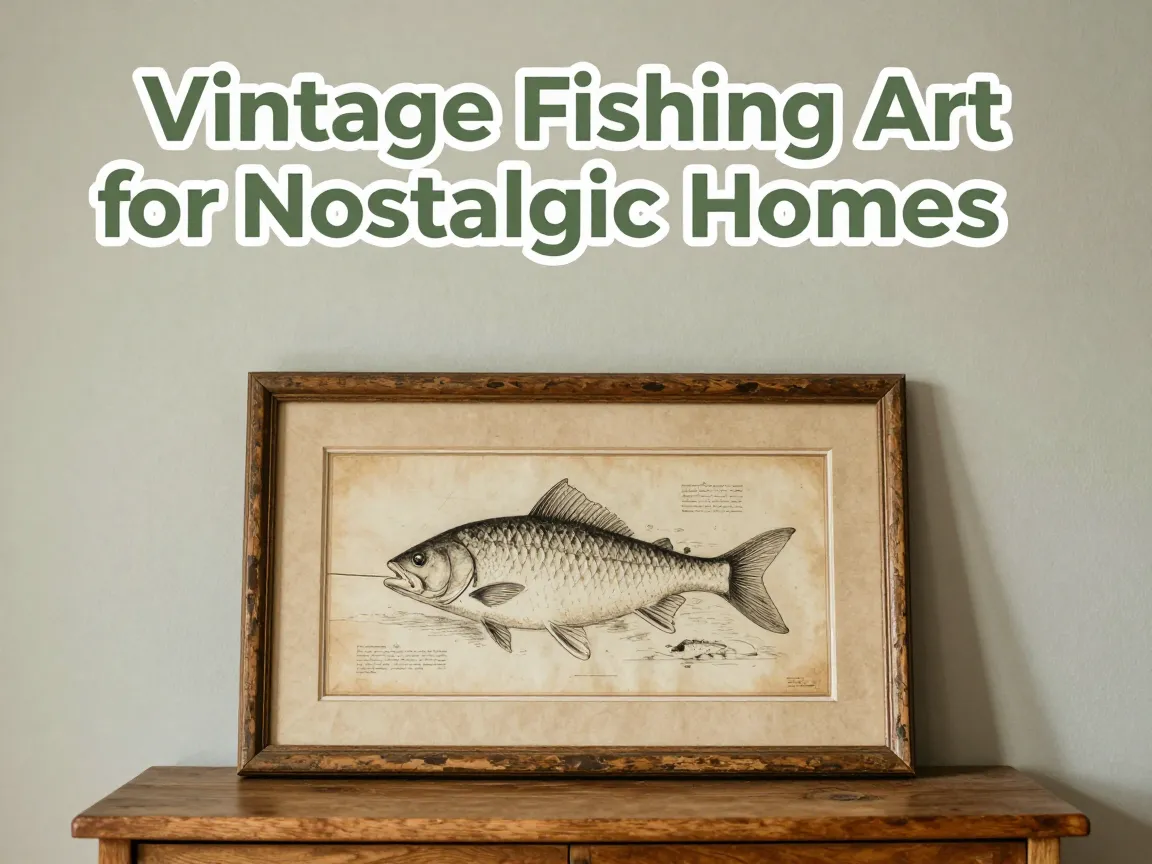
1. Antique Scientific Fish Charts
Few illustration styles communicate both beauty and intellectual weight the way a restored ichthyology chart does. These prints originated in the natural history tradition of the 18th and 19th centuries, when scientists and illustrators collaborated to document freshwater and saltwater species with extraordinary precision. Each fish was rendered in profile, labeled with its Latin binomial name, and often accompanied by fine crosshatch shading that gave the subject a three-dimensional quality. The result is something that feels simultaneously academic and deeply decorative.
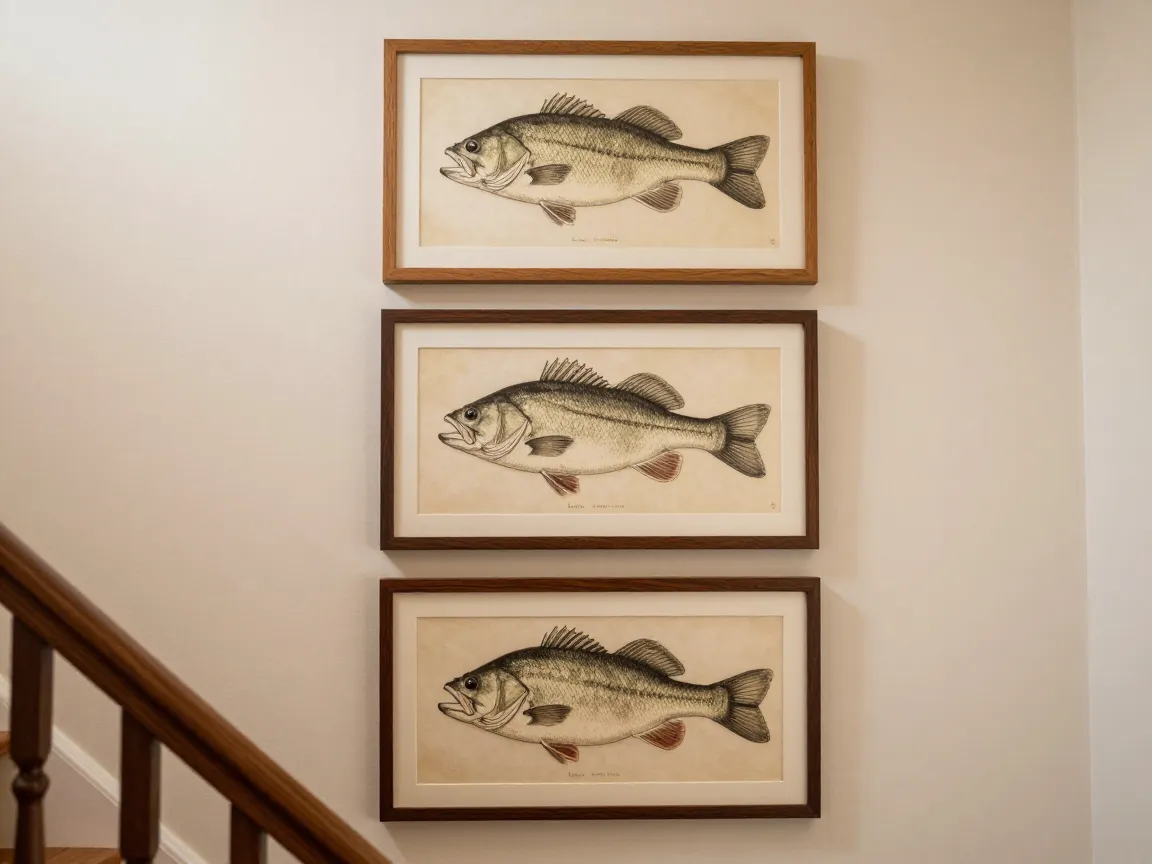
What makes antique scientific fish charts so effective for nostalgic decor is the tension between their serious purpose and their warmth. A chart featuring largemouth bass, perch, and crappie drawn in earthy ink tones against cream or aged-parchment paper instantly suggests a world of leather-bound field guides and wooden specimen drawers. That atmosphere resonates especially well in home libraries, offices, and study rooms where the occupant wants art that rewards a second look.
In 2026, marketplace sellers are offering large downloadable bundles of antique freshwater fish prints, some collections exceeding fifty individual species illustrations at high resolution. This makes it practical to build a cohesive gallery wall without hunting for matching frames across multiple vendors. For the best visual result, choose frames in natural oak or dark walnut and use off-white or kraft-toned mats rather than bright white, which can clash with the warm age of the original ink work. Staggering three or four different species charts in a column along a staircase wall is one of the most satisfying applications of this style.
2. Vintage Fly-Fishing River Scenes
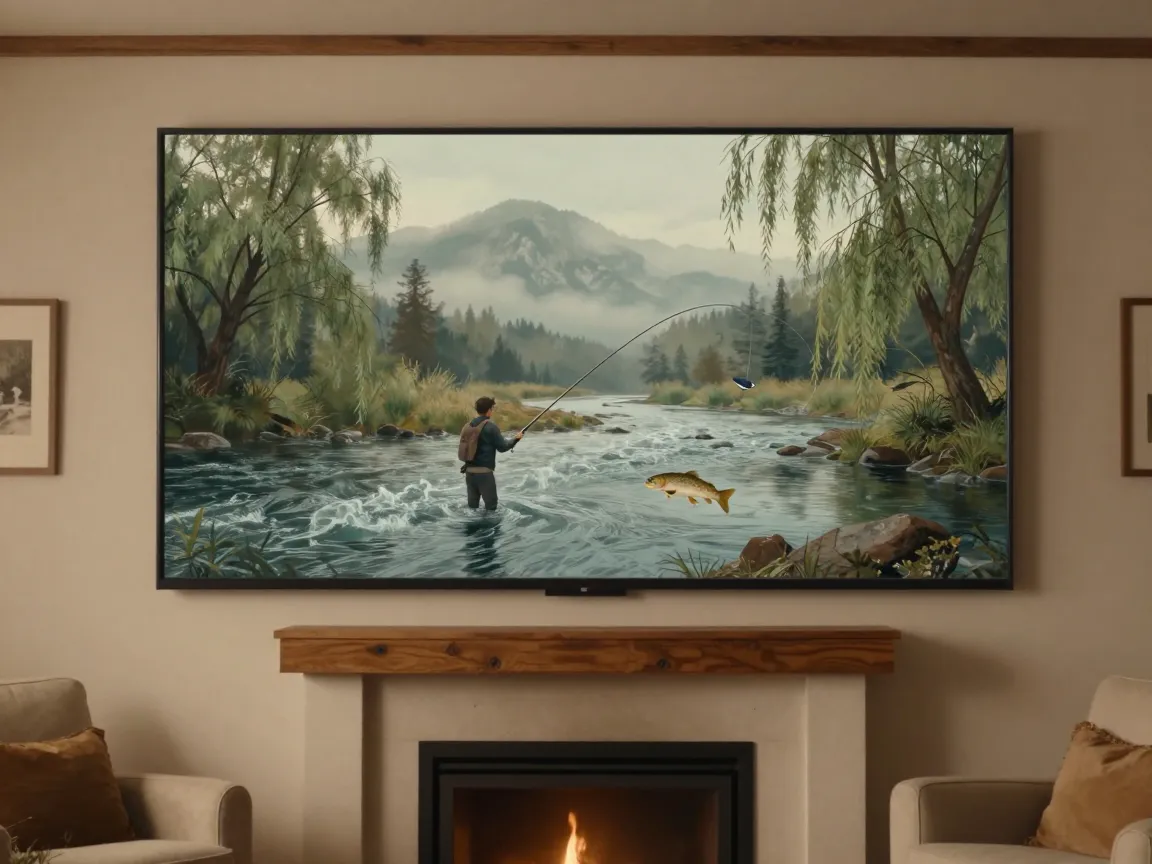
There is something about a painted or engraved fly-fishing scene that stops a person mid-step. The best examples in this sub-genre show a lone figure mid-cast on a rushing river, the arc of the fly line frozen in time above the water, surrounded by overhanging willows or misty mountains. These illustrations carry a romantic quality that is entirely different from the clinical precision of a fish chart, and they tend to work better as single statement pieces than as part of a grouped gallery.
Fly-fishing imagery consistently ranks among the most prominent motifs in vintage fishing decor collections. Trout-focused scenes in particular, a rising brown trout, a hand-net moment, a close-up of a wet fly resting on the surface film, carry an emotional specificity that general “fishing” art sometimes lacks. That specificity matters in decor: viewers who have never held a fly rod still sense that something meaningful and skilled is being depicted.
For placement, a large-format fly-fishing river scene works beautifully above a fireplace mantel or over a sofa in a lakehouse sitting room. The horizontal sweep of a river composition suits landscape-format prints, which can span a wide wall without feeling cramped. When selecting this type of print, look for illustrations that use a limited, earthy palette, sage green, warm brown, slate blue, rather than vivid sports-poster colors. The muted tones are what push this style into nostalgic territory rather than contemporary athletic branding.
3. Retro Fishing Tackle Advertisement Prints
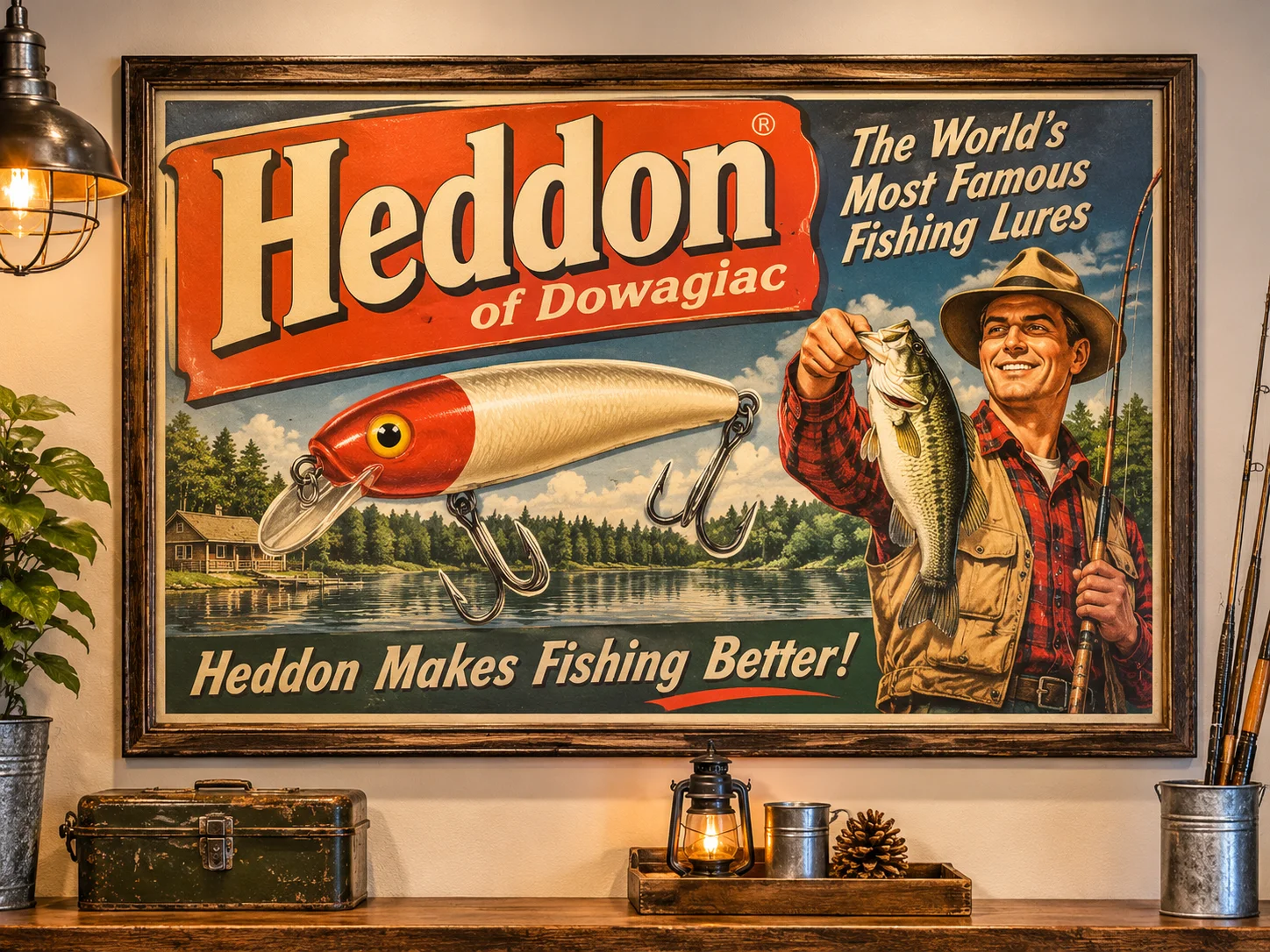
Between roughly the 1890s and the 1960s, fishing tackle manufacturers produced some of the most visually inventive advertising artwork of the commercial printing era. Lure companies, rod makers, and reel manufacturers commissioned illustrators to create chromolithograph and letterpress ads that depicted their products alongside heroic catches, pastoral lake settings, and confident anglers. Those original ads have become collector’s items, but high-quality restored reproductions are widely available and carry the same visual energy.
What sets retro tackle advertisement prints apart from other vintage fishing illustrations is their graphic boldness. Where a scientific chart is quiet and methodical, a tackle ad commands attention with oversized typography, saturated period colors, burnt orange, forest green, cream, navy, and a confident composition that places the product at the center of an aspirational scene. A framed 1920s-style lure advertisement positioned in a mudroom or bar area creates an immediate sense of personality and history.
The key to using this style successfully is restraint in grouping. One or two strong tackle advertisement prints make a sharp visual statement. Too many competing ads on the same wall create noise rather than nostalgia. A single oversized framed ad hung in a man cave, garage bar, or entryway is a proven format that keeps the energy focused. Pairing one with a simple unframed antique map of a local fishing lake, available from many vintage print sellers, adds geographic meaning without cluttering the visual field.
4. Hand-Drawn Rustic Angler Sketches
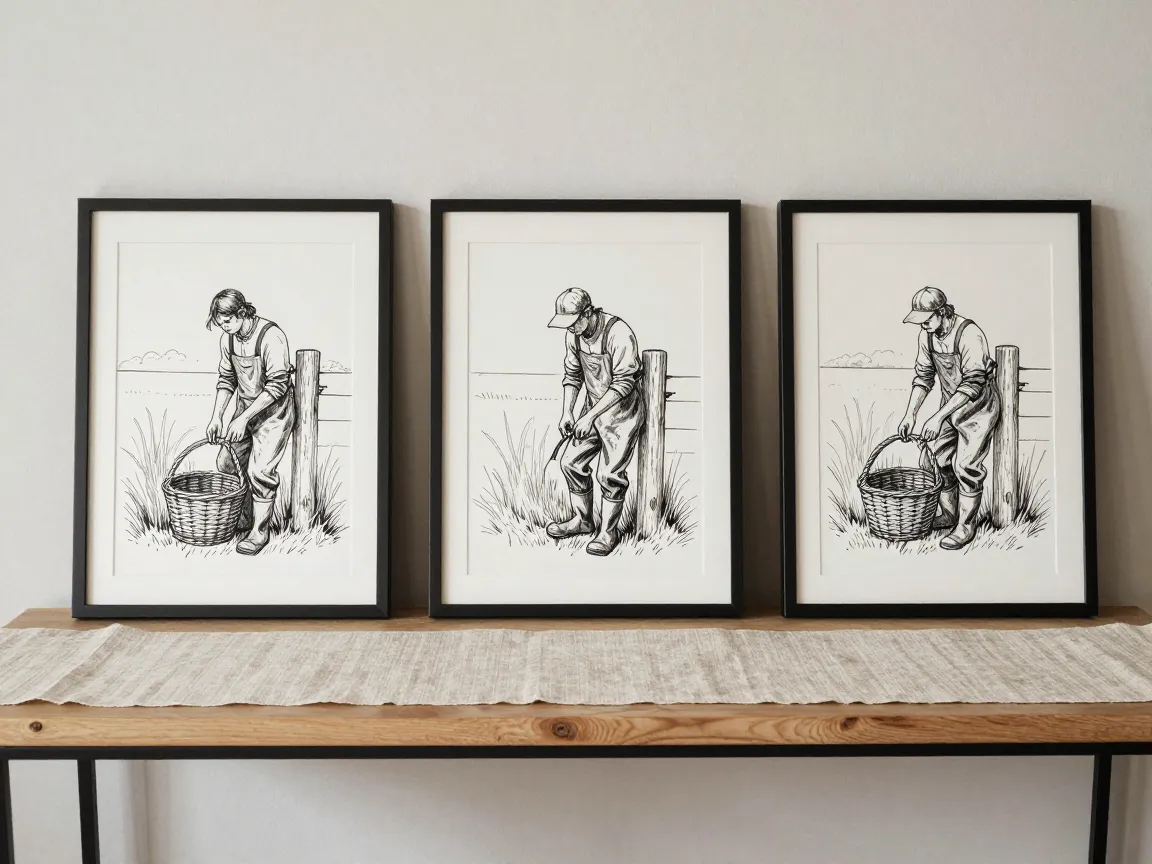
Not every vintage fishing illustration aims for the grandeur of a river scene or the authority of a scientific chart. The hand-drawn rustic angler sketch occupies a quieter, more intimate corner of this decorative category. These are the kinds of images that look as though they were drawn in the margins of a fishing journal: a figure in waders leaning against a fence post, a close-up of weathered hands tying a knot, a creel basket resting in tall grass. The technique is typically pen-and-ink or pencil with minimal tone, which gives the work an unfinished, personal quality.
This style has seen steady marketplace interest in 2026, particularly among buyers decorating cabins and lake houses in a cozy, neutral aesthetic rather than a traditional lodge look. The rustic angler sketch pairs naturally with raw linen, unbleached cotton, and natural-wood surfaces. Because the illustrations are typically small to medium in scale, they translate well to groupings, three sketches at the same size in matching thin black frames, arranged in a horizontal row above a hallway console table, create a collected, unhurried feeling.
One useful approach is to source sketches that depict the same angler at different moments: casting, waiting, releasing a fish. This creates a quiet narrative across the wall without requiring captions or explanatory text. The storytelling is embedded in the sequence, which is exactly what makes this style feel personal rather than generic. Buyers who commission custom versions from independent illustrators on craft marketplaces often find that incorporating specific local species, the native trout of a particular river, the bass of a specific lake, transforms a decorative print into something genuinely meaningful.
5. Nostalgic Lake House and Cabin Scene Illustrations
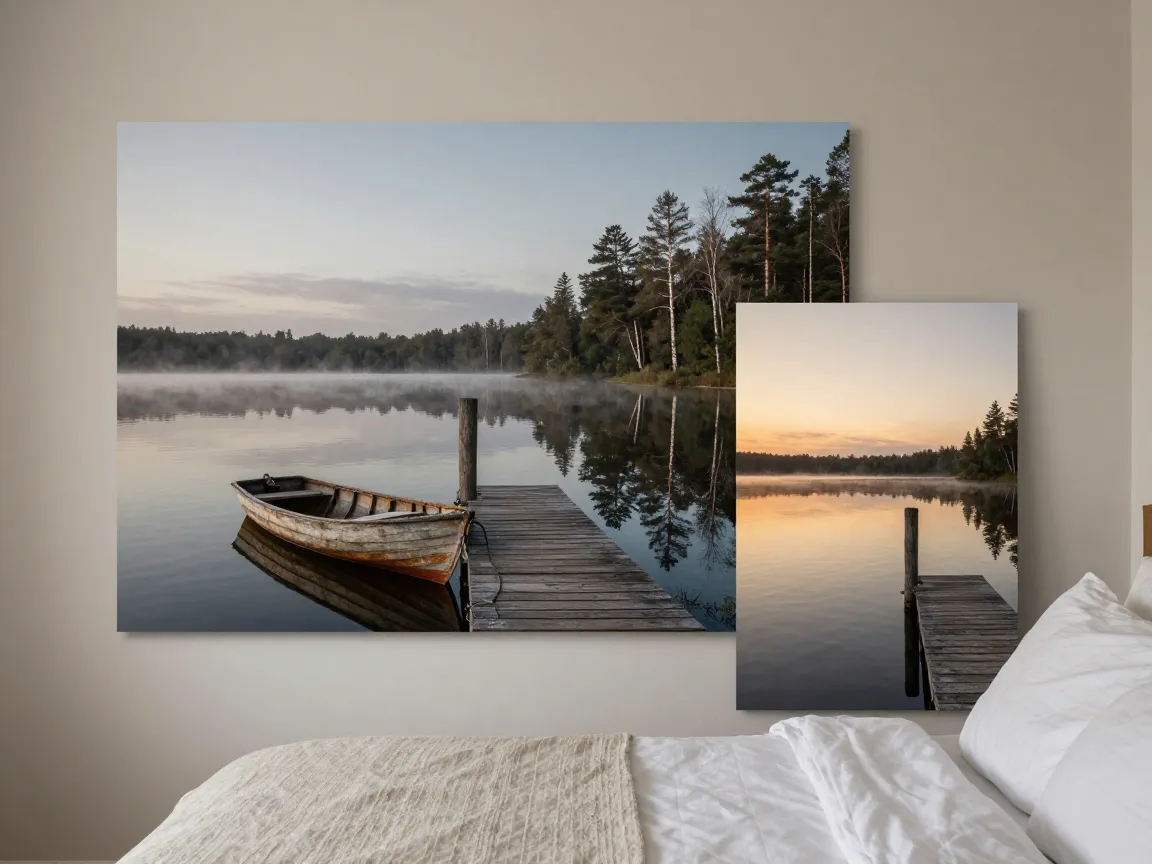
Where angler sketches focus on figures and tackle, the lake house and cabin scene illustration pulls back to show the whole world those anglers inhabit. Think of a hand-painted dock stretching into a still morning lake, a weathered rowboat tied to a post, a distant treeline of pine and birch reflected in flat water. These compositions are fundamentally about place rather than sport, which is why they resonate even with people who have never fished in their lives.
The emotional power of this style lies in its specificity of mood. The best cabin scene illustrations capture a particular quality of light, the grey-blue of an overcast summer morning, the amber of late afternoon filtering through pine needles, that triggers an almost involuntary sense of memory. Retailers and marketplace sellers in 2026 consistently use words like “nostalgic,” “rustic,” and “lake house” in their product copy for this category, which reflects how clearly buyers understand what feeling they are trying to bring into their homes.
For decorating purposes, cabin scene illustrations are among the most versatile pieces in the vintage fishing family. A wide landscape-format print suits the wall above a bed in a lakehouse bedroom, where the horizontal sweep of water and treeline mirrors the restful orientation of the space. A narrower portrait-format version, a dock post and its reflection, a single pine tree at the water’s edge, works in tight spaces like hallways, bathroom walls, or the narrow strip of wall beside a doorframe. Using both orientations in a staggered gallery arrangement is a current trend supported by marketplace bundle offerings that deliberately include portrait and landscape variants together.
6. Vintage Fish Wildlife and Species Portrait Prints
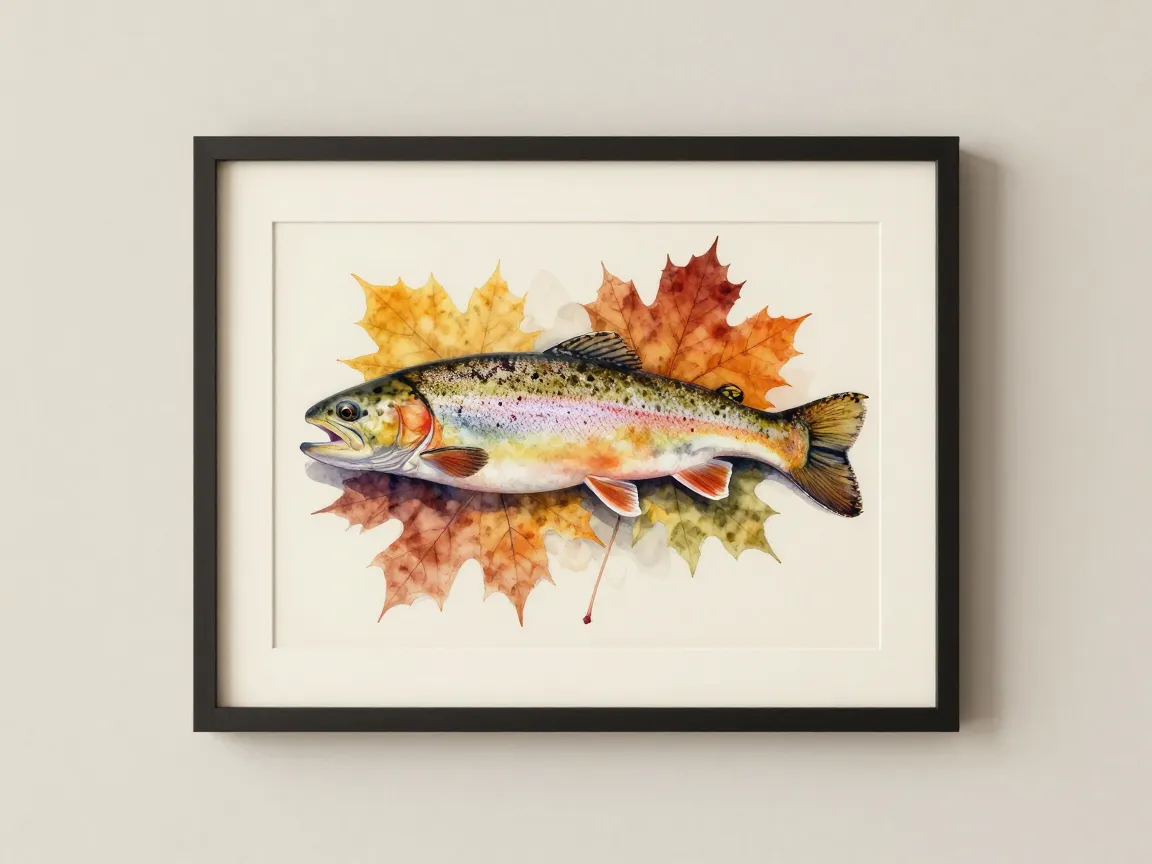
The final category draws from a tradition that sits exactly between scientific illustration and fine-art portraiture: the vintage wildlife fish print. Unlike the full-chart format of ichthyology posters, these are single-species portraits rendered with the ambition of a gallery painting. A brook trout depicted at life size against a watercolor wash of autumn leaves, a largemouth bass shown in full leap against a cream background, a channel catfish drawn with the confident line of a 19th-century natural history engraver, each of these is a portrait of an animal that happens to be a fish.
What elevates the best examples of this style is the combination of biological accuracy and artistic intentionality. The illustrator has not simply documented the species; they have chosen a pose, a setting, and a palette that communicate something about the character of the animal. A rainbow trout shimmering in mid-water has a different visual personality than a brooding northern pike lurking near a deadfall. That personality difference is exactly what makes single-species portrait prints so effective as focal pieces.
In terms of placement, these prints work particularly well in rooms where a single piece of meaningful art is preferred over a gallery arrangement, a primary bedroom, a formal dining room, or a private office. Choosing a species with personal significance, the fish one’s grandfather chased, the species native to a favorite local water, transforms the print from a decorating choice into a form of personal storytelling. Current marketplace offerings in late 2026 show strong demand for both individual species portraits and curated sets of two or three complementary species, which allows buyers to build a small thematic collection without committing to a full gallery wall.
How to Choose the Right Style for Your Space
Understanding the six options is one thing; matching the right illustration style to a specific room is where the real decorating work begins. The scientific fish chart and the wildlife species portrait share a certain quiet authority that suits rooms associated with focused activity, offices, studies, dining rooms. The fly-fishing river scene and the cabin landscape carry a more expansive, atmospheric quality that fits living rooms, bedrooms, and sitting areas where the goal is to invite relaxation. The retro tackle advertisement and the rustic angler sketch are the most conversational of the group, best placed in rooms where people gather informally: mudrooms, bar areas, man caves, and entryways.
Room scale matters as much as style. Large-format prints, whether a single wide river scene or a tall ichthyology chart, anchor a wall and become the visual center of a room. Smaller prints grouped in a gallery arrangement create a browsable, collected quality that rewards close inspection. The 2026 marketplace trend toward downloadable bundles that include multiple sizes reflects how buyers are thinking about this: they want flexibility to work at different scales without sourcing each print individually.
A practical starting point is to identify the dominant material palette of the room first. Warm wood tones, linen, and leather call for illustrations with earthy, sepia-adjacent palettes. White-painted shiplap and cool grey tones pair better with the cooler slate and sage hues found in many fly-fishing river prints. Getting that tonal relationship right is what separates a wall that looks intentional from one that looks assembled.
Conclusion
The 6 charming vintage fishing illustration ideas for nostalgic decor explored here, scientific fish charts, fly-fishing river scenes, retro tackle advertisements, rustic angler sketches, cabin landscape illustrations, and wildlife species portraits, each offer a distinct entry point into one of the most enduring decorative traditions in American and European homes. The category is active, commercially healthy, and genuinely diverse in 2026, with options ranging from free public-domain downloads to custom-commissioned originals.
The single most useful next step is to pick one room, identify the two or three emotional qualities you want that room to carry, and then choose the illustration style from this list that most naturally embodies those qualities. Start with one strong piece rather than a full gallery, and let the room tell you whether it wants company.