Timeless Vintage Fishing Art Pieces Every Collector Wants
Fewer than one in ten antique fish prints from the 18th and 19th centuries ever make it onto the open market in a given year, yet demand for them in 2026 is stronger than at any point in the past three decades. The 6 timeless vintage fishing art pieces every collector wants span everything from hand-coloured scientific engravings to mid-century cartographic curiosities, and understanding each category can mean the difference between a sound investment and an expensive reproduction. Whether the goal is a trophy piece for a lodge wall or the cornerstone of a serious antique collection, these six categories consistently appear on the shortlists of dealers, auction specialists, and passionate private buyers alike.
Disclosure: This post contains affiliate links. As an Amazon Associate, we earn from qualifying purchases, and at no extra cost to you.
1. 18th-Century Hand-Coloured Copper Engravings by Marcus Elieser Bloch
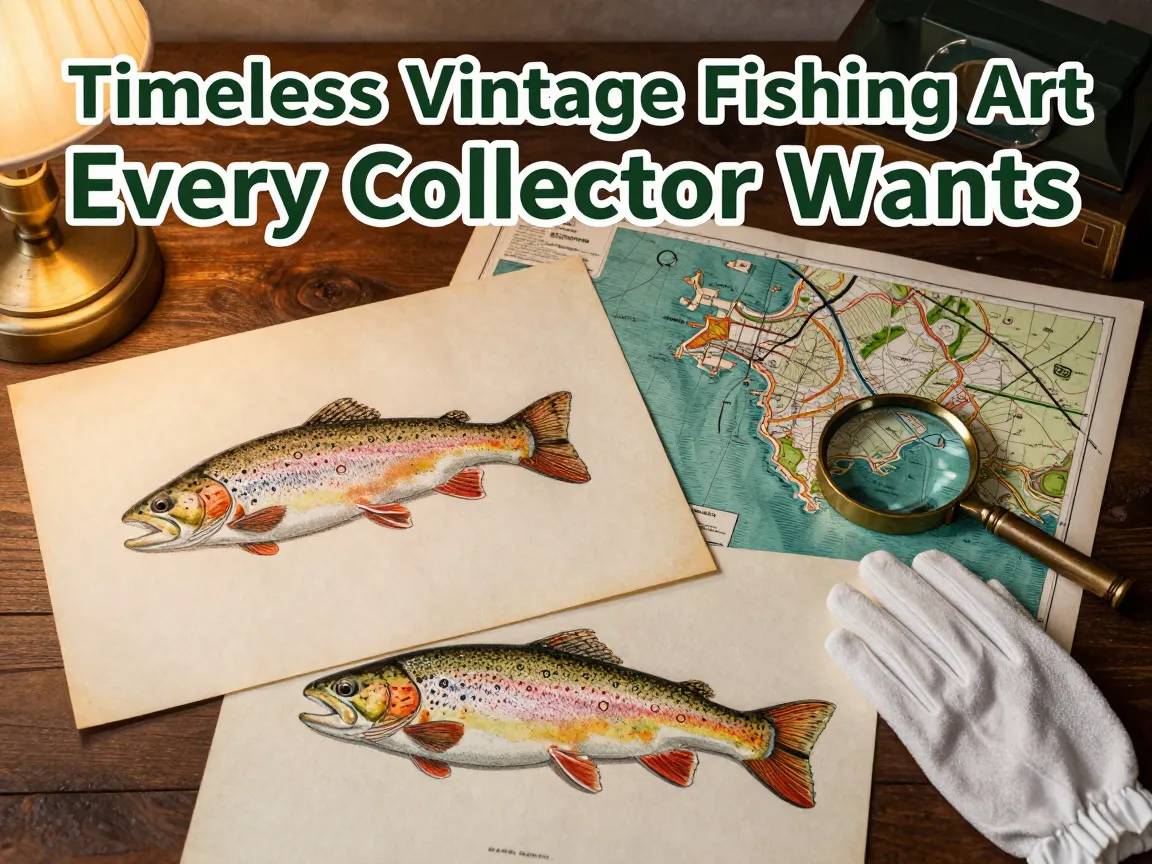
Few names carry more weight in the world of antique fish imagery than Marcus Elieser Bloch. The Berlin-based physician produced his monumental ichthyological series between the 1780s and the 1790s, and the hand-coloured copper engravings from that work remain among the most sought-after pieces in antique fishing art today. Each plate was engraved with remarkable anatomical precision and then coloured by hand, meaning no two prints are identical. That individuality is a large part of what drives collector enthusiasm more than two centuries later.
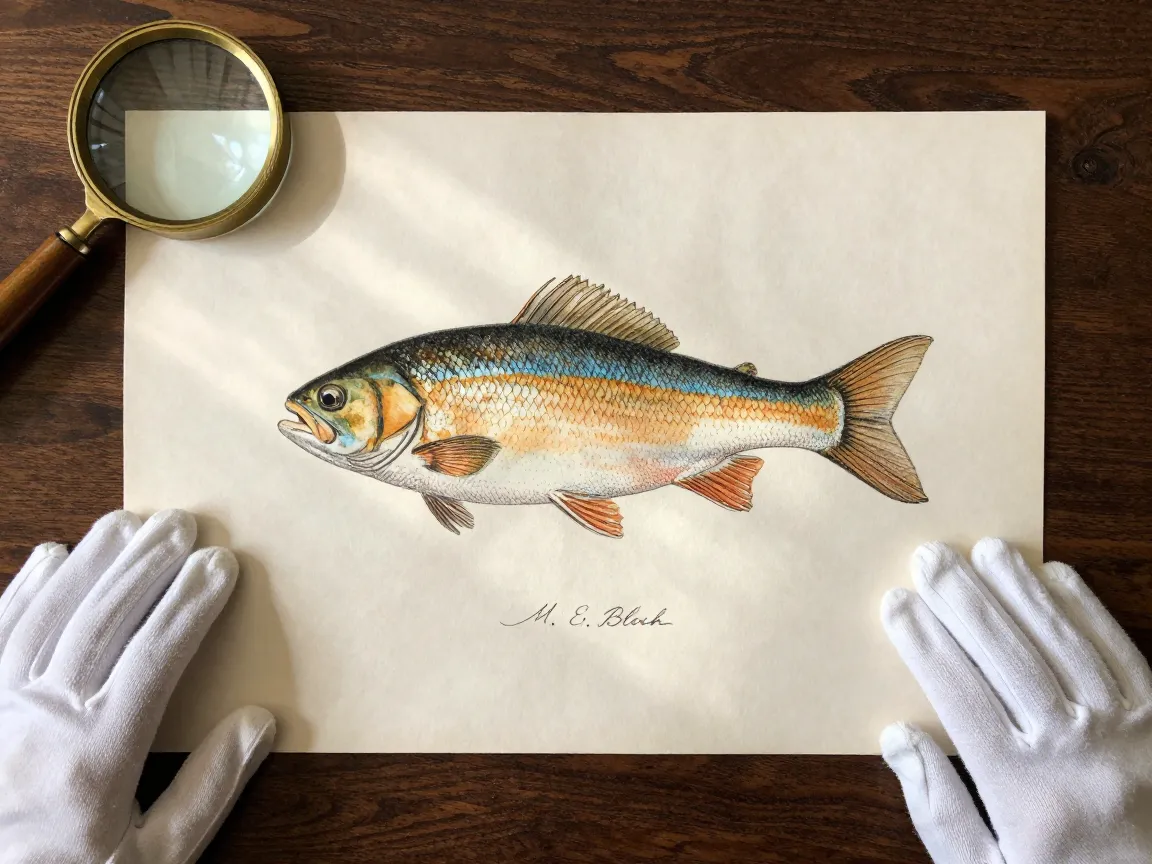
The market data supports the enthusiasm. Collectors who purchased Bloch prints in the 1990s paid roughly £50 per plate. By 2026, entry-level examples start at approximately £150 to £200, representing a steady long-term appreciation that few categories of paper art can match. Rarer species plates or examples with exceptionally vivid original colouring command considerably more. Because Bloch documented fish from Europe, Asia, and the tropics, the subject matter also appeals to collectors who have no particular interest in fishing itself, natural history enthusiasts and botanical print collectors frequently compete for the same pieces.
For anyone entering this category, condition assessment is critical. Bloch prints circulate both as individual plates removed from bound volumes and as complete or partial folios. Plates with clean, bright colouring, wide margins, and no foxing (the brownish age spots caused by mold or oxidation) are substantially more valuable. A reputable dealer or specialist auction house can confirm whether a plate is an original copper engraving or a later photomechanical reproduction, a distinction that dramatically affects both price and long-term value. Starting with a single authenticated plate is a sensible entry point before committing to larger purchases.
2. Edward Donovan and Sir William Jardine Ichthyological Plates
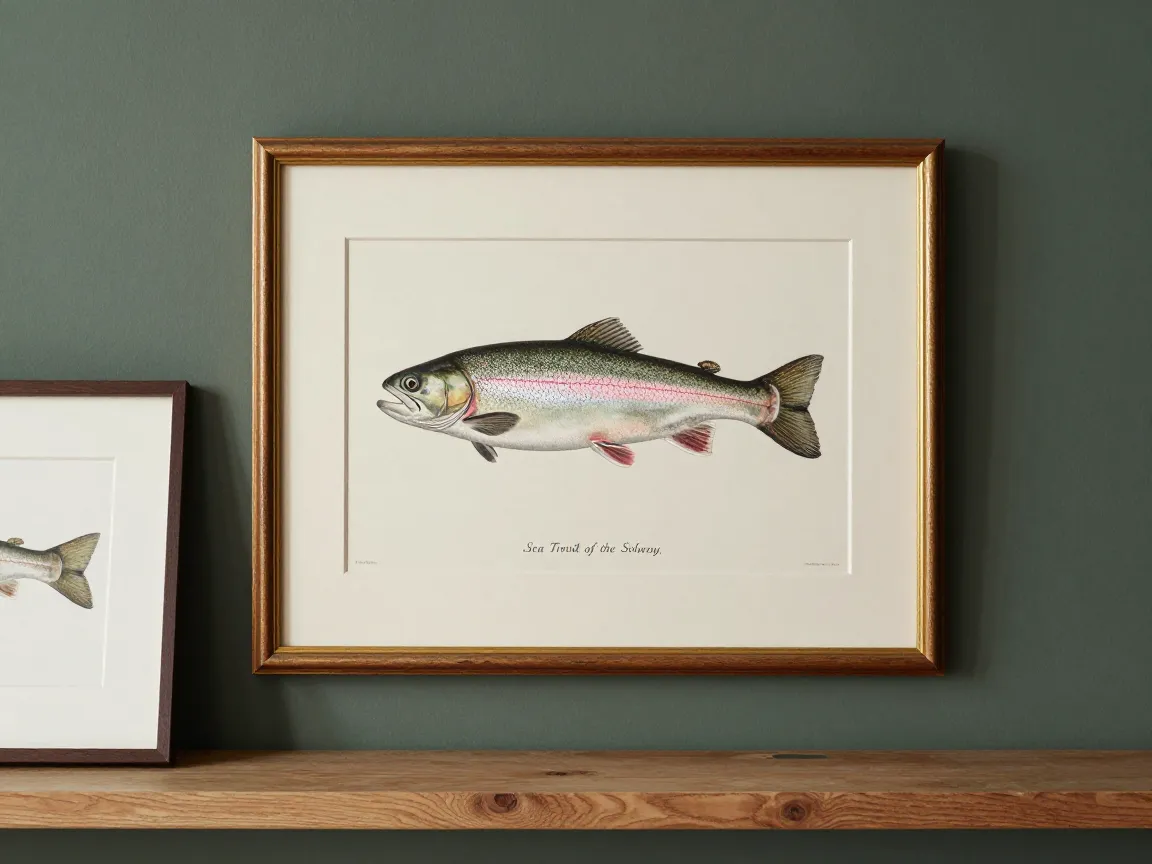
The British tradition of natural history publishing produced several artists whose fish illustrations rival Bloch in collector appeal. Edward Donovan, working in the late 18th and early 19th centuries, and Sir William Jardine, whose series on British fishes appeared in the 1830s and 1840s, both created plates that now feature prominently in antique print inventories maintained by specialist dealers. Jardine’s “Sea Trout of the Solway” is a particularly recognizable image, one that appears regularly on platforms catering to serious collectors and continues to attract mid-market prices that reflect enduring demand.
What distinguishes Donovan and Jardine plates from more generic Victorian natural history prints is the combination of scientific intent and genuine artistic quality. Jardine employed skilled engravers, including William Lizars, whose technical precision gave the finished prints a crispness that holds up even under close inspection. These are not decorative approximations of fish, they are documents of scientific observation rendered with the aesthetic sensibility of the period, which is exactly the combination that sustains collector interest across generations.
Acquiring Jardine or Donovan plates today is relatively accessible compared to Bloch. Specialist dealers maintain curated inventories that include examples from these artists alongside work by George Shaw, William Houghton, and Charles d’Orbigny, offering collectors the opportunity to build a thematically coherent collection of British and European ichthyological art. Museum-quality framing, available through several specialist dealers, adds immediate display value and protects the paper from further deterioration. Buyers should always request provenance documentation and confirm that any offered plate comes from an original publication rather than a facsimile edition.
3. Sherman Denton Trout Lithographs
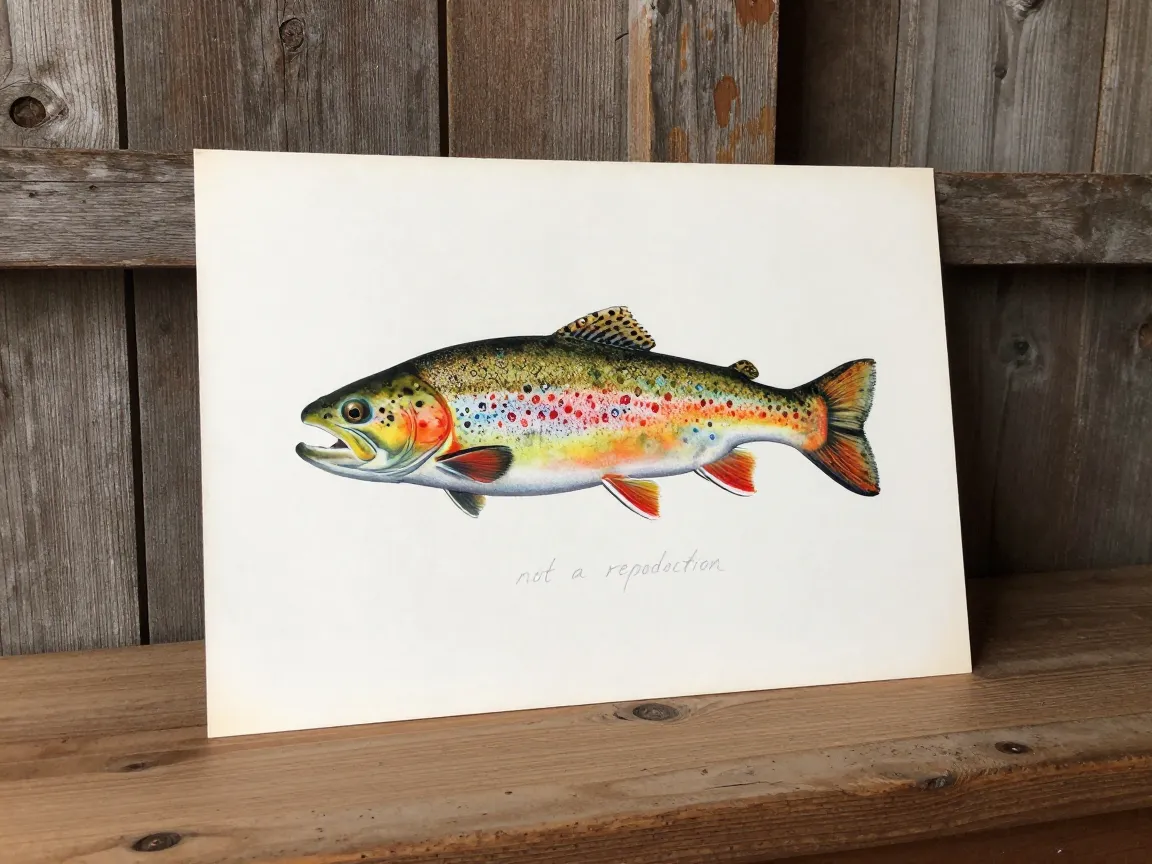
American fishing art has its own canon, and Sherman Denton occupies a central place in it. Working around the turn of the 20th century, Denton produced chromolithographic prints of freshwater game fish, most notably brook trout, that combined scientific accuracy with a vivid, almost luminous colour palette. Original Denton lithographs are over 100 years old, and the best examples were printed using the demanding stone lithography process that gives the colour a depth and texture impossible to replicate with modern printing.
The brook trout, with its intricate spotting pattern of red, orange, and blue halos against an olive-green body, is a naturally spectacular subject for colour printing, and Denton understood this. His male brook trout prints in particular are considered premium pieces, prized both by fishing enthusiasts who recognize the species and by collectors drawn purely to the visual quality of the image. Original Denton prints are sold matted and ready to frame, and reputable sellers are careful to distinguish them from the reproductions that also circulate. The phrase “not a reproduction” appears consistently in serious listings for Denton work, which tells its own story about how common imitations have become.
For collectors new to American sporting art, Denton represents an accessible but genuinely historic entry point. Prices for authenticated originals remain lower than comparable European scientific plates, partly because the American antique print market is less globally competitive than the British one. That gap, however, has been narrowing. Dealers who specialize in angling art now place Denton alongside Bloch and Jardine as one of the core names behind the must-have trout images in serious fishing art collections, and that recognition tends to precede significant price appreciation.
4. 19th-Century Sporting and Narrative Fishing Scenes
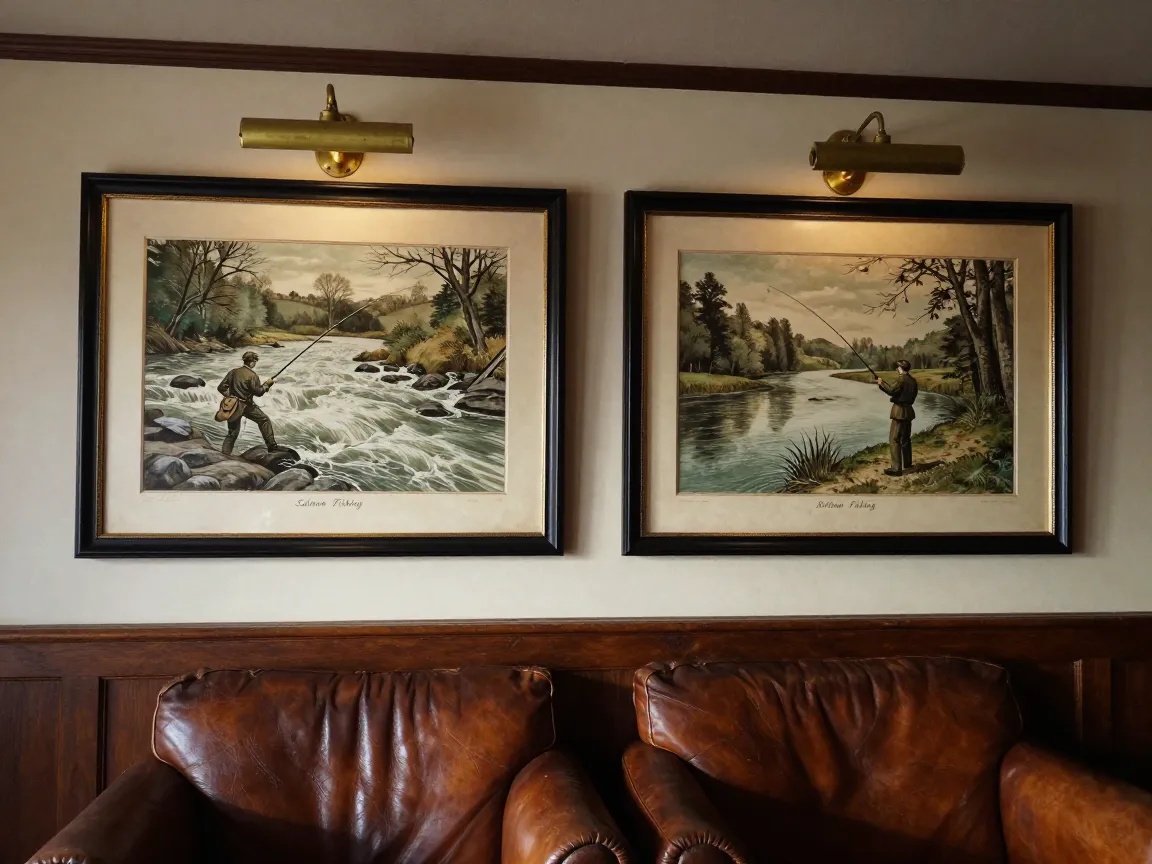
Not every collector is drawn to the scientific tradition of isolated fish studies. For many, the appeal of vintage fishing art lies in the sporting narrative, the angler at the river, the net breaking the surface, the drama of a salmon run captured at the moment of maximum tension. The 19th century produced a substantial body of work in this genre, and pieces by artists such as Henry Thomas Alken and James Pollard are among the most recognizable names in the category.
Alken’s “Salmon Fishing” and Pollard’s “Bottom Fishing” are the kinds of engravings and lithographs that defined the visual language of the sporting life for Victorian England. They appeared originally in illustrated periodicals and books aimed at the country gentleman, and they carried strong associations with class, leisure, and the rural landscape. That cultural weight has not diminished. These prints function equally well as historical documents, as decorative art, and as collectibles, which gives them broad market appeal across different types of buyers.
Vintage reproductions of these sporting scenes, printed more than 60 years ago on cotton rag paper, occupy an interesting middle tier in the market. They lack the premium of original 19th-century impressions, but they possess genuine age, tactile quality, and visual fidelity that separates them decisively from modern digital prints. For collectors working with moderate budgets, these older reproductions offer a way to acquire pieces with real material history without competing at the top end of the market. Prices in this segment typically run well under USD 100, making them an accessible starting point for anyone building a broader themed collection.
5. Original Oil Paintings of Fishing Harbours and Maritime Scenes
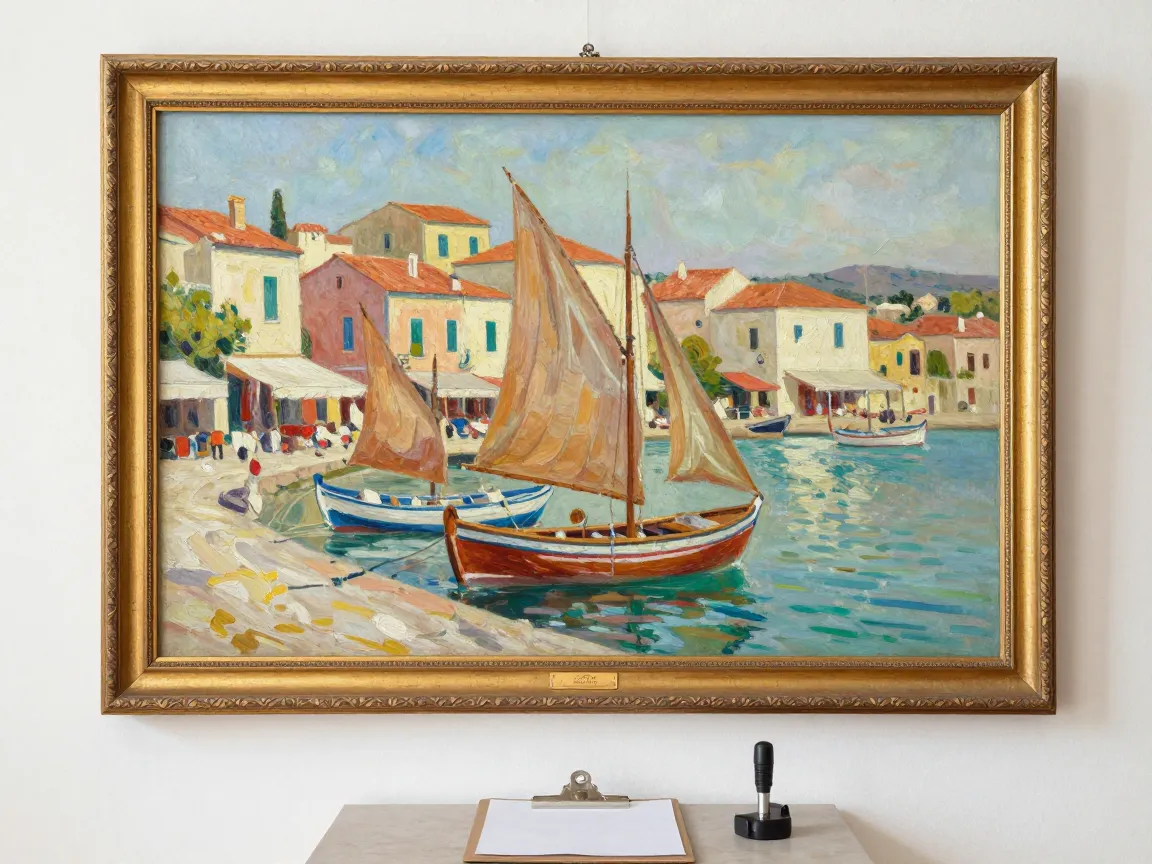
The step from prints to paintings represents the most significant price threshold in vintage fishing art, but it also opens access to a category that few other collecting areas can match for sheer visual presence. Original oil paintings of fishing harbours, coastal villages, and maritime working scenes have been produced by European artists since the 17th century, and the market in 2026 includes examples ranging from modest unsigned Victorian harbour views to signed works by named French and British painters that command prices well into the thousands.
French oils depicting Mediterranean fishing harbours represent a particularly active sub-segment. The quality of southern European light and the picturesque character of working fishing ports attracted generations of plein-air painters, and their canvases bring an immediacy and warmth that no print can replicate. A signed French oil of a Mediterranean fishing harbour offered at a discounted sale price remains a recognizable type in the current market, with buyers drawn both to the investment potential of original oil paintings and to the straightforward pleasure of living with a substantial, luminous canvas.
Purchasing original paintings requires more due diligence than buying prints. Condition issues including cracked varnish, over-painting, relining, and canvas repairs can significantly affect both aesthetic quality and long-term value. Having any painting assessed by a conservator before purchase is advisable, especially for works priced above a few hundred dollars. Provenance, the documented ownership history of the painting, adds value and provides assurance against the small but real risk of purchasing a misattributed or stolen work. Reputable auction houses and established dealers in maritime and sporting art are the safest channels for first-time buyers in this category.
6. Mid-Century Fishing Maps and Cartographic Art
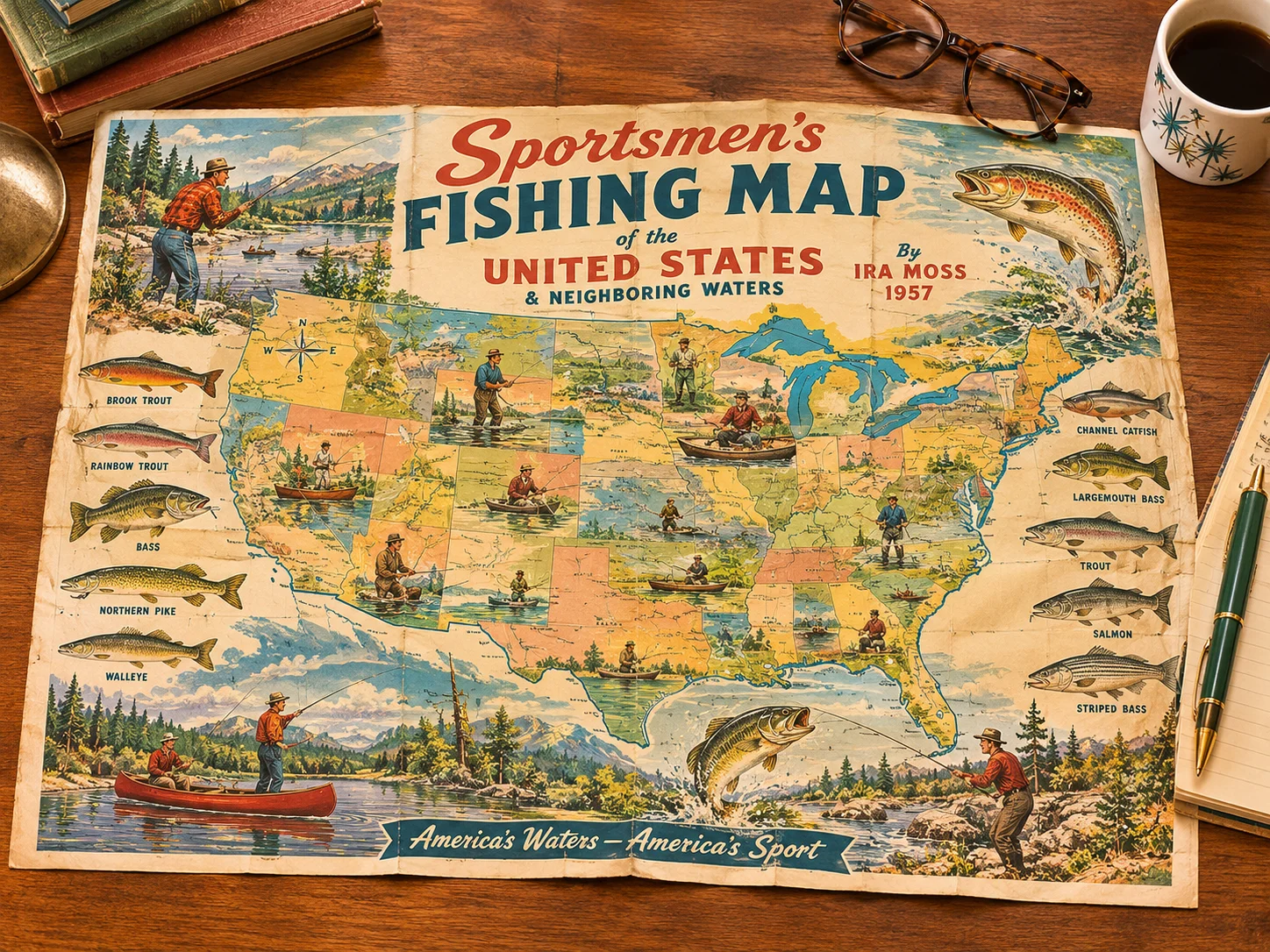
The most unexpected category on any list of the 6 timeless vintage fishing art pieces every collector wants is probably also the most democratic. Mid-20th-century fishing maps, illustrated, hand-coloured charts of lakes, rivers, and coastal fishing grounds produced for sporting enthusiasts between the 1940s and the 1960s, have emerged as a recognized sub-category of vintage fishing art in their own right. These maps are graphic documents of a particular moment in American outdoor culture, produced when commercial illustration and cartography overlapped in ways that created genuinely beautiful objects.
A circa-1957 “Sportsmen’s Fishing Map of the United States & Neighboring Waters” by Ira Moss is a representative example of the type: a large-format illustrated map combining practical geographic information with decorative vignettes of anglers, game fish species, and regional fishing scenes. The colours are characteristically bold and flat, the typography is a time capsule of mid-century commercial design, and the overall composition rewards the kind of close, sustained looking that only comes from something hanging permanently on a wall. These qualities have led collectors to treat mid-century fishing maps as wall art rather than simply as historical curiosities.
The practical advantages of this category are considerable. Original examples are still relatively affordable compared to 19th-century scientific prints, and the supply, while finite, has not yet been exhausted by collector demand. Reproductions exist as digital downloads, which are entirely acceptable for decorative purposes, but original printed examples carry the material authenticity that serious collectors prefer. For anyone who wants to diversify a fishing art collection beyond the conventional genres of ichthyological prints and sporting scenes, mid-century cartographic art offers a visually distinctive and historically grounded alternative that consistently attracts admiration from visitors who have never heard of Bloch or Jardine.
How to Build a Coherent Vintage Fishing Art Collection
Acquiring individual pieces is satisfying, but the collectors whose collections attract the most serious attention tend to approach the process with a unifying logic. That logic does not need to be rigid, a collection that mixes Bloch engravings with mid-century American maps can work beautifully if the pieces share a consistent standard of quality and condition. What matters most is authenticity. Every piece in the categories described above exists alongside a parallel market of reproductions, facsimiles, and misattributed works, and the ability to distinguish originals from imitations is the single most important skill a new collector can develop.
Working with specialist dealers rather than general antique markets accelerates that learning process considerably. Dealers who focus on antique prints and fishing art maintain curated inventories, provide condition reports, and can speak knowledgeably about the publication history of specific plates and editions. The current market in 2026 includes both traditional gallery-based dealers and online platforms with deep specialist inventories, giving collectors at every price point access to authenticated pieces with documented provenance.
Framing also deserves serious attention. Museum-quality conservation framing, using acid-free mats, UV-filtering glazing, and archival backing, protects paper-based works from the light, humidity, and acid migration that cause deterioration over time. A well-framed Bloch engraving or Denton lithograph not only displays better than an unframed or cheaply framed example; it retains more of its value over the long term. Several specialist dealers offer framing as part of their service, which simplifies the process for collectors who are new to the category.
Conclusion
The 6 timeless vintage fishing art pieces every collector wants, from Bloch’s hand-coloured copper engravings to mid-century cartographic fishing maps, share a quality that separates enduring collectibles from passing trends: they reward close attention. Each piece carries a specific history, a distinct technique, and a visual character that deepens rather than diminishes with familiarity. The most useful next step for anyone drawn to this field is to visit a specialist dealer, handle a few authenticated originals, and develop an eye for the material qualities that distinguish genuine antique prints from their many imitations. That hands-on experience, more than any amount of research, is what turns an interested observer into a confident collector.