Family Fishing Photoshoot Ideas for Unforgettable Outdoor Memories
Roughly 50 million Americans fish at least once a year, yet most family fishing trips produce only a handful of blurry phone shots taken in the middle of the afternoon, when light is flat and everyone looks squinty. That gap between how much these outings mean and how poorly they’re documented is exactly what this guide addresses. These 6 family fishing photoshoot ideas for unforgettable outdoor memories are built around real photographic technique, practical logistics, and the specific dynamics that make fishing with family different from any other outdoor activity.
Disclosure: This post contains affiliate links. As an Amazon Associate, we earn from qualifying purchases, and at no extra cost to you.
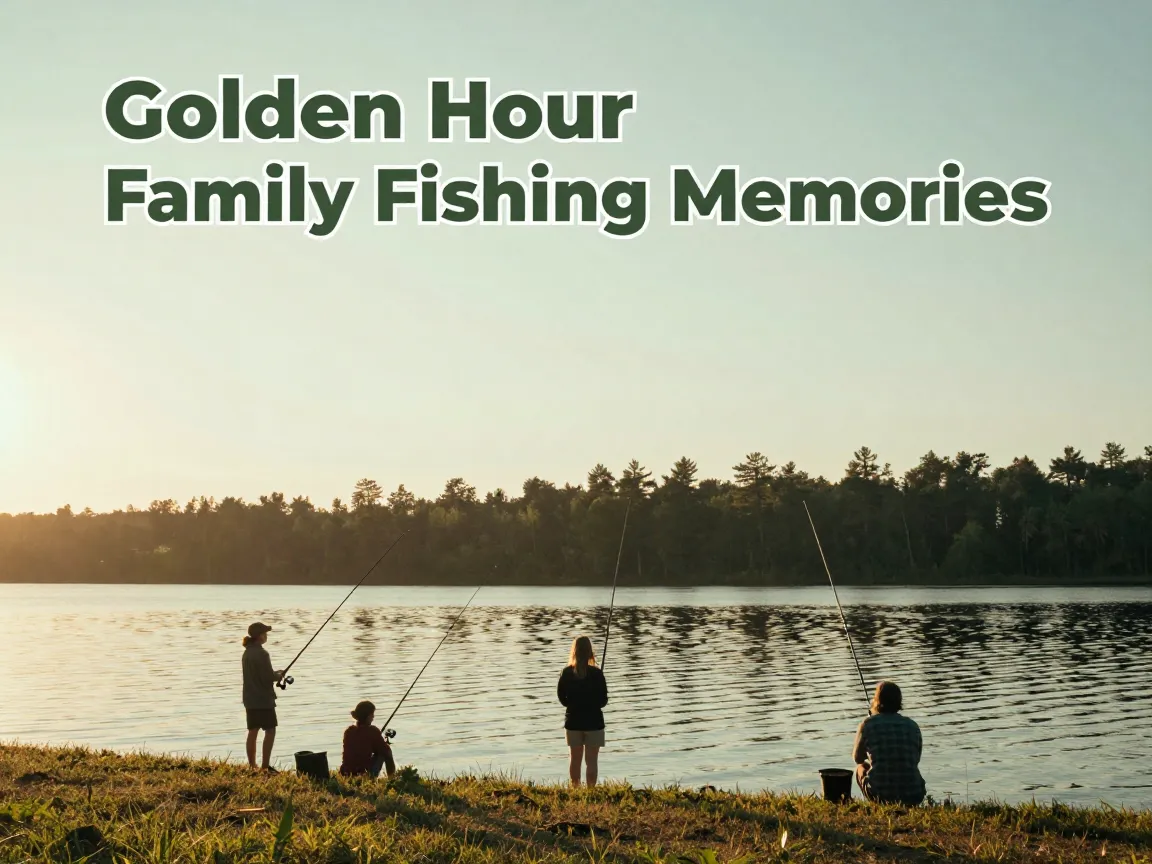
Each idea below is a standalone approach you can execute with a smartphone, a basic mirrorless camera, or anything in between. No professional crew required.
Key Takeaways
- Golden-hour light is the single biggest free upgrade available to any family fishing photographer.
- Candid action sequences almost always outperform posed group shots in emotional impact.
- Multi-generational compositions do storytelling work that portraits of a single age group cannot.
- Gear and detail shots give a photoshoot narrative depth and make prints more interesting on a wall.
- A seasonal series at one consistent location builds a visual record that compounds in value over years.
- Fish handling ethics and water safety should be visibly modeled in every image, not cropped out.
1. Golden-Hour Shore Fishing Portraits
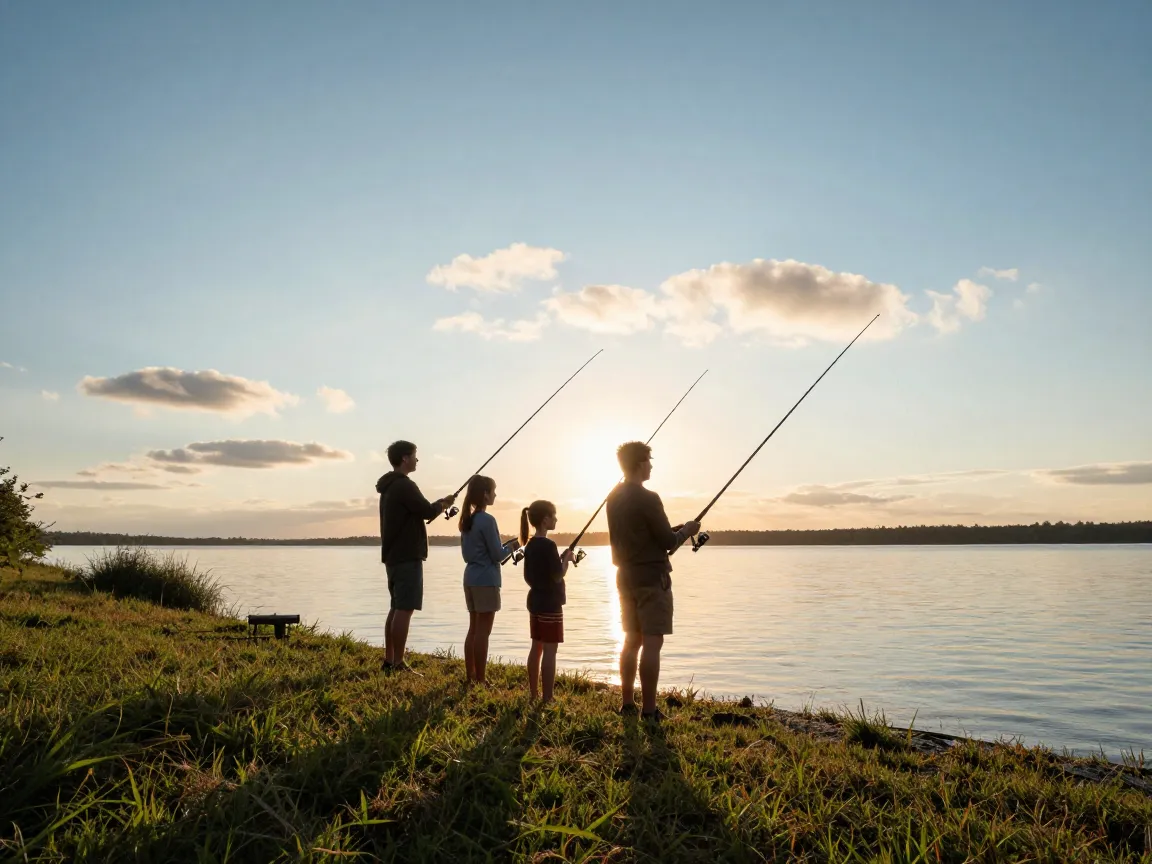
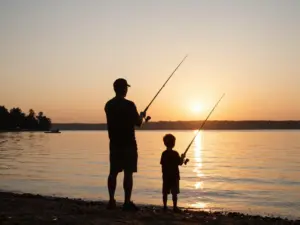
The hour after sunrise and the hour before sunset give you warm directional light that flatters skin tones, creates natural rim lighting around subjects, and turns ordinary water into something that looks like it belongs on a magazine cover. For shore fishing, this timing also tends to coincide with active fish, which means family members are genuinely engaged rather than standing around waiting.
Position the family so the sun is slightly behind and to one side of them. This creates separation between the subjects and the background and avoids the flat, shadowless look that midday light produces. If you are shooting with a smartphone, tap on a subject’s face to set exposure there, then slide the exposure compensation down slightly so the background sky retains color rather than blowing out to white.
A specific composition worth trying: stand at water level, slightly below the shoreline bank, and shoot upward toward the family with the sky and any clouds in the upper third of the frame. Even a low-resolution phone image taken at this angle with golden-hour light will look dramatically different from a standing eye-level shot. Keep the horizon level. Crooked horizons on water shots are distracting and hard to fix without cropping.
One practical caveat: golden hour lasts roughly 20 to 40 minutes depending on season and latitude. Have everyone in position and the camera settings roughly sorted before the light hits. Spending the first ten minutes of golden hour adjusting clothing or arguing about where to stand is a common and avoidable mistake.
Outfits matter more than most families expect at this hour. Earth tones, muted blues, and forest greens photograph beautifully against natural water and foliage backgrounds. Bright neon colors, busy patterns, and logos compete with the environment rather than complementing it. Coordinating does not mean matching; it means choosing a palette that sits well together and against the specific location you have chosen.
2. Candid Action Series of Casting, Reeling, and Landing
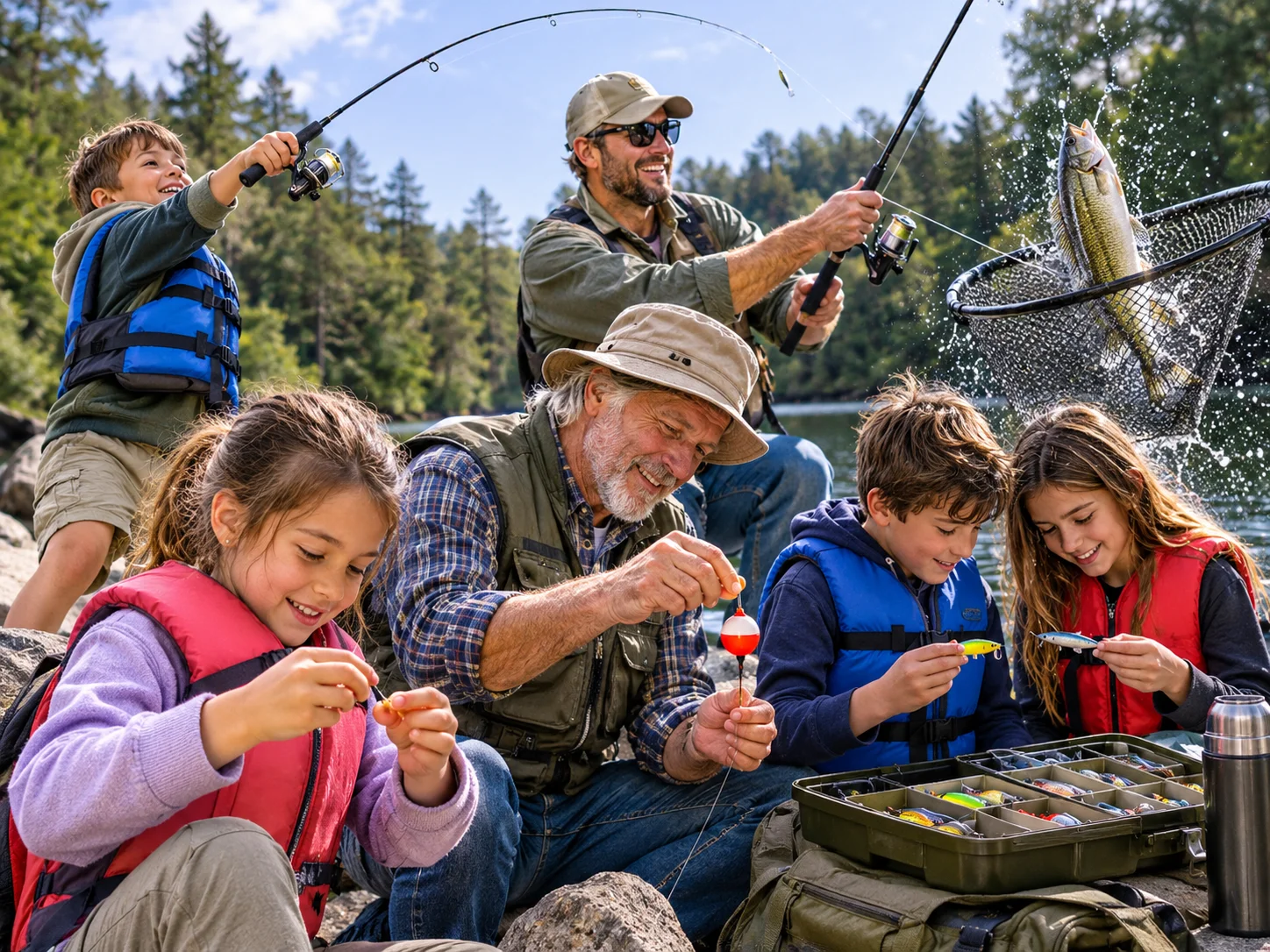
The still image of everyone holding up a fish at the end of a trip tells one moment of the story. A sequence that documents the cast, the wait, the strike, the fight, and the landing tells the whole story and is far more interesting to look back on years later.
Use your camera or phone’s burst mode for the active parts of the sequence. Modern smartphones shoot between 10 and 30 frames per second in burst mode, which is more than enough to capture a clean casting frame, a reel-turning frame, and a net-landing frame from a single burst. From a burst of 25 frames, you typically need only three or four keepers to tell the full sequence.
For the waiting and baiting segments, slow down and shoot single frames with attention to composition. A child threading a worm, a grandparent adjusting a bobber, two siblings comparing lures on a tackle box lid, these quieter moments are the connective tissue that makes an action series feel like a story rather than a highlight reel.
Proximity is the main technical challenge. Getting close enough to show facial expressions during the fight means you need to be near the angler without getting in the way. A focal length equivalent to 50mm, 85mm on a full-frame camera gives you enough working distance to stay out of the action while still filling the frame with one or two people. On a smartphone, step in closer physically rather than using digital zoom, which degrades image quality noticeably.
Sound-on video clips shot alongside the still images are a worthwhile addition here. A ten-second clip of a child shouting while reeling in a fish is something a still image cannot replicate. Treat these as supplementary to the stills rather than a replacement for them.
3. Multi-Generational Storytelling at the Dock, Bank, or Boat
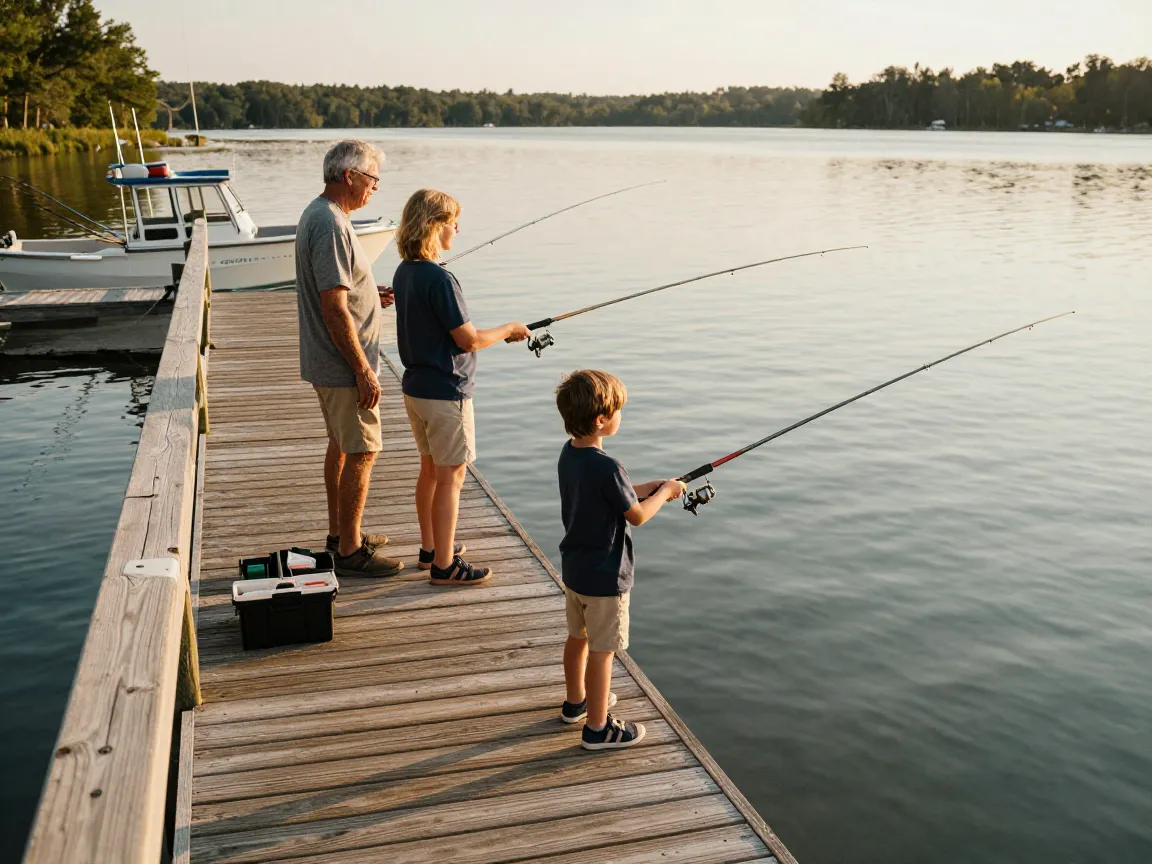
The visual dynamic of three generations fishing together, grandparent, parent, child, is specific to fishing in a way that few other activities produce. The physical act of teaching someone to cast, to read water, or to unhook a fish creates a natural hierarchy and physical connection that photographs with minimal direction.
A dock provides the most compositional control. It frames the scene, keeps everyone in a defined space, and offers multiple camera positions: from the water looking back at the dock, from the shore end of the dock looking out, and from above if there is an elevated bank or bridge nearby. The elevated angle, in particular, compresses perspective in a way that shows all three generations in one clean frame.
For the actual direction, avoid asking everyone to look at the camera. Instead, ask the grandparent to show the youngest child something specific: how to hold the rod, where to cast, what to look for in the water. The parent can be in the frame as the quiet middle layer, watching and participating. This creates a natural three-tier composition where each person has a clear role and the image reads as a moment rather than a portrait session.
The boat version of this concept works best when the boat is stationary. Movement introduces motion blur and limits safe movement for the photographer. Anchored at a calm cove, with rods out and everyone settled, is when the genuine relaxed expressions appear that make multi-generational boat shots compelling. Wide shots that show the whole boat and its surroundings establish scale and context; tighter shots showing two people sharing a rod or a tackle box create intimacy.
4. Lifestyle Gear and Detail Shots
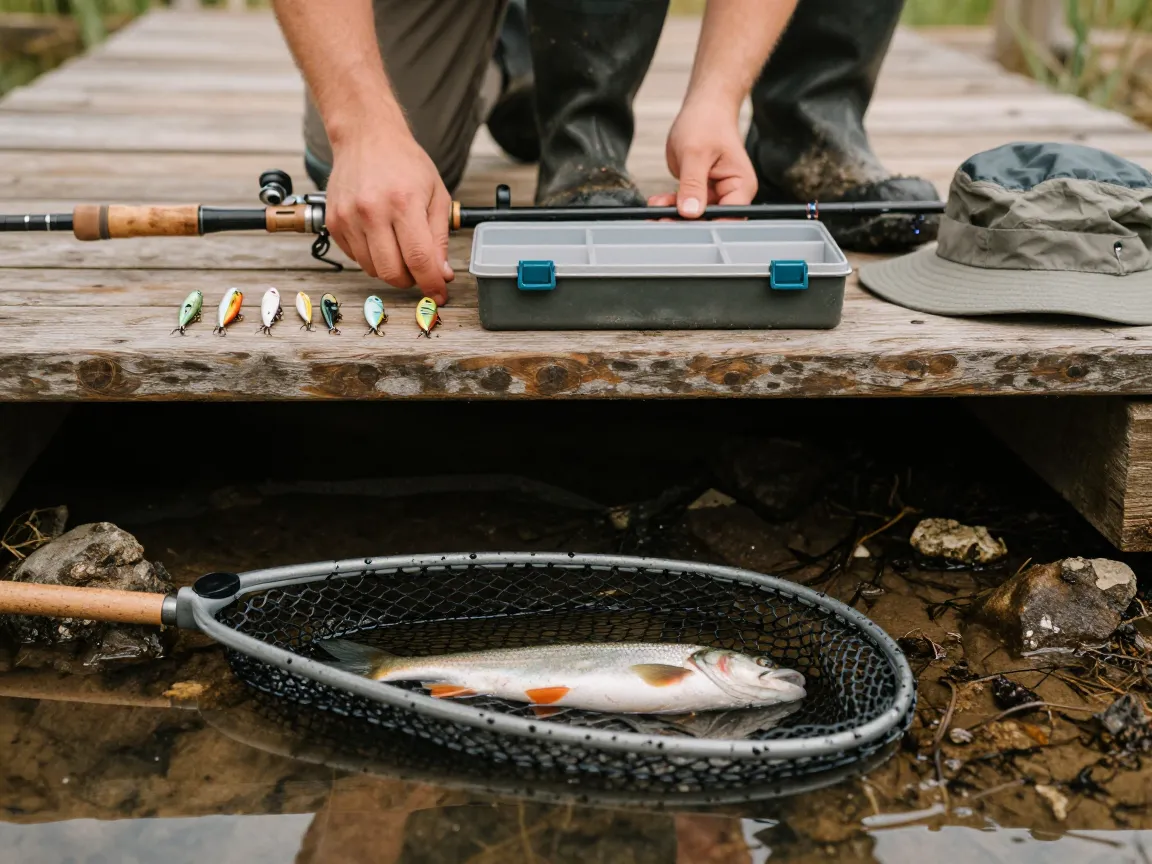
Most family fishing photoshoots consist entirely of people shots. Adding gear and detail images creates a photographic set that tells the full story of the day and gives a final gallery or printed album much more visual variety.
Detail shots worth capturing: a row of lures laid out on a wooden surface, a child’s small hand next to an adult hand holding the same rod, a tackle box open with its compartments visible, a fish in a net just below the water surface, a pair of wading boots on the bank with mud on them. None of these require perfect timing or burst mode. They are patient, compositional images that you can take during slow periods between casts.
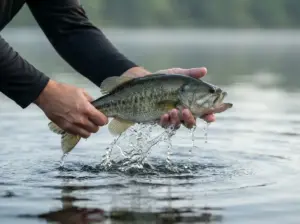
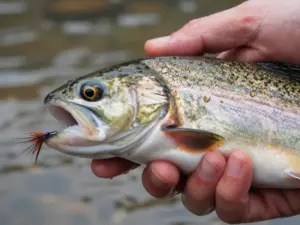
The fish-in-net-underwater shot deserves specific attention because it also models ethical fish handling. Keeping a fish in the water while photographing it rather than holding it in the air for extended periods is now a widely recognized catch-and-release best practice. An underwater net shot is both more visually interesting than a standard fish-hold portrait and more responsible from a fish welfare standpoint. Use a wide-angle setting and position the camera just at the waterline, with part of the frame above water showing the family and part below showing the fish. Many smartphones handle this split-water composition well in calm conditions.
Gear shots also preserve a kind of historical record. The specific rod a grandfather used to teach his grandchildren, the brand of tackle box that traveled to every trip for fifteen years, the faded fishing hat worn in photos spanning decades, these objects become meaningful artifacts in family photographs, and they photograph well in natural light on simple backgrounds like dock wood or shoreline rock.
5. Fishing and Paddling Adventure Sessions
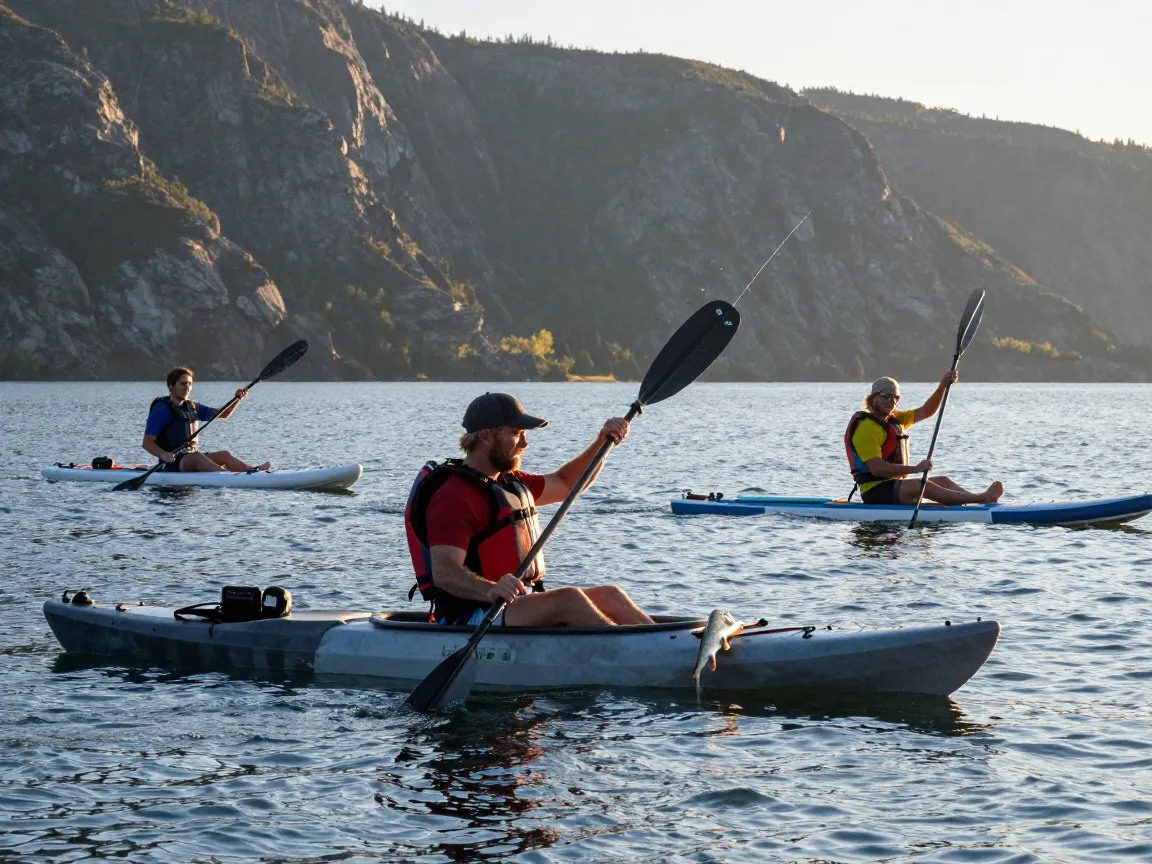
Combining a kayak, canoe, or stand-up paddleboard outing with a fishing photoshoot opens up camera angles and scenic backgrounds that shore-bound sessions cannot access. Paddling out to a mid-lake position, then fishing back toward shore with a dramatic ridgeline or cliff face behind the family, produces images that look genuinely different from anything you can get from the bank.
The logistics require more planning. At least one person needs to be the designated photographer for the water segment, either paddling a separate craft or positioned on a stable platform. A kayak with a rod holder and a waterproof phone case or small mirrorless camera on a neck strap is a practical setup. Keeping the camera low to the water level, shooting across the surface, creates the most dramatic perspective from this position.
Safety is non-negotiable here and also visually important. Life jackets on every family member, properly fitted, should be visible in the images. This is not just a legal and ethical point; photographs that document safe practice are genuinely more shareable and appropriate for children’s memories. Many families now make it a point to show safety gear as part of the visual story rather than removing it before shooting.
For variety within the session, alternate between wide establishing shots that show the full paddling-and-fishing scene and tight shots that focus on a single person casting from a kayak or landing a fish over the gunwale. The contrast between these focal lengths in a final gallery creates a natural rhythm that holds a viewer’s attention across many images.
6. Seasonal Series at a Favourite Fishing Spot
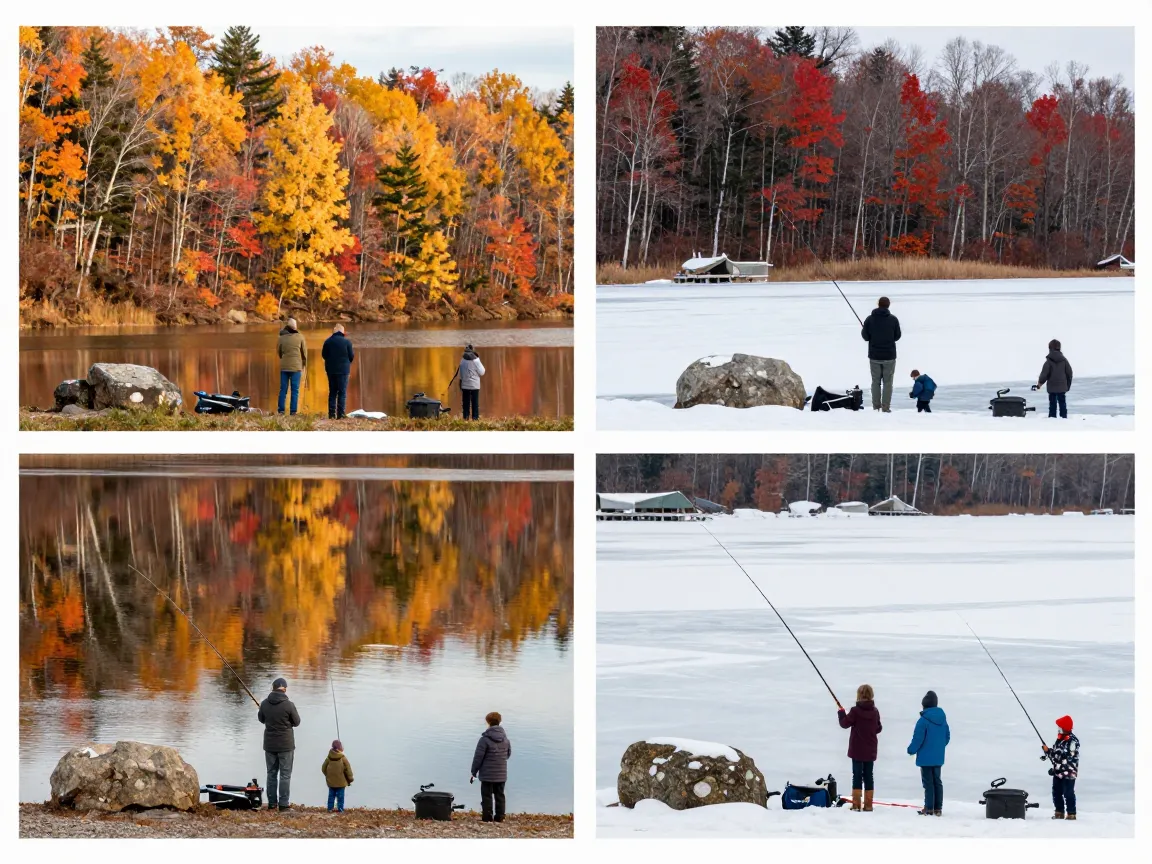
A single visit to a fishing location produces a photoshoot. Returning to the same location across multiple seasons produces a document of family life that is genuinely rare and grows more valuable every year.
Choose a location with strong year-round visual character: a spot with deciduous trees shows dramatic seasonal color change, a mountain lake shows snow in winter and wildflowers in summer, a tidal river shows the difference between low and high water seasons. The fixed geography acts as a consistent anchor while everything else, the children’s heights, the family’s clothing, the light quality, the foliage, changes around it.
The most effective seasonal series images are taken from an identical or nearly identical camera position at each visit. A specific rock, dock post, or tree serves as a reference point to replicate the composition. When the images are displayed side by side or in a sequence, the consistency of framing makes the changes in the family jump out clearly. A child who was barely tall enough to hold a rod in spring is suddenly casting independently by the following autumn; that progression is invisible in a single image and obvious in a series.
Late October and early November, when deciduous foliage peaks in many parts of North America, produces some of the richest background color available to outdoor family photographers. Golden and red leaves reflecting in calm water, combined with the cooler-weather clothing that often looks better in photographs than summer clothing, make autumn a particularly productive season for this concept. Winter sessions at ice-fishing locations introduce an entirely different aesthetic, with snow cover simplifying the background and the visual novelty of the ice fishing setup providing built-in compositional interest.
Printing a small set of images from each seasonal visit and dating them creates a physical archive. Digital files tend to stay unexamined in cloud storage; a printed set that sits on a shelf gets looked at.
Quick Comparison
| Idea | Best Camera Tool | Ideal Light | Difficulty | Unique Value |
|---|---|---|---|---|
| 1. Golden-Hour Shore Portraits | Phone or mirrorless | 1 hour before sunset | Low | Flattering light, scenic backdrops |
| 2. Candid Action Series | Phone burst mode | Any available | Low-Medium | Emotional narrative, sequence storytelling |
| 3. Multi-Generational Dock | Any camera | Golden hour or overcast | Low | Generational connection, teachable moments |
| 4. Gear and Detail Shots | Phone macro or standard | Soft natural light | Low | Visual variety, historical record |
| 5. Fishing and Paddling | Waterproof phone or mirrorless | Morning or golden hour | Medium-High | Unique angles, adventure scale |
| 6. Seasonal Series | Consistent phone or camera | Varies by season | Low per visit | Long-term family document, year-on-year value |
Conclusion
Of these six approaches, the seasonal series at a consistent location is the one most families overlook and later wish they had started earlier. The other five ideas produce strong individual sessions; the seasonal series produces a record. Pick a spot that holds meaning, return to it at least twice a year with a camera, and shoot from the same position each time. That discipline, applied consistently across five or ten years, produces something no single photoshoot can.