Aesthetic Fishing Pictures to Elevate Your Feed
Roughly 90 percent of anglers now carry a smartphone capable of shooting professional-quality images, yet most fishing feeds still look identical, the same stiff grip-and-grin pose, the same flat midday light, the same wide-angle distortion that makes a 4-pound bass look vaguely like a whale. The difference between a scroll-stopping feed and a forgettable one usually comes down to shot selection and a handful of intentional choices, not gear upgrades or expensive editing software.
Disclosure: This post contains affiliate links. As an Amazon Associate, we earn from qualifying purchases, and at no extra cost to you.
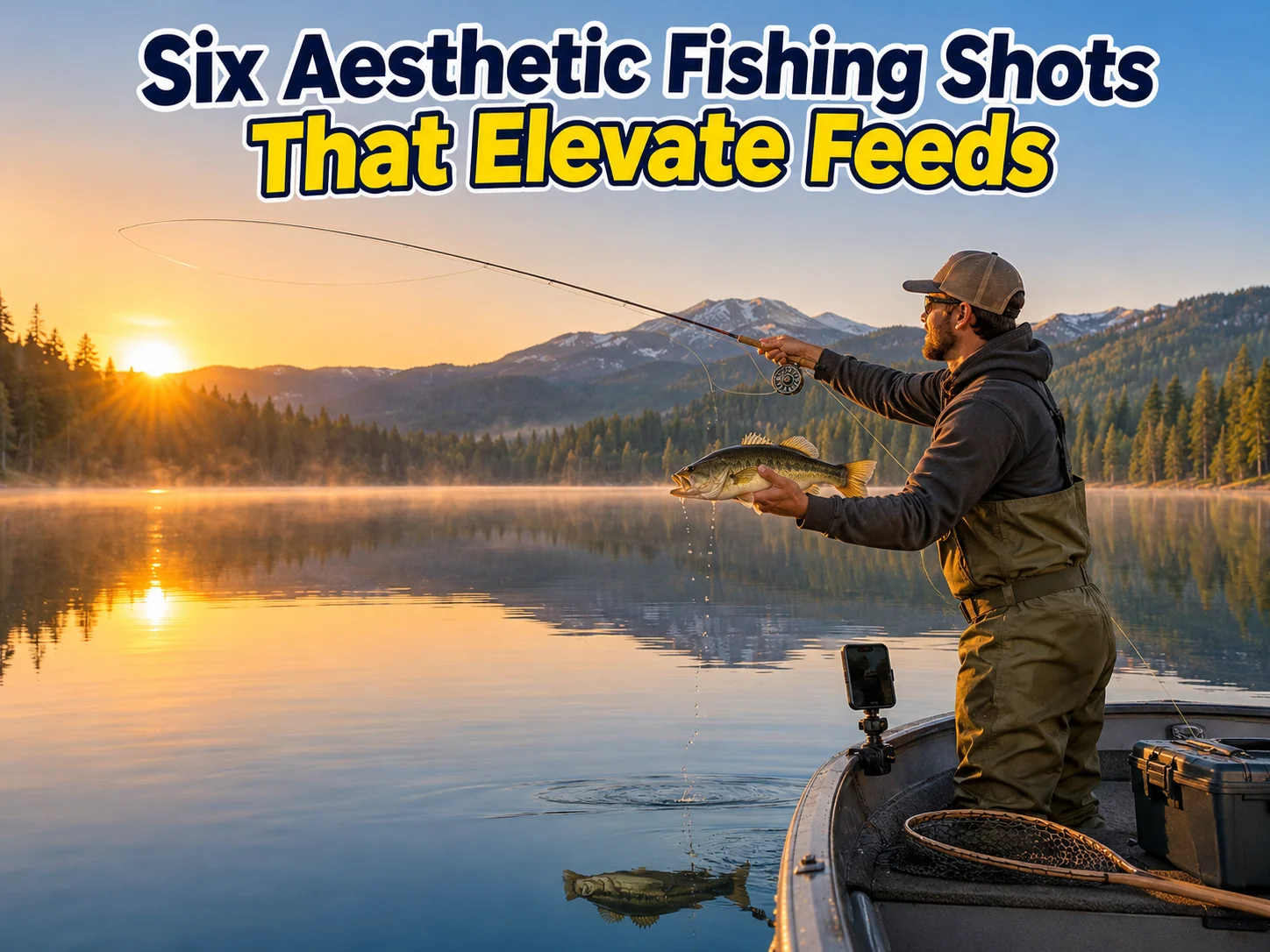
This guide breaks down the 6 aesthetic fishing pictures to elevate your feed into something worth following. Each entry covers a distinct image type, the specific camera settings or angles that make it work, and the practical details that separate a good version from a mediocre one.
Key Takeaways
- Six distinct shot types, hero, action, film-style portrait, reflection, water-level, and narrative carousel, are the building blocks of a visually varied fishing feed.
- Natural light at low sun angles (early morning or late afternoon) does more for image quality than any filter or preset.
- Focal lengths between 50 and 85 mm produce the most realistic-looking hero shots; wide-angle distortion inflates fish size but costs credibility.
- Fish welfare directly affects photo quality, a wet, properly supported fish in clean water always photographs better than a dry, stressed one.
- Subtle post-processing (brightness, contrast, warmth only) earns more respect from experienced audiences than heavy filtering.
1. The Clean Hero Shot
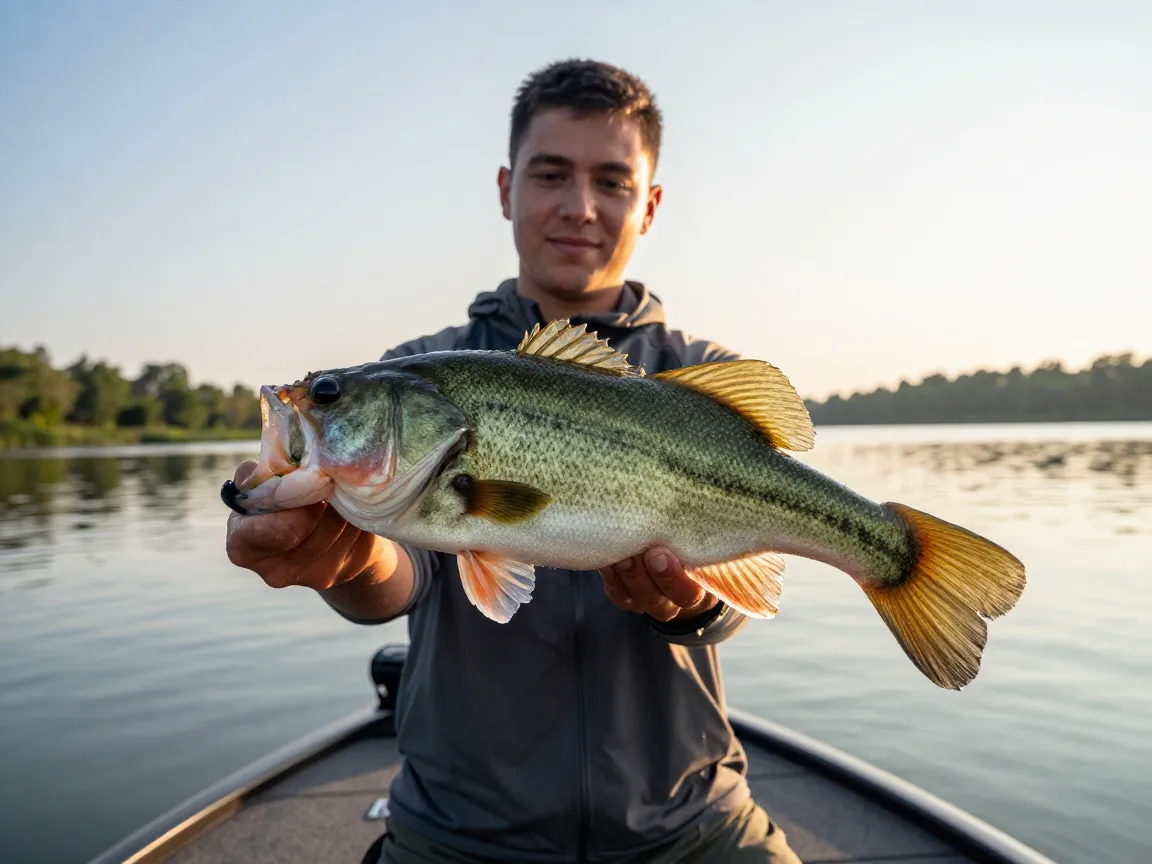
The standard catch photo has earned its bad reputation because most people take it badly. The angler stands square to the camera, arms extended as far forward as possible, and the result is a distorted perspective that experienced viewers recognize immediately. A clean hero shot fixes all three of those defaults.
Start with focal length. A 50 to 85 mm equivalent on a smartphone (activating the 2x optical zoom on most recent models) compresses the scene just enough to show realistic proportions. Step back two or three feet from your subject rather than getting close with a wide lens. Korda’s 2026 fishing photography guide makes this point directly: zoom in slightly and step back, rather than moving the phone forward. The fish looks like the fish actually looks, which is usually impressive enough.
Framing matters as much as lens choice. Place the angler slightly off-center using the rule of thirds, with open space on the side they’re facing. Shoot at eye level or slightly below, a low angle adds a sense of scale without distortion. If the light is harsh and overhead, turn the subject so the sun comes from the side rather than directly behind or above. Side light at low angles defines jaw lines, scale texture, and water droplets in a way that flat front light never will.
Fish welfare is not separate from photo quality here. A wet fish held horizontally, supported at the belly and tail, photographs better than a dry one held vertically by the jaw. It also demonstrates the kind of handling that experienced anglers and conservationists respect. NOAA Fisheries advises minimizing air exposure and keeping fish wet throughout the shot. A fish that looks healthy in the frame signals something about the photographer, and that signal is part of what makes the image feel elevated.
2. Cinematic Action and Release Frames
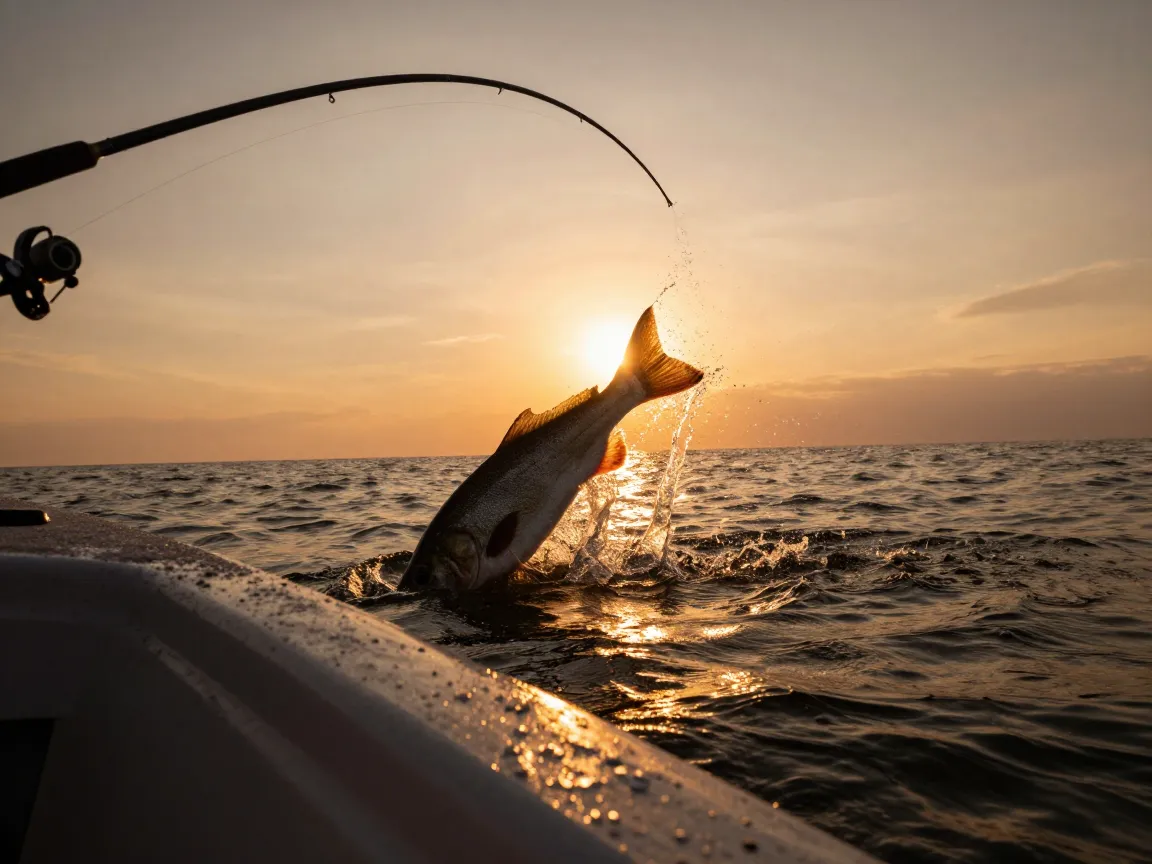
Action shots require preparation because the decisive moment lasts about half a second. The rod bending hard, the surface of the water exploding, the fish jumping, none of these wait for the camera to focus. Burst mode on a smartphone handles this well. Set burst firing before the fish is near the net, and sort through the frames afterward rather than trying to time a single shot.
The release frame is often more photogenic than the catch. A fish held just above the water surface, angled slightly nose-down, with its tail breaking the surface creates a naturally cinematic composition. Shoot at the lowest sun angle you have, late afternoon or the first thirty minutes of morning light, so the water surface picks up directional color. Backlit water droplets caught at f/2.8 or wider (most smartphone portrait modes achieve this) add a quality that no filter can replicate after the fact.
For video-to-still conversions, slow-motion footage shot at 240 frames per second on current iPhones or Pixel phones lets you extract individual frames of a surface break or hook set that would be impossible to capture otherwise. The resolution on a still frame pulled from 4K slow-motion is sufficient for a full-feed image on Instagram. This approach is now standard practice among charter fishing social media accounts that run trip-recap content.
One constraint worth naming: action shots from moving boats in poor light are difficult to execute without motion blur. If the conditions are not right for a sharp action frame, don’t force it. A sharp, well-composed static shot outperforms a blurry action attempt every time.
3. Film-Style Nostalgic Portraits
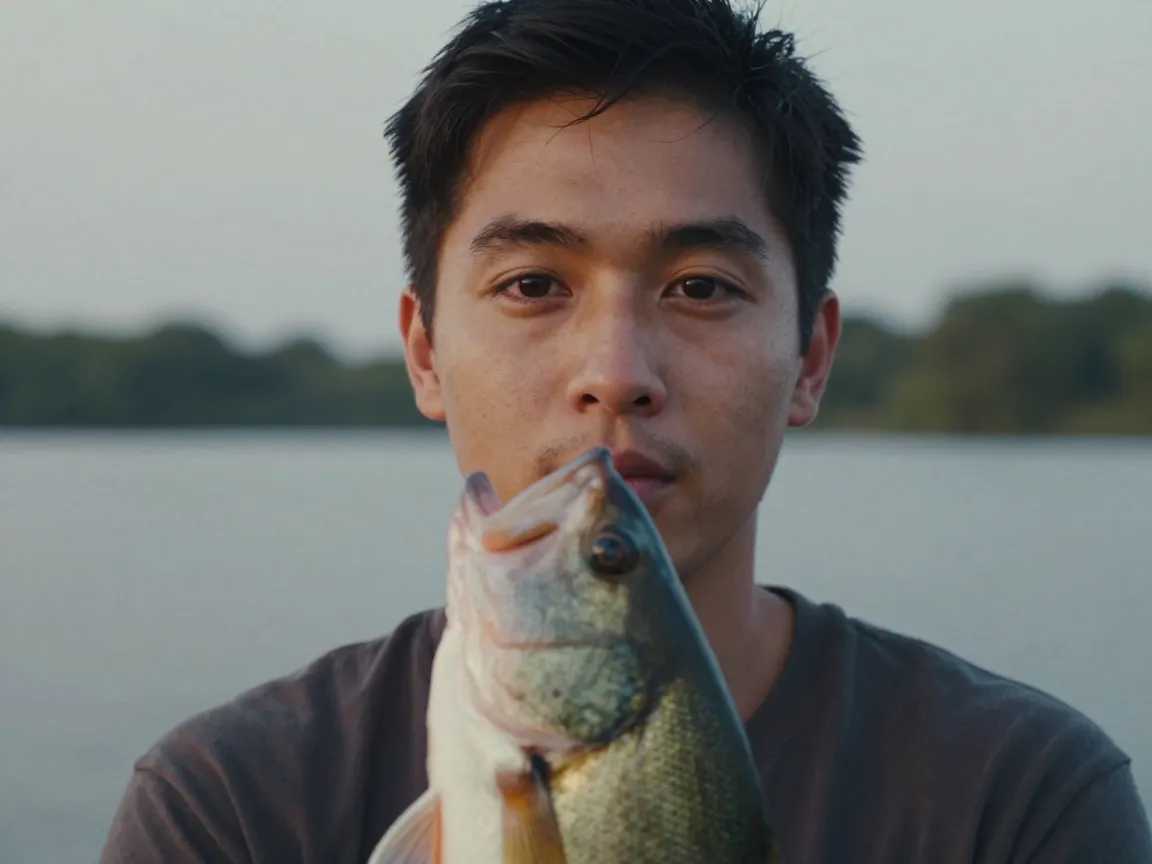
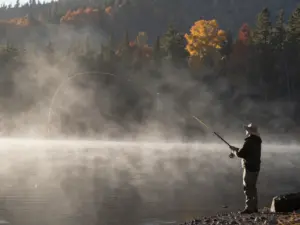
The filmic aesthetic, slight grain, soft focus edges, muted saturation, and a touch of overexposure, has become one of the dominant visual trends in fishing content on Instagram and TikTok. When done with restraint, it makes a catch photo feel like a memory rather than a documentation. When overdone, it looks like every other preset feed from 2019.
The key is to apply the treatment selectively. Choose one or two images per post that suit the mood, early morning fog, overcast flat light, or the blue hour just after sunset, rather than running every photo through the same filter. VSCO presets A4 or A6, or Lightroom’s Film 01 profile at 40 to 50 percent strength, produce the effect without destroying detail in the fish’s markings or the angler’s face.
Portrait orientation works well for this style. The vertical crop that NOAA recommends for social media suits a close portrait of the angler’s face above a fish held at chest height. The focus sits on the eyes, the fish is sharp but secondary, and the background, water, trees, boat deck, softens into color. It reads immediately as a feed-quality image rather than a snap.
Grain should come from the camera setting (increase ISO slightly in dim light) rather than being added digitally. Digital grain applied in post-processing looks artificial at higher magnifications. Natural grain from a higher ISO, especially on a Sony sensor, holds up well and contributes to the film effect without looking processed.
4. Reflection and Still-Water Compositions
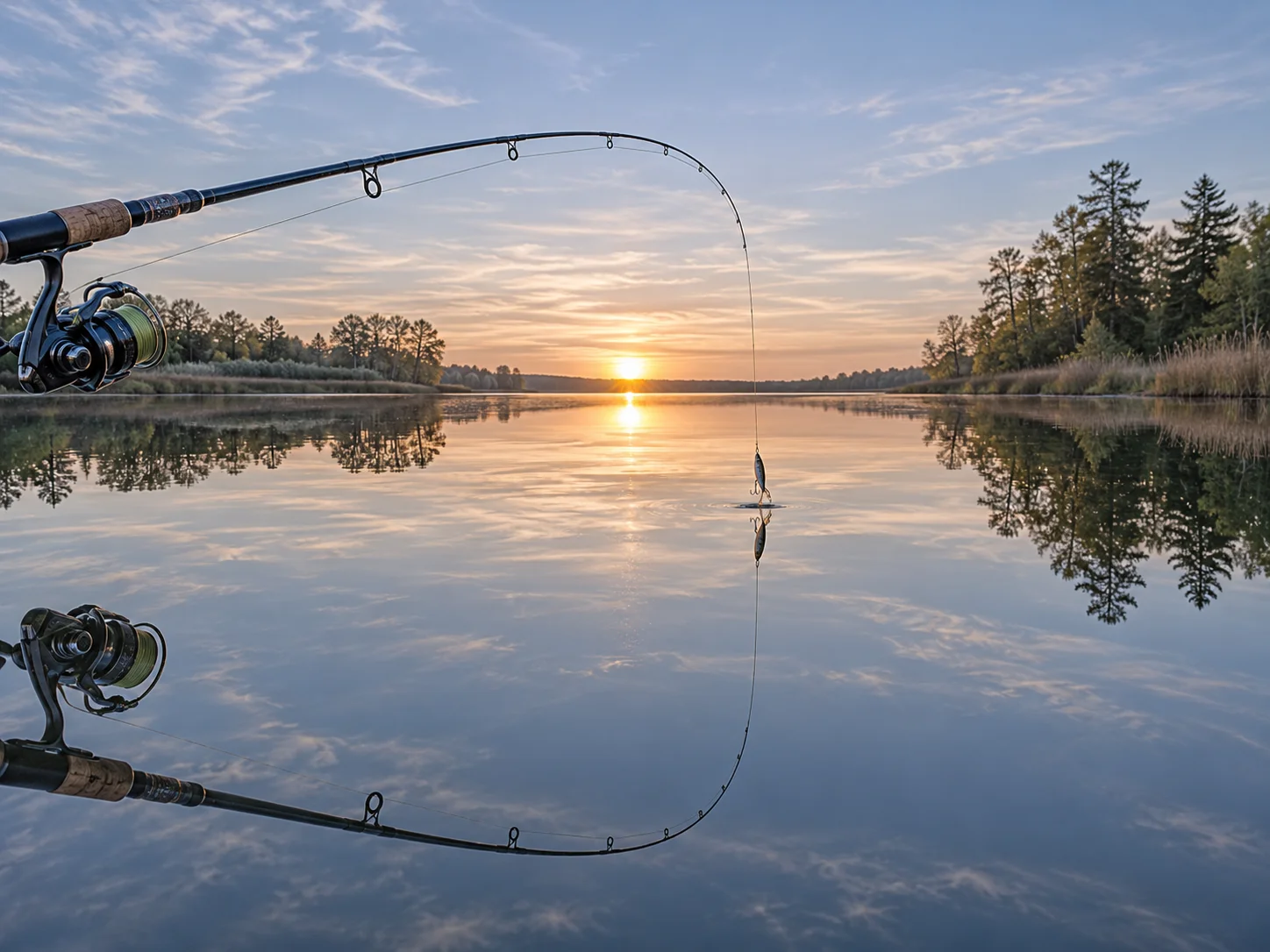
A glass-calm morning offers a compositional element that most photographers ignore: the water itself becomes a mirror. A reflection shot places the angler, boat, or shoreline trees in both the upper and lower half of the frame, with the horizon line centered. Breaking the rule of thirds deliberately, centering the horizon, works here because the symmetry is the subject.
The best conditions are within thirty minutes of sunrise on a windless morning before boats create wake. Tidal estuaries, flatwater bass lakes, and mountain reservoirs all produce usable reflections. The subject doesn’t need to be the fish; the rod tip bending toward its own reflection, or a lure breaking the surface of a mirrored lake, creates a minimal composition that performs well on feeds dominated by busy, oversaturated images.
Reflections also appear in less obvious places. Water captured in the convex surface of polarized sunglasses worn by the angler produces a compressed, wide-angle view of the scene, an unconventional framing that photographers covering freshwater fly fishing have used to strong effect. The fish, the rod, and the water all appear in the lens curve simultaneously. Getting close enough to fill the frame with the glasses requires a macro mode or the portrait mode on a recent smartphone, both of which are capable of focusing at 10 to 15 centimeters.
Post-processing for reflection shots should stay minimal. Slight increases to dehaze and clarity in Lightroom can sharpen the reflected image, but color grading should stay cool and natural. Warm presets flatten the silvery quality that makes reflection compositions distinctive.
5. Low-Angle Water-Level Views
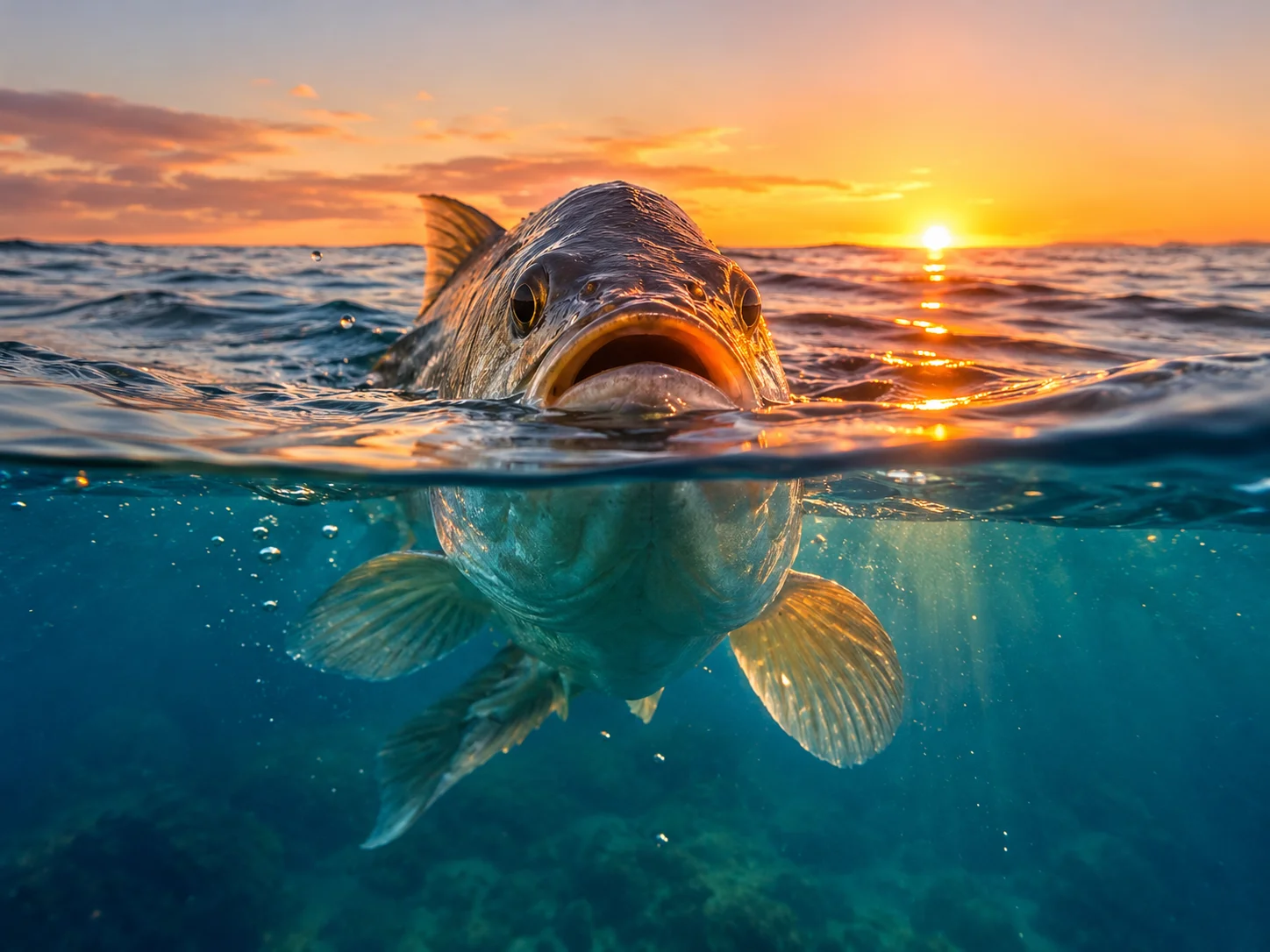
Getting the camera down to the surface of the water changes everything about how a fish photograph reads. At water level, the fish occupies both the underwater environment and the air above it simultaneously. The viewer gets a sense of the fish’s actual habitat rather than a view from above that could be a tank or a bucket.
This shot requires getting wet or using a waterproof case. Set the phone half-submerged with the lens at the waterline, fish facing into the frame, and shoot toward the light. At sunrise or sunset, the water surface becomes a gradient from deep blue below to warm orange above, and the fish floats between both. It’s a technically simple setup that looks like it required expensive underwater housing.
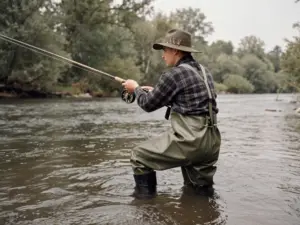
Low-angle shots also work above the water for wade fishing. Crouching until the camera is at water surface height, then shooting upward along the rod toward the sky, produces a dramatic silhouette frame with the rod, reel, and angler’s hands against open sky or cloud cover. This angle is now explicitly recommended in freshwater photography guides updated in 2026, specifically for wade fishers shooting on streams and rivers.
The practical constraint is stability. At surface level, any movement creates blur. Brace the phone against a gunwale, a rock, or a tackle box. Use the volume button as a shutter trigger rather than tapping the screen, which introduces shake. Set the timer to two seconds as an alternative to eliminate contact vibration entirely.
6. Narrative Day-on-the-Water Carousels
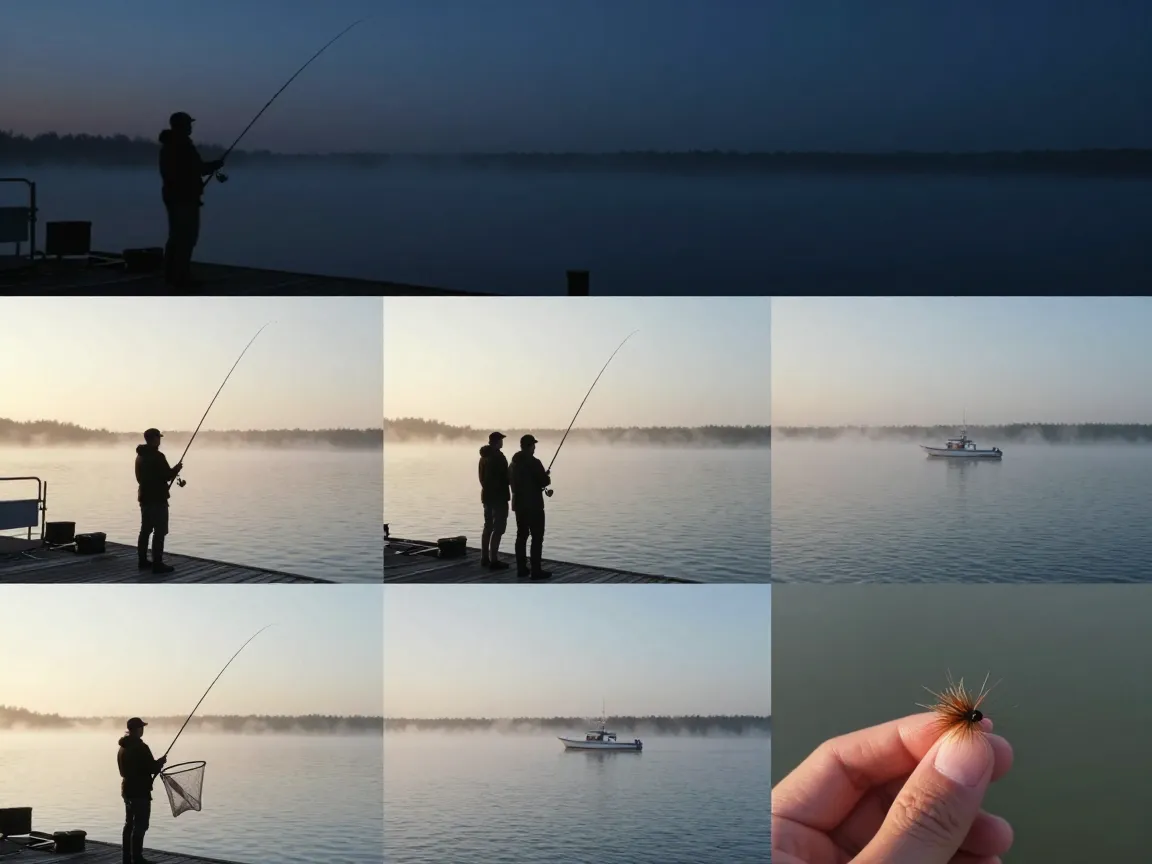
Single static images are losing ground to multi-image storytelling on Instagram and Facebook. Algorithm data and marketing guides for fishing charters both point in the same direction: a carousel of six to eight images from a single trip generates more engagement than any individual frame, because it keeps the viewer swiping. Each additional swipe signals sustained interest, which the algorithm rewards with broader reach.
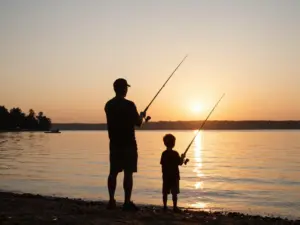
The structure that works follows a simple arc. The opening frame is atmospheric, a pre-dawn silhouette at the dock, a wide shot of fog sitting on the water, or the angler rigging up with the sky still dark. The middle frames cover the action: a bent rod, a fish coming to the net, a close-up of a specific detail like a hand-tied fly or a lure pattern. The final frame is a release shot or a wide landscape with the boat in frame, something that closes the story and places the day in a physical context.
Variety within the carousel matters as much as the arc. Mixing orientations (vertical and horizontal), distances (wide and macro), and subject matter (angler, fish, gear, environment) prevents the carousel from feeling like a slideshow of the same shot. Social-media-focused fishing content in 2026 recommends a minimum of three distinct shot types within any single carousel to maintain visual momentum across the swipe.
Caption writing for carousels follows the images rather than describing them. The first line of the caption should hook the reader with something specific, a time stamp, a water temperature, a detail about the fly choice, not a general statement about fishing. This applies equally to single images. Aesthetic fishing posts with specific, concrete captions consistently outperform generic ones in comment engagement.
Quick Comparison
| Shot Type | Best Light | Focal Length | Key Technical Note |
|---|---|---|---|
| Clean Hero Shot | Side or golden hour | 50-85 mm | Step back, avoid wide-angle distortion |
| Action / Release | Low sun angle | 24-35 mm | Burst mode; extract stills from slow-mo |
| Film-Style Portrait | Overcast or blue hour | 50 mm | Apply grain at capture via high ISO |
| Reflection Composition | Windless sunrise | 24-50 mm | Center horizon; minimal color grading |
| Water-Level View | Sunrise / sunset | 24 mm wide | Brace camera; use volume shutter |
| Narrative Carousel | Mixed across full day | Mixed | 6-8 images; at least 3 distinct types |
Conclusion
The 6 aesthetic fishing pictures to elevate your feed outlined here share one underlying principle: each type earns its place through deliberate choices about light, angle, and composition, not through heavy post-processing or gear that most anglers don’t carry. Start with the clean hero shot and the low-angle water-level view, both require nothing beyond your phone and a willingness to get into an uncomfortable position. Once those feel natural, build toward a full narrative carousel on your next full-day trip. That single carousel, shot with the variety described above, will do more for your feed’s performance than a year of single-image posts.