Double Fisherman Knot Uses Every Angler Should Know
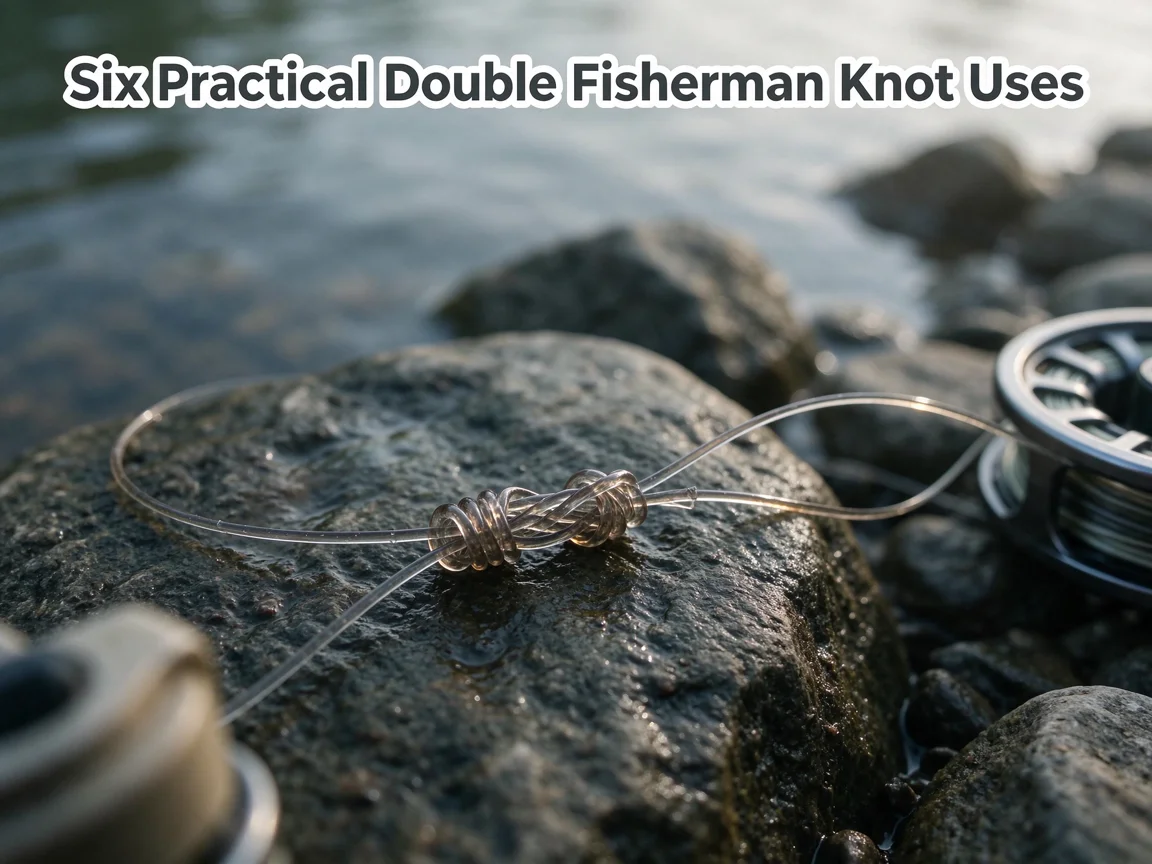
A knot that climbers and rescue teams trust with their lives has a quieter but equally practical role at the water’s edge. The double fisherman’s knot, two interlocking double overhand knots that cinch tight under load, rarely appears in fishing tackle tutorials, yet understanding the 6 double fisherman knot uses every angler should know can expand how you rig, access, and stay safe in the field. It joins lines cleanly, forms closed loops that hold under real tension, and backs up critical connections where a failure would cost more than a fish.
Disclosure: This post contains affiliate links. As an Amazon Associate, we earn from qualifying purchases, and at no extra cost to you.
Key Takeaways
- The double fisherman’s knot is a high-security bend, not a standard terminal-tackle knot; it works best where reliability matters more than quick re-tying.
- Its primary angling use is joining two lengths of fishing line, particularly thin, stiff, or slippery cordage where knots like the blood knot can slip.
- Closed loops tied with this knot are strong enough for gear slings, Prusik loops, and loop-to-loop leader connections.
- Anglers who fish from kayaks, canoes, or cliff-lined coasts benefit from knowing its rope-joining and backup-knot applications.
- The knot is compact and stays compact; it does not bulk up around guides or connection points the way some multi-turn knots do.
1. Joining Two Fishing Lines Into a Single Longer Run
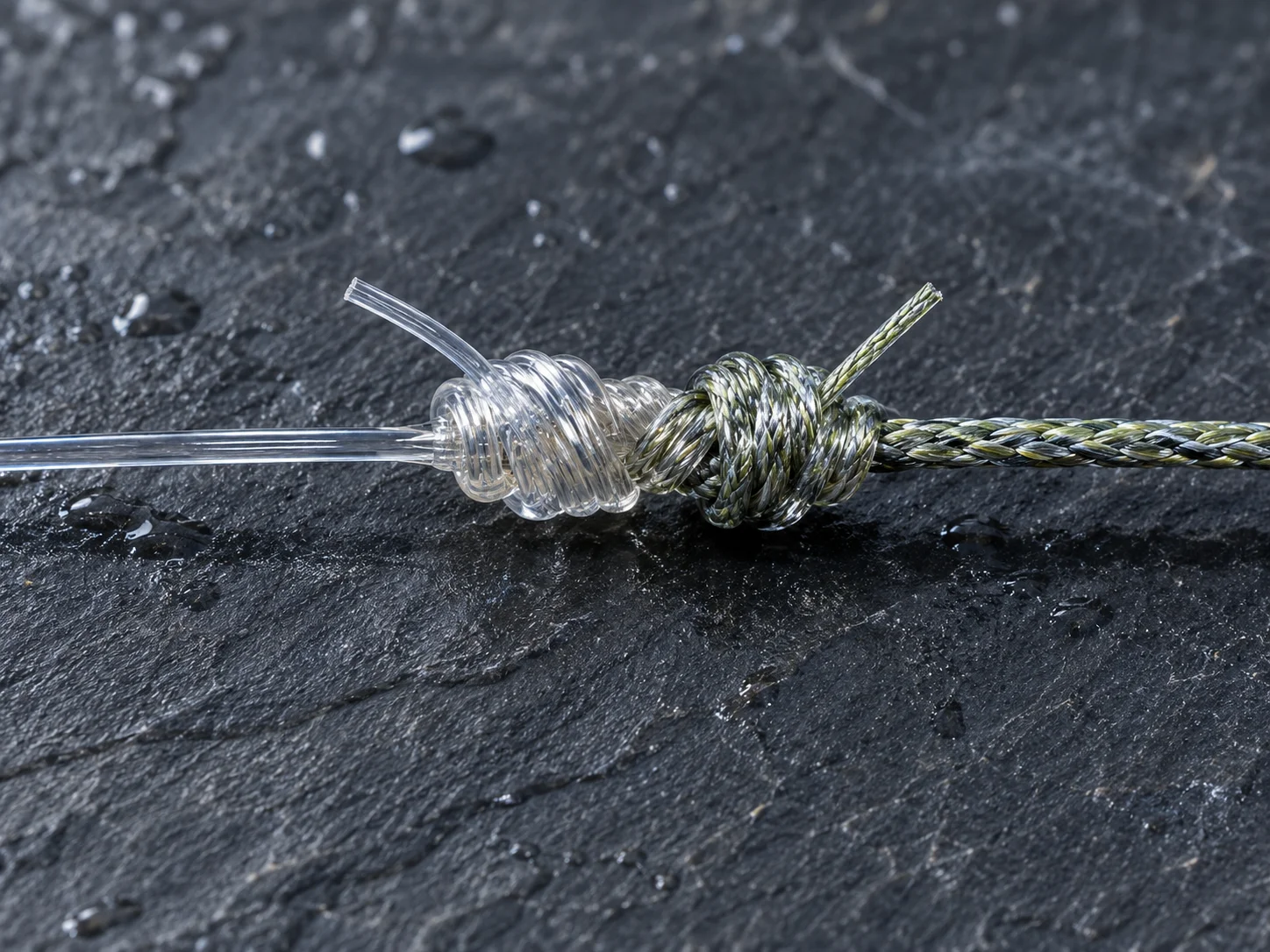
When backing runs short or a tippet section needs extending mid-session, most anglers reach for the blood knot or double uni. Both are excellent on standard monofilament. The double fisherman’s knot earns its place, though, when the lines are thin, stiff, or made of materials that resist seating cleanly, think fluorocarbon tippet finer than 5X, braided backing spliced to monofilament, or paracord inner strands repurposed as emergency tippet.
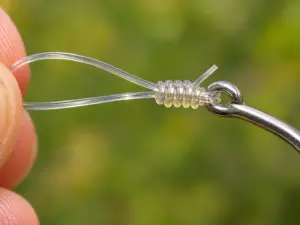
The knot works by wrapping each line twice around the standing part of the other, then passing the tag end back through both wraps. When you pull both standing ends, the two units slide together and lock. That locking geometry means the connection holds without needing lubrication tricks or careful coil management. On slippery lines, that matters. A blood knot on dry 6X fluorocarbon can loosen under repeated casting stress; a double fisherman’s connection on the same diameter generally does not.
One constraint worth naming: the double fisherman’s knot is not easy to untie after it has been loaded. If you’re extending a leader you plan to rework frequently, a loop-to-loop connection is faster. Use the double fisherman’s knot when permanence is acceptable and security is the priority, connecting fly line backing to a leader butt, for instance, where the join will likely never see the reel again this season.
2. Forming Closed Loops for Loop-to-Loop Leader Connections
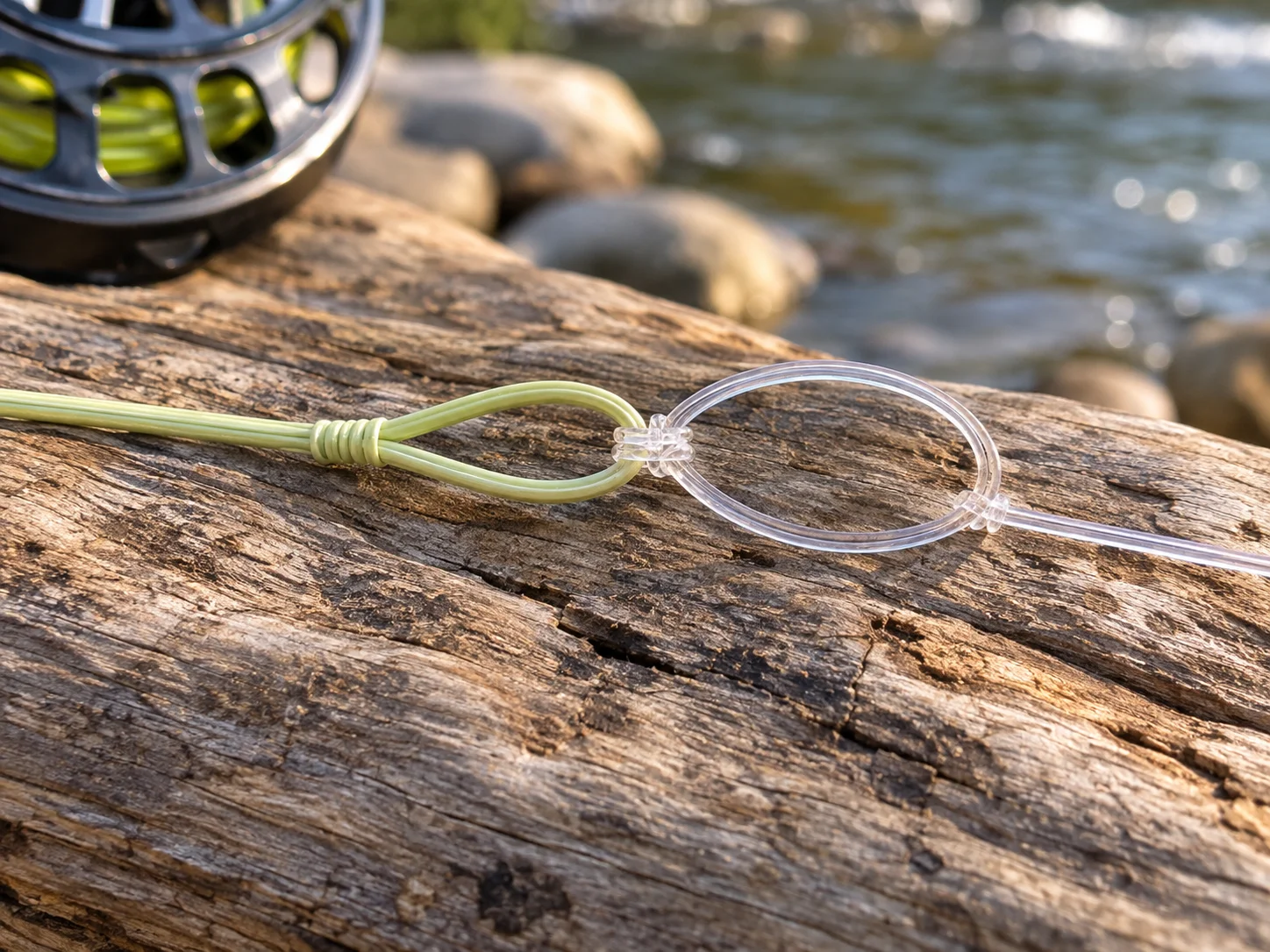
The double fisherman’s knot’s second major role for anglers is making closed loops from cord or heavy monofilament. Take a length of 30-pound fluorocarbon or stiff nylon, bring the two ends together, and tie a double fisherman’s knot. The result is a smooth, nearly round loop that seats cleanly into a perfection loop on the fly line tip.
Standard pre-tied loops that come factory-installed on fly lines can fail at the coating bond after a season of use. A hand-tied loop from heavy monofilament, closed with a double fisherman’s knot, gives you full control over loop size and material choice. Many guide services on rivers like the Madison or the Bow use this exact setup for clients who go through multiple leaders in a single day, because the loop profile is low enough to pass through rod guides without catching.
The same principle applies in conventional fishing. Closed mono loops attached to swivel eyes, snap connections, or dropper setups can be built quickly with this knot. Where a standard overhand loop might open under sustained pressure from a large fish, the doubled geometry of this knot holds its shape.
3. Creating Gear Slings and Tool Lanyards
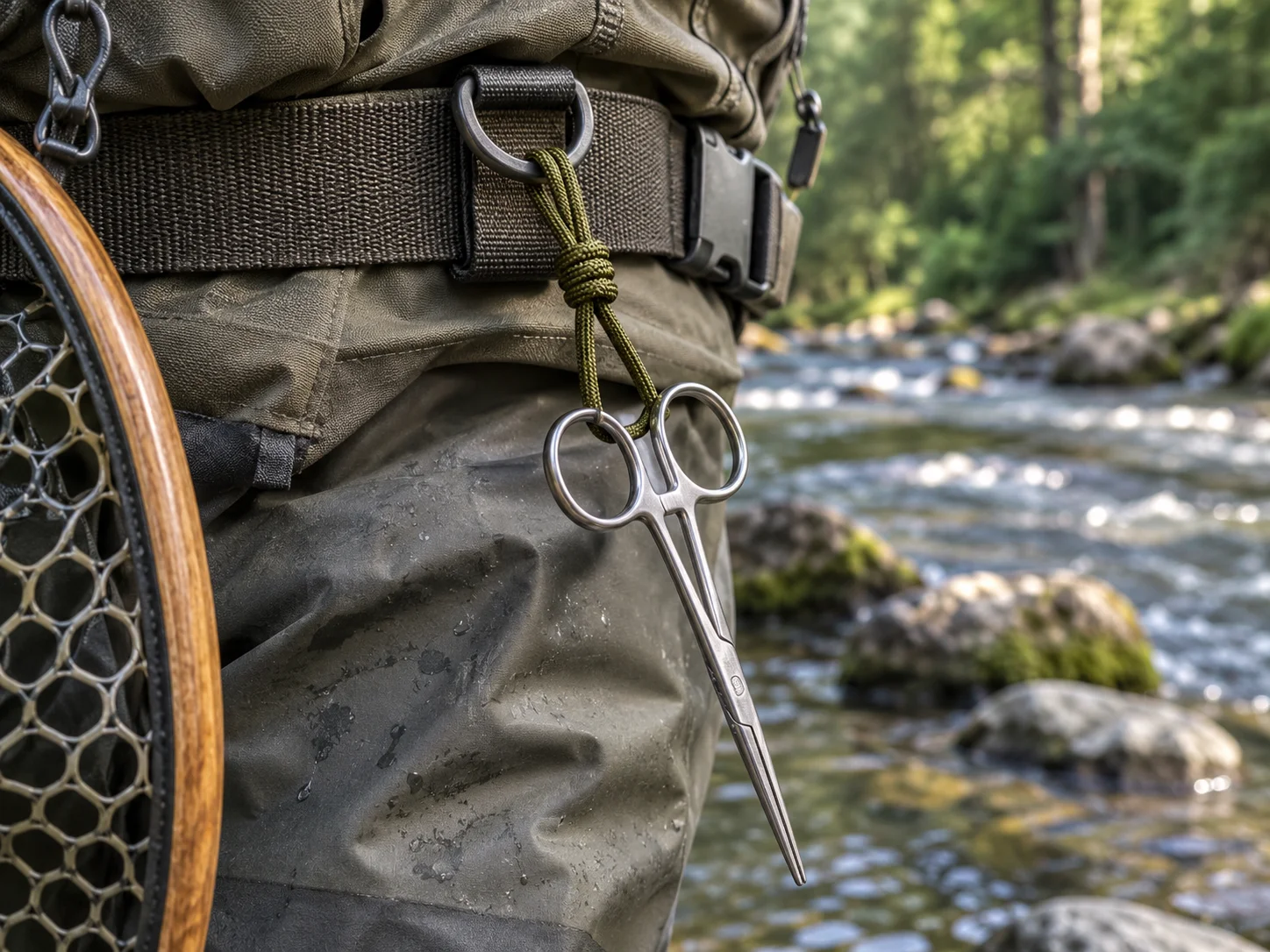
Anglers who wade aggressive water or fish from drift boats accumulate a problem: tools fall in. Nippers, forceps, hook removers, and small knives all end up on the bottom of a river at some point. A short section of paracord or thin accessory cord, tied into a closed loop with a double fisherman’s knot, solves this.
The loop threads through a tool’s lanyard hole or around its handle, then clips to a D-ring on a vest, pack strap, or wading belt. The double fisherman’s construction keeps the loop from opening under repeated tugging, which matters when you pull a hemostat free one-handed while managing a fish. A simple overhand loop in the same cord will eventually loosen and develop play. The double fisherman’s loop does not.
This use scales up easily. A wading staff tether, a net leash, a camera loop, all benefit from the same knot. Paracord inner strands (550 paracord contains seven inner strands, each rated to roughly 35 pounds) work well for small tools. For heavier items like landing nets, use the full 550 paracord sheath or 3mm accessory cord.
4. Building Grab Handles on Kayaks and Canoes
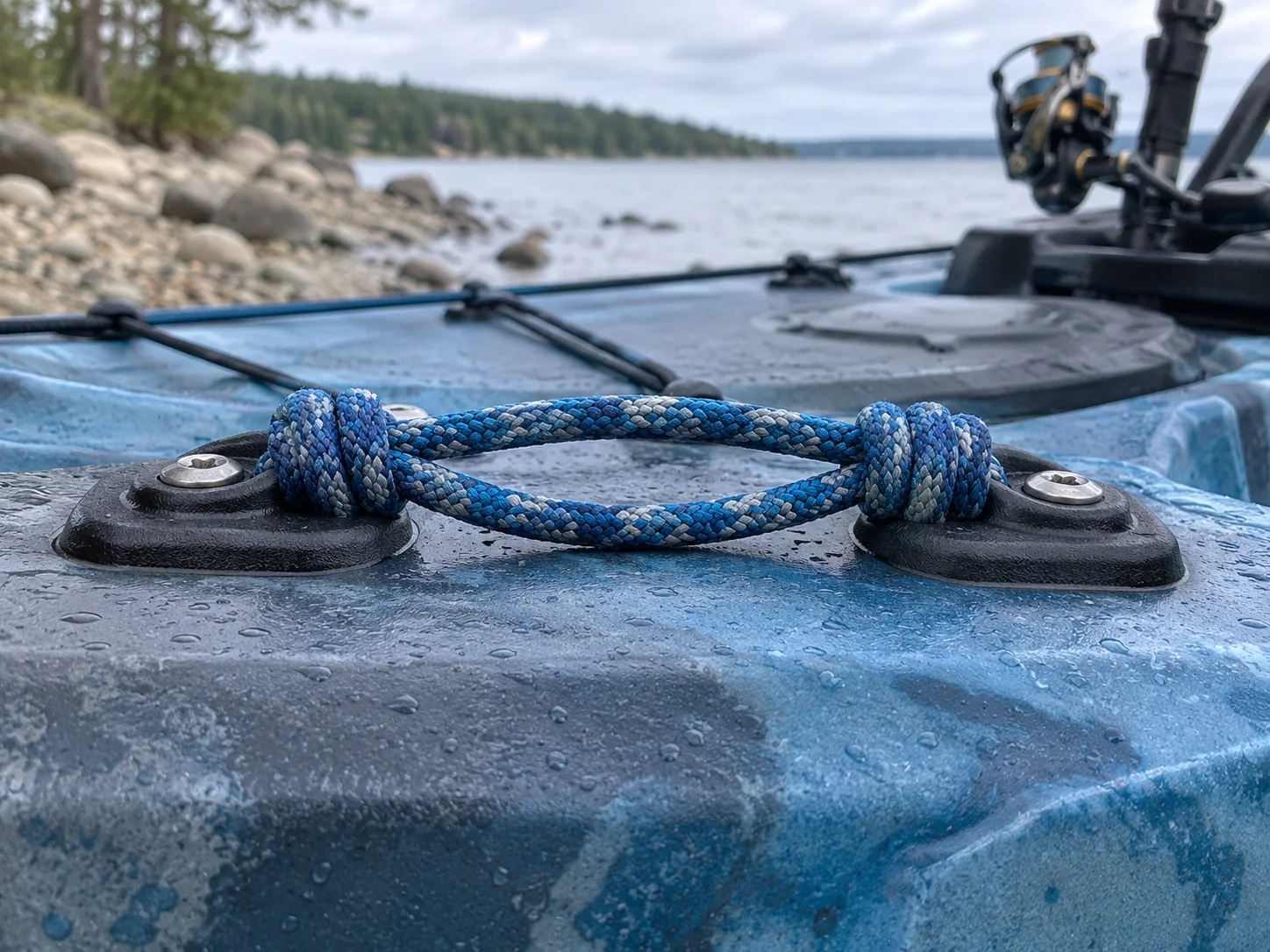
Anglers who fish from kayaks and canoes need secure anchor points that factory rigging often doesn’t provide. A short loop of 6mm or 8mm rope tied with a double fisherman’s knot and threaded through two adjacent deck fittings creates a low-profile grab handle or attachment point that holds its shape under load.
The knot’s compact profile is specifically useful here. Bulkier loops created with figure-eight knots or multiple overhand knots catch on paddle blades, rod tips, and gear. A double fisherman’s closed loop sits flat, stays tight, and doesn’t slide along the cord the way a simple overhand would if the loop geometry changes under repeated loading.
Paddling and kayak-angling communities have documented this use for years. The loop can function as a carry handle for portages, a cleat point for a small anchor trolley, or a tie-in spot for a safety throw bag. If you’re rigging a small boat for remote lake fishing where you’re carrying the craft between water bodies, two or three of these loops distributed along the hull can replace heavier factory hardware.
5. Backing Up Critical Knots on Mainline-to-Leader Connections
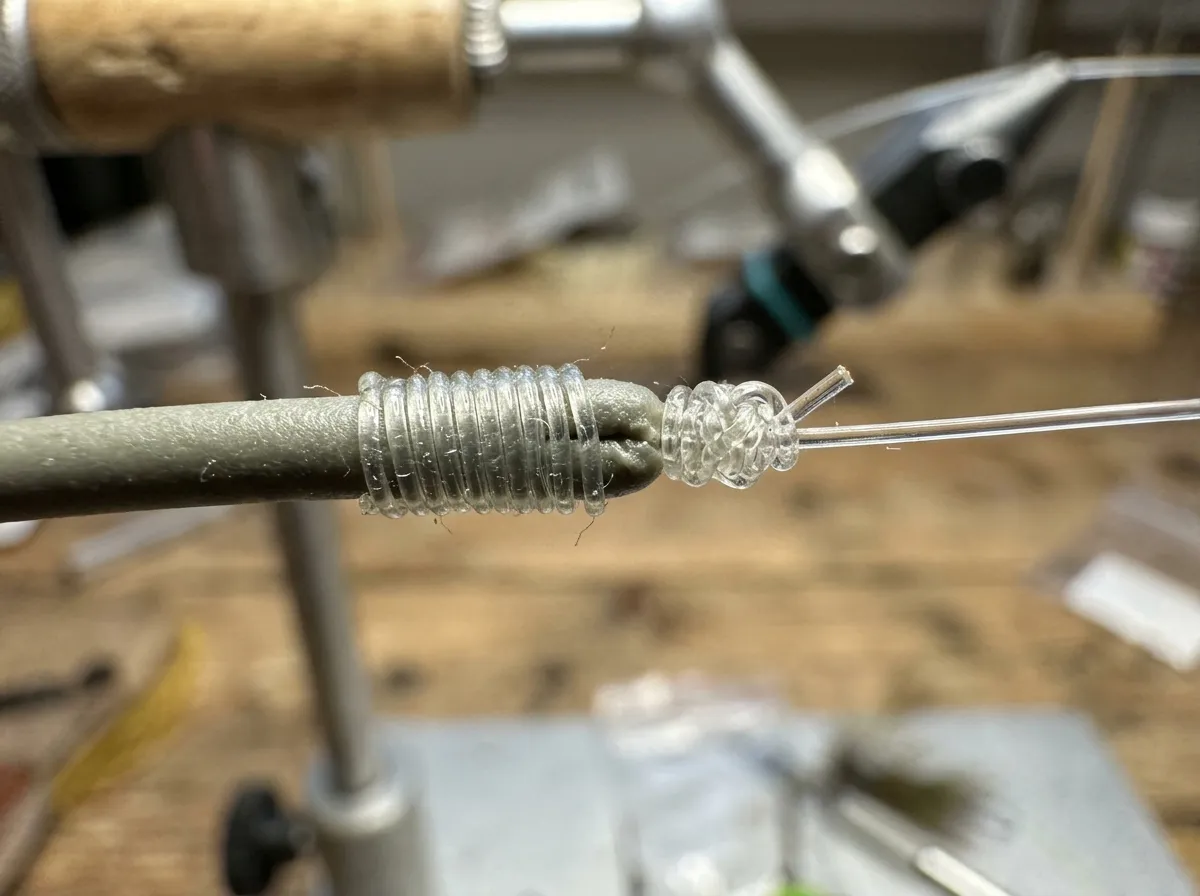
The double fisherman’s knot works as a backup knot, a secondary overhand or double overhand tied on the tag end of a primary connection to prevent that tag end from pulling back through the knot under load. Climbers do this routinely on figure-eight follow-throughs and bowlines. Anglers can apply the same logic.
On a nail knot or Albright connecting fly line to leader, the tag end that remains after trimming can be finished with a small double overhand (the core unit of the double fisherman’s knot) right up against the primary knot. This creates a physical stop. If the nail knot begins to slip under the sustained pressure of a large trout or salmon, the backup prevents full failure.
This is not a speculative improvement. Any connection where the tag end bears load during a slip scenario benefits from a stop knot. The double overhand used in the double fisherman’s system is specifically suited here because it cinches tighter as load increases, unlike a simple overhand that can loosen and migrate.
6. Securing Rope Systems for Accessing Remote Fishing Spots
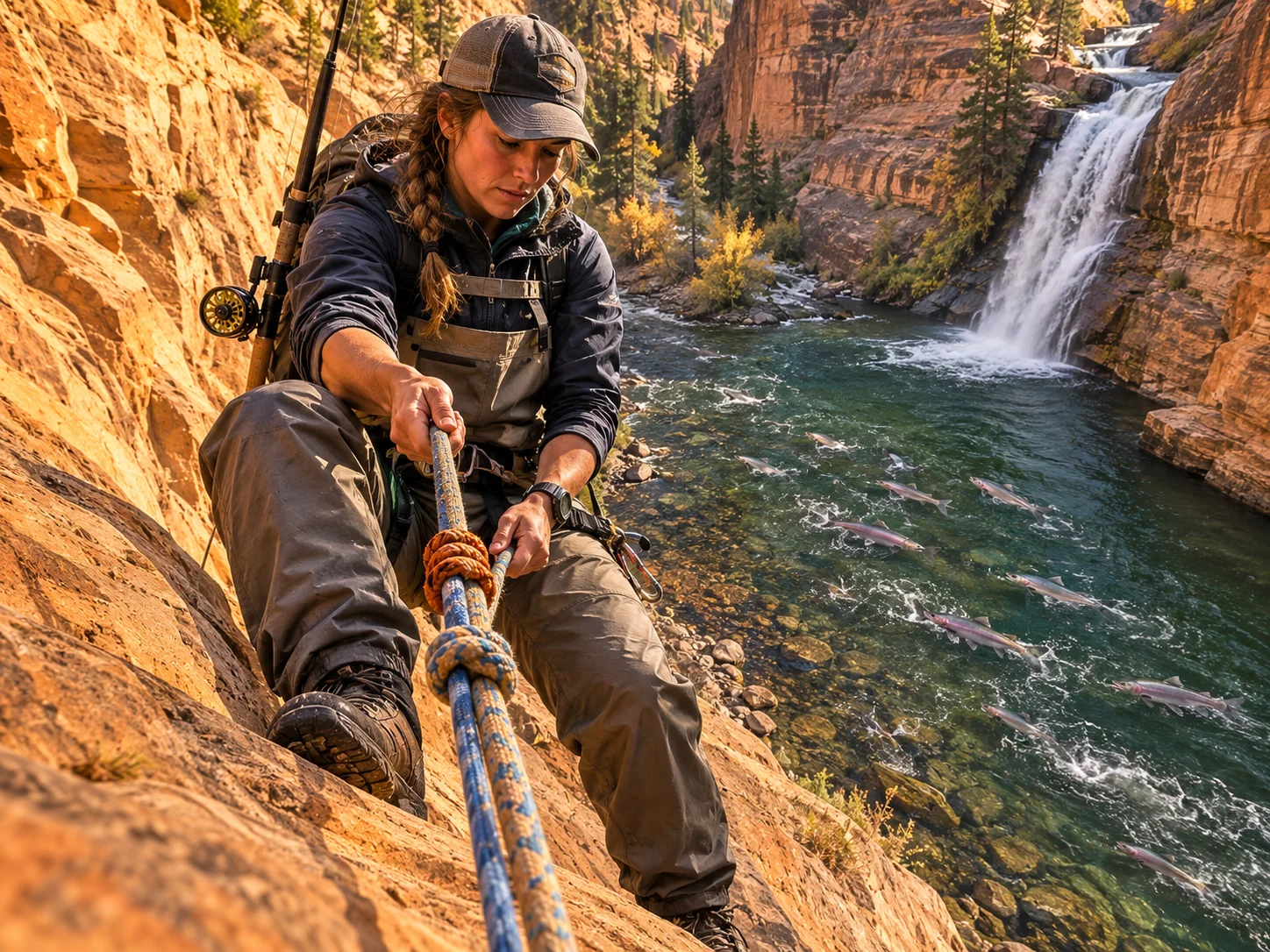
Some of the best fishing in North America sits at the bottom of canyon walls, behind waterfalls, or below coastal cliffs where the trail ends. Getting there requires basic rope work, and the double fisherman’s knot is standard in that toolkit.
When two ropes need joining for a rappel or when a fixed hand line needs anchoring across a river crossing, this knot is the preferred choice in climbing and rescue training because it holds under load, can join ropes of slightly different diameter, and does not roll or capsize the way a reef knot does. For an angler rappelling a 30-foot sandstone face to reach a steelhead run, that reliability is not abstract, it’s the difference between getting down and getting hurt.
Closed loops of accessory cord tied with this knot also serve as Prusik loops, which wrap around a main rope and grip under load but slide when unweighted. A Prusik loop provides a hand-hold or foot-hold on a fixed rope, letting an angler safely descend or ascend a steep bank while keeping both hands available. Standard Prusik loop construction requires a closed cord loop, and the double fisherman’s knot is specifically what most climbing manuals specify for making those loops.
For canyon fishing, scramble approaches, or any spot requiring a fixed safety line across fast water, knowing how to tie and trust this knot is a practical safety skill. The knot is not for everyone’s fishing. But for anyone who fishes where the water is hard to reach, it belongs in the same category as knowing how to read current and mend a line.
Quick Comparison
| Use | Best cord/line type | Permanence | Key benefit |
|---|---|---|---|
| 1. Joining two fishing lines | Fluorocarbon, mono, braid | Permanent | Holds on slippery/stiff materials |
| 2. Closed loop for leader connection | Heavy mono, fluorocarbon | Semi-permanent | Low profile, clean loop-to-loop fit |
| 3. Gear slings and tool lanyards | Paracord, accessory cord | Semi-permanent | Won’t loosen under repeated load |
| 4. Kayak/canoe grab handles | 6-8mm rope | Permanent | Compact, flat profile |
| 5. Backup for critical knots | Any line tag end | Permanent | Stops primary knot from slipping |
| 6. Rope systems for remote access | 7-9mm dynamic or static rope | Situational | Joins unequal diameters, load-tightening |
Conclusion
The double fisherman’s knot is not a replacement for the knots you already use in terminal tackle. The blood knot, improved clinch, and Palomar all serve better in those roles. What this knot does that others don’t is lock under load, stay compact, and work reliably on materials that give other knots trouble.
The most useful next step is straightforward: buy a few feet of 3mm accessory cord, sit down with the knot, and tie it until the hand movement is automatic. Build one closed loop, attach it somewhere on your kit, and load it. Once you’ve felt how it seats and tightens, you’ll recognize the situations where it’s the right choice, and you’ll be ready when one of those situations appears at the water’s edge.