Survival Life Hacks and Camping Ideas That Make Fishing Trips Safer
Roughly 767 people died in recreational boating incidents in the United States in a single recent year, and fishing-related activities account for a substantial share of those fatalities, according to U.S. Coast Guard recreational boating statistics. Most of those deaths involved people who were not wearing a life jacket. That single data point frames everything that follows. These 6 survival life hacks and camping ideas that make fishing trips safer are not abstract advice, they address the specific moments where fishing and camping combine to produce the highest risk.
Disclosure: This post contains affiliate links. As an Amazon Associate, we earn from qualifying purchases, and at no extra cost to you.
Key Takeaways
- A properly fitted life jacket is the single most effective piece of safety equipment you can bring; wearing it consistently matters more than any other gear choice.
- Pre-trip planning, including weather checks and a written float plan left with a trusted contact, reduces risk before you ever reach the water.
- Communication gear and a stocked first-aid kit belong on every trip, regardless of distance from the trailhead or boat ramp.
- Wading and water-edge safety require the same attention as open-water boating, especially in cold or fast-moving rivers.
- A tidy campsite and organized tackle area prevent a large category of injuries that rarely get counted but happen constantly.
1. Treat the Life Jacket as Non-Negotiable Equipment
The gap between knowing you should wear a life jacket and actually wearing one has narrowed in recent years, but it has not closed. National boating organizations, Scotland’s October 2026 fishing safety advisory, and the U.S. Coast Guard’s most recent recreational boating statistics all point to the same finding: the overwhelming majority of drowning victims in fishing-related incidents were not wearing personal flotation devices at the time of the accident.
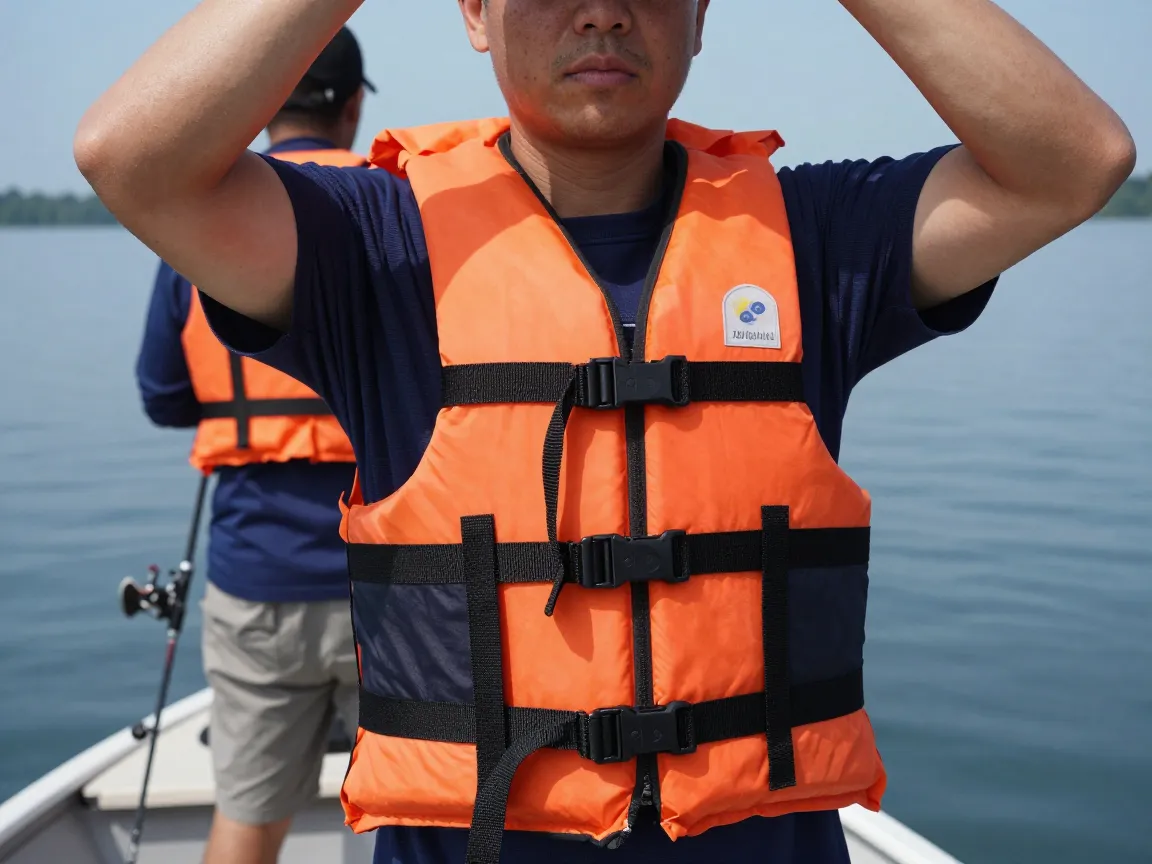
Fit matters as much as wearing one at all. A life jacket that is too large will ride up over the chin when you enter the water and can obstruct breathing instead of helping you float. The standard guidance from certified boating safety instructors is to try a jacket on, secure all closures, and then lift both arms above your head, if the jacket rises above your chin or the back of your head, it needs adjustment or a different size. Inflatable belt-pack styles are popular among fly fishers because they don’t restrict casting, but they require annual cartridge checks and must be re-armed after any deployment.
Cold water changes the calculation sharply. Water at or below 60°F (15°C) can cause cold shock, an involuntary gasp reflex followed by rapid hyperventilation, within seconds of immersion. At that point, swimming ability becomes largely irrelevant. A securely fastened life jacket keeps your airway above water during the minutes it takes to regain voluntary muscle control. For anyone fishing rivers, estuaries, or mountain lakes where water temperatures stay low even in summer, the life jacket is not a comfort item; it is the reason you survive long enough to be rescued.
For family camping-and-fishing trips, the Iowa DNR and Minnesota DNR both specify that children should wear properly sized flotation devices any time they are near deep or fast-moving water, not just on boats. A child can enter the water from a riverbank or a dock edge in a second, and even a confident young swimmer cannot fight cold shock or strong current.
2. File a Float Plan Before You Leave
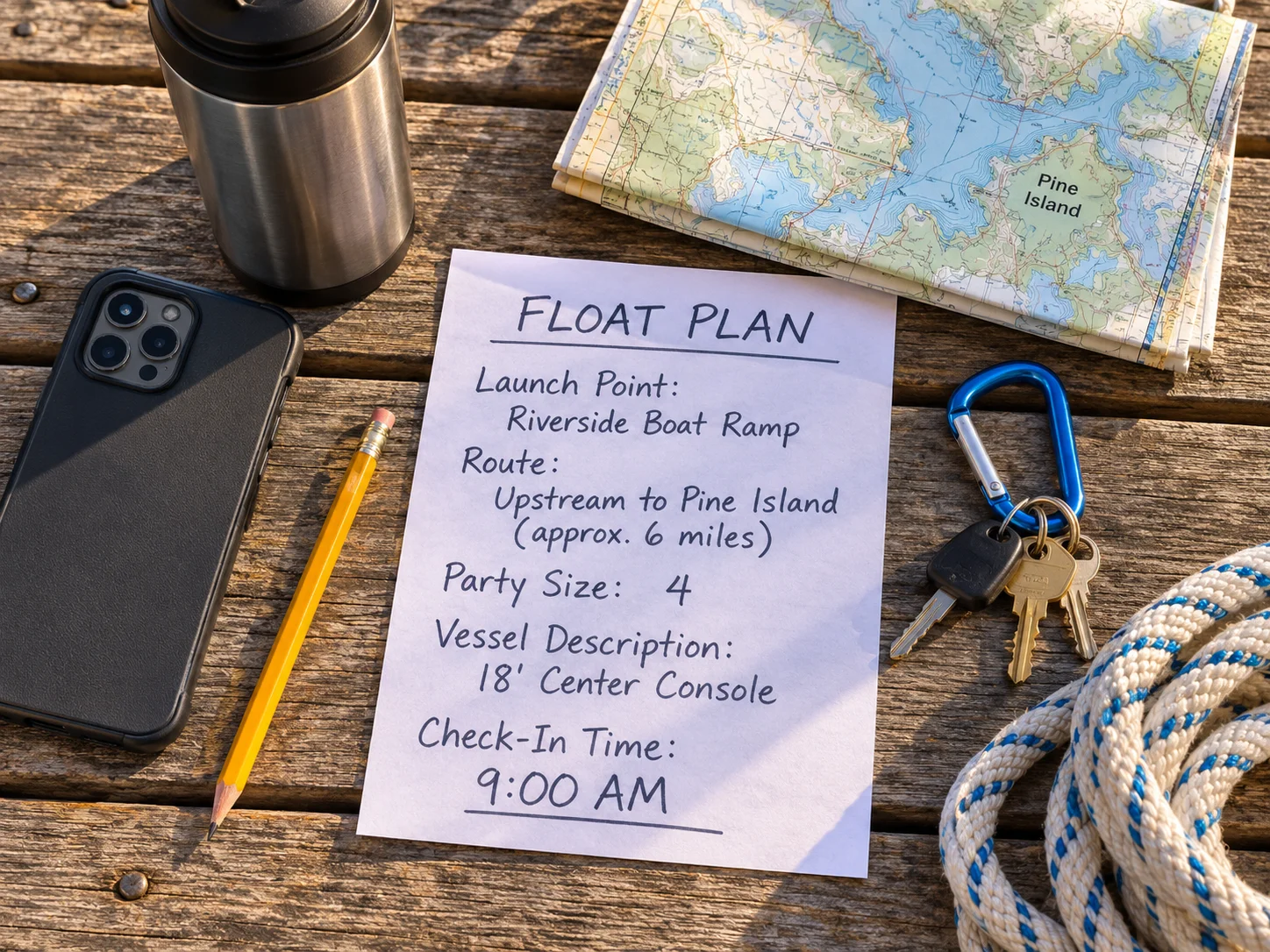
A float plan is a written record left with someone you trust, not posted on social media, not left in the car, that describes where you are going, when you plan to return, what boat or equipment you are using, and who to call if you don’t check in. The Food and Agriculture Organization’s fisher safety frameworks and commercial boating safety programs both treat this as a standard pre-departure step, yet most recreational anglers skip it entirely on day trips.
The practical format is simple. Write down the launch point or trailhead, your expected route, the number of people in your party, a description of your vessel or pack gear, and a specific check-in time. Give it to a family member or friend and agree on what action they should take, typically calling the relevant search and rescue or coast guard number, if that check-in time passes without contact.
For remote backcountry camping combined with fishing, this step is even more important. Yellowstone National Park’s 2026 fishing regulations explicitly recommend against hiking or fishing alone and require anglers to know area closures, bear management zones, and trail conditions before setting out. A float plan is the mechanism that connects your trip to outside help if something goes wrong before you can call for it yourself. No app or satellite messenger replaces the value of a person on shore who knows your plan and has a clear trigger for action.
One practical addition: note any medical conditions or medications in your float plan that would be relevant to rescuers. If a party member has a severe allergy or a cardiac history, a search and rescue team that knows this in advance can bring the right resources.
3. Carry a Charged Communication Device and a First-Aid Kit
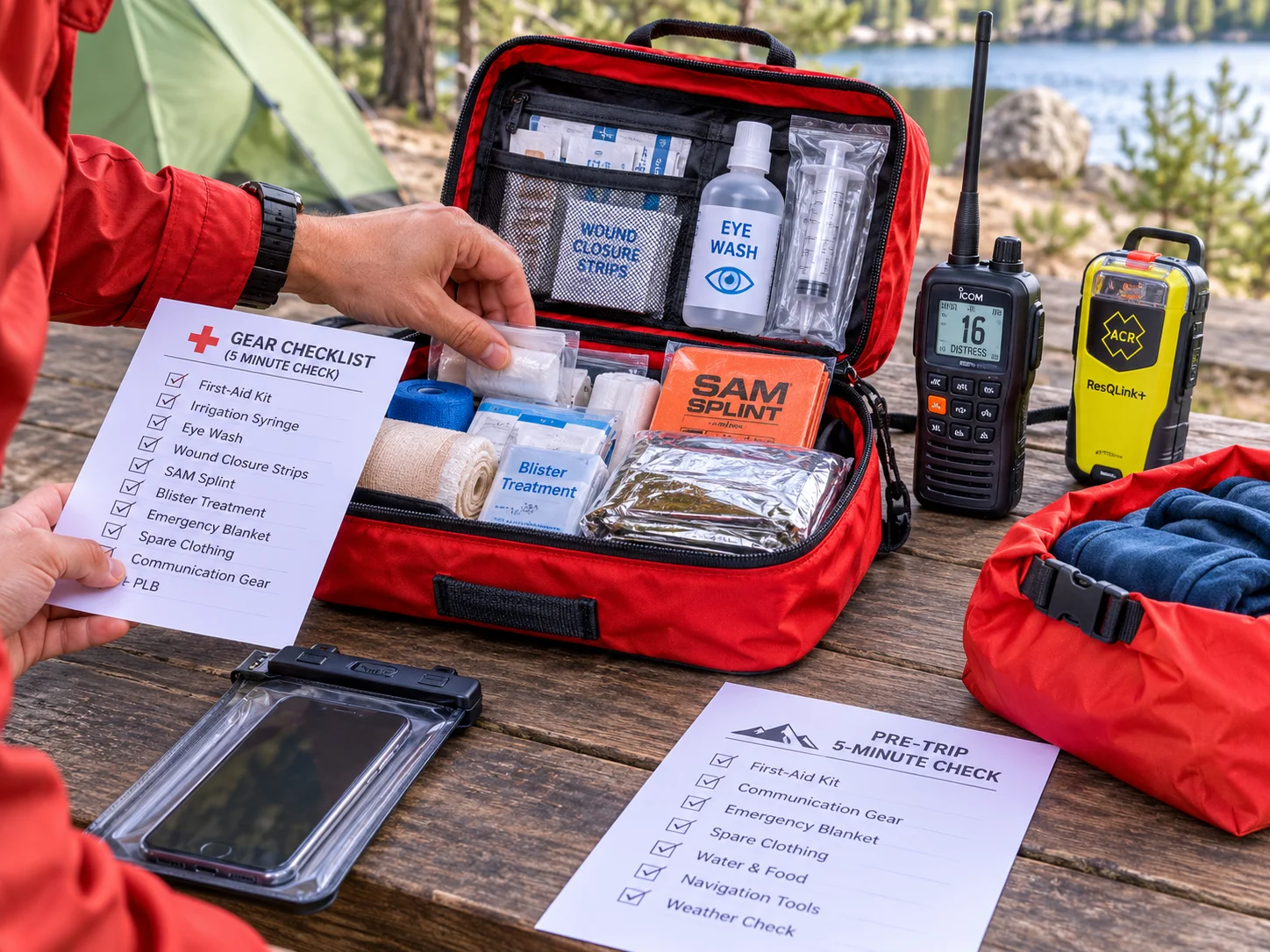
A fully charged smartphone in a waterproof case is a reasonable baseline for short, accessible fishing trips. It is not sufficient for anything remote. Discover Boating’s updated 2026 guidance and Boatsetter’s February 2026 safety checklist both list a VHF marine radio as standard equipment for boat-based fishing, VHF Channel 16 is monitored by the Coast Guard and other vessels, and it works when cell coverage fails. For backcountry camping and fishing trips more than a few miles from a road, a personal locator beacon (PLB) or satellite messenger adds another layer. PLBs transmit a distress signal to international search and rescue satellites and require no subscription.
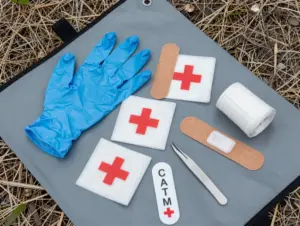
The first-aid kit deserves more thought than a drugstore travel pack. Fishing-specific injuries include deep hook punctures, cuts from fish handling and filleting knives, and eye injuries from line snaps. A properly stocked kit for a fishing trip should include irrigation equipment for wound cleaning, eye wash, wound closure strips, a SAM splint for sprains, and blister treatment for long hiking approaches. For boat-based trips or wading in moving water, hypothermia management, meaning a lightweight emergency foil blanket and dry spare clothing in a dry bag, is worth adding.
Check both devices before each trip. A radio with a depleted battery and a first-aid kit with expired antiseptic or missing components are not safety equipment; they are props. Build a five-minute pre-trip check into your routine: power on the radio, verify the PLB registration is current with the relevant national authority, and run through the first-aid kit contents against a printed list.
4. Know Your Wading Limits and Respect Moving Water
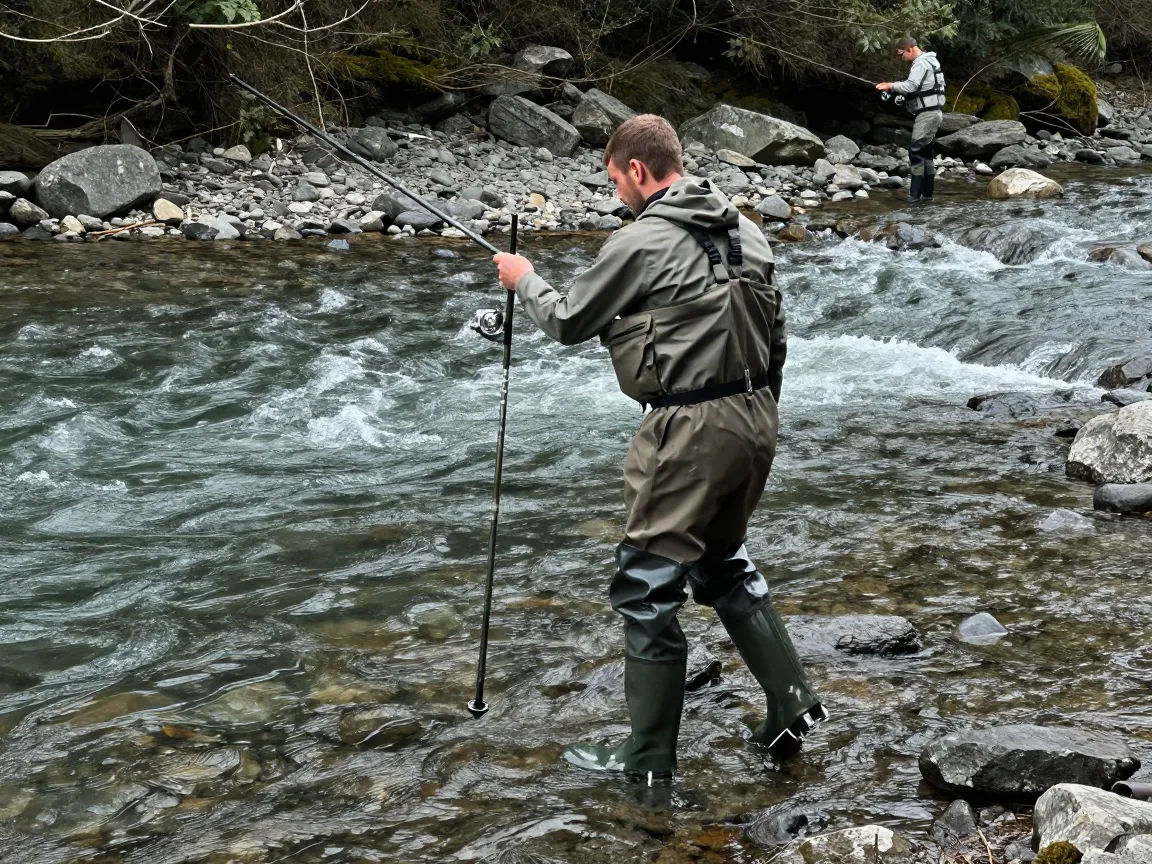
River and stream fishing carries risks that are easy to underestimate because the water looks manageable. Inland fisheries agencies and park authorities consistently note that wading-related incidents are among the more preventable injuries in freshwater fishing, and among the least discussed.
Fast current is the primary hazard. A flow rate that looks calm from the bank can produce enough force at knee depth to unbalance an adult angler carrying gear. The general guidance from wading safety resources is to face upstream when crossing, use a wading staff on any bottom you haven’t personally tested, and avoid wading above knee depth in currents above roughly two feet per second unless you know the specific bottom conditions well. Cold water compounds the risk: waders that flood become heavy and can trap air in a way that makes it harder, not easier, to regain footing.
Fishing alone in moving water is a recognized risk factor. If you fall and are pinned or knocked unconscious, no one is there to assist during the critical first minutes. Yellowstone and several other park authorities explicitly recommend against solo fishing in hazardous wading areas. For remote backcountry trips, the standard practice among experienced fly fishers is to use a buddy system for any wading crossing above ankle depth.
Wader choice matters too. Felt-soled waders were phased out in many states because they transport aquatic invasive species, so rubber-soled waders with aggressive lug patterns are now standard. Some anglers add removable aluminum cleats for particularly slick bedrock. Neither substitutes for checking current speed and bottom type before committing to a crossing.
5. Use a Written Weather Check and a Go/No-Go Decision
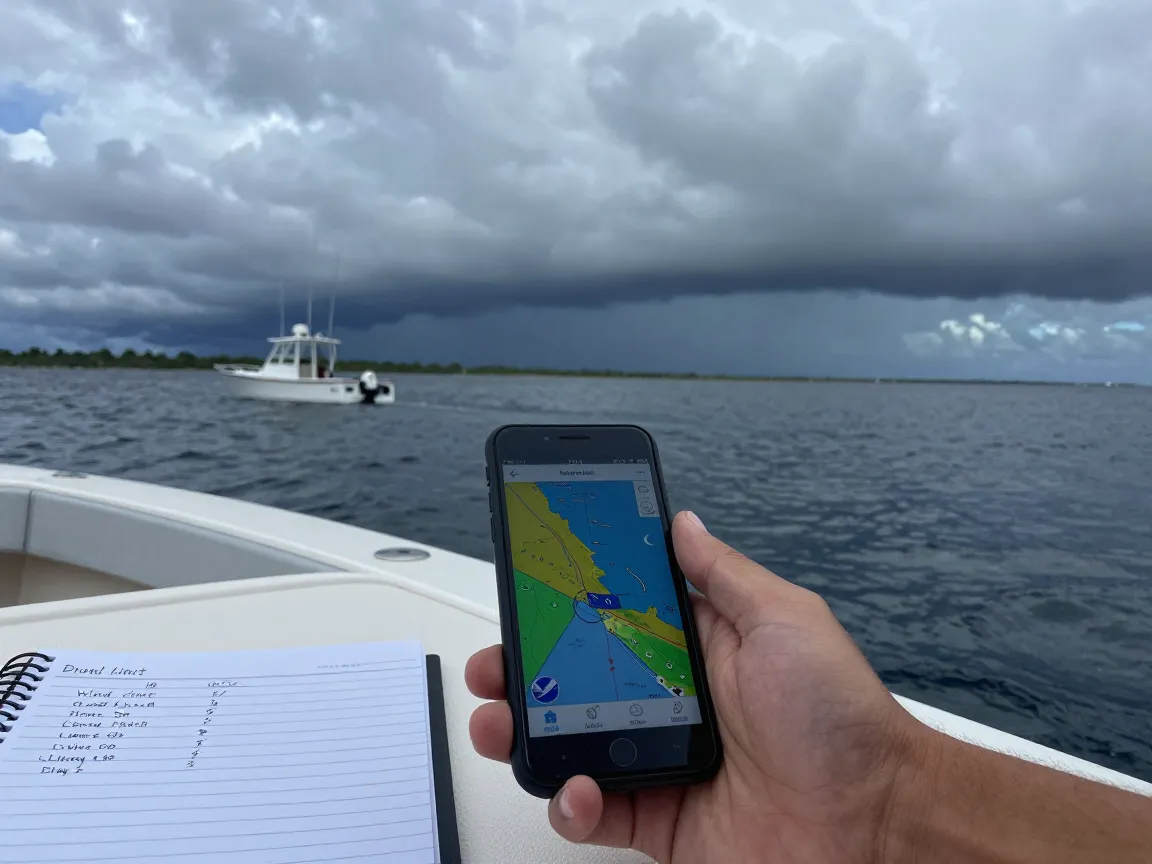
Weather is the external variable most likely to turn a planned trip dangerous, and it is the one that anglers most commonly underestimate because conditions often change after departure. The National Park Service’s October 2026 fishing safety article and Scotland’s October 28, 2026 advisory both frame weather monitoring not as a suggestion but as a core survival habit.
The practical system has three parts. Before departure, check a forecast specific to your location, not a city forecast, but a marine zone forecast for boat trips or a mountain area forecast for backcountry routes. The National Weather Service’s marine forecasts and the NOAA app both provide zone-specific outlooks. During the trip, monitor conditions actively: if cumulus clouds are building rapidly in the afternoon or wind is picking up faster than the forecast suggested, begin moving toward shore or camp before conditions deteriorate. After an unexpected change, have a clear rule about when you pack up and go rather than waiting it out.
The go/no-go decision is the part most people skip. Setting a threshold in advance, “if wind exceeds 20 knots, we return to the launch site” or “if lightning is visible within ten miles, we leave the water immediately”, removes the in-the-moment pressure to stay when conditions are marginal. This kind of pre-committed rule is standard in aviation safety culture and translates directly to fishing trip planning.
For multi-day camping trips, build a weather contingency into your itinerary. Identify sheltered camp positions on your map, know where the nearest substantial cover is relative to your fishing location, and don’t plan days so tightly that a weather delay forces you to travel in dangerous conditions to make a check-out time.
6. Keep Your Campsite and Tackle Area Organized
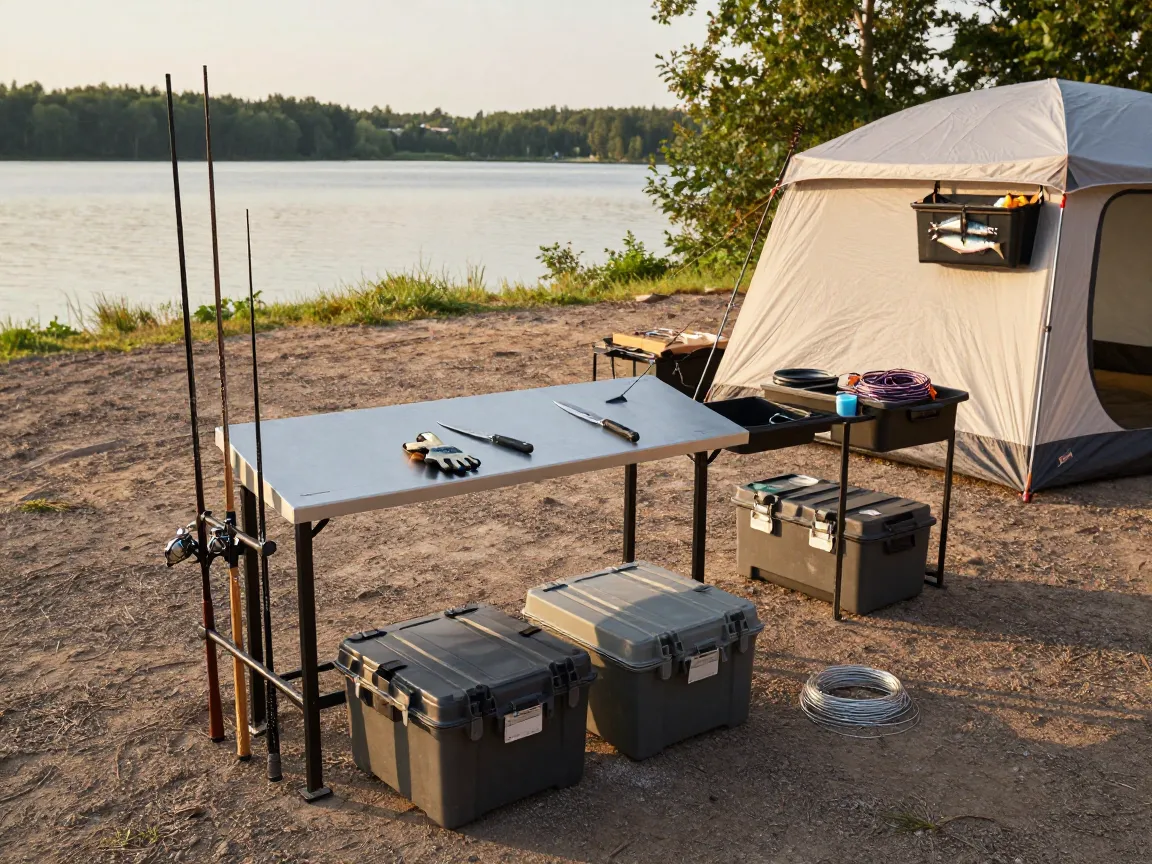
This entry sounds mundane compared to life jackets and weather planning, but it addresses a steady, underreported category of fishing-trip injuries: lacerations, puncture wounds, and trip-and-fall incidents caused by gear left on the ground.
Inland Fisheries Service guidance specifically warns against leaving rods and tackle on the ground where someone in the group can trip or step on them. A treble hook embedded in a bare foot is a painful injury requiring medical attention and potential antibiotic treatment, and it happens regularly on fishing trips where tackle management is casual. The same applies to knife handling at a campsite filleting station: a fixed cutting surface, a cut-resistant glove on the non-dominant hand, and a sheath on any blade not in active use reduce the risk substantially.
On boats, an organized deck is a safety feature. Fishing safety content updated in November 2026 advises keeping lines coiled, rods stowed in rod holders when moving, and tackle boxes closed and latched. Loose monofilament on a boat deck is a trip hazard and a potential entanglement hazard for limbs. A simple habit of doing a deck sweep before moving the boat between spots takes thirty seconds and prevents a consistent class of injuries.
At a campsite, designate a specific area for tackle prep and cleaning that is separate from the cooking and sleeping areas. This reduces the chance of a hook or knife ending up in foot traffic. It also keeps fish scent away from the tent, which matters significantly in bear country. Yellowstone’s 2026 regulations and similar guidance from agencies managing bear-active areas treat food and fish storage as a mandatory safety requirement, not an optional courtesy.
Quick Comparison
| Hack | Primary Risk Addressed | Gear Required | Works For |
|---|---|---|---|
| 1. Life jacket use | Drowning from falls or capsizing | Properly fitted PFD | Boats, wading, docks |
| 2. Float plan | Delayed rescue if something goes wrong | Paper and a trusted contact | All trip types |
| 3. Communication and first aid | Injury management and emergency contact | VHF/PLB, stocked kit | All trip types |
| 4. Wading safety | River immersion and falls | Wading staff, appropriate footwear | River and stream fishing |
| 5. Weather go/no-go | Exposure to dangerous conditions | Forecast app, pre-set thresholds | Boat and backcountry trips |
| 6. Gear organization | Lacerations, punctures, trips | Rod holders, tackle storage, sheath | Campsite and boat deck |
Conclusion
The 6 survival life hacks and camping ideas that make fishing trips safer are not complicated individually, the difficulty is that most of them require consistent habit rather than a single purchase. The float plan takes five minutes. The weather threshold can be decided the night before. The life jacket check takes thirty seconds. The cumulative effect of building all six into your standard pre-trip routine is a meaningfully lower probability of a serious incident on any given outing.
If you’re starting from zero, begin with the float plan. It costs nothing, works for every trip type, and creates the safety habit of thinking through what could go wrong before you leave rather than after something has.