Survival Skills Life Hacks That Turn Everyday Items Into Lifesavers
Most households already own at least 20 items that double as serious survival tools. The gap between someone who gets through a disaster and someone who doesn’t often isn’t gear, it’s knowing what the gear in a kitchen drawer can actually do. That’s the core premise behind the growing body of work on 6 Survival Skills Life Hacks That Turn Everyday Items Into Lifesavers: adaptability with what you already have is a trainable skill, not a lucky accident. Preparedness publications cataloguing up to 2,500 survival uses for common household items make clear that the inventory in most homes is already substantial. The only missing piece is the knowledge.
Disclosure: This post contains affiliate links. As an Amazon Associate, we earn from qualifying purchases, and at no extra cost to you.
Key Takeaways
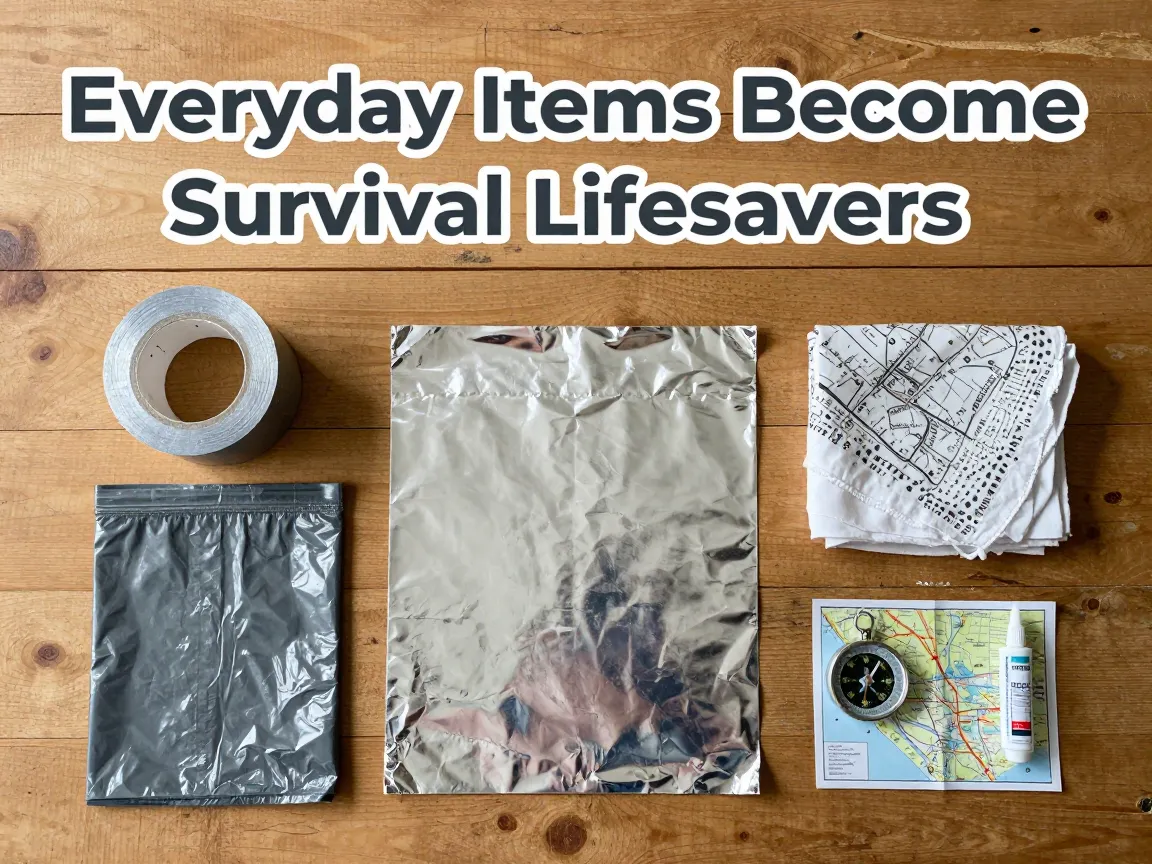
- Duct tape, trash bags, and aluminum foil each cover multiple critical survival functions that purpose-built gear also covers, at a fraction of the cost.
- Repurposing everyday items is a skill that must be practiced before a crisis, not figured out during one.
- Household hygiene items including super glue and activated charcoal have direct emergency medical and water-safety applications.
- Analog tools, paper maps, printed guides, compasses, become irreplaceable when power and connectivity fail.
- Small, sturdy containers like Altoids tins can organize and protect micro-kits that fit in a jacket pocket.
1. Duct Tape as a Multi-Function Survival Tool
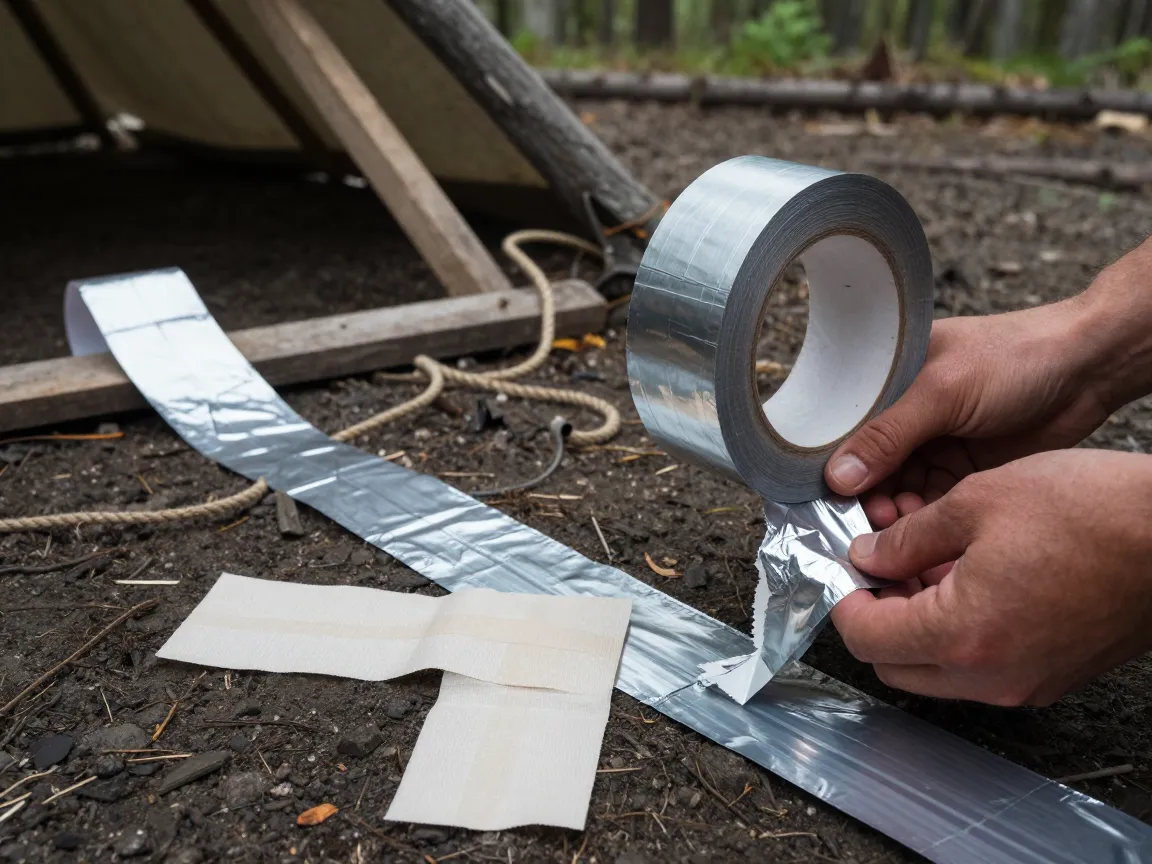
Duct tape is not simply a repair material. Across a wide range of preparedness guides updated through late 2026, it consistently ranks as the single most versatile item a person can carry, with uses spanning shelter construction, medical improvisation, and emergency signaling.
On the shelter side, strips of duct tape can seal gaps in a tarp or emergency poncho, waterproof the seams of a makeshift lean-to, and reinforce torn clothing against wind and cold. In wet conditions, a few minutes spent taping down the hem of a jacket can prevent significant heat loss. When torn into long strips and twisted together, duct tape also functions as rope with a reasonable load-bearing capacity, useful for lashing poles together or hanging supplies off the ground.
The medical applications are less obvious but well-documented. Tape applied directly over a blister prevents the skin from tearing further and reduces friction, which matters during any extended movement on foot. Butterfly strips made from narrow pieces can approximate wound closure when proper bandages are unavailable. For signaling, the silver-gray surface of standard duct tape reflects sunlight and can be laid flat on a dark surface, a roof, a trail, to form visible shapes for aerial rescuers.
One important constraint: duct tape loses adhesion on wet or dusty surfaces, and it should not be applied directly over deep or infected wounds. Its strength in a survival context comes from preparation, keeping a full roll (not a partial one) in a go-bag and knowing its limits before you need it.
2. Trash Bags and Plastic Sheeting for Shelter and Water Collection
A standard 55-gallon contractor trash bag weighs roughly 50 grams and costs less than a dollar. Preparedness content from multiple sources updated in late 2026 describes it as one of the highest-value items per gram in any emergency kit.
Cut a hole in the bottom and you have a functional rain poncho. Spread one flat on the ground as a vapor barrier under a sleeping bag and you significantly reduce heat loss to cold, damp soil, a situation that causes more hypothermia than cold air does. Two bags taped together at the opening and suspended between trees form a hammock-style rain fly that can keep occupants dry through moderate precipitation.
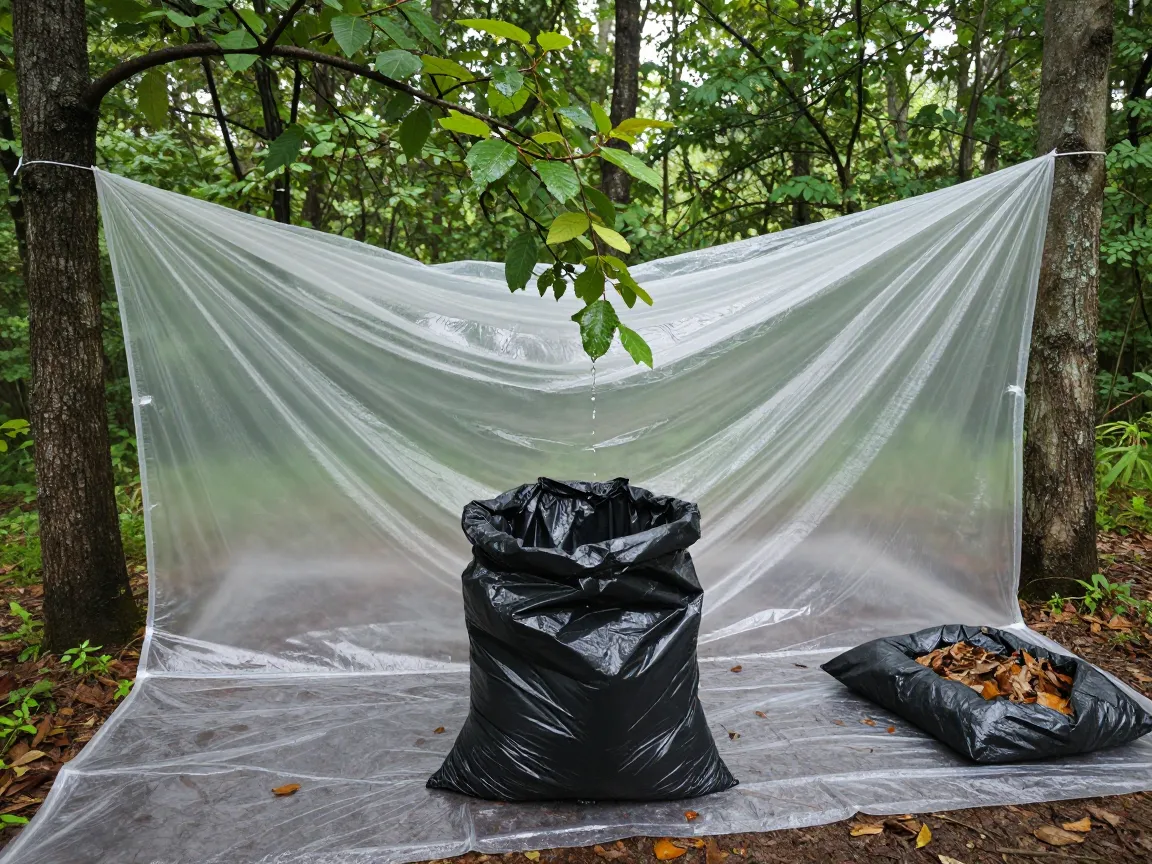
Water collection is where the physics work particularly well. A large plastic bag tied around a leafy branch on a sunny day collects drinkable moisture through transpiration, a technique called a tree transpiration bag. Output is modest (roughly 100-300 ml in a few hours depending on the tree and temperature), but in a water-scarce situation that volume matters. Bags can also be used to collect rainwater from surfaces, funnel runoff into a container, or transport water over short distances when no vessel is available.
For cold-weather use, stuffing trash bags with dry leaves inside a larger bag creates improvised insulation around a sleeping body, trapping warmth in the same way synthetic fill does. It’s not efficient enough for prolonged extreme cold, but it extends survival time significantly in moderate conditions. Keeping two to three contractor bags in a go-bag, in addition to whatever other shelter equipment you carry, adds redundancy at nearly zero weight cost.
3. Metal Cans and Aluminum Foil for Fire, Cooking, and Light
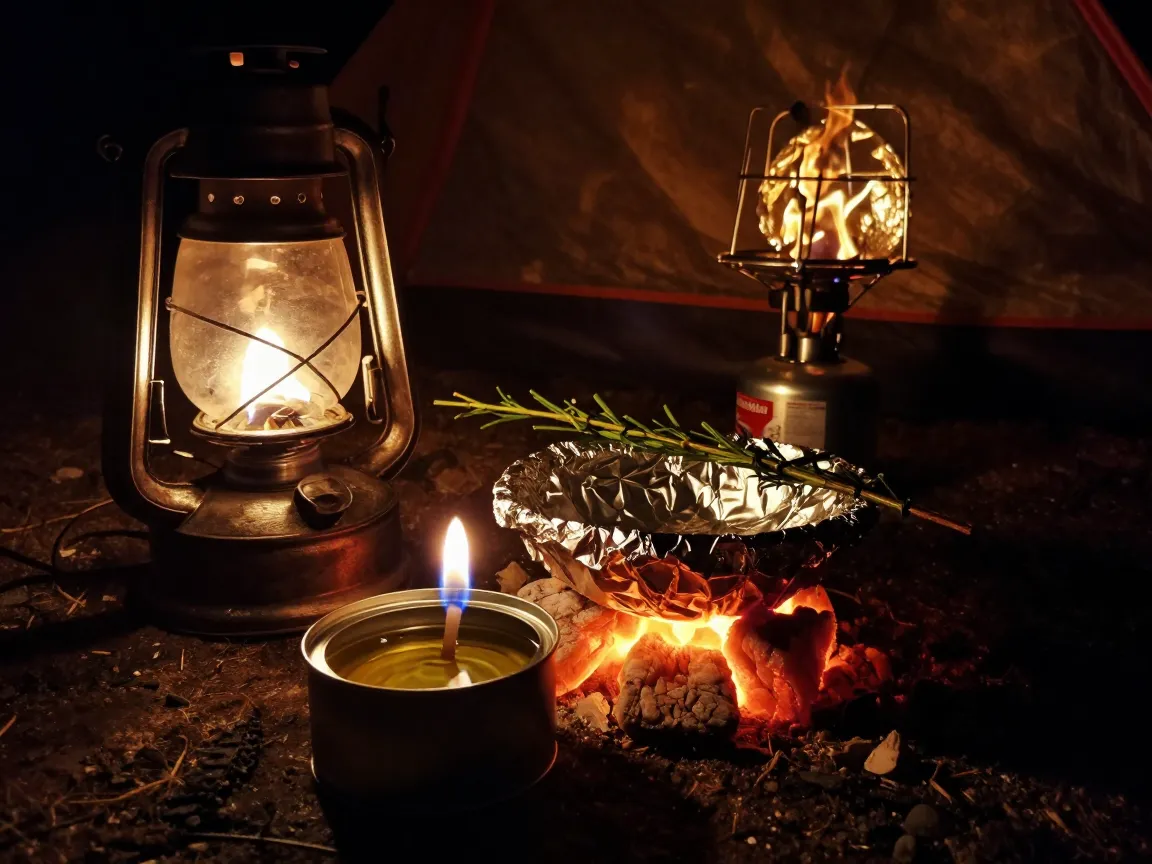
An empty tuna can and a strip of cotton, from a shoelace, a sock, or a torn shirt, makes a functional oil lamp when filled with any cooking fat, vegetable oil, or animal fat. The wick sits in the oil, the flame is low and stable, and the can contains the fuel safely. Survival Life’s outdoor hacks content demonstrates exactly this configuration, and it works in practice as a reliable light source for several hours per fill.
Aluminum foil extends this fire-and-cooking category considerably. Shaped into a bowl and set over coals, foil holds liquid and distributes heat well enough to boil water or cook small portions of food. Wrapped tightly around green branches arranged over a flame, it creates a rudimentary frying surface. For heat management in an emergency shelter, foil placed against a wall behind a small fire reflects radiant heat back into the space rather than losing it through the wall.
Soda cans have a separate set of applications. The tab from an aluminum can is a known improvised fishhook, it requires notching with a sharp edge, but the shape and rigidity of the tab produce a usable hook for small fish. The can itself, cut and shaped with any sharp tool, can be formed into a small alcohol stove by filling it with dirt or sand soaked in hand sanitizer or rubbing alcohol. Neither of these is a long-term solution, but both have documented use in short-term wilderness survival situations.
The practical constraint on all of these is sharpness. Cut aluminum is extremely sharp and causes deep lacerations without care. Handling cut can edges with a cloth wrap or folding the edge over before use reduces injury risk considerably.
4. Cloth, Bandanas, and Pantyhose as Filters and Carrying Aids
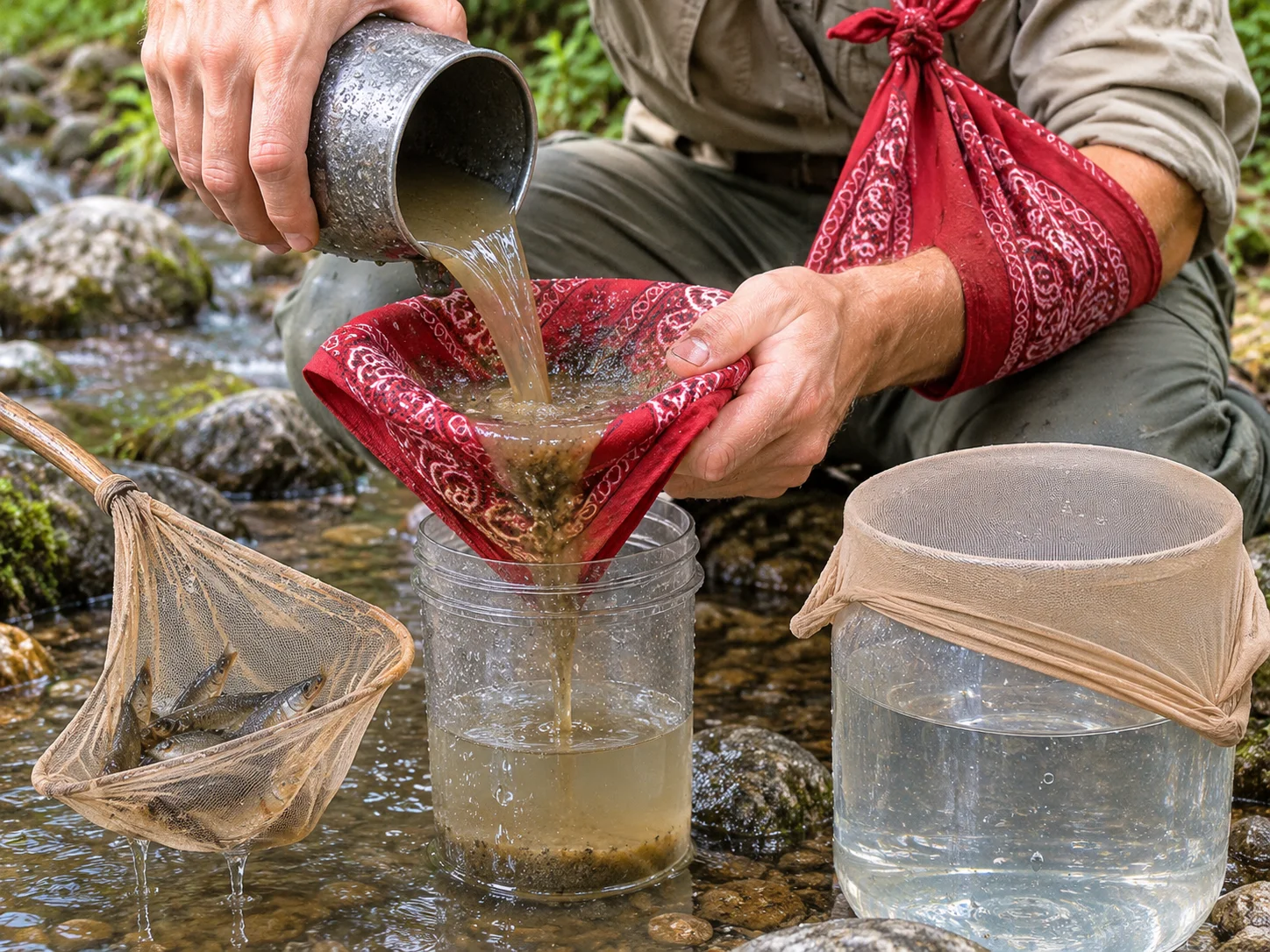
A piece of woven cloth does not purify water, but it removes sediment, debris, and particulates that would otherwise clog a filter or make chemical treatment less effective. Pouring turbid water through a folded bandana before treating it with iodine tablets or boiling significantly improves the outcome. This is a pre-filtration step, not a replacement for purification, and that distinction matters, cloth alone will not remove pathogens.
Bandanas cover a wider range of tasks than almost any other single piece of fabric. Folded into a triangle, one functions as a sling for an injured arm. Soaked in water and placed over the face, it filters some smoke particles in a low-smoke environment (not adequate for heavy smoke exposure). Tied to a pack, it signals movement to other parties. Survival guides consistently include bandanas on short lists of essential everyday carry items precisely because the fabric is cheap, light, and genuinely versatile.
Pantyhose are less obvious but have specific applications that coarser materials cannot replicate. Stretched across the mouth of a water container, nylon mesh catches small debris more finely than a bandana can. Used as a lightweight net with the opening gathered and tied, a leg of pantyhose can trap small fish or crayfish in slow water. As a food suspension system, food tied in a bag at the bottom, the stocking looped over a high branch, nylon holds up to weathering and animal interference better than rope tied in a simple knot. All three uses require nothing beyond what many households keep in a bathroom drawer.
5. Household Hygiene Items for Emergency First Aid
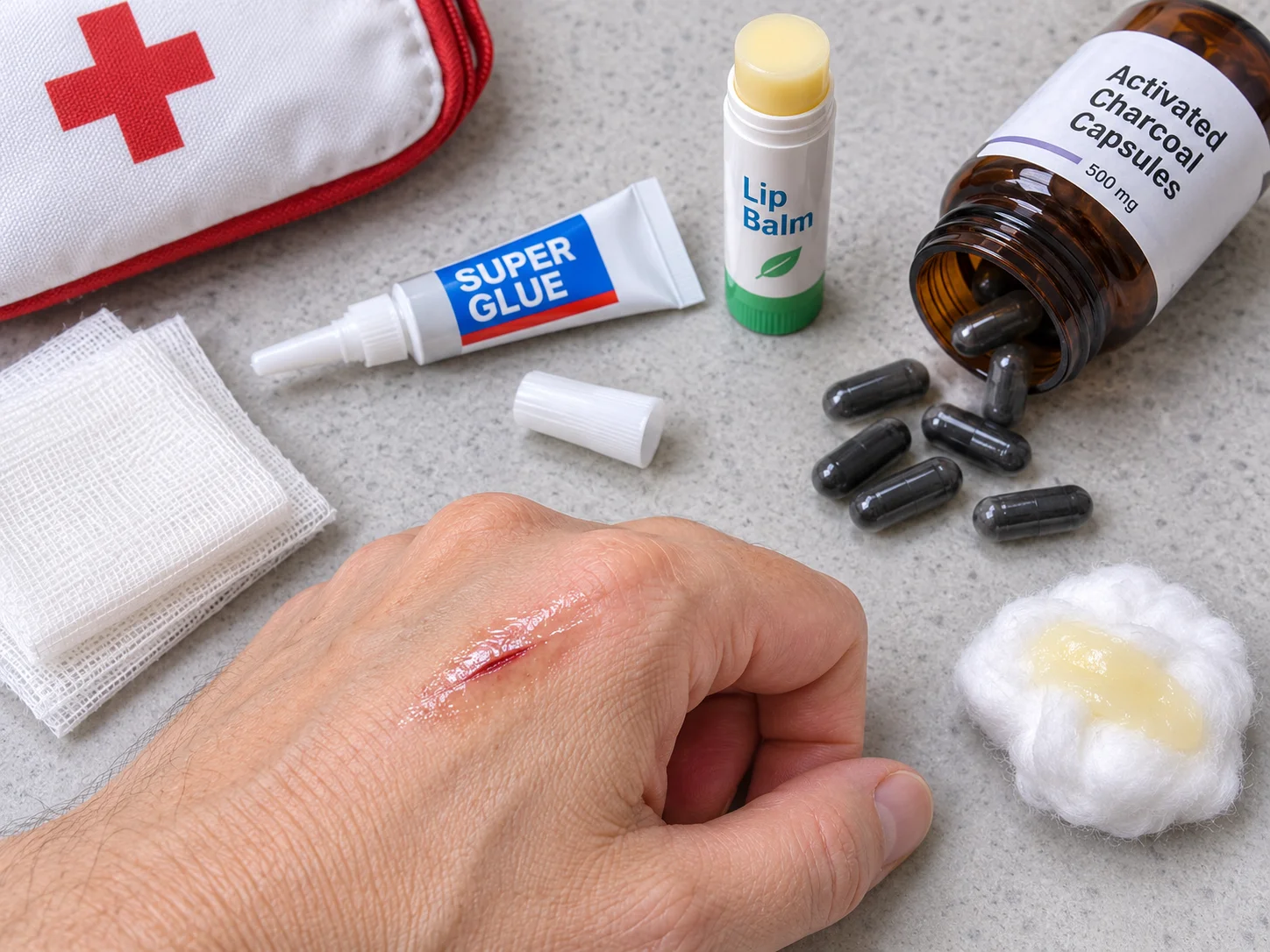
Super glue was developed in 1942, and medical-grade cyanoacrylate tissue adhesive has been used in clinical settings for wound closure for decades. The household version is chemically similar and, in a survival situation where bandages are exhausted or unavailable, applying a thin layer of super glue over a small, clean, dry laceration does close the wound and reduce bleeding. Urban Survival Site’s November 2026 guide names this explicitly as an emergency option for minor wounds when no other closure material is available.
The important caveats are real: super glue should not be used inside a wound, over infected tissue, or on deep cuts that require sutures. It seals the surface, which can trap bacteria in a contaminated wound. Used correctly on a clean, shallow cut, it provides workable temporary closure. Used incorrectly, it makes the injury harder to treat properly.
Lip balm has documented secondary uses that extend beyond cosmetics. Applied around the nostrils, it reduces chapping from repeated nose-blowing during illness, a minor comfort issue that becomes an infection risk if skin breaks down. Applied over insect bites, it creates an occlusive barrier that reduces itching. As a fire-starting aid, the petroleum-based wax in standard lip balm is flammable and extends the burn time of cotton or other tinder when applied before ignition.
Activated charcoal sits at the more serious end of this category. Available in capsule form at most pharmacies, activated charcoal can adsorb (bind to) a range of toxins if administered shortly after ingestion, before significant absorption has occurred. It’s also used in improvised water filtration as one layer in a multi-stage gravity filter. Multiple preparedness guides describe it as one of the few over-the-counter household items with both medical and water-treatment applications, recommending that at least a small supply be kept in any emergency kit.
6. Small Containers and Analog Information Tools
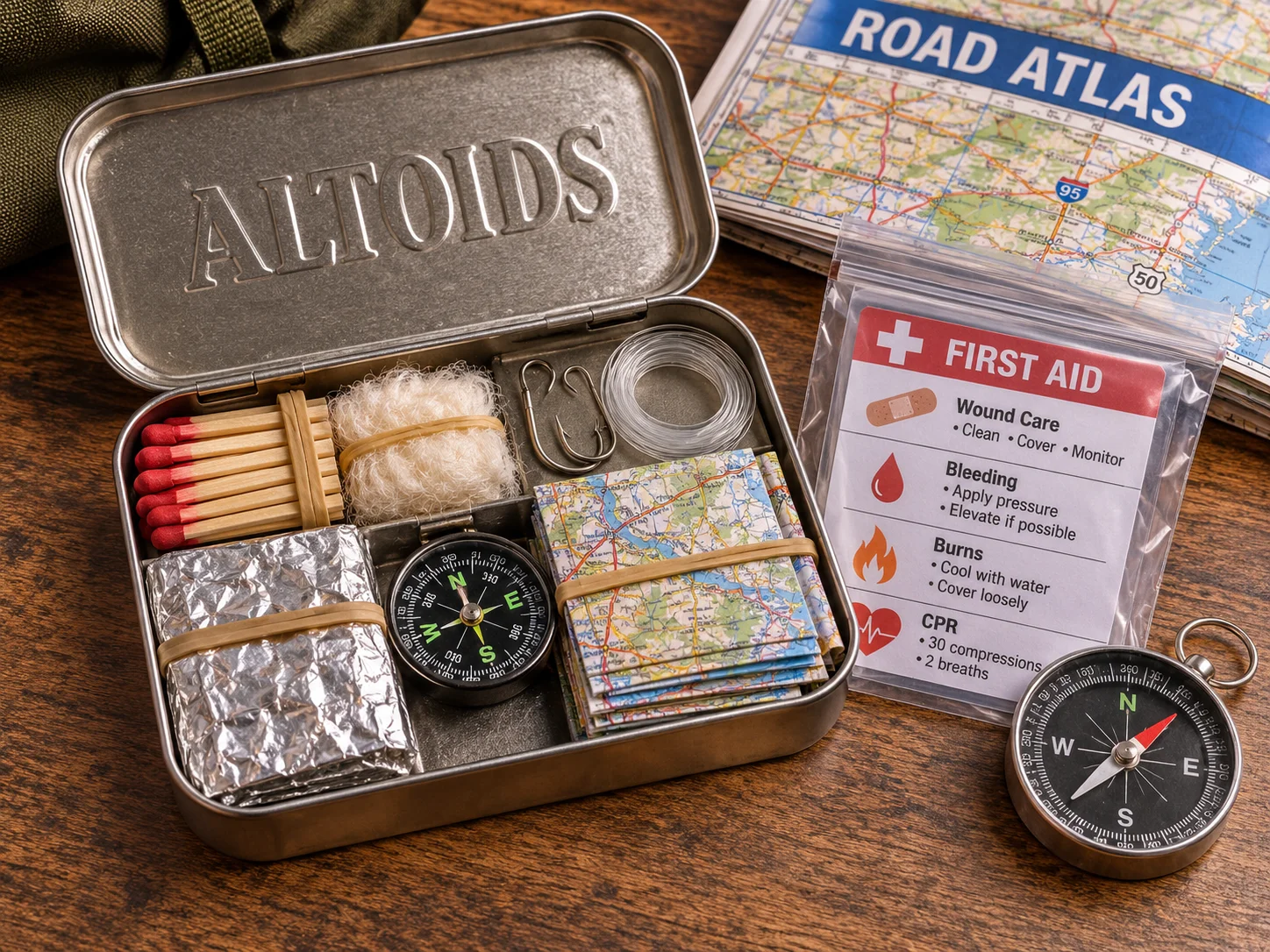
The Altoids tin has become a standard reference point in survival preparedness, and for practical reasons. The tin measures roughly 9 by 6 by 2 centimeters, closes securely, is water-resistant, and is free once the contents are consumed. A well-organized Altoids tin can hold waterproof matches, a small section of fire-starting tinder, two or three fishhooks with a short length of monofilament, a folded piece of aluminum foil, and a small button compass. That’s a functional fire-starting and food-procurement kit in an object that fits in a shirt pocket.
The broader principle is container awareness. Any small, waterproof, rigid container can serve this function. Prescription medication bottles, small plastic food containers, and metal mint tins all qualify. The organizing habit, keeping a micro-kit assembled and ready rather than scattered across a drawer, is what turns an ordinary container into useful emergency gear. A HomesteadHow-To article from November 2026 on everyday items preppers consider essential points out that the act of assembly is itself the skill: knowing what to include and why is more valuable than the container’s specific origin.
Analog information tools belong in the same category and are consistently underestimated until connectivity fails. A printed paper road atlas covers every road in a region without requiring a signal, a battery, or a screen. A printed first-aid reference card, laminated or kept inside a plastic bag, provides step-by-step guidance during exactly the situations where cognitive load is highest and internet access is least reliable. A small magnetic compass with a known declination correction for your region tells you which direction you’re moving regardless of terrain, weather, or battery level.
AlwaysReadyHQ’s preparedness content from October 2026 makes the case plainly: most households already own the raw materials for a functional survival kit. The gap is in organization and knowledge, not acquisition. Spending an hour assembling a micro-kit in a small tin, checking that a road atlas covers your region, and printing a laminated first-aid card costs very little and addresses the most common failure points in emergency preparedness.
Quick Comparison
| Item | Primary Survival Use | Key Constraint |
|---|---|---|
| Duct tape | Shelter repair, wound strips, signaling | Loses adhesion on wet or dusty surfaces |
| Contractor trash bags | Rain shelter, water collection, insulation | Not adequate for prolonged extreme cold |
| Aluminum foil and cans | Cooking, lighting, fishhooks | Cut edges are extremely sharp |
| Bandana and pantyhose | Water pre-filtration, slings, fine mesh net | Cloth alone does not remove pathogens |
| Super glue and lip balm | Wound closure, fire aid, bite relief | Super glue unsafe on deep or infected wounds |
| Altoids tin and paper atlas | Micro-kit container, navigation, first-aid reference | Only as useful as the contents you assemble |
Conclusion
The consistent thread across all six of these hacks is that the skill is in knowing before the moment arrives. A trash bag is useless as a rain shelter if you don’t know to bring one. Super glue won’t close a wound safely if you don’t know the conditions that make it appropriate or dangerous. The practical next step is straightforward: pick one item from this list, ideally the one that feels most unfamiliar, and practice the technique once before you need it. That single repetition converts the information from something you’ve read into something you can actually do under stress.