Fishing Clothes for Women That Actually Fit and Perform
Women now make up roughly one-third of all recreational anglers in the United States, yet for most of the sport’s commercial history, the clothing available to them was either a shrunken men’s medium or a pastel afterthought. That gap is finally closing. Brands built from the ground up for women, alongside established outdoor companies retooling their sizing methodology, have produced a generation of 6 fishing clothes for women that actually fit and perform across sun, rain, cold water, and long days on a boat. What follows is a detailed look at the six garment categories that matter most, what separates functional women’s fishing apparel from generic outdoor wear, and which specific features to prioritize before you spend a dollar.
Disclosure: This post contains affiliate links. As an Amazon Associate, we earn from qualifying purchases, and at no extra cost to you.
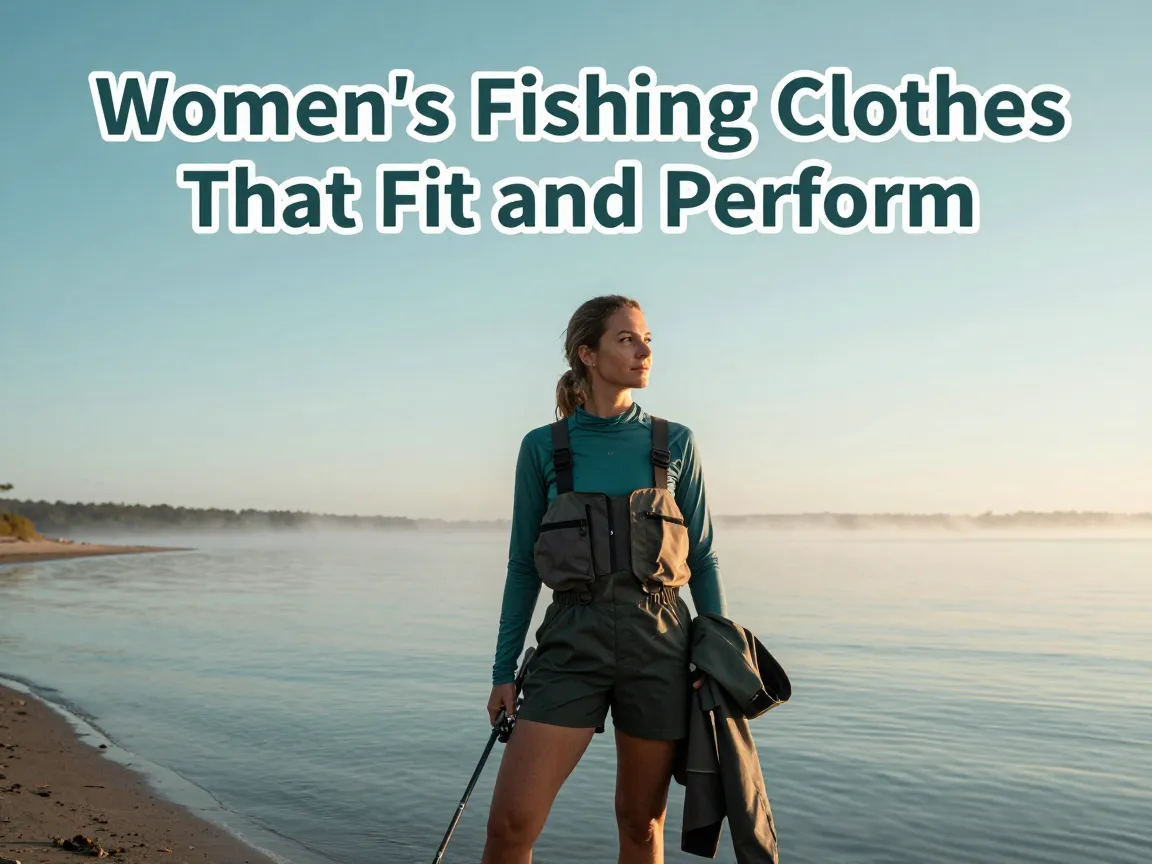
1. UPF Sun Protection Shirts with Contoured Fit
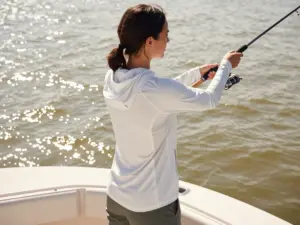
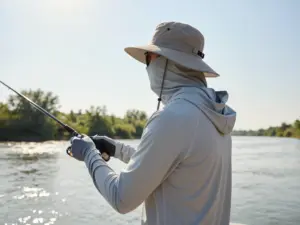
The long-sleeve performance fishing shirt is the single most-used garment in an angler’s kit, and the difference between a well-fitted women’s version and a unisex hand-me-down shows up fast. A shirt cut for a woman’s body places the shoulder seam correctly, leaves room through the bust without billowing at the waist, and keeps the sleeve length proportional to actual arm length rather than a man’s.
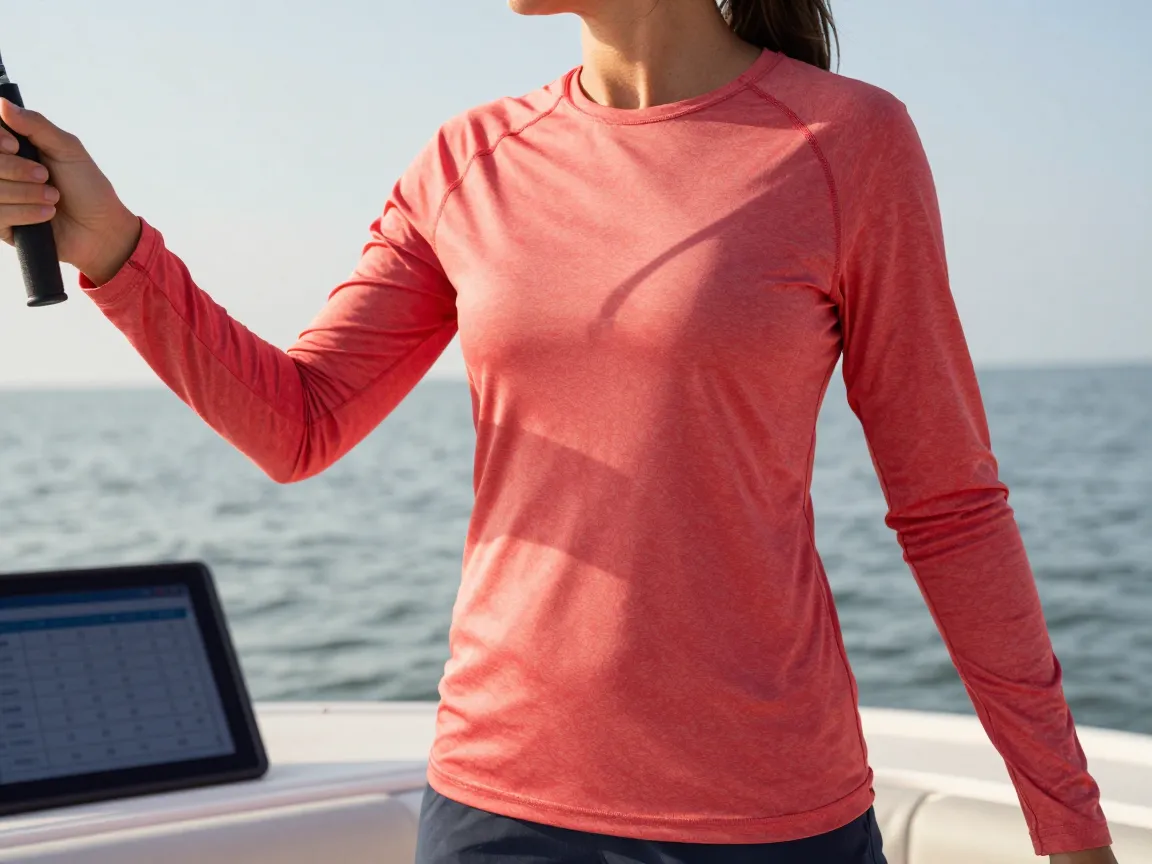
SaltyGrown’s Women’s Redfish Tail UPF 44+ Long Sleeve Performance Fishing Shirt is a useful benchmark. It offers a contoured-fit polyester construction, moisture-wicking properties, and sizes from XS to 2XL with bust measurements reaching about 48 inches. The brand publishes full body-length and sleeve-length specs alongside the bust chart, which is what a genuinely fit-focused sizing system looks like. DSG Outerwear takes a looser approach with its vintage muscle tank format in the same UPF 50+ category, targeting anglers who prefer a relaxed silhouette on warm-weather outings.
When shopping, check whether the product page specifies how the shirt fits through the shoulders and waist, not just chest circumference. L.L.Bean’s women’s fishing clothing guidance explicitly tells buyers to compare sleeve length, collar style, and pocket placement before clicking add to cart, then cross-reference body measurements with item-specific fit notes. That process takes three minutes and prevents the most common complaint in women’s outdoor apparel: a shirt that fits across the chest but pulls across the back during a casting motion.
Fabric weight matters too. A tightly woven 100% polyester or polyester-nylon blend in the 150-180 g/m range dries quickly, holds its UPF rating through repeated washes, and doesn’t cling when wet. Avoid cotton blends in this category regardless of how comfortable they feel in the store.
2. Waterproof Wading Pants Built Around Women’s Anatomy
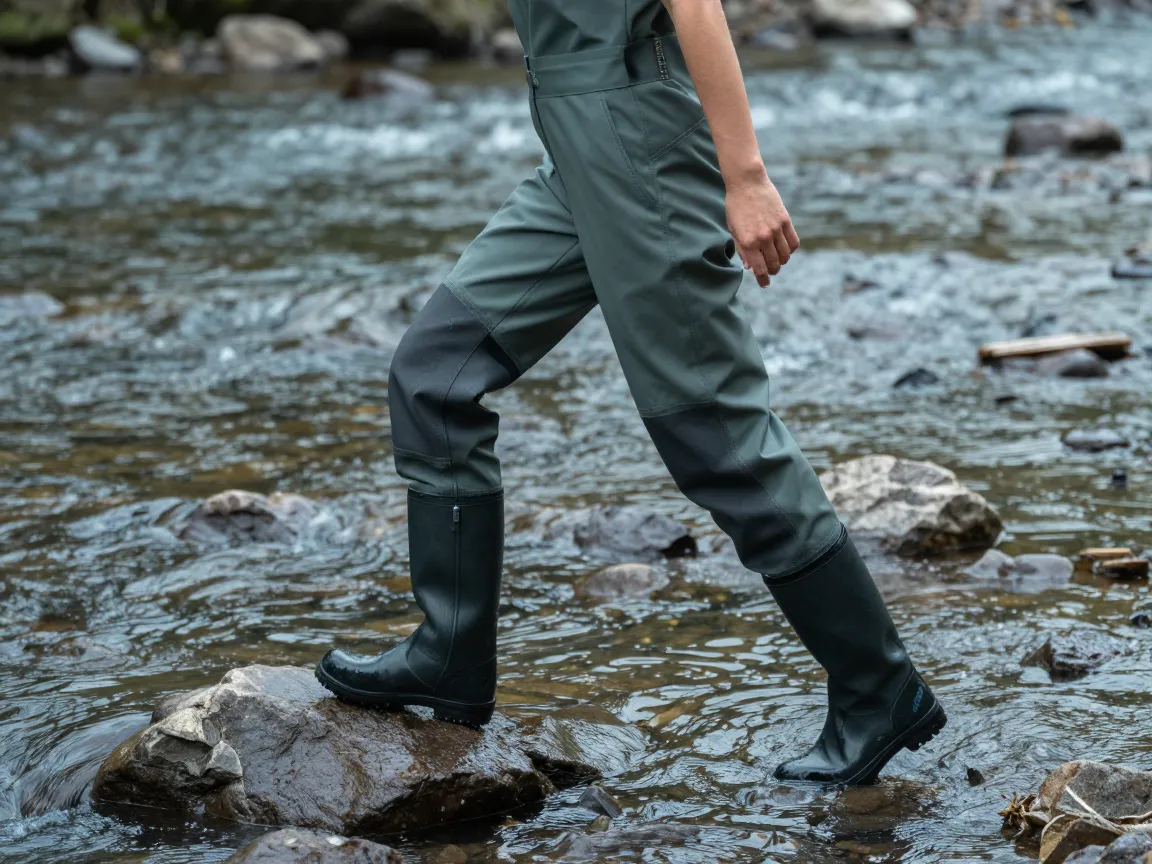
Wading pants may be the most technically demanding item in a fishing wardrobe, and they’re also the garment where the fit failures of unisex gear cause the most real problems. A wading pant cut for a male hip-to-waist ratio gaps at the back, binds at the thigh during a high step over slippery rocks, and places the inseam seam in the wrong location entirely.
Miss Mayfly, which calls itself the world’s first fishing and wading gear brand created exclusively to fit women of all shapes and sizes, built its Moxie Collection around a proprietary sizing methodology that prioritizes fit, comfort, stability, and durability together rather than trading one against another. Its waterproof wading pant is positioned as the industry’s first size-inclusive women’s wading pant, meaning it doesn’t treat women over a size 12 as edge cases. The engineering difference is in the patterning: the hip-to-rise ratio is set to female anatomy, the knee panels are articulated for forward leg movement, and the waistband sits at the natural waist rather than the low hip.
Gill Marine’s waterproof women’s fishing clothing takes a more universal approach, labeling fits clearly as “Regular Fit” and providing detailed delivery and fit guidance alongside technical specs. That transparency is worth noting because waterproof garments are expensive and return shipping is a pain. Gill’s approach acknowledges that understanding your specific measurements before purchase is part of the performance equation.
For cold-water or year-round anglers, a waterproof wading pant should include taped or welded seams, not just sealed ones, and be compatible with a wading boot system. Patagonia’s Swiftcurrent Wading Jacket pairs with its women’s waterproof layering system in a way that lets you build coverage from base layer out without buying a single multipurpose garment that compromises on all fronts.
3. Performance Fishing Shorts with Functional Pockets
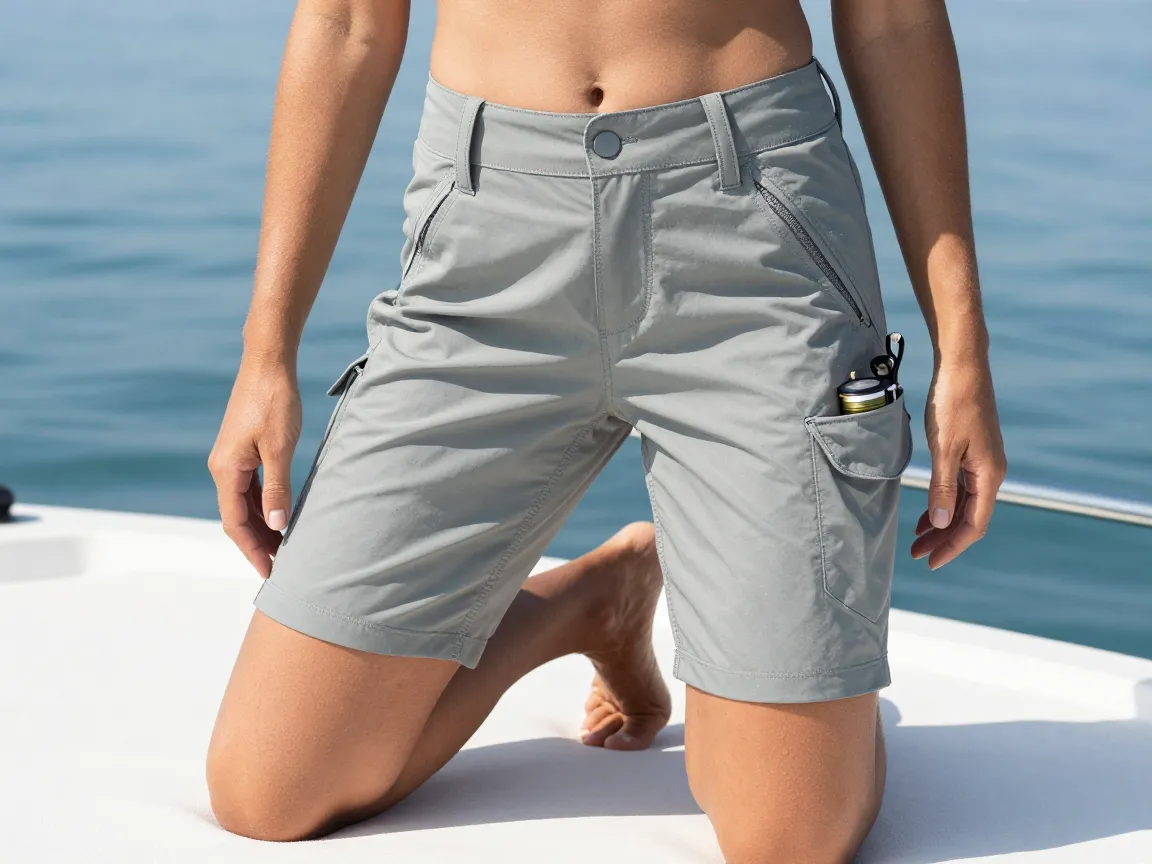
A fishing short that works on the water is not a hiking short or a casual chino with a quick-dry fabric. The difference is pocket architecture. On a boat or wading in shallow water, you need secure closures on at least two pockets, enough depth to hold a phone without it tipping out when you crouch, and a waistband that doesn’t roll down during repeated casting and bending.
AFTCO’s women’s fishing shorts are marketed explicitly as performance fishing apparel for women rather than unisex gear. The distinction matters because the inseam length, waistband height, and thigh cut all reflect female body proportions. A 5-inch inseam that sits correctly on a woman’s hip is different from a 5-inch inseam patterned off a men’s block and adjusted.
Stretch fabric is not optional in this category. A woven cotton or rigid nylon short restricts hip rotation during a cast and chafes after six hours in the sun. Four-way stretch fabric, typically a polyester-spandex blend in the 88/12 or 92/8 range, moves with the body and returns to shape. Quick-dry performance is a secondary benefit of the same fabric choice. If you’re wading in and out of a skiff or standing in moving water, you will get wet, and a short that stays damp for two hours is uncomfortable and cold once the sun drops.
Orvis’s women’s fly-fishing clothing line includes performance shorts specifically described as made to flex with a woman’s movement over rugged banks, with practical pocket placement. That phrase “practical pockets” sounds like marketing, but it refers to something specific: zip closures on side pockets so gear doesn’t fall into the water, and cargo pockets sized for a compact reel or leader spools rather than just a phone.
4. Lightweight Layering Tops and Vests for Variable Conditions
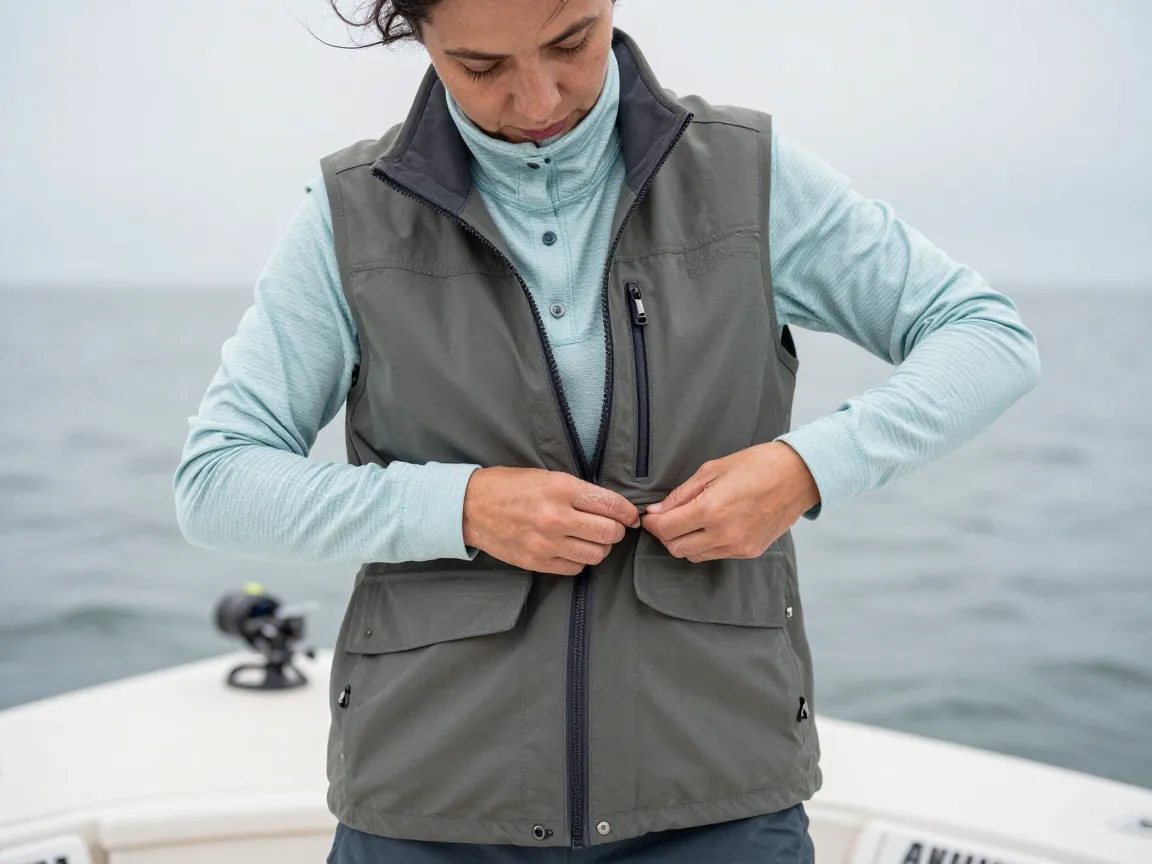
No fishing trip goes exactly as planned weather-wise. A layering system that works is one you can add and remove with cold, wet hands while standing in a boat. That means mid-layers and vests with full-length zippers, not pullover fleeces that require both hands and a dry surface.
The vest has had a renaissance in women’s fishing apparel because it solves a specific problem: warmth without restricting arm movement during casting. A well-fitted women’s fishing vest sits at the natural waist, has a back length that covers the lower back when you lean forward, and places chest pockets high enough to stay accessible under a wading jacket. Orvis’s women’s vest offerings emphasize inclusive sizing and versatile layering across its US and UK collections, with a consistent message that the vest shouldn’t pinch at the armhole or ride up at the hem.
For warm-weather trips where the concern is sun and wind rather than cold, a lightweight technical button-down in a vented fabric works as a mid-layer over a tank or sun shirt. L.L.Bean’s Tropicwear CoolPro Fishing Pants pair logically with this layer because both use evaporative cooling technology and UPF 50+ construction. Buying separates from the same technical system means the fabrics behave similarly through sweat, spray, and drying cycles.
Gill Marine’s lightweight layering pieces for women emphasize coverage and durability alongside labeled fit types, which helps when you’re buying online without trying on. A “Regular Fit” label from a brand that publishes women-specific measurements means something concrete. A “women’s fit” label from a brand that just nips the waist on a unisex pattern means much less.
5. Women’s Fishing Leggings for Active and Wading Use
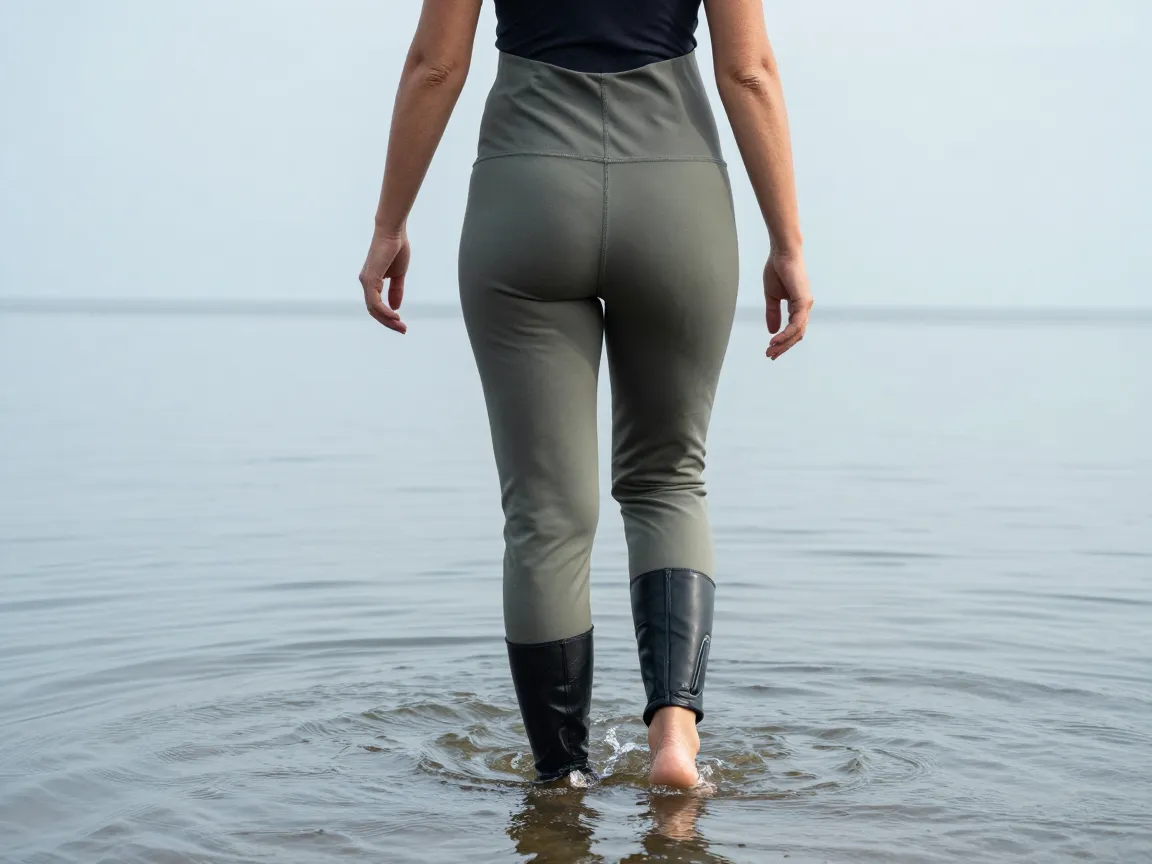
Fishing leggings occupy a different functional space than yoga leggings, even when they’re made from similar fabrics. The key differences are seam placement, UV rating, and waistband stability under wading gear. A flatlock seam runs flush against the skin rather than creating a ridge, which matters significantly if you’re wearing wading pants or waders over the top for hours at a time.
AFTCO includes fishing leggings in its women’s performance lineup alongside shorts, tops, and dresses, treating the category as a core technical piece rather than a casual add-on. Pelagic Gear extends the same logic across its women’s kit, which now includes performance leggings alongside polarized sunglasses and women’s fishing boots, reflecting an industry shift toward building a complete technical system for women rather than individual token pieces.
For cold-water wading, a mid-weight legging in a polyester or polyester-merino blend serves as a base layer under wading pants, adding thermal retention without bulk that would restrict circulation. For warm-weather use on a boat or pier, a lightweight legging with UPF 40+ or higher provides leg coverage without the heat of fishing pants. The waistband needs to stay up under its own tension, not through the pressure of an outer layer, because you’ll be taking the outer layer on and off.
FisheWear, founded specifically to address clothing that didn’t fit, function, or reflect women anglers, builds its leggings around both performance specs and visual personality, which matters to anglers who don’t want to look like they raided a men’s workwear catalog. That’s a legitimate product consideration. If you enjoy wearing what you fish in, you fish more.
6. Women-Specific Waterproof Rain Jackets and Outerwear
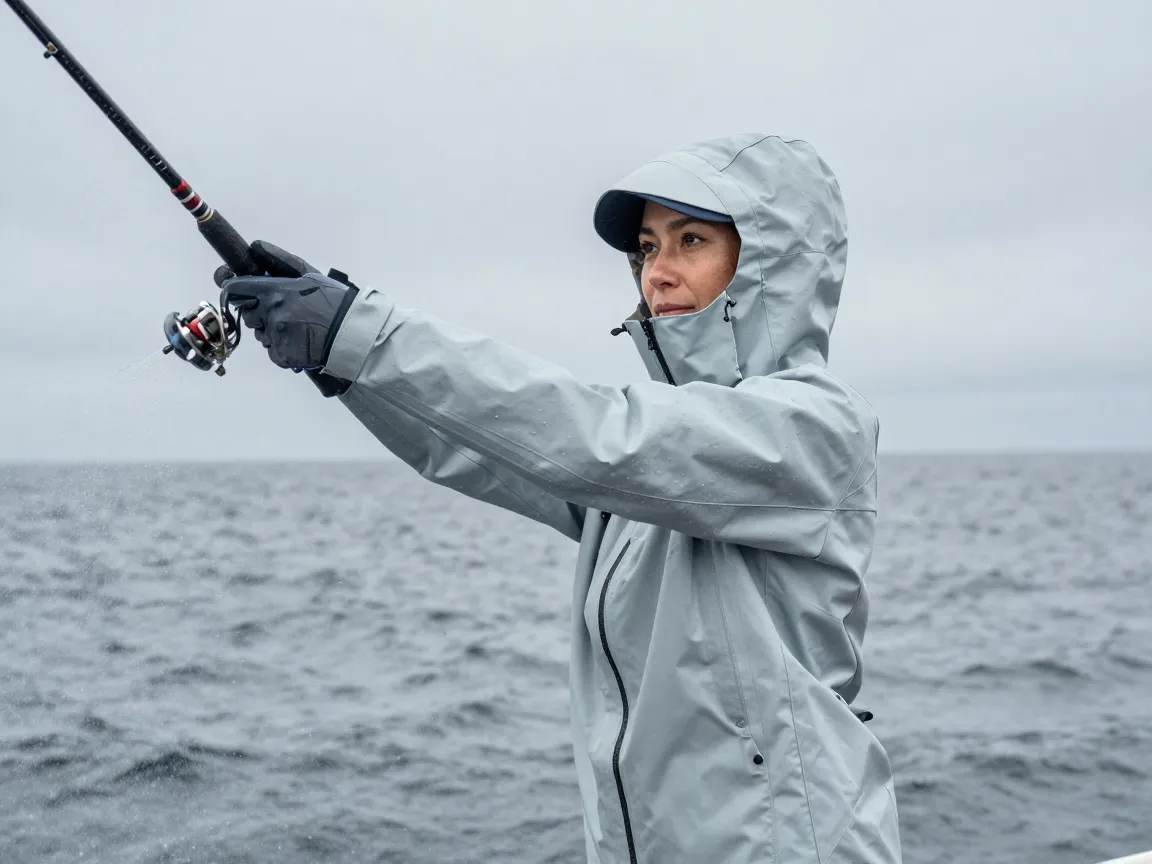
A waterproof fishing jacket designed for women differs from a unisex jacket in three measurable ways: sleeve length calibrated to women’s arm proportions, a torso length that covers the lower back when casting (arms extended forward), and hood geometry that fits a smaller average head without spilling over the eyes.
Patagonia’s women’s waterproof fly-fishing outerwear, including its Swiftcurrent Wading Jacket, describes its philosophy as “function-first fly fishing apparel engineered for versatility.” That means sealed seams, underarm vents for heat management during active fishing, and a cut that allows full arm rotation without pulling the jacket hem up. The mid-November 2026 updates to its women’s category pages show continued investment in women-specific technical patterning rather than color-differentiating a men’s design.
Gill Marine’s waterproof fisherman clothing for women is built for saltwater and offshore conditions where splash and spray are consistent rather than occasional. The technical spec here includes higher waterproofing ratings, reinforced cuffs that sit correctly over gloves, and collar heights that protect the neck from wind without restricting head movement. Gill labels each garment’s fit type explicitly, which removes guesswork when buying based on a size chart alone.
Orvis’s approach on both sides of the Atlantic stresses that women’s waterproof outerwear should be made to fit a woman’s body right, not just fit differently. The distinction is about engineering intent. A jacket patterned from a women’s block from the first draft produces different proportions than one adjusted retrospectively from a men’s template. When evaluating any waterproof fishing jacket, check the stated torso length at your size and compare it to your actual back length from collar to waist. If those numbers diverge by more than two inches, the jacket will ride up during casting.
Conclusion
The clearest next step is to narrow your list to the garment categories where fit failures cost you the most, whether that’s a sun shirt that pulls across the shoulders on the cast or a wading pant that gaps at the back. Start with one piece from a brand that publishes women-specific sizing specs rather than a unisex chart with a narrower shoulder measurement, compare sleeve and torso lengths to your actual body measurements, and buy from a retailer with a workable return policy. The women’s fishing apparel category has matured enough in 2026 that you should not have to compromise between fit and function.