Prepping Food Survival List Staples Every Fishing Prepper Needs
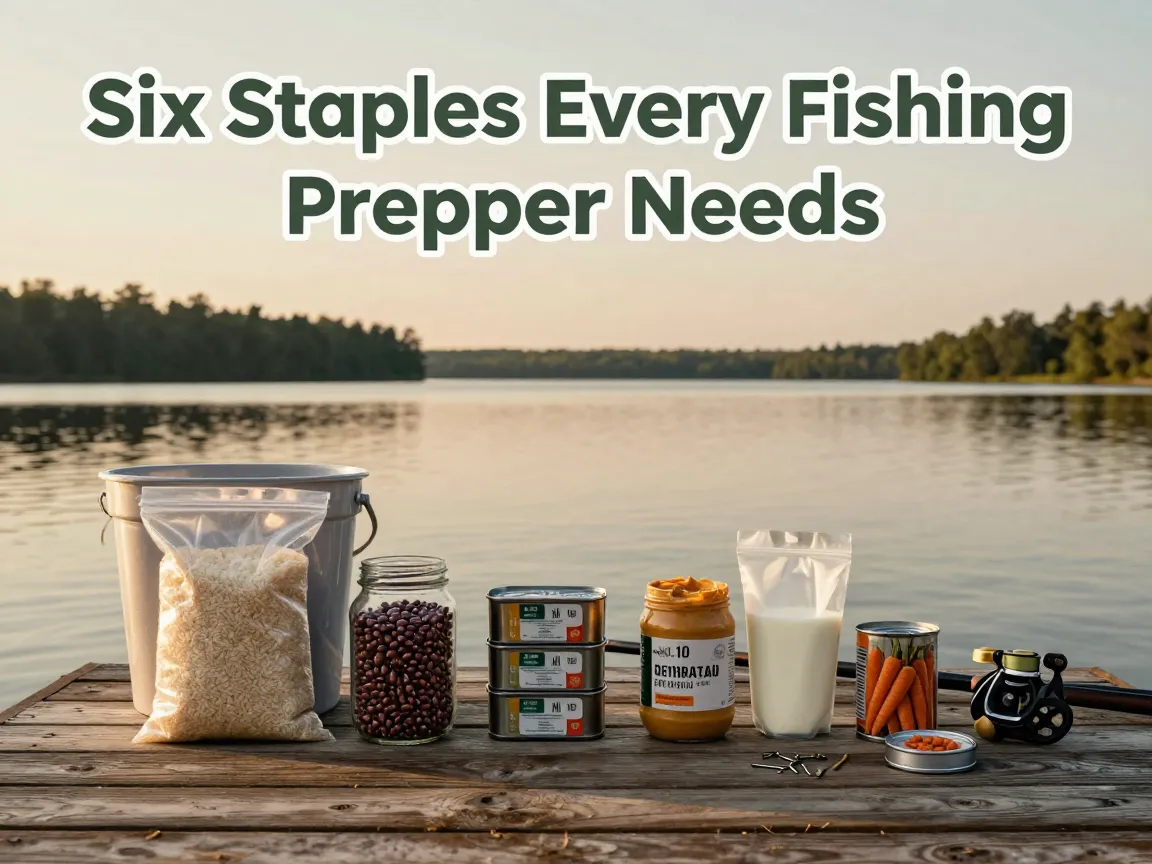
Only about 39 percent of American households maintain a 30-day emergency food supply, yet millions live within a few miles of fishable water and treat that proximity as a backup plan without stocking a single shelf around it. Fishing alone does not keep you fed. The 6 prepping food survival list staples every fishing prepper needs are the bridge between “I can catch something” and “my household eats reliably for months.” This article covers each staple category in enough detail to act on, with specific quantities and product notes where they matter.
Disclosure: This post contains affiliate links. As an Amazon Associate, we earn from qualifying purchases, and at no extra cost to you.
Key Takeaways
- Fishing is a harvest layer, not a pantry replacement. Stored staples carry you through low-catch days, bad weather, and winter.
- Grains and beans form the caloric foundation. Everything else supplements them.
- Preserved fish (canned tuna, canned salmon) belongs in the pantry as an independent staple, separate from whatever you catch.
- Fats and calorie-dense spreads like peanut butter deliver more energy per ounce than almost any shelf-stable food you can buy at a grocery store.
- Seasonings and baking basics are survival tools, not luxuries. They extend palatability over months and support morale.
- Reliable fishing gear is the food-acquisition tool that makes every other staple category more efficient.
1. Dry Grains: The Caloric Backbone of Any Long-Term Food Plan
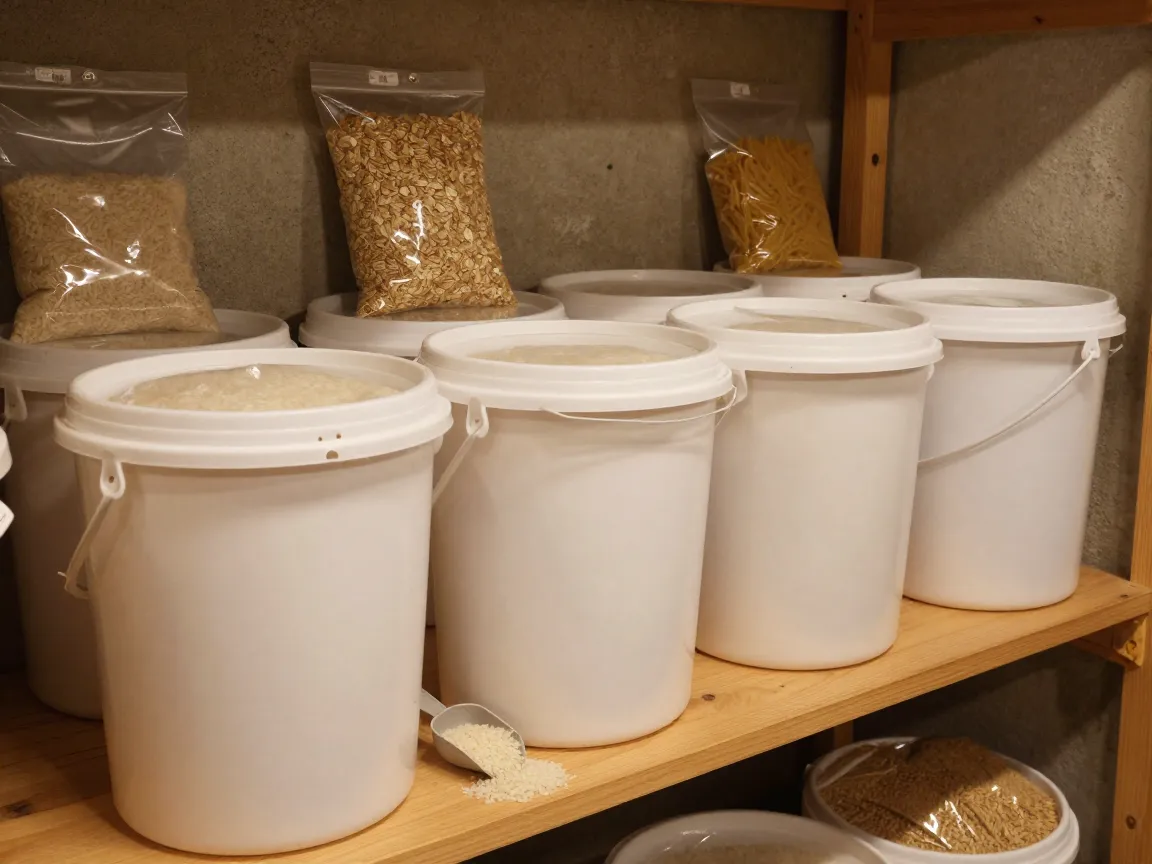
Rice, wheat berries, oats, and pasta are the reason most households can realistically store a full year of calories without a dedicated freeze-drying setup. White rice stored in sealed mylar bags inside five-gallon buckets with oxygen absorbers keeps for 25 to 30 years without meaningful nutrient loss. Rolled oats in the same setup last 20 to 30 years. Pasta, properly sealed, stretches to 25 years. These are not estimates from a marketing sheet, they come from water-activity and oxygen-depletion testing done by university food science programs.
For a fishing prepper, the math is straightforward. An adult doing moderate physical work (which describes most post-disaster scenarios) needs roughly 2,000 to 2,500 calories per day. A pound of dry white rice yields about 1,600 calories. A pound of dry pasta yields around 1,600 calories. A pound of rolled oats delivers about 1,700 calories. Fish, even a good catch, rarely provides more than 400 to 800 calories per person per day without a significant volume of cooking fat added. Grains fill that gap every single day, not just on good fishing days.
A practical starting target from current emergency food-storage planning is one month of raw staples per person, built up over several consecutive months until you reach a full year’s supply. That means roughly 25 to 35 pounds of combined dry grains per person per month. For a household of two adults, a year’s grain layer works out to about 600 to 840 pounds total, split across rice, oats, pasta, and wheat berries based on preference. Wheat berries add the option of grinding fresh flour, which matters if you are also storing yeast or baking soda, which is covered in staple six.
2. Beans and Legumes: Protein That Does Not Depend on the Weather
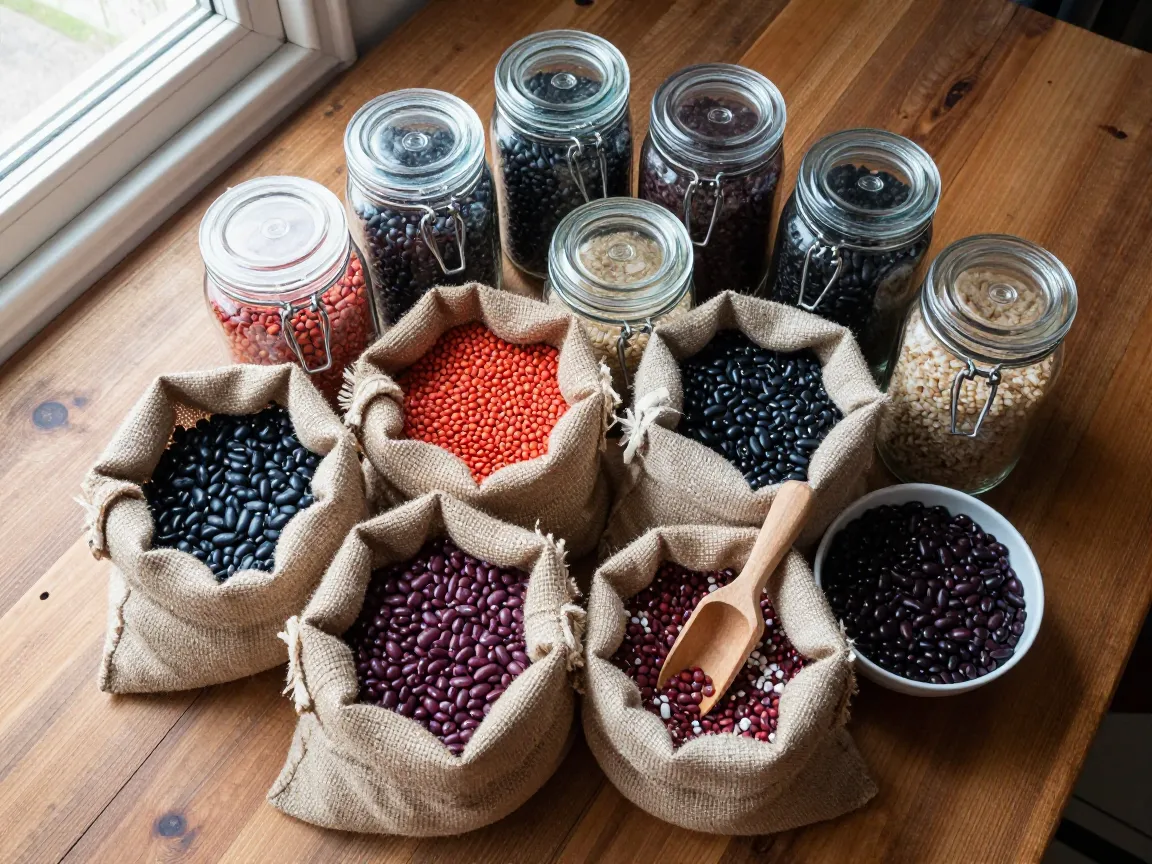
On any day when the fish are not biting, a cold front, muddy water after rain, a stretch of ice cover, beans are your protein source. Pinto beans, black beans, navy beans, and red lentils each bring 15 to 18 grams of protein per cooked cup alongside significant fiber and B vitamins. Lentils have a particular advantage: they cook in 20 to 25 minutes without pre-soaking, which matters when fuel is limited.
Dry beans stored in oxygen-free mylar bags last 25 to 30 years for most varieties. Lentils are slightly shorter at 20 to 25 years but still far outlast any canned alternative. The caloric density is also notable, a pound of dry pinto beans yields roughly 1,550 calories. Stored alongside grains, beans complete the amino acid profile that grains alone leave incomplete, which is why every serious one-year survival food plan lists them as a paired category rather than an optional addition.
For a fishing prepper specifically, beans serve a secondary function: on days when you bring home a solid catch of bass, crappie, or catfish, beans stretch that protein into two or three meals instead of one. A pound of catfish fillets plus a pot of black beans and rice feeds four people. The same catfish alone feeds two. That multiplier effect means your stored beans directly extend the value of every fishing trip you take.
Quantity planning follows the same monthly-per-person framework as grains: about 10 to 15 pounds of mixed dry beans and lentils per person per month is the standard recommendation from multi-year food-storage guides updated in 2026. For a household of two planning a full year, that is 240 to 360 pounds of legumes total.
3. Preserved Fish: The Category Fishing Preppers Consistently Understock
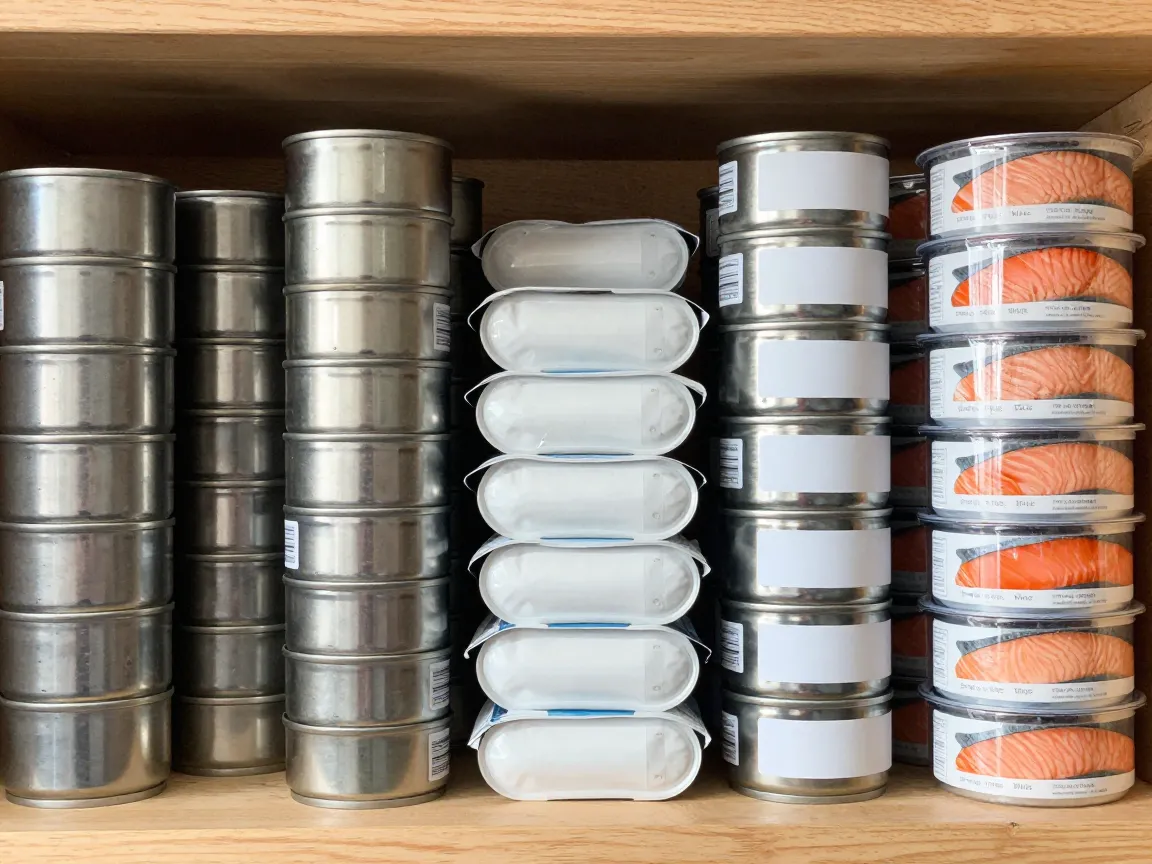
There is a logic trap that catches a lot of fishing preppers. Because they plan to catch fish, they skip stocking fish. The problem is that fishing yields are seasonal, weather-dependent, and skill-dependent. Canned tuna and canned salmon should sit on your shelf as a fully independent food category, not as a backup for days you skip the water.
Canned tuna in water or oil has a commercially printed shelf life of three to five years, though food-safety testing consistently shows it remains safe and nutritionally intact for several years beyond that date when stored below 75 degrees Fahrenheit. A single 5-ounce can of tuna in water delivers about 20 to 25 grams of protein and roughly 100 to 150 calories. Canned salmon runs slightly higher in fat and omega-3 content, making it nutritionally richer per serving, a meaningful consideration in a prolonged scenario where dietary fat from other sources may be limited.
Both products come in multiple formats: chunk light, albacore, smoked, with or without added oil, in pouches that are lighter and more compact than cans. For preppers managing weight and space, tuna and salmon pouches pack more efficiently than cans and have equivalent shelf lives. Practical stocking guidance from current 2026 survival food checklists recommends treating canned tuna and salmon as a “third protein pillar” alongside beans and whatever you catch fresh.
For a minimum useful stock, 36 to 48 cans or pouches per person per year gives you a canned fish option roughly three times per week, which covers low-catch stretches without touching your bean or grain reserves. That is a modest investment that meaningfully reduces pressure on both your fishing and your legume stocks during lean periods.
4. Fats and Calorie-Dense Spreads: The Staple Most Preppers Underestimate
Fat delivers 9 calories per gram, more than twice the caloric density of protein or carbohydrate. In a physical-labor environment, hauling gear, processing fish, maintaining shelter, fat is not optional. It is the fastest way to close the gap between your caloric intake and your caloric expenditure when food volume is constrained.
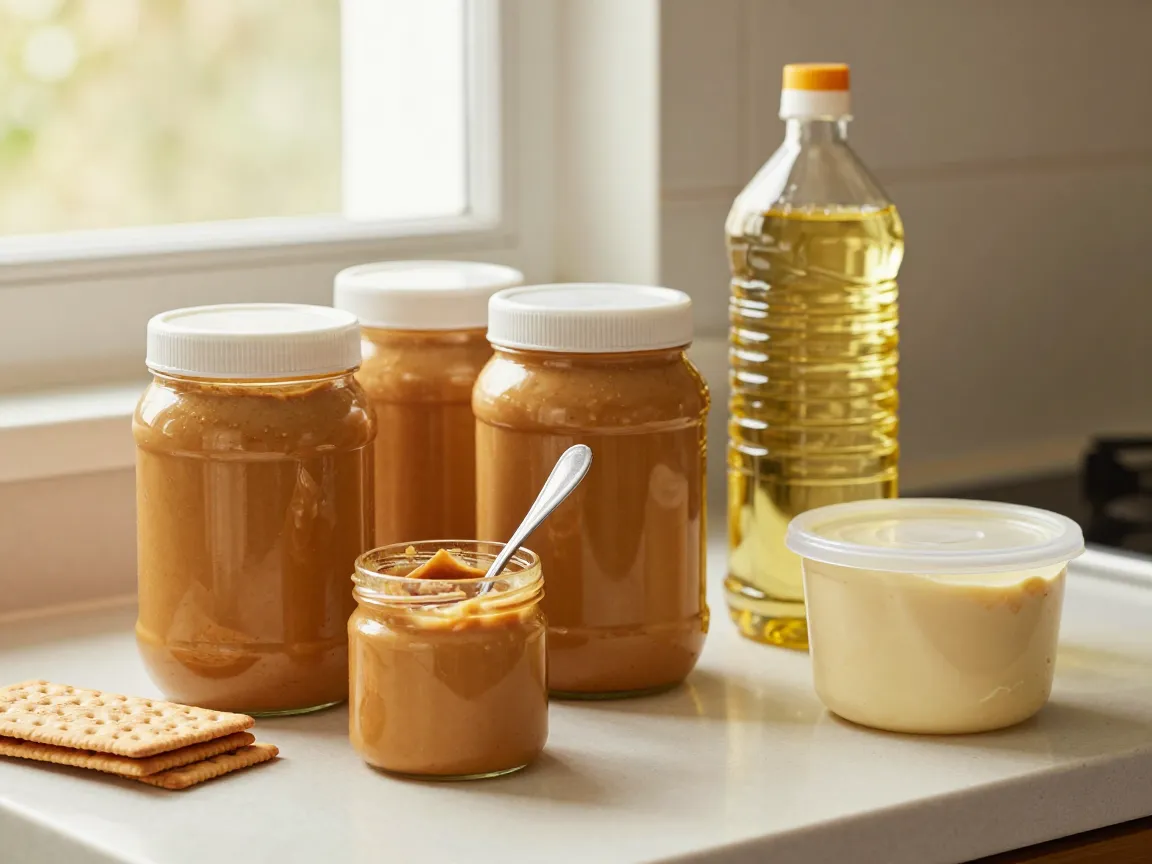
Peanut butter is the most discussed fat staple in current prepper nutrition guides, and the attention is deserved. A two-tablespoon serving delivers about 190 calories, 8 grams of protein, and 16 grams of fat. A standard 40-ounce jar contains roughly 2,500 calories. Commercial peanut butter (the stabilized kind, not natural-separation varieties) has a shelf life of one to two years past its best-by date at room temperature, and can extend further in cool storage. It requires no cooking, pairs directly with crackers, bread, or oats, and has a secondary use that is specific to fishing preppers: peanut butter is an effective dough bait for carp and catfish. You can eat it and use it as bait on the same trip.
Vegetable oil and lard round out the fat category. A quart of vegetable oil holds about 7,700 calories and stores for one to two years at room temperature. Lard stored in sealed containers lasts six months at room temperature and up to a year refrigerated or in cool storage. For cooking over fire, which is likely the dominant cooking method in a grid-down scenario, both fats are essential for frying fish efficiently and preventing protein from sticking to improvised cookware.
A reasonable fat storage target for a fishing prepper is two to four quarts of vegetable oil plus three to six large jars of peanut butter per person per year, supplemented by whatever animal fat you render from caught fish and game.
5. Powdered Milk and Dehydrated Vegetables: Nutritional Insurance for the Long Term
A diet of fish, beans, rice, and fat is filling, but it creates dietary gaps within weeks. Vitamin C, vitamin A, calcium, and several B vitamins drop to deficiency-level intakes when fresh produce and dairy disappear entirely. Powdered milk and dehydrated vegetables are the two most cost-effective shelf-stable options for filling those gaps without a freeze-dryer.
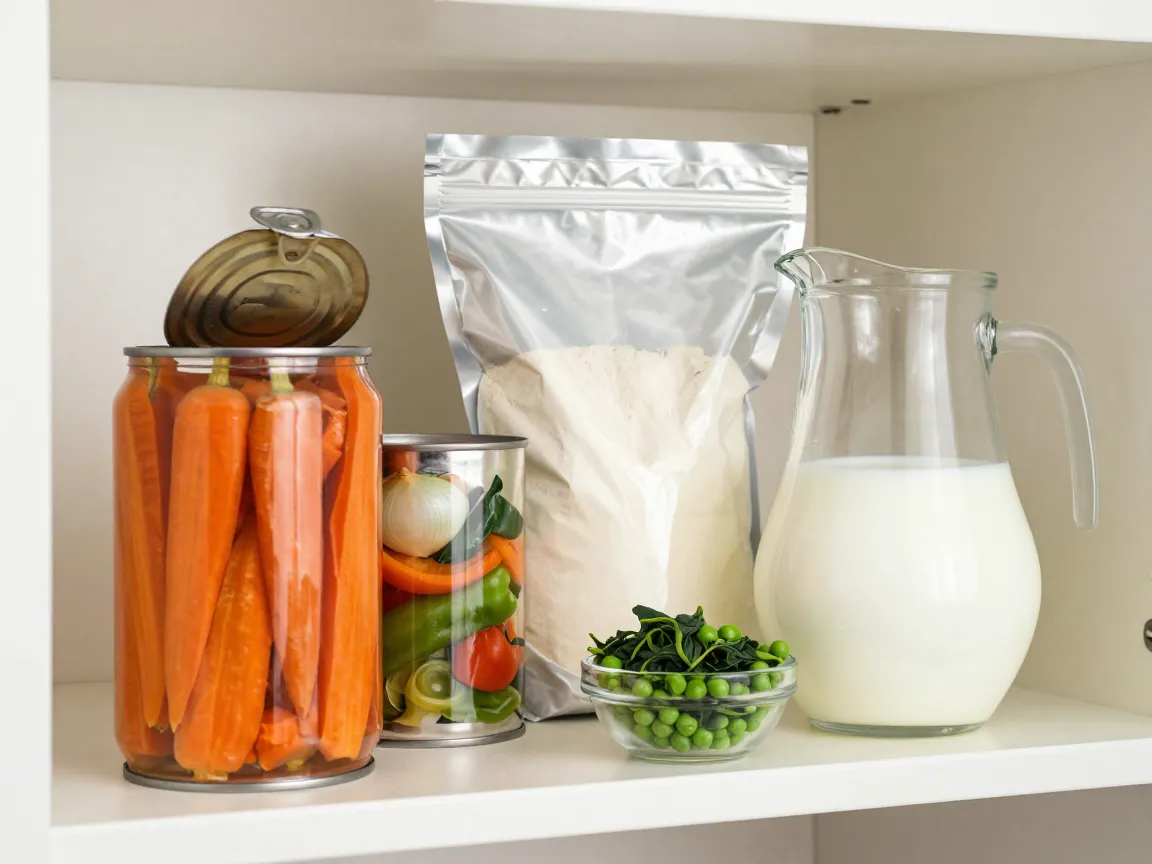
Non-fat dry milk stored in sealed mylar bags with oxygen absorbers lasts 20 to 25 years. It provides calcium (about 300 mg per reconstituted cup), protein (8 grams per cup), and riboflavin. For preppers with children, calcium intake is non-negotiable, there is no practical field substitute for it. Reconstituted dry milk also works directly in oatmeal, baked goods, and sauces made from stored grains, which makes it a functional ingredient rather than just a supplement.
Dehydrated vegetables, carrots, onions, bell peppers, spinach, peas, come in bulk cans with 10-to-25-year shelf lives depending on the product and storage temperature. They reconstitute in boiling water and add vitamins, fiber, and variety to grain-and-bean base meals. For a fishing prepper, dehydrated onions and carrots added to a fish stew do more for palatability and nutrition than almost any other single shelf-stable ingredient. A core one-year survival plan from 2026 food-storage guidance lists dehydrated vegetables explicitly alongside beans, rice, oats, pasta, wheat, sugar, salt, and dried milk as a nine-item foundational staple set, not as an optional upgrade.
A starting point: 10 to 15 pounds of non-fat dry milk powder and two to four large (no. 10) cans of assorted dehydrated vegetables per person for a three-month supply, scaled up proportionally for longer terms.
6. Fishing Gear as a Force-Multiplying Food Staple
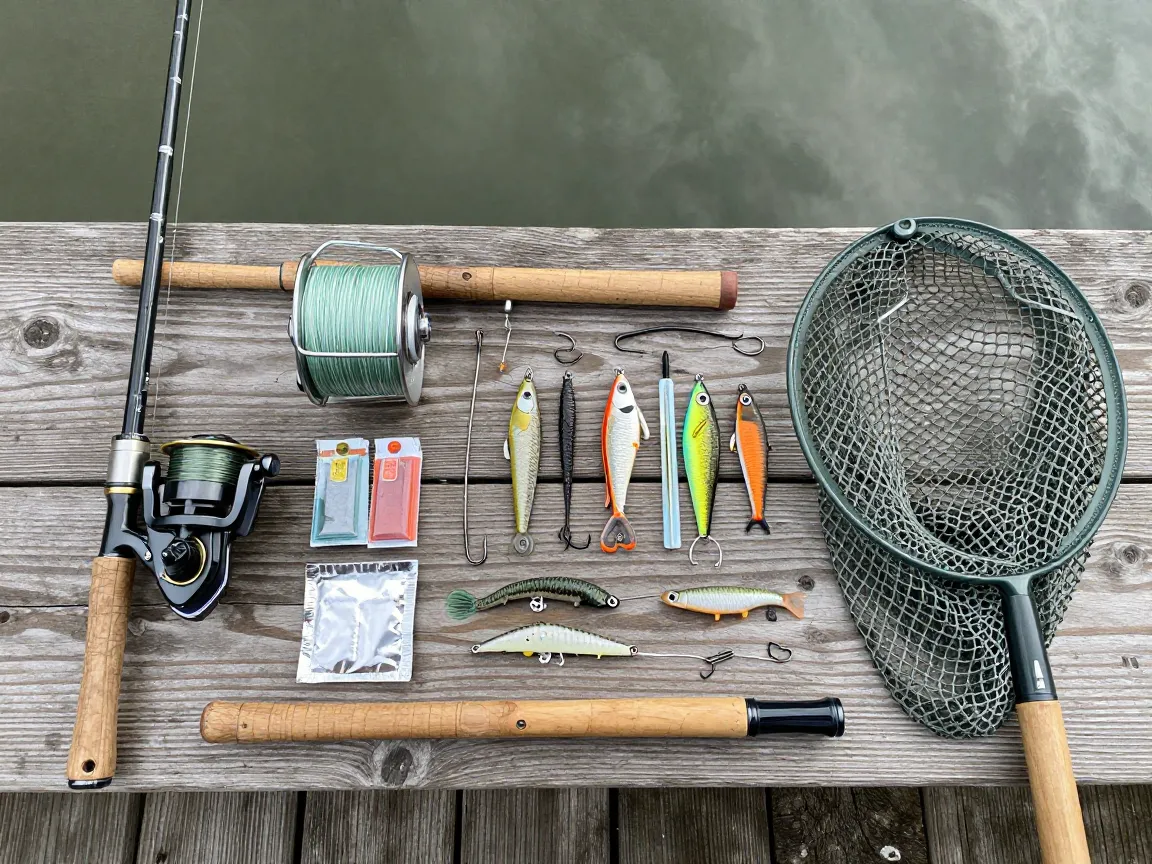
Gear is not food. But for a water-adjacent prepper, the right fishing setup is the tool that converts wild protein from a possibility into a consistent daily supply, which makes it as essential to your food plan as anything on a pantry shelf.
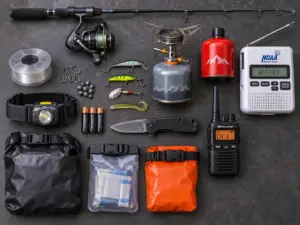
Current survival fishing guidance identifies a minimum useful kit as: at least 100 yards of monofilament line in the 10-to-20-pound test range on a reel, a selection of metal hooks in sizes 4 through 1/0, a few sinkers, and several soft plastic worms or jigs. This covers most freshwater situations from panfish to bass to catfish. A compact variation from a detailed survival fishing kit published in late 2024 and still in active circulation in 2026 uses 150 yards of 15-pound test line on a simple wooden dowel, artificial baits including Fish-Bites and Berkley Gulp products, a small sheet of aluminum foil for field cooking, and pre-packed seasoning sachets containing salt, pepper, Old Bay, lemon juice powder, curry, and powdered coconut milk. That entire kit fits in a quart-size bag and addresses both the catching and the cooking in one compact package.
Beyond the basic rod-and-reel setup, nets and passive gear shift fishing from an active time-investment into a passive food-acquisition system. A large gill net runs approximately $300 and can operate overnight without supervision, potentially yielding enough fish for multiple meals while you sleep or complete other tasks. Trotlines, a main line with multiple hooks spaced along it, anchored at both ends, achieve a similar passive-harvest result at much lower cost using line and hooks you likely already stock. Both nets and trotlines can also be improvised from natural plant fibers or scavenged cordage in zero-resource scenarios, though commercial versions are more reliable and faster to deploy.
A small boat or kayak in the $300 to $800 range opens deeper water, faster currents, and areas unreachable from shore, expanding the available fishing zone substantially. For preppers with water access, that investment directly translates into a larger and more consistent protein source. Spare hooks, spare line, a few backup lures, and a hand net for landing fish complete the package. The rule that experienced survival-fishing resources apply consistently in 2026 is simple: fish every day you can, preserve what you do not eat immediately, and treat your gear as a food-production asset that requires the same maintenance and redundancy as your pantry.
Quick Comparison
| Staple | Primary Role | Shelf Life (sealed) | Notes for Fishing Preppers |
|---|---|---|---|
| Dry Grains | Caloric base | 20-30 years | Pairs with any fish meal; fill caloric gap on no-catch days |
| Beans & Legumes | Protein + fiber | 20-30 years | Extends fish meals; lentils need no soak |
| Preserved Fish | Backup protein | 3-5 years (longer when cool) | Stock independently of your fishing output |
| Fats & Spreads | Calorie density | 1-2 years (peanut butter) | Peanut butter doubles as carp/catfish bait |
| Powdered Milk & Dehydrated Veg | Micronutrients | 10-25 years | Prevents deficiency on long-term stores |
| Fishing Gear | Protein acquisition | Indefinite (with maintenance) | Passive gear (nets, trotlines) multiplies daily yield |
Conclusion
The 6 prepping food survival list staples every fishing prepper needs work as a system: grains and beans carry your calories, preserved fish buffers your fresh catch, fats prevent energy deficits, powdered milk and dehydrated vegetables prevent nutritional deficiency, and reliable fishing gear ties the whole strategy to the water you live near. No single item on that list does the job alone.
The most useful next step is to audit what you already have against each category and find the gap with the worst consequences. For most fishing preppers, that gap is usually either fat reserves or preserved fish, categories that often get skipped because the pantry “feels full” after grains and beans are stocked. Fill that gap first.