Fishing Rods and Reels Buying Tips That Help Beginners Choose Gear With Confidence
Roughly 54 million Americans fish each year, yet the most common reason first-timers quit before their second trip is gear that fights them instead of helping them. The wrong rod and reel combo does not just make fishing harder, it makes it confusing and discouraging. These 6 fishing rods and reels buying tips that help beginners choose gear with confidence cut through the marketing noise and give you a clear framework so you spend your money on something that actually works.
Disclosure: This post contains affiliate links. As an Amazon Associate, we earn from qualifying purchases, and at no extra cost to you.
1. Match Reel Type to Your Actual Skill Level
The first decision, which type of reel to buy, matters more than brand, price, or color. There are three common types: spincast (push-button), spinning, and baitcasting. Each has a specific use case, and picking the wrong one is the fastest way to spend your first afternoon untangling line instead of fishing.
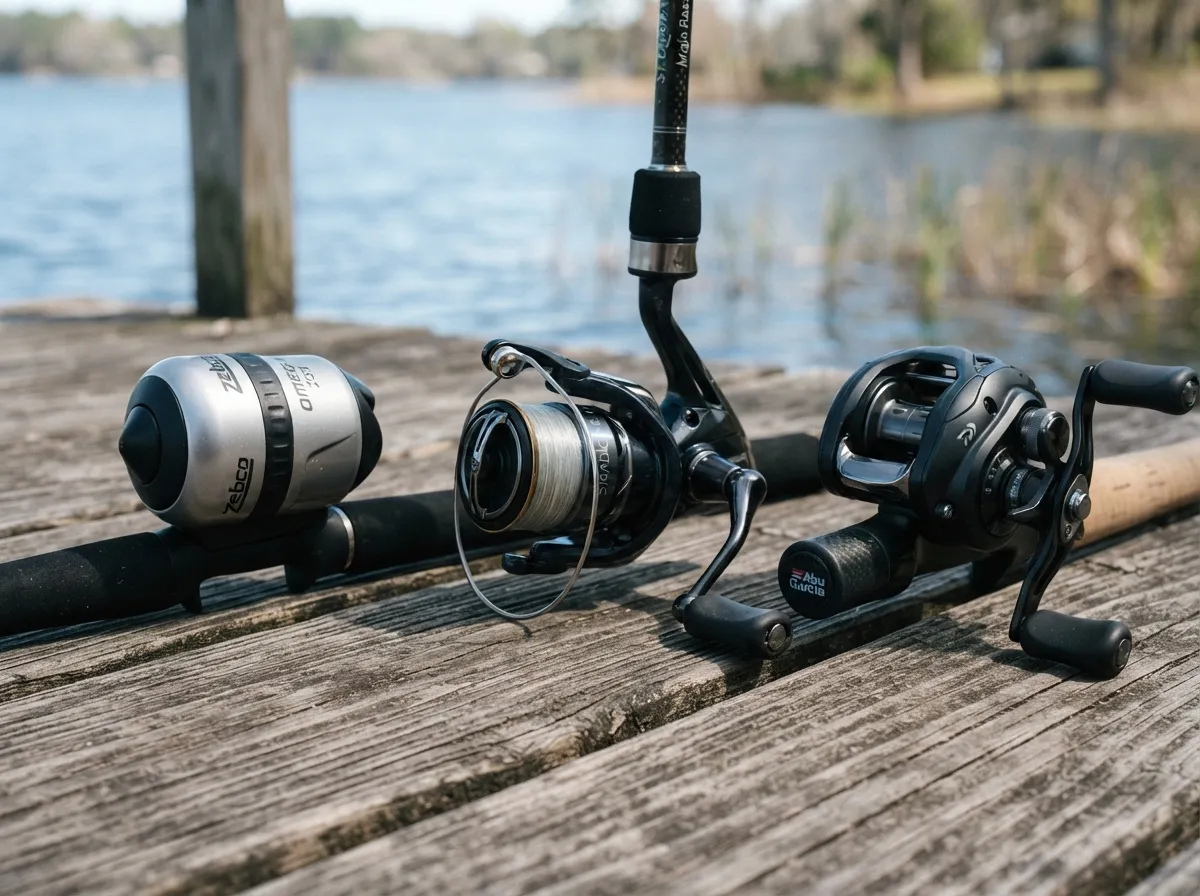
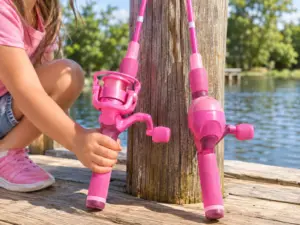
Spincast reels have an enclosed face with a single push-button to release line. They are low-maintenance, nearly tangle-free, and ideal for children or adults who have never held a rod before. The trade-off is limited casting distance and sensitivity. For many adults, they feel like training wheels after a few sessions.
Spinning reels sit below the rod with an open-faced spool and a wire bail. They are the standard recommendation for beginners who are adults, and for good reason: they handle light lures and live bait without backlash, the learning curve is measured in hours rather than weeks, and nearly every fishing technique for freshwater beginners, panfish, trout, bass, works well on a spinning setup. Most serious beginner guides in 2026 converge on a 2500 to 3000 size spinning reel as the starting point.
Baitcasting reels sit on top of the rod and require precise thumb pressure during the cast to prevent the spool from overrunning the line. When that overrun happens, you get what anglers call a “bird’s nest”, a dense tangle that can take fifteen minutes to clear. Skip the baitcaster entirely until you have at least one full season of spinning reel experience.
2. Understand Rod Power and Action Before You Shop
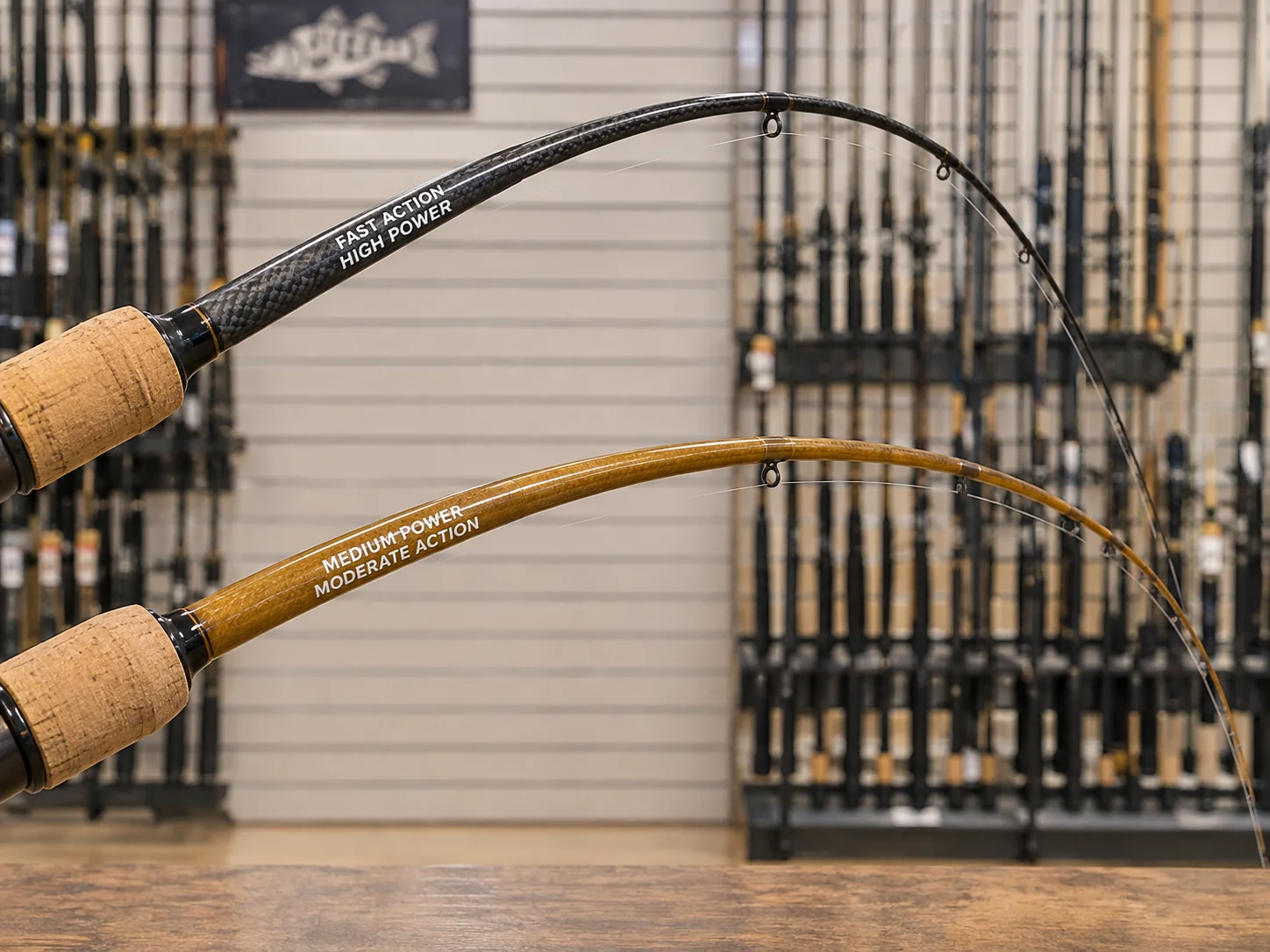
Walk into any tackle shop or scroll any online listing and you will see terms like “medium power” and “moderate action” printed on a rod. Most beginners skip right past them. That is a mistake, because these two specs, power and action, determine what line, lures, and fish the rod can handle.
Power refers to how much force it takes to bend the rod. Light power rods flex easily; heavy power rods stay stiff under load. For a first freshwater outfit, medium power hits the widest range of species and techniques. It handles bass, panfish, trout, and most standard lures without overloading the blank or leaving you too undergunned for a decent-sized fish.
Action describes where the rod bends along its length. A fast-action rod bends mostly in the top quarter of the blank, which gives sensitivity but less casting forgiveness. A moderate action bends further down toward the middle, loading more of the blank during the cast, which makes it more forgiving when your casting stroke is inconsistent. For beginners, moderate action is easier to cast accurately. These ratings are printed on the rod above the handle, take thirty seconds to find them before buying.
One more detail worth knowing: rod blanks come in fiberglass, graphite, or a composite of both. Graphite is lighter and more sensitive, but it chips and cracks more easily if handled roughly. Fiberglass is heavier but far more durable. Composite blanks split the difference. For a first rod, fiberglass or composite is worth prioritizing over ultra-light graphite sensitivity you will not yet feel anyway, broken tips from accidental drops or over-loading are the single most common complaint among new anglers.
3. Start With a 6’6″ to 7′ Spinning Combo
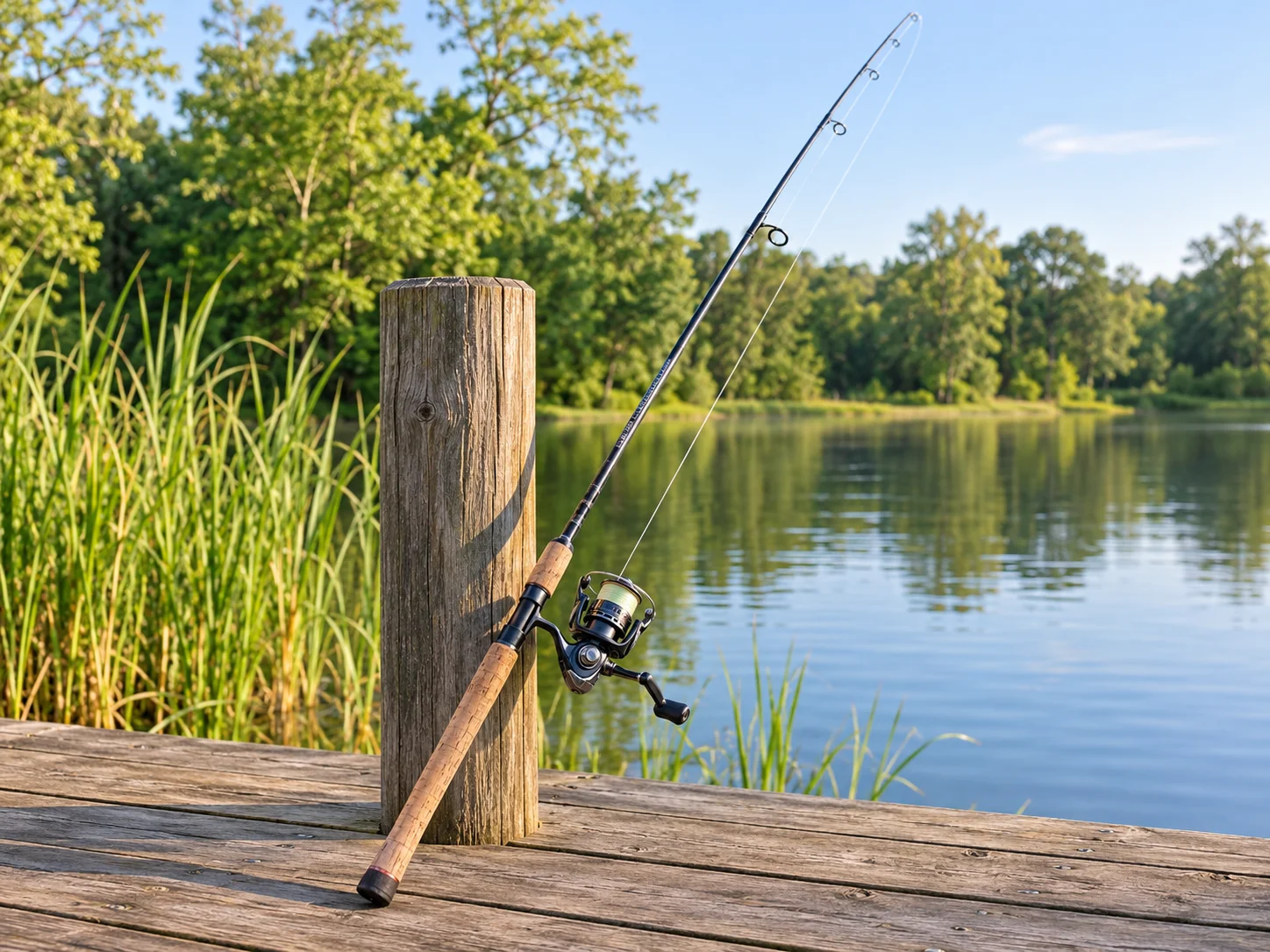
Specific numbers matter more than general advice here. The rod length that works for the widest variety of beginner scenarios, bank fishing, light boats, docks, ponds, rivers, is between 6 feet 6 inches and 7 feet. That range gives you enough casting leverage to reach reasonable distances without becoming unwieldy in tight spaces.
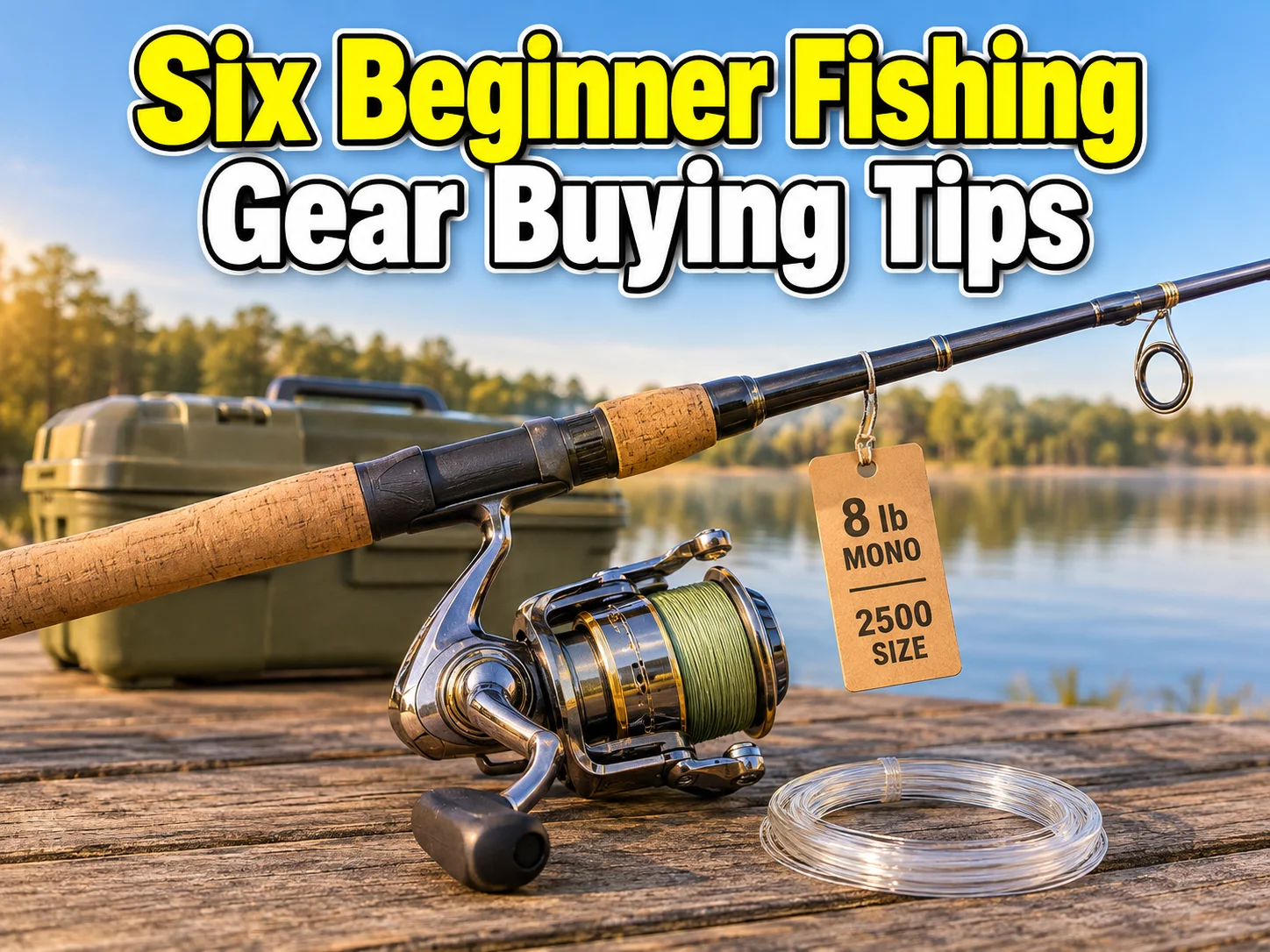
Paired with a 2500 or 3000 size spinning reel spooled with 8 to 10 pound monofilament, this setup handles panfish, bass, and trout without asking you to swap gear between species. Monofilament line in that weight range is forgiving when you over-tighten the drag or set the hook too hard, and it is easy to retie when you clip off a worn section.
Pre-spooled, matched combos sold as a single unit are worth the premium for a first purchase. Buying a rod and reel separately and then spooling line yourself requires knowing line-to-spool ratios, avoiding line twist during spooling, and verifying that the rod and reel ratings align. A matched combo that comes ready out of the box removes three variables at once. Several late-2026 roundups specifically flag whether a combo is pre-spooled as a primary criterion for beginner suitability.
The 7-foot ceiling also matters. Beyond 7 feet, rods become noticeably harder to control in confined areas and heavier to hold during long sessions. Longer rods have their place, surf fishing, specific bass techniques, but that is not a beginner’s first problem to solve.
4. Read the Line and Lure Ratings on the Rod and Reel
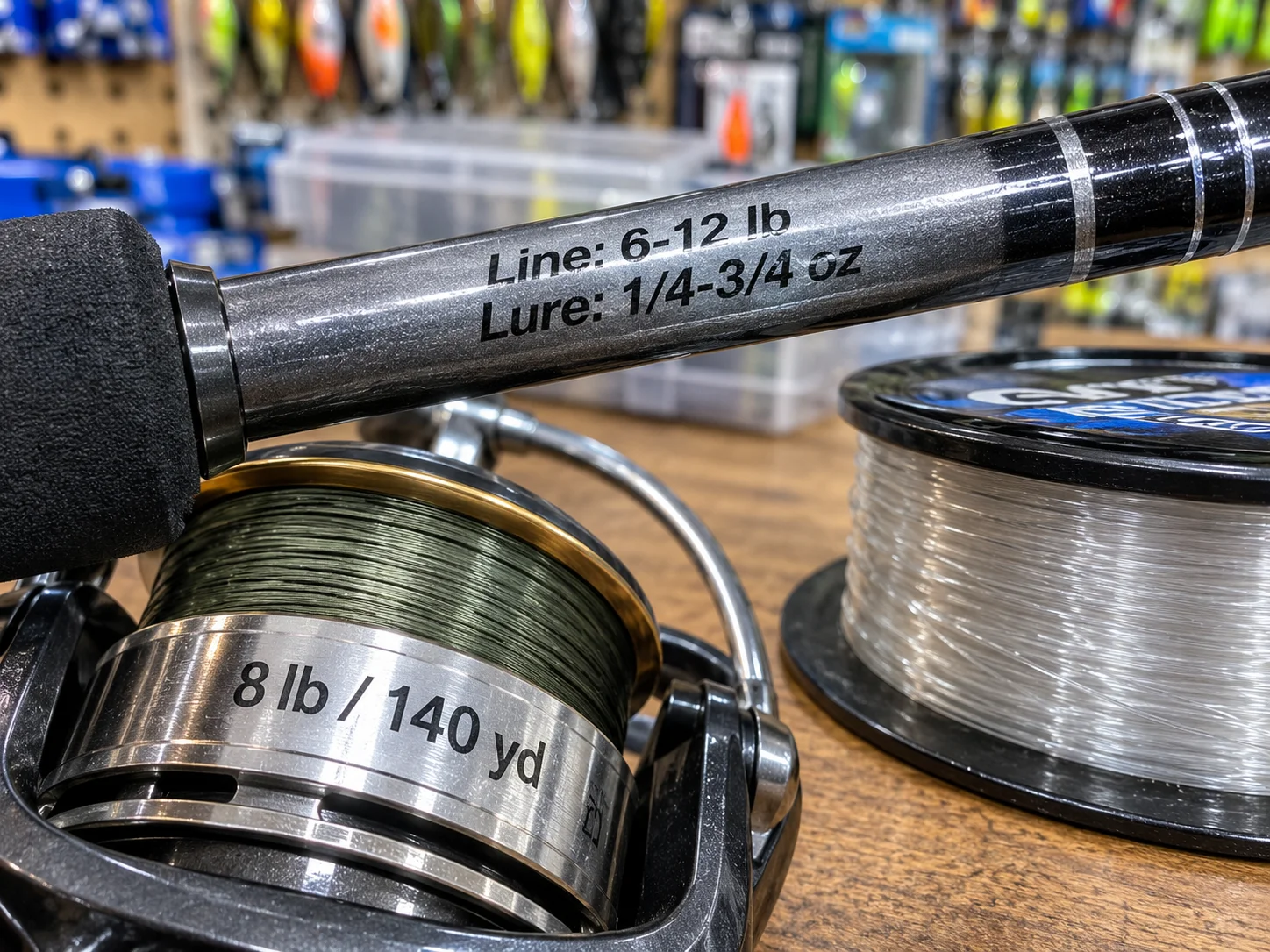
Every rod sold in 2026 has a label above the handle that lists a line weight range and a lure weight range. A label reading “Line: 6-12 lb / Lure: 1/4-3/4 oz” is not a suggestion, it is the operating envelope the blank was designed around. Fish outside those ranges and the rod either fails to load properly during the cast or risks snapping under stress.
The reel has matching information either stamped on the spool or printed on the box, stating line capacity in a format like “8 lb / 140 yd.” That tells you how much line fits at that diameter. The goal is to make sure the rod’s line rating, the reel’s capacity marking, and the line you buy all agree with each other. A medium-power rod rated for 6 to 12 pound line, a 2500-size reel with capacity for 8 pound monofilament, and a spool of 8 to 10 pound mono all point in the same direction. That is a matched system.
Mismatched components create concrete problems. Too heavy a line on a light rod reduces casting distance and increases break-offs at the tip. Too light a line on a heavier setup loses sensitivity and snaps on a solid hook-set against a decent fish. Neither scenario is obvious until it costs you a lure or a fish.
One warning specific to reel shopping: size numbers differ by brand. A “2500” on one brand is not the same physical size as a “2500” on another. Use the line-capacity marking as your anchor, not the size number, when comparing reels from different manufacturers.
5. Check Balance, Drag, and Build Quality Before You Buy
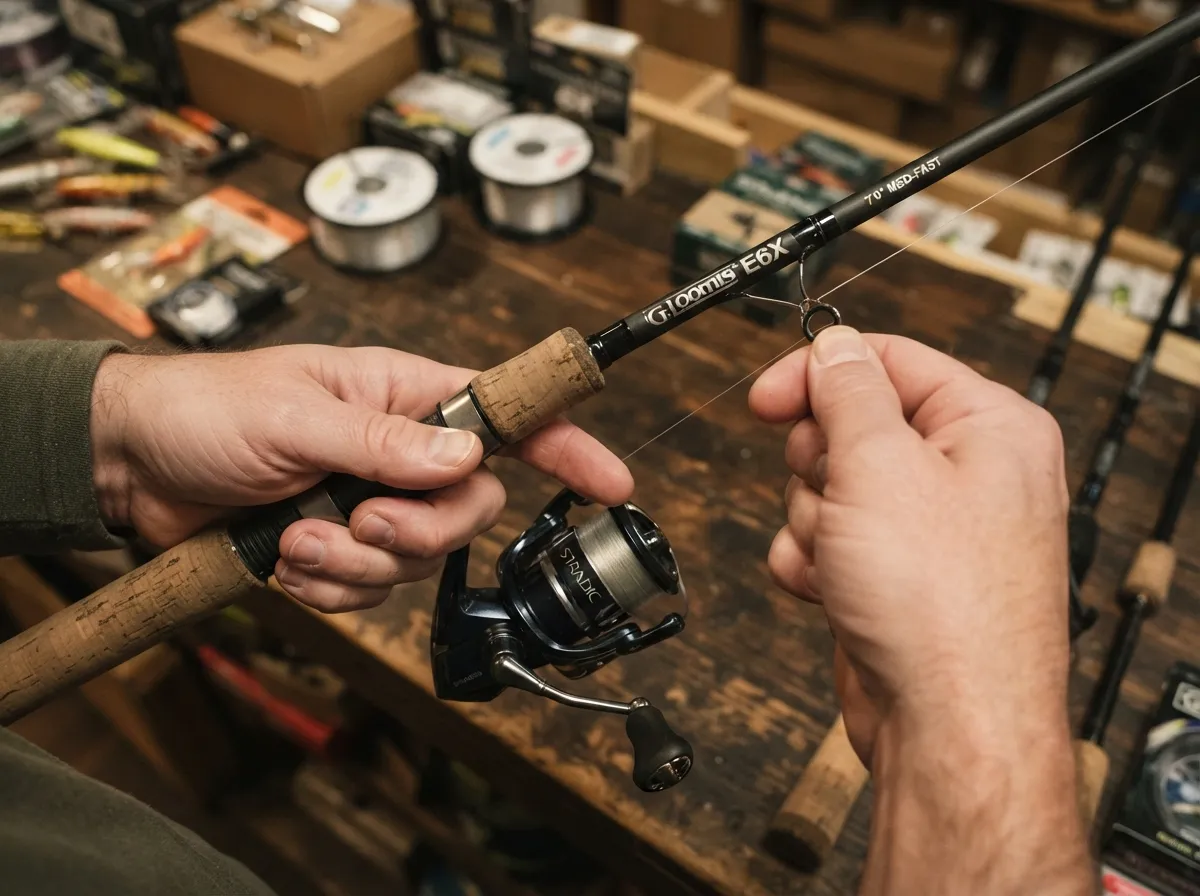
A rod and reel combo that looks right on paper can still feel wrong in your hand. Three physical checks, balance, drag smoothness, and guide condition, tell you more than any spec sheet.
Balance is the simplest check. With the reel mounted on the rod, hold the outfit at the front of the handle grip with one finger. The outfit should balance close to that point without tipping sharply toward the tip or the reel. When a reel is too heavy for the rod, the whole setup feels rear-heavy and fatiguing after thirty minutes. When the reel is too light, the tip pulls down and reduces your casting control. Neither is obvious on a spec sheet, but both are obvious in your hand in under ten seconds.
Drag is the friction system that lets line slip out under a set load when a fish runs. Turn the drag knob down, pull the line by hand, and slowly increase the knob while pulling. The resistance should build smoothly with no jerks or grinding. A dragging system that stutters will cause line breaks at the worst moments. This check takes about twenty seconds and can save you a ruined fishing trip.
Guides, the small rings along the rod that the line passes through, should be inspected closely. Run your fingernail inside each ring. Any roughness, crack, or chip will fray your line with every cast, causing invisible damage that leads to unexpected break-offs. One-piece stainless steel guides hold up better than multi-piece or aluminum oxide options under rough beginner handling.
Also grip the reel seat and try to wobble the reel. It should sit completely firm. Any play between reel foot and seat translates directly to imprecise casting and an annoying rattling sound that gets worse over time.
6. Set a Realistic Budget and Verify Specs Before You Buy
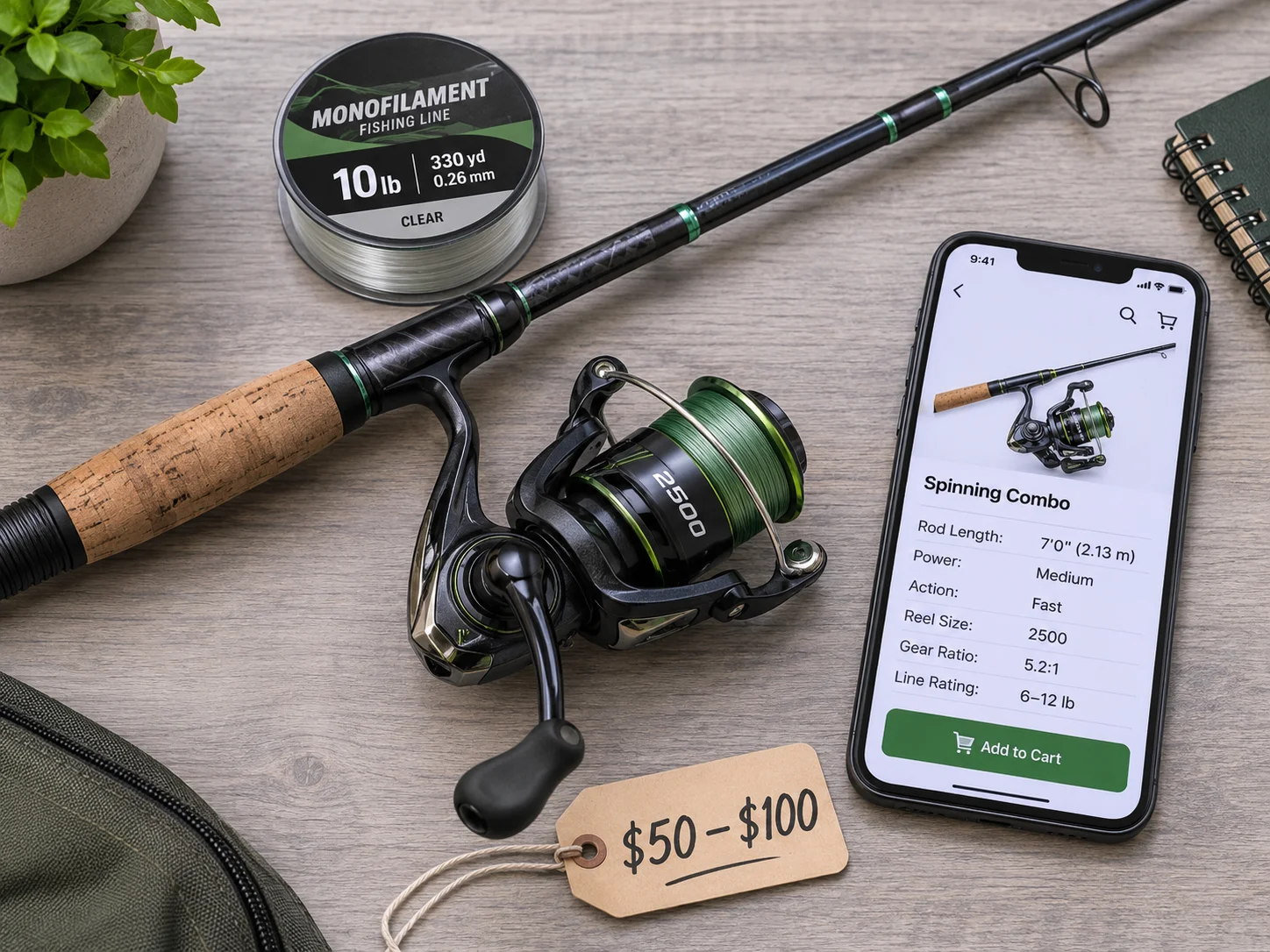
For a first freshwater spinning combo in 2026, the functional budget range is roughly $50 to $100. Below $50, build quality tends to suffer in the parts that fail first under beginner use, guide inserts, drag washers, and bail springs. Above $150 for a first setup, you are paying for performance features that beginner casting technique will not access, such as ultra-fine gear tolerances and sub-6-ounce reel weights. Entry-level reels around 6.7 ounces from brands like 13 Fishing and comparable mainstream manufacturers hit the balance of durability and smoothness in that range without asking you to spend on features you cannot yet feel.
A specific caution worth taking seriously: online listings are frequently mis-labeled. The model number in the listing title may not match the rod length, power, or reel size in the description. Cross-check every listing against the manufacturer’s official product page, verify rod length, power, action, reel size, gear ratio, and line rating before clicking purchase. This matters especially during deal seasons when third-party sellers push high volumes of inventory with copy-pasted or generic descriptions.
Gear ratio is one spec that beginners often ignore and sellers often highlight. A 6.2:1 ratio means the spool rotates 6.2 times for each full turn of the handle, making it a relatively fast retrieve. A 5.2:1 is slower. For general freshwater beginners, ratios between 5.2:1 and 6.2:1 cover nearly every technique well. Chasing a 7.1:1 “high-speed” reel as a first purchase is marketing working as intended, you do not need it yet.
One last point on drag numbers: most marketing material leads with maximum drag figures. A reel advertising “20 lb max drag” sounds impressive but rarely matters for a beginner on 10-pound line. Working drag, the setting you actually fish, should be about 25 to 30 percent of line test, so around 2.5 to 3 pounds on 10-pound mono. The 20-pound max is headroom, not a performance indicator you will use. Buy the reel that feels smooth and fits the system; ignore the ceiling drag number.
Conclusion
The core logic running through all six of these tips is the same: buy a matched system, not a collection of individual parts. A 6’6″ to 7′ medium-power spinning rod, a 2500 to 3000 size reel, and 8 to 10 pound monofilament form a foundation that works across dozens of beginner scenarios. Beyond that, the physical checks, balance, drag, guides, reel seat, take under two minutes at the counter and filter out gear that looks right but performs poorly. If you do one thing before your next purchase, pull up the manufacturer’s product page and verify that every spec on the listing matches the actual model. That single habit prevents most beginner gear mistakes before they happen.