Boy Scout 10 Essentials Every Fisherman Should Carry in the Wild
Roughly 153 million fishing trips are taken in the United States each year, yet search-and-rescue records from the National Park Service show that inadequate gear ranks among the top three contributing factors in backcountry emergencies. That gap between how many people fish in remote water and how few carry a proper safety kit is exactly what the 6 Boy Scout 10 Essentials every fisherman should carry in the wild addresses directly.
Disclosure: This post contains affiliate links. As an Amazon Associate, we earn from qualifying purchases, and at no extra cost to you.
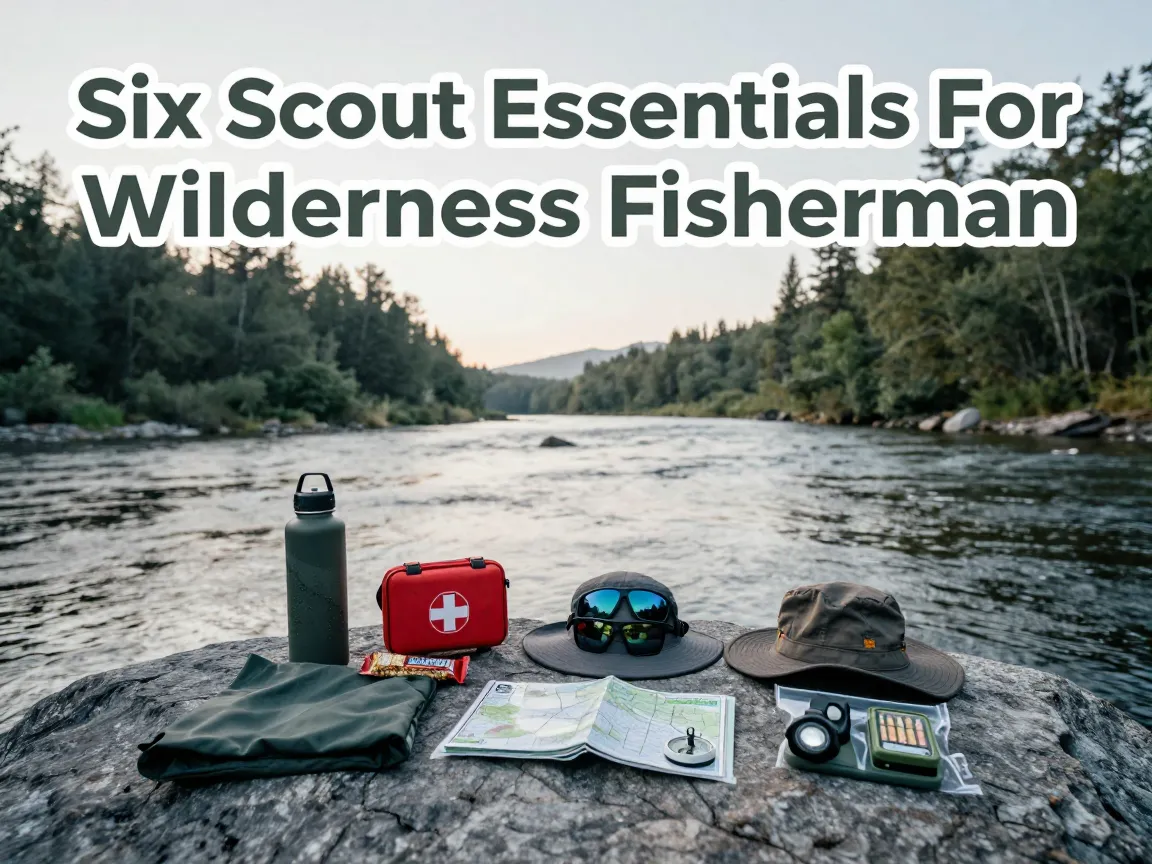
The Scout program has maintained its 10 Outdoor Essentials for decades, and official BSA publications confirmed in late 2026 that the list remains unchanged. It covers a pocketknife, first-aid kit, extra clothing, rain gear, flashlight or headlamp, trail food, water, matches or fire starters, sun protection, and a map with compass. For a fisherman heading into backcountry, six of those categories carry disproportionate weight. Miss any one of them on a remote lake or river system and what starts as a day trip can become a survival problem.
This article identifies those six, explains what they mean in practical fishing terms, and shows exactly how to pack them alongside your rod and reel.
Key Takeaways
- The BSA 10 Outdoor Essentials, confirmed unchanged in 2026, form the safety baseline all backcountry anglers should build from.
- Six of those ten categories matter most in fishing-specific scenarios: hydration and fuel, first aid, sun protection, weather protection, navigation, and light plus fire.
- Fishing-specific items like tackle and waders are additions, not replacements, for Scout essentials.
- A 1-liter minimum water bottle is a concrete starting point; Scout troop checklists from Avon Troop 333 specify this exact volume.
- Carrying these six items does not require a heavy pack; modern lightweight versions of each fit inside a standard fishing vest or daypack.
1. Water and Trail Food for Sustained Energy on the Water
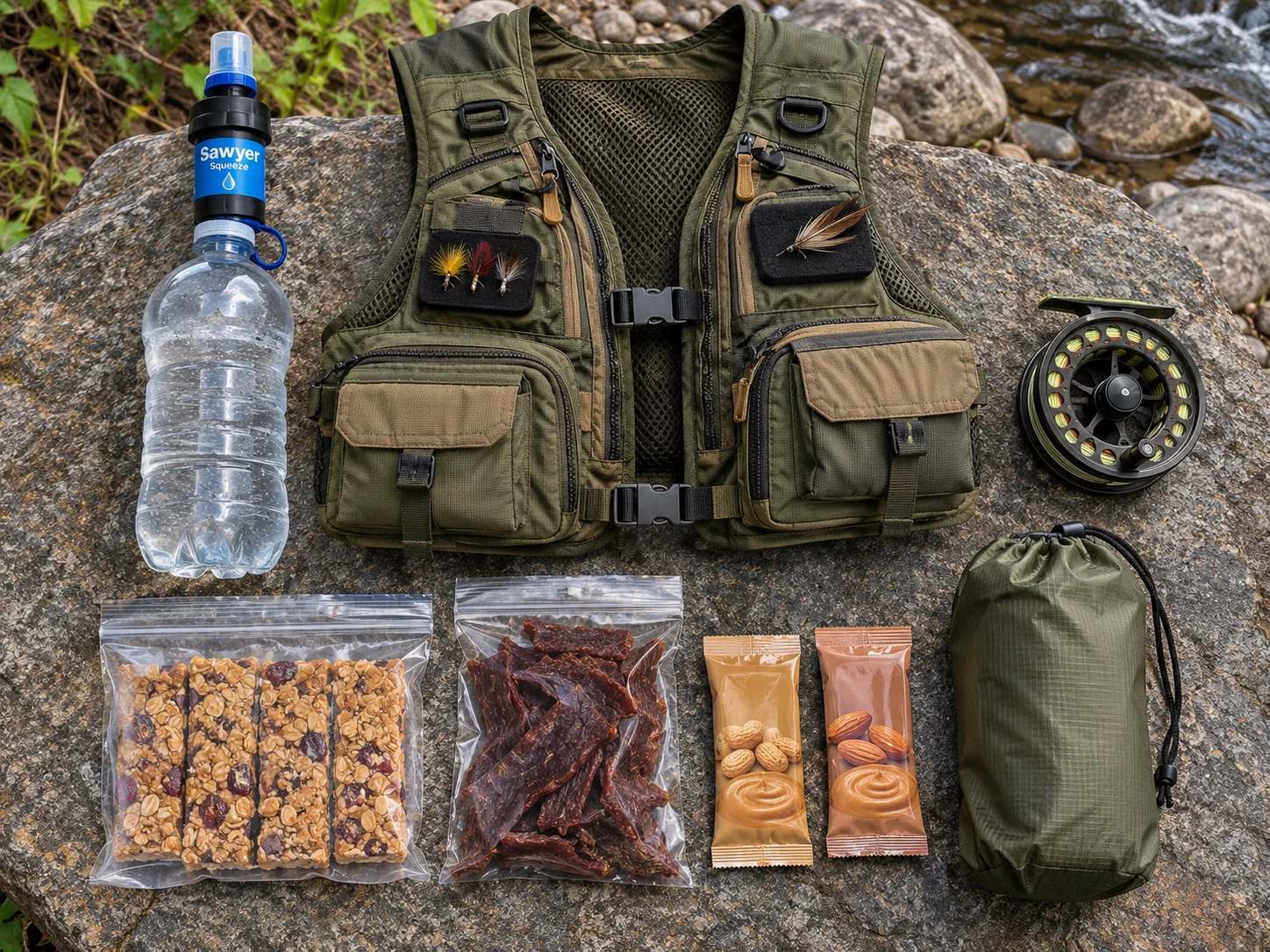
Dehydration affects casting accuracy, decision-making, and balance on slippery river rocks before you feel thirsty. Scout checklists used by active troops in 2026, including those from Avon Troop 333, specify a minimum 1-liter water bottle as a required personal item. For a full day of wading in summer heat, 1 liter is a floor, not a target. Plan on 2 liters if you’re hiking more than a mile to your fishing spot.
Water purification matters as much as the vessel itself. A lightweight squeeze filter like the Sawyer Squeeze adds roughly 3 ounces to your pack and lets you refill from any stream safely. This is especially relevant for fly-in or bush trips where the nearest trailhead is an hour’s flight away. Carry the filter; don’t rely on the water looking clear.
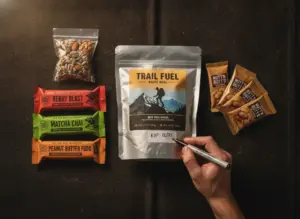
Trail food for fishing trips should lean toward slow-digesting carbohydrates and fats rather than sugar-heavy snacks. Granola bars, jerky, and nut butter packets maintain steady energy through long wade sessions. Pack more than you think you need. If a river is running faster than expected and you have to wait it out, food becomes part of the safety calculation.
2. First-Aid Kit Configured for Hook Injuries and Cuts
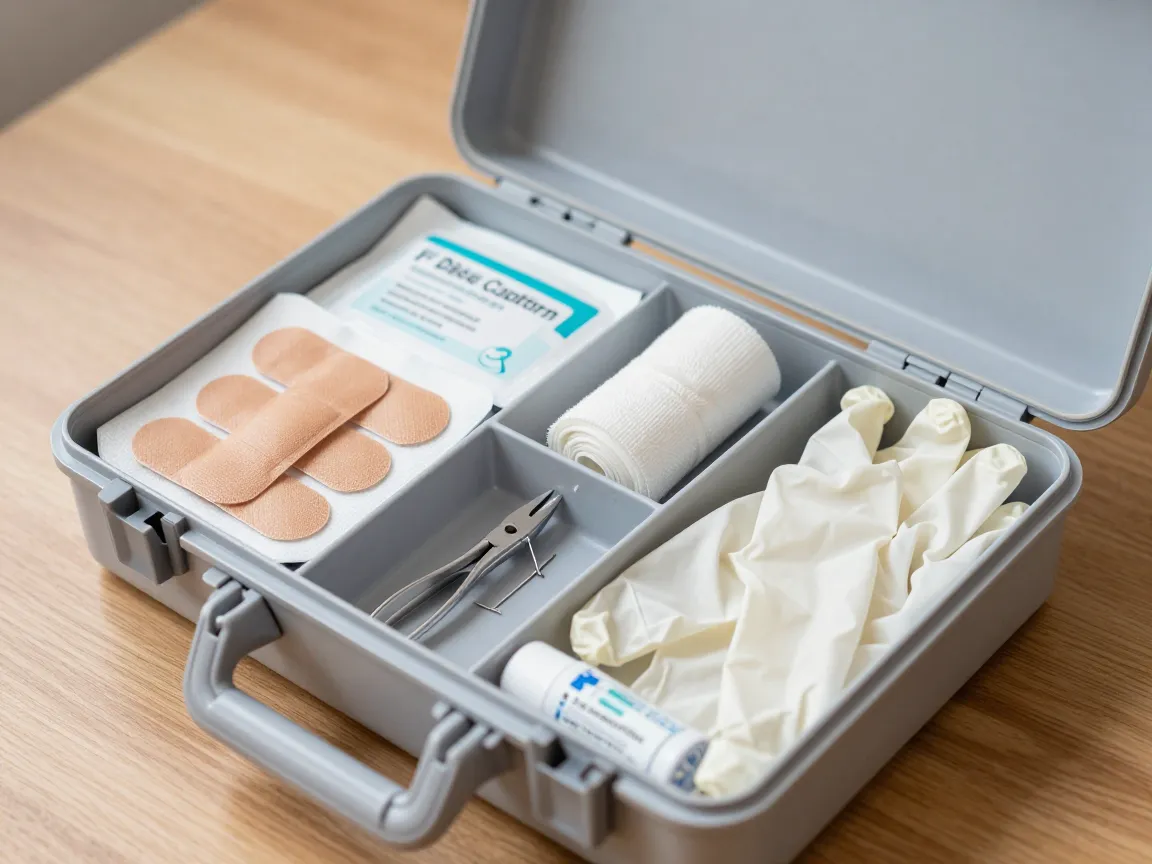
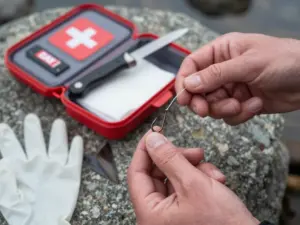
A standard drugstore first-aid kit is not a fishing first-aid kit. Anglers face a specific set of injuries: barbless and barbed hook punctures, fish-fin lacerations, line cuts, and burns from fire starters or camp stoves. The Scouts BSA standard first-aid kit covers adhesive bandages, gauze, antiseptic wipes, and blister care, which is a solid start. Add to it nitrile gloves, needle-nose pliers or forceps for hook removal, a thin wire cutter for cutting hook shafts when backing out is not possible, moleskin for hot spots from wading boots, and a small tube of antibiotic ointment.
Hook removal in the backcountry is worth practicing before you need it. The push-through method and the string-yank method both require steady hands and the right tools. Neither works well if your kit is a mess of loose items in a wet backpack. Use a compact hard case with labeled sections.
Allergic reactions to insect stings are another backcountry hazard. If you or anyone in your group carries an epinephrine auto-injector, confirm it’s in the kit and not expired before every trip. A single wasp sting miles from a road is a different problem than the same sting in a parking lot.
3. Sun Protection That Goes Beyond Sunscreen
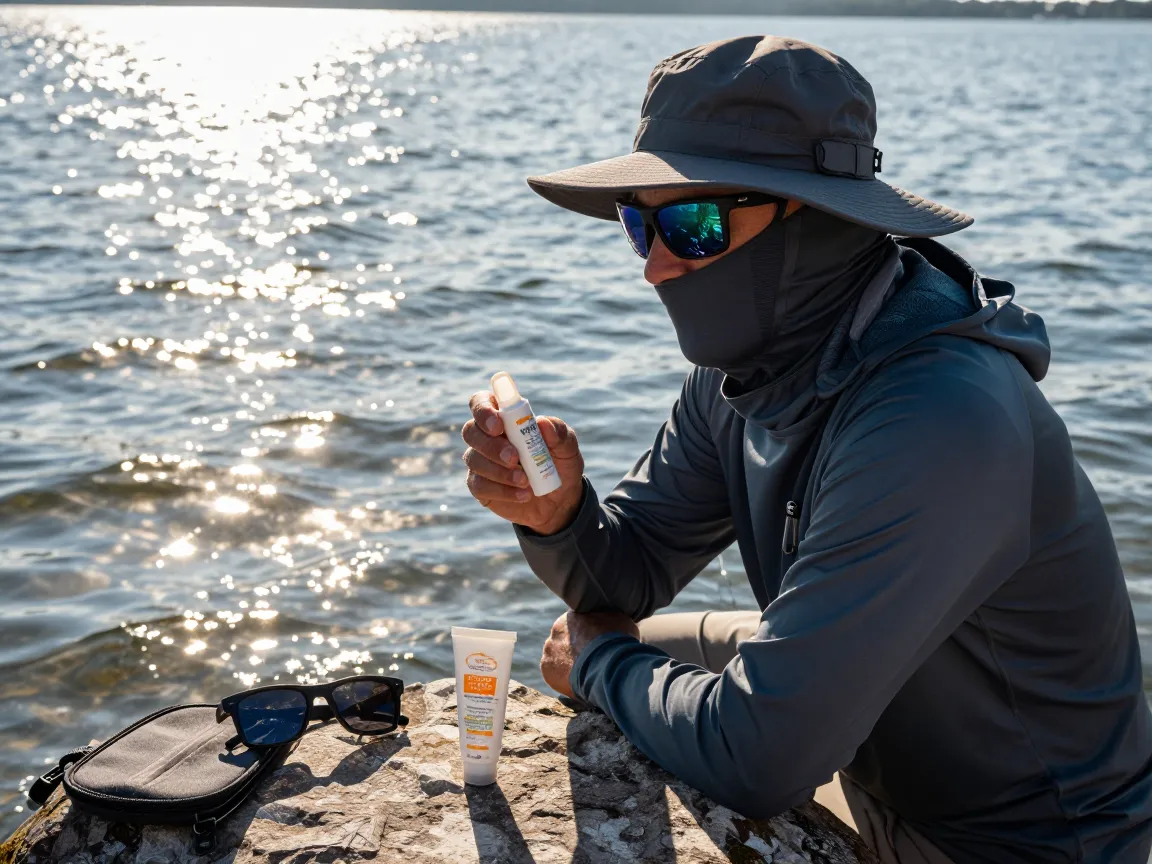
Anglers spend more time in direct UV exposure than almost any other outdoor user group. Water reflects UV radiation, which means your face, neck, and the underside of your chin receive more sun than a hiker on a shaded trail. The Scout 10 Essentials list includes sun protection as a named category, and backcountry fishing resources updated in 2026 expand this into four practical components: sunscreen, a wide-brim hat, UV-protective lip balm, and polarized sunglasses.
Polarized sunglasses do double duty. They reduce UV exposure to the eyes, and they cut surface glare so you can read water, spot fish, and see underwater obstacles before you step on them. Spare polarized glasses are specifically recommended in expert backcountry fly-fishing guides for remote or fly-in trips because a cracked lens on day two of a five-day float is a real problem. Carry a backup pair in a hard case inside your pack.
Sunscreen for anglers needs to be water-resistant and sweat-resistant, with a minimum SPF 30. Apply it before you get on the water, not after you’ve already been standing in the sun for an hour. Reapply every two hours regardless of how the day feels. UV exposure at altitude or high-latitude summer trips can cause burns on overcast days.
4. Rain Gear and Extra Clothing to Prevent Hypothermia
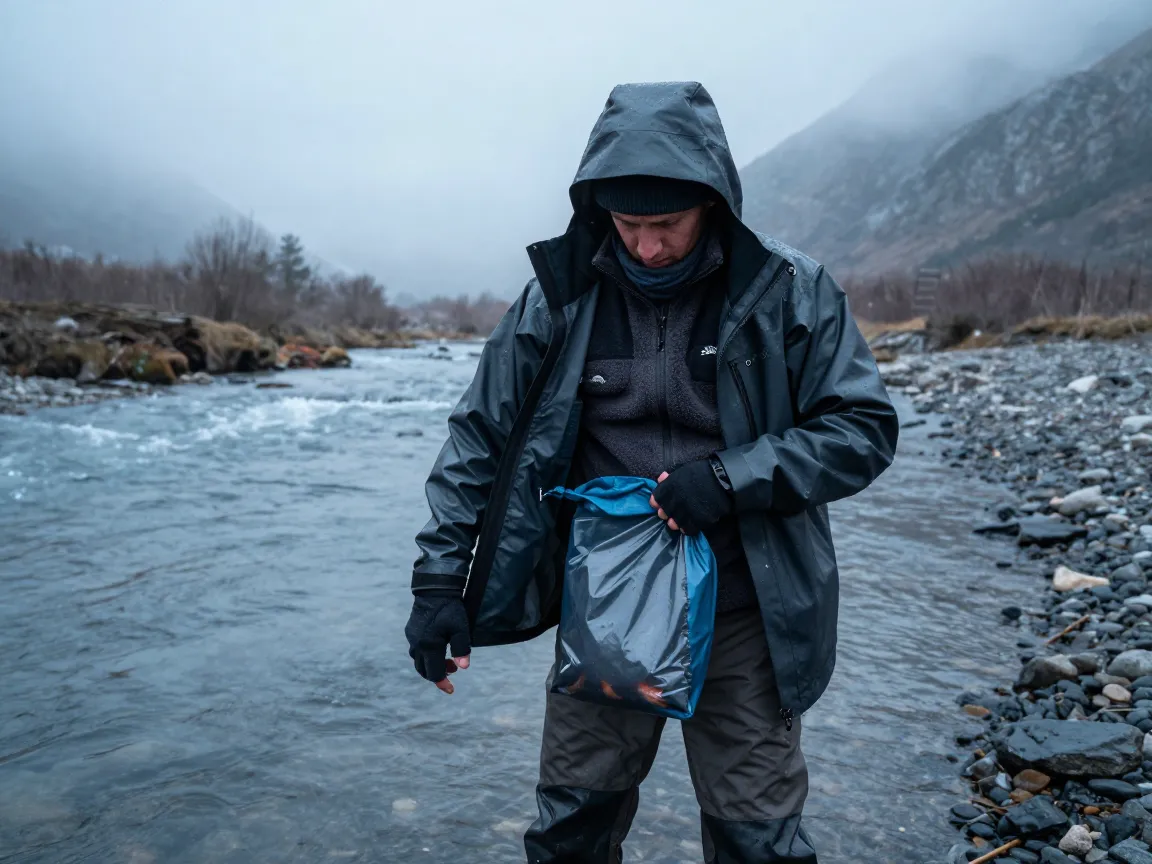
Water temperature in backcountry rivers and alpine lakes routinely stays below 55 degrees Fahrenheit well into summer. At that temperature, a wader failure or unexpected swim can produce cold-water shock within minutes. Rain gear is not just about staying dry in a storm; it’s the outer layer that traps body heat when conditions change fast.
The backcountry fly-fishing gear lists published in 2026 consistently recommend synthetic, quick-dry fabrics rather than cotton for base and mid layers. Cotton holds moisture against the skin and loses its insulating value when wet. Synthetic fleece or merino wool mid-layers continue to insulate even damp. A packable hardshell rain jacket that weighs under 12 ounces fits in a vest pocket and covers the core of the Scout requirement without adding meaningful bulk.
Extra clothing in this context means at minimum one dry base layer stored in a waterproof bag inside your pack. That layer stays sealed until it’s needed. If you end up swimming involuntarily or caught in a sustained downpour, that dry layer can be the difference between walking out under your own power and needing extraction. Fingerless wool gloves and a Buff-type neck gaiter are compact additions that significantly extend your warmth margin on cold mornings or unexpected late evenings.
5. Map and Compass for Large Lake and River Navigation
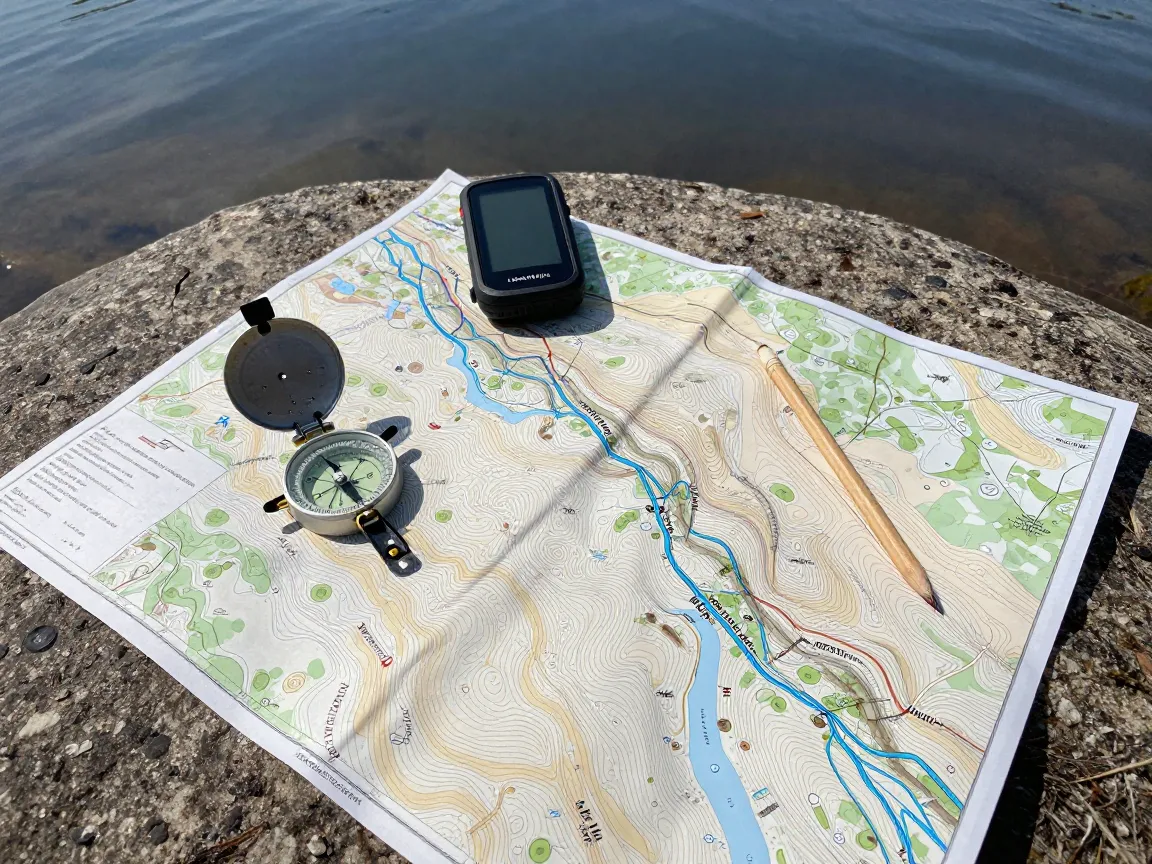
GPS devices fail. Batteries die in cold weather. Phone signal disappears two miles past the trailhead. A printed topographic map and a baseplate compass are the Scout standard for a reason: they require no power source and work in every condition. For fishermen, this combination serves a function beyond not getting lost. It lets you identify tributary streams likely to hold fish, plan upstream and downstream access points before you wade, and understand the terrain around a lake without cell service.
Learning to use a map and compass together takes about an hour of practice. Taking a bearing off a map, then walking to that bearing on a compass, is a skill you can learn from a Scout handbook or any basic orienteering guide. The investment is small relative to the confidence it creates.
Modern GPS units designed for backcountry use, such as the Garmin inReach series, add emergency satellite communication to the navigation function. Expert backcountry fishing guides list emergency communication devices alongside navigation tools as essential for remote trips. If your budget allows, a GPS unit with two-way messaging is a meaningful safety upgrade over a compass alone. Carry both; use the map and compass as your primary in areas where the GPS is unreliable, which includes dense tree canopy and deep canyons.
The San Diego-Imperial Council’s 2026 “10 Essentials to Adventure” guidance frames navigation knowledge as part of a broader risk management habit, not just a gear item. Knowing where you are on a map before you need to know is fundamentally different from checking your position after you’re disoriented.
6. Flashlight or Headlamp Combined with Matches and Fire Starter
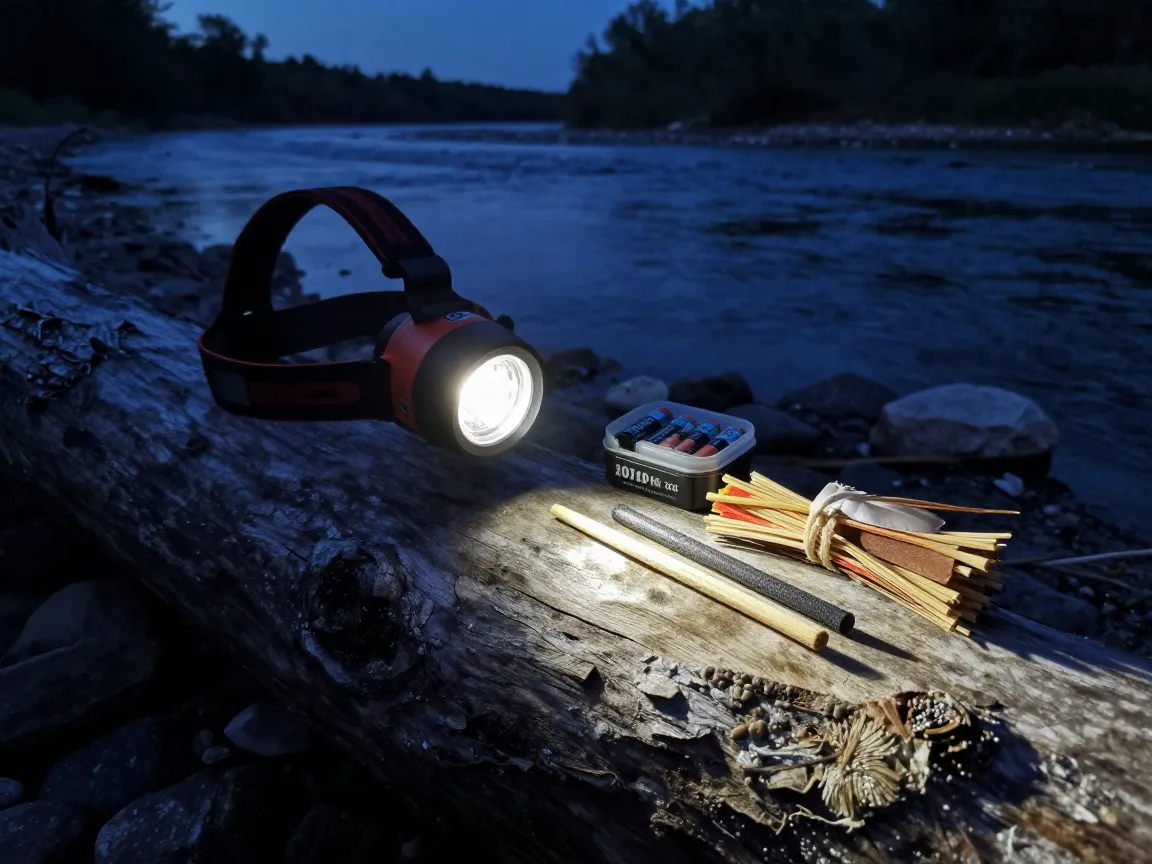
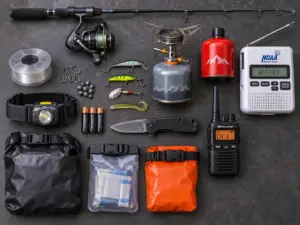
This entry combines two Scout essentials that functionally belong together for anglers. A good evening hatch often keeps fly fishermen on the water past dark. That alone justifies a headlamp; navigating back over rocky riverbanks without one is how twisted ankles happen. A headlamp is better than a handheld flashlight because it keeps both hands free for climbing, casting, and landing fish.
Carry fresh batteries or a fully charged rechargeable unit before every trip. Cold temperatures reduce lithium-ion battery capacity noticeably. Alkaline batteries actually perform more reliably than lithium-ion in sustained cold, so for winter or high-altitude trips, alkaline AAs in a standard headlamp are a sound choice.
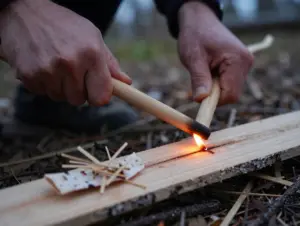
Matches or fire starters address the scenario where an unexpected overnight becomes necessary. Wet weather, an injury, a navigation mistake, or waders that fill with water and can’t be dried can all force an unplanned camp. Fire provides warmth, the ability to signal, and a psychological anchor in a stressful situation. Waterproof matches and a ferrocerium rod stored in a sealed container inside your pack add less than 4 ounces but cover a wide range of emergency situations.
Scout troop gear pages reviewed in 2026 pair fire-starting tools with the Firem’n Chit, a certification confirming the Scout knows how to build and extinguish a fire responsibly. For adult anglers, the equivalent is knowing fire-building basics for wet conditions: tinder bundles from dry material found under bark, feather sticks for initial flame catch, and fire lay geometry that works in wind. Practice this at home before you need it in the field.
Quick Comparison
| Essential | Primary Risk It Addresses | Minimum Item to Carry |
|---|---|---|
| Water and trail food | Dehydration, fatigue, poor decisions | 1-liter bottle, filter, 2,000 cal of food |
| First-aid kit | Hook injuries, lacerations, allergic reactions | Fishing-configured hard case kit |
| Sun protection | UV burns, eye damage, glare hazards | SPF 30+, wide-brim hat, polarized glasses |
| Rain gear and extra clothing | Hypothermia, cold-water shock | Packable hardshell, dry synthetic base layer |
| Map and compass | Disorientation on large water systems | Topo map, baseplate compass, optional GPS |
| Headlamp and fire starter | After-dark navigation, emergency overnight | 100+ lumen headlamp, waterproof matches, ferro rod |
Conclusion
These six Scout outdoor essentials are not a substitute for fishing knowledge. They’re the safety floor that lets you fish confidently in remote water without turning a minor problem into a serious one. The practical next step is to build a dedicated fishing safety kit that stays packed year-round. Use a small hard-sided dry bag or a waterproof stuff sack, load it with the six categories above, and place it inside your pack before you add anything else. That order of packing matters: safety gear should never be the thing you leave behind to make room for an extra spool of tippet.