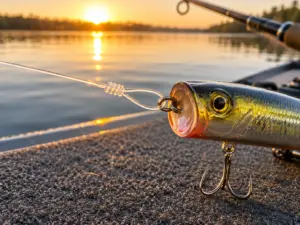
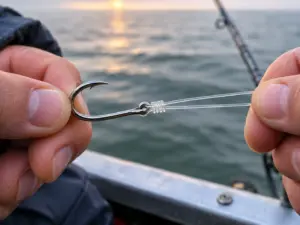
Fishing Knots Braid Anglers Trust for Slippery Line
Braid connections fail more often from poor knot choice than from line failure itself. Without the right knot, most braided line connections retain only around 70% of the line’s rated breaking strength, sometimes less. That gap closes fast when you use knots designed around braid’s specific problem: its smooth, low-friction surface lets standard knots slip under load before they ever fully seat.
Disclosure: This post contains affiliate links. As an Amazon Associate, we earn from qualifying purchases, and at no extra cost to you.
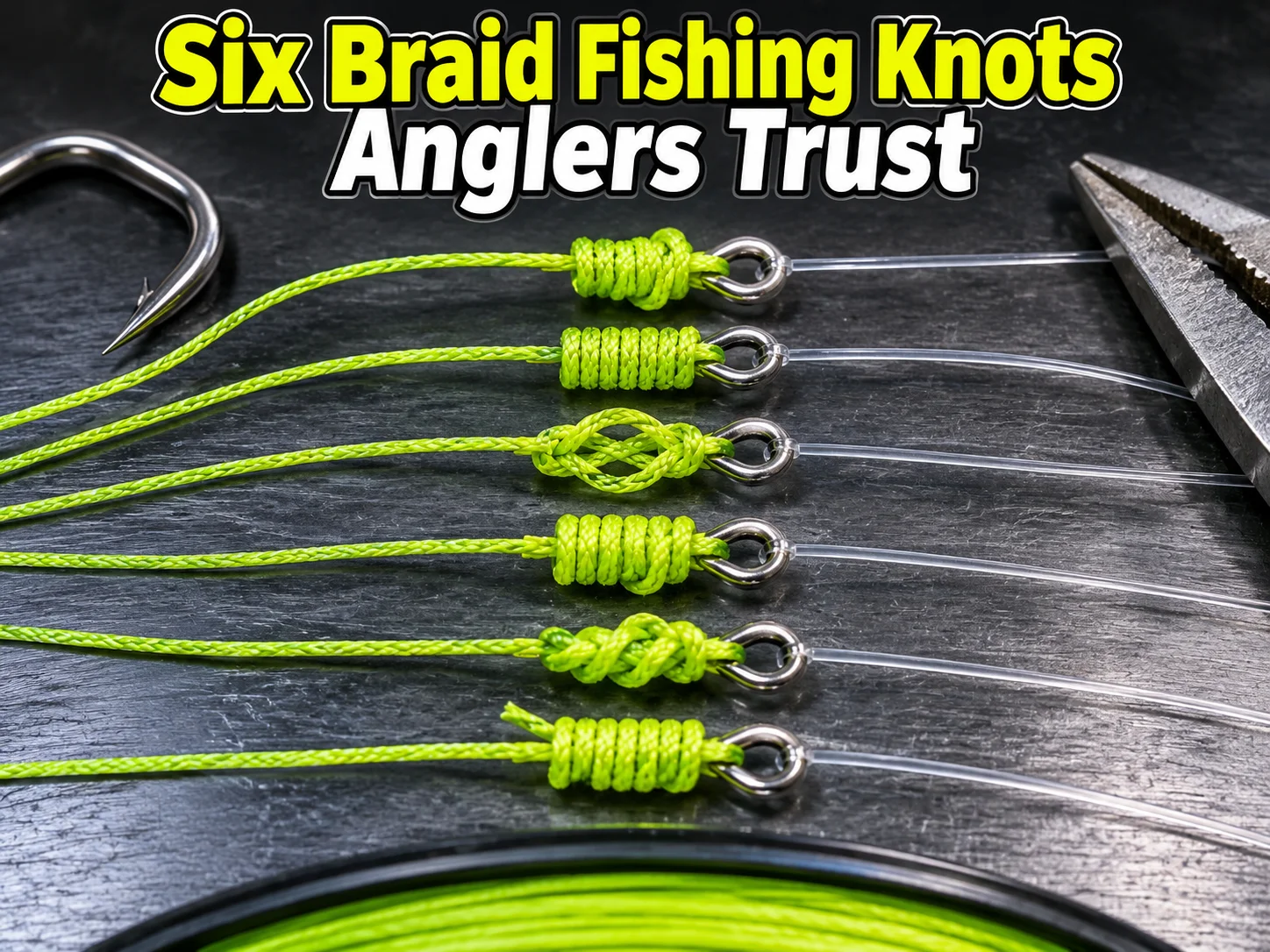
The 6 fishing knots braid anglers trust for slippery line share one trait, each one accounts for braid’s slickness through extra wraps, doubled loops, or interlocking coils that grip without depending on friction alone. If you’ve been using a standard clinch or improved clinch knot on braid, that’s the starting point for most connection failures. These six knots fix that.
Key Takeaways
- Standard clinch knots are increasingly unreliable on braid because braid’s smooth surface allows them to slip before full load.
- The Palomar knot tests at 95-100% line strength and remains the most trusted terminal knot for direct braid-to-hook connections.
- The FG knot is the benchmark braid-to-leader connection, offering near-100% strength with a profile slim enough to pass through rod guides cleanly.
- Extra wraps are not optional on braid, they are the difference between a solid knot and one that unravels under a hard run.
- Berkley developed its Braid Knot specifically to stop slippage, making it a reliable alternative when other terminal knots won’t hold on ultra-slick superlines.
1. Palomar Knot
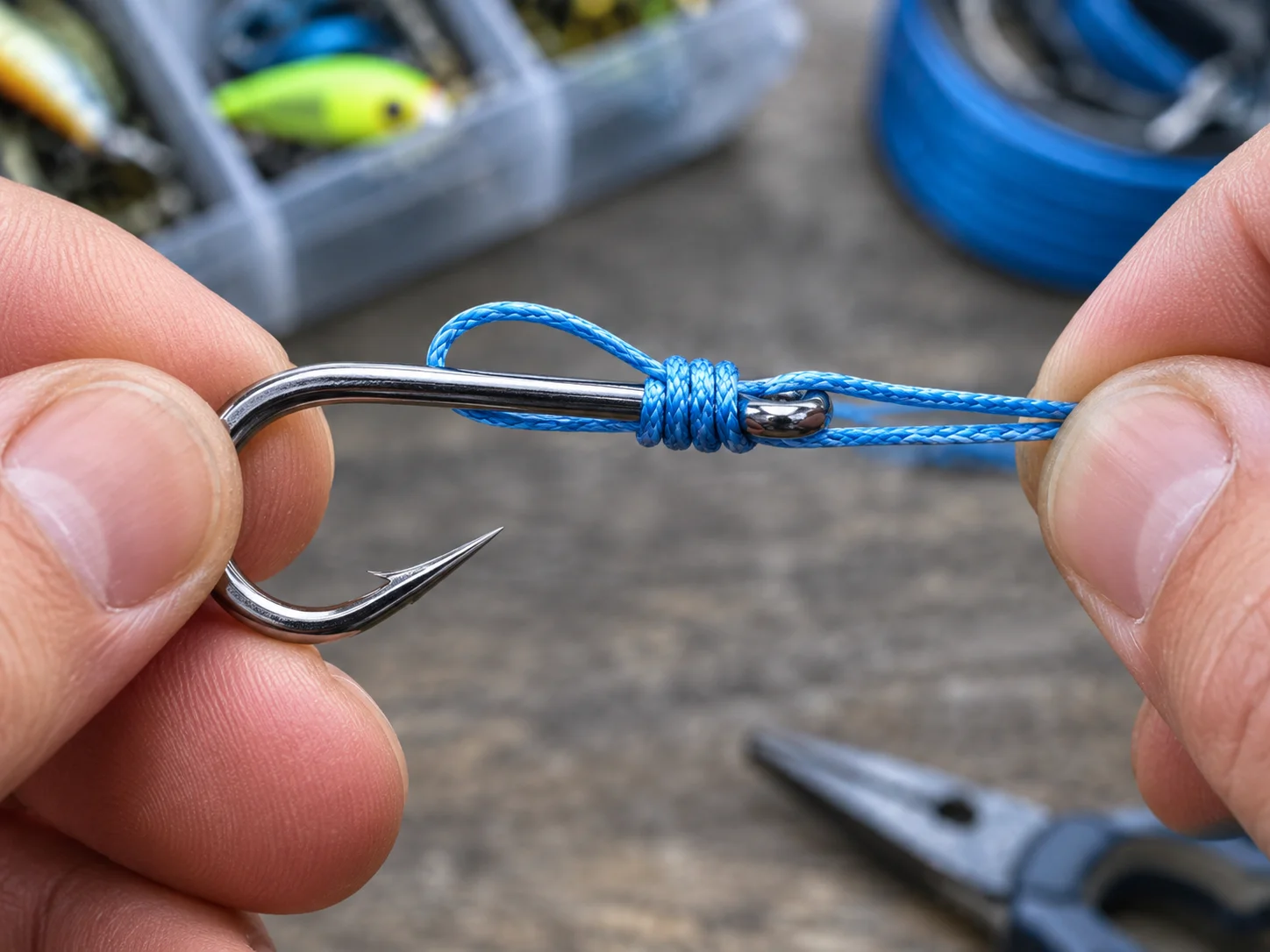
The Palomar knot has the highest adoption rate among braid anglers for a straightforward reason: it tests consistently at 95 to 100% of rated line strength when tied correctly on braided line. That figure holds across multiple line weights and brands. The knot works because it passes a doubled section of line through the hook eye, which distributes load across two strands rather than one, and the overhand loop that locks around the hook shank seats tightly even when the surface of the braid offers little friction.
Tying it on braid requires one adjustment from the monofilament version. Double roughly six inches of line, pass that loop through the eye, tie a loose overhand knot in the doubled section, then pass the loop over the entire hook before pulling both the tag end and running line simultaneously. The simultaneous pull is what allows the knot to seat evenly. If you pull one strand before the other, the knot can twist and reduce its tested strength.
For very fine or ultra-slick superlines, particularly anything in the 10-pound or lighter range, many surf and saltwater anglers now use the Double Palomar, which adds one extra pass of the doubled line through the eye before completing the standard finish. The Double Palomar takes roughly 20 extra seconds to tie and is a reasonable insurance step on braid that tends to feel almost waxy between the fingers. At heavier line weights, the standard Palomar seats well on its own.
2. FG Knot
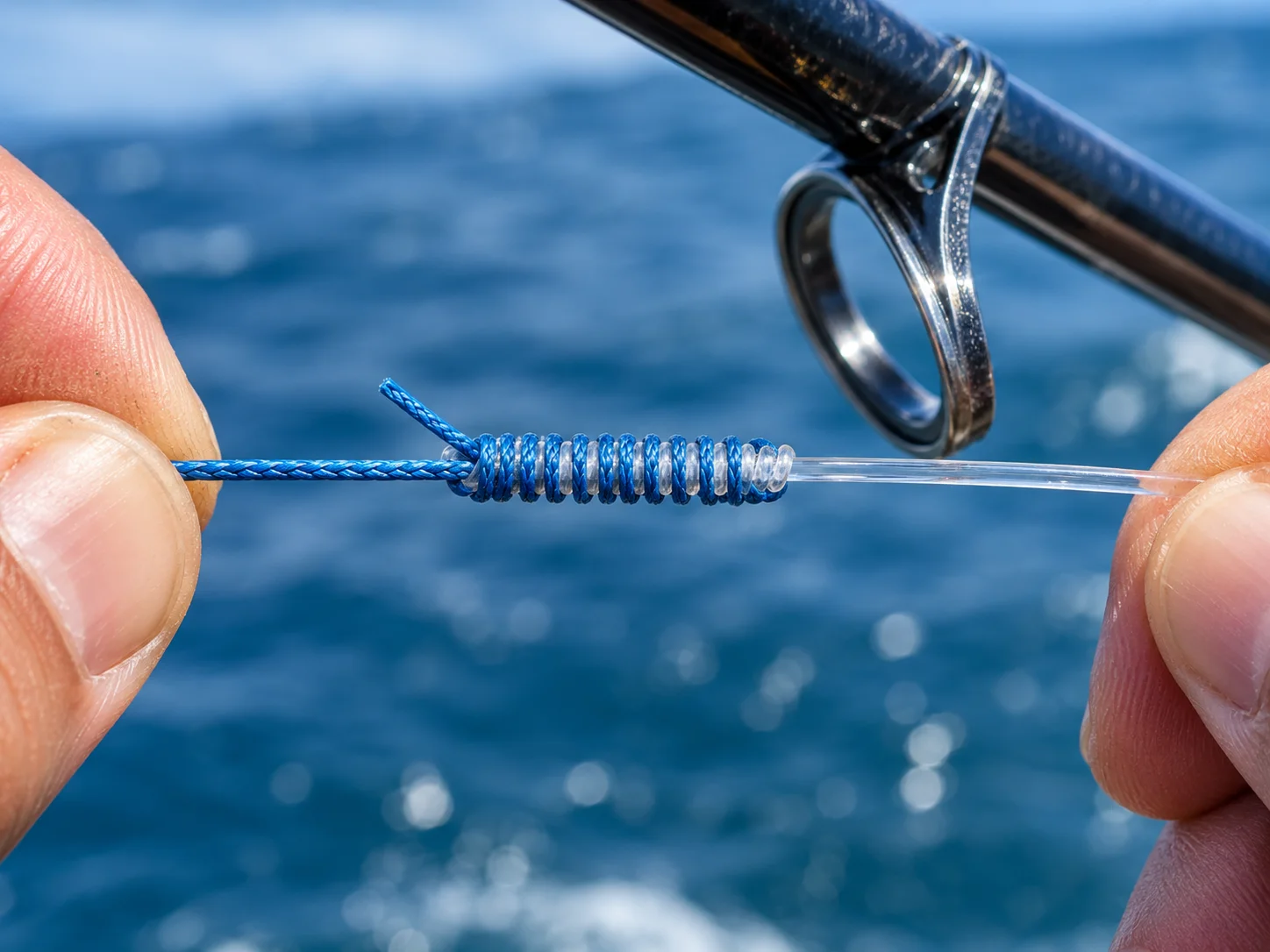
The FG knot is the preferred braid-to-leader connection for most serious saltwater and freshwater anglers working with fluorocarbon or monofilament leaders. Its strength tests near 100% of the braid’s rating, which is unusual for a line-to-line connection. More practically, the FG’s profile is thinner than any double uni or loop-to-loop connection, so it passes through rod guides and even through the tip-top without the bump that can disrupt a cast or cause wear.
The knot works by wrapping braid tightly around the leader in alternating half-hitches, pulling each wrap snug before adding the next. The braid grips the leader through compression rather than through the leader gripping the braid. That matters on braid specifically, the leader is the textured surface the braid clamps onto, so the knot doesn’t rely on braid’s smooth surface at all to hold.
Tying the FG well requires practice. Twenty to twenty-five alternating wraps are standard for most leader diameters, followed by a series of half-hitches to lock the connection. The finishing sequence, not the wrapping phase, is where most beginners lose strength in the FG. A poorly finished FG can fail at the half-hitches rather than at the main connection, so each finishing wrap needs to be pulled tight before adding the next. Once the technique is repeatable, the FG outperforms every other braid-to-leader option in both strength and castability.
3. Uni Knot and Double Uni Knot
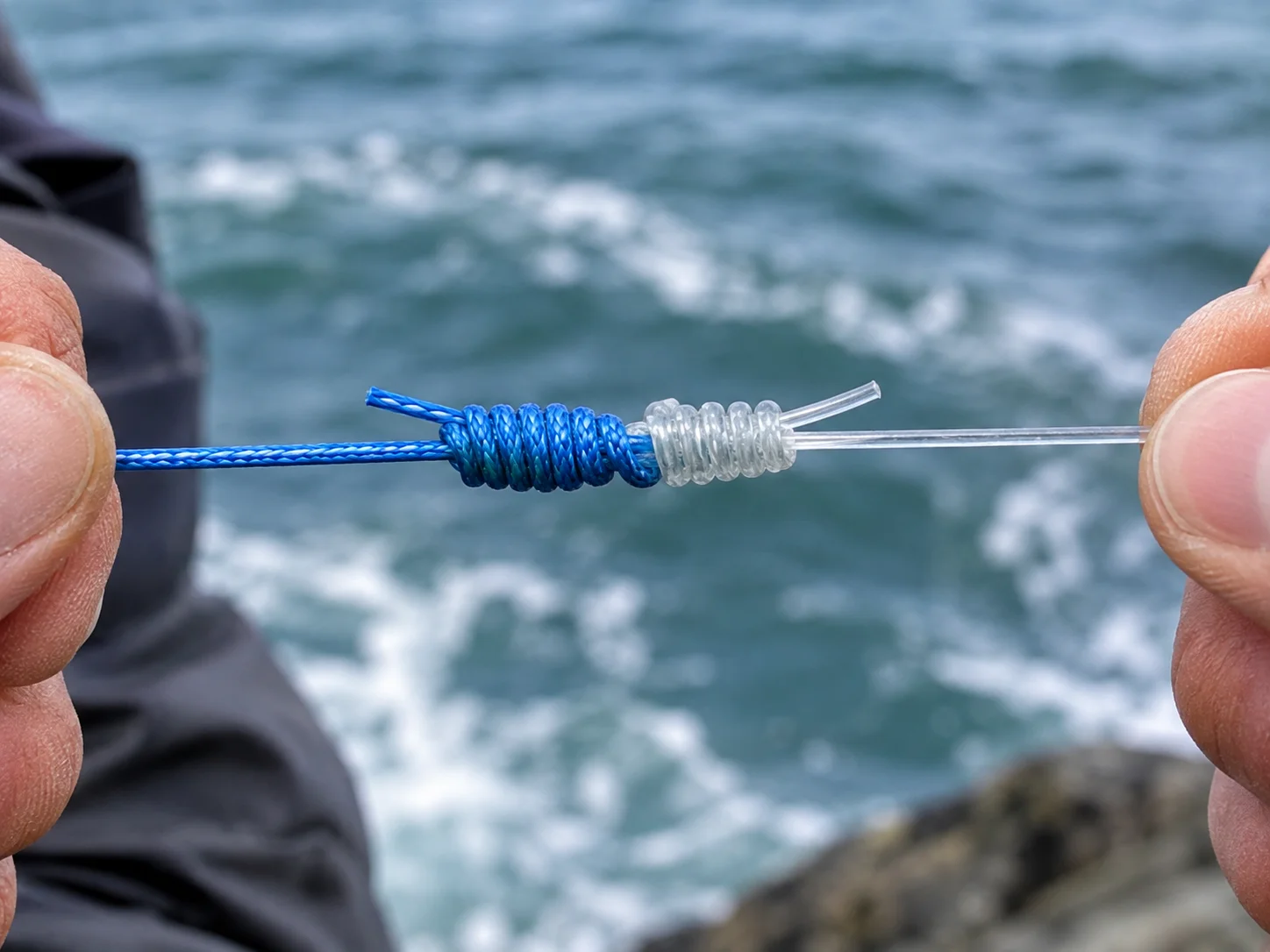
The Uni knot is one of the most versatile knots in fishing, it connects line to terminal tackle, connects two lines together, and works across monofilament, fluorocarbon, and braid. On braid, the standard Uni requires more wraps than you’d use on mono. Where five or six wraps is sufficient for monofilament, braid demands a minimum of eight wraps to prevent the knot from sliding loose under sustained pressure. That adjustment is non-negotiable on smooth superlines.
The Double Uni knot connects braid to a fluorocarbon or monofilament leader by tying two Uni knots that face each other and slide together when tightened. Each knot wraps around the opposing line, so neither relies solely on its own surface for grip. The asymmetry in wrap counts matters here: use eight wraps on the braid side and four or five on the leader side. The leader is thicker and grips differently, so matching wrap counts on both sides actually weakens the braid side of the connection.
Surf anglers fishing rough conditions often keep the Double Uni as a backup connection when the FG isn’t practical, particularly when tying in dim light or cold conditions where the FG’s precision becomes difficult. The Double Uni can be tied quickly by feel, seats reliably with a steady pull, and holds well enough for most inshore and nearshore applications. It’s not quite as slim as the FG through guides, but for a workhorse knot under field conditions, it performs at a level that the improved clinch simply can’t match on braid.
4. Berkley Braid Knot
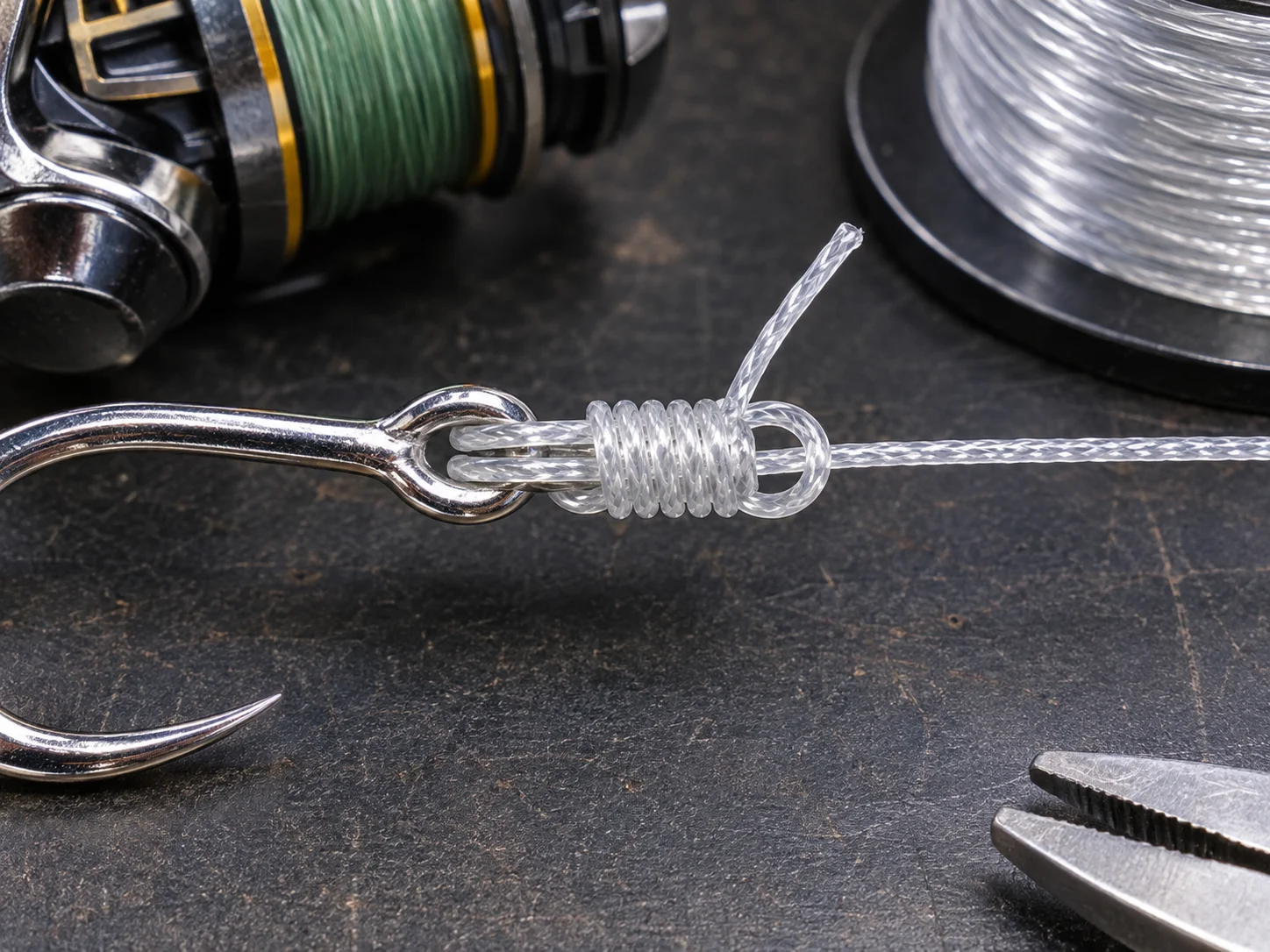
Berkley developed the Braid Knot as a manufacturer-specific solution to a problem that became more common as ultra-slick superlines entered the market in the late 1990s and early 2000s. The knot was engineered to prevent braid from slipping at terminal connections, specifically on the smooth, low-stretch lines that standard knots were not designed to handle.
The tying sequence threads the braid through the eye twice, then wraps the tag end back through both loops and around the running line eight times before threading the tag end through the original loops in a specific order. That threading sequence creates a locking structure that closes under load rather than sliding. The knot performs reliably on modern superlines that feel almost glassy between the fingers, where even a correctly tied Palomar can occasionally lose a turn at the eye under sudden shock.
The Berkley Braid Knot is not as quick to tie as the Palomar. That tradeoff is worth it in two situations: when fishing ultra-thin diameter braids in light-tackle applications where every bit of knot integrity matters, and when retying frequently in cold or wet conditions where maintaining consistent tension through a Palomar’s doubled-loop pass becomes difficult. For standard braids in the 20- to 50-pound range, the Palomar still tends to be the faster and equally strong choice. But the Berkley Braid Knot earns its place in the toolkit for anyone who has watched a terminal connection let go on a fish that never should have been lost.
5. Triple Surgeon’s Knot
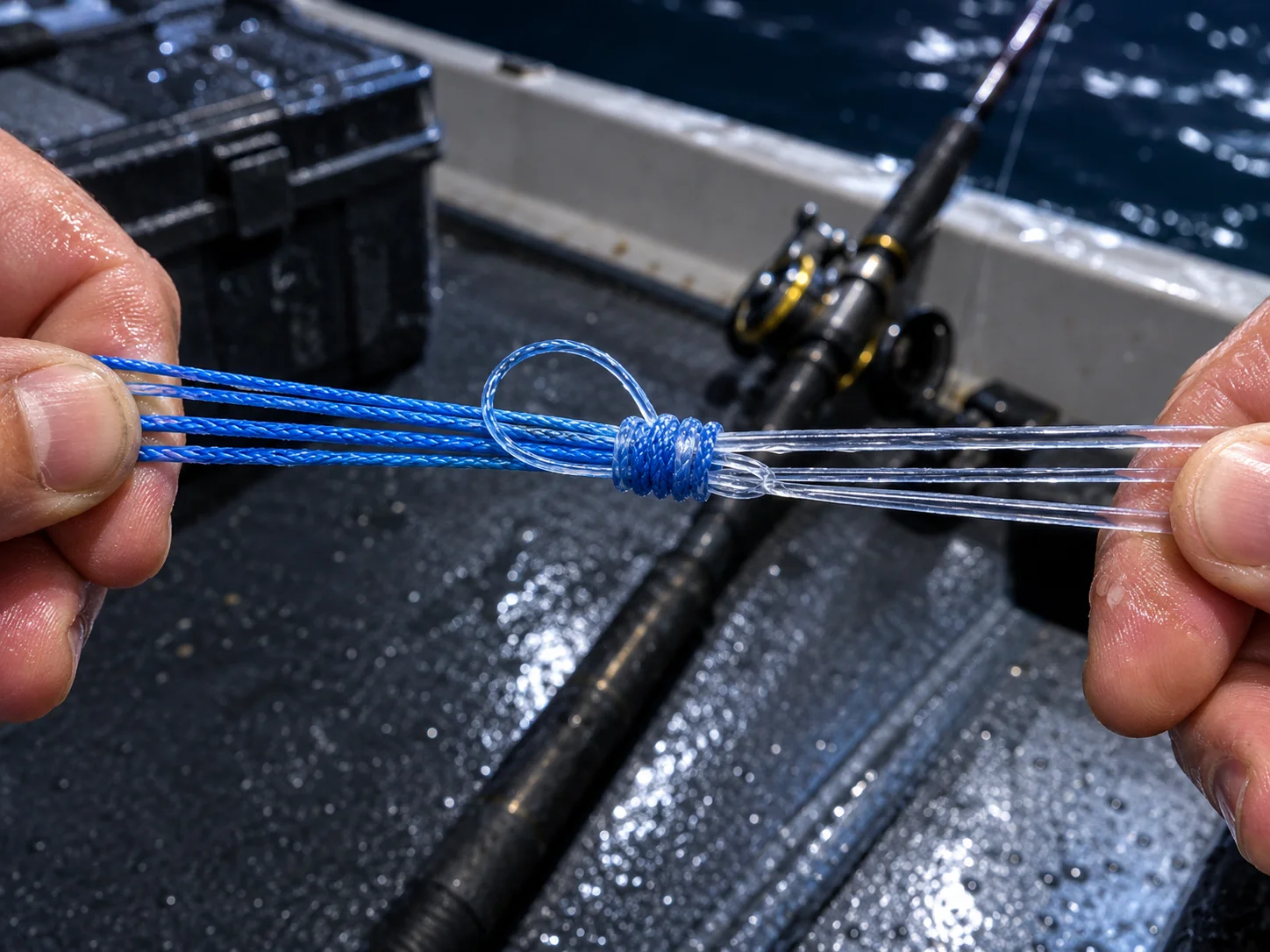
The Surgeon’s knot in its basic two-pass form is widely recommended for joining two lines of similar or different diameter, and several fly fishing and sportfishing organizations specifically list it as a reliable option for slick lines including braid and fluorocarbon. The Triple Surgeon’s knot, three passes instead of two, strengthens the connection and is the version worth learning if braid is involved.
Tying it is straightforward. Lay the braid and leader parallel with several inches of overlap, form a simple loop from both lines together, then pass both the tag end of the leader and the entire working end of the braid through that loop three times. Pull all four strands simultaneously to seat the knot. The simultaneous pull is the same principle at work in the Palomar, it prevents one side from seating before the other, which would create an uneven grip.
The Triple Surgeon’s knot is thicker at the junction than either the FG or the Double Uni, so it isn’t the best choice when casting through guides is a priority. Where it earns regular use is in situations that call for a quick braid-to-leader connection with high reliability: night fishing, rough surf, boat decks with water on them. It’s also more tolerant of imperfect execution than the FG, which makes it appropriate for anglers who don’t yet have the FG’s finishing sequence dialed in. At full strength with three passes, the Triple Surgeon’s holds well enough for most freshwater applications and lighter saltwater work.
6. Improved Clinch Knot, Why Extra Wraps Change Everything
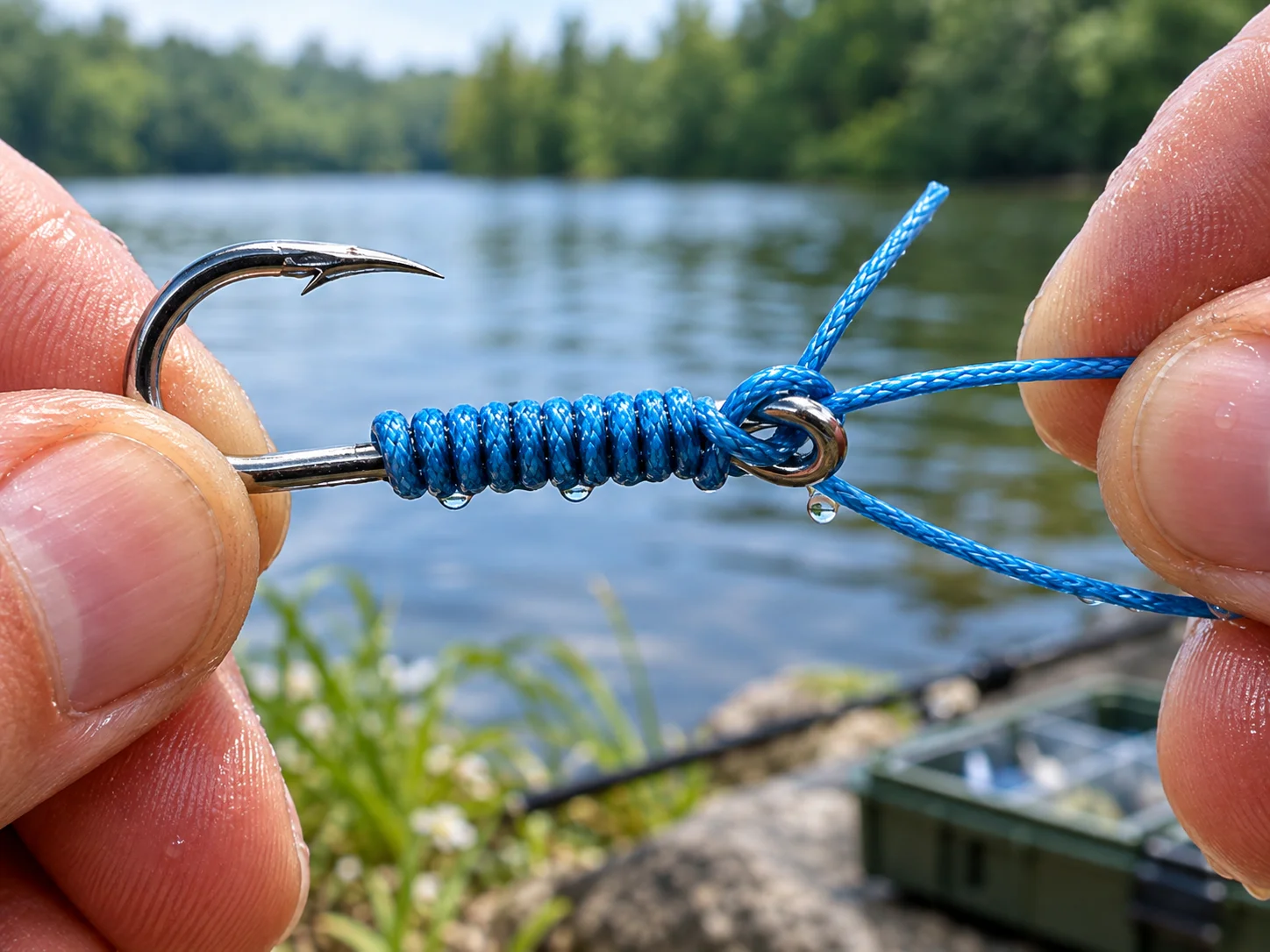
The standard improved clinch knot has been the default terminal knot for decades. On monofilament, five wraps and a clean seat through the loop produce a reliable connection. On braid, that same five-wrap improved clinch is widely flagged as unreliable. The knot slips. It doesn’t cut the line; it unravels from the eye because braid’s surface gives the coils nothing to grip against.
The fix isn’t to abandon the improved clinch entirely but to understand what it requires on braid. At a minimum, eight to ten wraps are necessary to give the coils enough friction mass to resist sliding. Some anglers add a half-hitch between the hook eye and the coils before passing the tag end, which acts as a secondary lock. Wetting the knot before the final pull also matters more on braid than on mono, dry braid coils generate enough heat from friction to weaken the line slightly during cinching.
That said, even a well-tied improved clinch on braid doesn’t match the strength retention of a correctly tied Palomar or Berkley Braid Knot at the same connection point. For casual freshwater fishing with moderate-strength braid and smaller hooks, an eight-wrap improved clinch is a workable option when other knots aren’t immediately at hand. For saltwater fishing, heavy cover, or any situation where a fish runs hard at an angle that creates sudden shock on the terminal connection, the improved clinch on braid is not the right tool regardless of wrap count. Knowing why it underperforms is as useful as knowing the knots that outperform it.
Quick Comparison
| Knot | Best Use | Strength on Braid | Ease of Tying |
|---|---|---|---|
| Palomar | Terminal (hook/lure) | 95-100% | Easy |
| Double Palomar | Terminal, ultra-slick braid | 95-100% | Easy-moderate |
| FG Knot | Braid-to-leader | Near 100% | Difficult |
| Double Uni | Braid-to-leader | Strong with 8+ wraps | Moderate |
| Berkley Braid Knot | Terminal, slick superlines | High | Moderate |
| Triple Surgeon’s | Braid-to-leader | Good | Easy-moderate |
| Improved Clinch (8+ wraps) | Light freshwater terminal | Moderate | Easy |
Conclusion
Of the 6 fishing knots braid anglers trust for slippery line, the two that pay off fastest to master are the Palomar for terminal connections and the FG for leader connections. Those two knots cover the majority of real fishing scenarios where braid connection failures happen. Once those are consistent, the Double Uni and Triple Surgeon’s give you reliable backups for situations where the FG’s precision isn’t practical. The Berkley Braid Knot and the reworked improved clinch fill specific gaps, ultra-slick light lines and emergency retying situations respectively.
The next useful step is testing your own knots before the season starts. Tie each one in the specific braid you fish, attach the tag end to a fixed point, and pull against the running line until something gives. Watching which knots slip versus which ones hold tells you more about knot performance on your actual gear than any tested average.