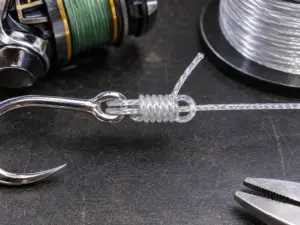
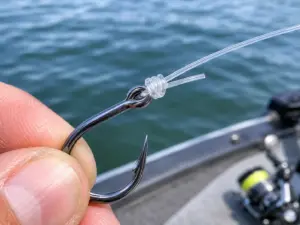
Fishing Knots Guide Picks for Every Situation on the Water
Roughly 80% of all lost fish trace back to knot failure, not rod failure, not reel failure, and not bad luck. That single fact is what makes knot selection the most underdiscussed skill in fishing. This 6 Fishing Knots Guide Picks for Every Situation on the Water breaks down the six connections that handle virtually every scenario you will face, from spooling a reel before dawn to tying a lure to a fluorocarbon leader in a moving skiff. Multiple guides published in 2026, including those from Salt Strong, Shimano, and knots.fish, converge on the same conclusion: six well-practiced knots are genuinely enough.
Disclosure: This post contains affiliate links. As an Amazon Associate, we earn from qualifying purchases, and at no extra cost to you.
Key Takeaways
- Two knots alone, the Palomar and the Improved Clinch, cover roughly 80% of everyday fishing scenarios.
- The FG Knot is the strongest braid-to-leader connection available but takes longer to tie than any other knot in this guide.
- The Double Uni Knot is the best backup when conditions make tying an FG impractical.
- Loop knots like the Non-Slip Loop give lures free movement that a tight-to-the-eye connection kills.
- Knowing which knot fits which connection type, terminal, line-to-line, loop, or rig, is more valuable than knowing a dozen knots by name.
1. Palomar Knot
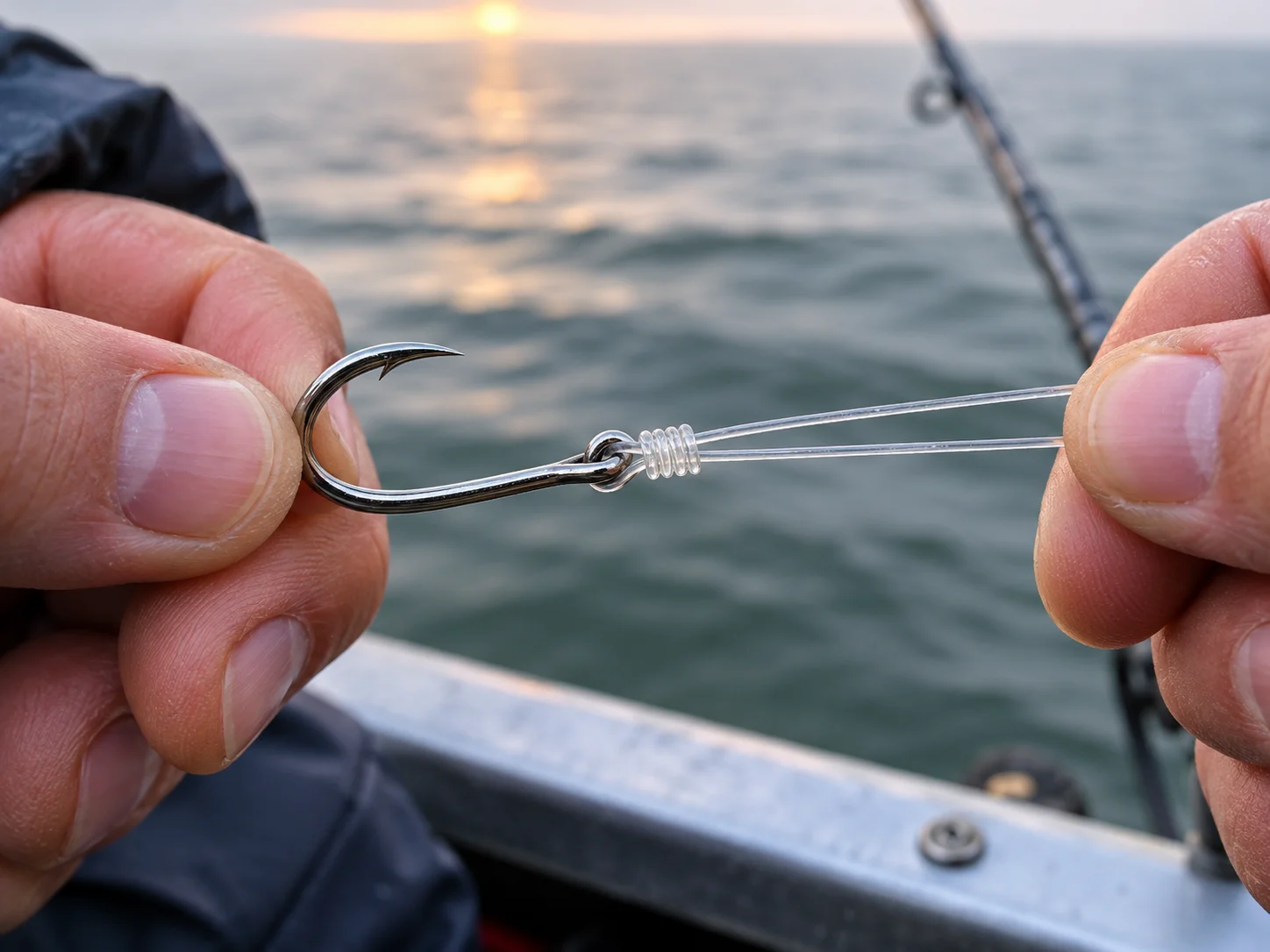
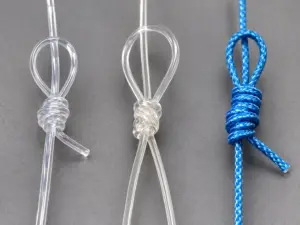
The Palomar is the knot most experienced anglers reach for first. It tests at roughly 95% or better of line strength across monofilament, fluorocarbon, and braid, which makes it one of the few knots that performs at that level on all three materials. The construction is simple: double the line, pass the loop through the hook eye, tie a loose overhand knot with the doubled strand, and then pass the hook through the loop before pulling tight. That doubled-line design distributes load across two strands rather than one, which is why the numbers hold up under real pressure.
Where the Palomar earns its spot on this list is consistency under field conditions. You can tie it in low light, in cold water, or on a rocking boat and still produce a knot that hasn’t been compromised by a sloppy wrap. Darkhorse Fishing’s 2026 knot guide describes the Palomar as one of two knots that together handle about 95% of all fishing situations. For standard terminal connections, hook to line or swivel to line, nothing on this list beats its combination of strength and speed.
One genuine limitation is line diameter. With very heavy braid, doubling the line and passing it through a small hook eye twice can be awkward. In those cases, switching to a Uni Knot is the practical move. But for the vast majority of hook and swivel connections in freshwater and inshore saltwater, the Palomar is the default.
2. Improved Clinch Knot
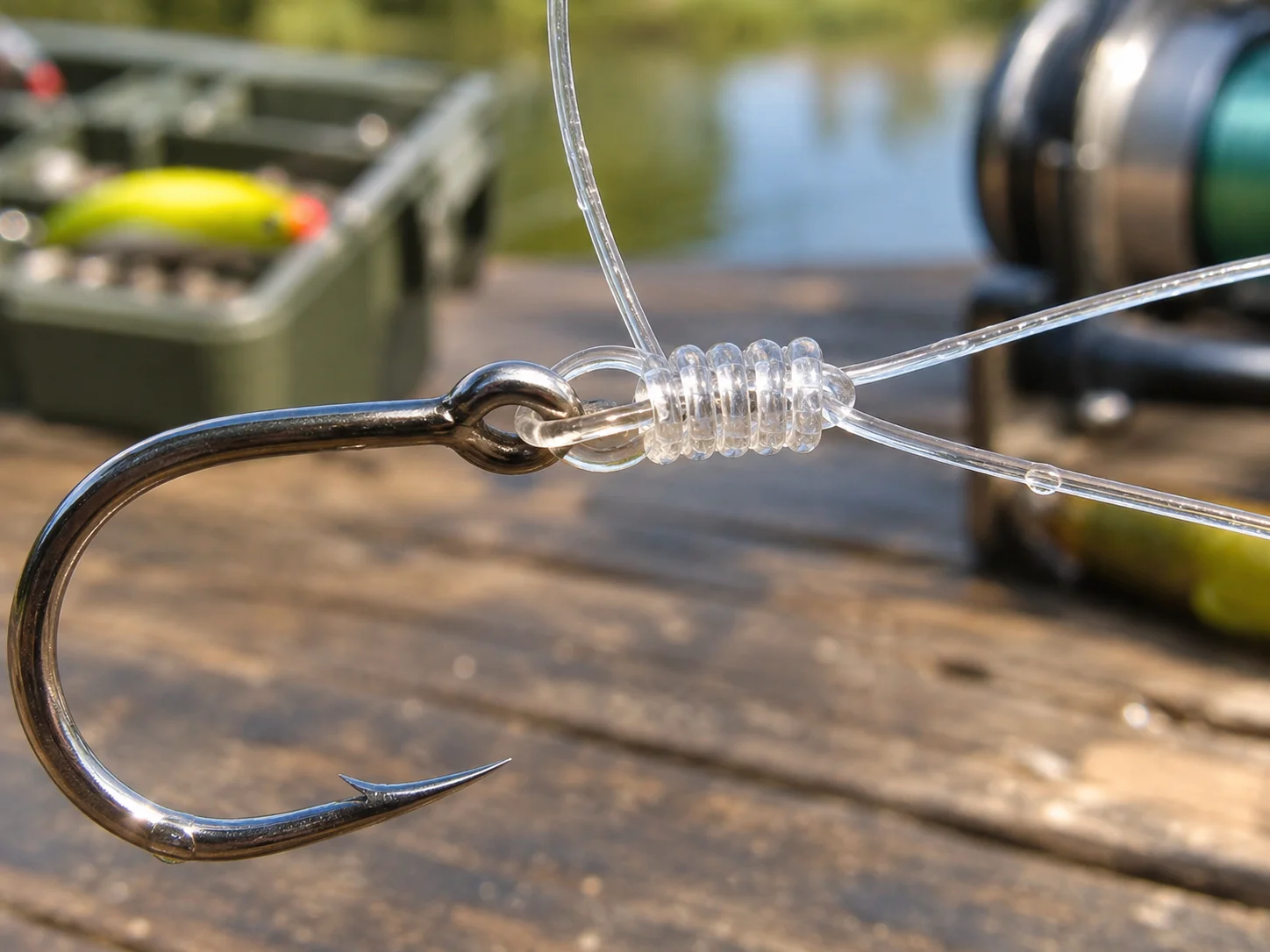
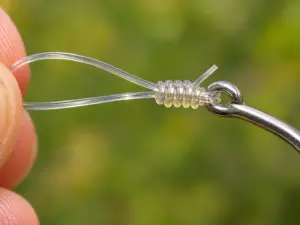
Alongside the Palomar, the Improved Clinch is the knot most likely already in your muscle memory. Guides aimed at beginning anglers consistently note that just these two knots together cover 80% of fishing situations. The Improved Clinch works by threading the tag end through the hook eye, wrapping it five times around the standing line, passing the tag through the small loop near the eye, and then back through the large loop formed by the wraps. Wet the coils before cinching, or the friction heat alone will weaken the knot.
The five-wrap version is standard on monofilament and fluorocarbon up to about 20-pound test. Beyond that, dropping to four wraps prevents the coils from binding on themselves. On braid, most anglers skip this knot entirely because braid’s slick surface lets the coils slip, particularly under sustained load. The Palomar handles braid connections to terminal tackle better.
What keeps the Improved Clinch relevant in 2026, despite the proliferation of newer options, is that it’s taught in almost every entry-level guide, printed in every manufacturer’s manual, and verifiable in seconds. The Shimano official knot guide, updated late in 2026, still walks through it step by step as a core terminal knot. If you can tie it correctly every time under pressure, it does what it promises.
3. FG Knot
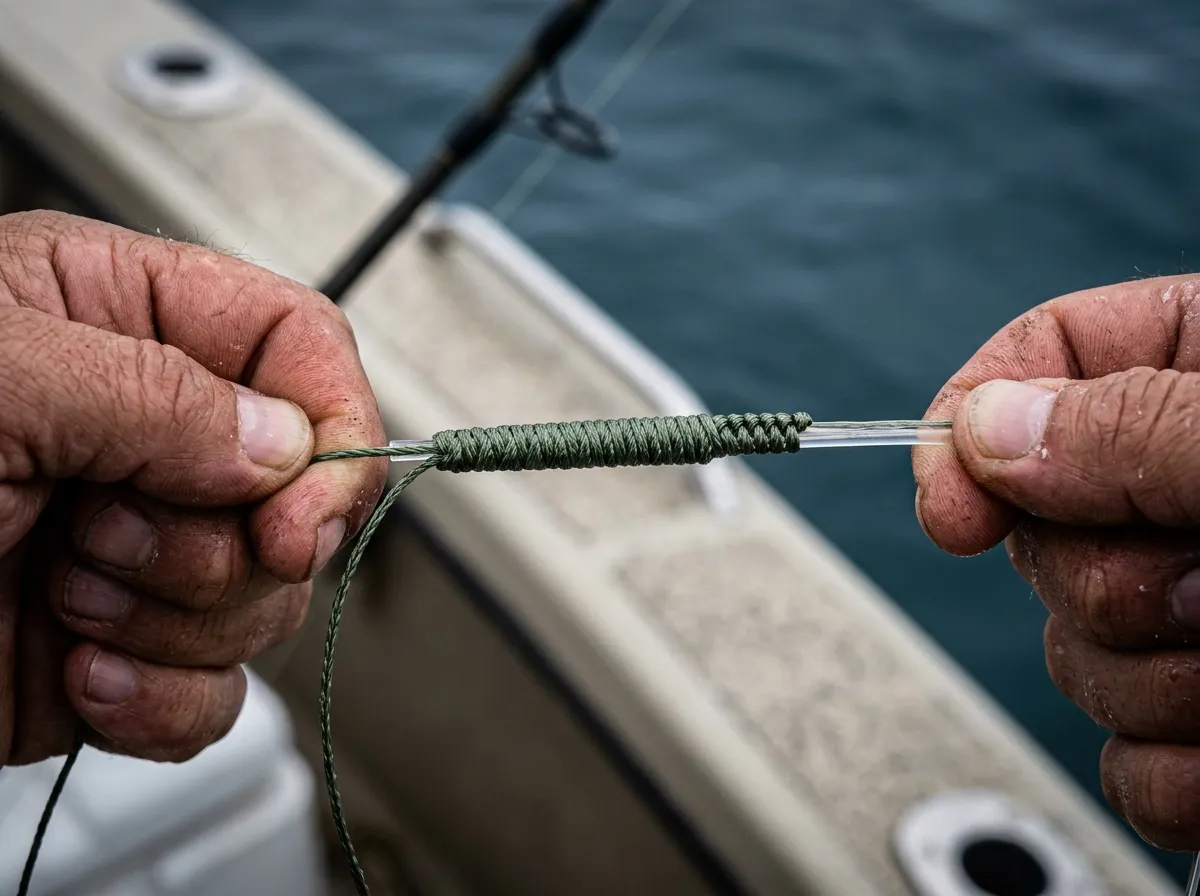
The FG Knot is the only braid-to-fluorocarbon connection that sits flush enough to pass through rod guides without resistance. Every other braid-to-leader knot creates a small bulge at the junction. The FG produces a connection that is as close to the diameter of the braid itself as any hand-tied knot achieves. That matters most when you’re making long casts with a spinning rod or working a lure through heavy current where even a slight catch on a guide kills the action.
Tying it takes practice. The standard method involves holding tension on the leader, alternating cross-wraps of the braid around it for 20 or more passes, then finishing with a series of half hitches. Most anglers spend a few sessions getting the tension consistent before the knot stops slipping under load. The payoff is a connection described in multiple 2026 saltwater guides as the “thinnest, strongest” option available for the braid-to-leader joint.
The practical advice from guides covering Florida inshore and offshore fishing is to tie the FG at home or at the dock, not in the middle of a drift. When you need to retie a braid-to-leader connection quickly at sea, the Double Uni Knot (covered below) handles that job. The FG is a planned knot, not a reactive one. Use it when you have time and calm water.
Quick Comparison
| Knot | Primary Use | Best Line Type | Approx. Strength | Tie Speed |
|---|---|---|---|---|
| Palomar | Terminal: hook/swivel | Mono, fluoro, braid | ~95%+ | Fast |
| Improved Clinch | Terminal: hook/lure | Mono, fluoro | ~90%+ | Fast |
| FG Knot | Line-to-line: braid→leader | Braid + fluoro/mono | ~95%+ | Slow |
| Double Uni | Line-to-line: braid→leader | Braid, mono, fluoro | ~85-90% | Medium |
| Non-Slip Loop | Terminal: lure/fly | Mono, fluoro | ~90%+ | Medium |
| Dropper Loop | Rig building | Mono, fluoro | ~85%+ | Medium |
4. Double Uni Knot
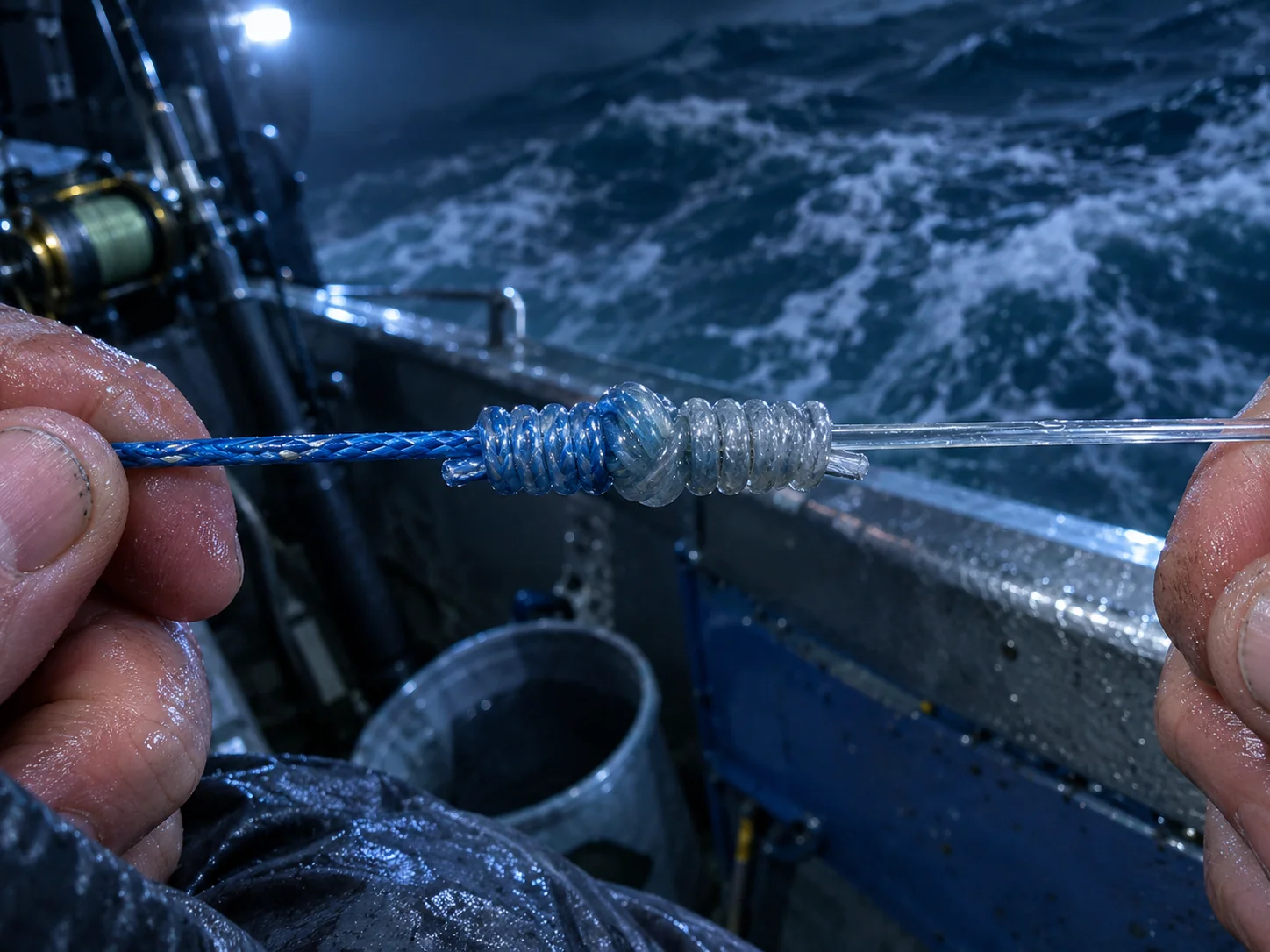
The Double Uni is the knot you tie when tying an FG is not realistic. That happens more often than many guides admit. Night fishing, rough weather, cold hands, and fast-changing tides all create conditions where a 20-step connection becomes a liability. The Double Uni ties in roughly 30 seconds once you know it. Thread the braid alongside the leader, make a loop with the braid end, wrap the tag end through that loop five times, pull tight, then repeat on the leader side, and slide the two resulting knots together.
Its strength rating sits slightly below the FG, in the 85-to-90% range depending on the specific lines used, but that difference matters less in most practical applications than its reliability under stress. A properly tied Double Uni will not slip. The joint is slightly bulkier than an FG, which is why it’s the backup option rather than the primary, but on shorter casts or in heavy current where guide-clearance is not a factor, that bulk is irrelevant.
The knots.fish fly fishing guide and several Florida-focused saltwater guides both include the Double Uni as one of the six essential connections precisely because it covers the moments when your first-choice knot is unavailable. Having a reliable fallback is not a compromise; it’s part of a complete knot toolkit.
5. Non-Slip Loop Knot
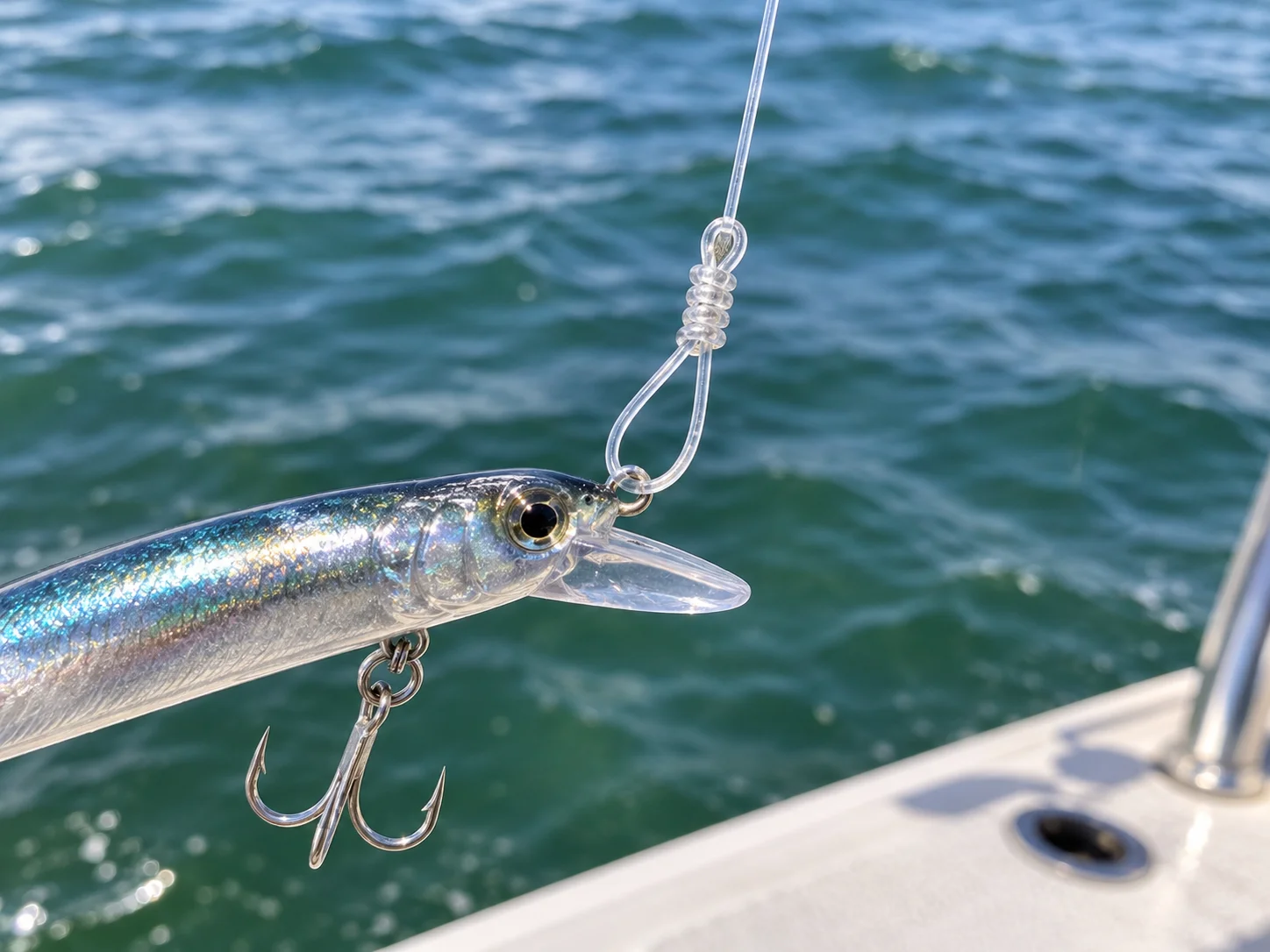
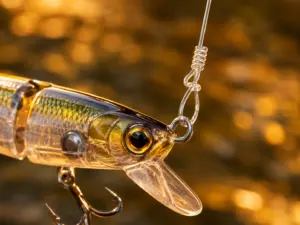
A tight-connection knot holds a lure directly against the eye. That restricts the lure’s movement. For hard baits with built-in action, like jerkbaits and crankbaits, that restriction changes the action the manufacturer designed into the lure. The Non-Slip Loop Knot, also called the Kreh Loop, creates a fixed loop at the terminal end so the lure swings freely. On subsurface lures fished with slow retrieves or pauses, the difference in action is visible in the water.
Tying it starts with an overhand knot in the standing line about six inches above the tag end. Pass the tag through the hook eye and back through the overhand loop, then wrap the tag around the standing line four times (three times for heavier line) and pass back through the overhand knot. Wet the knot and pull the tag and standing line simultaneously to tighten. The finished loop should be small and neat, roughly a quarter-inch, large enough to allow movement but tight enough to hold position.
This knot also appears in fly fishing contexts, where loop-to-lure connections are standard for certain streamer presentations. For inshore saltwater fishing, guides covering Florida scenarios recommend it specifically for attaching lures to fluorocarbon leaders, where stiffness in the leader material makes free movement at the terminal end even more important. It tests at roughly 90% of line strength on monofilament.
6. Dropper Loop
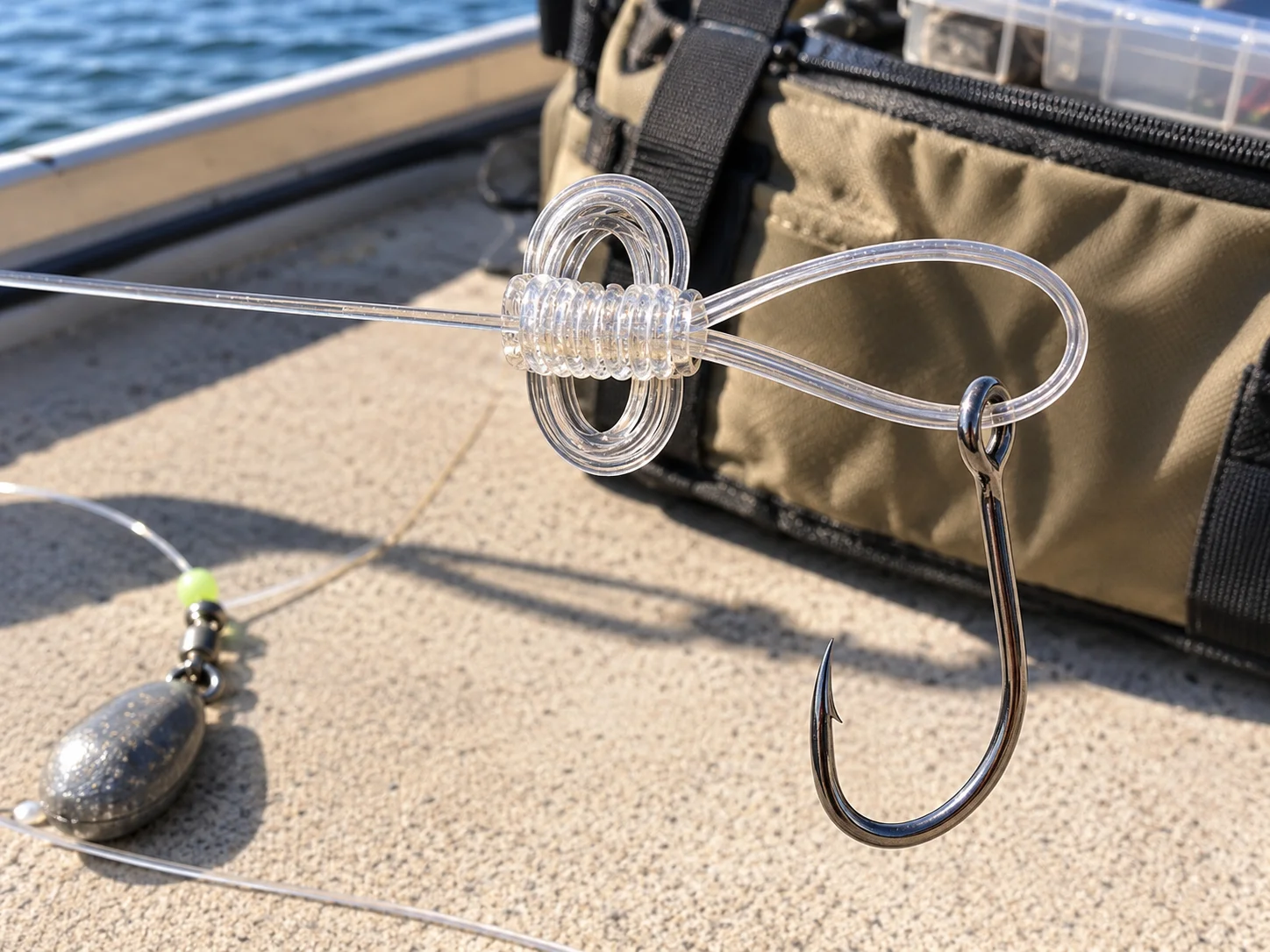
The Dropper Loop is the knot that makes multi-hook rigs possible without buying pre-tied leaders. It creates a fixed loop at any point in the middle of a line, perpendicular to the main strand, allowing you to attach a hook or sinker above the terminal end. Bottom fishing rigs, pompano rigs, and fluke rigs all rely on some version of this construction. Knowing how to tie it means you can build any multi-hook rig from a single spool of monofilament.
The process involves forming a large loop in the line, wrapping that loop around your fingers (or a pencil) six to eight times, then pulling the middle of the original loop back through the center opening before tightening. The loop that protrudes should be stiff and stand at a near-right angle to the main line, which prevents the hook from tangling around the main strand during a cast or retrieve. Line diameter affects the number of wraps: lighter line needs more, heavier line fewer.
A game warden field guide published in late 2026 extends the usefulness of loop knots beyond fishing specifically, noting that similar loop constructions are relevant for boat-handling in tight quarters. For strictly fishing applications, the Dropper Loop’s value is in rig building. It’s the difference between carrying a premade rig box and being able to construct whatever the bottom conditions require from materials already in your tackle bag.
Conclusion
The six knots in this guide, Palomar, Improved Clinch, FG Knot, Double Uni, Non-Slip Loop, and Dropper Loop, cover every connection category you’ll encounter: terminal to hook or lure, braid to leader, loop for lure action, and in-line for rig building. The best next step is not memorizing all six at once. Tie the Palomar and Improved Clinch until they’re automatic, then add the Double Uni. Once those three are reliable under pressure, the FG, Non-Slip Loop, and Dropper Loop each solve a specific problem you’ll eventually face on the water. Build the toolkit one knot at a time, and each one you add actually gets used.