Tying Fishing Knots Techniques That Boost Your Hookup Rate
Anglers who switch from a Palomar to a snell knot on bait rigs report roughly a 20 to 30 percent increase in solid hookups, not because one knot is harder to tie, but because it rotates the hook point inward during the set. That single mechanical detail is a useful entry point for understanding all 6 tying fishing knots techniques that boost your hookup rate. The knot connecting your hook to your line is the last mechanical link in the whole system. Getting it wrong means fish that strip the bait, roll off the hook at the net, or simply never get properly stuck in the first place.
Disclosure: This post contains affiliate links. As an Amazon Associate, we earn from qualifying purchases, and at no extra cost to you.
Key Takeaways
- Match knot type to line material: Palomar for braid, improved clinch for mono and fluorocarbon, snell for bait or turned-eye hooks.
- Snell knots produce a straight-line pull that rotates the hook point into the fish, raising hookup rates on bait rigs by 20 to 30 percent compared to standard clinch-style ties.
- Loop knots are the correct default for topwater lures, a fixed knot chokes lure action and reduces consistent hookups.
- Double-snell two-hook rigs convert short-striking fish on large baits by placing a second snelled hook near the tail.
- Moistening, seating, and testing every knot before casting is not optional preparation; it is the difference between knot slippage and full rated strength.
1. Palomar Knot for Braided Line Connections
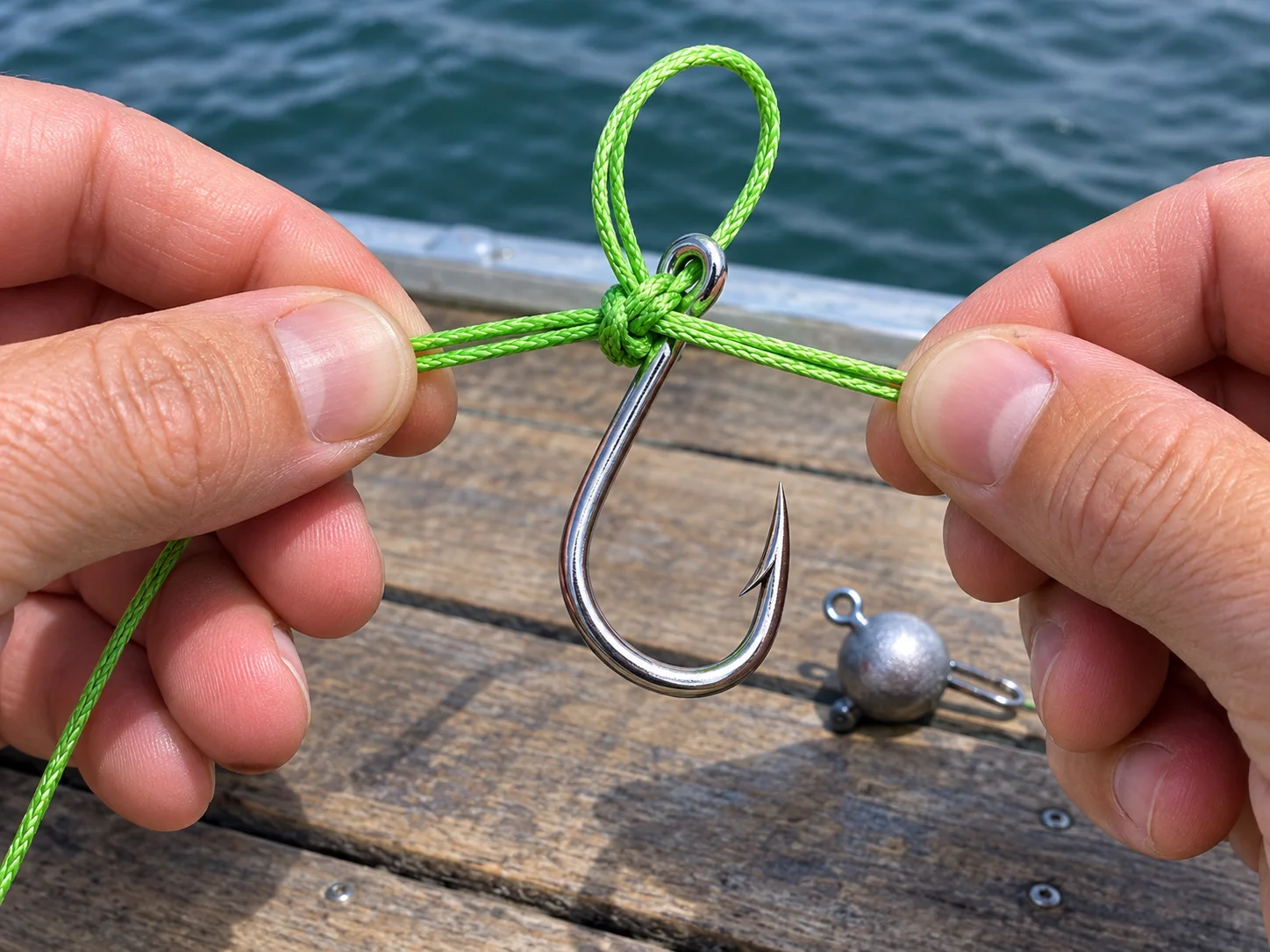
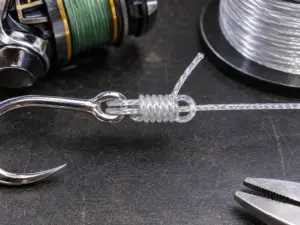
Braided line and standard clinch knots are a bad combination. Braid’s smooth, round surface gives knots almost nothing to grip, so a half-seated clinch can fail under a hard hookset at surprisingly low loads. The Palomar knot solves this by using a doubled line passed through the eye, looped over the hook, and pulled tight, creating multiple friction points that test at 95 to 100 percent of rated line strength.
Applying this in practice is straightforward. Double about six inches of braid, push the loop through the eye, tie a loose overhand knot in the doubled section, then pass the loop over the entire hook before pulling both ends snug. The doubled structure grips braid reliably in a way that single-strand knots simply do not. For a jig head, the Palomar also seats more cleanly than a uni knot because braid’s low stretch means any slack left in the knot telegraphs into a gap at the eye.
One constraint worth knowing: the Palomar works poorly on swivels or oversized hooks where the loop is too small to pass the terminal tackle through cleanly. On those setups, a uni knot or improved clinch on heavier mono is a more practical alternative. For standard braid-to-hook connections in bass, inshore saltwater, or carp fishing, the Palomar is currently the most consistently recommended choice across state agency knot guides and tackle-specific tutorials updated through 2026.
2. Improved Clinch Knot for Monofilament and Fluorocarbon
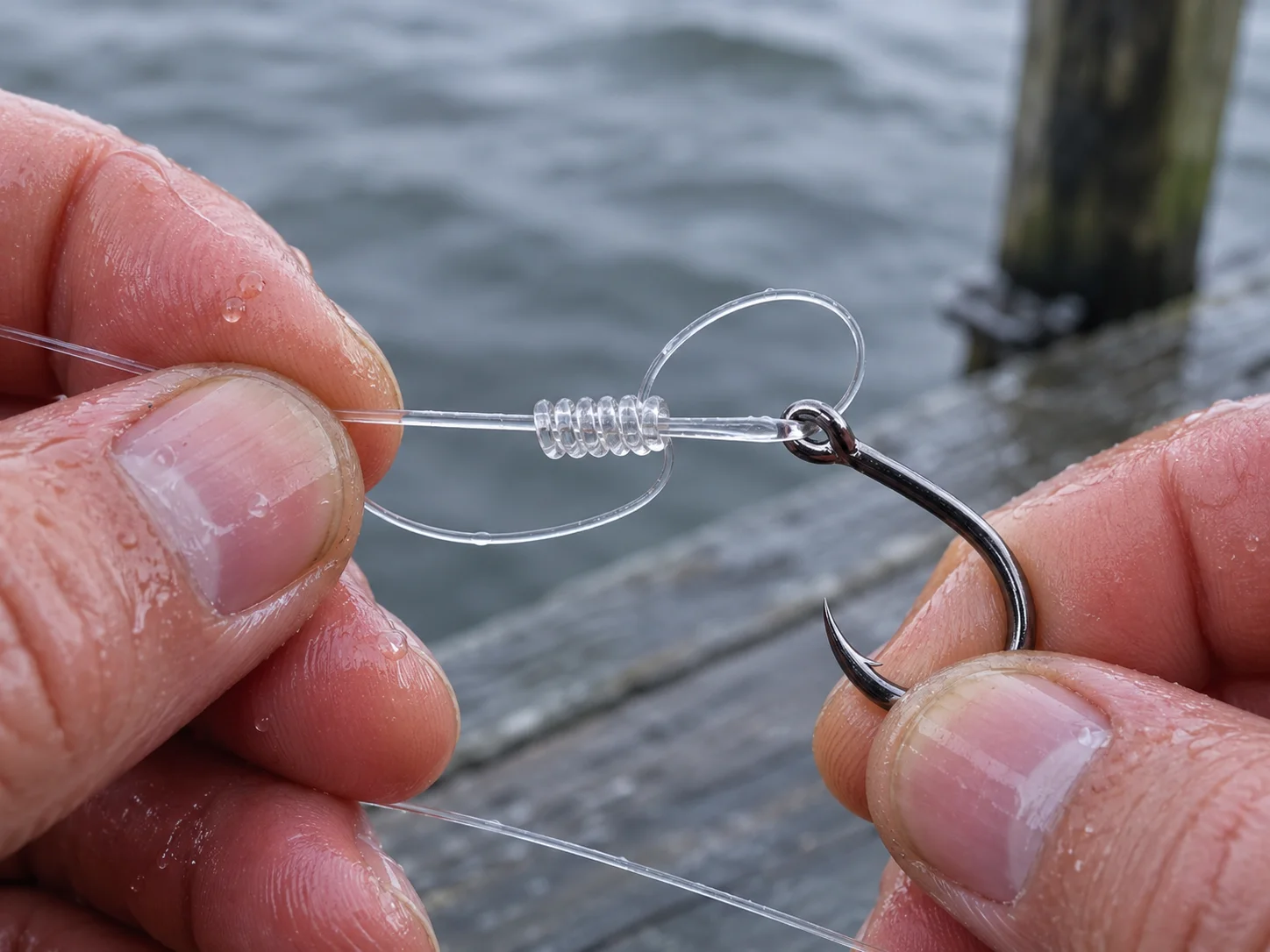
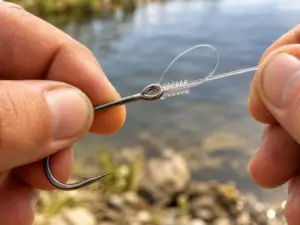
Fluorocarbon and monofilament have enough surface texture to hold a standard clinch, but adding one refinement, threading the tag end back through the loop formed above the eye before tightening, produces the improved clinch and raises that hold to 85 to 95 percent of line strength. The extra tuck locks the coils so they can’t unwind under a sudden load.
The technique is five to seven wraps around the standing line, then the tag end goes through the small loop near the eye and back through the large loop just created. Wet the whole thing with saliva before you pull. Dry fluorocarbon tightening on itself generates heat from friction, which weakens the knot before it even sees a fish. This is not a precaution unique to one brand; it applies to all fluorocarbon because of how the material’s dense structure responds to compression under heat.
For pier fishing on mono leaders, inshore flounder rigs, and any terminal connection where fluorocarbon is the material, the improved clinch is currently the consensus first choice in updated beginner and intermediate knot references. Its moderate strength ceiling also means it performs reliably without demanding perfect tying conditions, useful when hands are wet, light is poor, or the wind is up. Know its limit: on braid, skip it. The coils do not hold, and the knot fails at a fraction of its mono-rated strength.
3. Snell Knot on Bait and Turned-Eye Hooks
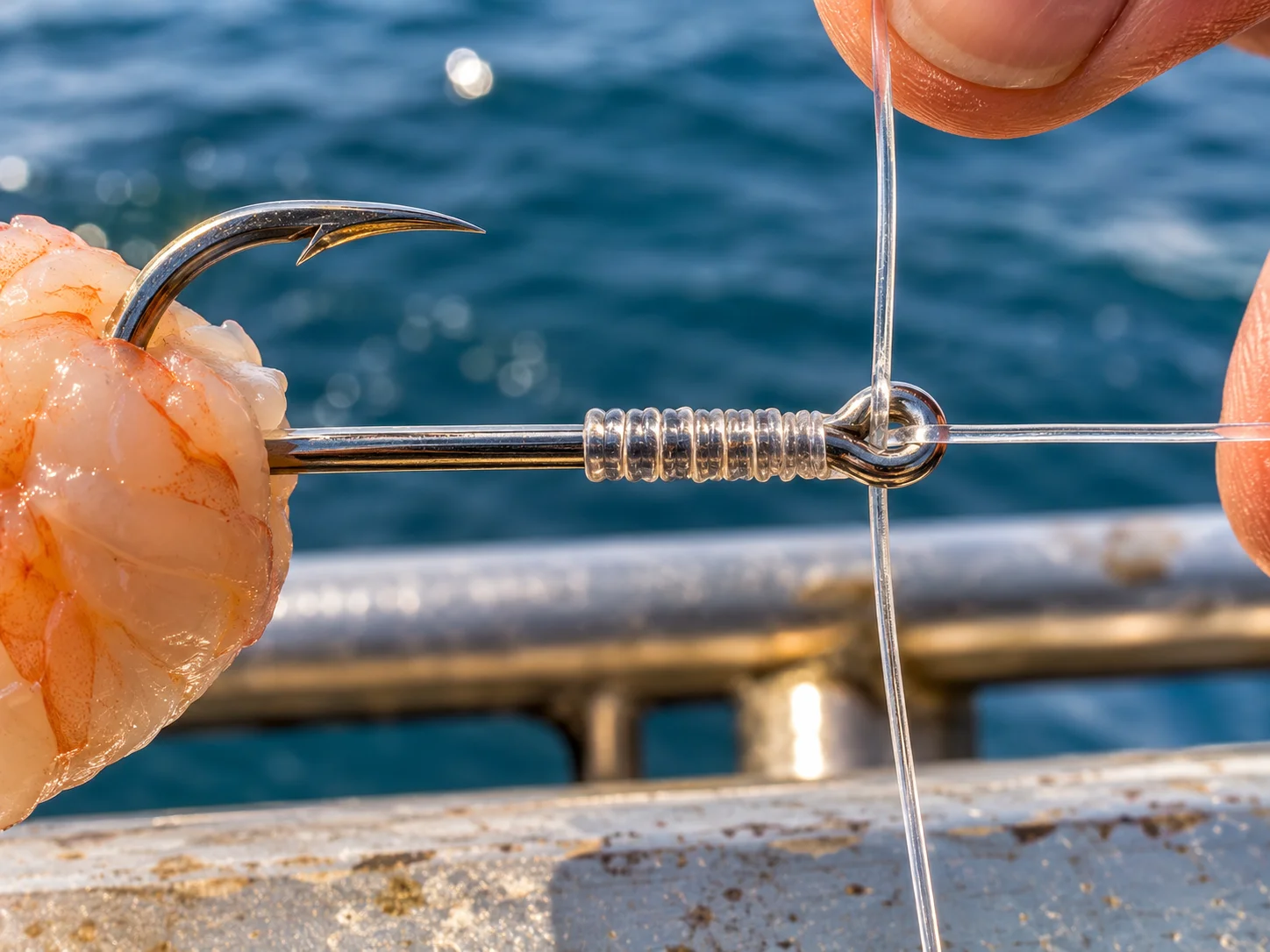
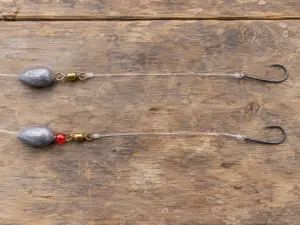
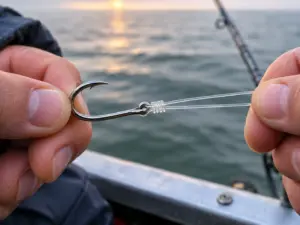
A snell knot wraps the leader around the hook shank rather than passing it through the eye, so the line exits in-line with the shank. When a fish takes a bait and the angler sweeps the rod, that geometry rotates the hook point directly into the fish’s jaw rather than allowing it to kick sideways or pull back through the mouth. That is the mechanical reason anglers consistently report 20 to 30 percent more solid hookups after switching from a clinch to a snell on bait rigs.
The tie itself takes practice but is not complicated. Pass the leader through the eye from the bottom, run it alongside the shank pointing toward the bend, then wrap the tag end around both the leader and the shank six to eight times working toward the eye. Pull the tag end back through the original loop at the eye and tighten by pulling both ends in opposite directions. Wet the wraps before the final pull.
Circle hook rigs benefit from snells in the same way. A circle hook is designed to rotate and catch the corner of the mouth as the fish moves away; a snell keeps the line aligned with the shank during that rotation, improving penetration without an aggressive sweep. State agencies that updated their “learn to fish” materials in 2025 and 2026 specifically list the snell as the best choice for bottom-fishing bait rigs and live-bait setups targeting species like catfish, flounder, and redfish. For any hook with a turned or offset eye, the snell also eliminates the awkward angle a clinch creates at the connection point.
4. Loop Knots for Topwater Lures
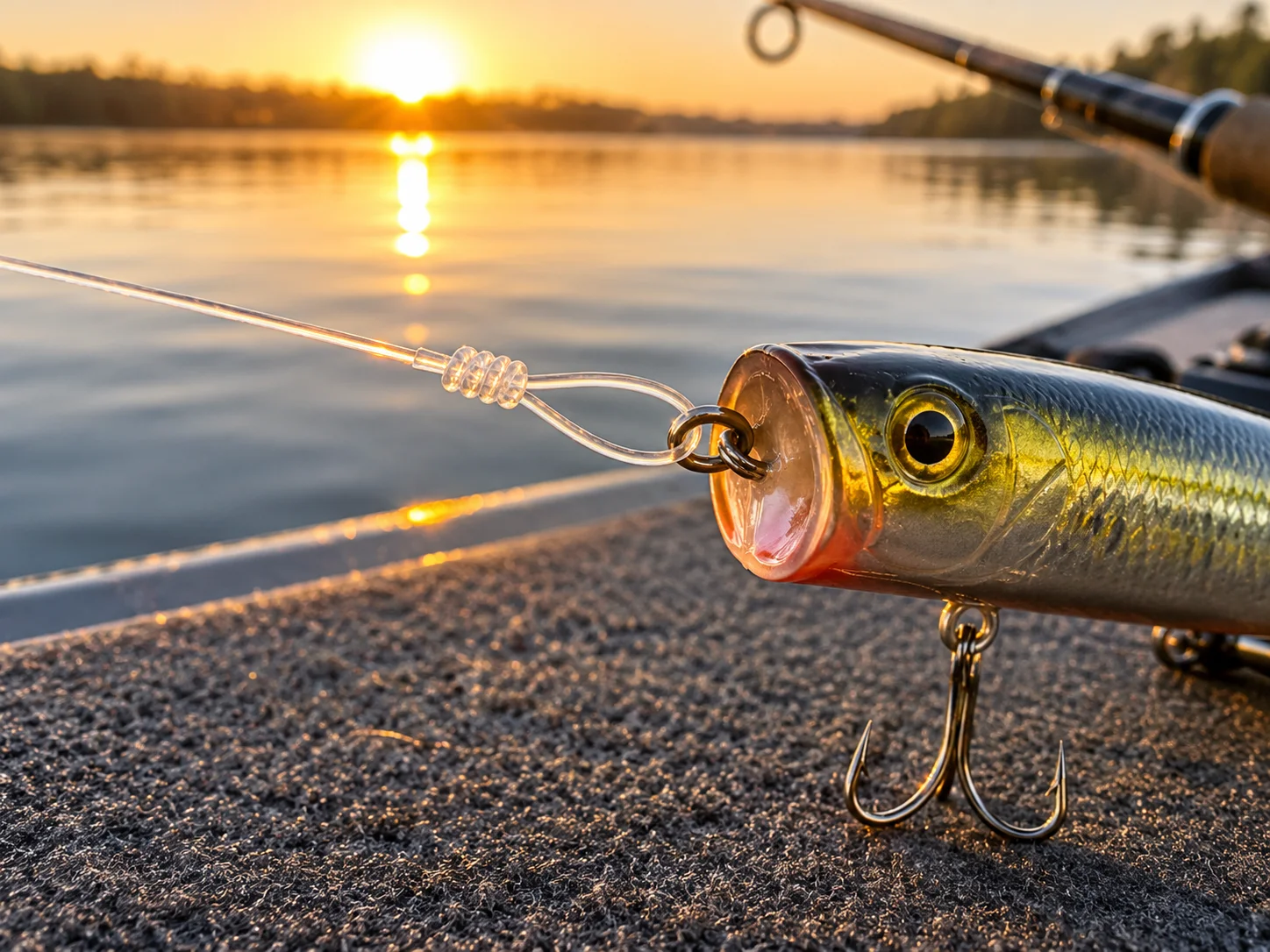
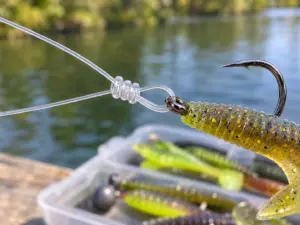
A fixed knot locked tight against a topwater lure’s eye restricts pivot. The lure still moves, but it moves less freely, and that reduction in action flattens the erratic walking or popping motion that triggers strikes. A loop knot leaves a small open loop at the connection, so the lure swings freely on every twitch. Current topwater-specific knot guidance treats the Non-Slip Mono Loop (sometimes called the Rapala knot) as the default for walking baits and hard-bodied topwaters, citing consistently higher hookup rates compared to fixed connections.
Tying a Non-Slip Mono Loop starts with an overhand knot in the standing line about four inches from the end. Pass the tag end through the lure eye, then back through the overhand knot, then wrap around the standing line three to four times and return the tag back through the same overhand knot from the other side. Moisten and tighten by pulling both tag and standing line. The resulting loop should measure roughly a quarter inch, small enough to stay out of the hooks but large enough to allow full swing.
Timing still matters alongside knot choice. Topwater guides consistently recommend waiting until you feel the weight of the fish and pausing about one second before sweeping the rod on walking baits, an impulsive hookset on a surface explosion frequently pulls the lure away before the hook is in contact. The loop knot maximizes the mechanical advantage of the connection, but correct timing is what actually converts the strike. Both elements need to be right.
5. Double-Snell Two-Hook Rig for Large Baits and Short Strikers
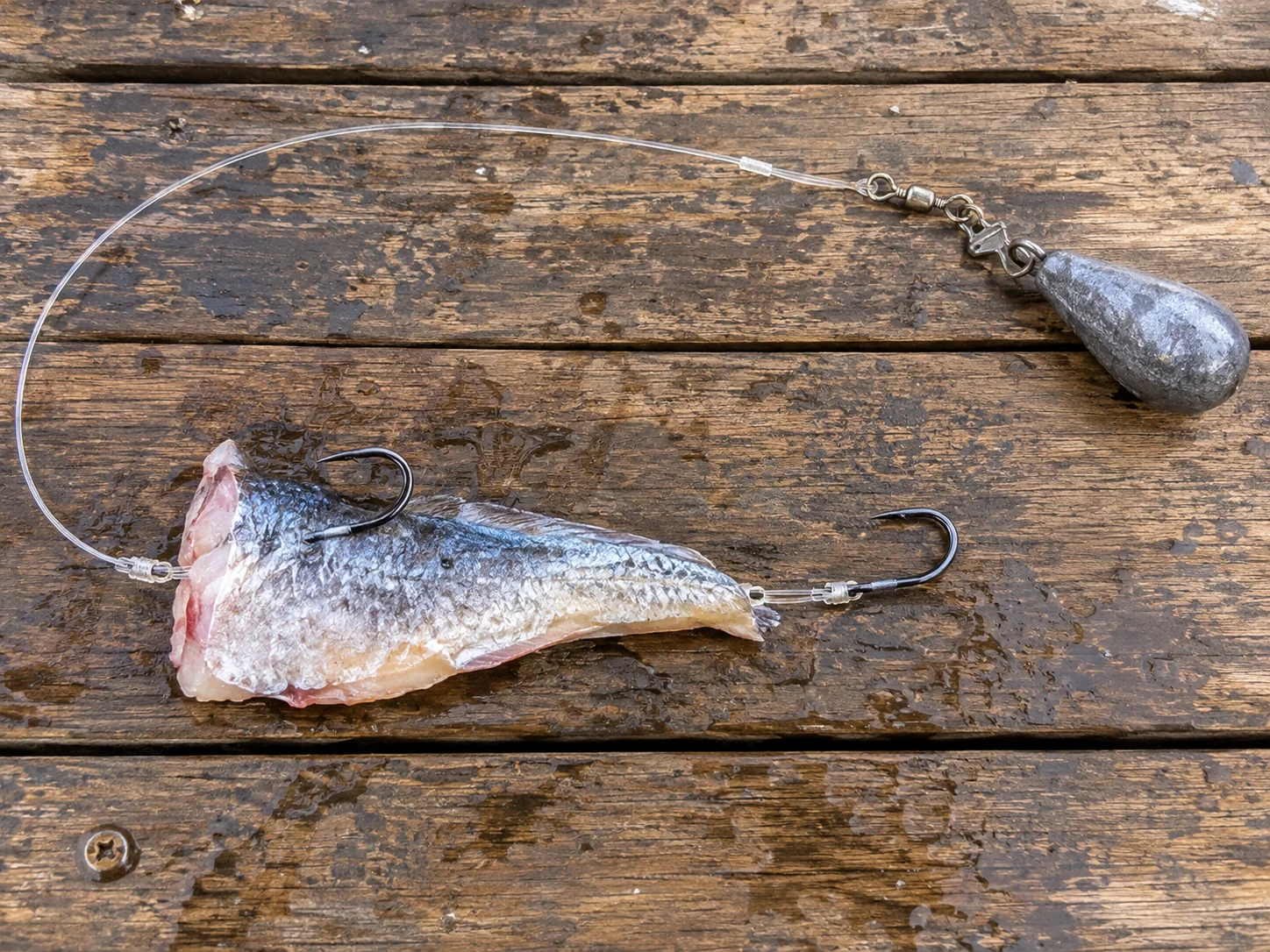
Large cut baits and whole baitfish present a problem: fish often pick up the head or the middle and spit the hook before the angler can respond. A double-snell rig places two snelled hooks in-line along the bait, typically with one hook at the head and a trailing hook near the tail. Fish that nip the tail end contact the second hook; fish that engulf the head contact the first. The result is a meaningful increase in hookup ratio on species known for tentative takes, including striped bass on large bunker chunks, flathead catfish on whole bluegill, and grouper on squid or pinfish.
Building the rig requires tying the first snell in the usual way on the main leader, then measuring roughly two to four inches of leader material and snelling the second hook so it lies in-line with the first, both hook points facing the same direction. The gap between hooks should roughly match the bait’s length from head to tail section. Some anglers use a short piece of heavy mono as a stinger connection to allow some flex between hooks on soft baits.
The double-snell appears increasingly in 2025 and 2026 bottom-fishing and big-bait tutorials as a targeted fix for short strikes rather than a universal rig. It adds complexity and can tangle on the cast if the second hook is too long. Use it when you’re consistently feeling takes without hookups on large presentations, that pattern is exactly the problem it’s designed to address.
6. Moisten, Seat, and Test Every Knot Before Casting
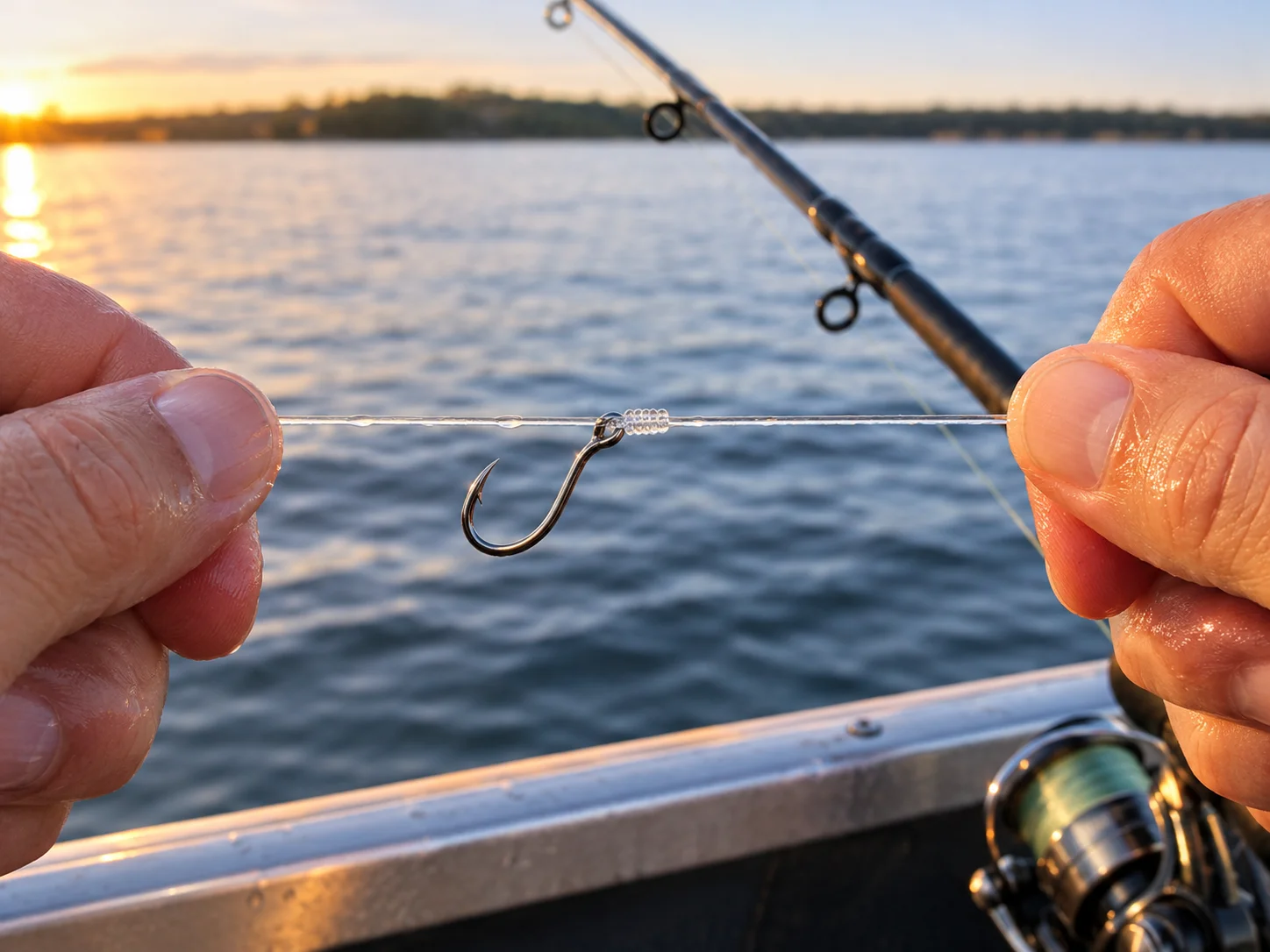
A 2024 study published in Scientific Reports examining biodegradable gillnets found that knot slippage and friction during tightening can significantly reduce effective tensile strength, with poorly seated knots failing well below the material’s rated load. The finding supports what fishing agencies and instructors have communicated in updated materials through 2026: knot execution determines whether a knot performs at its rated strength or at a fraction of it.
The process has three non-negotiable steps. First, moisten the knot with saliva or water before tightening. Dry friction generates heat that weakens nylon and fluorocarbon at the microscopic level where coils press against each other. Second, pull on all ends, both the standing line and the tag end, evenly and firmly. A knot tightened by pulling only the standing line often seats asymmetrically, leaving gaps between coils that collapse under load. Third, test the finished knot with a firm, sustained tug before the first cast. This check catches knots that are about to slip under fishing pressure while there is still time to retie.
Focusing on a small set of knots tied correctly produces better results than collecting many knots tied imprecisely. Current educational materials from regional wildlife agencies converge on this recommendation: master three to five knots thoroughly rather than accumulating a repertoire of twenty that are each tied from memory without consistent technique. Anglers who can tie a Palomar, improved clinch, snell, and loop knot reliably in low light with wet hands have covered the vast majority of hook-and-line situations they will encounter across freshwater and inshore saltwater fishing.
Quick Comparison
| Technique | Best Line Type | Primary Benefit | Strength Rating |
|---|---|---|---|
| Palomar | Braid | Highest strength on smooth lines | 95-100% |
| Improved Clinch | Mono / Fluorocarbon | Reliable hold, easy to tie | 85-95% |
| Snell | Any, bait/turned-eye hooks | Straight-line pull, hook rotation | High |
| Non-Slip Mono Loop | Mono / Fluorocarbon | Free lure action on topwaters | Moderate-High |
| Double-Snell Rig | Any | Covers short strikes on large baits | Depends on base knot |
| Moisten, Seat, Test | All | Achieves full rated knot strength | Full rated |
Conclusion
Of all six techniques, matching knot to line type, Palomar for braid, improved clinch for mono and fluorocarbon, snell for bait rigs, returns the most immediate gains for the least additional effort. If you retie nothing else after reading this, switch your braid-to-hook connection to a Palomar and your bait rig to a snell. Test both knots with a hard tug before the first cast of the day. The mechanical improvements are already built into those two knots; you just need to let them work.