Fishing Knots for Lures That Keep Action and Strength Intact
A single bad knot costs more than a fish. It costs the confidence in every cast that follows. Anglers lose lures to knot failures far more often than to line breaks in open water, and most of those failures trace back to using the wrong knot for the wrong line type or the wrong lure style. The 6 fishing knots for lures that keep action and strength intact covered here solve that problem directly, matched to specific line materials and lure behaviors that field testing has confirmed since 2026 research updated the rankings.
Disclosure: This post contains affiliate links. As an Amazon Associate, we earn from qualifying purchases, and at no extra cost to you.
The selection comes down to two categories: snug knots that lock the lure to the line for maximum break strength, and loop knots that leave a small open ring so the lure can swing and dart freely. Knowing when to use each type matters as much as knowing how to tie it.
Key Takeaways
- The Palomar knot retains about 89% of 10 lb monofilament strength and ranks as the most reliable all-around snug knot for mono and fluorocarbon.
- The Trilene knot tests at roughly 96% strength on 10 lb mono, making it the strongest snug option on monofilament specifically.
- The Uni knot outperforms the Palomar on braid, averaging 20.2 lb breaking strength versus 18.4 lb for the Palomar on 10 lb braid.
- The Improved Clinch knot performs reliably on mono but drops to about 75% on fluorocarbon and can slip completely on braid.
- Loop knots (Non-Slip Loop and Rapala) sacrifice a small amount of raw strength in exchange for free lure movement, which produces more strikes on jerkbaits, topwaters, and swimbaits.
- Matching the knot to both line type and lure style is the single most effective way to improve connection reliability.
Quick Comparison
| Knot | Best Line Type | Strength (10 lb mono) | Lure Freedom |
|---|---|---|---|
| Palomar | Mono / Fluoro | ~89% | None (snug) |
| Trilene | Mono | ~96% | None (snug) |
| Improved Clinch | Mono | ~96% | None (snug) |
| Uni | Braid | Avg. 20.2 lb break | None (snug) |
| Non-Slip Loop (Kreh) | Mono / Fluoro | ~83% (10 lb fluoro) | Full loop |
| Rapala | Mono / Fluoro / Braid | High / varies | Full loop |
1. Palomar Knot
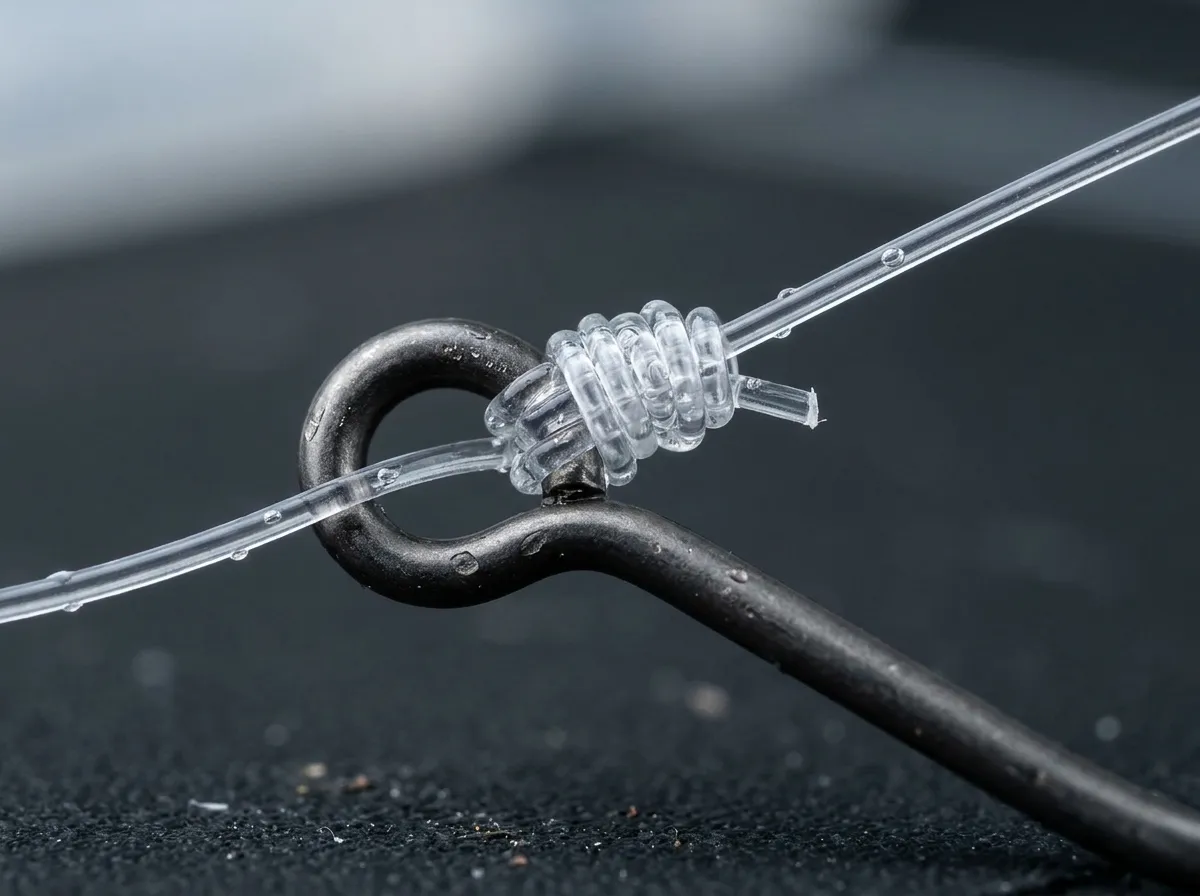
The Palomar is the knot most testing protocols return to as the baseline. Pull tests on 10 lb monofilament show it retaining about 89% of line strength, dropping to 82% on 10 lb fluorocarbon, and declining further to around 63% on 14 lb braid. Those numbers position it as the dominant choice when you’re fishing mono or fluorocarbon and want a snug connection that holds without requiring perfect technique every time.
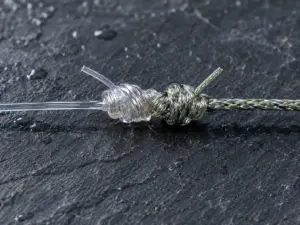
The tying sequence is simple enough to do in low light. Double the line to form a loop, pass the loop through the hook eye, tie a loose overhand knot in the doubled line, and then pass the loop over the entire lure or hook before cinching. Because the loop goes around the hook, the knot seats itself under load rather than sliding or twisting. That self-seating quality is what makes it forgiving across different eye sizes and lure weights.
Vermont Fish and Wildlife and Pennsylvania’s Fish and Boat Commission both include the Palomar in entry-level fishing education as “extremely versatile and dependable,” and that assessment holds up under lab conditions. Where it falls short is braid. The 63% retention on 14 lb braid is a meaningful drop from its mono performance, and if you’re running braid straight to a lure without a leader, the Uni knot is a better choice for that connection. Use Palomar for mono and fluorocarbon; treat it as a default for crankbaits, jigs, and spinner baits where lure action doesn’t depend on a pivot point.
2. Trilene Knot
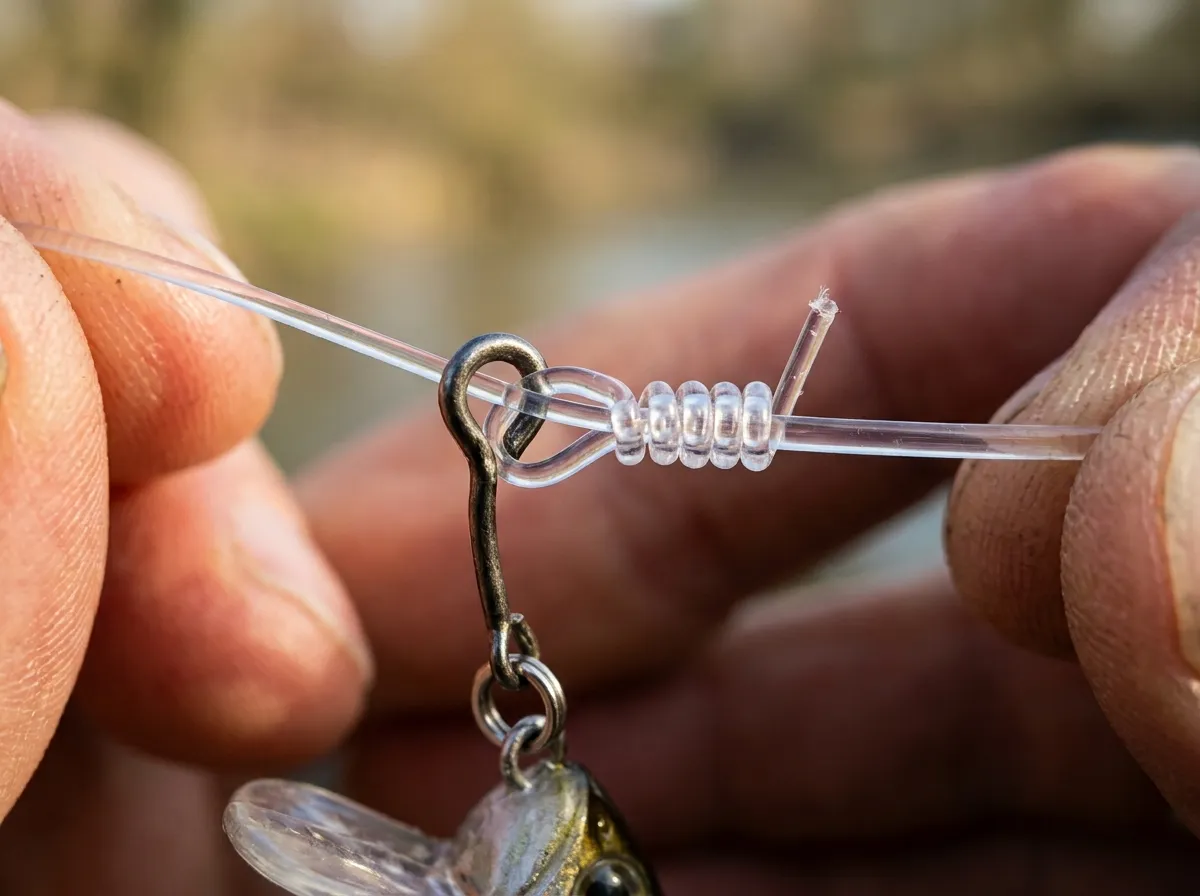
The Trilene knot holds a narrow performance edge over the Palomar on monofilament. Pull tests consistently report roughly 96% strength retention on 10 lb mono, which makes it the strongest snug option on that line material when tied carefully. Its design builds on the Improved Clinch principle but adds a second pass through the hook eye before wrapping, which distributes stress across two strands of line at the connection point rather than one.
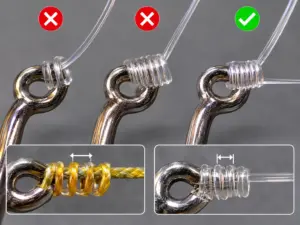
Pass the line through the hook eye twice to form a double loop, then wrap the tag end four to six times around the standing line, and feed the tag back through both loops at the eye. That double-strand entry is the structural reason for its high mono performance. The two passes through the eye reinforce the knot against the specific failure point where most single-pass knots weaken under sustained load.
The tradeoff is that the Trilene is slightly more time-consuming to tie than the Palomar, and it performs best on monofilament rather than fluorocarbon or braid. On hard baits and jigs where you want the absolute maximum strength snug connection and you’re using mono, it’s the right call. For fluorocarbon applications, the Palomar’s ease and consistent performance make it the more practical choice even if the Trilene has a slight raw-strength edge on mono.
3. Improved Clinch Knot
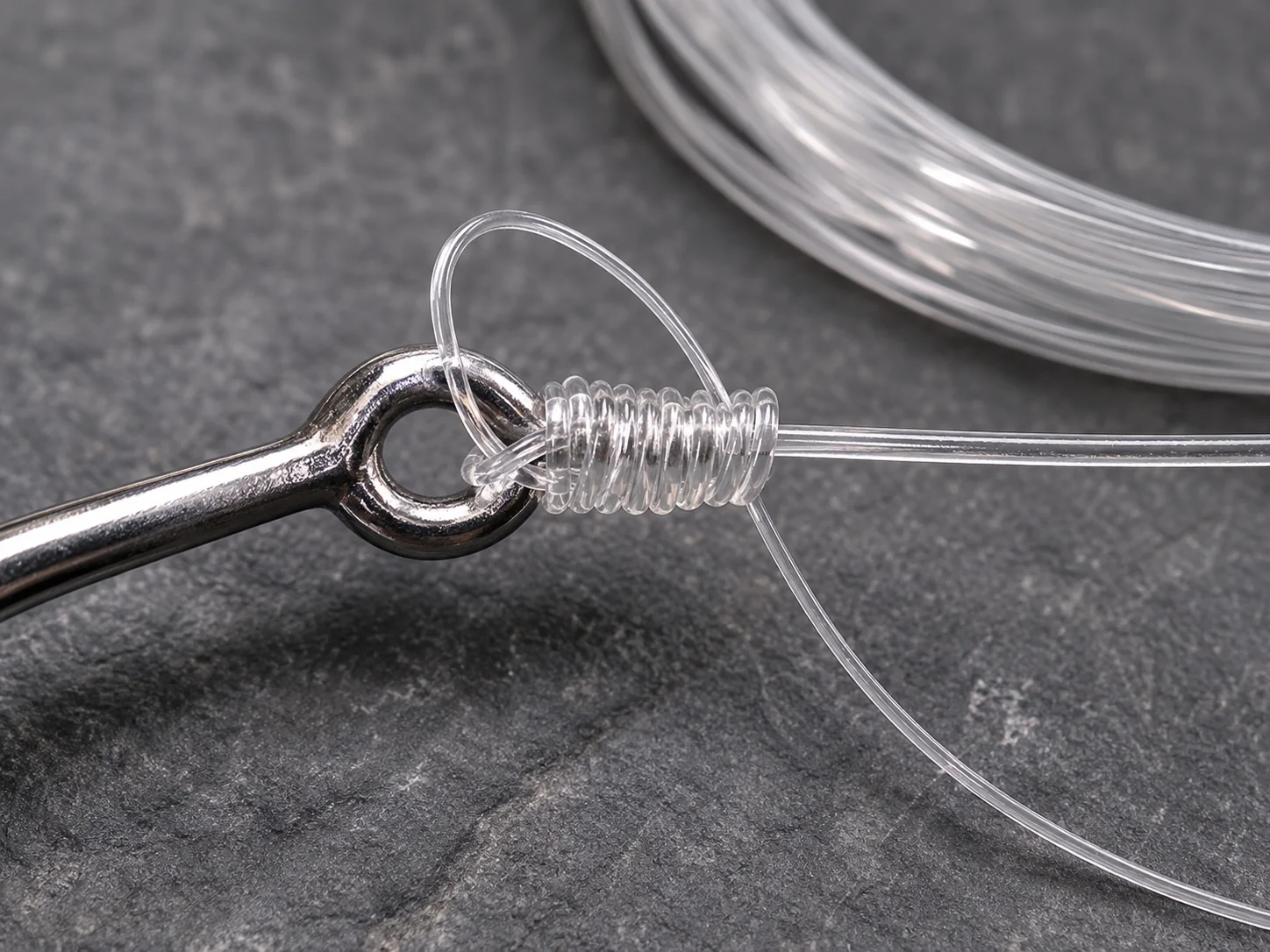
Probably more anglers know the Improved Clinch knot than any other, which is both its advantage and the reason it gets misused. Carefully tied on 10 lb monofilament, it tests at around 96% strength retention, matching the Trilene. The problem is that performance degrades sharply with line type: fluorocarbon pulls at closer to 75% strength, and in documented braid tests, the Improved Clinch has slipped completely under load on 14 lb braid, meaning the knot failed before the line broke.
The tying sequence is widely known: thread the line through the eye, wrap the tag end five to seven times around the standing line, then bring the tag back through the small loop near the eye and through the large loop formed by the main wrap. Cinch firmly and trim. That final step of passing through two loops is what distinguishes the “improved” version from the basic Clinch, and skipping it reduces strength significantly.
If your fishing involves a mono main line to a lure, the Improved Clinch is a legitimate choice, particularly for anglers who’ve tied it thousands of times and can execute it cleanly under field conditions. But swapping to braid without changing your knot is a real failure risk. The same applies to fluorocarbon leaders: a 25% strength reduction on fluoro is not a minor inconvenience when a 20-pound bass hits a swimbait on 15 lb test. Know the limits before you rely on it.
4. Uni Knot
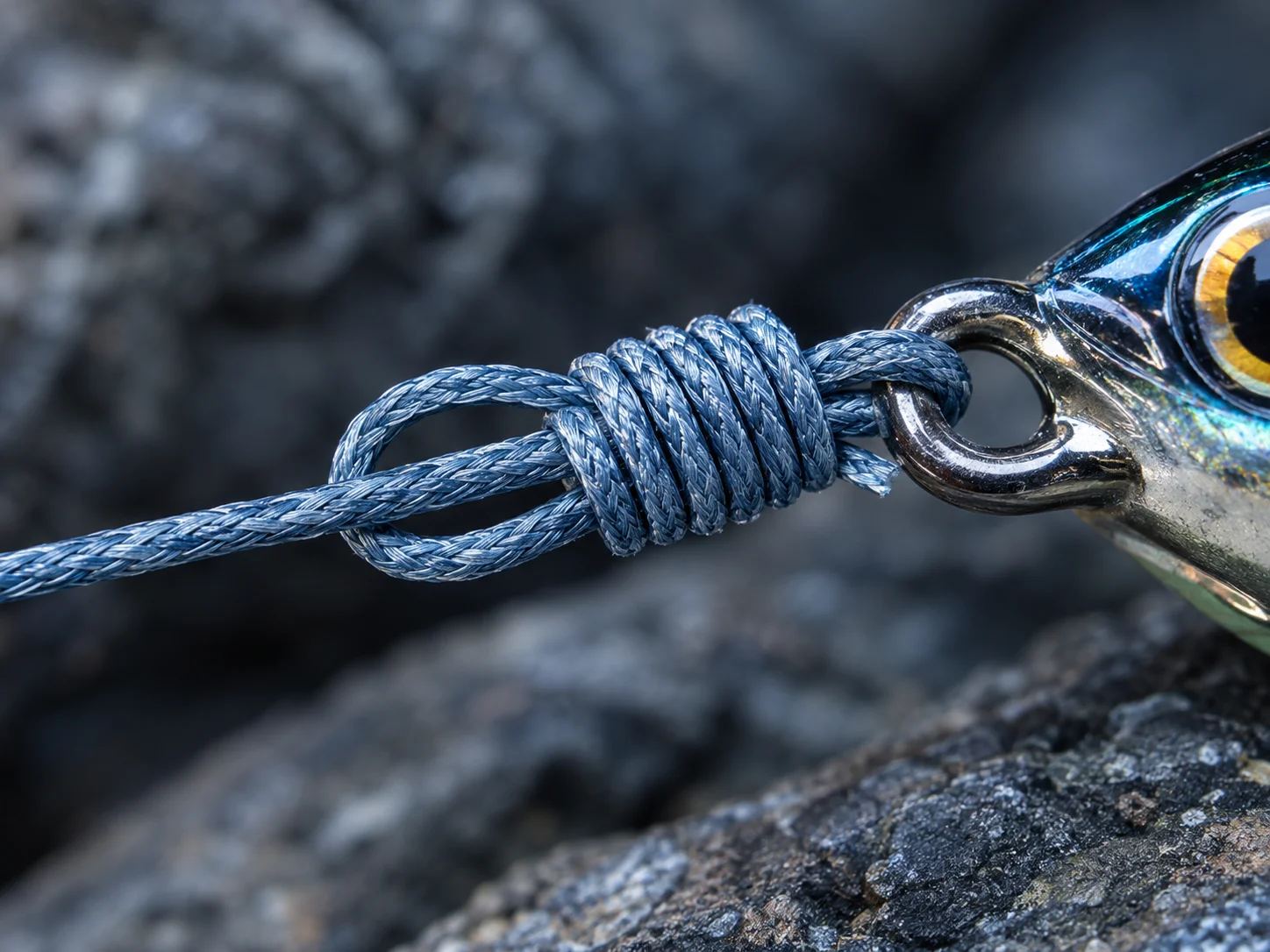
For braid, the Uni knot’s field numbers are hard to argue with. Comparative pull tests on 10 lb braid show the Uni averaging 20.2 lb at breaking versus 18.4 lb for the Palomar on the same material, a gap large enough to matter when you’re fishing heavy cover or targeting species that run hard. That difference flips the default recommendation: on braid, use the Uni rather than the Palomar.
To tie it, run the line through the hook eye and double back parallel to the standing line to form a loop. Wrap the tag end around both strands inside the loop six times, then pull the tag end to tighten the coils. Slide the knot down to the eye. The resulting structure grips braid through friction across multiple coils, which suits braid’s slick, low-stretch properties better than the loop-over-the-hook geometry of the Palomar.
The Uni knot also has practical range beyond lure connections. The same structure works for joining two lines, attaching mono to braid (using a double Uni), and anchoring line to a reel spool. That versatility makes it a knot worth learning even if you primarily fish mono, since it covers braid scenarios without requiring you to master a third or fourth knot. Modern “five-knot” frameworks from 2026 that claim to cover most fishing situations include the Uni as one of the core selections alongside the Palomar and Non-Slip Loop for exactly this reason.
5. Non-Slip Loop Knot (Kreh Loop)
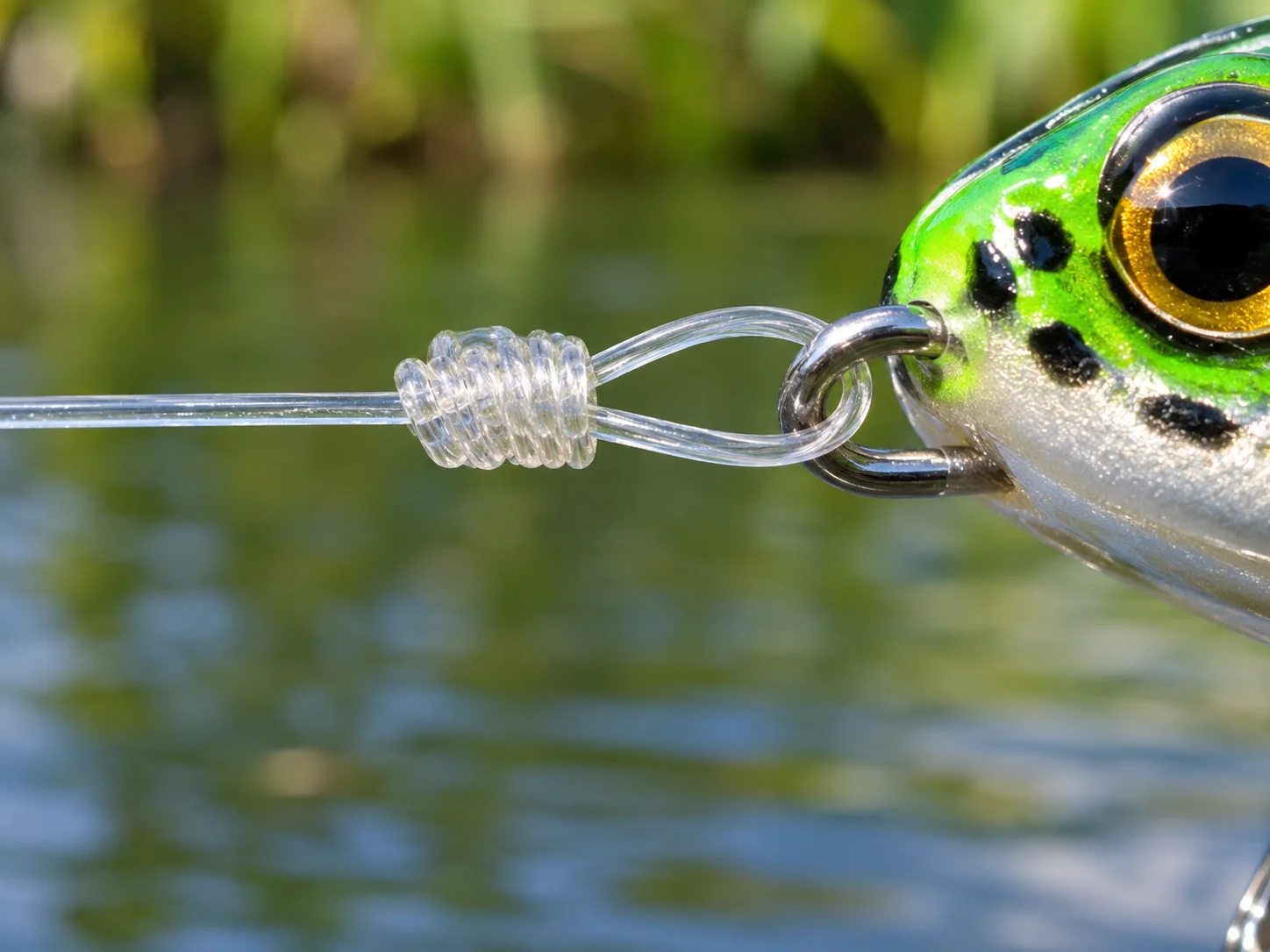
A snug knot tied to a topwater frog or walking bait locks the lure’s eye to the line, restricting the natural side-to-side pivot the lure was designed to produce. Field observation and game-warden guidance from late 2026 put it plainly: snug knots can “kill the action” on certain moving baits. The Non-Slip Loop knot, developed by fly-fishing pioneer Lefty Kreh, fixes that by leaving an open loop that lets the lure swing freely through its full range of motion.
Pull tests on 10 lb fluorocarbon place the Non-Slip Loop at about 83% strength retention, which is lower than the Palomar’s 89% on the same material, but high enough that most anglers fishing 10 to 20 lb test won’t encounter the gap in practical fishing. The knot forms a fixed-diameter loop that doesn’t tighten under load the way a Clinch knot does, keeping the lure free to pivot on every twitch of the rod.
The tying process starts with an overhand knot in the standing line several inches above the tag end. Thread the tag through the hook eye, pass it back through the overhand knot in the same direction it entered, then wrap the tag around the standing line five to seven times (fewer wraps for heavier line), and thread the tag back through the overhand knot again. Pull both ends to seat. Keep the finished loop short, roughly the width of the hook eye or slightly larger, to prevent the lure from fouling on the loop itself during a cast. This knot is the right default for crankbaits, swimbaits, topwater frogs, and any lure where the manufacturer’s intended action requires a hinge point.
6. Rapala Knot
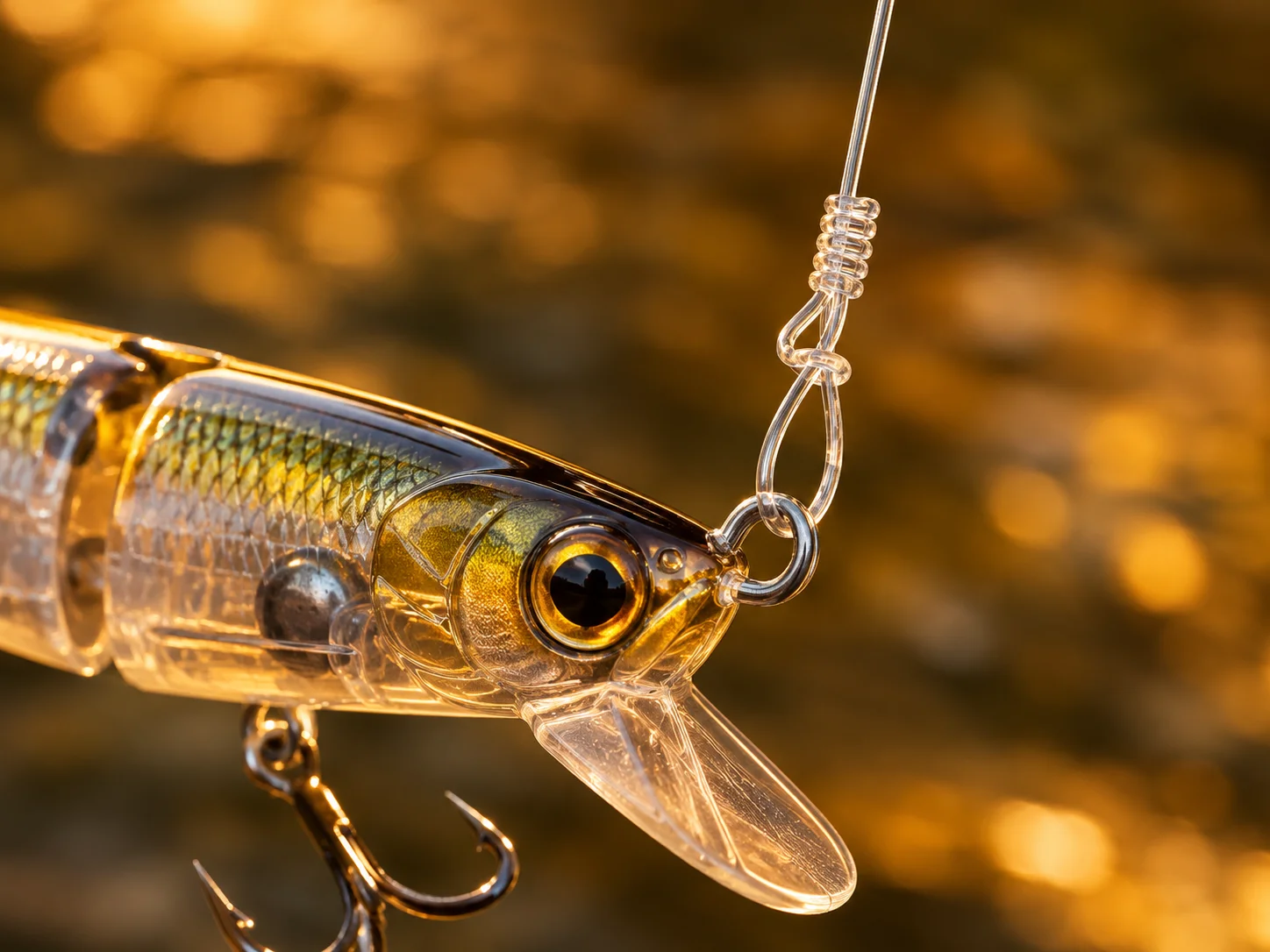
Salt Strong’s loop-knot ranking places the Rapala knot first among loop options, with the Non-Slip Loop second, and the gap between them comes down to how each knot is intended to be used. The Rapala knot is widely considered the maximum-action loop knot in current rankings because it maintains nearly full lure freedom and ties directly to the knot’s manufacturer-designed geometry, making it especially well-suited to Rapala-style hard baits with internal weight systems and built-in wobble.
The tying sequence differs from the Non-Slip Loop. Begin with an overhand knot tied in the line about six inches from the end, leaving the tag end free. Thread the tag through the lure eye and back through the overhand knot, then wrap it three times around the standing line above the overhand knot. Bring the tag back through the overhand knot, then back through the new loop formed by that final pass, and pull tight. The result is a fixed loop that won’t close under tension, similar in function to the Kreh loop but with a slightly different structure at the base.
Where the Rapala knot earns its first-place loop-knot ranking is on jerkbaits and jointed hard baits. A jointed crankbait’s side-to-side glide depends on the attachment point pivoting freely, and the Rapala knot allows that movement through the full stroke without restriction. A 2026 technical comparison confirmed that loop knots as a category provide a “flexible attachment and more natural action” for hard baits and streamers, with the Rapala and Non-Slip Loop leading the group. If you fish one style of lure more than any other and that lure is a jerkbait or walking topwater, the Rapala knot is worth learning before the Non-Slip Loop.
Conclusion
The practical rule that covers most fishing situations is straightforward: use a Palomar or Trilene on mono or fluorocarbon when you want maximum break strength with jigs, spinners, or tight-action crankbaits; use the Uni on braid; and switch to the Non-Slip Loop or Rapala knot any time the lure’s action depends on a free pivot point. The Improved Clinch stays useful on mono only, with the understanding that it carries real failure risk on fluorocarbon and braid.
The best next step is to test the two or three knots relevant to your line type and lure selection on a scale before your next trip. Tie ten specimens of each, pull them to failure, and note where each breaks. That takes about twenty minutes and gives you more reliable information than any reference chart because your specific line, eye size, and hand tension are part of the system.