Maternity Fishing Photography: Celebrating Motherhood With a Rod in Hand
A 2026 survey of leading outdoor maternity portfolios found that water-based sessions, rivers, reservoirs, coastal harbours, now appear in the front pages of more than half the regional photographers actively promoting lifestyle pregnancy work. Within that broad category, a quieter niche has been gaining ground: maternity fishing photography, the practice of celebrating motherhood with a rod in hand and a recognizable outdoor identity front and center.
Disclosure: This post contains affiliate links. As an Amazon Associate, we earn from qualifying purchases, and at no extra cost to you.
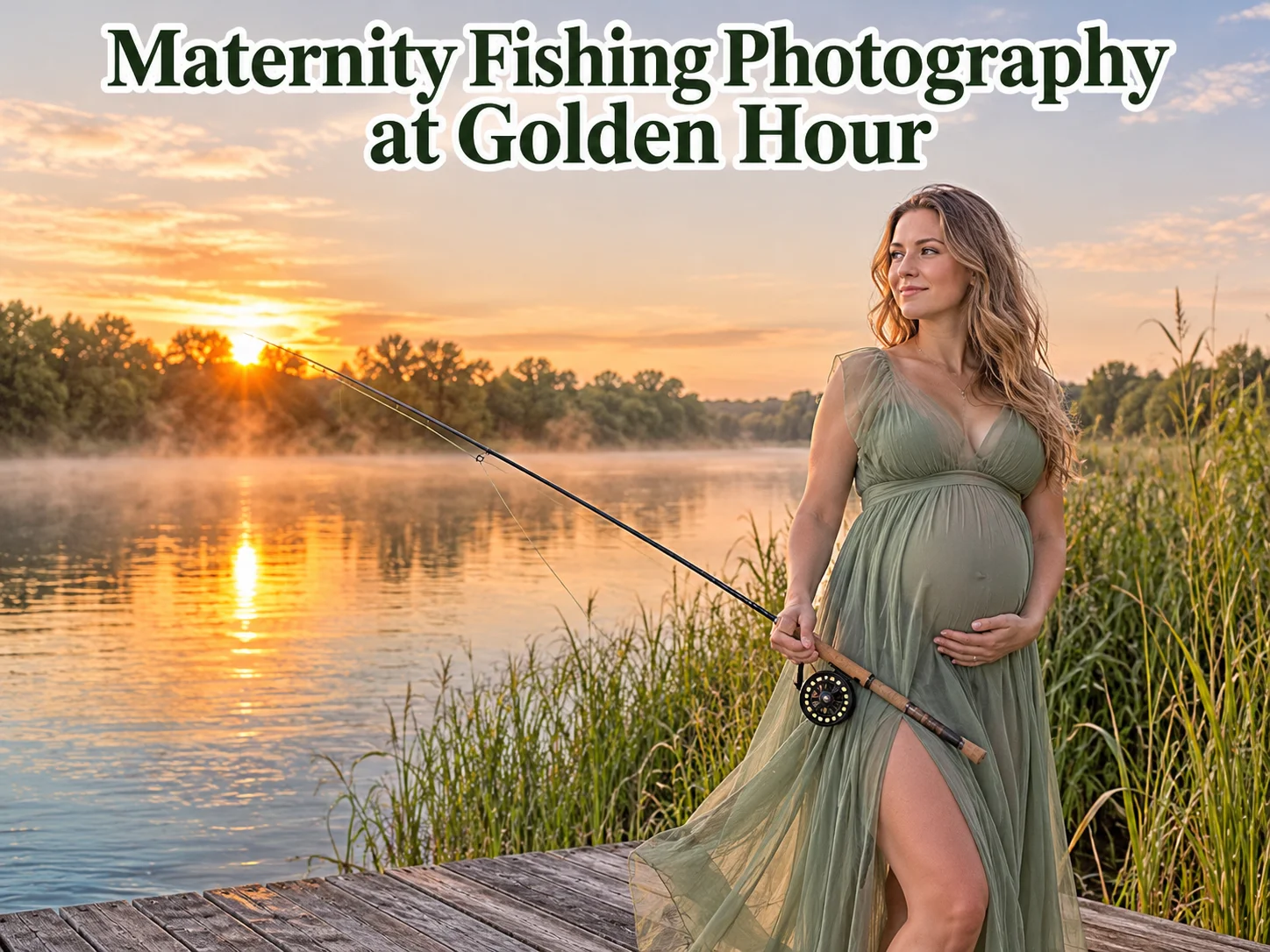
This is not a trend built on novelty props. It is built on a straightforward idea: that a pregnancy portrait is more compelling when it shows who the person already is, not who a studio set tells them to be. For families who fish together, on a lake, a tidal river, a working harbour, the rod is as natural a part of the frame as a baby bump.
Key Takeaways
- The recommended window for outdoor maternity sessions, including fishing-themed shoots, is consistently 28 to 34 weeks of gestation.
- Working fishing harbours, reservoirs, and riverbanks are recognized maternity locations in 2026, not fringe ideas.
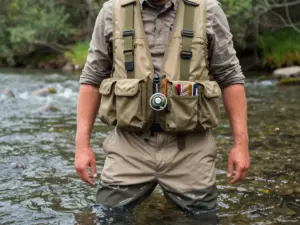
- Fly-fishing waders worn by the photographer, not just the subject, are a documented technique for creating water-level maternity portraits.
- Fishing-themed digital backdrops and prop sets are commercially available, making studio-based fishing concepts accessible year-round.
- Personalization is the dominant client demand in lifestyle maternity work; incorporating a hobby like fishing fits that trend directly.
Why Fishing Environments Work as Maternity Backdrops
Fishing locations carry a specific visual vocabulary that serves maternity photography well. The combination of open water, natural light bouncing off a surface, and foreground texture, reeds, dock boards, gravel banks, gives a photographer multiple compositional layers without any artificial staging.
One frequently cited example from 2025 to 2026 is a Missoula riverbank session where the same stretch of water had already been used for rafting and fishing before it became the backdrop for a maternity shoot. The location carried existing meaning for the family. That pre-existing connection is exactly what separates a maternity fishing portrait from a generic water shot: the rod, the waders, or the tackle box signals a life already being lived, into which a child is arriving.
Coastal fishing towns bring a different register. A 2026 guide to Deauville-Trouville describes the working fishing harbour, colourful boats, a fish market, port infrastructure, as a primary location for pregnancy shoots. The appeal is authenticity over romance. The harbour is not curated for photography; it looks the way it looks, and that everyday quality reads as honest rather than staged.
Inland options are just as viable. Studios in the Great South Bay area of Long Island reference the bay’s boating and fishing culture in maternity marketing, while Maryland-based photographers list locations like Loch Raven Reservoir for their natural affinity with waterfront leisure. Clients who already spend weekends at these spots need very little convincing.
1. Choose the Right Gestational Window
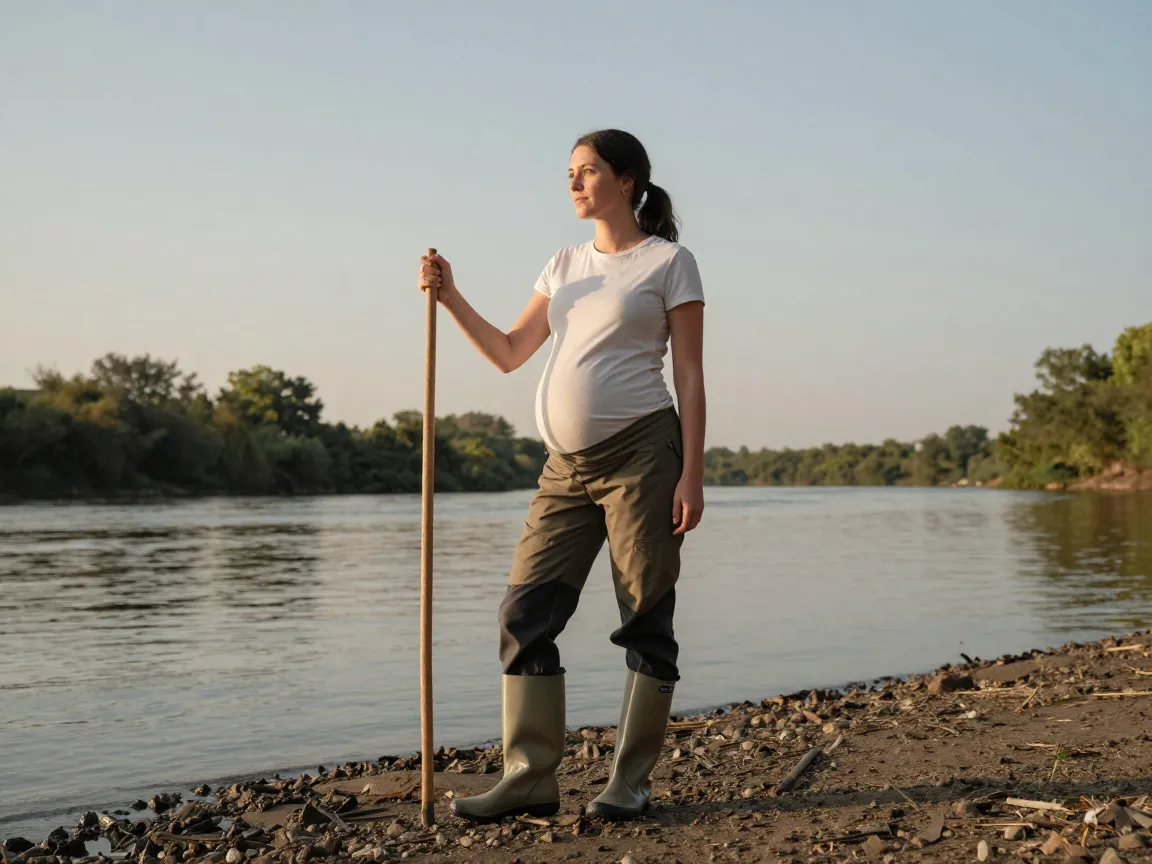
Planning a session at 28 to 34 weeks is not arbitrary. At 28 weeks the bump is clearly visible in photographs. By 35 weeks, many clients find extended outdoor sessions, standing on uneven riverbanks, managing wading boots, holding a rod, physically uncomfortable.
The 28-to-34 window appears in both a Missoula river shoot case study and a Hudson Valley outdoor maternity guide, making it the most consistently cited recommendation for outdoor sessions that involve physical engagement with a location. For fishing-themed shoots that require actual wading, aim for the lower end of that range, 28 to 30 weeks, when energy and balance are more reliable.
2. Scout the Location at the Same Hour You Plan to Shoot
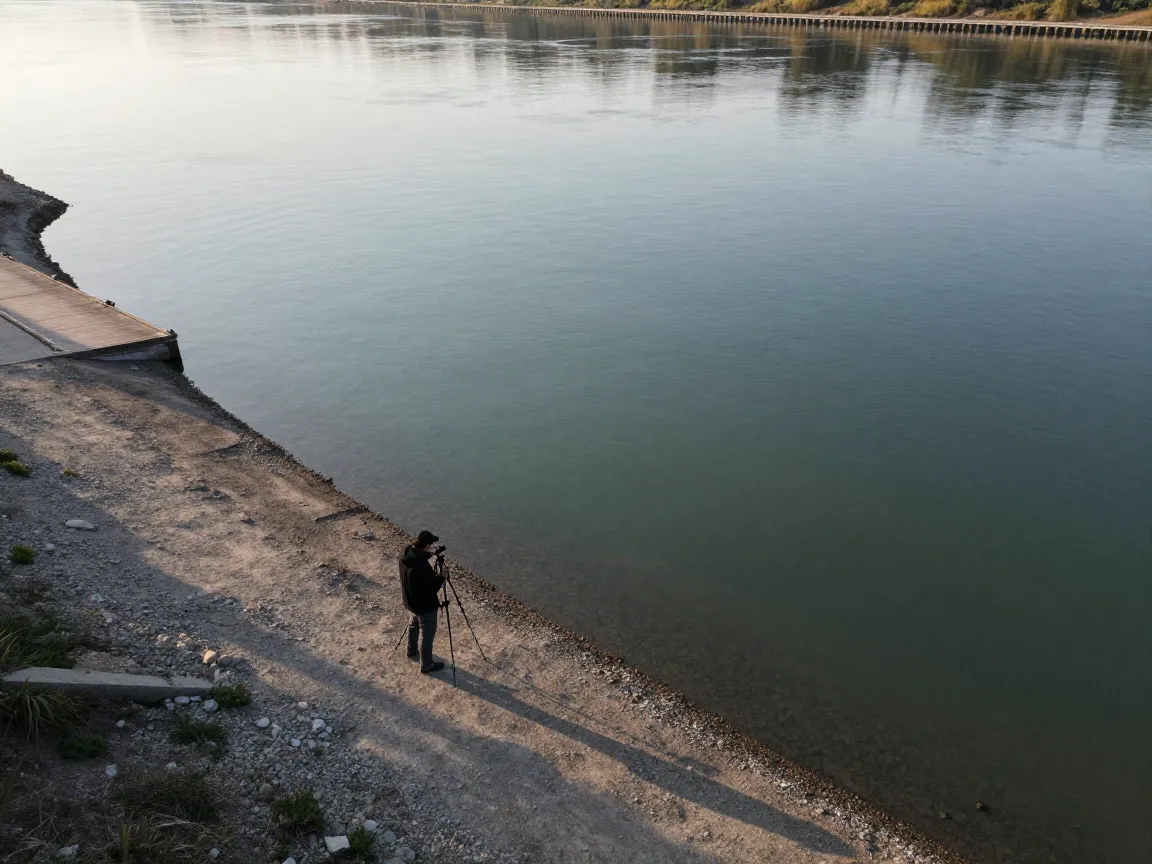
Waterside light changes faster than almost any other environment. A river that photographs beautifully at 6:30 PM in flat, diffused light becomes harsh and reflective by midday, and completely dark by 7:45 PM. A 2026 technical tutorial recommends scouting an outdoor maternity location at the precise hour you plan to shoot, specifically to understand how the light behaves, where shadows fall on water, and which bank faces the sun.
For fishing environments, scouting also means checking bank stability, water depth if wading is involved, and whether dock or pier surfaces are safe for a pregnant client wearing sandals or wading boots. These are not photographic concerns; they are basic safety checks that become photographic decisions once you know what you’re working with.
3. Work in the Hour Before Sunset
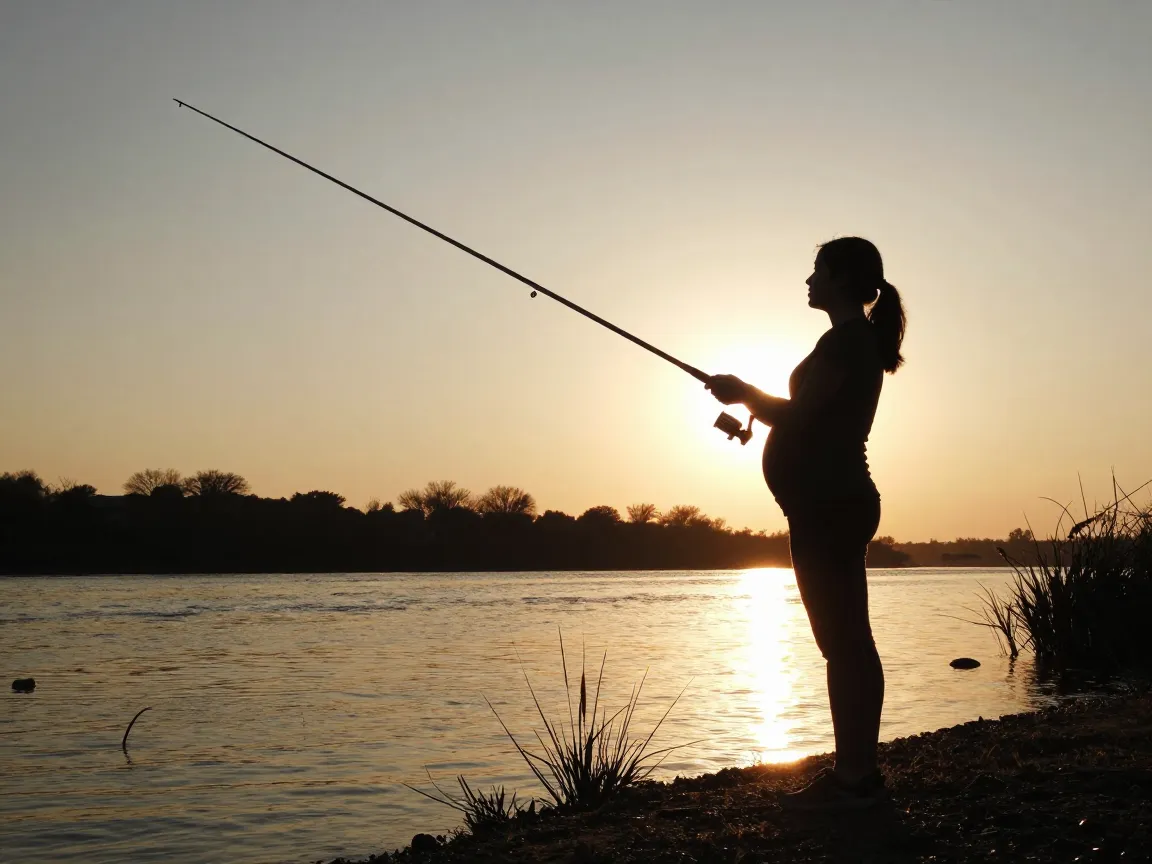
The recommendation to shoot in the hour before sunset appears across multiple 2026 outdoor maternity guides and is especially relevant near water. During that window, light is low-angle, warm, and diffused enough to soften without flattening. Reflections on a river or reservoir surface during this period add natural fill light that reduces the need for reflectors.
For the fishing context specifically, that light turns a fly rod into a graphic element. The long, thin silhouette of a rod held against a backlit sky or reflected water creates a strong compositional line that connects the subject to the environment without requiring any posed explanation.
4. Use Fly-Fishing Waders to Access the Water
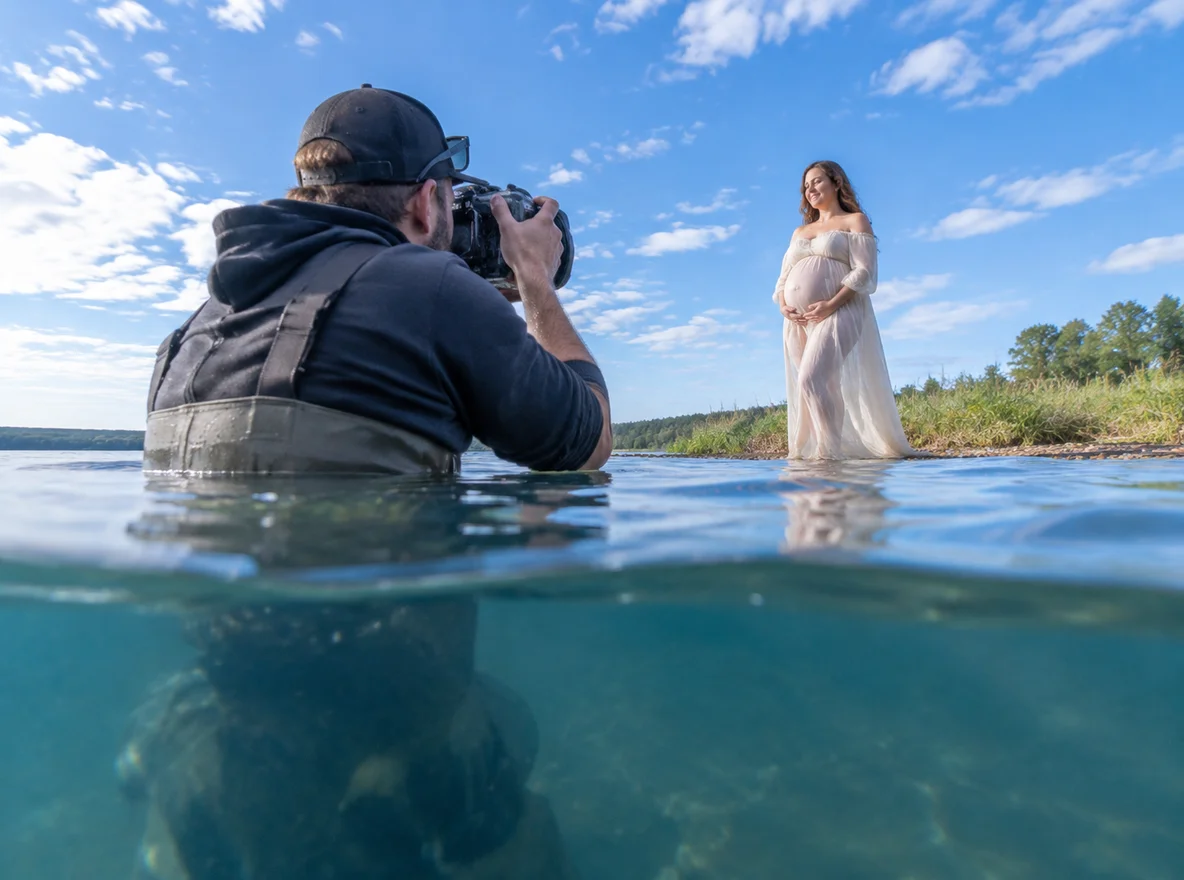
One of the more practical techniques documented in this niche comes not from a maternity specialist but from a Nikon-featured story in which a photographer describes working “up to my ears in water” to capture lake-level maternity portraits. The method: fly-fishing waders worn by the photographer, not the subject. This allows the camera to sit at water level, shooting upward or straight across the surface, while the pregnant client stands safely on the bank or in shallow water.
The result is a perspective that is impossible to achieve from dry land. The waterline frames the subject from below, the sky fills the top third of the frame, and the bump reads against open space rather than a cluttered background. The waders cost between $80 and $300 depending on material, and most photographers who shoot near rivers find them useful far beyond maternity work.
5. Incorporate Fishing Gear as Props with Intent
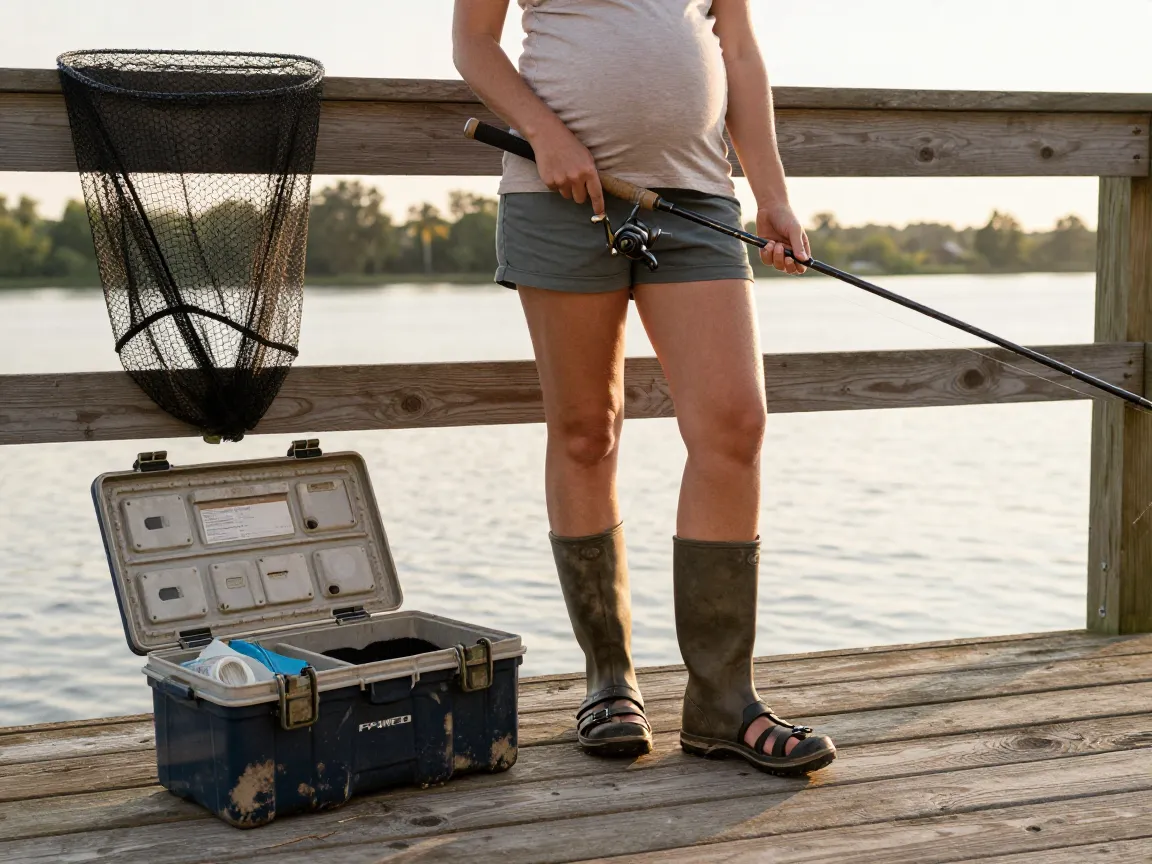
A rod in hand works photographically when it belongs to the person holding it. When it doesn’t, it reads as a prop and the portrait feels costume-like. The distinction matters, and clients generally know which category they fall into.
For clients who fish, relevant gear choices include:
- A fly rod or spinning rod the client actually uses
- Wading boots or rubber-soled fishing sandals worn into shallow water
- A tackle box open on a dock or bank beside the client
- A landing net held or leaned against the subject
Stock photography libraries show the visual baseline: a pregnant woman fishing on a river bank at sunset, rod in hand, is already a recognized commercial image. What separates a strong commissioned portrait from a stock image is specificity, the actual lake, the client’s own rod, the light that only exists on that particular evening in that particular place.
Studio photographers without access to water can use digital composite backdrops. Commercial listings include maternity portrait digital backdrops featuring floral boats and water scenes, as well as “Gone Fishing” themed scenes that can be used for studio sessions delivered as composites. These are not substitutes for a location shoot, but they extend the concept to clients in landlocked areas or who can’t travel during pregnancy.
6. Build the Session Around Family, Not Just the Subject
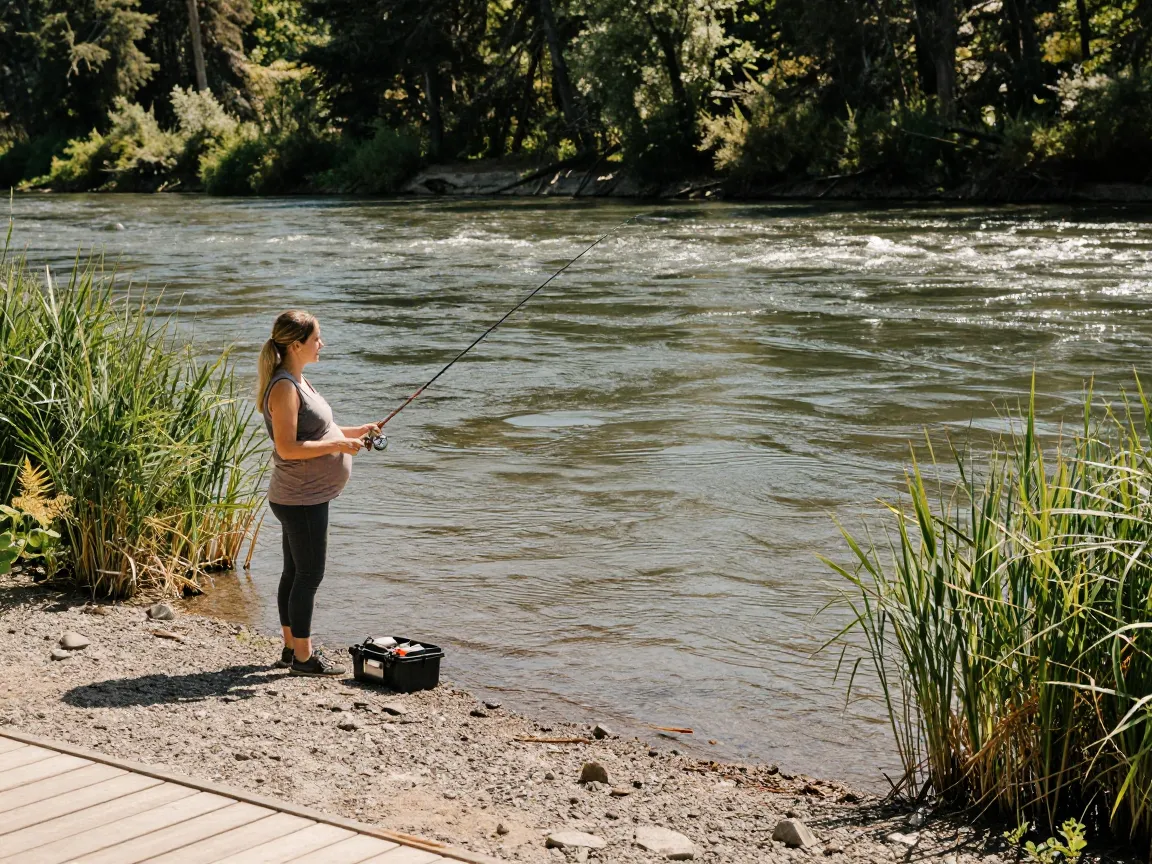
The personalization trend in 2026 maternity work is clear in how photographers are marketing sessions. Multiple guides frame outdoor maternity portraits as a way to “make the session feel like your family instead of a template.” That phrase reflects a real client demand, and fishing is one of the cleaner ways to execute on it.
A partner who fishes with the client can hold a rod beside them on a dock. An older child can sit on a bank with a small rod while the expectant parent stands behind them. A dog that comes along on fishing trips is a legitimate participant. These additions are not embellishments; they document the family structure that the new child is joining.
The fishing environment also frames the session’s narrative without anyone having to explain it. A harbour, a reservoir at dawn, a tidal estuary at low water, each of those places tells a viewer something specific about the family’s life before the conversation begins.
Planning Checklist for a Maternity Fishing Session
| Category | Key Consideration | Notes |
|---|---|---|
| Timing | 28 to 34 weeks gestation | Earlier end of range if wading is planned |
| Light | One hour before sunset | Scout at same hour in advance |
| Location | River, reservoir, harbour, bay | Check bank stability and water depth |
| Photographer gear | Fly-fishing waders for water access | Enables water-level angles |
| Props | Client’s own rod and tackle | Authenticity over rental props |
| Studio option | Digital composite backdrops | Fishing-themed scenes commercially available |
| Family inclusion | Partner, children, pets | Builds narrative around existing family identity |
Technical Choices That Affect the Final Image
Focal length matters more near water than in a studio. A 2026 technical tutorial recommends a mid-to-telephoto workhorse range for riverbank and field sessions, specifically because longer focal lengths compress the background, in this case, the water surface, and isolate the subject against it without requiring them to stand far from the bank. A wider lens puts both the client and the full environment in sharp focus, which works for environmental portraits but can dilute the intimacy of a bump-forward image.
Reflective water surfaces can confuse a camera’s metering system. Shooting in manual mode or using exposure compensation to protect the subject’s skin tones is standard practice on bright-sky days over open water. At golden hour the problem largely resolves itself, which is another reason that timing recommendation keeps appearing across guides.
Clothing choices interact with the location. Flowing fabrics photograph well against moving water because they echo the movement in the frame. A sage-green or deep blue dress against a teal river reads as deliberate; a white sundress against a working fishing harbour can look mismatched unless the client’s personality genuinely calls for that contrast.
A note on safety: No maternity portrait is worth a fall on a wet dock or a slip on a mossy bank. Bring a non-slip mat for dock surfaces, have a dry towel and a chair available on location, and always have a second adult present who is not operating a camera.
Where Maternity Fishing Photography Sits in 2026
The niche has not been formalized as a distinct category by any major photography industry body. What exists instead is a convergence: expanding outdoor maternity portfolios that treat rivers and harbours as primary locations, a growing commercial market for fishing-themed digital backdrops and props, and mainstream technical guidance that now covers shooting safely near and in water.
Stock libraries already treat “pregnant woman fishing” as a standard search result. Regional studios in coastal and inland fishing communities are using the water-and-angling culture of their areas as a marketing differentiator. Neither of those is a category, but together they confirm that maternity fishing photography: celebrating motherhood with a rod in hand is a recognizable and commercially supported concept, not a fringe experiment.
The incremental growth path is straightforward. As more photographers publish outdoor maternity portfolios featuring fishing locations, clients who fish will search for those images and find them. That search behavior will push more photographers to offer the concept explicitly rather than incidentally.
Conclusion
For photographers looking to add maternity fishing photography to their offering in 2026, the practical starting points are specific: book sessions between 28 and 34 weeks, scout the water location at the same hour you plan to shoot, invest in a pair of fly-fishing waders for water-level access, and ask clients to bring their own gear rather than renting props.
For expecting clients who fish, the ask is simpler. Bring the rod you actually use, wear clothes you can move in near water, and book the session before 34 weeks. The portrait you get will show the life you already have, with the person who is arriving placed squarely in the middle of it.