Deer And Hunter Moments That Capture the Thrill of the Wild
Roughly 11.4 million Americans head into the woods each fall carrying a bow or firearm, yet only a fraction of those hunters ever manage to put the full experience into words. The thrill is not simply about the harvest. It lives in the seconds before, during, and after a deer appears, in the hammering pulse, the locked gaze between predator and prey, and the stories that veterans still retell decades later. The 6 Deer And Hunter Moments That Capture the Thrill of the Wild explored in this article are drawn from real encounters, viral footage, and time-tested hunter wisdom. Together, they reveal why deer hunting remains one of the most intensely human pursuits in the outdoors.
Disclosure: This post contains affiliate links. As an Amazon Associate, we earn from qualifying purchases, and at no extra cost to you.
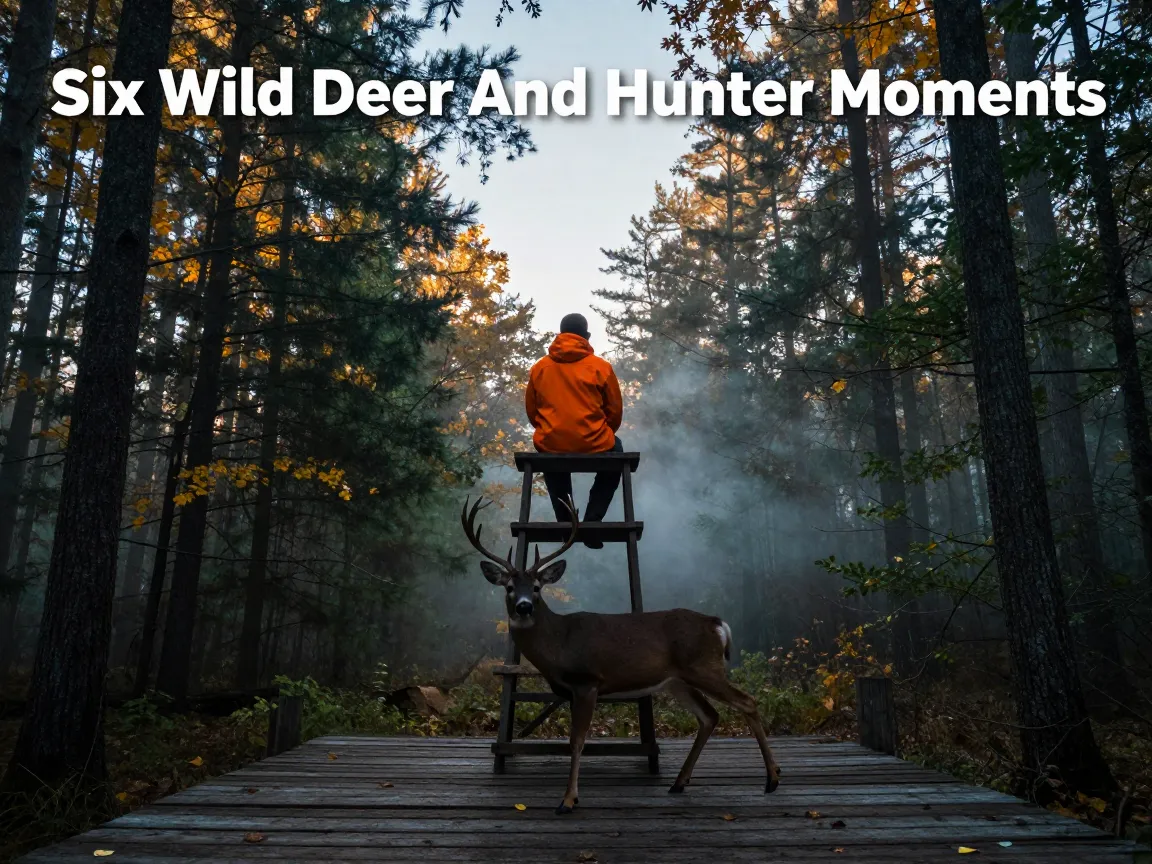
1. The First Rut Fight Witnessed from a Stand
Nothing in the deer woods announces autumn quite like the crack of antlers meeting at full force. When two mature bucks decide to settle dominance within sight of a hunter’s stand, the experience crosses from sport into something closer to wildlife documentary, except the hunter is part of the scene.
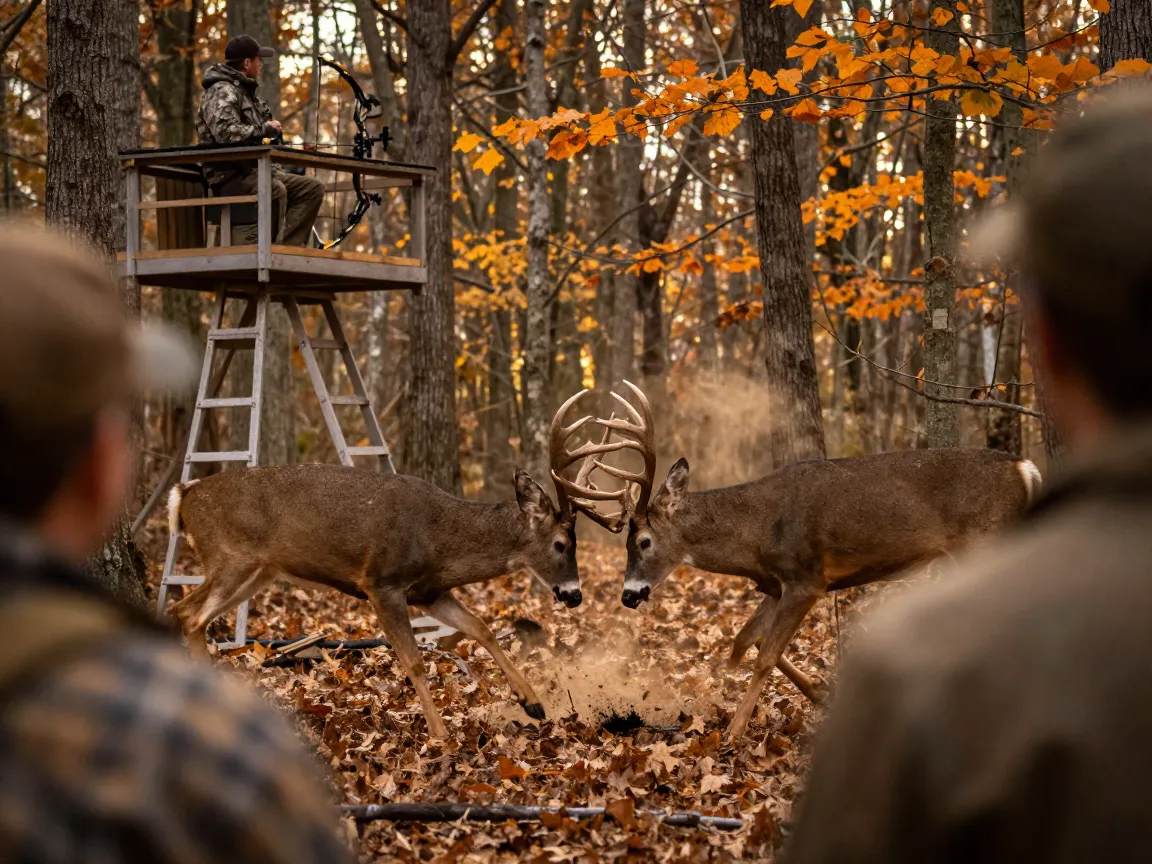
Rut fights happen fast. A dominant buck will lower his rack, a challenger will answer, and within seconds hundreds of pounds of muscle are twisting, pushing, and grunting across the forest floor. For a hunter perched fifteen feet above, the adrenaline is almost disabling. The temptation to draw or raise the firearm collides with the raw fascination of watching wild animals behave in a way most people only see on a screen.
A widely shared video from a Texas hunting camp captured exactly this scenario during peak rut. Two large whitetail bucks sparred for nearly four minutes while a hunter filmed from an elevated blind, voice audibly shaking in the footage. The clip went viral precisely because viewers, hunters and non-hunters alike, could feel the barely contained chaos of the moment. That response confirmed what veteran hunters have always known: witnessing a rut fight is one of the purest forms of wild spectacle available to anyone willing to sit still long enough.
The practical takeaway for hunters is that rut fights are predictable in terms of timing and location. Scrape lines, rub clusters, and funnel terrain near doe bedding areas are reliable staging grounds. Setting up near these features during the peak rut window, typically a narrow span of days specific to each region, dramatically increases the odds of watching this particular drama unfold up close.
2. The Moment a Buck Responds to a Call
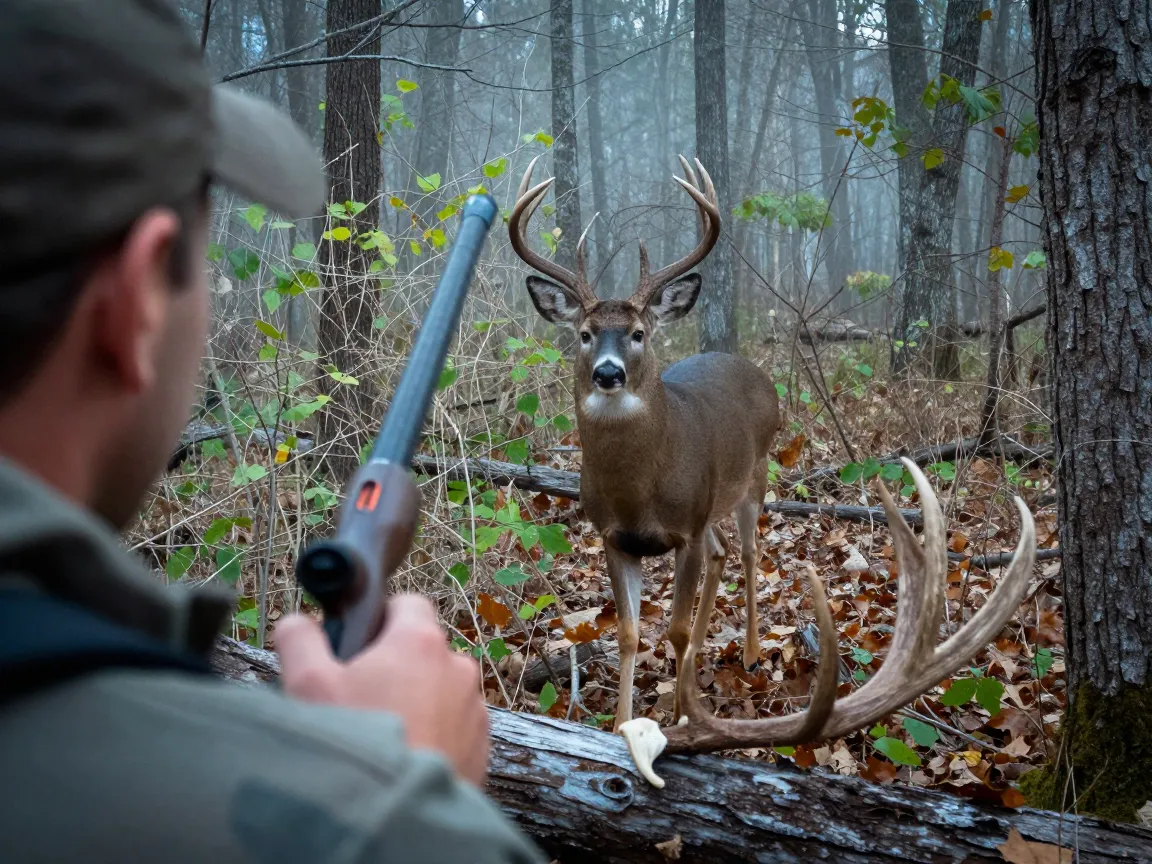
Calling in a buck is part science, part gamble, and entirely addictive. When a hunter rattles antlers, blows a grunt tube, or works a snort-wheeze and a deer actually turns and walks in, the feeling is unlike anything else the woods can produce.
The mechanics behind a successful call are worth understanding. During the rut, bucks are primed to investigate competing males. A well-timed rattling sequence mimics the sound of two bucks fighting, triggering a dominant deer’s territorial instinct. A grunt call suggests a rival is nearby. When those sounds reach the right buck at the right moment, his body language changes immediately, head up, ears forward, stiff-legged walk. He is coming in, and he is coming in angry.
The thrill here is layered. The hunter has effectively spoken the animal’s language. There is a creative and intellectual satisfaction in that exchange that goes beyond simply finding a good location. Expert hunters and outdoor commentators frequently point out that calling separates passive waiting from active hunting. It demands reading the deer’s mood, adjusting volume and cadence, and knowing when to go silent. A buck circling at sixty yards, trying to wind the source of that sound, will expose every mistake in the hunter’s setup.
One seasoned whitetail hunter described the experience this way in a hunting column published this past season: the moment a buck commits and starts closing distance, every sensory experience sharpens. The crunch of leaves under his hooves sounds impossibly loud. Time seems to slow. That is not poetic license, it is a documented physiological response to high-stakes predatory focus, and deer hunting delivers it with remarkable consistency.
3. The Trail Camera Oddity That Stops Every Hunter Cold
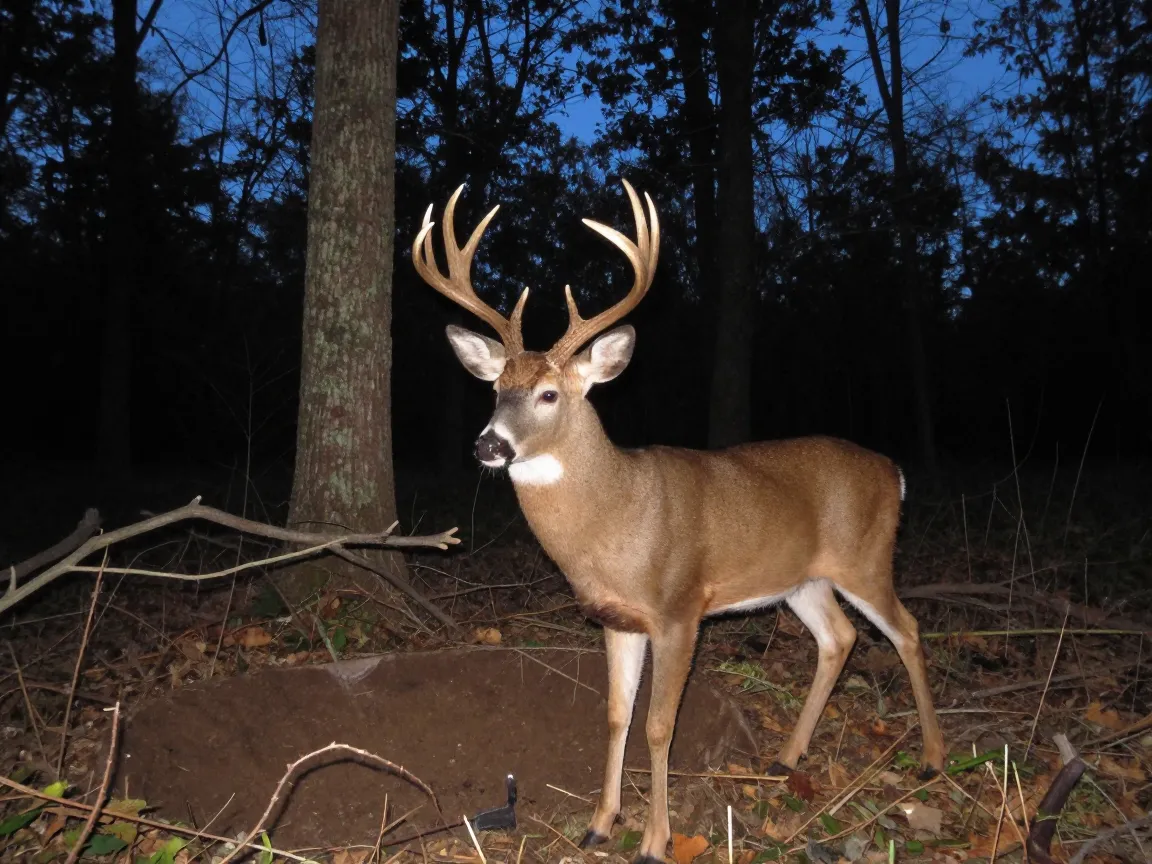
Modern trail cameras have transformed pre-season scouting into a kind of ongoing mystery novel. Hunters check their cards expecting routine footage, does, fawns, the occasional coyote, and occasionally find something that defies easy explanation.
One of the most compelling categories of trail-cam discovery is the antler oddity. A buck photographed in the Midwest in recent seasons appeared to be wearing a shed antler draped over his main rack, creating an almost comedic double-antler effect. The image spread quickly through hunting communities online, generating debate about how it happened and how long the deer had been carrying the extra hardware. Similar images surface every year: bucks with velvet still attached late in the season, non-typical frames that look digitally altered, or deer with injuries that have healed in remarkable ways.
These discoveries do more than entertain. They remind hunters that deer are individuals with unique histories, not interchangeable targets. Veteran hunters who have watched a specific buck develop over multiple seasons through trail-cam footage describe a genuine emotional investment in that animal. When they finally encounter him in the field, the moment carries weight that a stranger deer never could.
Trail-cam culture has also shifted how hunting stories are told. Where older generations relied on memory and hand-drawn maps, today’s hunters build detailed digital profiles of target bucks across months. The thrill of the hunt now begins at a laptop screen and builds slowly across weeks of accumulated images, reaching its peak the morning that buck finally steps into range. That extended arc of anticipation is itself a form of the wild’s hold on hunters, delayed, data-driven, and no less powerful for it.
4. The Dog-Driven Chase Through Thick Cover
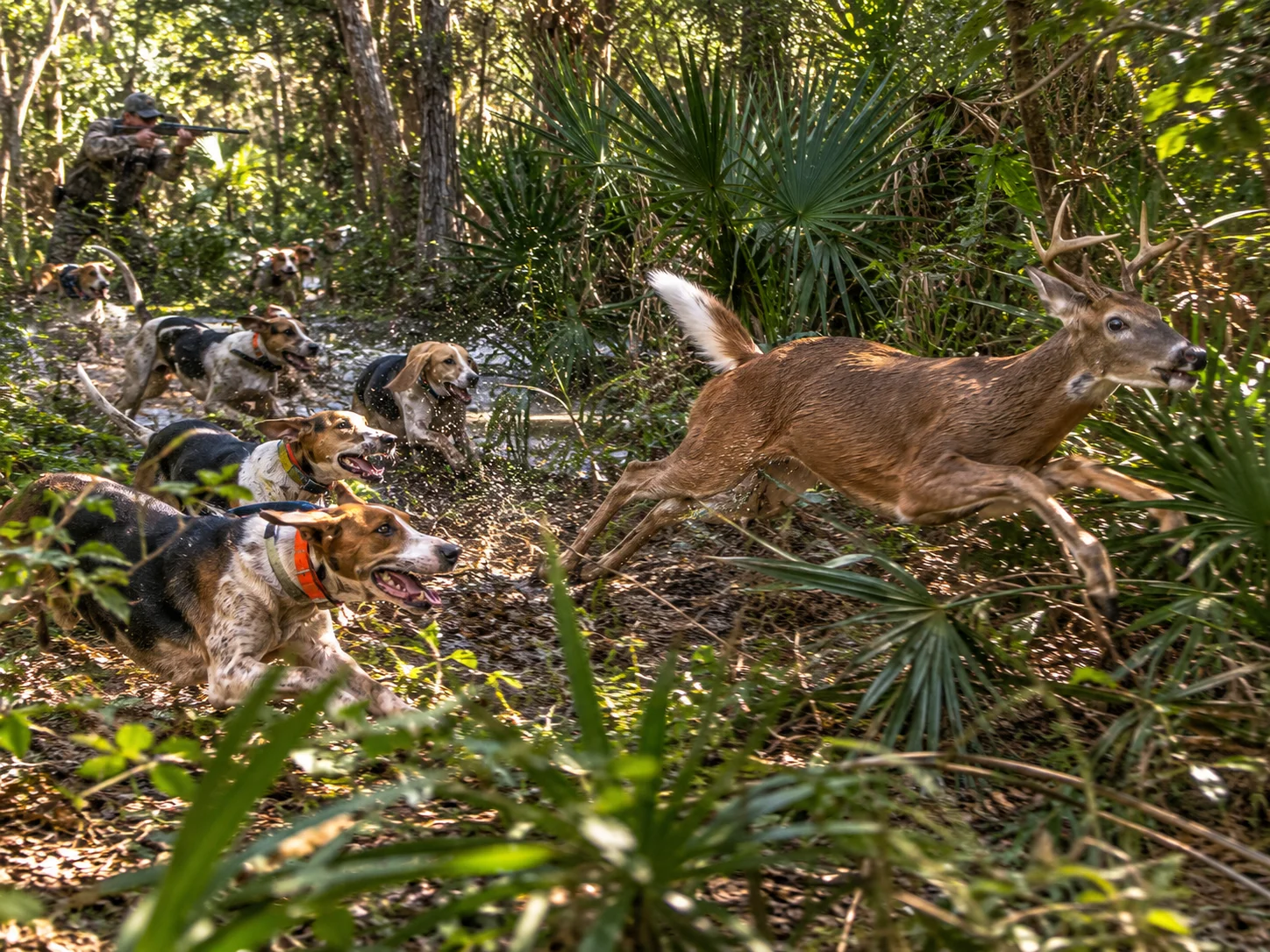
In several regions of the American South and in parts of Europe, deer hunting with hounds is not just tradition, it is the defining experience of the season. When a pack of well-trained dogs strikes a fresh deer track and opens up in full cry, the landscape comes alive in a way that no other hunting method can replicate.
The hunter’s role in a dog drive is to read the terrain and anticipate where the deer will break from cover. A whitetail pushed by hounds does not run in a straight line. It circles, doubles back, uses water crossings, and exploits every topographic feature available. The hunter who understands deer behavior and local geography will intercept that deer. The hunter who simply stands and waits will watch it disappear over the next ridge.
High-adrenaline footage from dog-driven hunts in the Southern states captures this chaos well. The sound of the pack shifts direction every few seconds. The deer appears suddenly, often at a dead run, often close, often in a gap that lasts less than two seconds. Shot opportunities in these hunts demand instant decisions. There is no prolonged setup, no careful rangefinding, no second chance to read the wind. The entire encounter happens in the time it takes to shoulder a gun.
For hunters raised on this tradition, it represents the full sensory experience of the chase: the music of the hounds, the physical urgency, and the communal nature of a team working together across a large piece of property. It is, as outdoor writers have noted, one of the last hunting styles that genuinely resembles the way humans hunted for most of history.
5. The Youth Hunt Encounter That Reframes Everything
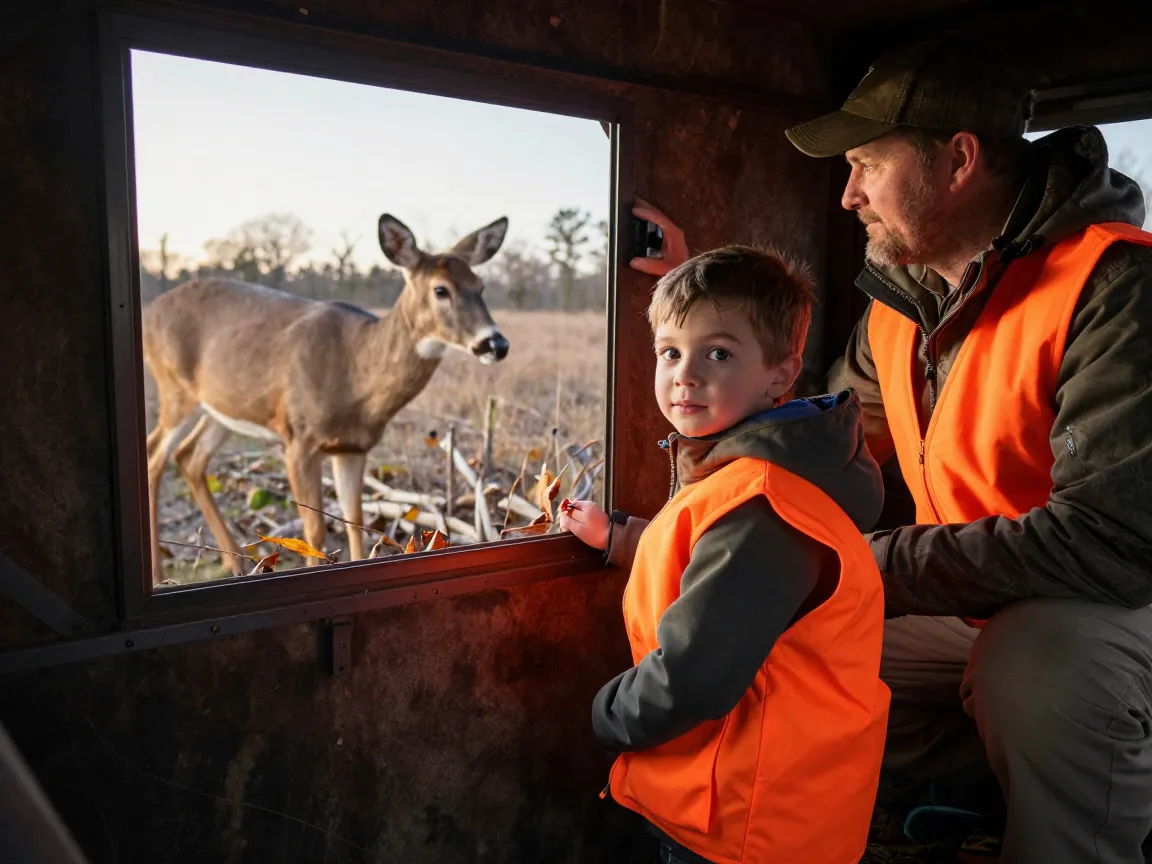
Few moments in deer hunting carry more emotional weight than watching a young person experience a close deer encounter for the first time. Whether the hunt ends with a harvest or simply with a deer walking past at ten yards, the effect on a young hunter is permanent.
Family-oriented deer encounters have become one of the most shared categories of hunting content on short-form video platforms in 2026. The formula is consistent: a child in oversized blaze orange, a patient adult mentor, and a deer that cooperates just enough to make the experience magical. Comments on these videos run deep with adult hunters remembering their own first close encounter, the smell of the woods, the impossibility of staying still, the moment a living wild animal chose to pass within arm’s reach without knowing it was being watched.
What these moments reveal about deer hunting is something that goes beyond any argument about ethics or utility. A close encounter with a wild deer is a genuine crossing of worlds. The animal is entirely on its own terms. The young hunter, by committing to silence and patience, has earned entry into a space that cannot be bought or shortcut. That lesson, that some things require sustained, quiet effort, lands differently in the woods than it ever does in a classroom.
Veteran hunters who mentor youth hunters often describe these outings as among the most meaningful hunts of their entire careers. The emphasis shifts completely from outcome to experience. A trophy buck becomes irrelevant when the goal is a ten-year-old’s first wide-eyed encounter with a wild animal at close range. This reframing of the hunt, meaning over measurement, is central to how serious hunters now talk about why deer hunting matters.
6. The Rut-Crazed Buck and the Harvested Deer
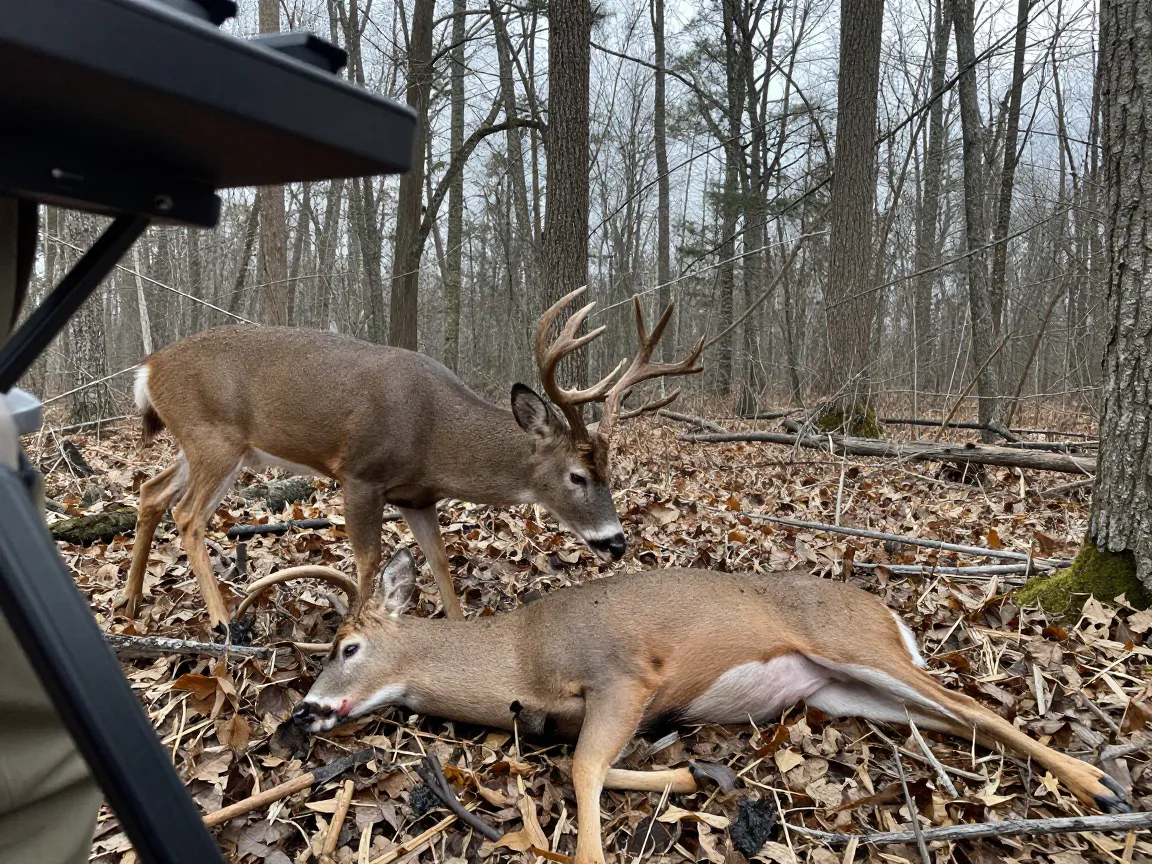
Of all the strange and powerful moments deer hunting produces, few are as disorienting as watching a rutting buck approach a harvested deer with aggression rather than alarm. It happens, and when it does, hunters rarely know quite what to make of it.
During the peak rut, a buck’s hormonal state is so elevated that his threat-assessment system becomes unreliable. There are documented cases, captured on both trail cameras and by hunters in the field, of bucks approaching downed deer, circling them, even displaying dominance postures over them. One hunter recounted being so surprised by this behavior that he delayed leaving his stand for several minutes, unable to process what he was watching. The buck apparently interpreted the harvested deer as a rival or simply refused to process the stillness as death.
This moment captures something essential about the rut and about wild animals under hormonal pressure. It is not comedy, though it can appear absurd. It is a window into the biology of a large ungulate at the extreme edge of its annual cycle, single-minded, risk-tolerant, and operating on instinct overriding all other input. For hunters, it is a reminder that the deer they pursue is a complex animal, capable of behavior that defies the patterns laid out in any field guide.
Outdoor commentators who write about these encounters tend to treat them as evidence of what makes deer hunting a genuine test of senses and adaptability. No scouting report or hunting app prepares a hunter for the moment a live, agitated buck stands over a harvested deer thirty yards away. The hunter must decide quickly and correctly. That demand for real-time judgment under surprise conditions is, at its core, what separates deer hunting from virtually every other outdoor pursuit. It is wild, unscripted, and entirely real.
Conclusion
The 6 Deer And Hunter Moments That Capture the Thrill of the Wild described here share a common thread: none of them can be manufactured, scripted, or guaranteed. That unpredictability is precisely the source of their power. Rut fights, called-in bucks, trail-cam mysteries, dog-driven chases, youth encounters, and rut-fueled behavioral oddities all remind hunters and observers alike that deer hunting is fundamentally an engagement with something untamed.
For anyone looking to experience or deepen that engagement in 2026, the most direct next step is time in the field, specifically, time spent observing and listening rather than simply waiting. The hunters who accumulate the richest moments are almost always the ones who treat every sit as an opportunity to learn something new about how wild deer move, communicate, and respond to the world around them.