Clever Fishing Setup Ideas That Make Every Trip Easier and More Organized
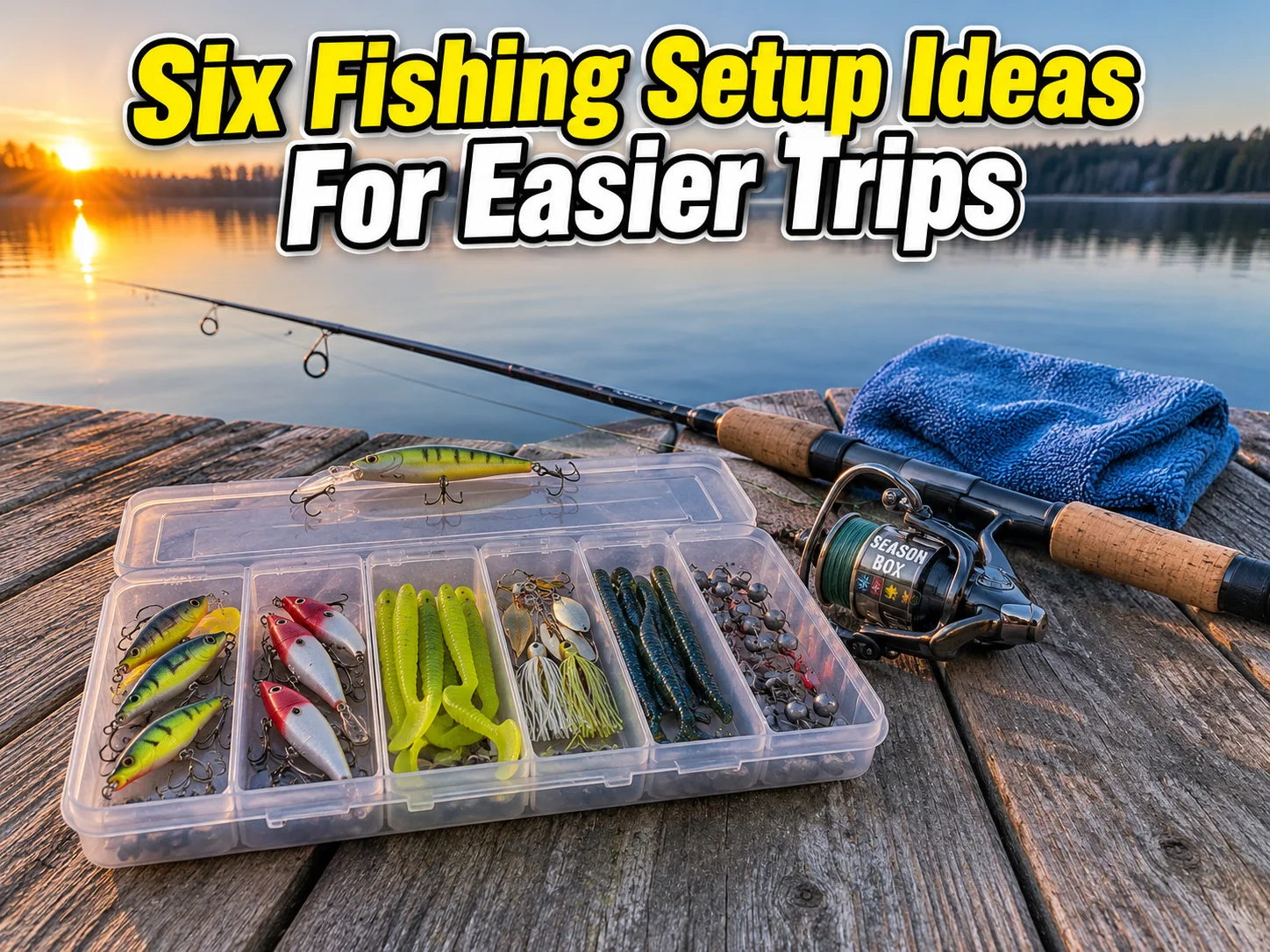
Anglers lose an average of 30 minutes per trip just searching for tackle, time that could be spent on the water. That number compounds fast over a season, and the fix rarely requires new gear. What it requires is a system. These 6 clever fishing setup ideas that make every trip easier and more organized are drawn from practical guides published in 2026, and they work whether you fish from a bass boat, a kayak, or the bank of a local pond.
Disclosure: This post contains affiliate links. As an Amazon Associate, we earn from qualifying purchases, and at no extra cost to you.
1. Build a Three-Tier Tackle System
Most anglers own far more tackle than they ever use on a single outing, and the problem is not the volume, it is that everything travels together. A three-tier system solves this by separating tackle into three distinct layers based on how often and where it gets used.
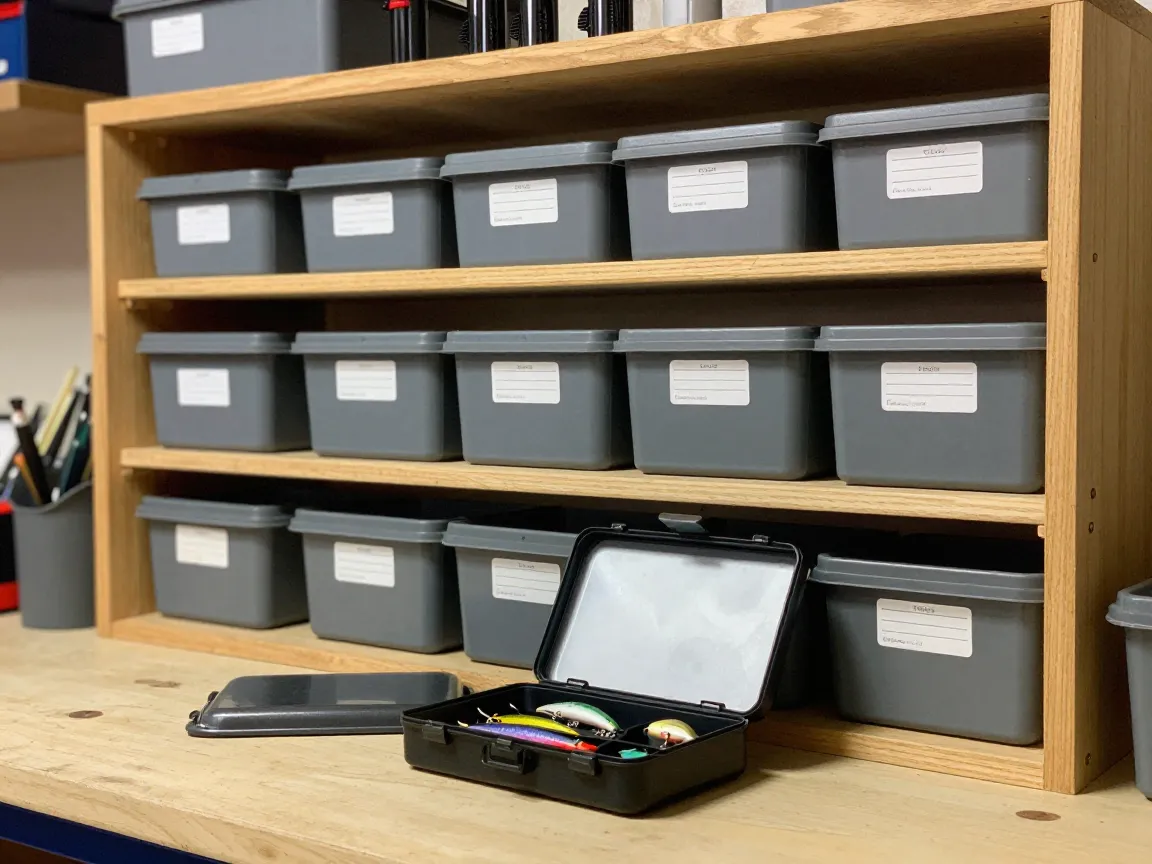
The first tier is bulk storage at home: a cabinet, shelving unit, or large tackle bag that holds the entire collection. Nothing leaves this layer unless it is being promoted to tier two. The second tier is a set of mid-size “season boxes”, one per technique or species, that live in the boat or main bag. These get refreshed at the start of each season based on what you expect to target. The third tier is the “go-box”: a single small tray packed the night before a trip with only the lures you realistically expect to throw that day.
The power of this structure is the forced decision. Packing a go-box takes five minutes because the season boxes are already curated. You are not rummaging through 400 lures to find a finesse jig head; you already know where it lives. FishUSA’s tackle storage guide describes this exact approach and frames the go-box as the layer that cuts packing time most dramatically, because it converts a chaotic pre-trip scramble into a simple selection step.
One useful constraint: set a physical limit on the go-box. If it does not close, something has to come out. That discipline keeps the system honest across dozens of trips.
2. Pack Destination-Specific Trip Kits
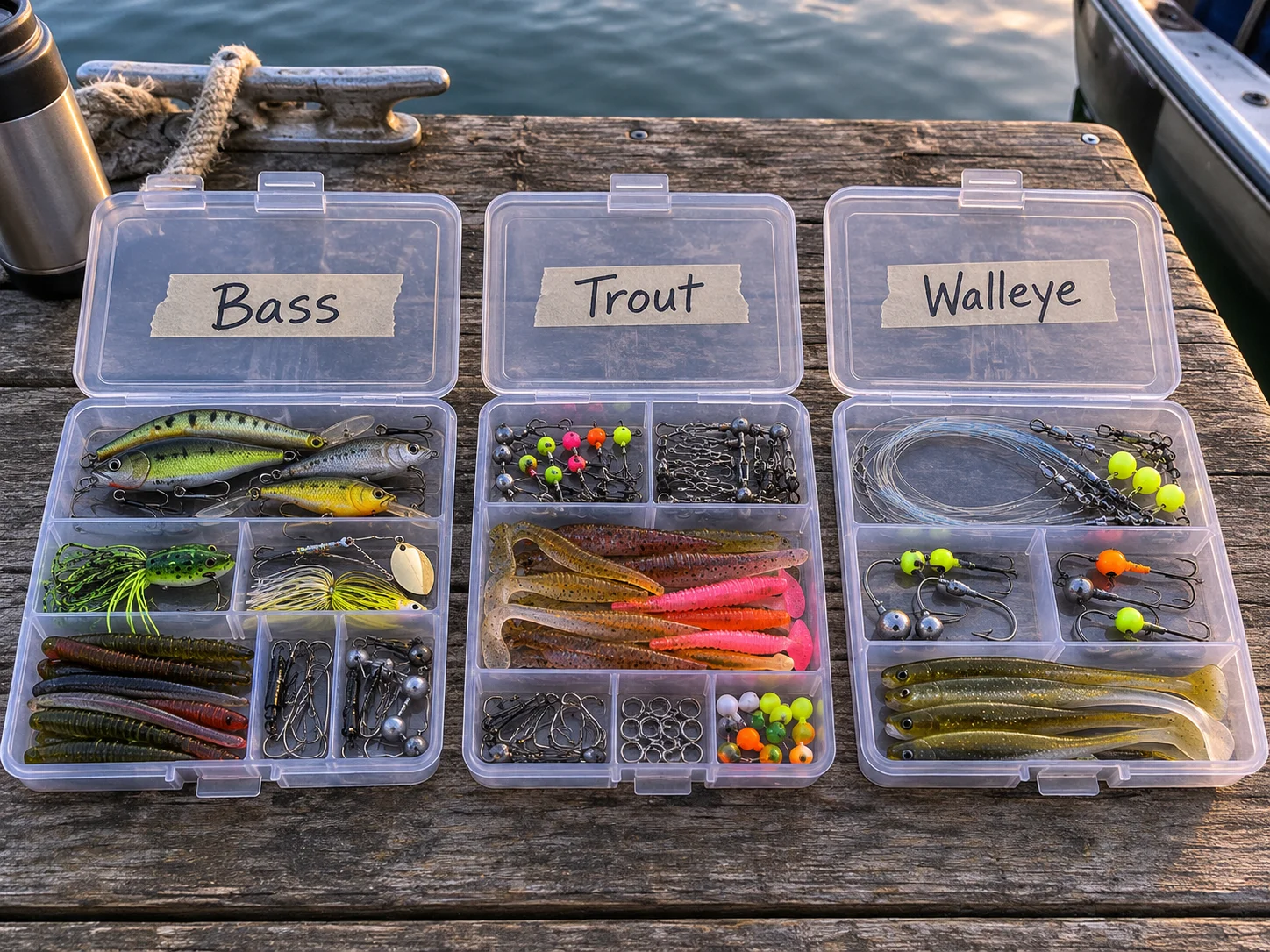
Generic organization by lure type, all crankbaits together, all soft plastics together, works fine at home but fails on the water when you are switching between a morning bass bite and an afternoon walleye drift. Destination-specific trip kits flip the organizing principle: instead of grouping by what a lure is, you group by where and when you plan to use it.
The practical version of this is a set of trays or small boxes, each labeled for a specific fishery or situation. One tray for bass on your local reservoir, another for trout on a nearby stream, a third for walleye off a particular dock. Each tray holds only the lures, hooks, and terminal tackle relevant to that destination. When you head to the reservoir, you grab the bass tray. When you drive to the stream, you grab the trout tray. The rest stays home.
The Crates App’s guide to trip preparation suggests this approach lets you leave for a trip in roughly ten minutes, because you are not making decisions at the door, you made them when you built the kit. The trays essentially encode past knowledge about what works where, so a Friday afternoon trip does not start with a 20-minute planning session in the garage.
Soft plastics are the one category worth double-checking per destination. Colors that produce on stained water reservoirs often do nothing on clear mountain streams, so keeping destination-specific color selections in each tray prevents the “wrong plastics in the wrong box” problem mid-trip.
3. Segregate Tackle by Species and Technique
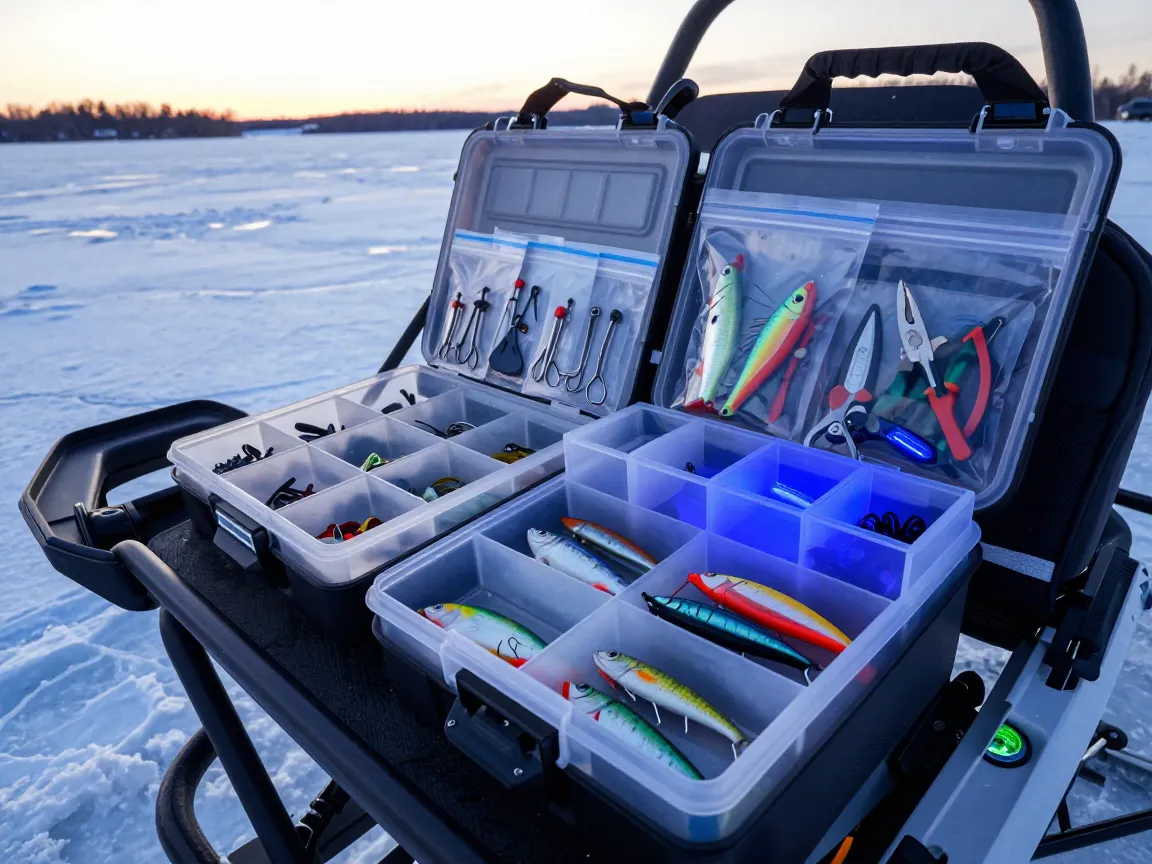
Mixing all terminal tackle into one compartment and all jigs into another feels organized until you are on a frozen lake at sunrise trying to find a 1/32-oz panfish jig among walleye blade baits. Segregating tackle by both species and technique eliminates that problem entirely.
The practical approach breaks down like this: hooks and small terminal components go into small clear bags or divided trays, one set per target species. Jigs and hard baits get their own waterproof boxes, again sorted by what they are designed to catch rather than just by size. Soft plastics, which tend to bleed color and damage other lures, go into larger resealable bags or specialized soft-bait cases. Oversized baits, topwaters, glide baits, large swimbaits, need deep boxes or roll-up bags with enough room that hooks do not tangle.
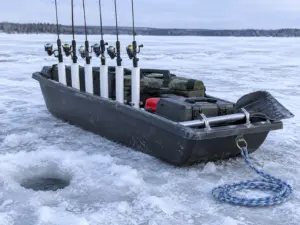
For ice fishing specifically, the same logic applies at the destination level. Panfish jigs and micro plastics stay with panfish gear. Walleye rigs stay with walleye gear. All tools, hook removers, pliers, line clippers, occupy one consistent spot so you are not patting down five pockets in the cold. BuiltRight Industries’ ice fishing organization guide recommends using small bins with dividers inside the sled so tackle does not shift in transit, and keeping one dedicated “grab-and-go” cube bin for the tackle and tools you reach for most.
Fly fishers benefit from one additional layer of segregation: organizing by both technique and fly weight. Keeping small nymphs, large nymphs, streamers, small dries, and large dries in separate boxes means you grab the right box for the current presentation without sorting through mixed patterns streamside.
4. Adopt a Minimalist One-Rod Setup for Short Trips
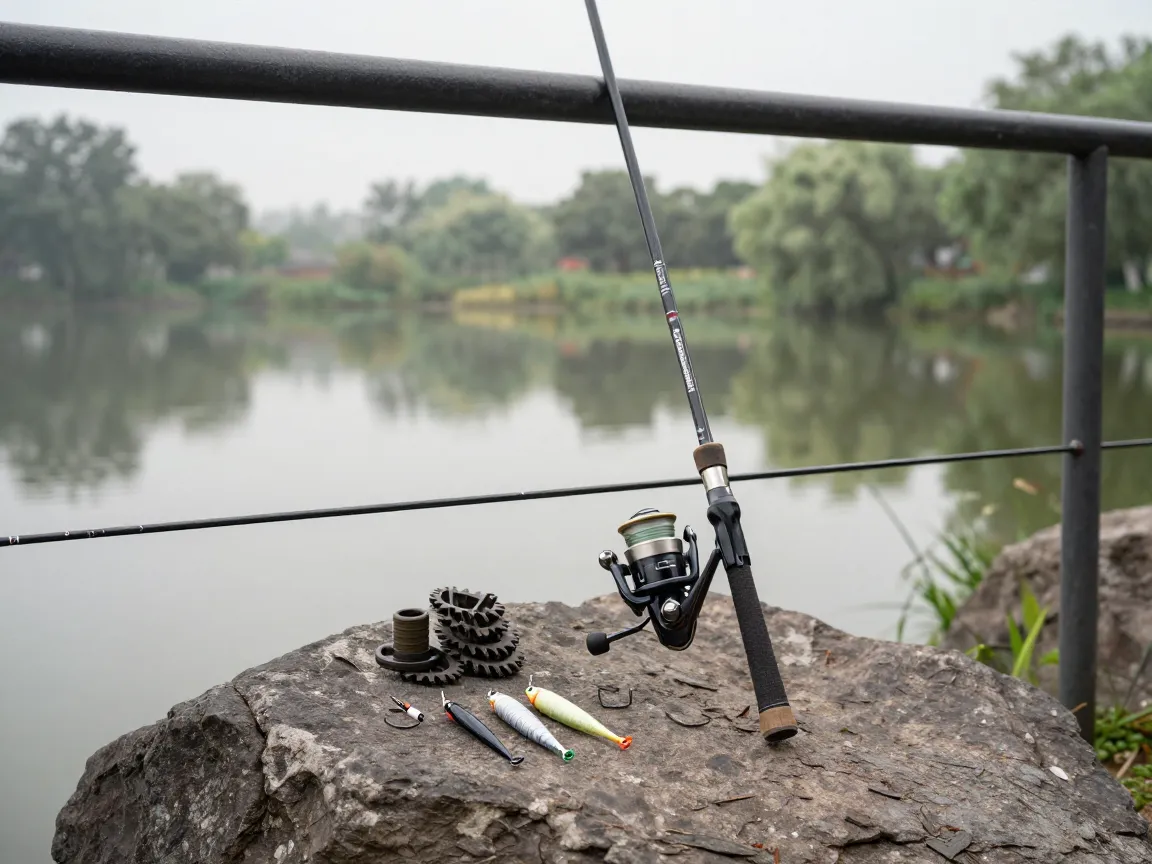
There is a persistent belief that more rod-and-reel combinations mean more options on the water. For trips under three days, or any trip where time is tight, a single well-chosen setup actually outperforms a quiver of specialized rods, because you spend less time rigging, re-rigging, and deciding.
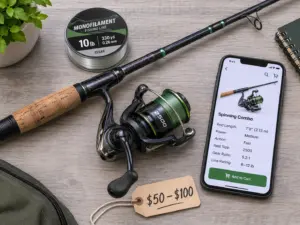
A medium-action rod paired with a mid-range spinning reel covers more water than most anglers use in a day session. It handles finesse techniques well enough when rigged light, and it can manage heavier presentations with a simple leader or sinker adjustment. Guidesly’s 2026 guide to fishing when you are short on time makes this point directly: a single versatile setup lets you cover multiple depths and techniques without breaking down and re-rigging between spots, which is where most time actually disappears.
The tackle selection for this approach mirrors the minimalist rod philosophy. Outdoor Wilderness Supply’s 2026 essential gear guide pegs a core freshwater kit at two or three hook sizes, a handful of split-shot sinkers, barrel swivels, two or three bobbers, and a small selection of soft plastics or inline spinners. That is a setup that fits in one jacket pocket and covers most freshwater scenarios without a tackle bag on your back.
The limitation worth naming is that this does not work for every fishery. If you are specifically targeting large trophy species that demand heavy braided line and stout rods, a single medium-action spinning rod will not cut it. But for general freshwater days, particularly when you have two or three hours rather than a full day, a single versatile setup lets you get fishing immediately instead of spending the first half-hour organizing.
5. Label Everything and Purge Annually
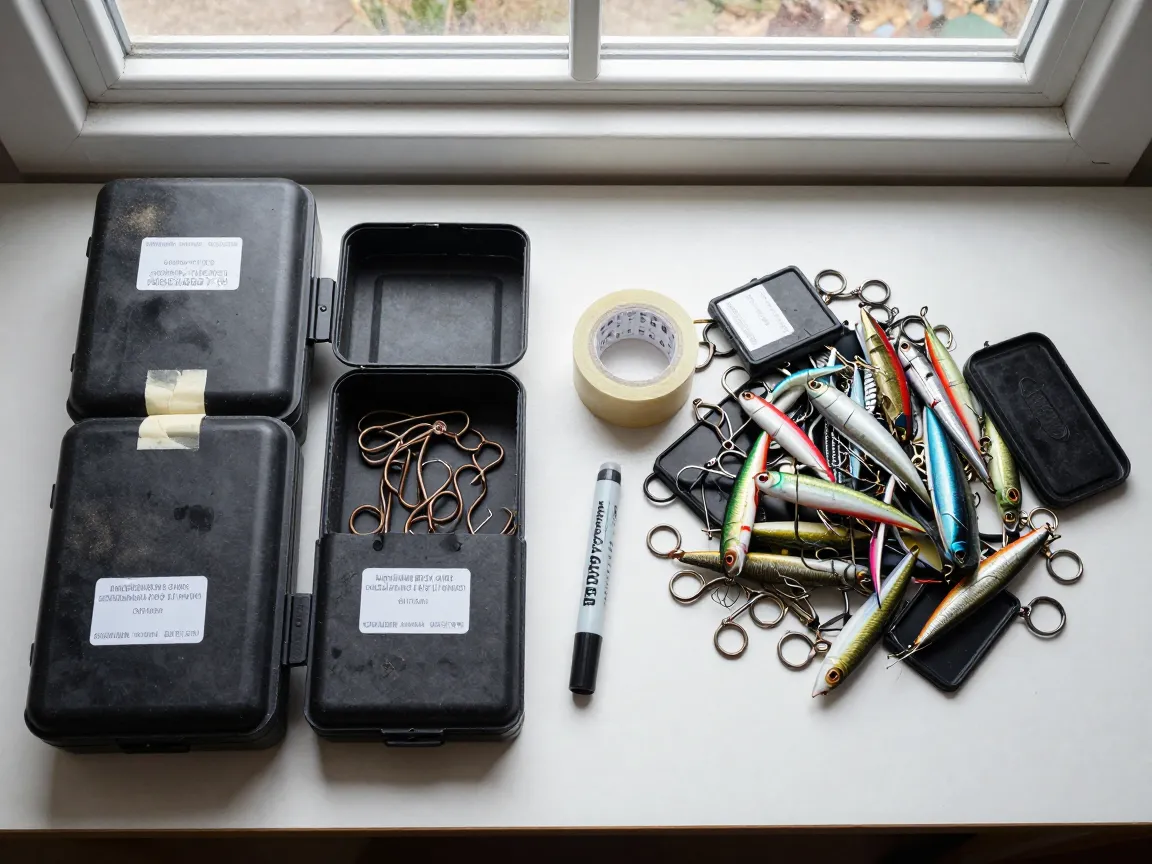
A well-organized tackle system degrades over time if there is no maintenance routine. Boxes get refilled in the wrong order, rusty hooks accumulate, and labels fade. Two habits prevent most of this: external labeling on every box, and one annual gear purge before the season starts.
External labels sound obvious, but many anglers skip them because the system feels intuitive when they build it. Six months later, three identical black boxes sit in a bag and none of them look different from the outside. Labels, even simple masking tape and a marker, eliminate this problem immediately. Fin Feather Fur’s tackle box guide from 2026 makes the point clearly: when every box is labeled on the outside, you stop opening three boxes to find what you need.
The annual purge is equally straightforward and more impactful than it sounds. Before the season, open every box and remove anything broken, corroded, or unused for two straight seasons. Rusty hooks are not just ineffective, they contaminate other tackle in the same compartment. Hooks that have lost their point do not need sharpening; they need to leave the box. A June 2026 tutorial on gear organization demonstrates that sorting, resetting, and decluttering a full tackle collection takes a single afternoon and produces a system that is noticeably faster to use all season.
One additional habit worth combining with the purge: keep boxes open after a trip until all lures are fully dry before closing them. Moisture trapped inside a box accelerates rust and corrosion on hooks and split rings. It is a two-minute step that extends the lifespan of terminal tackle significantly.
6. Clean and Store Gear Properly Between Seasons
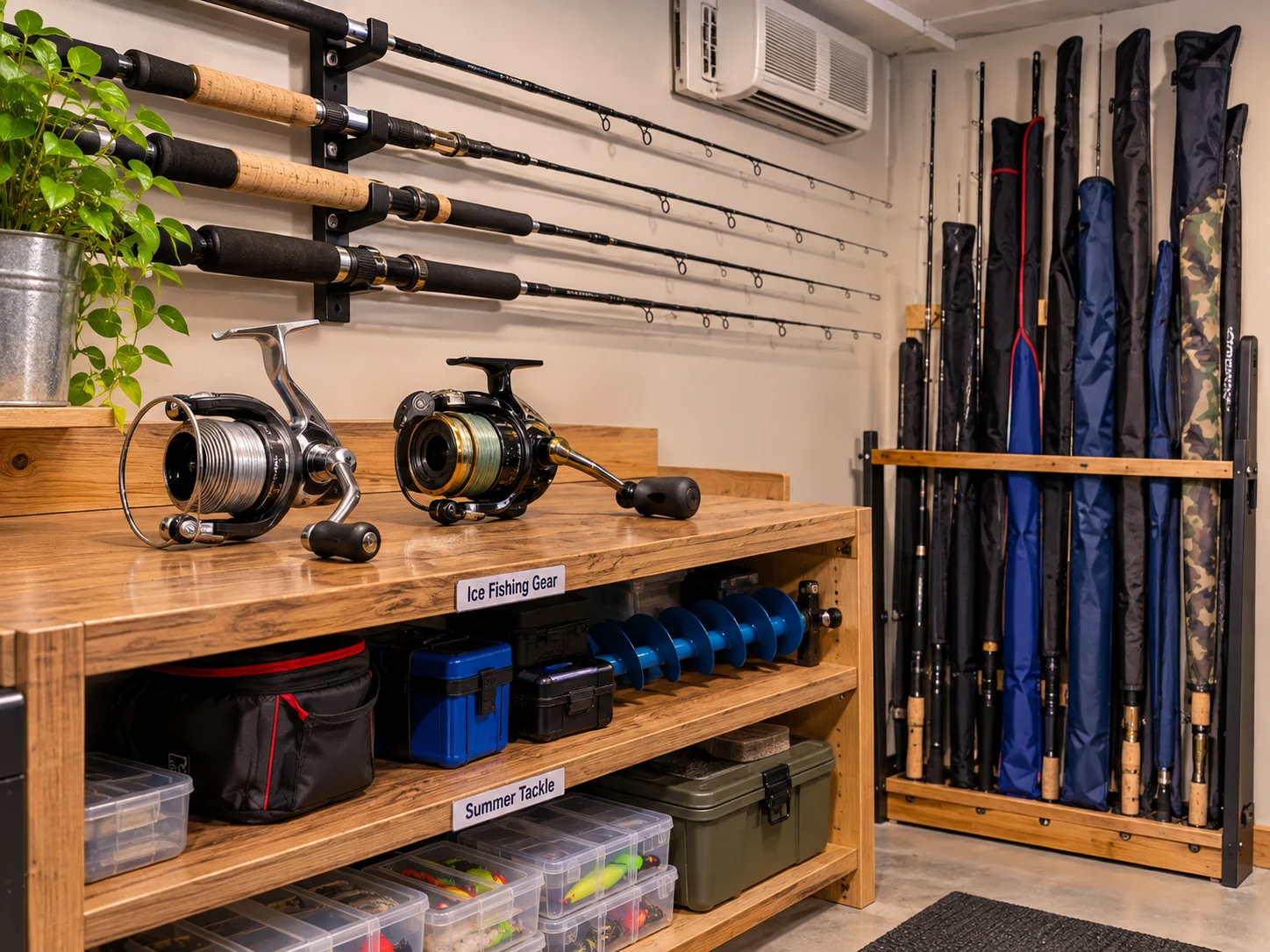
The most overlooked setup idea has nothing to do with boxes or labels. It is how you treat your gear in the months it is not being used. Rods and reels that go into storage dirty or improperly configured will fail, or underperform, the moment you need them.
For reels, the sequence matters. When rinsing after a trip, particularly a saltwater outing, tighten the drag fully before running water over the reel. This keeps water out of the drag washers, which are the most expensive component to replace. Once the reel is clean and dry, back the drag off completely. Leaving drag washers compressed under tension for weeks or months causes them to deform, which produces uneven drag performance the next time you hook a fish. A November 2026 column in the Providence Journal on winter gear care covers both steps and frames them as the difference between a reel that works perfectly next spring and one that needs a service call.
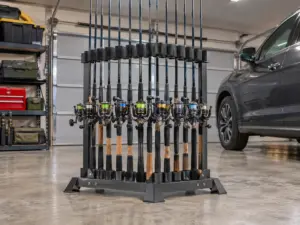
Rods benefit from horizontal or vertical storage on indoor racks, away from temperature swings and moisture. Guides and ferrules corrode faster in a humid garage than in a climate-controlled room. CubeSmart’s rod storage guidance recommends keeping rods on dedicated racks rather than leaning them against walls, where tip sections take lateral stress over months.
Before long-term storage, add rod sleeves or bags. This protects guide inserts from contact damage and prevents line from tangling around other gear. For ice fishing setups, keeping all ice gear on a dedicated labeled shelf, separate from summer gear, means your January rig is exactly where you expect it, not mixed in with camping equipment from August.
The payoff for all of this is tangible: gear that has been cleaned, dried, and stored correctly is ready to fish the moment you pull it out. No rust to deal with, no seized drag, no brittle guides. That means your first trip of the season starts at the water, not in a repair session at the workbench.
Conclusion
Of these six approaches, the three-tier tackle system and destination-specific trip kits do the most work in the shortest time. If you only act on one thing after reading this, build a go-box tonight for your next trip and limit it to what you actually plan to throw. That single change compresses pre-trip prep from 30 minutes to under 10, and once you experience that, the rest of the system tends to follow naturally.