DIY Survival Food Buckets Every Fisherman Should Stock Up On
Only about 39 percent of Americans have enough emergency food stored to last more than three days, yet fishermen regularly spend nights or entire weekends at remote lakes, rivers, and ice-fishing shacks where the nearest grocery store is an hour away. The gap between those two facts is exactly why the concept of 6 DIY survival food buckets every fisherman should stock up on is worth taking seriously rather than treating as a prepper hobby. A well-organized bucket system handles food, water, and energy in a format that fits a boat locker, truck bed, or ice shack corner without requiring a commercial emergency kit costing several hundred dollars.
Disclosure: This post contains affiliate links. As an Amazon Associate, we earn from qualifying purchases, and at no extra cost to you.
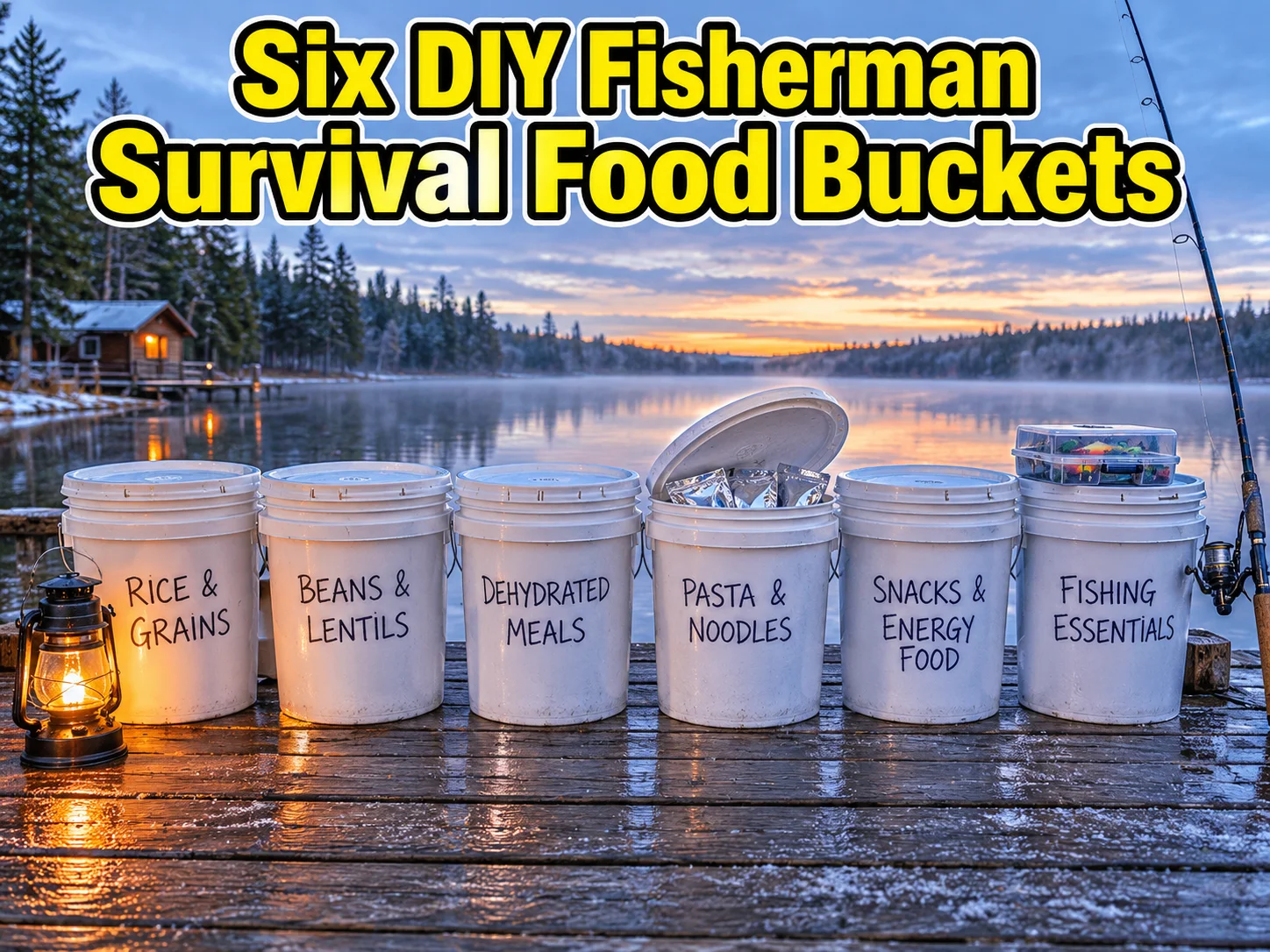
The six-bucket approach works because it separates functions. One bucket’s job is calories. Another handles protein. A third is pure convenience for fast meals. The last few address water, quick energy, and fishing gear. When one bucket runs low or gets damaged, the others keep you fed. That redundancy is what makes the system worth building.
Key Takeaways
- Focus on total calories and actual days of food, not serving counts printed on commercial bucket labels.
- A single food-grade 5-gallon HDPE bucket with a Gamma Seal lid can store more than 25 pounds of dry staples or roughly 2.5 days of drinking water for one person.
- Building a six-bucket system costs less than most commercial 30-day emergency kits while giving you full control over what goes inside.
- At least one bucket should be dedicated to fishing gear, bait, and tackle to free up your food buckets for actual food.
- Rotate stock annually and label every bucket with contents, pack date, and calorie estimate on the outside.
1. The Staple Grains and Legumes Bucket
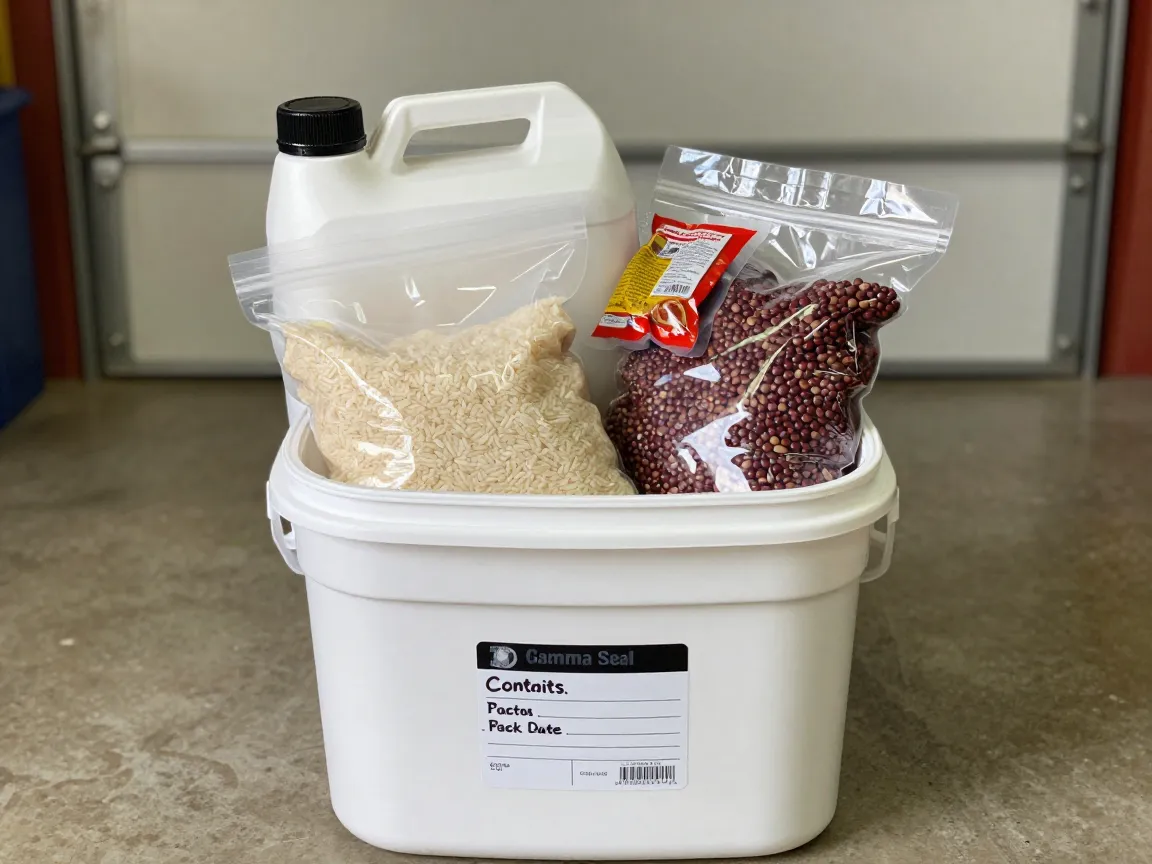
A single 5-gallon food-grade HDPE bucket packed with 25 pounds of white rice, 8 pounds of dried beans, and 1 pound of salt costs under $25 at most warehouse stores and covers roughly one month of bare-bones caloric baseline for one adult. That math has been confirmed repeatedly by preparedness writers and DIY budget guides, and it still holds in 2026 regardless of which store you buy from. White rice stores well above 25 years when sealed with an oxygen absorber inside a mylar bag placed into a food-grade bucket with a tight lid. Dried beans store nearly as long under the same conditions.
For fishermen, this bucket is the backbone. If you catch nothing for three days, the rice and beans keep you functioning. Pack the rice and beans in separate mylar bags inside the same bucket so you can access one without exposing the other to air and moisture. Add a small vacuum-sealed bag of bullion cubes or a few packets of hot sauce to make the meals edible after day two.
The hardware matters as much as the food. Standard snap-on bucket lids work but are frustrating to reseal in cold weather or with wet hands. A Gamma Seal screw-top lid costs about $8 to $10 and threads on securely after the first installation. When you’re on a frozen lake at 5 a.m., you want a lid you can open with one hand wearing a glove. Label the outside with a black permanent marker: contents, pack date, and estimated calories. That label takes ten seconds and saves confusion when you’re pulling buckets out of a dark truck bed.
One caveat worth noting: dried beans require significant cooking time and fuel. If your camp stove has limited fuel, pre-soak the beans in water for eight hours before cooking to cut boil time nearly in half. Keep that in mind when planning how much fuel you’re bringing alongside this bucket.
2. The Freeze-Dried Meal Bucket
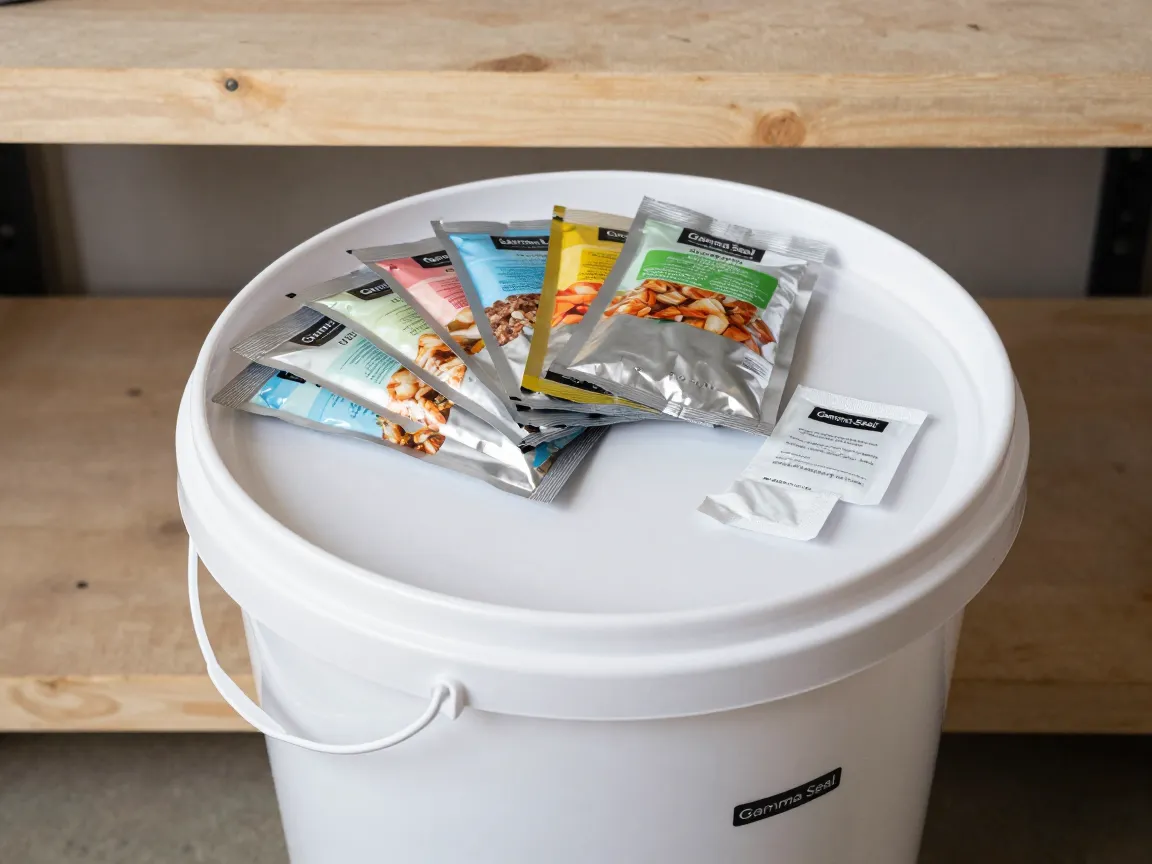
Commercial freeze-dried meal buckets from brands like Mountain House, 4Patriots, and Augason Farms have earned a legitimate place in a fisherman’s setup, but buying one off the shelf and calling it done misses most of the value. The smarter approach is to treat the commercial bucket as a template and supplement or replace it with a DIY-assembled bucket built around your own calorie targets.
Recent evaluations of commercial options place the Augason Farms 30-Day Quick Starter Supply pail at 55,630 total calories across 307 servings, which translates to roughly 28 actual days of food for one adult eating 2,000 calories per day. Ready Hour’s comparable 4-week kit lands near 56,460 calories. Those numbers are useful benchmarks because the serving counts printed on the labels (120, 150, 307) are almost always calculated at portion sizes well below what a physically active angler actually eats. A fisherman hauling gear, standing in cold water, or working in winter conditions burns closer to 2,500 to 3,000 calories per day. At that burn rate, a “30-day bucket” covers 18 to 22 days, not 30.
If you’re building a DIY freeze-dried meal bucket, buy individual pouches of freeze-dried entrées during sales and pack them into a clean 5-gallon food-grade bucket with an oxygen absorber. Aim for at least 14,000 calories total, which is roughly one week of real-world activity for a physically active adult. Mountain House and similar brands sell individual pouches in flavors that require only boiling water, which is an advantage on a boat where cooking options are limited. Variety matters more than you’d expect by day four of an extended trip.
The 25-year shelf life claimed by most freeze-dried brands (4Patriots cites this explicitly and outdoor media has consistently confirmed it in product testing) means this bucket can sit in your garage or boathouse undisturbed until you need it. Date the bucket and check every two years to confirm the pouches haven’t been punctured or the bucket damaged.
3. The Protein Cache Bucket
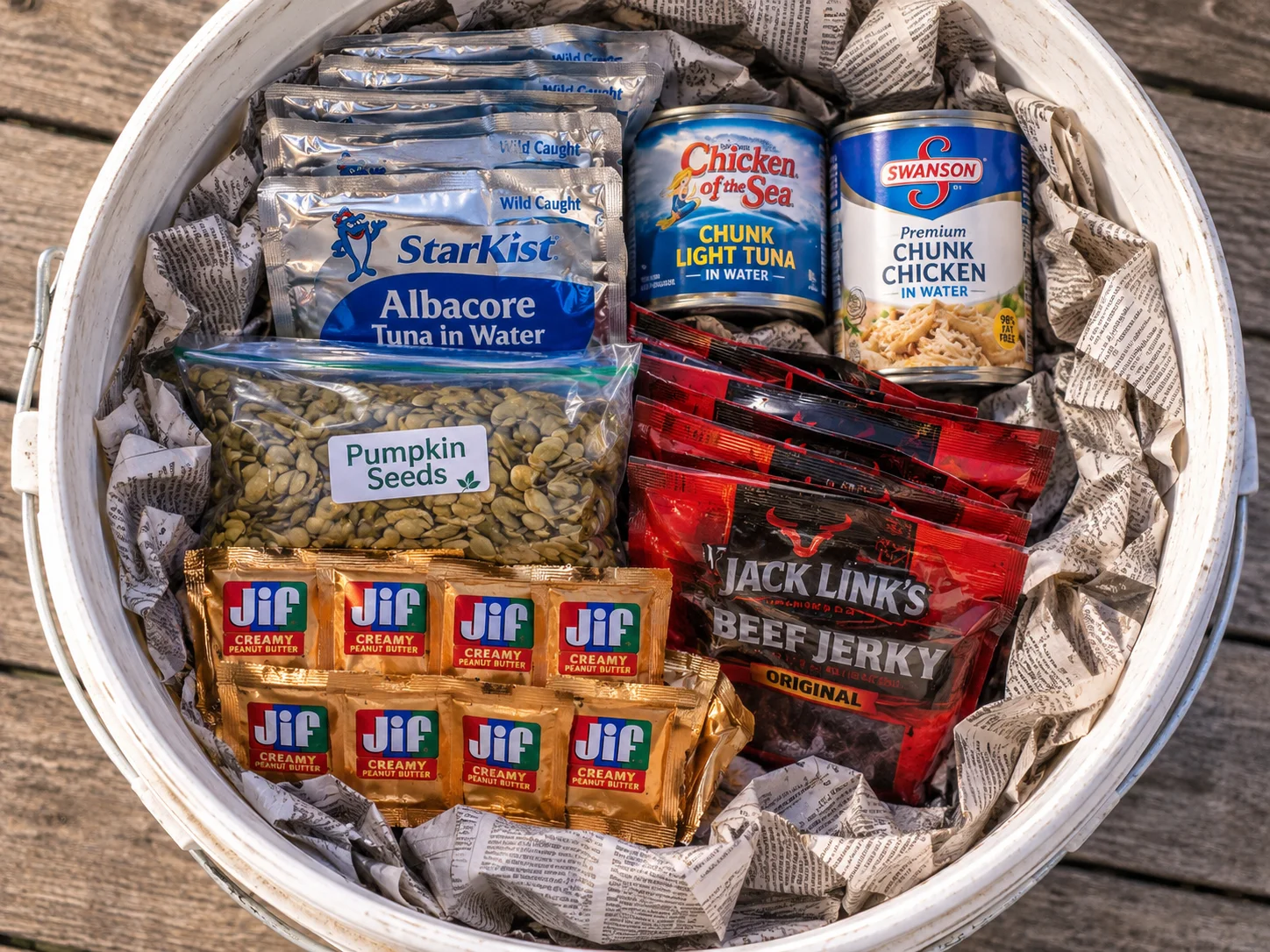
Rice and beans provide protein, but not at the density that keeps energy and mood stable during multi-day fishing trips. A dedicated protein bucket built around shelf-stable animal protein changes that. The simplest version uses canned fish, canned chicken, and foil pouches of tuna or salmon packed into a clean 5-gallon bucket with crumpled newspaper or packing material to prevent cans from rattling and denting during transport.
Foil pouches of tuna are preferable to cans for a boat or backpack scenario because they weigh less, take up less space, and don’t require a can opener. A single 5-ounce pouch of albacore tuna contains about 30 grams of protein. Packing 30 pouches (roughly one per meal for protein supplementation over two weeks) adds up to about 15 pounds all-in and fits easily in a 5-gallon bucket. Add a dozen packets of peanut butter, a bag of pumpkin seeds, and several packets of beef jerky to push the total protein count higher and add variety.
This bucket also handles a practical fishing-specific problem. On a productive day, you may catch more fish than you can eat immediately. Having a dedicated protein bucket already stocked means you’re not making decisions about how much of your general food supply to consume today versus saving for tomorrow. The fresh catch supplements the bucket rather than replacing it.
Rotate this bucket every 12 to 18 months because canned fish and foil pouches have shorter best-by windows than freeze-dried staples. Mark the rotation date on the lid. When you rotate, the old stock becomes the daily pantry at home and the bucket gets repacked fresh before the season starts.
4. The Quick-Energy and Snack Bucket
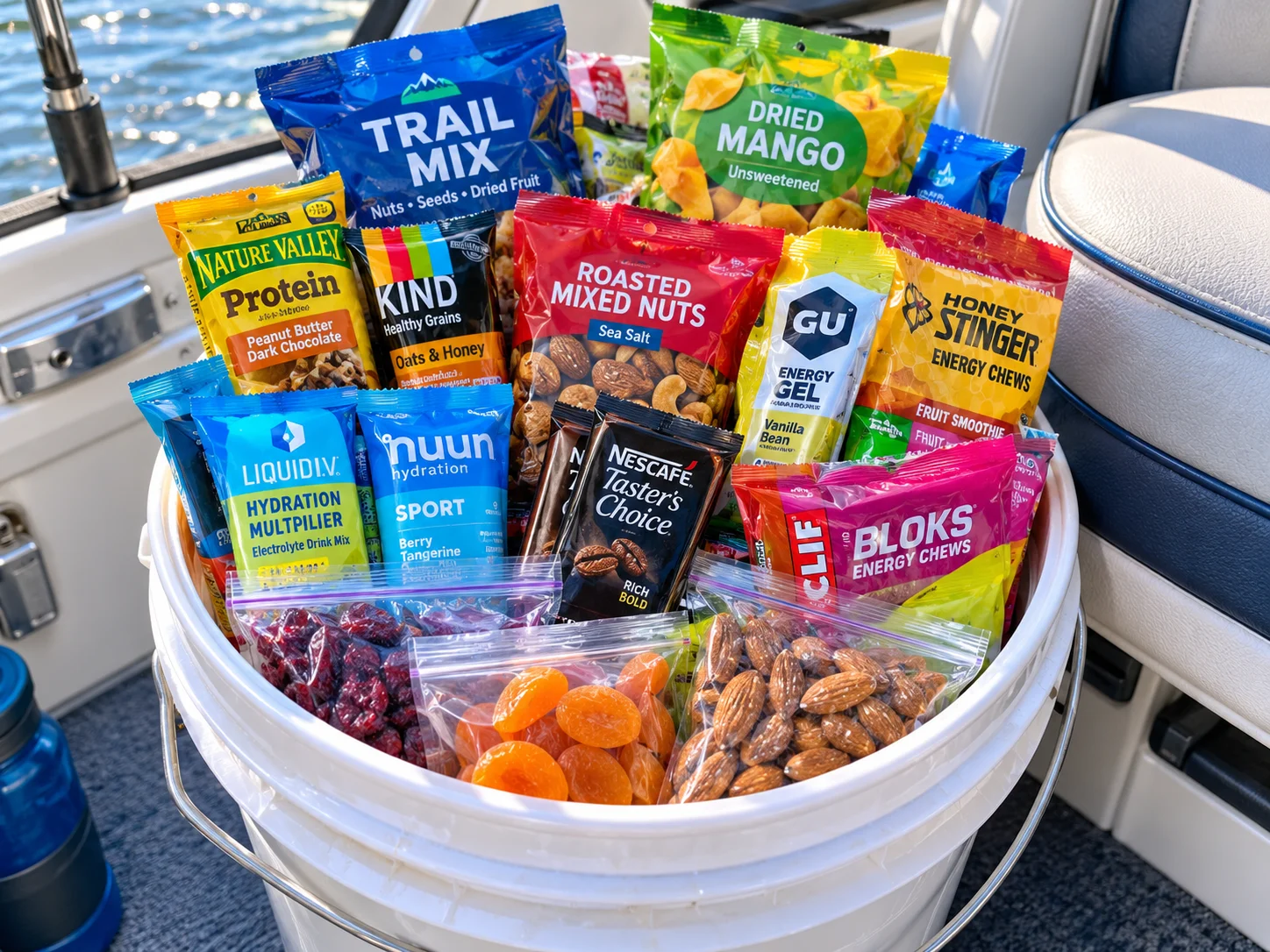
Long fishing days rarely follow a schedule that allows for a sit-down meal at noon. A bucket stocked entirely with quick-energy foods handles the gap between breakfast and dinner without requiring a stove, cooking time, or cleanup. This is the bucket you crack open on the water.
Pack it with a mix of high-calorie bars (look for bars with 250 to 400 calories each and a shelf life of at least two years), trail mix, hard candies, electrolyte drink powder packets, instant coffee packets, dried fruit, and roasted nuts. Avoid chocolate bars in warmer months because they melt and ruin other items. Vacuum-sealed bags of mixed nuts have a usable shelf life of 12 to 18 months and provide fat, protein, and salt in a compact format. Energy chews and gels intended for endurance athletes also work well here and pack a large calorie density per ounce.
The electrolyte packets deserve specific attention. Dehydration is a common problem during cold-weather fishing because cold air suppresses thirst signals. A fisherman on a frozen lake for eight hours may drink far less than needed and not realize it until fatigue hits hard. Packing 20 to 30 single-serve electrolyte packets in this bucket adds almost no weight and provides a consistent reminder to hydrate. Drink mix brands like Liquid I.V. or Nuun sell individual servings that fit easily in this bucket alongside other snack items.
Keep this bucket accessible rather than buried under other gear. Consider storing it on the floor of your boat cab or directly beside your seat in an ice shack rather than in a locked storage compartment. The whole point is fast access without unpacking anything.
5. The Water Storage and Treatment Bucket
One food-grade 5-gallon bucket filled with water provides roughly 2.5 days of drinking water for a single adult at the standard one-gallon-per-day baseline, or less than two days at the higher intake rates recommended during physical activity in cold weather. That’s not a lot, but it’s enough to cover an emergency gap while you source and treat additional water from a lake or stream.
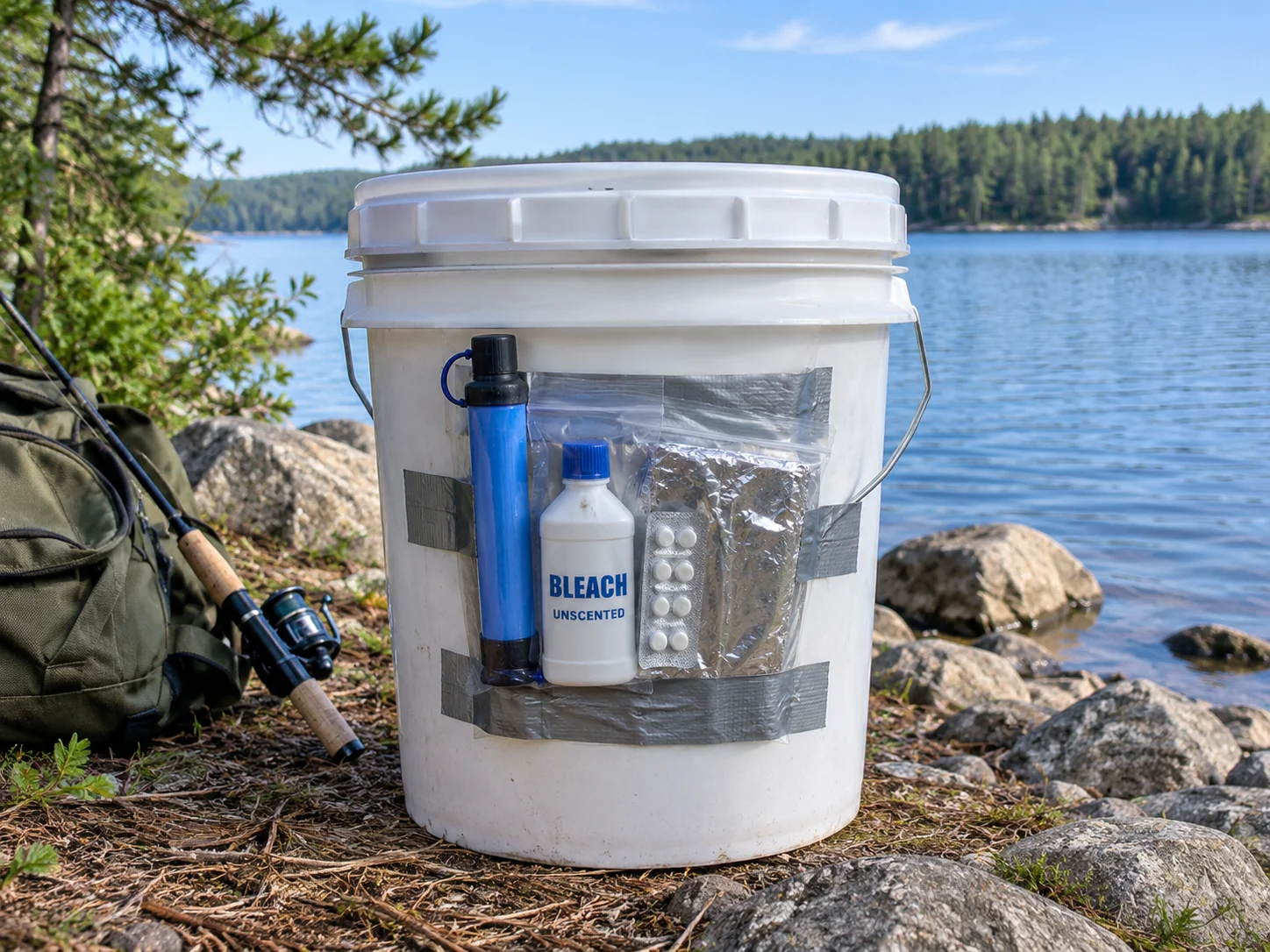
Build this bucket differently from the food buckets. Start with a food-grade HDPE container that has never held anything but water or food. Add a Gamma Seal lid for secure resealing. Tape a small kit to the side of the bucket (or store it inside before filling) containing a LifeStraw or similar personal filtration device, 10 water purification tablets, a folded piece of aluminum foil for solar water disinfection backup, and a small bottle of unscented liquid bleach rated at 8.25 percent sodium hypochlorite. At that concentration, the CDC guidelines call for adding 8 drops per gallon and waiting 30 minutes.
Fishermen near freshwater sources are in a better position than most when it comes to water during an emergency. The issue is not usually finding water; it’s treating it quickly enough to stay hydrated without getting sick. Giardia and other waterborne pathogens live in clear, cold lakes that look perfectly safe to drink from. The treatment kit in this bucket solves that problem without adding significant weight or cost.
Replace the stored water every six months even if the bucket hasn’t been opened. Stored water doesn’t expire in the way food does, but plastic containers can leach compounds over time and the absence of chlorination allows bacterial growth in some conditions. A fresh fill twice a year is a minor effort for a supply you genuinely need in an emergency.
6. The Fishing Gear and Utility Bucket
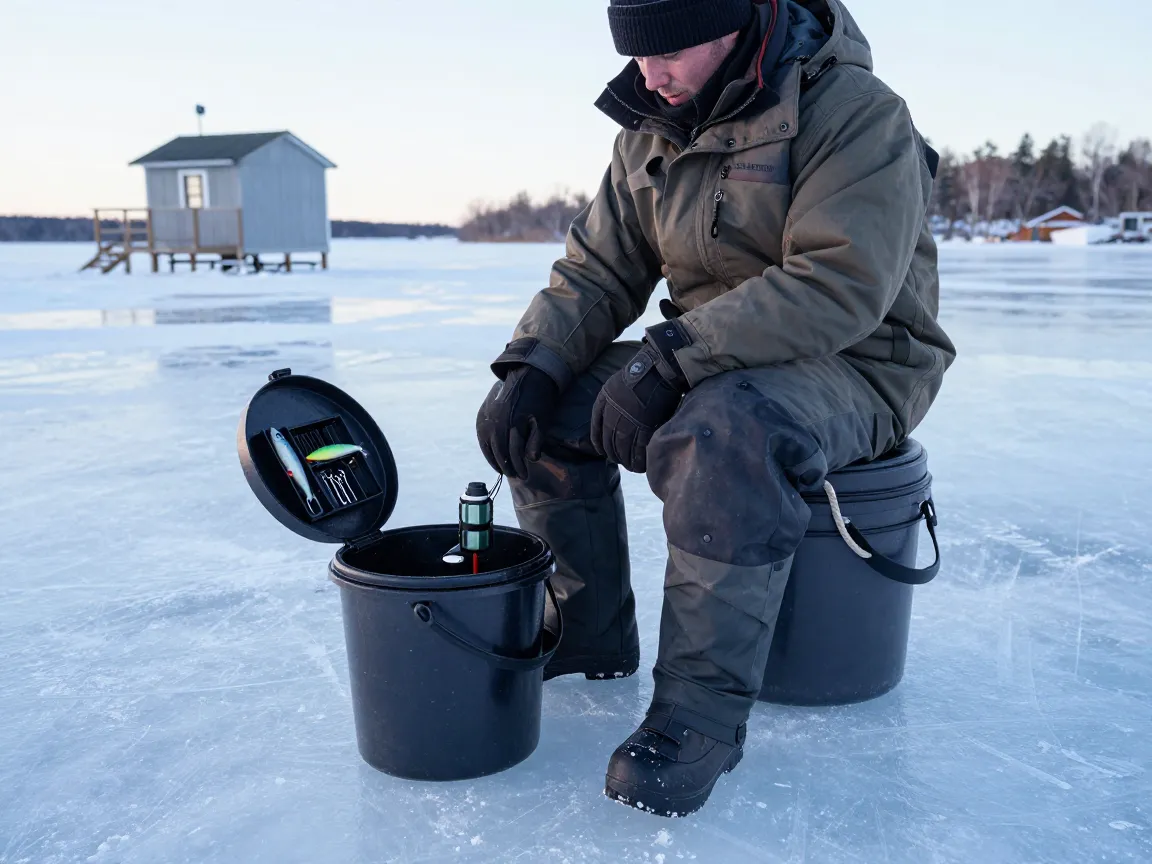
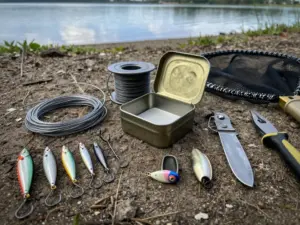
The fifth and sixth buckets in this system don’t have to both hold food, and this one shouldn’t. A well-organized fishing gear bucket serves simultaneously as a tackle box, live bait container, fish hauler, and camp seat. That four-in-one function is what makes the standard 5-gallon bucket the most used piece of gear in a working fisherman’s kit.
Configure this bucket with a padded swivel lid that doubles as a seat (available from most outdoor retailers for $15 to $20), a battery-powered aerator clipped inside for live bait, and an internal organizer tray for lures, line, and hooks. When loaded with gear, a typical fishing bucket runs 8 to 12 pounds, light enough to carry onto a dock or drag across ice with a rope handle. The same bucket carries your catch back to camp at the end of the day and gets rinsed and repacked for the next morning.
The dual-use logic here is long-established among outdoorsmen and survival-minded fishermen. Preparedness guides explicitly describe empty long-term food buckets as the fisherman’s preferred utility container. Once you rotate out your food storage from one of the other five buckets, that food-grade container gets a second life as a gear bucket. The 25-year lifespan of a food-grade HDPE bucket means you’re not throwing anything away; you’re just reassigning it.
For ice fishermen specifically, the bucket-as-seat function is not optional. Sitting directly on ice for hours is dangerous regardless of insulation. A padded bucket lid at 12 to 14 inches off the ice surface keeps circulation running and core temperature stable during long sits. Some ice anglers upgrade to a bucket with MOLLE strap loops and a padded back harness, turning the whole thing into a wearable pack for the walk across the ice. That setup keeps both hands free for dragging sleds or carrying rods.
Quick Comparison
| Bucket | Primary Function | Approx. Weight When Packed | Shelf Life Consideration |
|---|---|---|---|
| 1. Staple Grains | Calorie base (rice, beans, salt) | 33-35 lbs | 25+ years sealed |
| 2. Freeze-Dried Meals | Ready-to-eat variety | 15-20 lbs | 25 years (commercial pouches) |
| 3. Protein Cache | Animal protein, dense calories | 14-16 lbs | 12-18 months (rotate) |
| 4. Quick-Energy Snacks | On-water fuel, no cooking needed | 8-12 lbs | 12-24 months (rotate) |
| 5. Water Storage | Emergency hydration + treatment | 42 lbs full | Refill every 6 months |
| 6. Fishing Gear | Tackle, bait, seat, catch hauler | 8-12 lbs | No expiry |
Conclusion
The six-bucket system works because every bucket has a specific job and nothing is wasted. Start with buckets one and five (staple grains and water), which give you the longest shelf lives and the most caloric coverage per dollar spent, then add the others as budget allows. Buy food-grade HDPE buckets and Gamma Seal lids from a hardware store rather than specialty survival retailers and you’ll spend a fraction of what commercial kits cost for the same caloric coverage. Label everything before you store it.