Horseback Archery Aesthetic Ideas for a Bold, Cinematic Look
A horse at full gallop, a rider’s torso twisted backward, an arrow already gone before the hoofbeats catch up. Few sports hand a photographer or filmmaker this much built-in drama for free. That is why horseback archery keeps showing up in travel documentaries, fashion editorials, and tourism campaigns even though it remains a niche competitive discipline.
Disclosure: This post contains affiliate links. As an Amazon Associate, we earn from qualifying purchases, and at no extra cost to you.
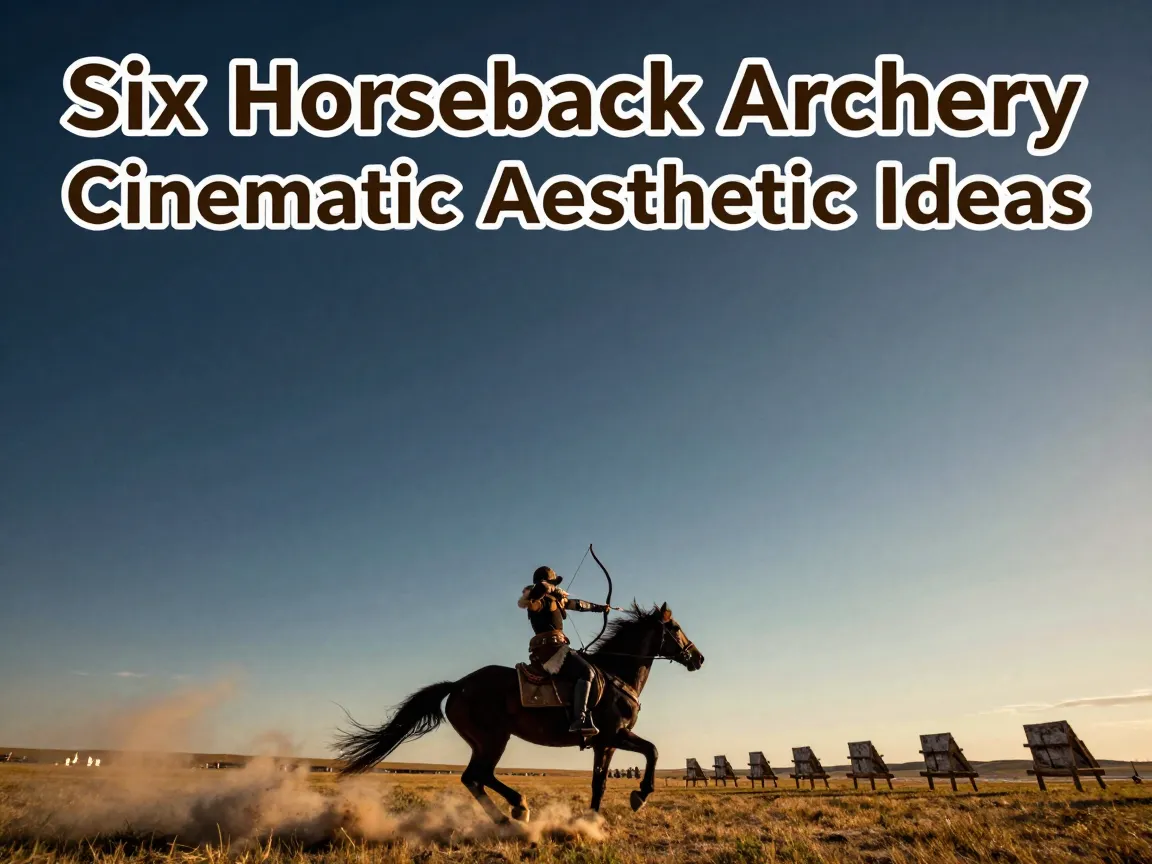
This guide breaks down six horseback archery aesthetic ideas for a bold, cinematic look, drawn from real traditions and competitive scenes around the world. Each one offers a different mood, color palette, and visual story, whether the goal is a photo shoot, a short film, or simply understanding why this sport photographs so well. From Japanese shrine festivals to Mongolian steppe championships, the variety here is the whole point.
1. Shrine-festival samurai aesthetic rooted in Japanese yabusame
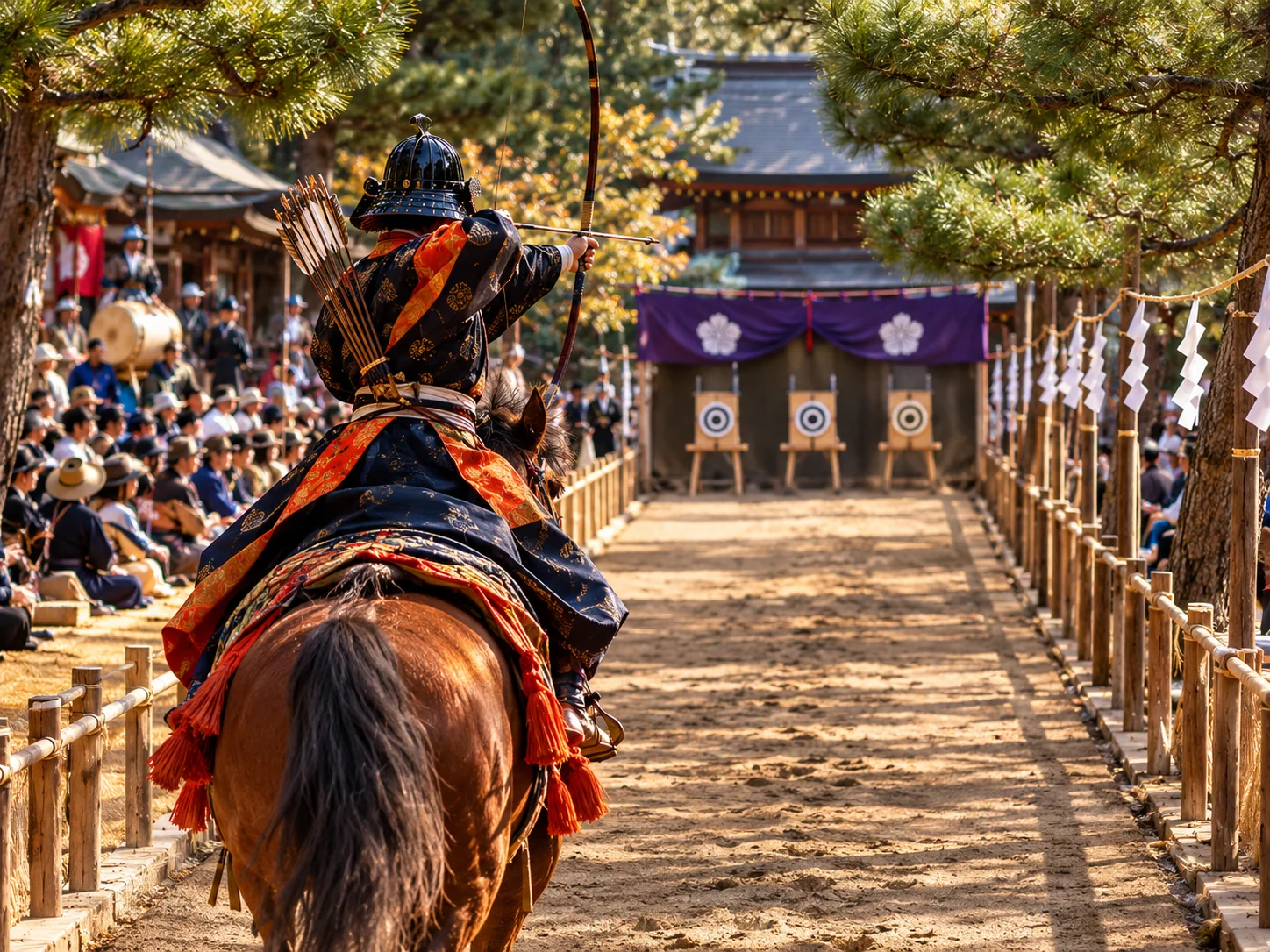
Yabusame is one of the oldest organized forms of mounted archery still practiced today, and its visual signature is unmistakable. Riders wear hunting-style samurai costumes, complete with lacquered helmets, wide-sleeved hunting robes, and quivers slung diagonally across the back. The setting matters as much as the costume: narrow sand tracks running through Shinto shrine grounds, often lined with wooden fences, pine trees, and onlookers seated on straw mats.
A photographer chasing this look should think about framing the track itself as a visual corridor. The archer gallops past three small wooden targets in quick succession, loosing each arrow in roughly two seconds, so the real cinematic payoff often comes from the anticipation shots, the raised bow, the taut rein hand, rather than the release itself. Shrine festivals also layer in ritual elements, drumming, paper streamers, formal bows, that add texture beyond the ride.
One practical note for anyone staging a similar shoot, even outside Japan: the costume is specific and historically coded, so borrowing color schemes (deep indigo, burnt orange, black lacquer) works better aesthetically than attempting a literal recreation without the cultural context. This aesthetic rewards patience and long lenses more than wide action shots.
2. High-contrast winter-mountain aesthetic from the Kalash Valley
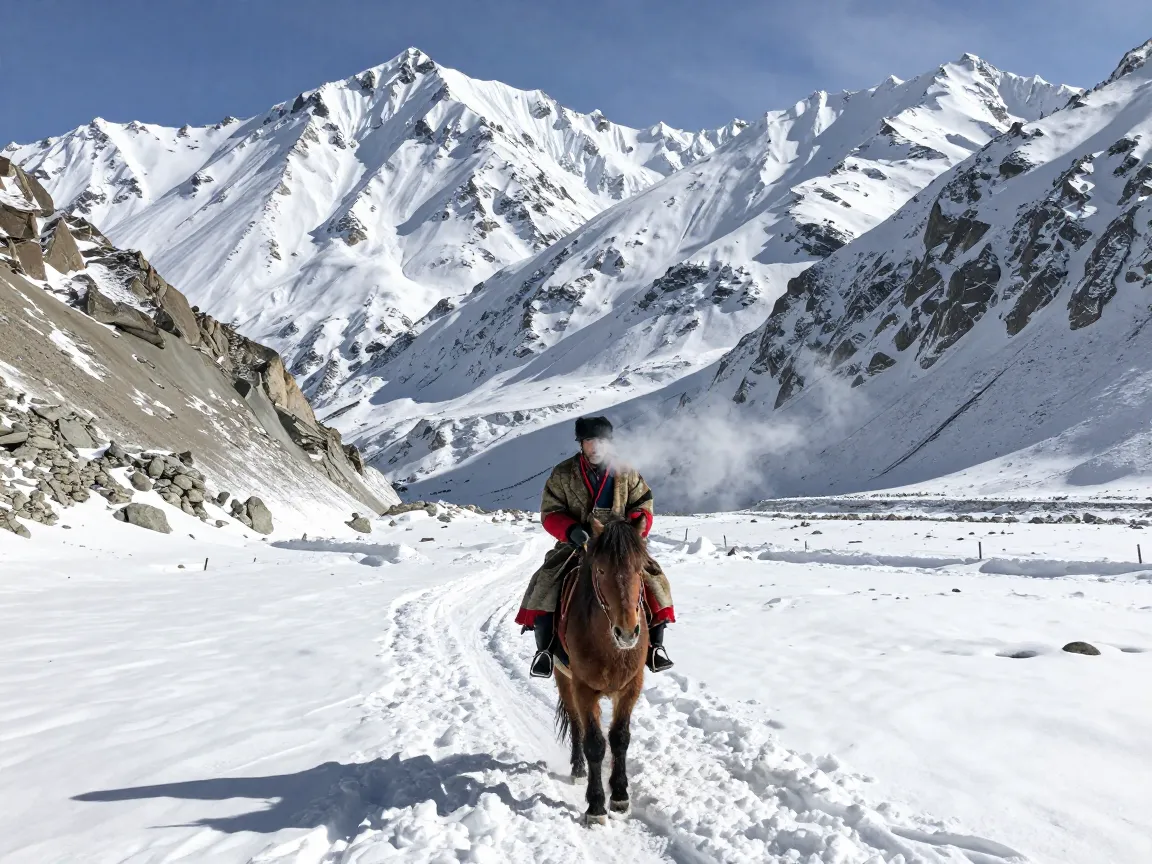
The Kalash people of northern Pakistan live in a landscape that does most of the cinematic work before a single arrow flies. Jagged snow-capped peaks, narrow valley floors, and crisp winter light create a natural high-contrast backdrop that few other horseback archery settings can match. Riders here often wear distinctive woven garments and layered wool, colors that pop hard against white snow and gray stone.
Unlike the formal choreography of yabusame, this setting leans into ruggedness. The terrain is uneven, the air is thin, and the riding style reflects a community tradition rather than a staged performance. A visual storyteller working with this aesthetic should prioritize wide establishing shots that show scale, a single rider small against a massive ridge line, before moving into tighter shots of breath fogging in cold air and reins gripped with gloved hands.
The caveat worth remembering is that Kalash cultural practices are tied to a specific, small, and vulnerable community, so any serious documentary or editorial project benefits from grounding the visuals in actual local context rather than treating the valley as a generic snowy backdrop. The aesthetic works because it is specific, not despite it.
3. Nomadic steppe-warrior aesthetic seen at the World Nomad Games
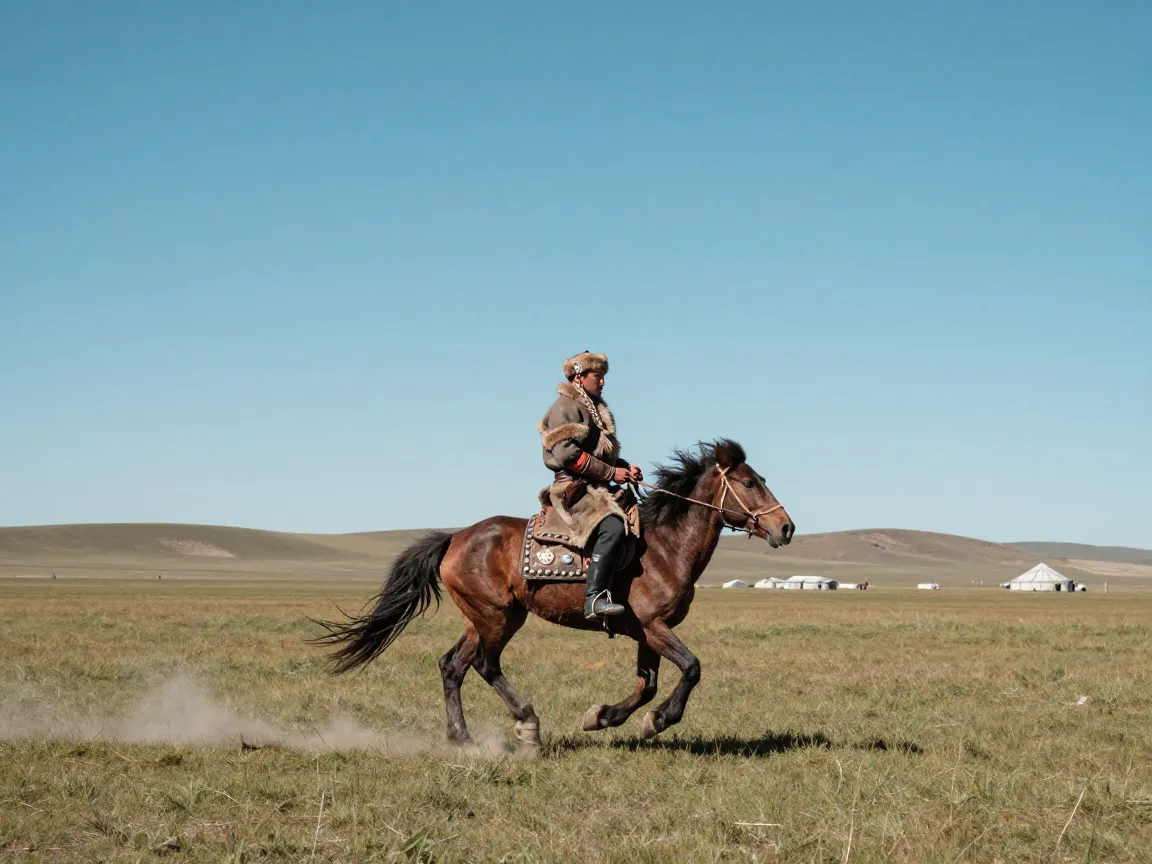
Mongolia and the broader Central Asian steppe tradition supply what is probably the most widely recognized horseback archery visual: open grassland stretching to the horizon, a rider in a fur-trimmed deel, and a sturdy, shaggy-coated horse built for distance rather than show. This look dominates coverage of the World Nomad Games and various Mongolian national championships, where mounted archery sits alongside wrestling and horse racing as a marquee event.
The steppe aesthetic thrives on horizontal composition. Wide, nearly empty skies and rolling grass give a sense of limitless space, which makes a single galloping rider feel both small and powerful at once. Costume details worth capturing include leather bracers, braided hair ornaments, and saddle gear decorated with metal studs or embroidery, all of which read clearly even from a distance because the background is so uncluttered.
A follow-up angle for anyone building a broader visual story is pairing this aesthetic with ger (yurt) camps, herding scenes, or evening campfires, since the Nomad Games themselves are staged as a celebration of broader nomadic culture, not just the archery event. That context turns a single action shot into part of a larger narrative about a living tradition rather than an isolated sport.
4. Arena-spectacle aesthetic built for China’s national championships
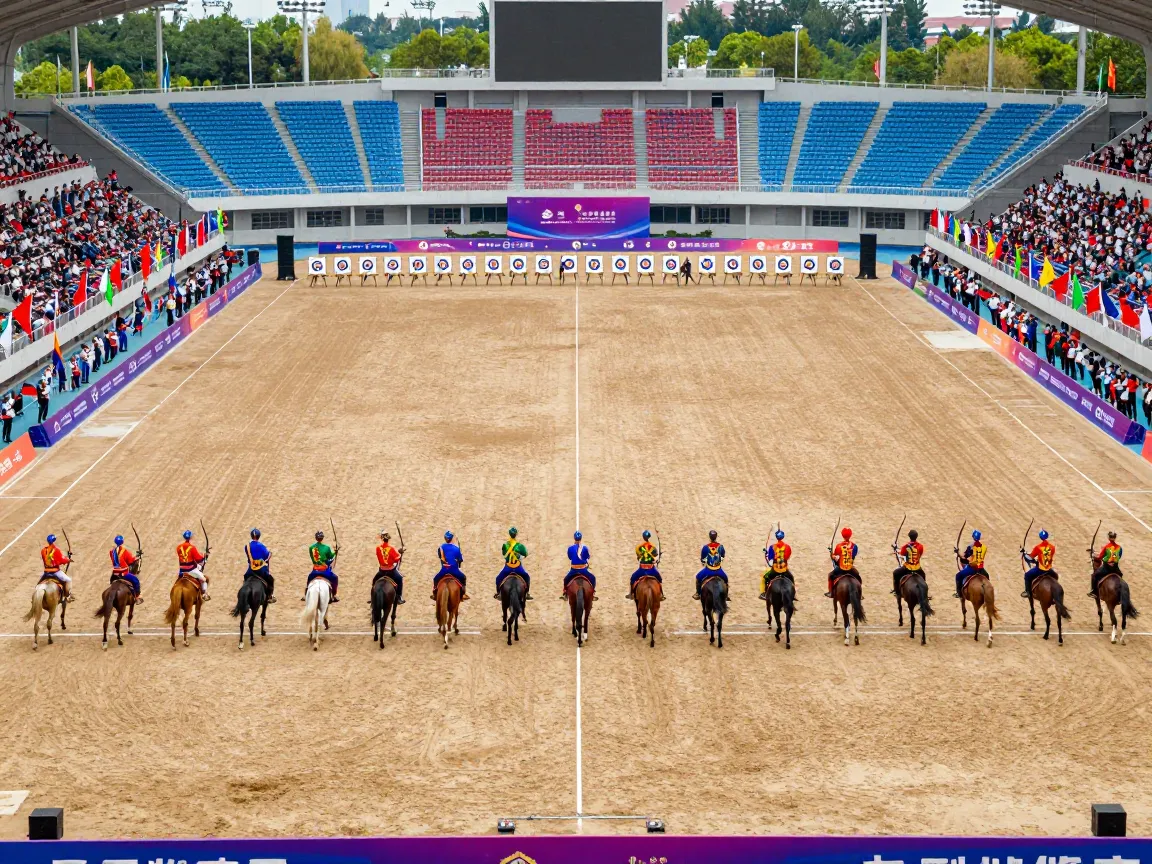
China’s national horseback archery championship and related ethnic games competitions take the opposite approach from the open steppe look. Here the setting is a defined arena, often with stadium seating, branded banners, and controlled lighting, turning the sport into a structured spectacle rather than a wilderness tradition. Riders frequently wear bright, decorative costumes tied to specific ethnic groups, chosen partly for visibility from stadium distances.
This aesthetic photographs well with symmetry and repetition. Multiple riders lined up at a starting point, matching target rows, and uniform track markings all create strong graphic patterns that work in both photography and broadcast footage. Crowd shots matter here too, packed stands and flag waving add scale and energy that a solo rider shot cannot provide alone.
For creators working on a brand campaign or sports feature, this arena style is often the easiest to replicate on a limited budget, since the controlled environment allows for predictable camera positions and lighting setups, unlike the unpredictable terrain of mountain or steppe settings. The trade-off is that it sacrifices some of the raw, untamed feeling that makes the other aesthetics distinctive.
5. Championship broadcast aesthetic from Kassai Valley and professional media crews
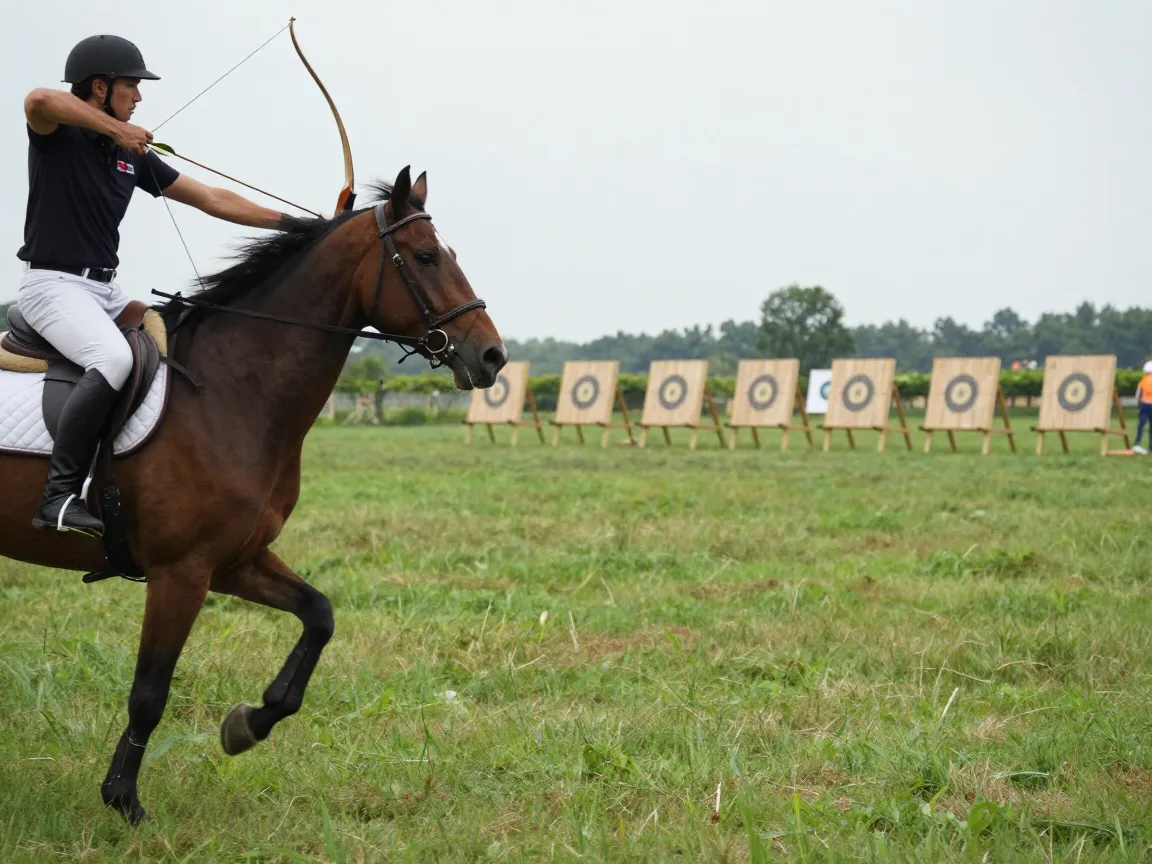
Kassai Valley in Hungary has become something of a spiritual home for modern horseback archery, hosting championships that draw international competitors and increasingly sophisticated media coverage. This aesthetic is defined less by costume and more by production values: drone footage tracking riders across the course, slow-motion replays of arrow releases, and on-screen graphics showing split times and scores.
The visual appeal here comes from technical precision rather than cultural pageantry. A well-shot Kassai Valley sequence might include a low tracking shot running parallel to the horse, a close-up on the bow string at the moment of release, and a wide drone pullback showing the full course layout with its sequence of targets. This is horseback archery presented like a modern extreme sport, comparable in polish to motocross or downhill mountain biking broadcasts.
Anyone trying to recreate this look should budget for stabilized camera gear and multiple simultaneous angles, since the appeal depends on seamless cutting between perspectives. A single static camera cannot capture the layered drama that makes championship broadcast footage feel cinematic; it is built in the edit as much as in the field.
6. Global tour aesthetic shaped by the IHAA competition circuit
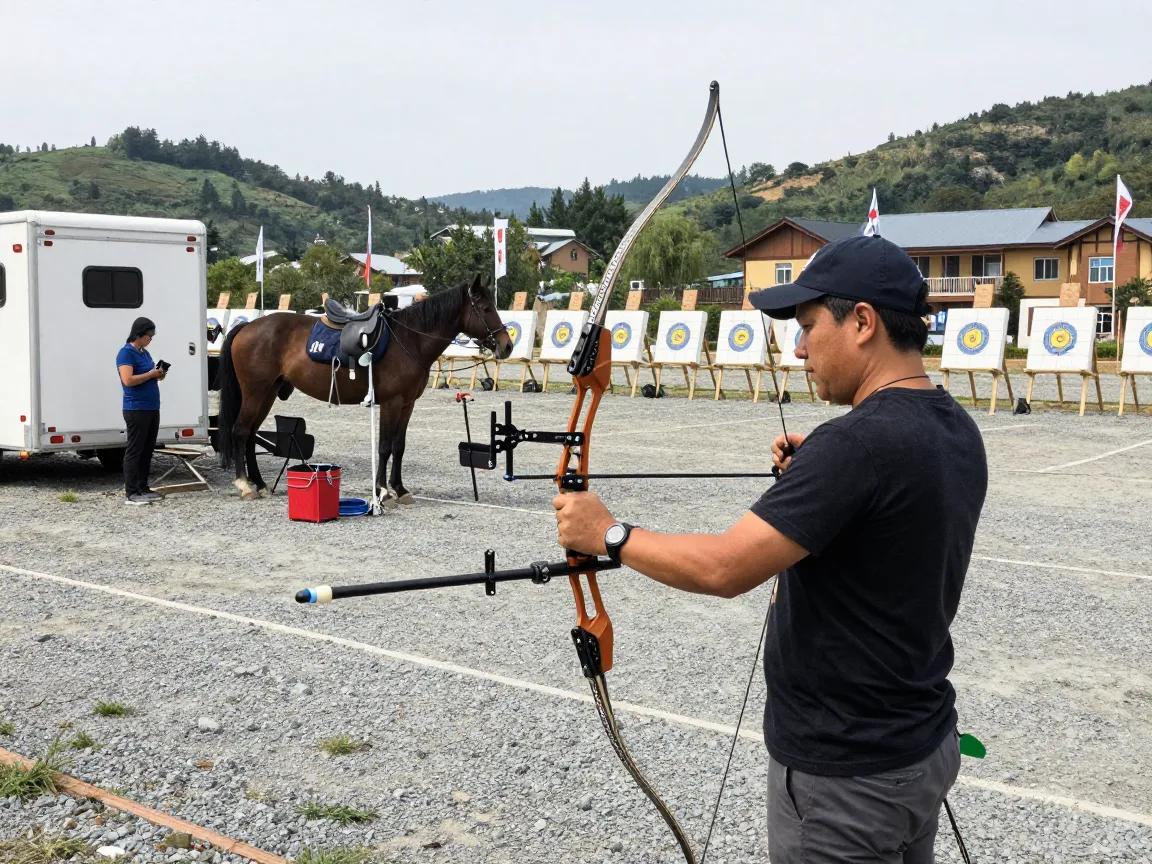
The International Horseback Archery Alliance runs a calendar of events across multiple countries, and that circuit has created its own distinct visual identity: a patchwork of local flavor layered under a shared competitive format. A rider might compete in Korea one season and Hungary the next, and the IHAA aesthetic captures that contrast directly, uniform scoring systems and course designs juxtaposed against wildly different backdrops, climates, and spectator cultures.
This idea works especially well for a photo essay or travel-style video series, since the narrative device writes itself: the same sport, the same riders, a completely different setting each time. One frame might show a competitor adjusting gear in a gravel parking lot before a European event, while the next shows a rider warming up on a dusty track in South Korea under very different light and architecture.
A practical note for documentary projects following this circuit is that athlete access often improves over a multi-event relationship rather than a single shoot, since competitors and organizers get used to a familiar crew. The global tour aesthetic rewards a longer-term commitment over a one-off shoot, because its real story is continuity and contrast across locations, not a single dramatic moment.
Choosing the right aesthetic for your project
These six horseback archery aesthetic ideas for a bold, cinematic look are not mutually exclusive. A documentary crew might open with steppe-warrior wide shots, cut to arena-spectacle crowd energy, and close on championship broadcast slow motion. What unites all six is a simple visual truth: this sport already contains motion, tension, and release built into every single attempt, so the real creative work lies in choosing the setting, costume, and camera approach that fits the story being told. Start with one aesthetic that matches the available location and access, then build outward from there.