Survival Life Hacks That Make Emergency Kits Actually Useful
Only about 45% of Americans have a basic emergency kit ready at home, according to FEMA survey data. That gap between knowing you should prepare and actually doing it comes down to one problem: most standard kit advice is either too vague to act on or produces a box of supplies that never gets touched. These 6 survival life hacks that make emergency kits actually useful are built around closing that gap with specific, low-cost changes that work in real emergencies rather than ideal ones.
Disclosure: This post contains affiliate links. As an Amazon Associate, we earn from qualifying purchases, and at no extra cost to you.
Key Takeaways
- A tiered kit structure covering 72 hours, two weeks, and one month handles the full range of emergencies without requiring a single bulk purchase.
- Multi-purpose items like heavy-duty trash bags replace several single-use products and reduce overall pack weight and cost.
- Written communication plans and offline information tools matter more than most physical supplies when infrastructure fails.
- Starting small and adding items gradually makes preparedness sustainable rather than a one-time project that gets abandoned.
- Tailoring your kit to your household’s specific hazards and medical needs is the difference between a functional kit and an unused one.
1. Build a Tiered Kit Instead of One Generic Bag
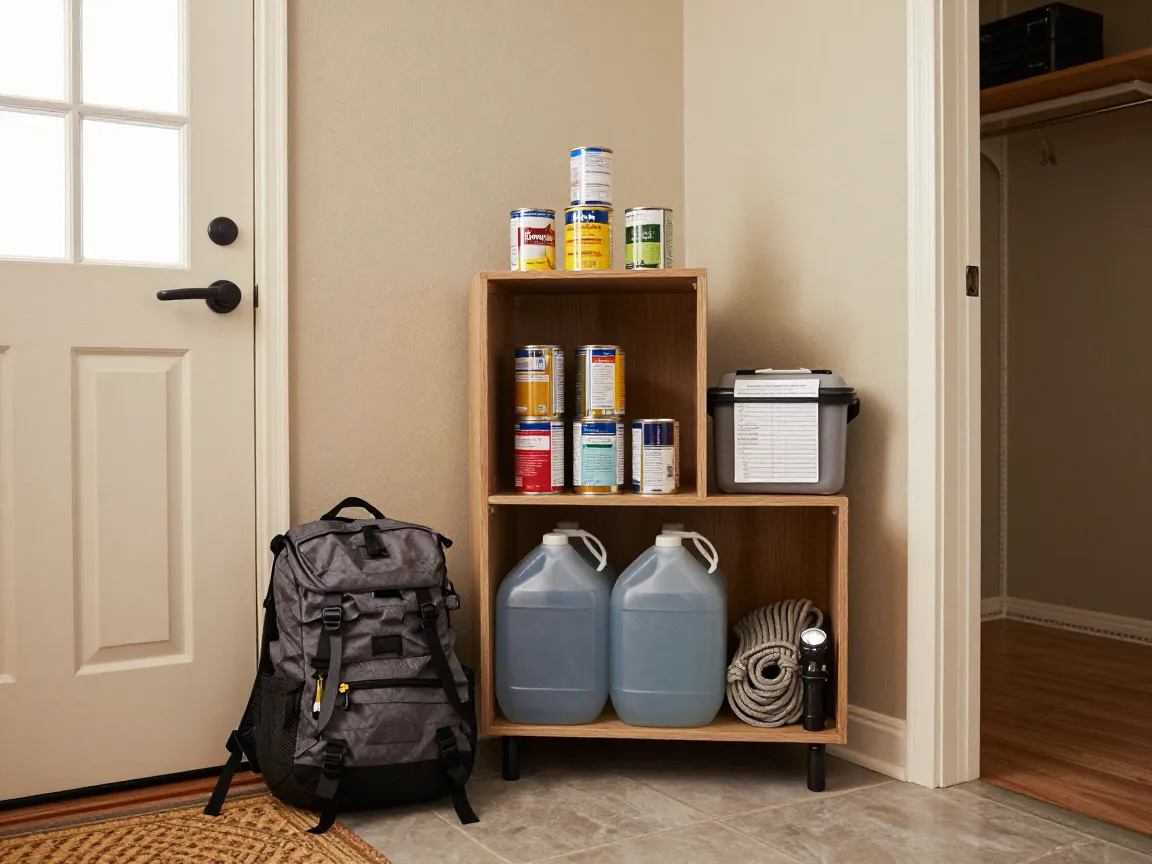
The standard “72-hour kit” advice gets repeated everywhere, but most emergencies don’t resolve in 72 hours. Hurricanes strand people for weeks. Power outages in extreme cold last longer than three days. A single bag sized for a weekend trip cannot cover a two-week shelter-in-place scenario or a month of disrupted prescription access.
A three-tier structure solves this. The first tier is a true 72-hour go-bag: compact, grab-and-go, with water, food, documents, and basic tools for evacuation. The second tier is a home kit with enough supplies for 14 days, stored in one location where you don’t need to carry it anywhere. The third tier is a 30-day medication supply, kept separate from both and rotated into regular use so it stays current. Each tier handles a different type of emergency, and together they cover scenarios from wildfires requiring fast evacuation to extended grid failures that keep you at home.
The practical step is to separate these physically. Keep the go-bag by the door or in a vehicle. Keep the two-week home kit in a closet near the kitchen. Keep medications in a labeled, waterproof container in a temperature-stable spot. When you need to leave in five minutes, you grab the go-bag. When a storm keeps you home for ten days, you’re drawing from the home kit. These are different problems and they need different tools.
One often-overlooked detail in the third tier: a typed, laminated list of all current medications with dosage, prescribing physician, and pharmacy contact. During a large-scale disaster, pharmacies often cannot access digital records. That paper list can get a prescription filled when nothing else can.
2. Convert Your Go-Bag Into a Dual-Use System
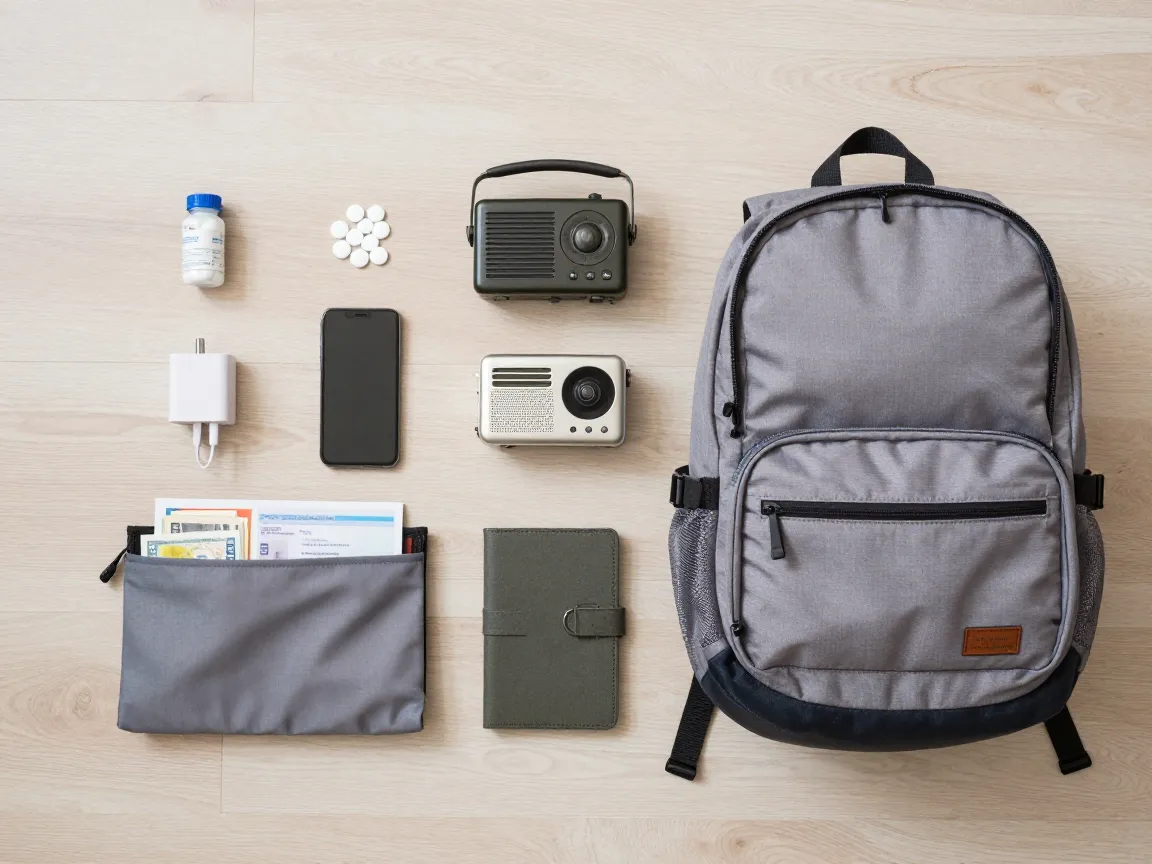
A go-bag that only works for evacuation is half a tool. With a small adjustment in how you pack and label it, the same bag can support shelter-in-place scenarios, which are statistically more common than full evacuations for most households.
The concept is straightforward: pack the bag so its core contents are useful in both contexts. Water purification tablets work at home and on the road. A battery-powered or hand-crank radio is useful whether you’re in a shelter or in your living room. A portable phone charger matters in both situations. The items that only make sense for evacuation, like extra cash and physical copies of ID documents, go into a labeled inner pouch that you can grab or leave based on the situation.
What this removes is the false choice between “bug out” and “shelter in place” framing. Most households face emergencies that require a mix: they stay home for two days while utilities are down, then evacuate when flooding approaches. A bag designed only for the road is useless for day one; a home kit you can’t carry is useless for day three. The dual-use setup covers both phases with one coherent system.
One useful application is running a quick annual drill where every adult in the household opens the bag, identifies what each item does, and confirms the layout still makes sense. That 20-minute exercise catches expired items, missing supplies, and configuration problems before an emergency does.
3. Replace Bulky Bedding With Heavy-Duty Trash Bags
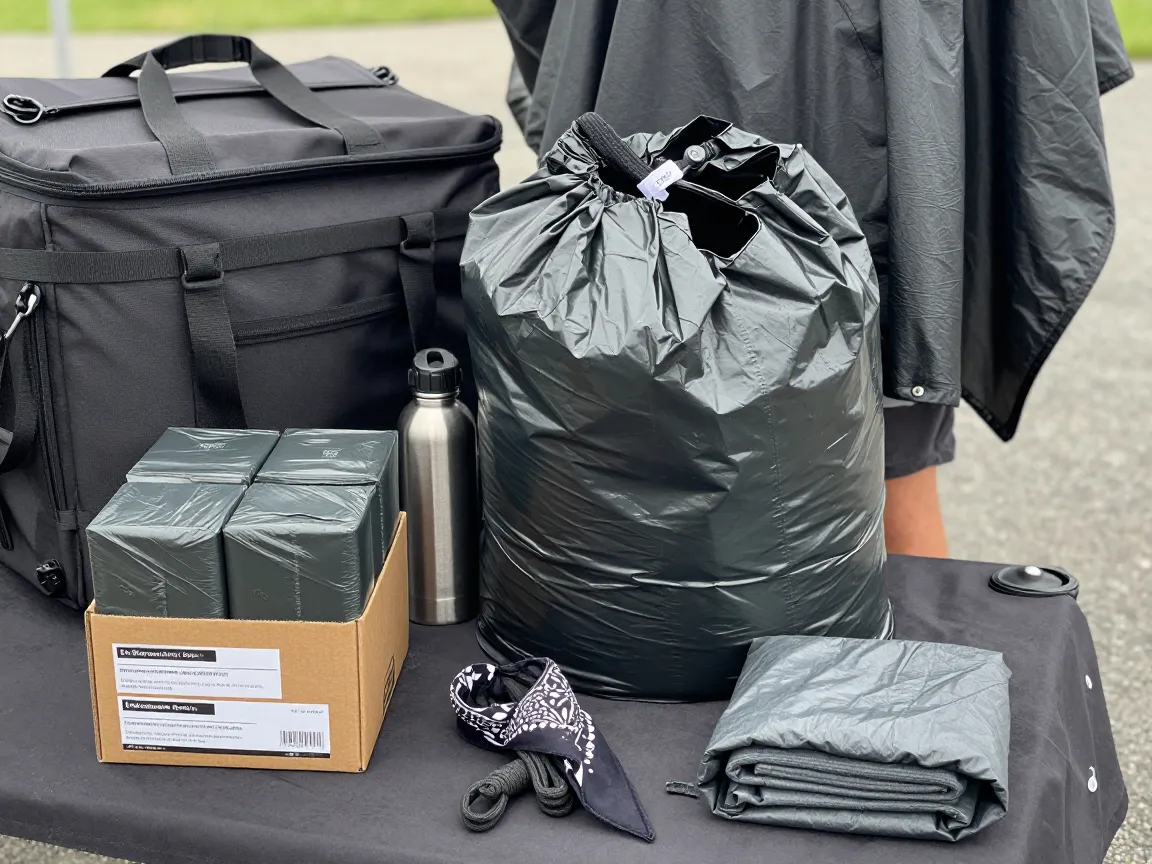
Single-use thermal blankets have their place, but space-to-function ratio matters enormously in a go-bag. A box of 3-mil contractor-grade trash bags weighs almost nothing, costs less than $10, and replaces or supplements several specialized items that take up far more room.
A 42-gallon contractor bag can serve as a rain poncho (with holes cut for head and arms), a ground cover, an improvised waterproof storage layer inside a bag to protect documents and electronics, a water collection vessel, or a shelter material when combined with cordage. In a shelter-in-place scenario, the same bags serve as sanitation containers when toilets fail, which is a far more common problem than most preparedness guides acknowledge. The CDC’s guidance on emergency sanitation specifically recommends heavy-duty bags for waste containment when sewage systems are compromised.
The substitution principle applies broadly. Before buying a specialized piece of emergency gear, ask whether a common household item handles the same job. A bandana does the work of a dust mask in most non-industrial emergencies. A metal water bottle can boil water over a fire in a way that a plastic hydration bladder cannot. These substitutions reduce cost and complexity while improving reliability, because you’re using items you already know how to use.
The one caveat: multi-purpose items only work if they’re durable enough for the secondary tasks. Standard kitchen trash bags tear under stress and are not a real substitute for contractor-grade bags in emergency sanitation or shelter applications. Material quality is not a place to cut corners here.
4. Use Offline Communication Tools and Written Plans
When cell networks fail, most households have no plan. Cell towers typically fail within hours of a large-scale power outage because backup generator fuel runs out. During Hurricane Sandy in 2012, large portions of New York and New Jersey had no cell service for days. During California wildfires, networks are intentionally throttled to prevent interference with emergency communications.
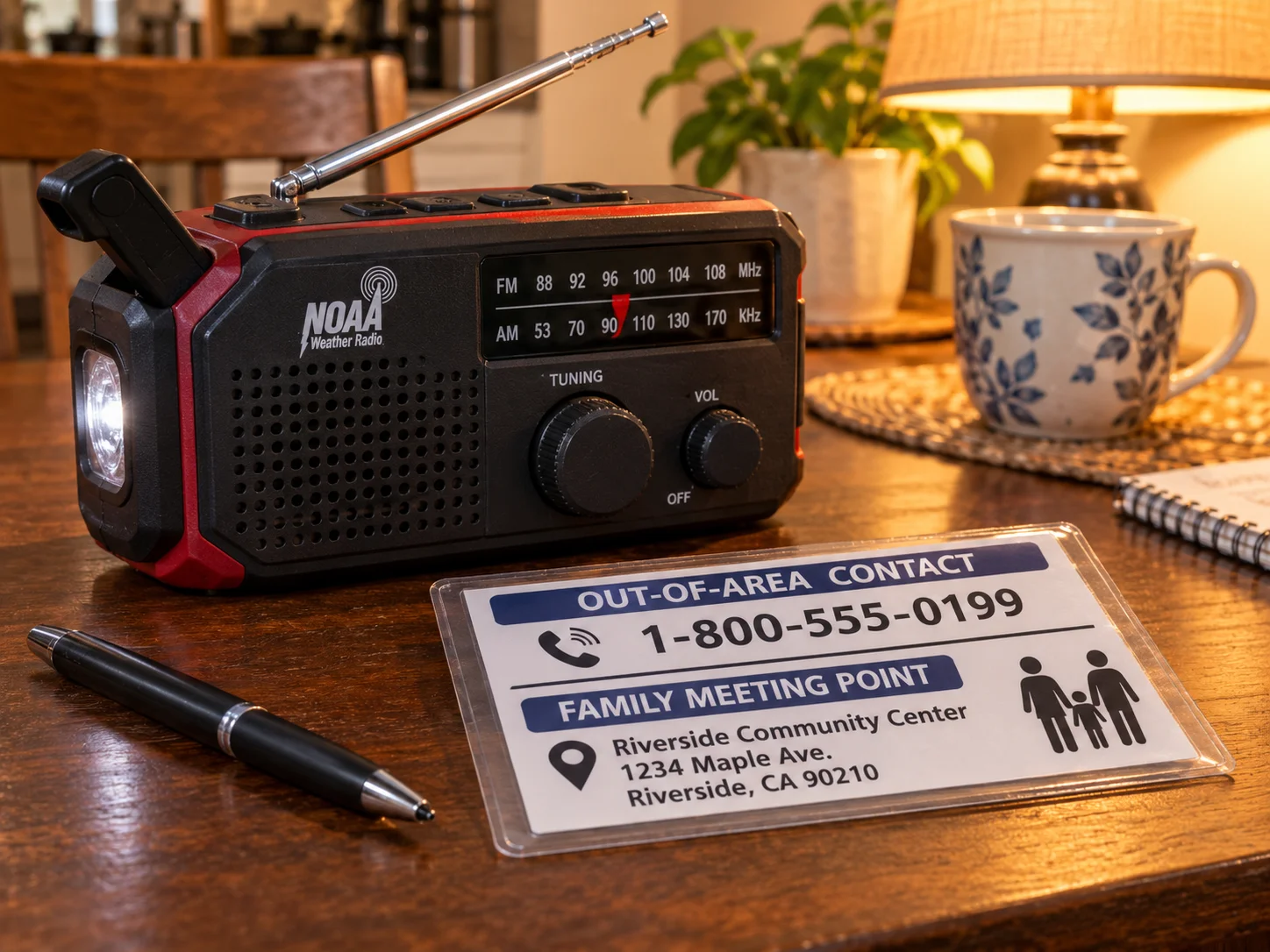
A battery-powered or hand-crank NOAA weather radio is the most direct fix for receiving official emergency information when internet and cell service are down. NOAA’s Weather Radio All Hazards network broadcasts 24-hour alerts across all hazard types on seven dedicated frequencies, and a basic receiver costs under $30. This is not optional information infrastructure; it’s the channel through which evacuation orders and shelter-in-place directives actually reach people when other systems fail.
The written plan matters as much as the radio. A laminated card with out-of-area contact numbers, a designated family meeting point, and the address of your closest emergency shelter covers the communication failures that hardware can’t fix. When cell networks are down, calling an out-of-state relative as a relay contact often works because long-distance lines are less congested than local ones. That technique requires knowing the number in advance, which requires writing it down before the emergency.
Store one copy of the written plan in the go-bag and a second copy in each vehicle. Tell every household member where it is and what it says. The plan has no value if only one person knows it exists.
5. Start Small and Rotate Consistently
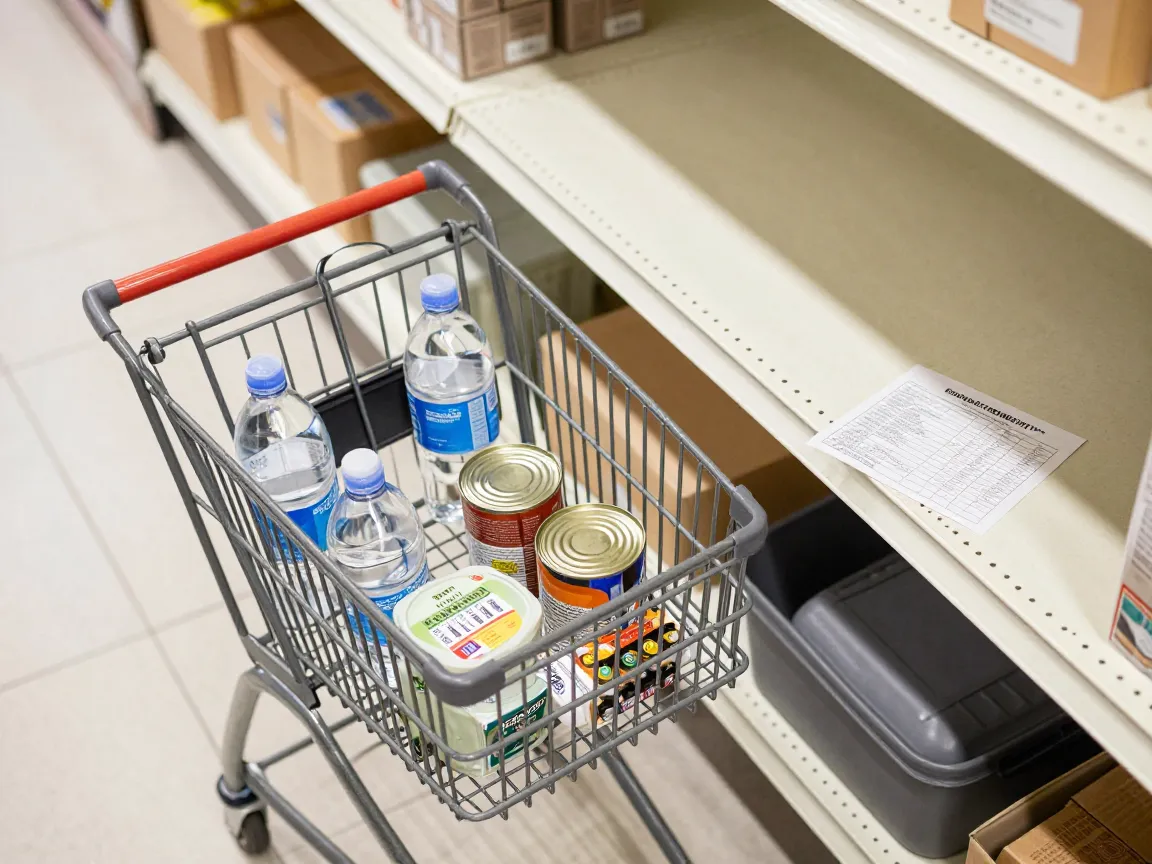
One reason emergency kits fail is that the barrier to starting feels too high. The image of buying $400 of supplies in a single trip stops most people entirely. The drip-feed approach works better: add one or two items to your regular grocery cart each week and rotate them into your kit. At that pace, a functional 72-hour kit comes together in about six weeks and costs roughly the same as it would have in one purchase.
Rotation matters as much as acquisition. Water stored in ordinary plastic bottles degrades in taste and can leach chemicals after about six months, particularly if stored in a warm space like a garage. Food with expiration dates needs checking. Batteries self-discharge. A twice-yearly review, one in spring and one in fall, aligned with daylight saving time changes, catches degraded items before they’re needed. FEMA recommends this biannual schedule specifically because it creates a consistent habit rather than a one-time purchase that never gets revisited.
Using original sealed water bottles rather than refilled containers avoids contamination and leak problems in a bag. A single broken water container can ruin documents, electronics, and food. This is a mundane detail but a consistent cause of kit failures when people actually need to use their supplies.
The incremental approach also makes it easier to customize for your household. A family with an infant has different needs than a household with adults and a dog. Adding items gradually means you can solve for those specific requirements rather than buying a generic pre-packaged kit and hoping the contents match your situation.
6. Tailor the Kit to Your Hazards and Your Household
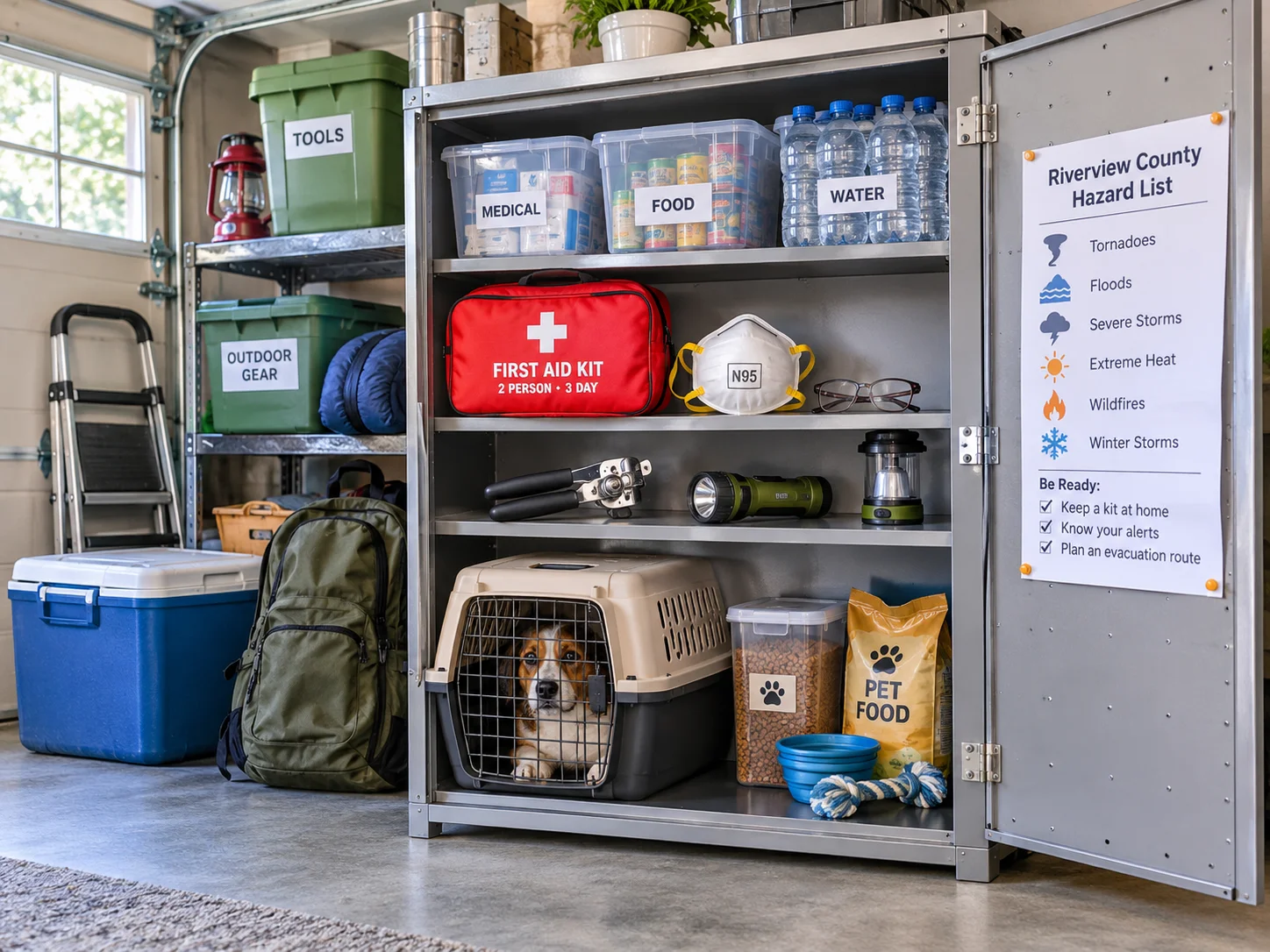
Generic kit lists are written for a statistical average household facing an unspecified emergency. Most households don’t match that description. A coastal household faces flooding and hurricane evacuation. An inland household in wildfire country needs an air filtration option and a fast-evacuation protocol. An urban apartment dweller has different storage constraints than someone with a garage and a basement.
The Red Cross and FEMA both publish hazard-specific supplementary lists that extend beyond the general kit recommendations. Using those lists, cross-referenced against your local emergency management agency’s published risk profile for your county, produces a genuinely tailored kit rather than a generic one. Most county emergency management websites publish a list of the top three to five hazards for that area; that list should drive your kit priorities.
Vulnerable household members require explicit planning. Households with members who use powered medical equipment need to know their local utility’s medical baseline program, which provides priority restoration and advance notification in many states. Households with pets need carrier-ready supplies because most public emergency shelters do not accept animals. Households with elderly members or those with mobility limitations need to plan physically how they would evacuate and who would assist, because that cannot be improvised during an emergency.
First aid and personal hygiene supplies belong in the core kit, not in an optional extras category. The Red Cross estimates that 80% of trauma cases in disasters involve injuries that basic first aid can address before professional help arrives. A kit with water and food but no wound care supplies is built for comfort, not survival. At minimum, include a commercial first aid kit rated for two people for three days, and supplement it with any household-specific medications, an extra pair of glasses if applicable, and a manual can opener if the food supply includes canned goods.
Quick Comparison
| Hack | Primary Benefit | Cost Level | Applies To |
|---|---|---|---|
| 1. Tiered kit structure | Covers short and long emergencies | Low | All households |
| 2. Dual-use go-bag | Handles evacuation and shelter-in-place | None (repacking) | All households |
| 3. Contractor trash bags | Multi-use, lightweight, cheap | Very low | All households |
| 4. Offline communication tools | Information access when networks fail | Low | All households |
| 5. Drip-feed and rotate | Sustainable, low-barrier preparedness | Spread over time | All households |
| 6. Hazard and household tailoring | Kit matches actual risks | Variable | Customized per household |
Conclusion
The 6 survival life hacks that make emergency kits actually useful share a common logic: specificity beats generality at every stage. A tiered structure beats a single bag. A dual-use system beats a one-scenario tool. Written plans beat assumed knowledge. Household-specific customization beats generic lists.
The most useful next step is to pick one of the six and act on it this week rather than planning to address all six at once. For most households, that means either starting the tiered structure by designating a go-bag and a home kit location, or doing a 20-minute audit of whatever supplies already exist. Either action closes the gap between having a kit in theory and having one that actually works.