Pocket Fishing Kit Ideas for Minimalists Who Want Gear That Fits Anywhere
Most anglers own more gear than they’ve used in a decade. The average American household spends over $1,300 a year on fishing equipment, yet surveys of recreational anglers consistently show that most successful outings use a fraction of that gear. The 6 pocket fishing kit ideas for minimalists who want gear that fits anywhere covered here flip that logic on its head, treating line, hooks, and one or two small lures as the complete kit rather than the starting point.
Disclosure: This post contains affiliate links. As an Amazon Associate, we earn from qualifying purchases, and at no extra cost to you.
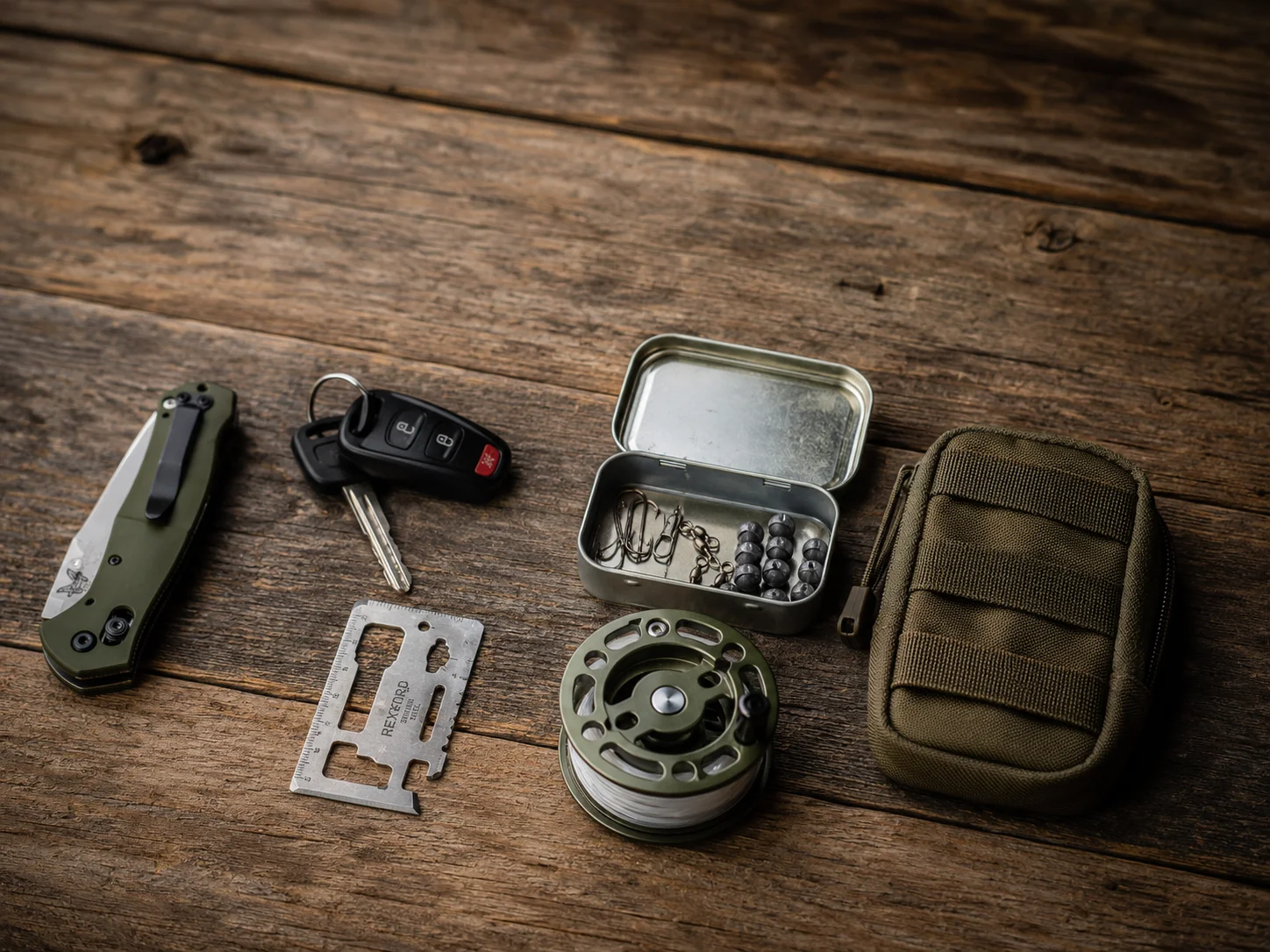
Each idea below focuses on a specific configuration, not a vague philosophy. Some weigh under an ounce. Some fit beside a credit card. All of them are real products or setups in active use in 2026, and none require a tackle box, a rod bag, or a dedicated backpack pocket.
1. Credit-Card-Format Micro Tool Set in a Wallet Slot
Grim Workshop’s Micro Fishing Kit is probably the most refined version of this concept available right now. The kit consists of three flat stainless-steel cards: a micro spool tool that holds monofilament, a hook tool, and a spoon lure card. Each piece is credit-card-sized and thin enough to slide into a wallet slot alongside your cards or cash. The full kit retails at $16.95 and was last updated in late October 2026, which suggests the product line is actively supported rather than a stale catalog item.
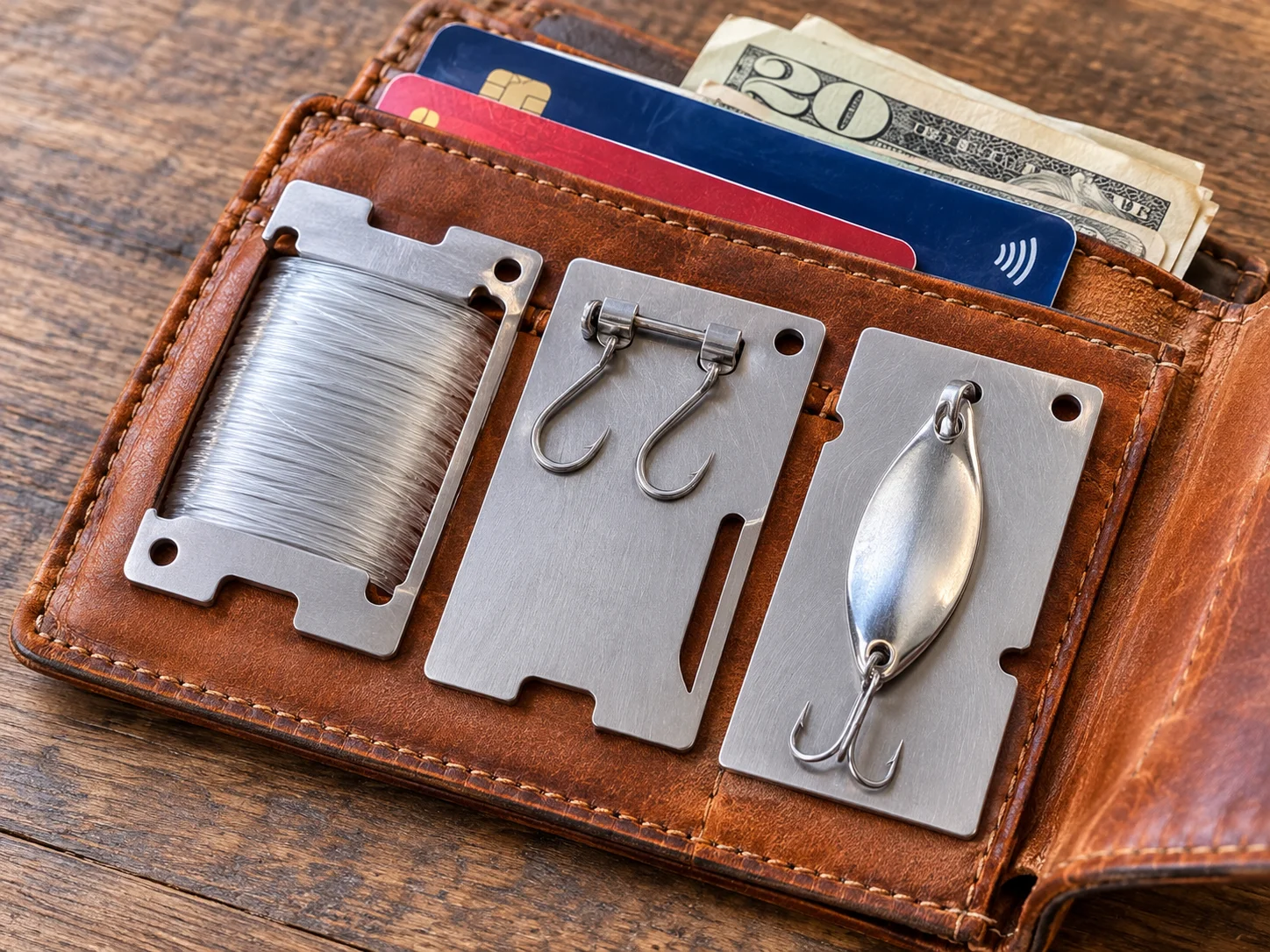
The practical appeal is straightforward. If you carry a wallet, you now carry a fishing kit with zero additional bulk. There’s no pouch to forget, no carabiner clip to snag on other gear, and no decision to make about whether the kit is worth bringing. It’s already there. Stainless steel handles water, salt, and the occasional mud pocket without corroding, so the same set of cards can live in your wallet for a full season without maintenance.
The limitation is real: these tools are designed for small fish, specifically panfish, trout in narrow streams, or any situation where a 6-to-10-inch catch is a good result. The spool holds a modest length of line, and the spoon lure is small. If you’re heading to a lake where you expect to target bass over two pounds, this setup won’t serve you well. But for spontaneous fishing opportunities at creek crossings, farm ponds, or roadside pullouts, it’s the most frictionless option in the category.
A smart pairing is to load the spool with 4 lb monofilament and tuck two or three size-10 hooks into the hook card. That combination covers trout, bluegill, perch, and crappie across most freshwater environments in North America. The wallet slot format also makes it a natural backup option: carry a full rod and reel on planned trips, and let the card set handle everything else.
2. Sealed Pocket Case with a Rodless Hand Reel
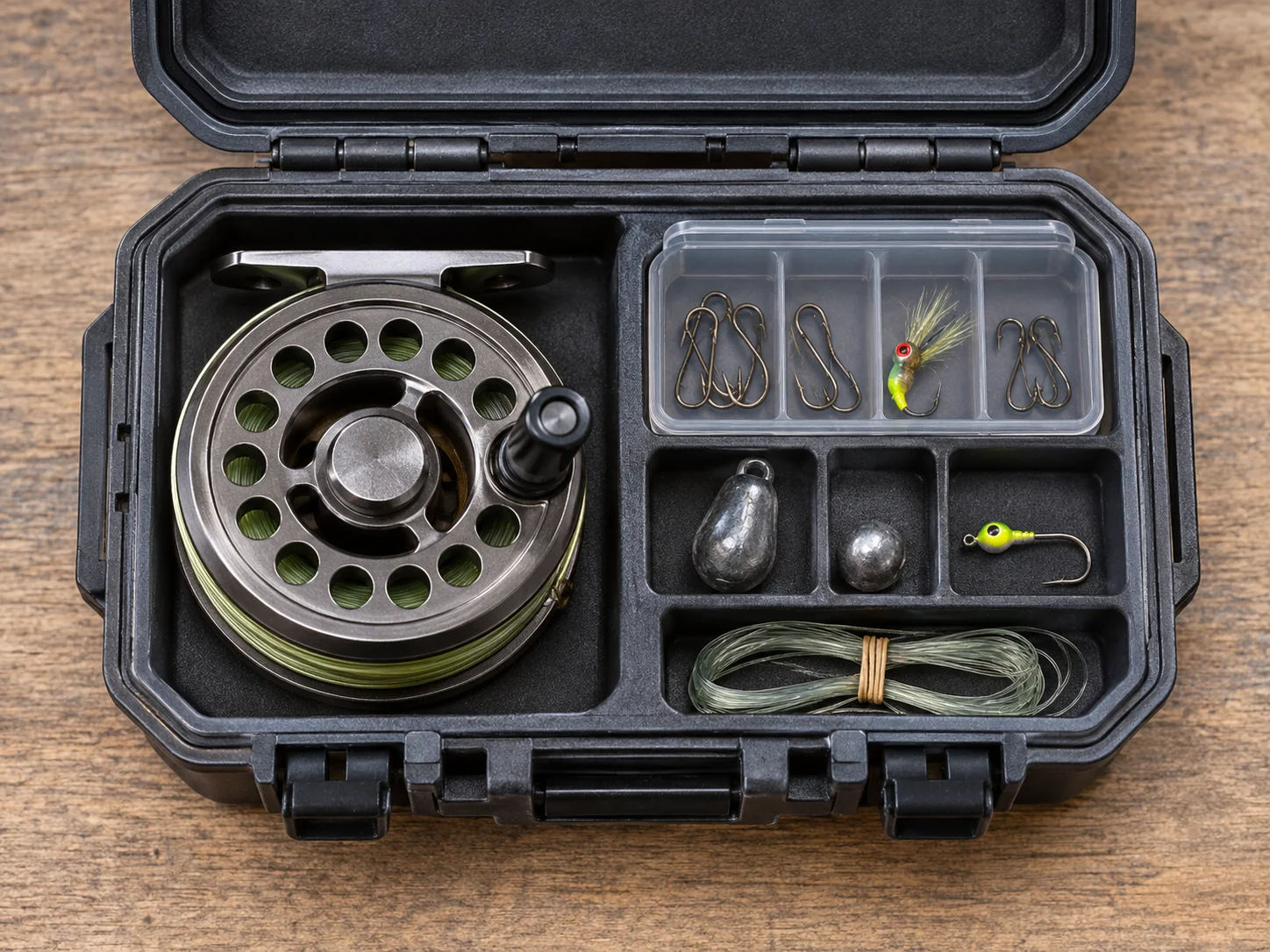
Crystal Creek Gear’s GoReel Pocket Kits represent a different category: a sealed, purpose-built case that holds a rodless hand reel, pre-spooled line, and water-specific tackle. The kits come in Pond, River, and Lake versions, with each one calibrated to the typical fish and conditions in that environment. As of September 2026, independent gear reviewers rated it the best lightweight fishing option for pocket carry in that class.
The defining feature is the hand reel itself. Removing the rod entirely cuts weight and eliminates the longest dimension of any traditional fishing setup. You hold the reel, cast by swinging the line, and retrieve by winding. It’s a technique that takes about ten minutes to learn and works surprisingly well for open water where casting distance matters less than stealth and simplicity. The sealed case means the whole assembly can live in a jacket pocket, a vest pocket, or a glovebox without worrying about hooks snagging fabric or line tangling.
Each kit variant includes tackle matched to the target environment. The River version, for example, includes smaller hooks and lighter weights suited for current, while the Lake version carries a small jig and a heavier sinker for deeper water. This kind of pre-curation is exactly what minimalist carry demands: someone else has already made the tradeoff decisions so you don’t carry ten options when two will work.
One thing worth knowing: Crystal Creek also sells just the hand reel on its own, without the case or the tackle. That stripped-down option is lighter and cheaper but requires you to build your own tackle selection, which shifts the work back to you. For most people, the full kit is the better starting point. Buy the kit, fish it a few times, then decide if you want to swap in different hooks or weights based on what you’ve actually encountered. That’s a more grounded approach than optimizing a kit you haven’t used yet.
3. Altoids Tin or Micro Survival Tin Build
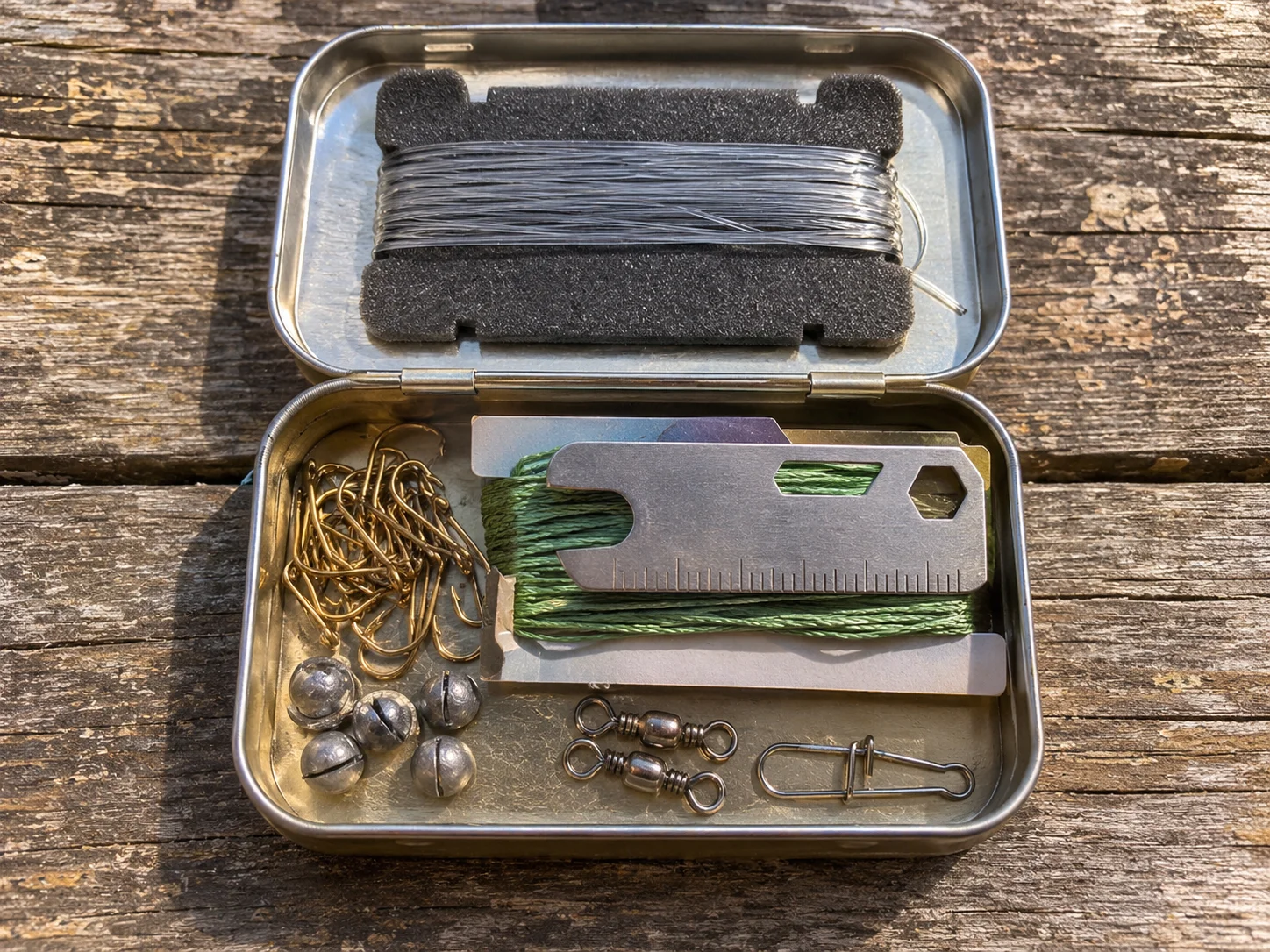
An Altoids tin holds more fishing utility than it looks like it should. The standard tin measures roughly 3.75 by 2.25 inches and can hold 10 to 15 small hooks, four or five split-shot weights, two swivels, a snap, and a short length of braided line wrapped around a folded card. Add one of Grim Workshop’s flat micro cards on top and you have a kit that covers most freshwater scenarios without exceeding the volume of a deck of playing cards.
The appeal of building your own tin kit is control. You choose exactly which hook sizes go in, which weight sizes match your most common water, and whether to include a micro jig or a small inline spinner blade. Anglers who fish one or two specific environments regularly, say a local creek and a neighborhood pond, can tune the tin precisely to those locations rather than carrying a generic assortment. The result is a kit with a higher hit rate and no dead weight.
The Altoids tin format also travels exceptionally well. It passes through airport security without question, fits in a shirt pocket, and costs nothing if you already eat mints. Metal tins are more durable than zip-lock bags and stack cleanly in a larger kit if you later decide to expand. Grim Workshop specifically calls out the Altoids tin as one of the compatible storage formats for their micro fishing tools, which means the flat card tools integrate directly with this DIY approach without awkward fitting.
The one gap is line. Hooks, weights, and lures are compact, but even 20 feet of monofilament takes up space when loose. The clean solution is a Grim micro spool card inside the tin lid, or a short section of line pre-wrapped around a small foam card, which keeps everything organized and prevents the tangled-line frustration that makes improvised kits annoying in the field.
4. Keychain or Zipper-Pull Micro Kit
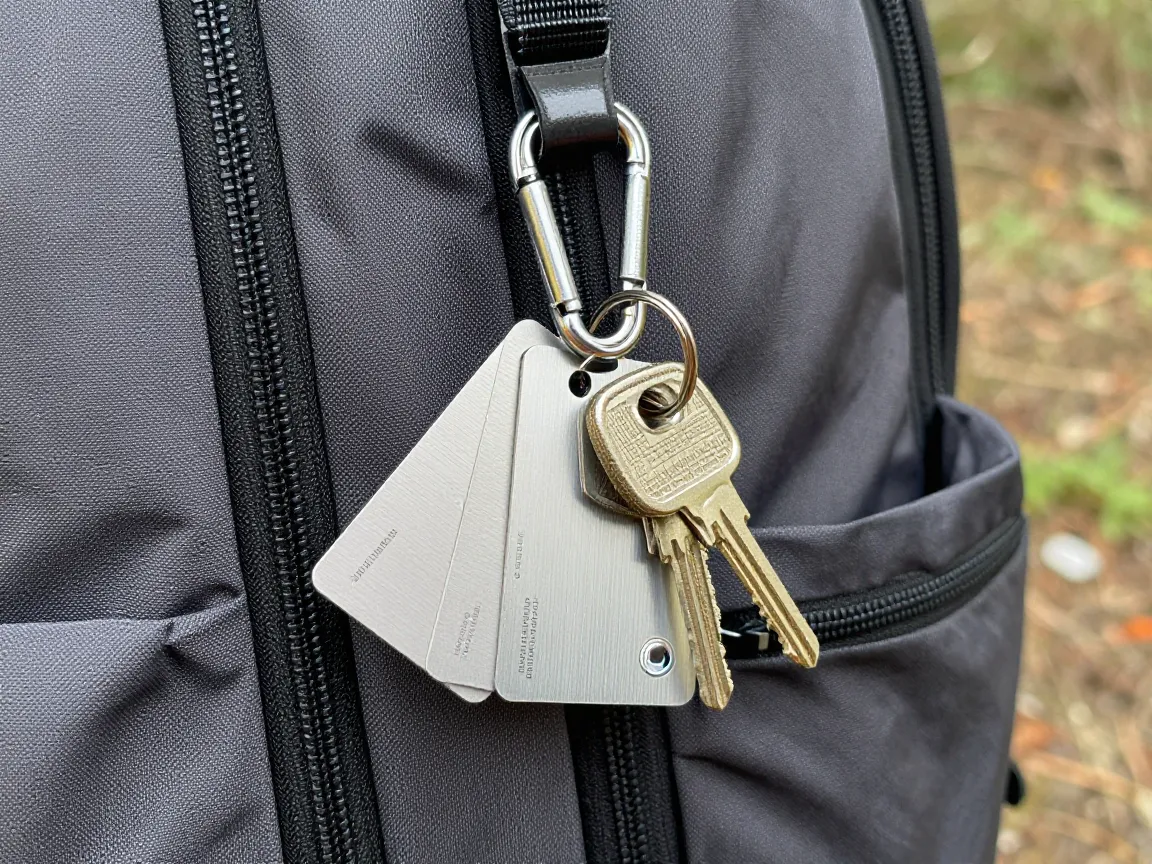
Grim Workshop also markets their Micro Fishing Kit components as keychain and zipper-pull carry options. The same stainless cards that fit a wallet slot can also thread onto a keyring or attach to a zipper pull with a small split ring. That means the kit goes wherever your keys go, which for most people is everywhere.
Keychain carry changes the psychology of a fishing kit slightly. A wallet kit is passive; it’s there when you need it. A keychain kit is active in the sense that you handle it every time you pick up your keys. That visibility means you’re less likely to forget it exists when an opportunity appears. If you drive past a creek and stop, the kit is in your hand the moment you grab your keys to lock the car.
The weight tradeoff is minimal. The three-card Micro Fishing Kit weighs almost nothing by keychain standards. A carabiner and a few keys outweigh it already. The main concern is key clutter: if your keyring is already full, adding three metal cards creates a jangling mass that’s uncomfortable in a pocket. The practical fix is a separate small carabiner clipped to a bag strap, a backpack zipper, or a belt loop, keeping the fishing tools accessible without crowding the keyring.
This configuration suits urban minimalists and commuters as much as outdoor enthusiasts. The kit doesn’t care whether it’s hanging from a laptop bag in a city or clipped to a trail pack in the backcountry. The common thread is opportunistic fishing: catching fish when the moment presents itself rather than when a planned trip allows.
5. MOLLE-Compatible Micro Pouch with an Anodized Handline Reel
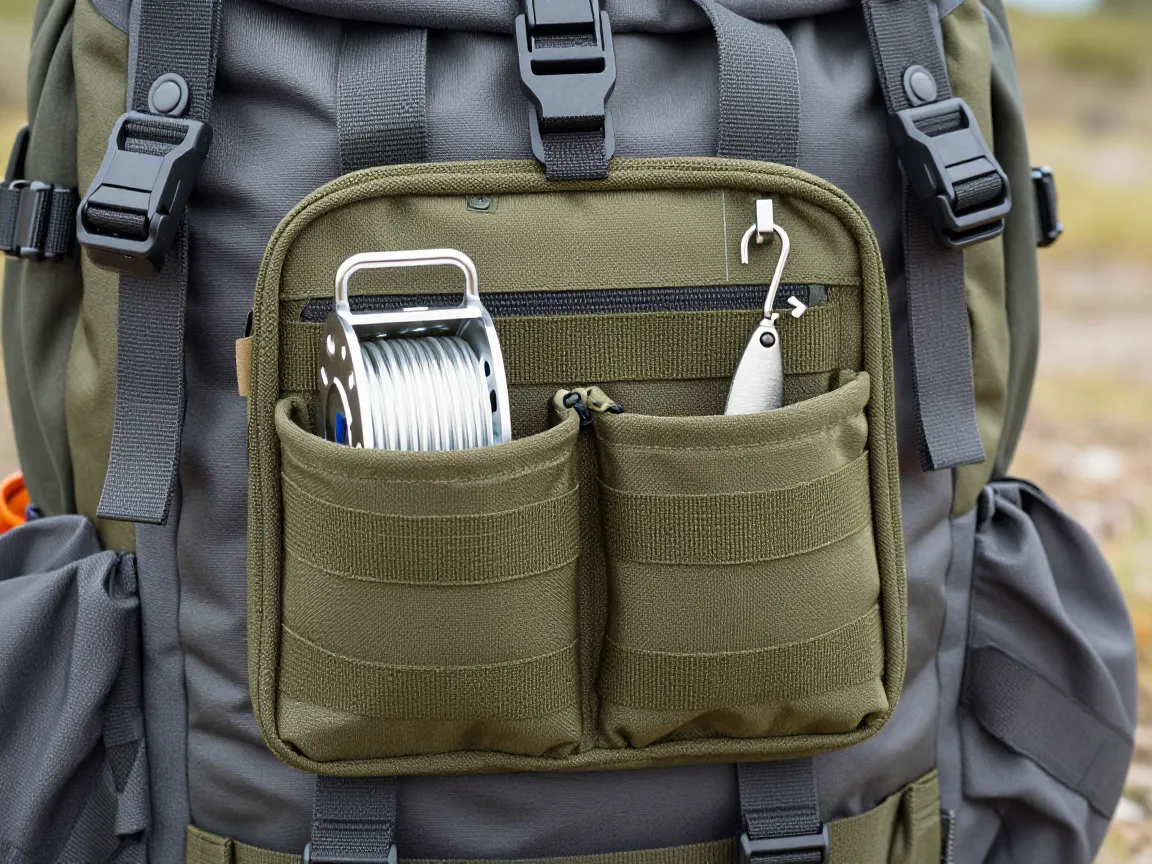
The Yoyito Hand Line Fishing Kit takes the pocket concept one step further by integrating a PAL/MOLLE-compatible pouch directly into the product. The kit includes an anodized aluminum handline reel, pre-spooled line, a hook, a sinker, and a small pouch with two inner pockets and a PAL attachment point. The seller explicitly states that the entire kit fits in a standard pocket, and the MOLLE attachment means it can also mount directly to a vest, chest rig, pack, or belt system.
The anodized aluminum reel is worth noting because it distinguishes this kit from plastic handline options. Aluminum handles saltwater exposure without corroding, it stays light, and it doesn’t degrade from UV exposure over time. For anglers who fish both fresh and salt water across kayak fishing, backcountry hiking, or coastal hiking trips, that material choice matters over a multi-year lifespan.
The MOLLE/PAL attachment is a genuinely useful feature for hikers and backpackers who already run a pack with MOLLE webbing. The pouch mounts flat against the pack face, adds no meaningful volume, and keeps the fishing kit accessible without digging through the main compartment. That’s a better solution than burying a kit at the bottom of a dry bag and not fishing because retrieval feels inconvenient.
The Yoyito kit was originally listed in March 2026 and updated in late October 2026, which suggests it’s a current product with active seller support. The two inner pockets inside the pouch allow you to add a few extra hooks, a small split-shot assortment, and a folded leader section without everything rattling loose together. It’s slightly larger than the ultra-flat card options, but it offers enough organization to handle more varied fishing situations from a single pocket-sized unit.
6. EDC Pouch Build with Off-the-Shelf Components
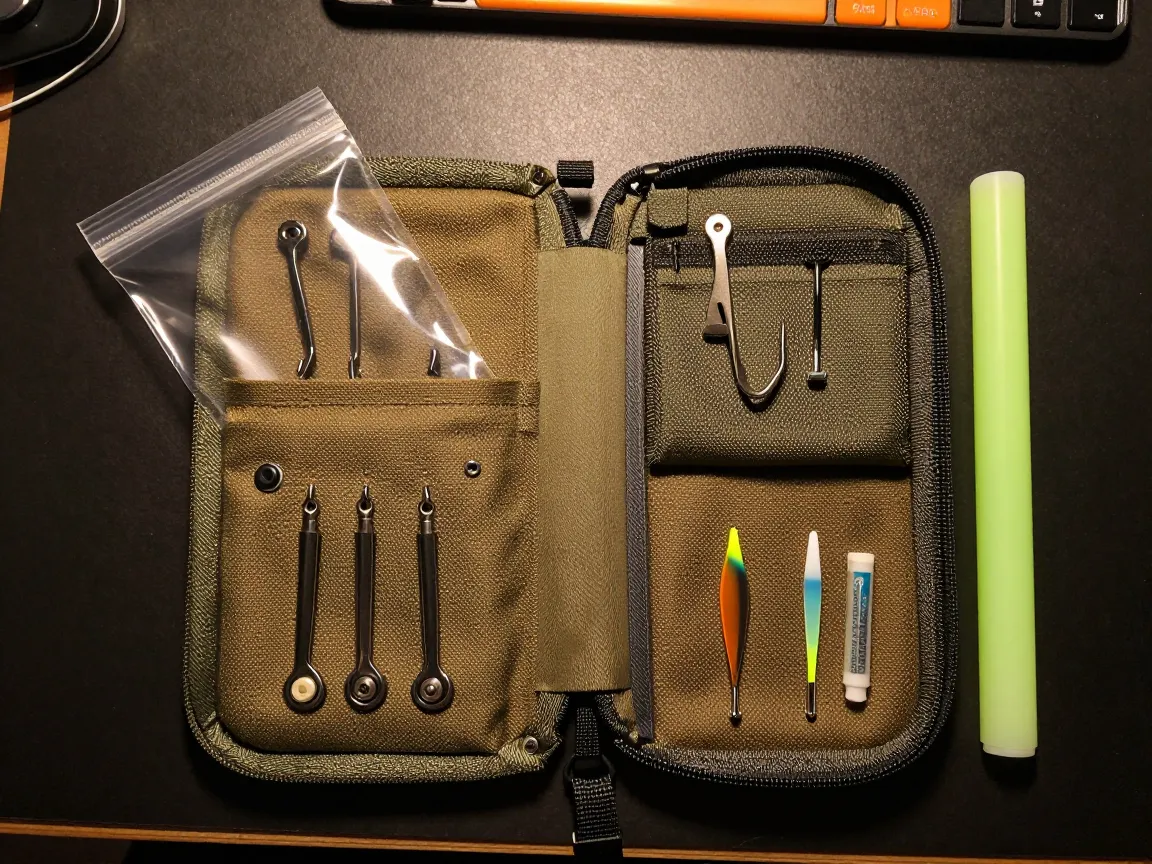
The final approach is a curated EDC pouch build, assembling components from multiple sources into a small organizer pouch that covers fishing alongside other everyday carry tools. This is the most flexible format and also the one that takes the most intentional design, but gear content on video platforms like YouTube shows it’s also the most popular method among people who actually fish opportunistically.
Channels like Airborne OutdoorZ documented EDC pouch builds in mid-November 2026 that include off-the-shelf kits like the SOL fishing kit as a core unit, then add specific components: extra hooks in a small zip bag, two or three swivels, a couple of split shots, and a chemical glow stick for low-light fishing. The result fits in a pouch roughly the size of a large wallet and covers far more scenarios than any single pre-built kit.
The advantage over buying a single complete kit is modularity. If you fish a particular river regularly and find that size-8 baitholders outperform the hooks in a pre-built kit, you just swap them. If you want to add a small tube jig for bass or a tiny inline spinner for trout, there’s space in the pouch for it. The build evolves with your actual fishing rather than staying static.
Grim Workshop’s Fishing PAK Kit, priced in the $19.99 to $24.99 range, offers a middle ground: it’s more complete than the flat micro card set but still small enough to drop into a pouch or jacket pocket. Using the PAK Kit as the anchor and adding two or three targeted additions gives you most of the customization benefit without starting from scratch.
The main constraint of the pouch build is discipline. It’s easy to add “just one more thing” until the pouch no longer fits in a pocket. Setting a hard rule, say the pouch must fit flat in a rear jeans pocket with the button done, keeps the build honest. That physical limit is more reliable than trying to estimate weight or volume in the abstract.
Conclusion
The right pocket fishing kit depends entirely on your carry style. If a wallet is always on you, the flat card format from Grim Workshop is the lowest-friction option. If you want a fully integrated rodless system ready to fish straight from a jacket pocket, the GoReel sealed case handles that well. If you run MOLLE gear on a pack or vest, the Yoyito pouch system slots in cleanly.
The next step is simpler than most people make it: pick one format, buy it or build it, and carry it for 30 days. The first time you stop at a stream you’d normally pass and actually fish it, the kit pays for itself in the experience.