Fresh Water Fishing Basics Every Beginner Should Know Before Their First Cast
Roughly 54 million Americans go fishing each year, yet most first-time anglers show up at the water carrying too much gear, the wrong rig, and zero knowledge of local regulations, and then wonder why they go home empty-handed. The 6 fresh water fishing basics every beginner should know before their first cast are not complicated, but skipping even one of them makes the difference between landing your first bluegill before lunch and spending three hours untangling line from a dock. Work through each one before you leave the driveway and your first trip becomes a foundation instead of a frustration.
Disclosure: This post contains affiliate links. As an Amazon Associate, we earn from qualifying purchases, and at no extra cost to you.
1. Get Licensed and Read Your State’s Current Regulations
Every U.S. state requires anglers to carry a valid fishing license on their person while fishing, and “on their person” means right there at the water, not sitting in your car or saved to a cloud drive you cannot access offline. Most states sell licenses online and allow digital copies on a phone, which is fine as long as you can pull it up without cell service.
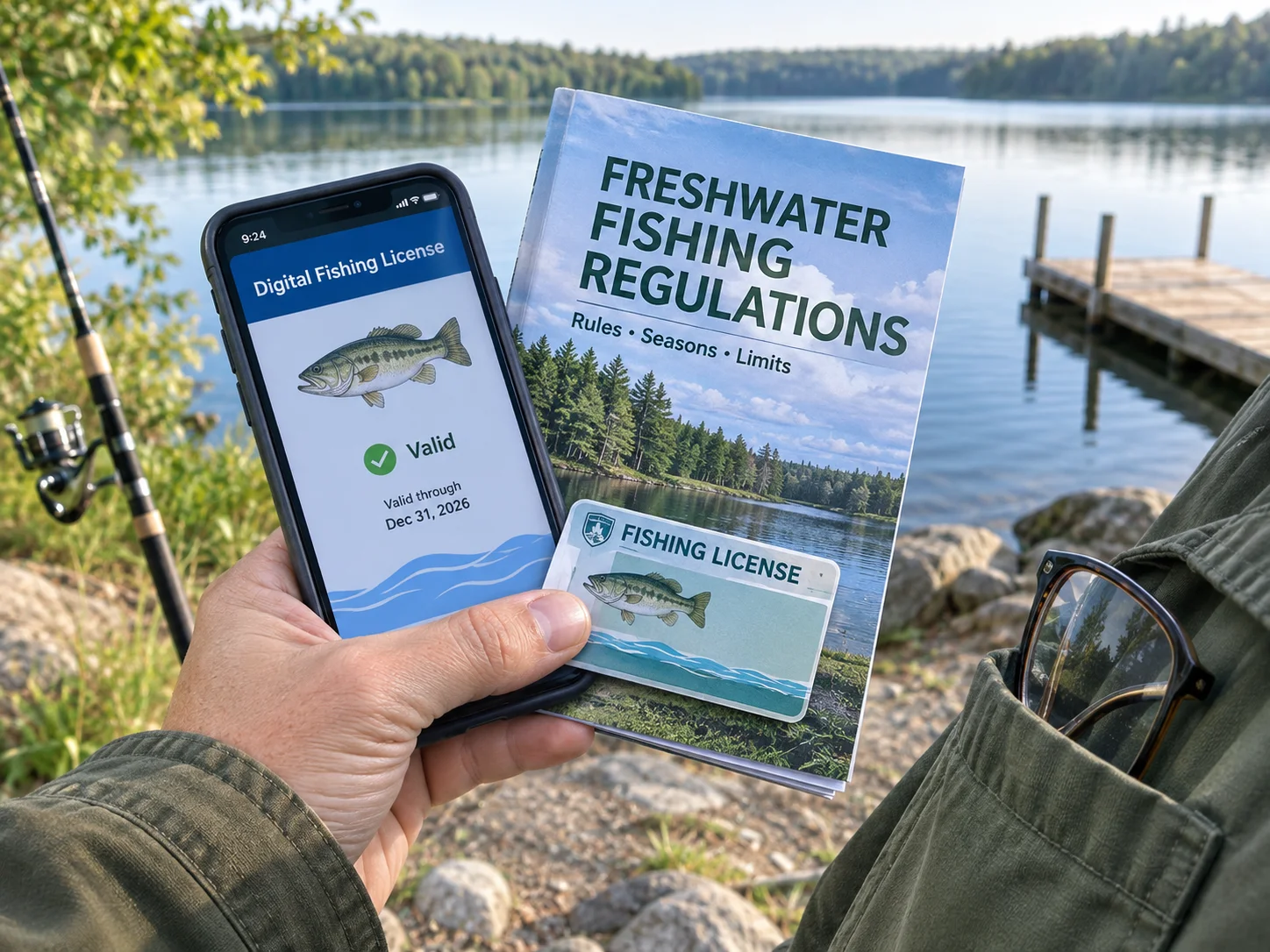
The license fee is the easy part. The regulations attached to it are where beginners get tripped up. Each state publishes an annual or biannual freshwater fishing regulation booklet, and the rules can shift significantly from one season to the next. New York’s 2026 freshwater regulations, for example, limit each line to no more than two baited hooks or two artificial lures. California’s 2026 freshwater rules impose a zero-trout bag limit and require barbless artificial-only tackle from November 16 through the Friday before the last Saturday in April. Those are not minor details, breaking either rule can result in a fine that far exceeds the cost of a full season license.
Before your first trip, download or pick up the printed regulation booklet for the specific body of water you plan to fish. Look up the species you are likely to catch, note size limits and bag limits, and confirm whether bait restrictions apply. Five minutes of reading prevents an expensive mistake and keeps fish populations healthy for the next generation of anglers.
2. Choose One Simple Rod-and-Reel Combo and Set It Up Correctly
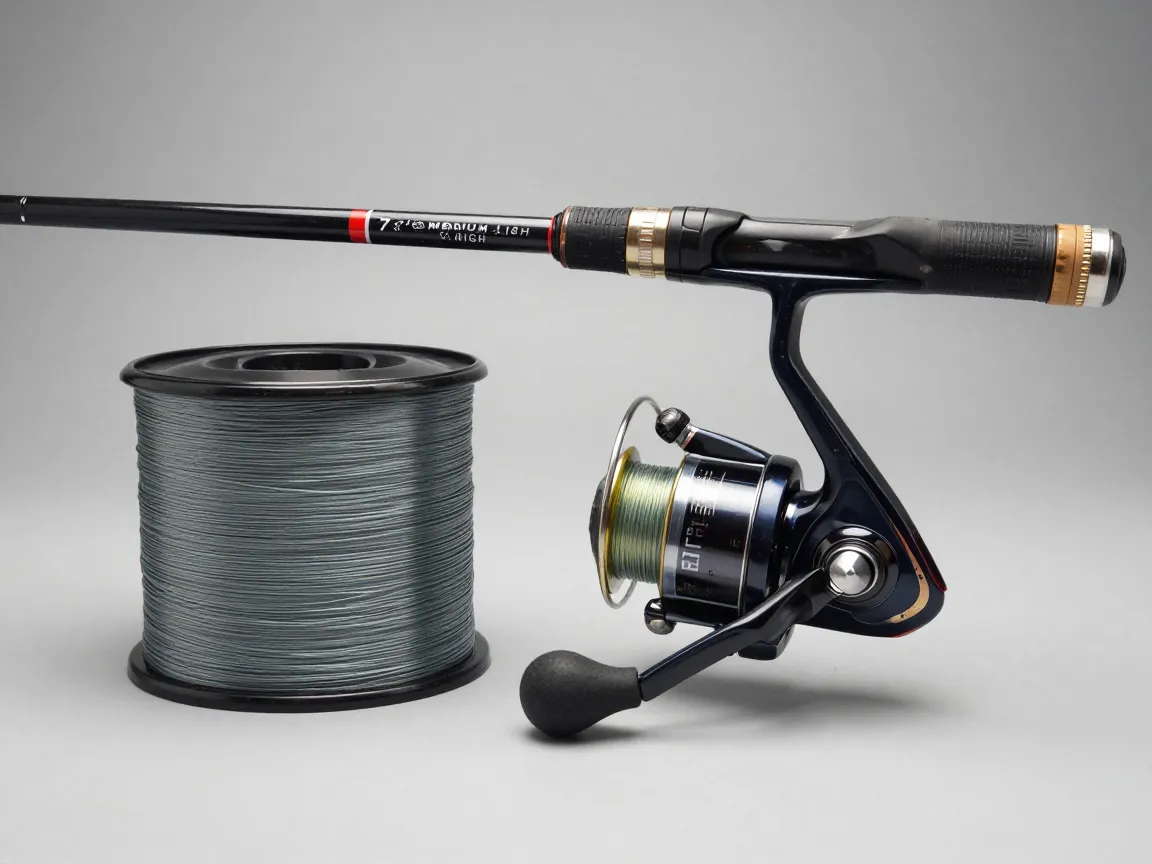
Walk into any sporting goods store and you will find walls of rods, reels, and combos at every price point. For a first-time freshwater angler, the decision should be simple: a 7-foot medium or medium-light spinning rod paired with a matching spinning reel. That combination handles the majority of species a beginner will encounter in ponds and small lakes, bluegill, bass, crappie, perch, and the spinning reel itself is forgiving enough that mistakes during casting do not turn into 20-minute backlash sessions.
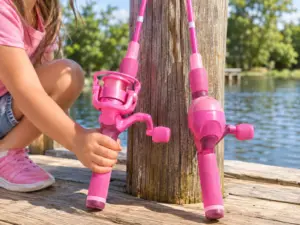
Spincast reels, the closed-face kind with a push button, are fine for young children but tend to limit casting distance and sensitivity. Baitcasting reels require a practiced thumb to prevent the spool from overrunning; they are worth learning eventually, but not on your first outing. Fly outfits are their own skill set entirely.
Once you have the combo, spooling it correctly matters more than most beginners realize. Fill the spinning reel spool to just below the lip, leaving about an eighth of an inch of clearance. Keep steady tension on the line as it comes off the supply spool, otherwise it will twist and tangle during your first few casts. For line weight, 6-10 lb monofilament covers most warm-water freshwater situations. If you are specifically targeting trout or small panfish where subtlety and low line visibility matter, dropping to 4-6 lb test improves presentation. For general bass and warm-water fishing, 8-12 lb mono is a practical starting range. Set the drag before you cast by pulling line off the reel by hand; it should slip at a firm, steady pull well below the line’s rated breaking strength, not lock up completely.
3. Master One Rig Before You Add Others
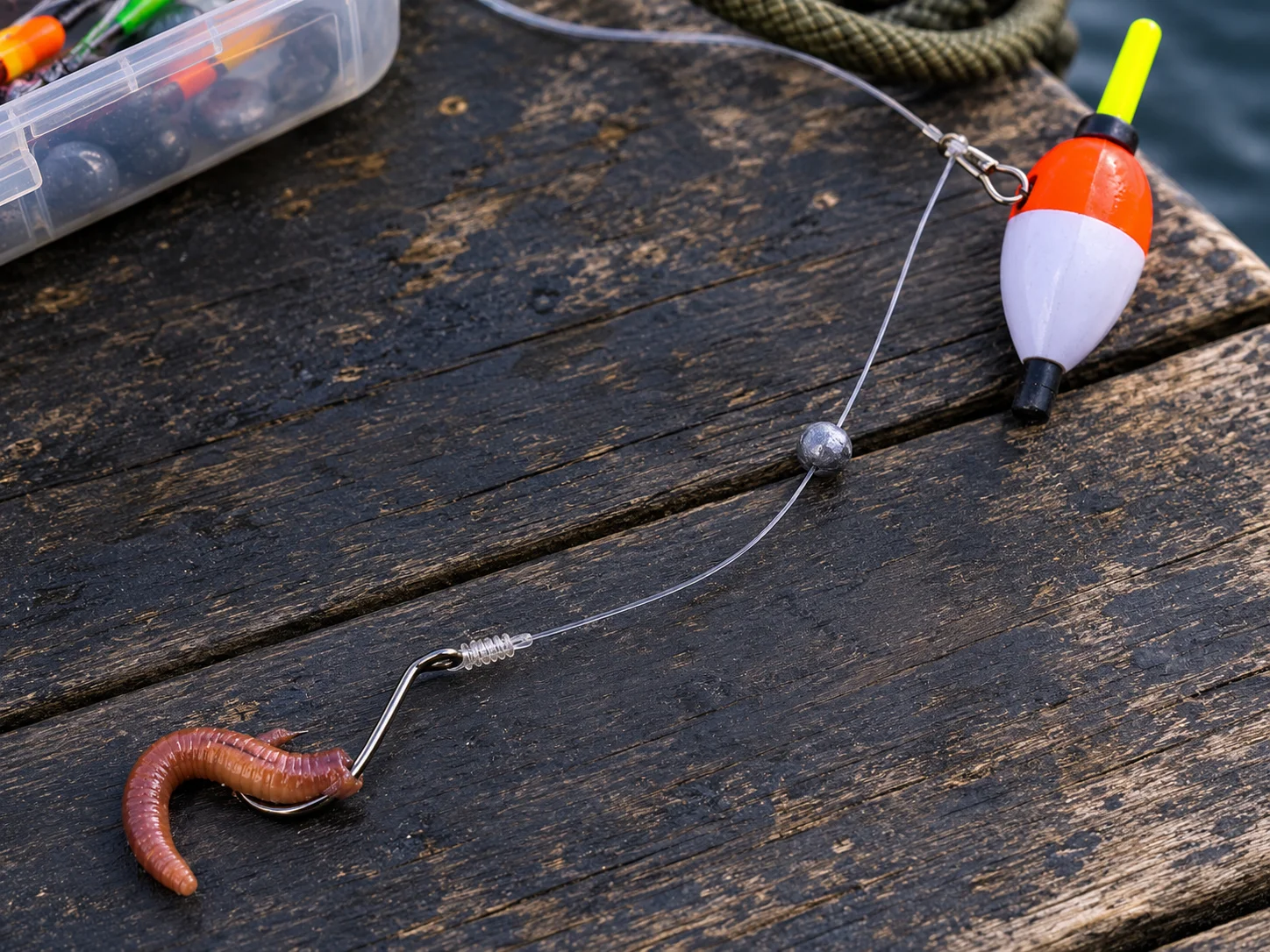
New anglers tend to buy an assortment of lures and rigs and then cycle through them randomly when nothing bites. The result is that they never fish any single setup long enough or correctly enough to know whether the problem is the rig or the presentation. A single live-bait bobber rig, fished properly, will catch more fish on a beginner’s first day than a tackle box full of untested options.
The rig itself is straightforward. Tie a #6 or #8 long-shank hook to the end of your line using an improved clinch knot: thread 6 inches of line through the hook eye, wrap it around the main line five or six times, pass the tag end back through the small loop near the eye, then through the large loop formed by the wraps, and pull it tight. Pinch a small split shot sinker onto the line 6 to 10 inches above the hook. Clip a slip bobber or a fixed float onto the line, set so the bait hangs just above the bottom or just above any visible structure like a submerged log. Bait with a half nightcrawler or a small minnow.
That rig catches bluegill, crappie, perch, and small bass reliably. Fish it thoroughly in one spot for at least 20 minutes before concluding nothing is there. The temptation to switch rigs after five minutes of no bites is real and almost always counterproductive on a first trip.
4. Pick the Right Location and Keep Your Casts Short
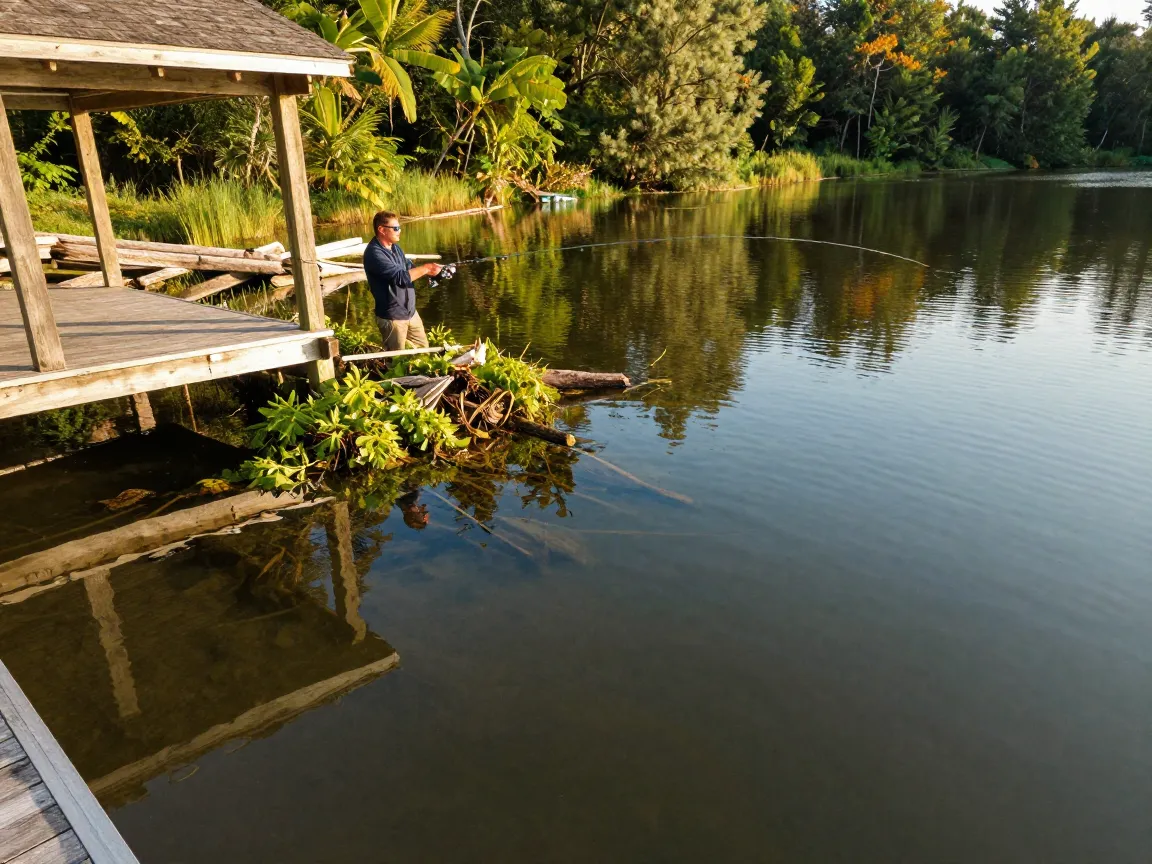
Beginners often assume that fish live in open water and that longer casts reach more of them. The opposite is usually true. Most freshwater fish, particularly panfish species like bluegill, hold near structure, submerged weeds, dock pilings, fallen logs, undercut banks, because that is where food concentrates and cover protects them from predators.
Small public ponds, calm shorelines, docks, and piers are ideal starting spots for a first trip. They provide natural structure, shallow water where fish are visible or at least predictable, and clear banks that make casting and landing fish easier. Targeting a small pond’s shaded dock corner with a 20-foot cast is far more productive than heaving a bait into the featureless center of a large lake.
Polarized sunglasses help more than most beginners expect. They cut glare off the water’s surface and let you actually see submerged grass beds, rock piles, and in shallow clear water, the fish themselves. Spotting a cluster of bluegill holding near a weed edge and placing your bait six feet in front of them is a fundamentally different experience from casting blind and hoping. Keep casts short and accurate, work your bait near visible cover, and move along the bank every 15 to 20 minutes if no bites come in a spot that looks promising.
5. Detect Bites and Set the Hook Without Overthinking It
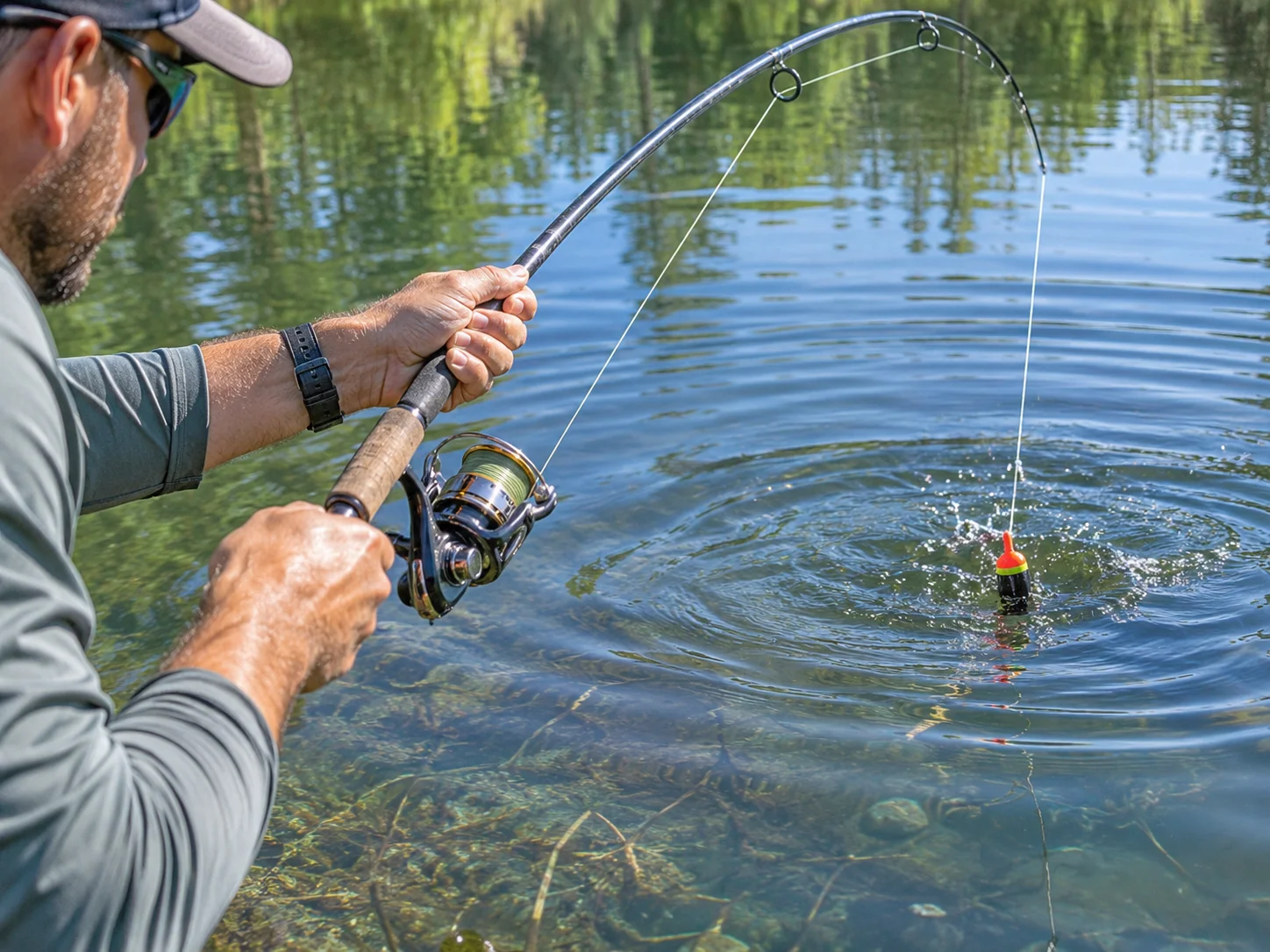
The hardest moment for most first-time anglers is not the cast, it is recognizing a bite and responding correctly. With a bobber rig, the signals are clear but they can still catch you off guard. A sharp dip or a sudden sideways slide of the float is a fish; a slow, gradual drift is usually current or wind. When the bobber goes under or slides decisively, lift the rod tip in a firm, controlled upward motion, not a full-arm baseball swing, and immediately begin reeling. That firm lift sets the hook point into the fish’s mouth. Pulling too hard often rips the hook free or snaps light line; not reacting at all gives the fish time to spit the bait.
Watch the rod tip and the line, not just the bobber. On calm water, a twitching line or a slight bend in the rod tip can signal a fish mouthing the bait before the bobber shows any movement. When you feel resistance after the hook set, keep steady pressure and reel at a consistent pace. Panfish do not require dramatic drag-screaming runs, but they do require enough tension to keep the hook seated.
Expect to miss bites. Missing hook sets is part of the learning process and a function of timing, not failure. After a missed bite, check that your bait is still on the hook before recasting, small panfish have a talent for stripping worms cleanly without committing to the hook.
6. Handle Fish Quickly and Safely, Then Adapt Based on What You Learn
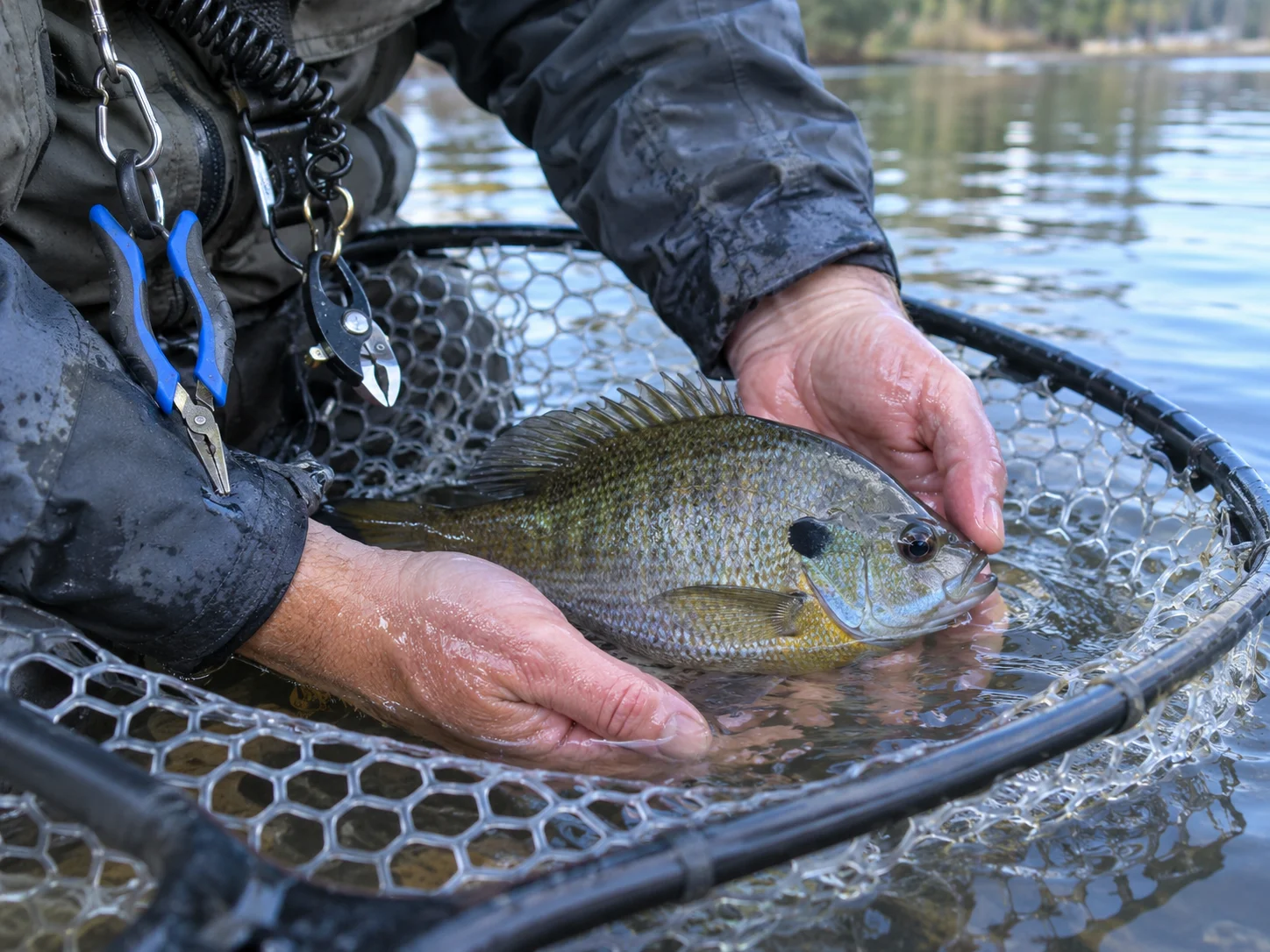
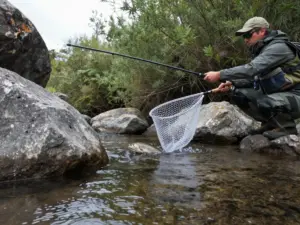
Catch-and-release is the default for most beginners, and doing it correctly keeps the fish alive and the fishery healthy. Wet your hands before touching any fish; dry hands strip the protective slime coat that guards against infection. When possible, use a rubber-mesh landing net rather than grabbing the fish directly, rubber is less abrasive to the fish’s surface than nylon or bare hands. Keep pliers and a line cutter within reach so hooks can be removed in seconds rather than minutes. If the hook is deep, cut the line close to the hook rather than digging for it; a small hook left in a fish is less damaging than extended handling. The target is to keep the fish in the water or exposed to air for no more than about 10 seconds before release.
After you have handled and released a fish, pay attention to what that catch tells you. What depth was the bait? What structure was nearby? What time of day did the bite happen? These observations, accumulated across a single morning, become your personal fishing intelligence for that water.
If bites stop, change one variable at a time. Move 30 feet along the bank and try a different piece of structure before adjusting depth, and adjust depth before switching bait. Random, simultaneous changes leave you no information about what actually worked. Wind shifts, cloud cover moving in, and the transition from morning to midday all reposition fish and change their feeding activity, recognizing those patterns is a skill that develops only if you are paying attention to them from the first trip forward.
Conclusion
The fundamentals covered here, licensing, a matched spinning setup, one reliable rig, structure-focused location choice, clean hook sets, and safe fish handling, give a first-time freshwater angler a real foundation rather than a lucky guess. The single most useful next step before heading out is to visit your state fish and wildlife agency’s website, download the current freshwater regulation booklet for your target water, and confirm the specific rules for the species and season you are fishing. That five-minute task protects you legally, protects the resource, and sets the right mindset for every trip that follows.