Authentic Japanese Fish Print Techniques You Will Love
Fewer than 200 years ago, Japanese fishermen solved a practical problem by pressing ink-covered fish onto paper to record the size of their catches. That functional habit quietly evolved into one of the most distinctive printmaking traditions in the world. Today, gyotaku, from the Japanese words for “fish” and “rubbing”, is practiced in museum workshops, university classrooms, and artists’ studios across six continents. If you have ever wanted to explore 6 authentic Japanese fish print techniques you will love, this guide covers every major method from the foundational direct approach through color embellishment, fabric transfers, and conservation-minded applications. Each technique builds on its own distinct logic, tools, and aesthetic rewards.
Disclosure: This post contains affiliate links. As an Amazon Associate, we earn from qualifying purchases, and at no extra cost to you.
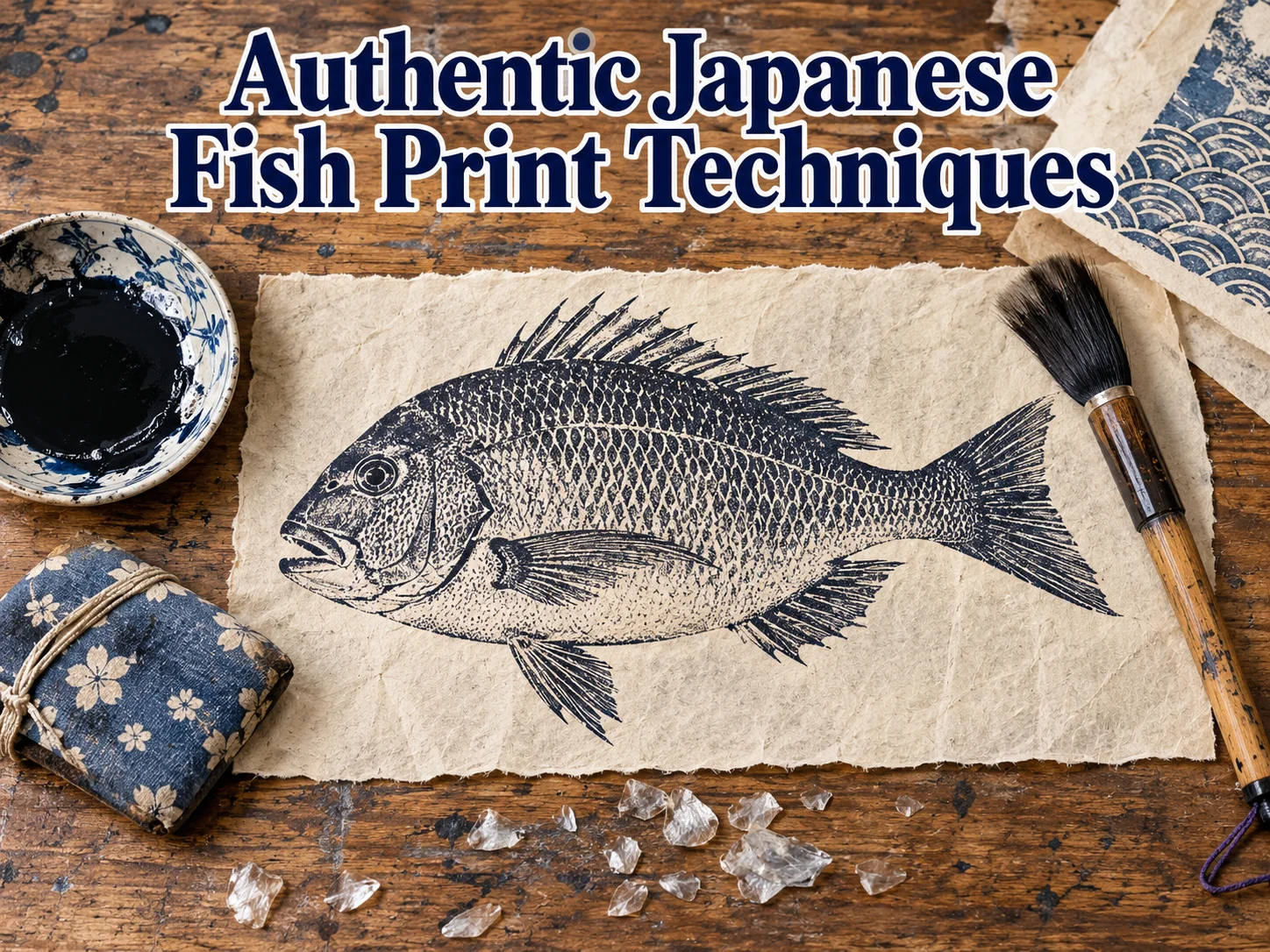
1. Chokusetsuhō: The Direct Ink Method
The direct method is where nearly every gyotaku practitioner begins, and for good reason. Its workflow is straightforward, its tools are minimal, and the results carry an undeniable immediacy that more refined techniques sometimes sacrifice. The Japanese term chokusetsuhō translates roughly as “direct rubbing method,” and the name describes the process exactly: ink or paint is applied to the surface of the fish, and then paper is pressed on top to receive the impression.
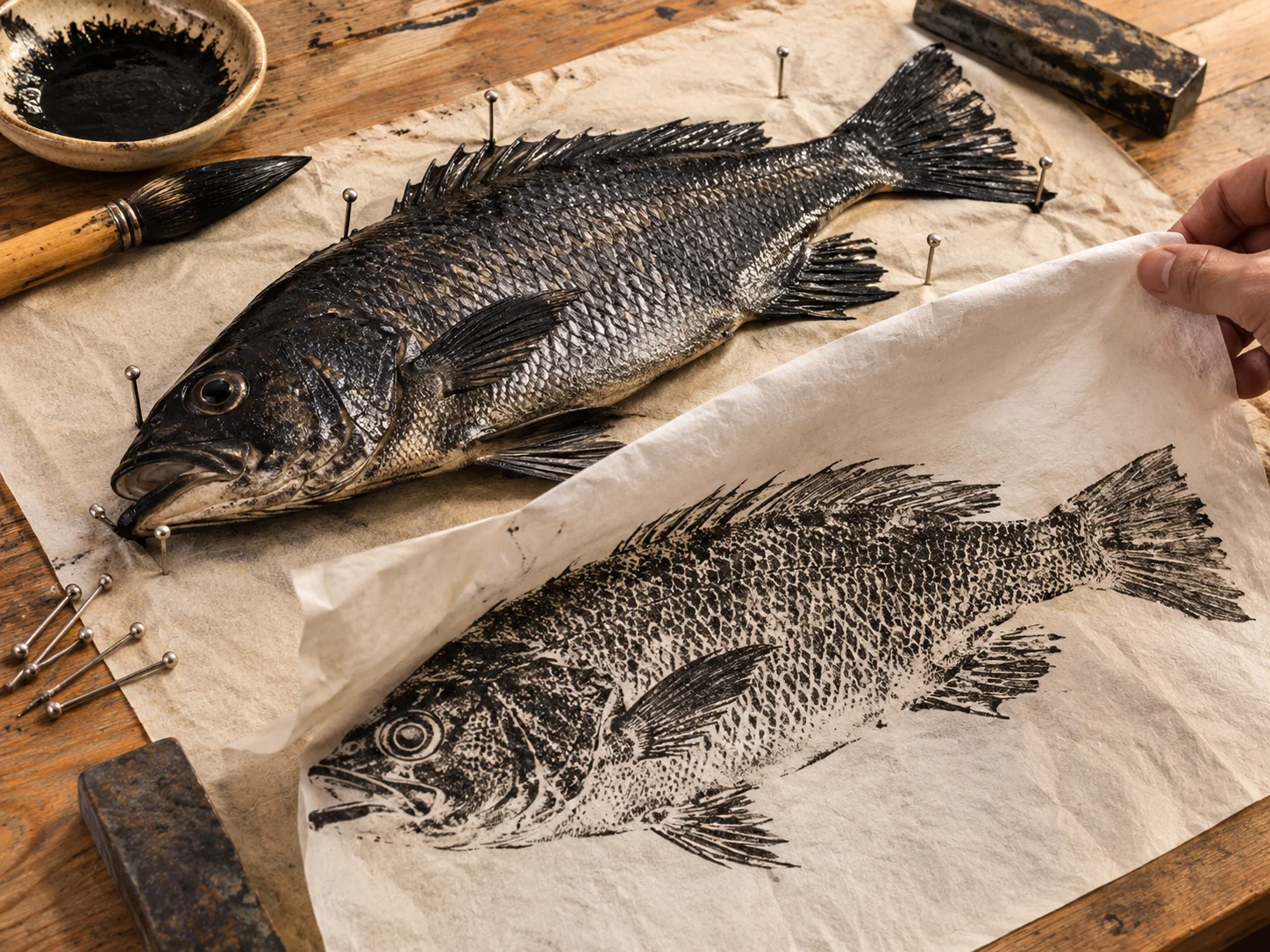
Preparation matters more than most beginners expect. The fish must be clean, dry, and free of excess moisture, which can cause ink to bead or bleed. Fins are spread and positioned to their fullest natural extension, sometimes held in place with small pins or folded paper wedges, so the print captures the fish at its most anatomically complete. A wide, soft brush then carries sumi ink, the traditional black ink used in Japanese calligraphy and painting, across every surface: scales, fins, the delicate ridges around the eye socket, and the textured skin of the belly.
Once the fish is inked, a sheet of thin washi paper is laid carefully over it. The printer uses fingertips to press gently from the center of the body outward, working toward the fins and tail to avoid trapping air bubbles or shifting the paper. Even pressure across the scales captures their overlapping pattern with remarkable fidelity. The paper is then peeled back in one slow, controlled motion to reveal the print. After the ink impression dries, the artist often paints the eye by hand, since the eye’s curved surface rarely prints well on its own.
The direct method’s greatest strength is tactile honesty. Every scale ring, every fin ray, every irregularity in the fish’s skin transfers directly to the paper. This is why U.S. Fish and Wildlife Service educational programs use chokusetsuhō as a teaching tool: the printed result is a nearly scientific record of the specimen. For beginners working with newsprint or even standard rice paper, this technique demands almost no specialized equipment beyond ink, a brush, and patience.
2. Kansetsuhō: The Refined Indirect Method
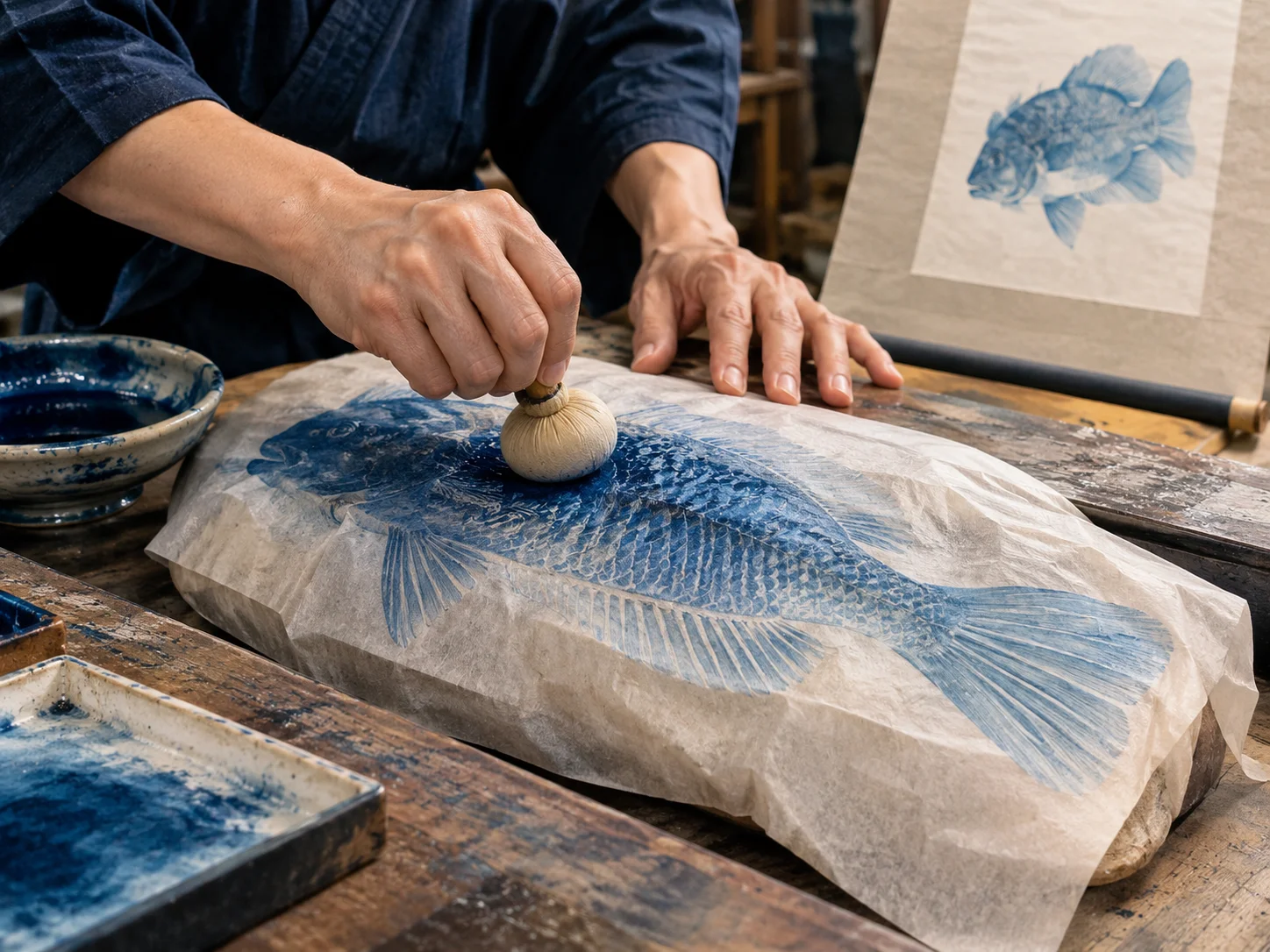
If the direct method values directness, the indirect method values control. Kansetsuhō, the indirect rubbing method, reverses the sequence entirely. Instead of inking the fish and pressing paper onto it, the artist drapes thin dampened washi directly over the uncoated fish, molds the paper to the fish’s contours by hand, smooths out every wrinkle carefully, and then applies color from above using a specialized tool called a tanpo.
The tanpo is a small pad made from cotton wrapped tightly in a piece of silk. Its rounded, firm surface holds ink or mineral pigment and distributes it evenly when dabbed across the surface of the paper. Because the washi is damp and pliable, it settles into every groove between scales and around the spines of fins, essentially becoming a thin mold of the fish’s surface. When color is tapped through from above, it settles most intensely on the raised areas, the outer edges of scales, the leading edges of fins, producing a subtle three-dimensional gradient that the direct method rarely achieves.
Fin handling in kansetsuhō is an art within the art. Because fins are delicate and three-dimensional, the artist typically lifts and repositions small sections of the paper around each fin ray, tapping color individually along each spine before moving to the next. This labor-intensive approach preserves the structural detail of even the most fragile pectoral fin. The finished print has a softer, more luminous quality than a direct impression, with tonal variation that resembles traditional watercolor painting more than a rubber stamp.
Contemporary artists and institutional workshops increasingly favor kansetsuhō for display-quality work. The technique allows for color mixing directly on the tanpo, so a single fin can shift from deep indigo at its base to pale cerulean at its tip. When mounted on hanging scroll paper in the traditional kakejiku format, an indirect gyotaku print is virtually indistinguishable from a painted artwork at first glance, a quality that has helped the technique gain recognition as a legitimate fine art discipline rather than a craft curiosity.
3. Color Embellishment and Pigment Layering
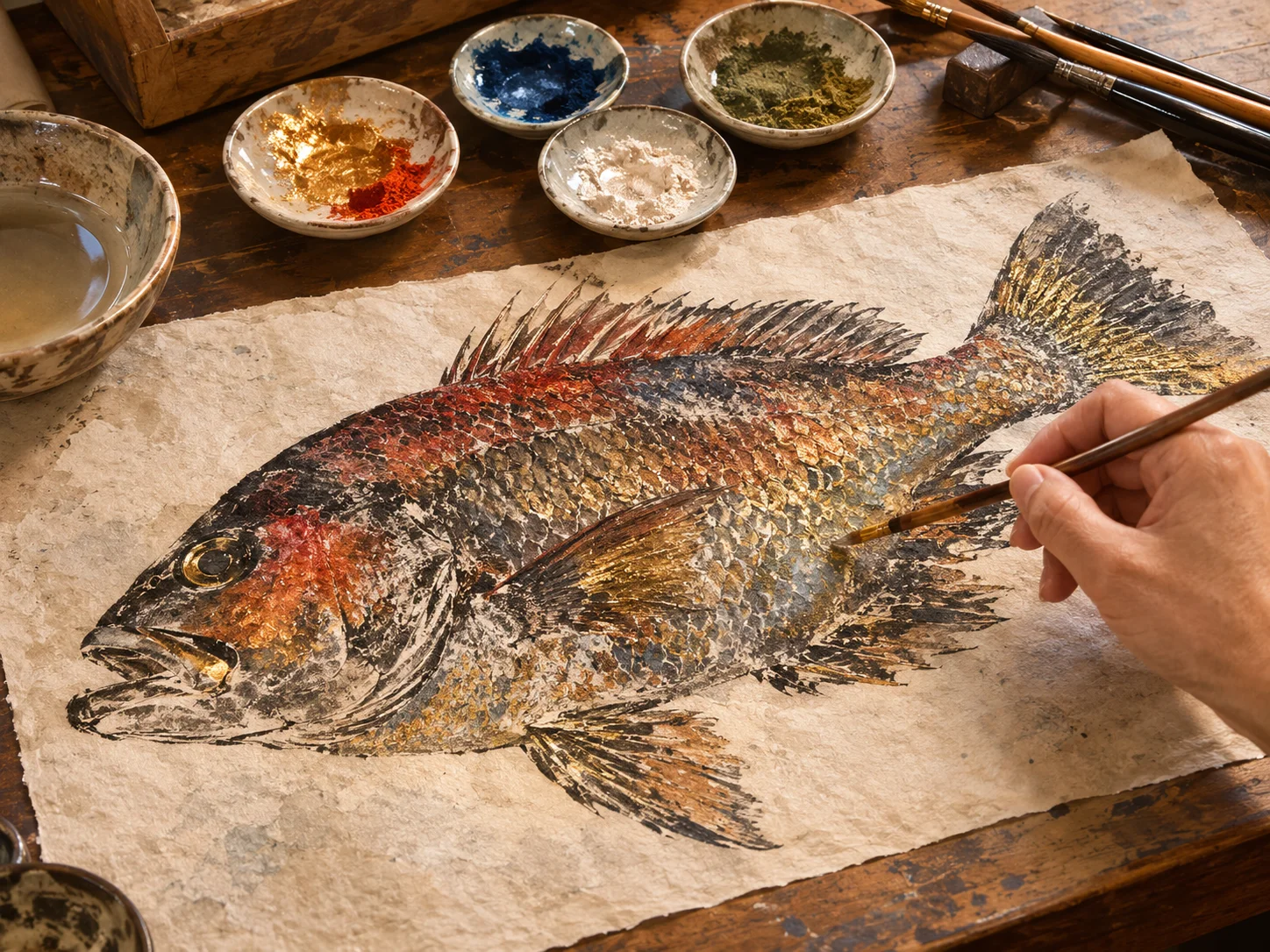
Gyotaku’s earliest practitioners worked almost exclusively in black sumi ink. The goal was documentation, and black provided the highest contrast and clearest anatomical record. As the practice moved from fishing boats into artists’ studios, a different priority emerged: naturalistic beauty. Color embellishment techniques developed to address this shift, adding brushwork and pigment layering over a base gyotaku impression to capture the iridescent shimmer of scales, the deep reds of a snapper’s flank, or the neon stripe of a tropical wrasse.
The most common approach begins with either a direct or indirect base print in a neutral or lightly toned ink. Once that base layer is dry, the artist applies additional color using fine sumi brushes or watercolor techniques directly on the print. The scale pattern already impressed into the paper serves as a guide, the raised texture actually catches and holds pigment differently depending on how the brush is loaded, creating automatic variation in tone across each scale. Skilled practitioners can suggest the metallic blue-green of a mackerel or the golden flank of a bream with just two or three carefully placed washes.
Layering order matters significantly. Transparent washes applied in sequence, light values first, darker accents last, allow each layer to modify the one beneath it without destroying the delicate gyotaku impression underneath. Artists working in this sub-technique often use traditional Japanese mineral pigments called iwaenogu, which are ground from natural stone and mixed with an animal-glue binder. These pigments are prized for their granular texture, which interacts with the fibrous surface of washi in ways that synthetic watercolors cannot replicate.
Modern gyotaku artists have also experimented with metallic inks and interference pigments to suggest scale iridescence, a quality that is genuinely difficult to capture even in photographic reference. Good News Network’s coverage of contemporary gyotaku notes that these color innovations were part of a broader evolution in which the art form moved from pure documentation toward aesthetic expression. For practitioners who want prints that hang as finished artwork, mastering pigment layering is the step that separates a technically correct impression from a visually compelling one.
4. Fabric Transfer Gyotaku
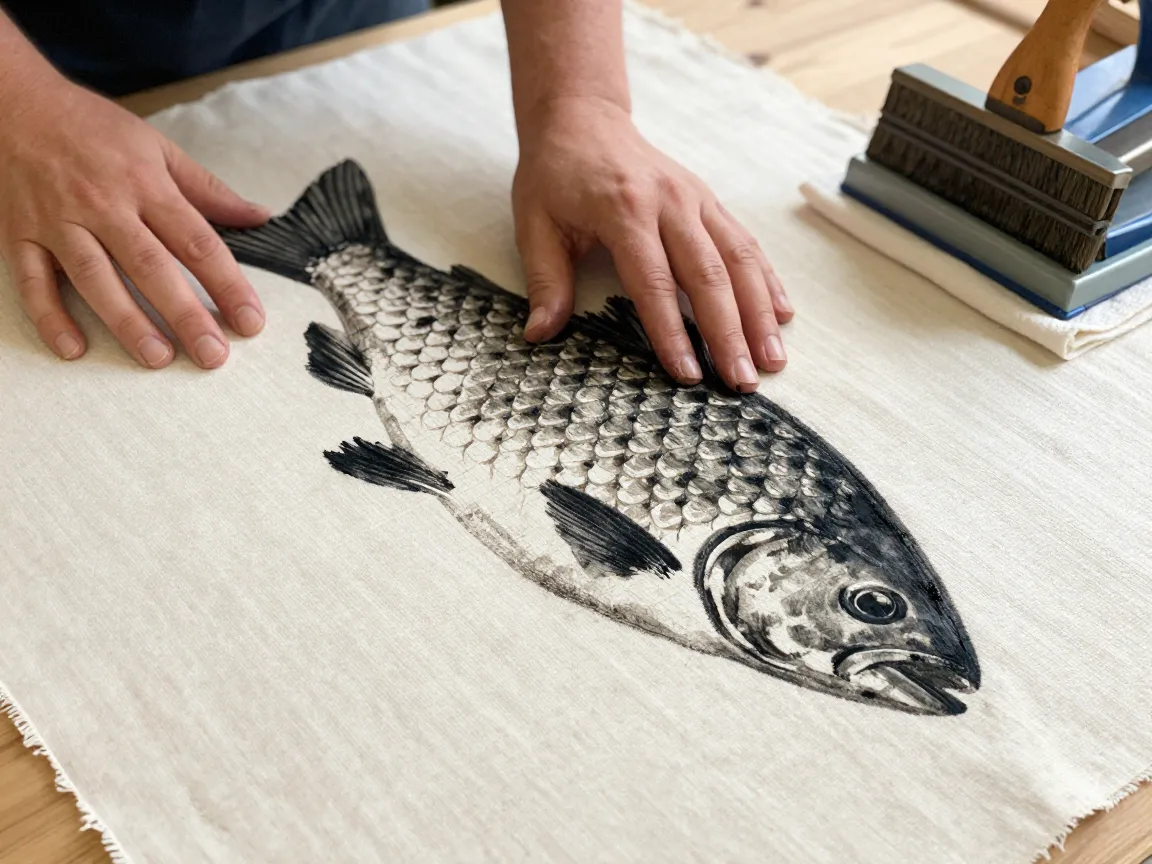
Washi paper is the traditional substrate for gyotaku, but the technique transfers remarkably well to fabric, and that transition opens up an entirely different range of applications and aesthetic possibilities. Fabric gyotaku uses the same fundamental logic as the direct method, but replaces paper with natural-fiber textiles: unbleached muslin, fine linen, raw silk, or cotton canvas. The result is a print that can be worn, framed under glass, sewn into larger textile works, or displayed as a wall hanging with a texture that paper cannot provide.
The ink selection changes when moving to fabric. Sumi ink alone does not bond reliably to woven fibers, so fabric gyotaku typically uses water-based textile inks or fabric-safe acrylic paints mixed to a thin consistency. The fish preparation and inking process mirrors the direct method closely: the specimen is cleaned, dried, positioned with fins extended, and coated with a smooth, even layer of pigment using a broad brush. The fabric is then pressed onto the fish just as paper would be, though fabric’s dimensional weave requires slightly more pressure and a firmer hand to ensure the texture registers clearly.
One notable advantage of fabric over paper is dimensional stability. Fabric does not absorb moisture unevenly the way washi sometimes does, so the impression tends to be consistent across the entire surface of a large fish. This makes fabric gyotaku particularly well-suited to working with larger specimens, a full-sized striped bass or a wide-bodied carp that would challenge the most carefully placed sheet of paper. The woven texture of the fabric also adds its own visual layer to the impression, with the grid of the weave creating a subtle pattern that interacts with the fish’s scale structure in ways that can be visually striking.
After printing, fabric works require heat-setting to fix the textile ink permanently. A household iron or heat press applied through a protective cloth layer bonds the pigment to the fibers so the print survives washing and handling. The Kennedy Center’s educational resources on gyotaku highlight fabric transfer as an accessible variation that works particularly well for younger students, since fabric is more forgiving of uneven pressure and minor handling errors than thin washi.
5. Multi-Specimen Composition
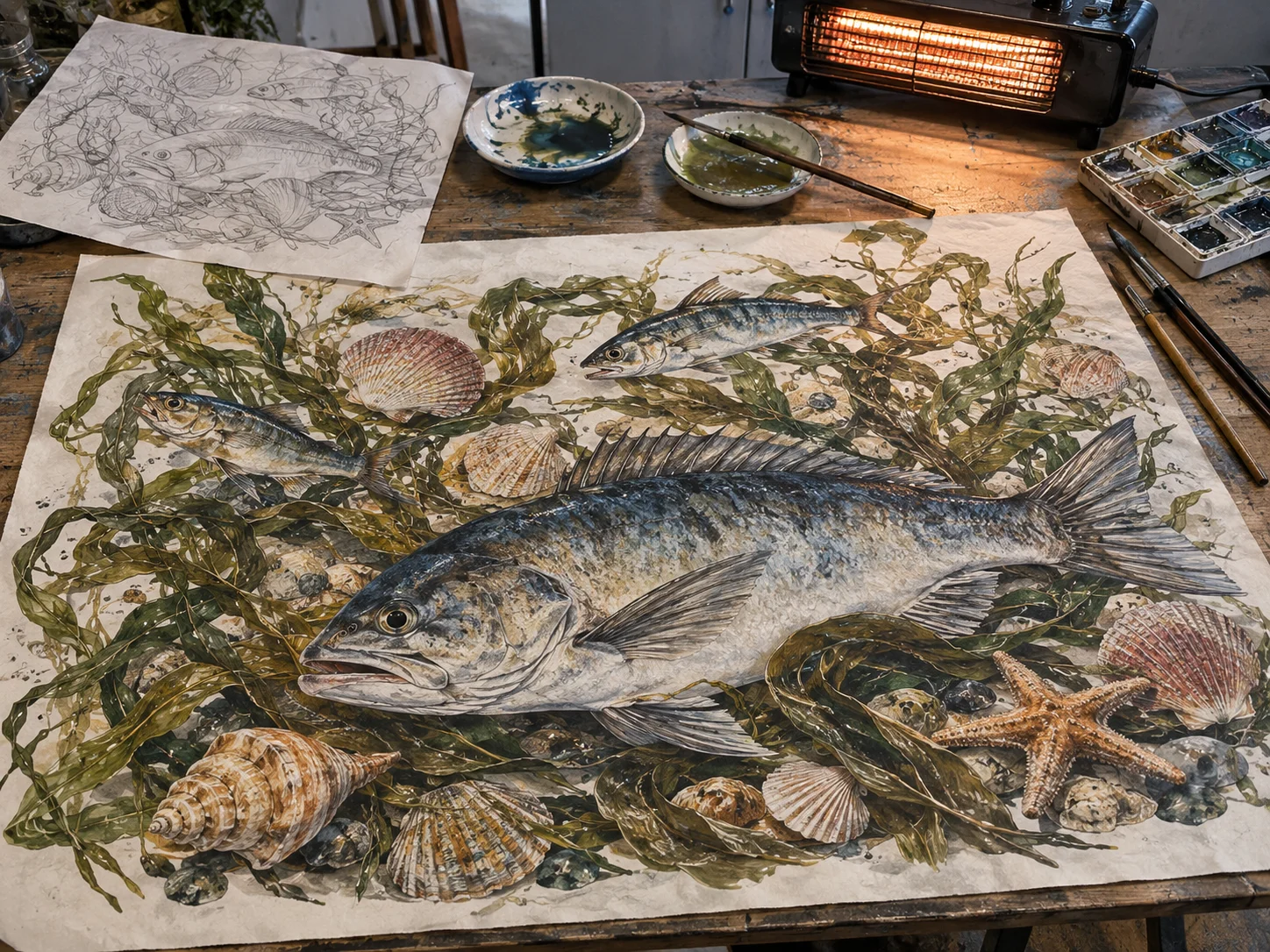
Single-fish prints are the foundation of gyotaku practice, but the technique does not stop at one specimen per sheet. Multi-specimen composition is the practice of combining impressions from two or more fish, and sometimes from shells, seaweed, squid, crab claws, or other marine subjects, on a single sheet to create a unified scene. This approach draws the technique firmly into the territory of pictorial art, requiring the practitioner to think about negative space, overlapping forms, visual balance, and narrative coherence before a single drop of ink is applied.
Planning the composition before inking is essential. Many artists sketch a rough layout on a separate sheet, mapping where each specimen will fall relative to the paper’s edges and to one another. The sequence of printing matters: typically, background elements, strands of seaweed, flat shells, smaller fish positioned in the distance, are printed first, while the dominant specimen is applied last to sit visually in the foreground. Overlapping impressions, where a fin from one fish slightly overlaps the body of another, can suggest depth and movement in a way that isolated single prints never achieve.
The technical challenge in multi-specimen work is ink timing. If the first fish’s impression is still wet when the second is pressed nearby, the two layers can bleed into one another and muddy the composition. Many artists partially dry each impression with a low heat source or simply by waiting before adding the next element. Others intentionally exploit wet-on-wet bleeding for specific effects, particularly when suggesting water movement around the fish’s body or the soft diffusion of light filtering through water.
Artists who specialize in multi-specimen gyotaku often develop their own library of frequently used specimens, keeping molds or reference prints of seaweeds, coral branches, and shells that they combine with freshly inked fish. The Smithsonian’s conservation-focused coverage of gyotaku notes that these richly detailed compositions serve as ecological documents as much as artworks, showing entire micro-ecosystems in a single image, a function that photographs, however detailed, often struggle to match.
6. Conservation-Oriented and Live-Release Gyotaku
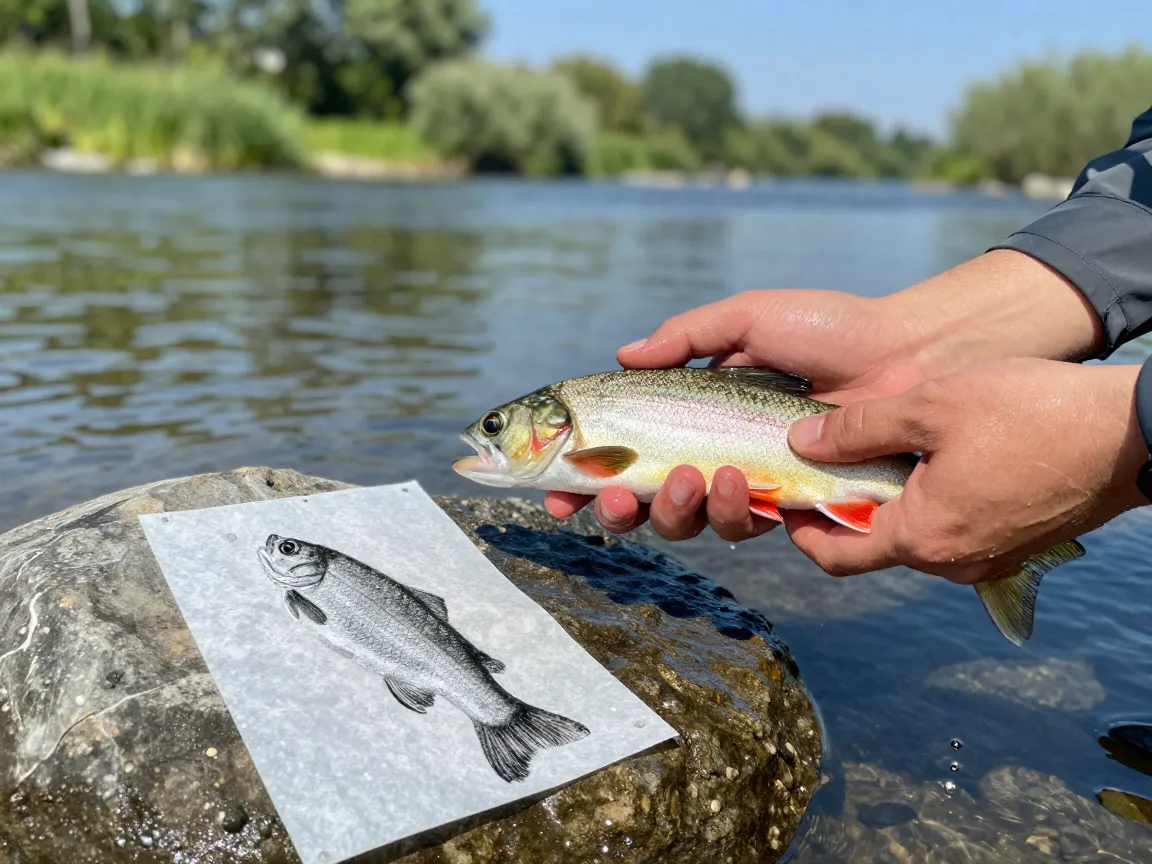
The newest and arguably most philosophically interesting development in gyotaku practice is its alignment with conservation ethics. Traditional gyotaku required the fish to be harvested, and the specimen was typically consumed after printing. Modern conservation-oriented gyotaku modifies that relationship fundamentally, using non-toxic, water-soluble paints that allow the fish to be released alive and unharmed after the print is taken.
The technique requires careful material selection. Any ink that contacts the fish’s skin must be safe for aquatic environments and must not disrupt the fish’s protective mucus layer, which serves as its first defense against infection. Water-based, non-toxic acrylic paints diluted to a thin, smooth consistency are the most common choice. The fish is handled with wet hands or gloves throughout to minimize stress, inked quickly and gently, printed onto washi or fabric, and returned to the water within a time frame that experienced practitioners keep as short as possible.
Live-release gyotaku has gained particular traction in sport-fishing communities, where catch-and-release ethics are already well established. Rather than a photograph held next to a smiling angler, a gyotaku print provides a life-sized, anatomically precise record of the catch, scale pattern, fin structure, and body dimensions intact, without requiring the fish’s death. The print’s dimensions can even be used to calculate the fish’s weight using standard length-to-weight formulas, preserving all the practical documentation value of the traditional technique.
Smithsonian Magazine has highlighted this application specifically, noting that fish printing can deepen appreciation for marine life while simultaneously preserving a detailed record of species characteristics for scientific and educational purposes. Conservation organizations and natural history societies have incorporated live-release gyotaku into public programming, treating it as a bridge between artistic practice and environmental stewardship. For practitioners who want their work to carry meaning beyond the studio, this technique offers a compelling answer to the question of what art can do in the world.
Conclusion
The six techniques covered here, direct ink printing, indirect tanpo application, color embellishment, fabric transfer, multi-specimen composition, and conservation-oriented live-release printing, represent the full arc of gyotaku’s development from practical fishing record to serious artistic and educational practice. Each method has its own entry point: the direct technique rewards beginners with immediate, satisfying results; the indirect method offers a lifetime of refinement; color layering, fabric work, and composition building expand the toolkit progressively; and live-release printing connects the craft to something larger than the studio.
The best next step for anyone new to these methods is simply to start with the direct technique using a fresh fish, a soft brush, a bottle of sumi ink, and a sheet of rice paper. The first print will be imperfect. It will also be unmistakably, specifically yours, a one-to-one impression of a living form that no photograph or digital file can replicate.