Forest Hunter Outfit Ideas for Stealthy, Rugged Style in the Woods
Only about 11.5 million Americans hunt in forested terrain each season, yet the gap between those who blend seamlessly into the timber and those who spook game within the first hundred yards often comes down to what they are wearing. Clothing in the woods is not just a comfort decision, it is a tactical one. The right combination of fabrics, colors, and construction can mean the difference between a close encounter and a blown stalk. These 6 forest hunter outfit ideas for stealthy, rugged style in the woods cover the full range of woodland hunting scenarios, from quiet early-season bowhunts in dense cover to late-season all-day sits in bitter cold, drawing on 2026 apparel trends that favor quieter fabrics, matte finishes, and modular layering over heavy single-piece garments.
Disclosure: This post contains affiliate links. As an Amazon Associate, we earn from qualifying purchases, and at no extra cost to you.
1. The Silent Woodland Layering Kit
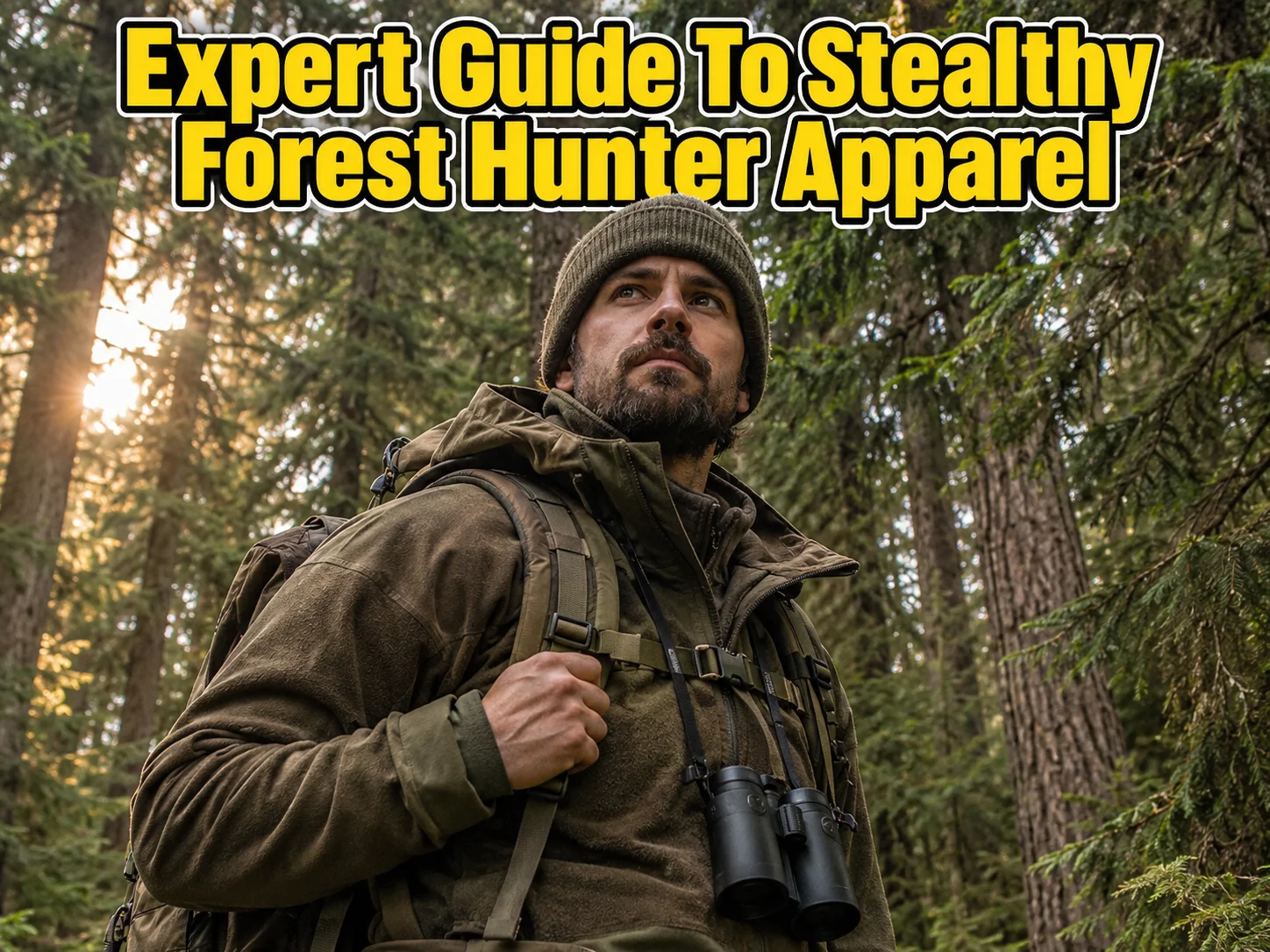
The foundation of any serious forest hunting wardrobe is a layering system built specifically around silence. Modern hunting-apparel research consistently points toward three-piece modular setups: a moisture-wicking base layer, a stretch fleece or softshell midlayer, and a brushed-face outer shell that refuses to whisper, crinkle, or catch on branches. Each component plays a distinct role, and the system only works when all three are chosen with noise suppression in mind.
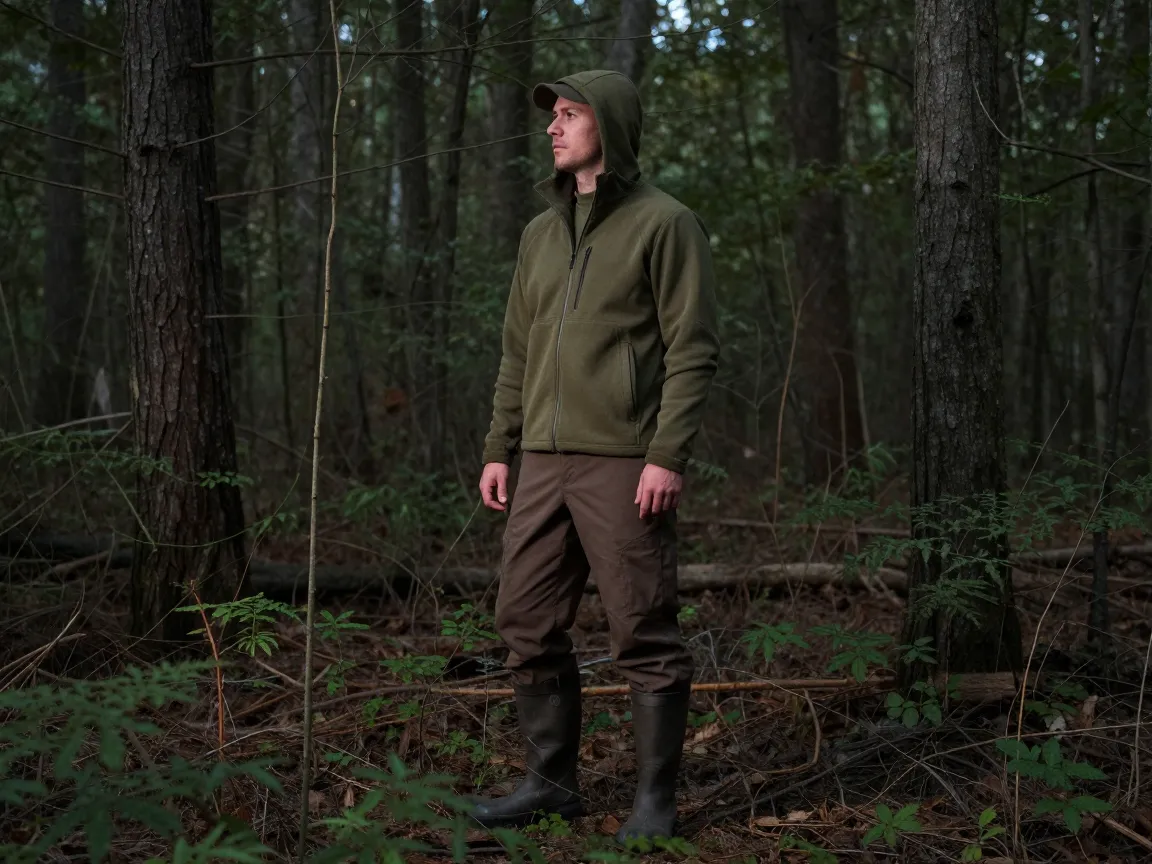
The base layer should be synthetic or merino wool. Both manage sweat during a predawn walk-in and regulate temperature once you stop moving and the cold settles in. Merino is naturally odor-resistant, which matters enormously in close-cover stalking. The midlayer, typically a stretch fleece or a bonded softshell, adds insulation without bulk, allowing a full range of motion when climbing, crawling, or threading through tight saplings. Look for versions with minimal exterior texture that could snag.
The outer shell is where silence is won or lost. Brushed tricot and micro-fleece face fabrics have almost no audible signature against bark or brush, unlike the stiff nylon shells that defined hunting gear a decade ago. Noiseless zipper pulls, soft hook-and-loop closures, and close-fitting hoods round out the package. In 2026, muted greens, deep tobacco brown, and olive drab are the dominant color choices for dense timber because they disappear in dark understory environments where bright or high-contrast patterns actually draw the eye. For bowhunters or those doing any form of still-hunting and stalking, this layering kit is the most important investment on this list.
Practical note: buy the outer shell slightly larger than your normal size to allow the midlayer to sit underneath without compressing insulation or restricting arm movement. That small adjustment in fit prevents the shell from riding up during a draw stroke and eliminates the fabric-tightening noise that accompanies an ill-fitting jacket.
2. The Brush-Busting Upland Forest Rig
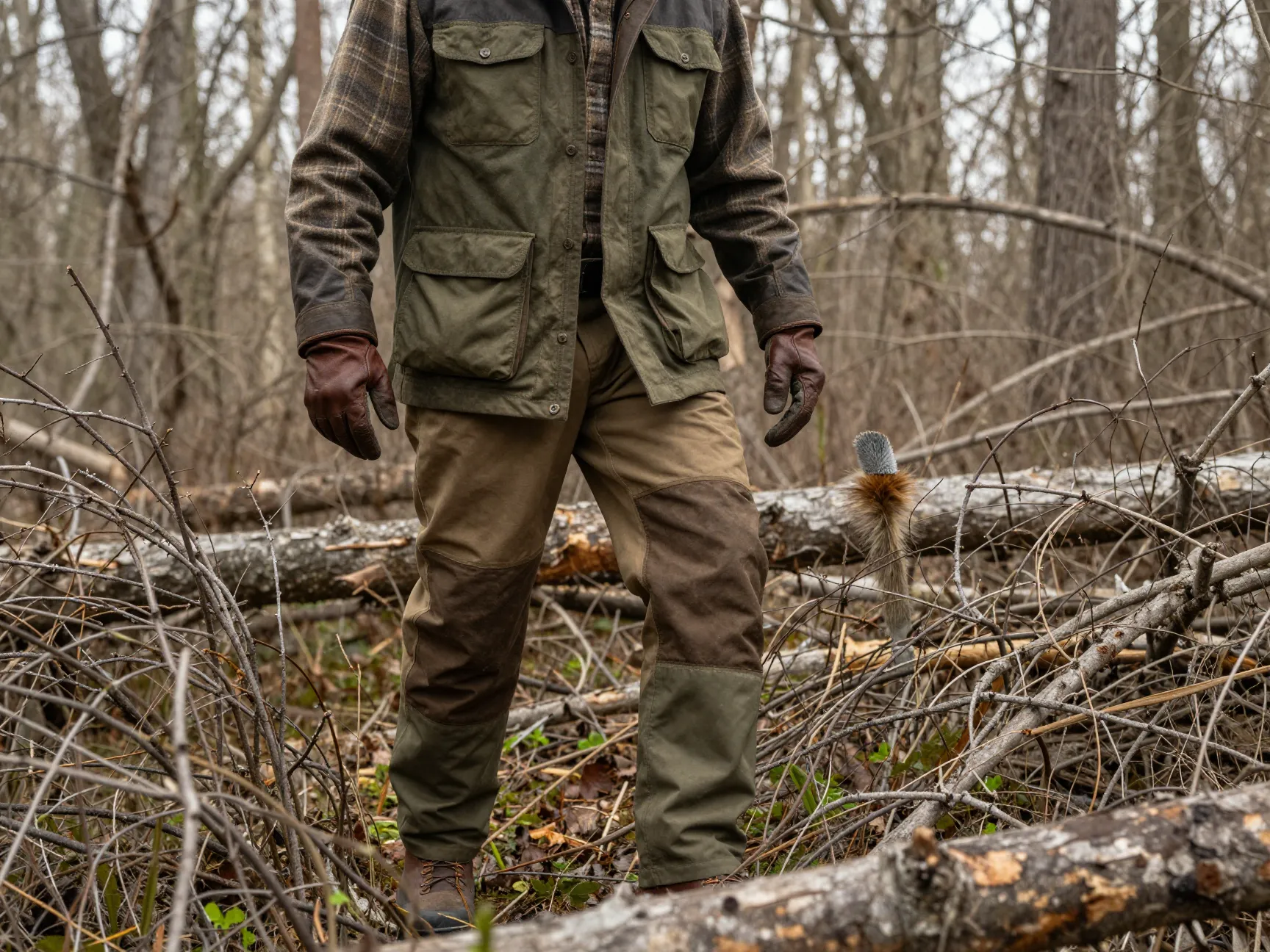
Thick timber is not just quiet-fabric territory, it is also briar country. Any hunter who has pushed through a creek-bottom tangle of multiflora rose or walked a blowdown ridge in pursuit of ruffed grouse or early-season whitetails knows exactly how quickly light pants shred and how fast a standard cotton shirt catches and tears. The brush-busting rig is built around durability first, with style as a close second.
The centerpiece is a pair of briar-resistant field pants. These use reinforced front panels, often a double-layered nylon or Cordura face fabric, over the thighs and shins where contact with thorns is constant, while the seat and back panels use a lighter, more breathable material to prevent overheating. Pair these with a heavyweight wool-blend or flannel overshirt, ideally in an earth-tone plaid or solid forest green, and the outfit achieves a classic, traditional look that has been standard in upland hunting circles for generations.
A waxed cotton or heavy canvas field jacket finishes the rig. These jackets handle moisture without the crinkly sound of a coated nylon shell, age gracefully, and carry the aesthetic of a working hunter rather than a tactical operator. Modern versions include reinforced elbows, shell loops on the chest, and large bellows pockets designed to hold a folded vest, a call, or field-dressed small game. When this jacket layers cleanly over a wool shirt and a vest, the combination works equally well pushing pheasants through brush edges or sitting a ridge-top treestand during a cold front.
The brush-busting rig leans more toward rugged durability than technical stealth, making it the right choice when the terrain demands toughness over silence, dense second-growth, cutover timber, or any situation where covering ground through thick vegetation matters more than a whisper-quiet approach.
3. The Hybrid Camo and Solid Crossover Outfit
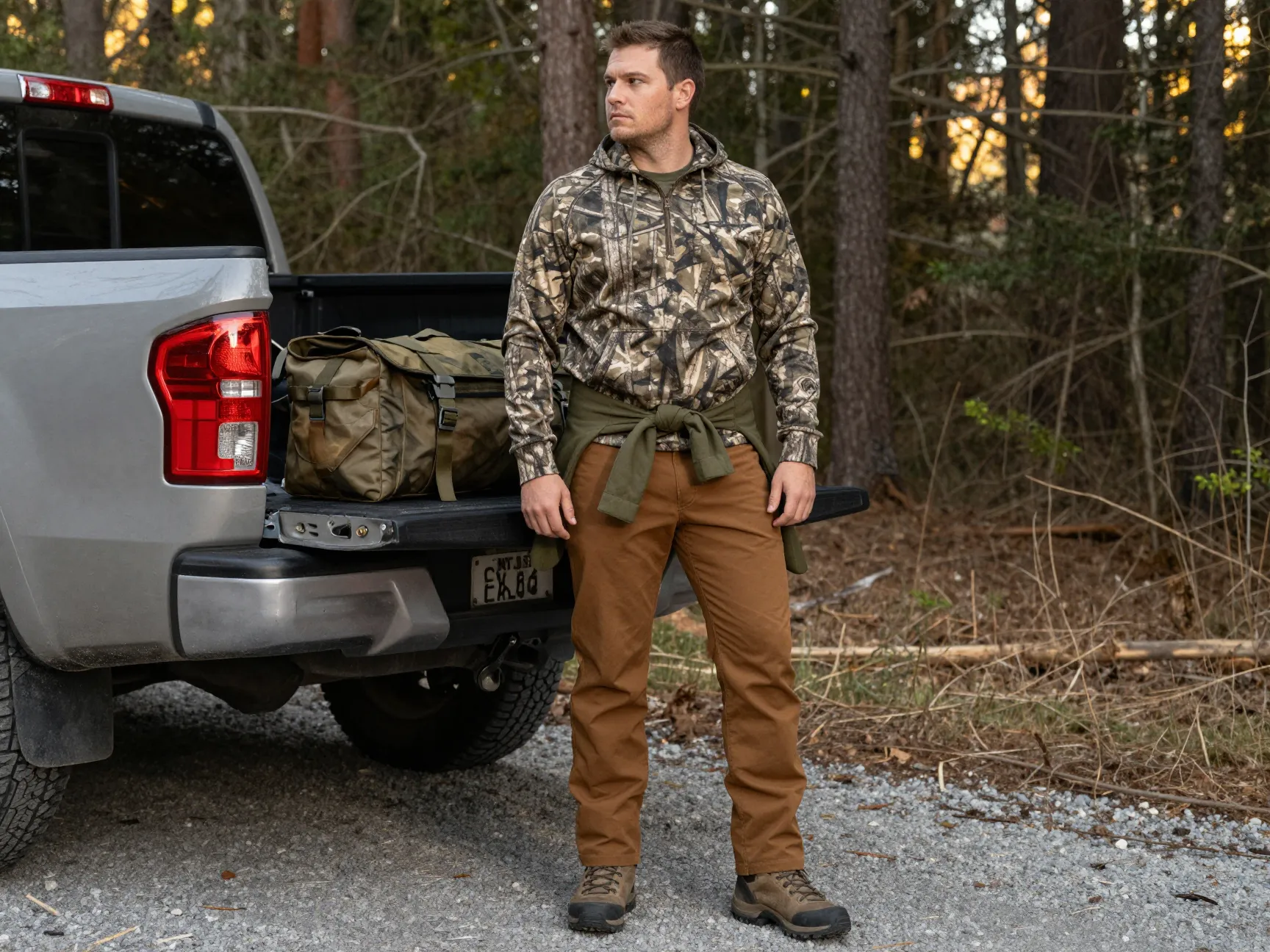
One of the most practical shifts in 2026 hunting apparel is the deliberate blurring of the line between hunting clothes and casual wear. The hybrid crossover outfit pairs technical camo pieces with solid earth-tone counterparts, creating a look that functions at the treestand, at the truck, and even at a diner without drawing stares or demanding a full wardrobe change.
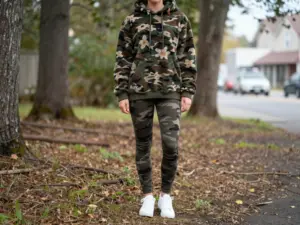
The standard build is a camo top, a hooded pullover or a quarter-zip in a woodland pattern, worn over solid khaki or tobacco-brown pants. The reverse works equally well: a solid olive or charcoal jacket over camo pants. Some newer garments, like Browning’s Switchback line introduced in 2026, are explicitly engineered to function in both worlds, offering a full camo exterior that reverses to solid black for use in ground blinds or casual settings. That kind of dual-purpose design reflects a broader industry understanding that most hunters’ lives do not cleanly separate “woods time” from “everything else.”
From a stealth perspective, this outfit works in a range of forest conditions. Solid earth tones perform surprisingly well in dark timber, particularly in the late season when leaf litter and bare branches create a monochromatic brown-and-gray landscape. The camo element, wherever it appears, adds the pattern break that disrupts a hunter’s outline at closer ranges. For deer hunters using ground blinds, solid black interiors make an all-black or dark-solid outfit the most effective concealment choice available, and this hybrid approach accommodates that easily.
The crossover outfit is also the most socially versatile option on this list. Hunters who travel by vehicle, stop at gas stations or sporting-goods stores between locations, or move from public land to a private lease in the same afternoon will find that avoiding full-camo from head to toe makes those transitions significantly less conspicuous.
4. The Blaze-Orange-Compliant Forest Deer Kit
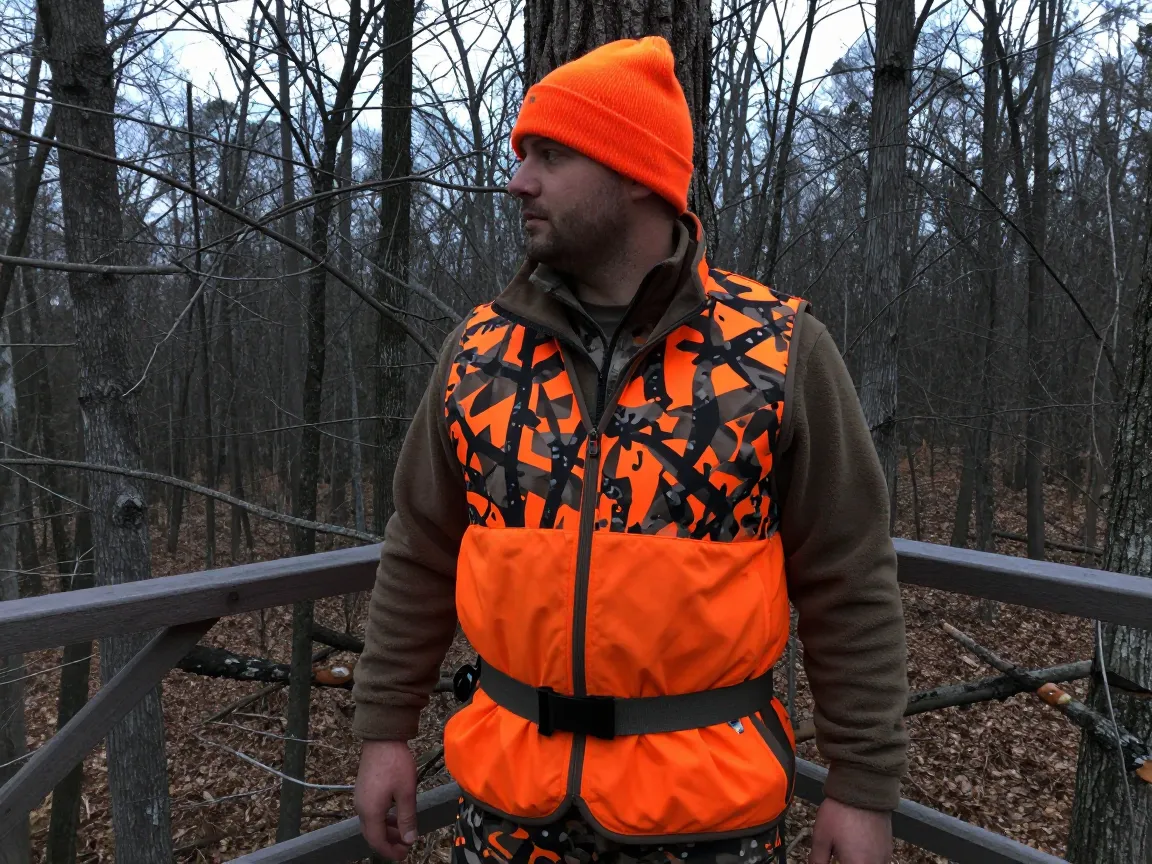
Legal visibility requirements create a genuine design challenge for forest deer hunters. The goal is to remain as concealed as possible from deer while remaining highly visible to other hunters, two objectives that are almost directly opposed. A well-assembled blaze-orange-compliant kit resolves that tension without sacrificing either safety or stealth.
Many states require approximately 400 square inches of blaze orange worn above the waist, plus an orange head covering during firearm deer season. The modern solution is blaze camouflage, patterns that print black geometric or woodland overlays onto the orange background. These patterns disrupt the solid block of color that deer eyes may perceive differently at close range, while still meeting the high-visibility threshold that makes blaze orange effective for hunter-to-hunter recognition at distance. Research into deer vision suggests that deer process color differently than humans, and broken patterns may reduce the alerting effect of the orange better than solid blaze.
The kit beneath the blaze layer should follow the silent layering principles from outfit one: a merino or synthetic base, a quiet fleece midlayer in muted brown or olive, and a compact insulating piece that fits under the blaze vest without adding significant bulk. The blaze vest itself should be a slip-on or zip-front design that can be removed quickly during a pack-out when the season is over or when transitioning from a drive to a still-hunt.
Head coverage matters as much as the vest. A blaze orange knit cap or reversible hat with a camo interior serves double duty. For hunters using elevated stands, adding blaze-orange bibs over the base system provides extra warmth and keeps the full legal requirement met even when a jacket is unzipped or removed during physical activity. The result is an outfit that keeps other hunters safe, satisfies legal requirements in virtually every state, and still maintains a coherent, rugged woodland aesthetic.
5. The Women-Specific Forest Hunter System
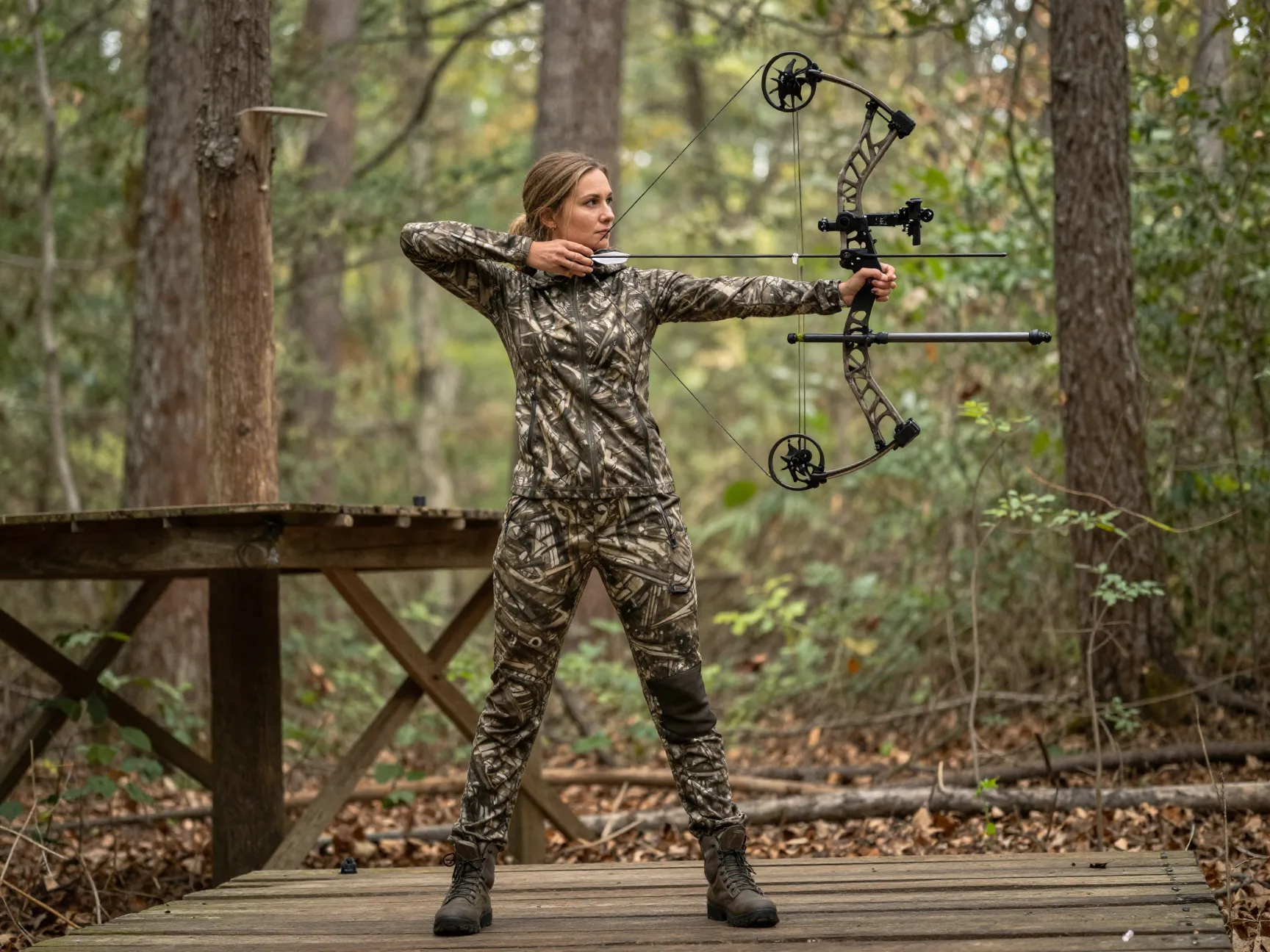
For years, women who hunted in forested terrain were largely stuck choosing between men’s cuts that fit poorly and a narrow selection of pink-accented garments that prioritized appearance over function. That landscape has changed dramatically by 2026, with major manufacturers releasing full women’s-specific systems built around the same performance criteria as their flagship men’s lines, but with proportional fits that actually work for climbing stands, drawing bows, and moving through brush.
The key difference in women’s-specific forest hunting systems is not just sizing. It is construction geometry. Shorter torso lengths, adjusted shoulder proportions, and hip-to-waist ratios that account for different body shapes mean that cuffs, hems, and hoods land where they should rather than fighting the wearer constantly. A hood that sits correctly on a shorter neck does not slide over the eyes during a critical moment. Pants with a properly placed rise do not gap at the back when kneeling or climbing.
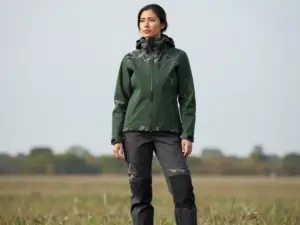
New 2026 women’s lines incorporate classic woodland patterns, including traditional Bottomland-style timber camo, alongside quiet hooded midlayers and waterproof outer shells in sizes and cuts designed for a sleek, low-profile silhouette. That silhouette matters in tight treestand platforms where bulk creates instability. Quiet stretch fabrics allow a full draw cycle without the shoulder restriction that standard cut jackets impose, which is a non-negotiable requirement for women bowhunters.
Layering logic remains the same as for any forest hunting system: moisture-wicking base, insulating quiet midlayer, weather-resistant shell. What changes is finding those pieces in fits that do not require compromises. A women’s-specific system built from the ground up outperforms an adapted men’s system in both comfort and function over a long sit or a demanding walk-in, and in 2026, the selection available to make that choice is broader than it has ever been.
6. The All-Weather Technical Whitetail System for Long Sits
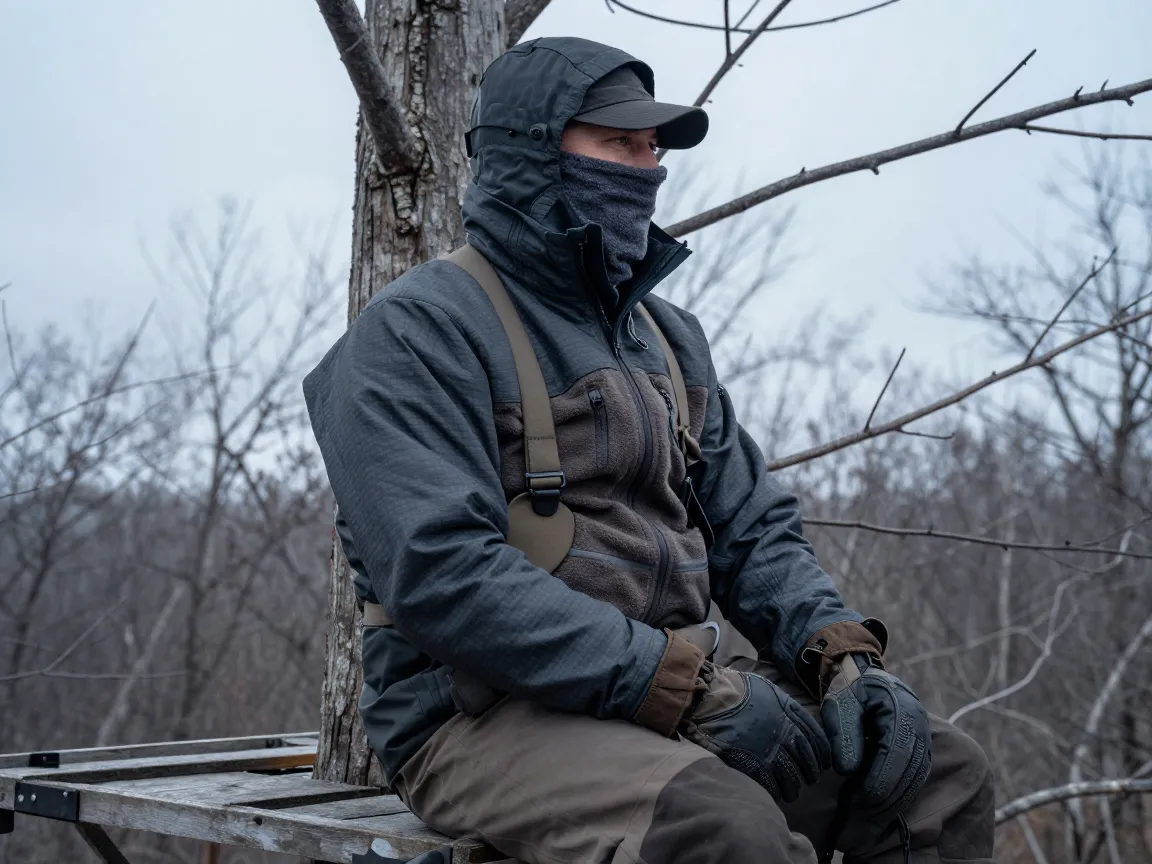
The hardest outfit challenge in forest hunting is not the morning stalk, it is the all-day sit during a cold front when temperatures drop 20 degrees between sunrise and midday, wind shifts twice, and the hunter cannot move without risking detection. The all-weather technical whitetail system is engineered for exactly that scenario: maximum thermal efficiency, complete windproofing, scent management, and enough comfort to stay on stand when every instinct says to climb down.
The base of this system is an odor-control midlayer, a treated fleece or activated-carbon garment that reduces scent dispersal during long stationary periods. Scent is the most reliable alarm system a deer possesses, and in timber where thermals are unpredictable, chemical odor management buys meaningful margin. Over this, a low-bulk insulated jacket or vest provides core warmth without restricting arm movement during a shot sequence.
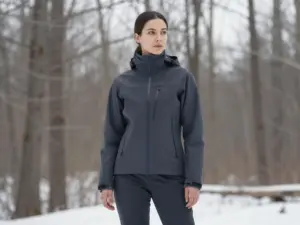
The outer system consists of windproof bibs and a windproof jacket or parka, chosen for a ripstop or quiet woven shell that blocks wind without generating noise. Mid- to late-season sits in hardwood and mixed timber are brutal if wind penetrates the insulation, and even a moderate breeze extracts heat from an unprotected body faster than any amount of base-layer insulation can replace it. Modern windproof bibs are cut to allow full layering underneath, with elastic waistbands and adjustable suspenders that accommodate the thickness variation between early and late-season builds.
Critically, this system extends to the extremities. Insulated, windproof gloves with a grip palm for bow or rifle handling, a neck gaiter in a quiet brushed fabric, and an insulated hat with ear coverage complete the package. Industry analyses from late 2026 point to continued growth in scent-management treatments, improved windproof membranes, and lighter synthetic insulation as the main direction of technical hunting apparel development through the early 2030s, meaning that this category of outfit will continue to improve significantly over the next several seasons.
Conclusion
Each of these six outfits addresses a specific set of conditions and demands, from the bowhunter threading through tight cover to the firearm hunter sitting a frozen ridge for eight hours. The common thread across all of them is intentionality: every fabric, color choice, and construction detail serves a purpose. As 2026 apparel trends continue to push toward quieter materials, smarter camo patterns, and modular systems that adapt to changing conditions, the forest hunter’s wardrobe has never offered more capable options.
The clearest next step is to identify which of these six scenarios most closely matches the terrain and hunting style that occupies the most days on the calendar, then build that outfit properly before adding others. A well-assembled primary system outperforms a closet full of compromises every single time.