Fly Fishing Pictures That Capture the Sport’s Quiet Magic
Roughly 54 million Americans fish each year, yet the images most people associate with the sport show grins, grip-and-grin hero shots, and held-up catches. Fly fishing resists that framing almost by design. The photos worth returning to from a day on the water tend to have no fish in them at all. This article looks at 6 fly fishing pictures that capture the sport’s quiet magic, examining what makes each visual type work, what it communicates, and how photographers and anglers alike have used these images to convey something that catch counts never could.
Disclosure: This post contains affiliate links. As an Amazon Associate, we earn from qualifying purchases, and at no extra cost to you.
Key Takeaways
- The most resonant fly fishing images focus on atmosphere, posture, and place rather than the catch itself.
- Photographers like Rob Hammer explicitly frame their work around quiet moments, changing weather, and missed fish, not trophy shots.
- Close-up fly detail shots and wide tundra landscapes both serve the same function: they slow the viewer down.
- Light conditions, particularly early morning and overcast days, do more compositional work than any single subject.
- Stock libraries exceeding 35,000 fly fishing images consistently market their catalogs around “quiet focus and serene settings,” confirming this is what audiences seek.
1. The Perfect Cast Suspended in Air
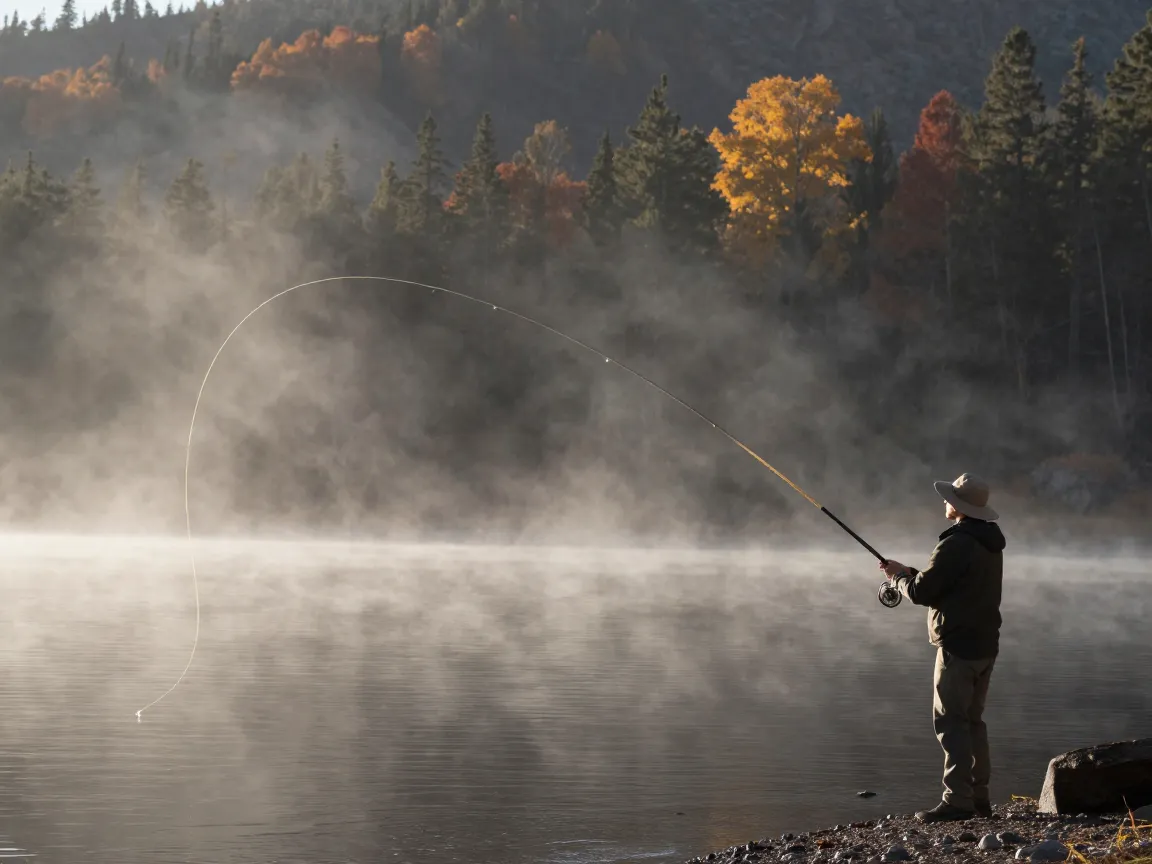
A fly cast lasts about one second. When a camera catches the line at full extension, that second becomes permanent, and something shifts in how the viewer reads the sport. The loop shape tells a practiced eye everything: how tight the angler’s timing was, how much line was carried, whether the presentation would land quietly or slap the surface. For everyone else, the arc is simply beautiful, a narrow ribbon of light drawn across mist or autumn color.
Fine-art photographer Rob Hammer built his Eastern Sierra series at Convict Lake around exactly this image type. His framing prioritizes the elegance of the cast over any landed fish, documenting fall-color walks to the water and gear preparation as equal parts of the story. The cast photograph becomes a summary of all that preparation made visible for a single moment.
What makes these images durable is their universality. The angler’s face is often turned away or hidden under a hat brim. Gender, age, and skill level are ambiguous. The viewer can place themselves in the frame without friction. Tamron’s fly fishing photography advisory, still circulating in 2026, points directly at this: subtle angler movements on quiet shorelines carry more emotional weight than action shots of running fish. The cast photograph proves that point every time it works.
A practical note for photographers: a shutter speed of 1/1000s or faster stops the line cleanly, but the real work is positioning. Shooting from a low, slightly downstream angle with a bright sky or fall canopy behind the angler separates the line from a cluttered background and gives the loop the contrast it needs to read.
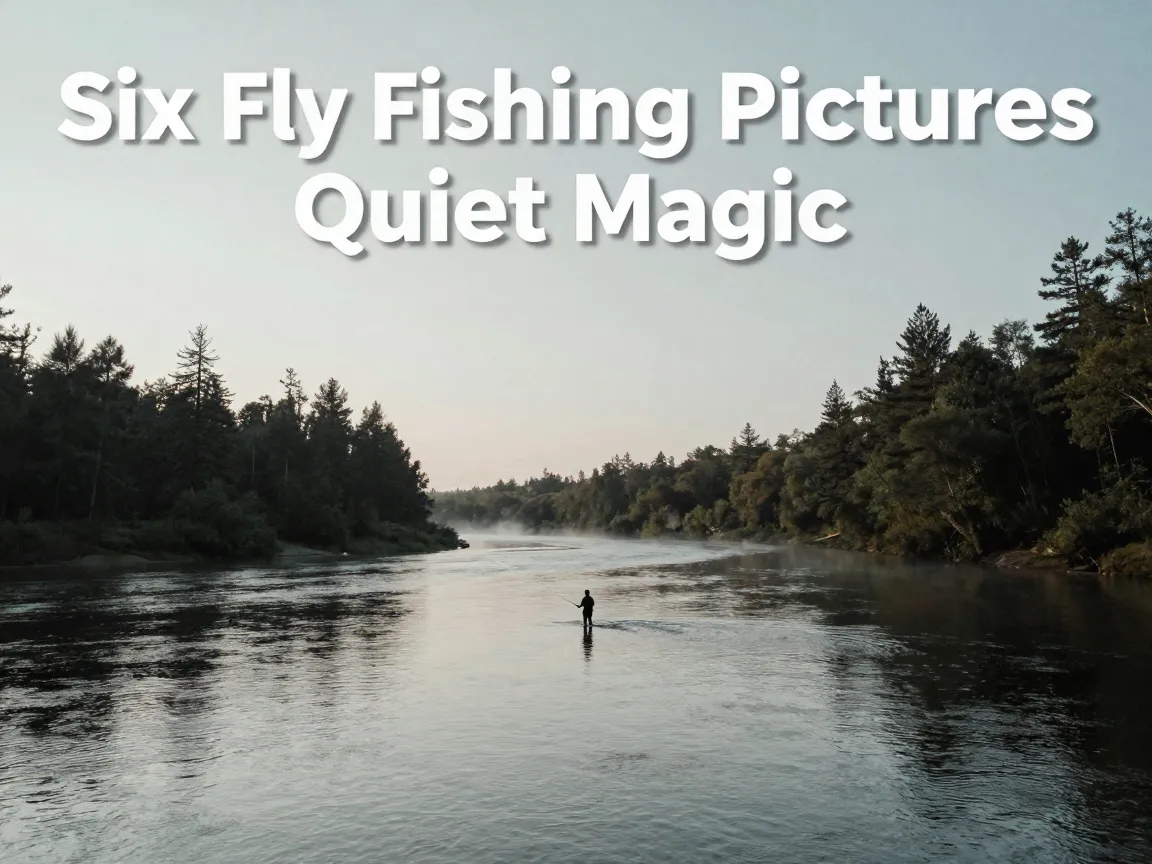
2. The Wide Landscape With One Small Figure
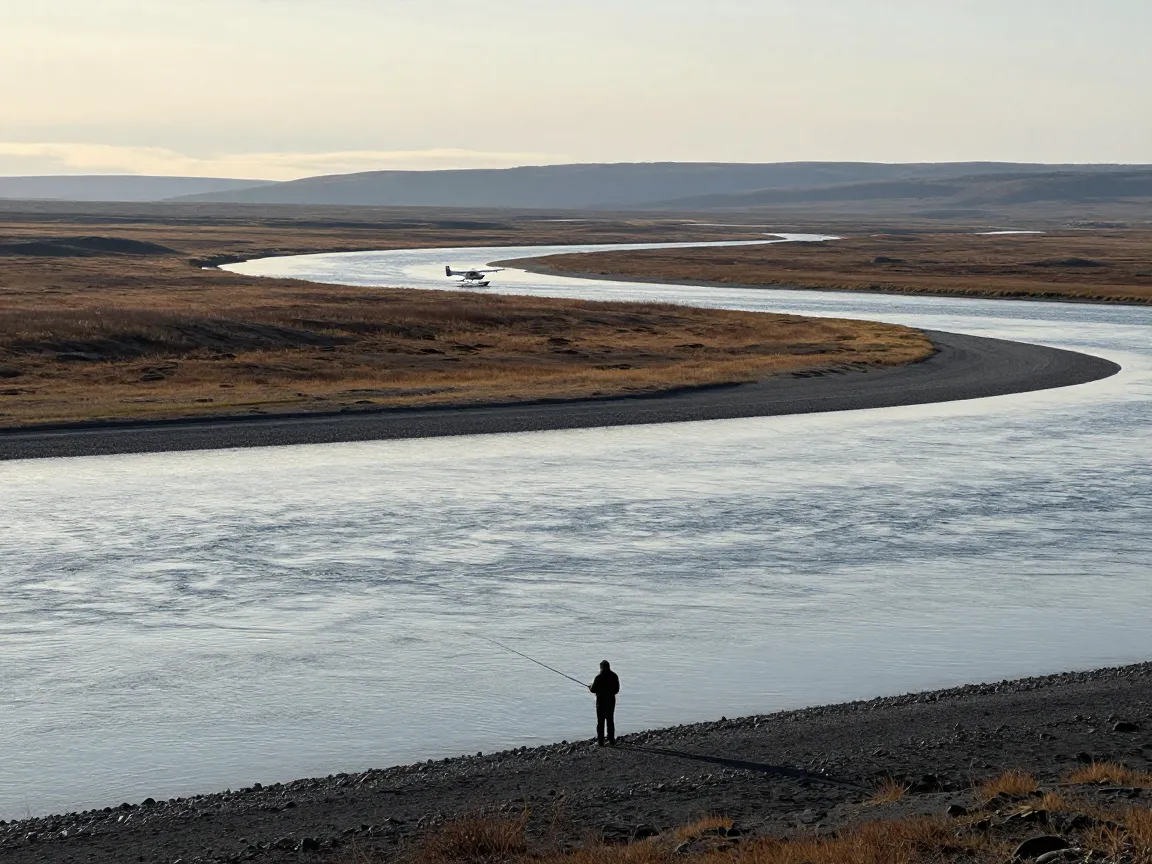
Fly fishing takes people to places that are difficult to reach. That distance is part of the appeal and part of what the best photographs try to show. When a single angler appears as a small mark against an enormous stretch of river, tundra, or canyon wall, the image makes an argument about scale that no caption needs to explain.
Hammer’s Alaska Iliamna collection works this way throughout. His framing places anglers in the context of empty tundra crossings and remote water, with float planes and long northern-light days filling the background. The person in the frame is not the subject so much as the evidence that someone chose to come here. The landscape is the subject. The angler is the proof of how much it was worth.
Orvis News archive photography has used this approach consistently for years, with early-season Wyoming and Montana rivers photographed at distances that show uncrowded water, atmospheric light, and the relationship between a fisher and a river system larger than any single day’s catch. That low angler density in the frame communicates something iStock’s fly fishing library has identified explicitly in its editorial marketing: serene settings where the environment dominates create the “quiet focus” that buyers and viewers keep returning to.
For this image type to work, the angler needs to be positioned by light, not just placed in frame. Early morning or overcast conditions eliminate harsh shadows and let the water surface carry color. A figure in shade against lit water reads immediately. A figure in blown-out highlight against dark banks reads as a mistake.
3. The Fly Detail on a Tying Bench
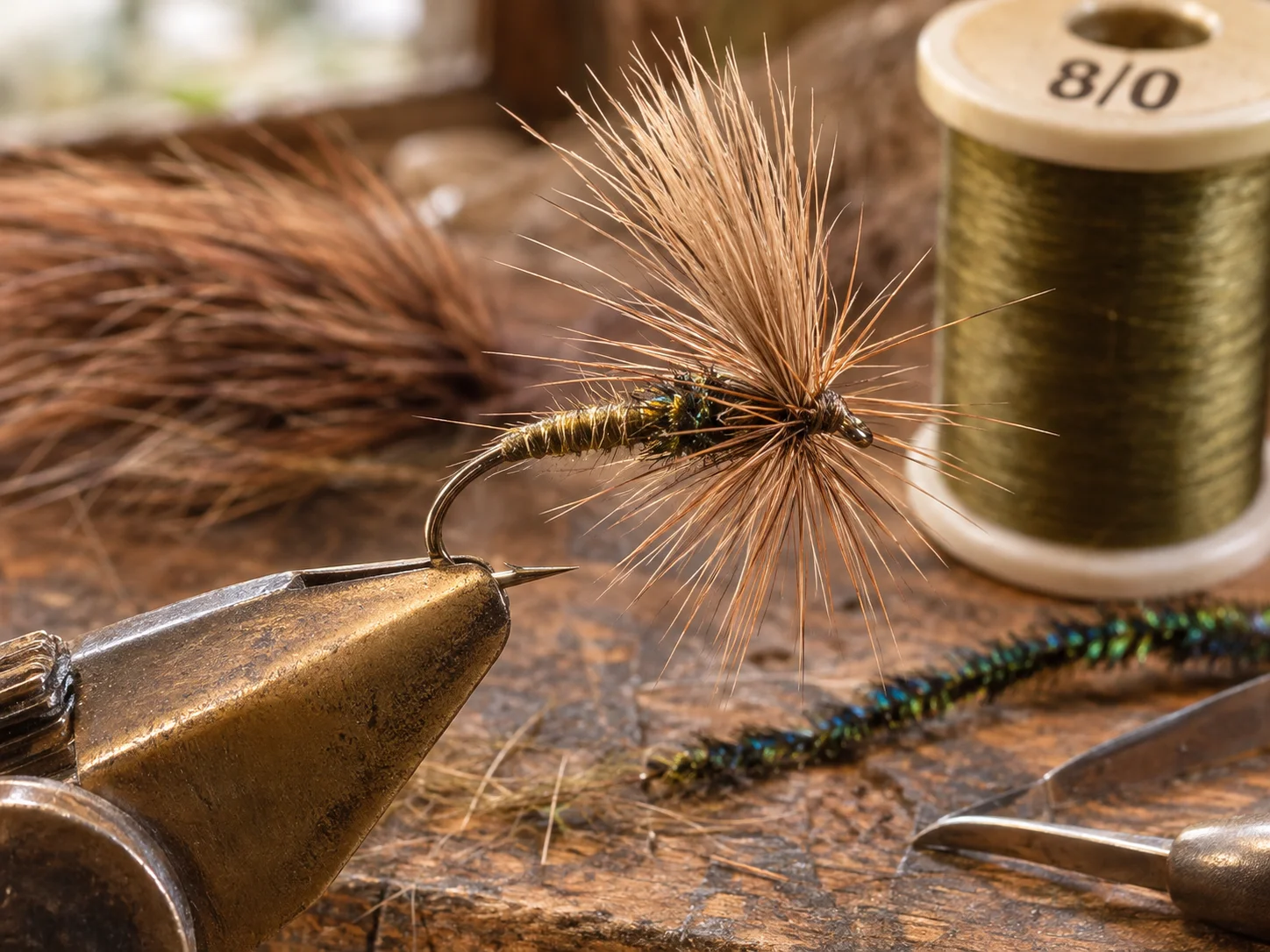
Scale reversal is one of photography’s most reliable tools, and no subject in fly fishing uses it better than the hand-tied fly. A size-20 midge pattern smaller than a fingernail, photographed with enough magnification to show the thread wraps and hackle fibers, turns a functional object into something that looks like months of craft. Because it did take months, or years, of practice to tie well.
Flickr’s “Flytying” and “Troutflies” communities have built galleries around exactly this subject, pairing close-up tying bench images with reflective captions about stillness and self-knowledge. The choice is deliberate. These photographers are not documenting gear. They are using intimate detail to argue that the sport has an interior life most outdoor photography ignores.
A elk-hair caddis dry fly photographed against rough-hewn wood, a small piece of peacock herl, a spool of 8/0 thread, and a hook in a vise communicates ritual. The viewer understands without being told that someone will wake before sunrise, drive a long way, and use this tiny object to participate in something they find worth doing. That implied story is what separates the fly detail photograph from catalog product photography. The difference is usually a matter of background texture, natural light, and whether the tying bench looks like it has been used.
Macro lenses in the 90-105mm range are the standard tool here. A single small softbox or a window on an overcast day prevents the harsh specular highlights that make thread wraps look plastic rather than fibrous.
4. The Release, Hands in Water
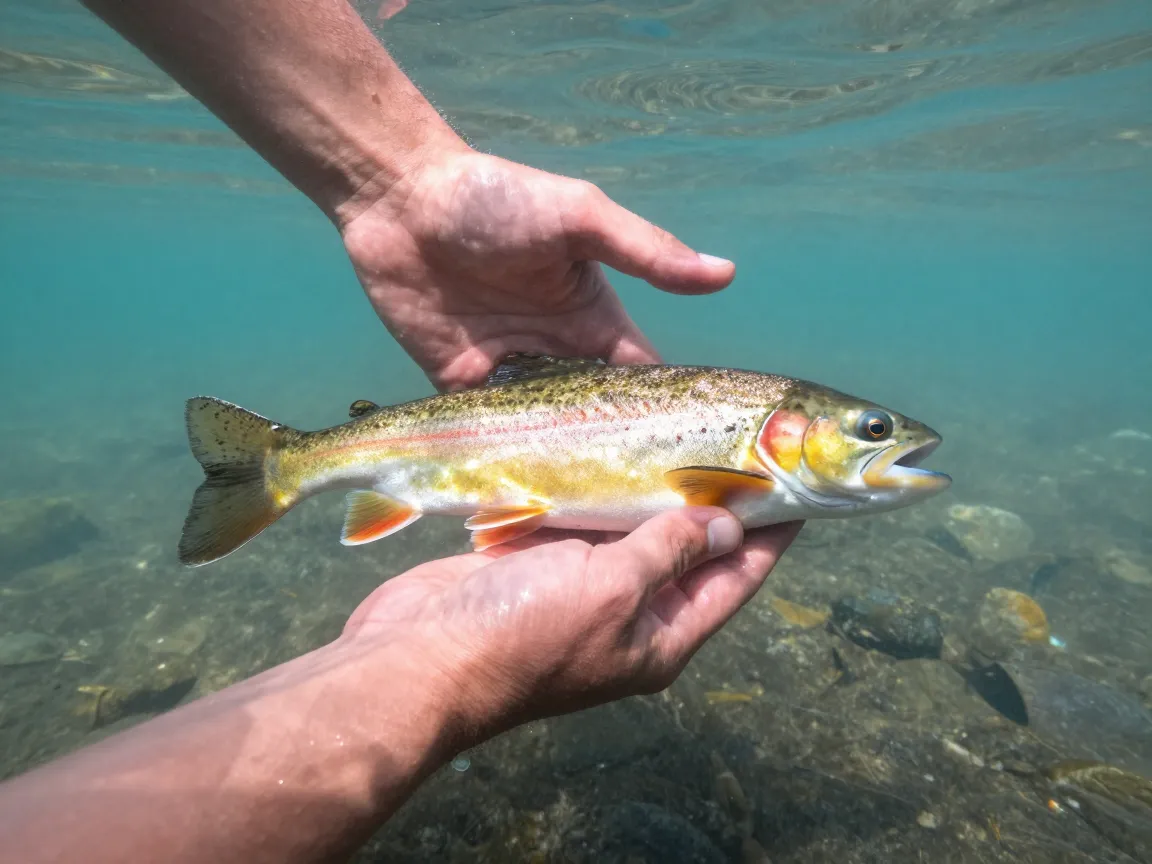
A grip-and-grin photograph documents possession. A release photograph documents letting go, which is a rarer and more interesting thing to show. The two hands, the fish held gently just below the surface, and the moment before it kicks free: this composition has become one of the defining visual symbols of modern catch-and-release fly fishing.
Hammer’s Patagonia and Cheesman Canyon work returns to this image repeatedly. Trout slipping back into clear current, with the angler’s hands still visible in cold water, anchors what he describes on his portfolio page as the moments that “make it all sink in.” The fish is not a trophy. The hands are not triumphant. The image is about return, which is also what rivers do when you leave them.
Shutterstock’s fly fishing library describes these release shots as lifestyle and nature-focused images rather than sport-performance shots, and that classification is accurate. The release photograph circulates most widely not in fishing publications but in conservation contexts, tourism materials, and brand content for outfitters who want to communicate a philosophy alongside their services.
Technically, clean water and good light on the fish are the main requirements. Murky water or low contrast between the fish and the riverbed produces images where the central subject disappears. Polarizing filters help cut surface glare when shooting from above. The best release photographs are made in cold, clear water where the fish itself provides color: the red lateral stripe of a rainbow, the yellow flank of a brown.
5. The River at First Light, No Angler Present
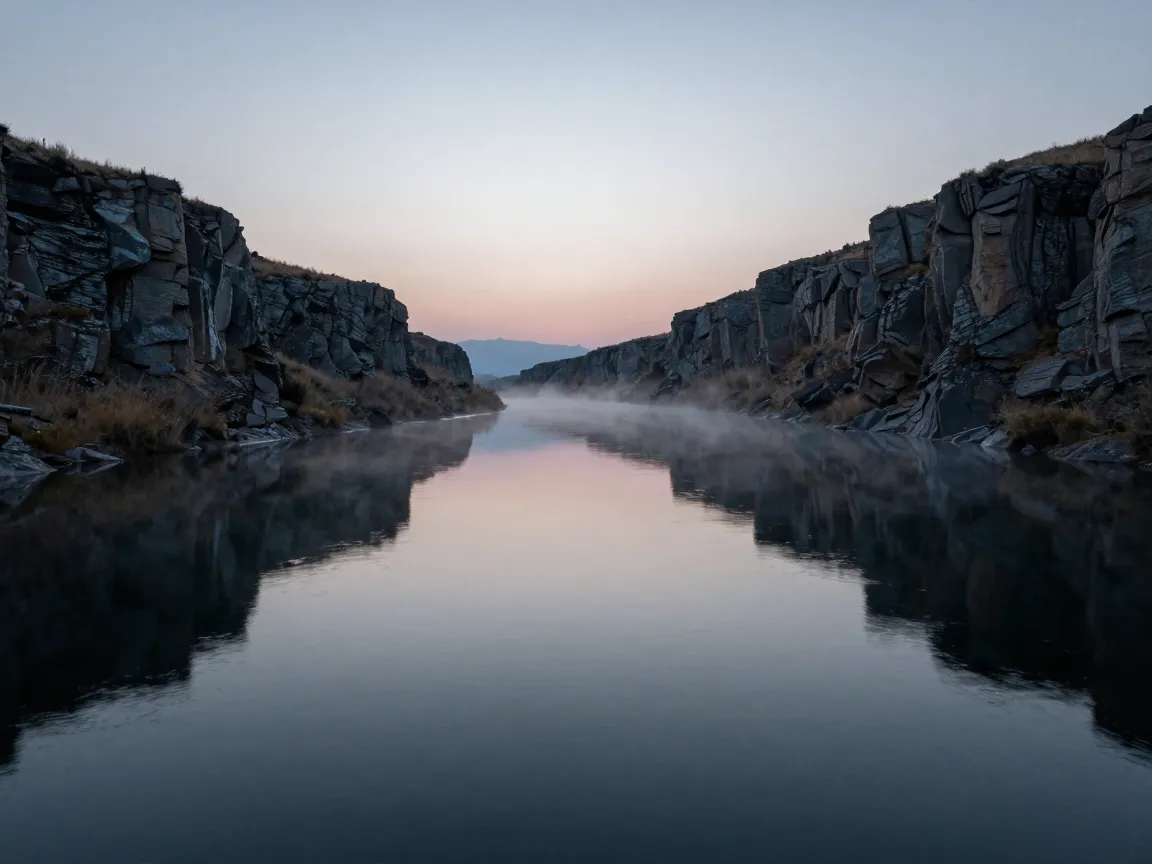
Some of the most effective fly fishing photographs contain no fisher at all. A river photographed in the gray-blue minutes before sunrise, still and reflecting the sky, communicates the same waiting quality that anglers describe when they talk about why they keep returning to the water. The image is an invitation and a mood simultaneously.
The Global FlyFisher gallery curates this image type alongside instructional content, treating scenic atmospheric shots as equivalent storytelling tools to technical photography. Their position, backed by years of community curation, is that a beautiful place well-photographed makes the same case for the sport as any action image, often more persuasively. Orvis News has used early-season “magic of pre-runoff” river shots in Montana and Wyoming to the same effect: uncrowded water, low morning light, the implicit promise of a cold, quiet morning before the world wakes.
Flickr’s “Flyfishing” tag community reinforces this choice through sheer volume. Contributors caption these empty-water shots with descriptions of escape and tranquility, positioning the river itself, not the catch, as the destination. The sport’s geography does a great deal of this communication for free. A river running through a basalt canyon or across alpine tundra does not need an angler in the frame to explain why someone drove four hours to stand in it.
Long-exposure techniques applied sparingly, 1/4 to 2 seconds of shutter, can smooth fast water into something that reads as more contemplative than it looks to the eye. Used too aggressively, the effect turns clinical. The goal is a river that looks fishable, not airbrushed.
6. The End-of-Day Walk Out, Gear in Hand
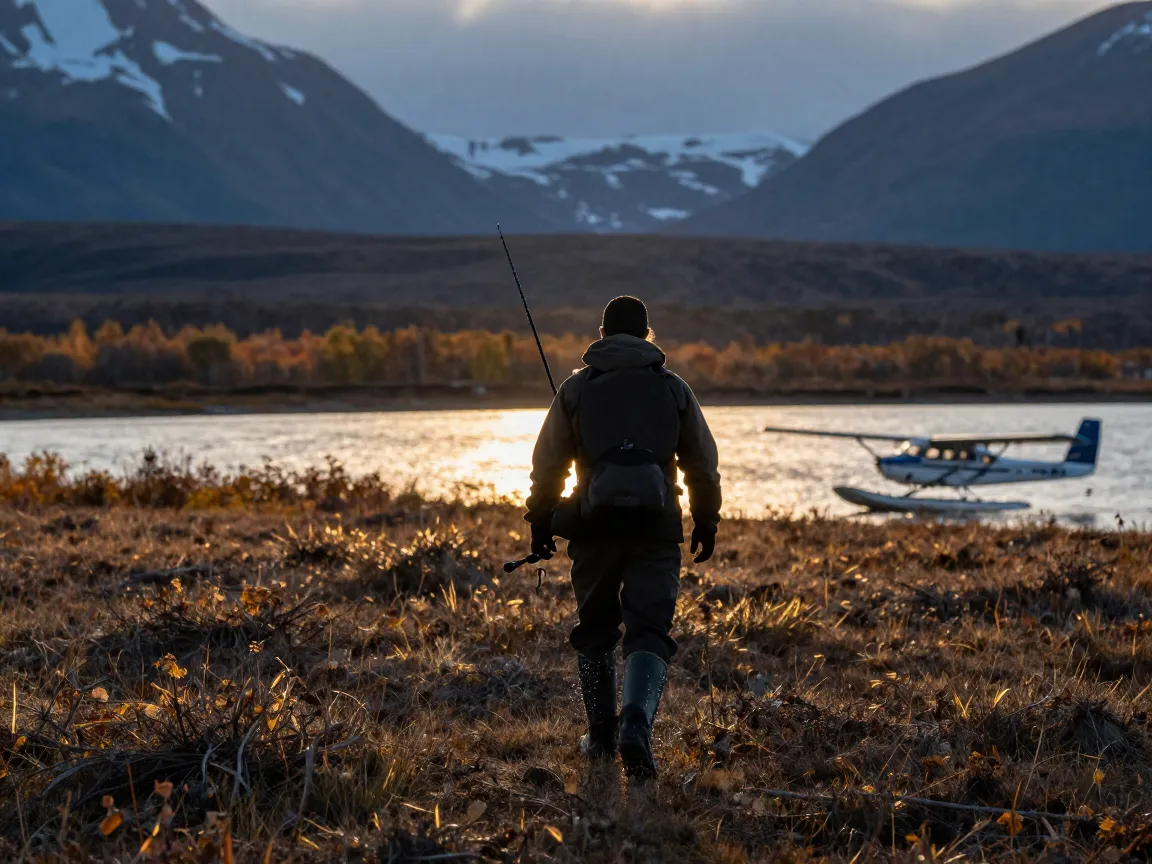
The last photograph worth examining is the one that most anglers take themselves: the walk back to the truck or float plane as the light fails, rod broken down and slung over a shoulder, wading boots still dripping. It is an exit photograph, but it functions as a summary of everything that happened between arrival and departure, including the parts no camera caught.
Hammer’s Alaska Iliamna series closes on exactly this note, with figures crossing tundra back toward float planes after long days on remote water. The image type appears across the Eastern Sierra work as well, with quiet fall-color walks used as bookends to the fishing itself. His portfolio statement frames these moments directly: the long days, the missed fish, the people who keep coming back. The walk-out photograph is the visual form of that statement.
What it shows is not failure or success but commitment. The rod case carried over a shoulder after eight hours of wading a Patagonian river says something different than a trophy shot taken in the first hour. Time spent is what distinguishes fly fishing from most other forms of recreation, and this image type is the only one that makes that visible.
The compositional challenge is light. End-of-day often means backlit subjects with blown-out sky, which can work if handled deliberately, using the angler as a silhouette against fading water color, or fought against by turning and shooting toward the last lit stretch of river. Both approaches appear in professional galleries. The silhouette version is more common and arguably more clichéd; the half-turn, where the angler is partly lit and partly in shadow walking away, tends to feel less staged.
Quick Comparison
| Image Type | Key Subject | Main Mood | No Fish Required |
|---|---|---|---|
| 1. Cast in air | Line loop, body posture | Elegance, skill | Yes |
| 2. Wide landscape | River and terrain scale | Solitude, remoteness | Yes |
| 3. Fly detail | Tied fly on bench | Craft, ritual | Yes |
| 4. The release | Hands, fish, water | Return, care | Briefly visible |
| 5. Empty river at dawn | Water, light, sky | Waiting, invitation | Yes |
| 6. Walk-out | Angler exiting, gear | Time spent, commitment | Yes |
Conclusion
These six image types are not interchangeable decoration. Each one makes a specific argument about what fly fishing is, and together they build the case that the sport is primarily about where you are and how long you stay, not what you bring home. Photographers from Rob Hammer’s editorial work to community contributors on Flickr have arrived at the same set of subjects independently, which suggests these are not aesthetic preferences but accurate descriptions of the experience itself.
If you want to put this into practice, pick one image type and go back to the same stretch of water twice under different light conditions. The difference between a mediocre and a strong version of any of these shots almost always comes down to light and patience, which, as it happens, are the same things the fishing itself requires.