Ocean Fishing Outfit Picks for Salt, Sun, and Spray
Salt spray and roughly 20 knots of apparent wind can drop a 78-degree day on the bow of an offshore boat to something closer to 62 degrees before the first bait is even rigged. Add eight hours of direct sun reflected off open water, repeated soakings from green water over the rail, and the kind of fish oil that eats through ordinary cotton by noon, and it becomes clear that what you wear on the ocean is not a style question. These 6 Ocean Fishing Outfit Picks for Salt, Sun, and Spray address each of those problems in a specific way, from the layer against your skin to the sole of your shoe, so you can stay comfortable, protected, and functional from the dock run to the last drop-back.
Disclosure: This post contains affiliate links. As an Amazon Associate, we earn from qualifying purchases, and at no extra cost to you.
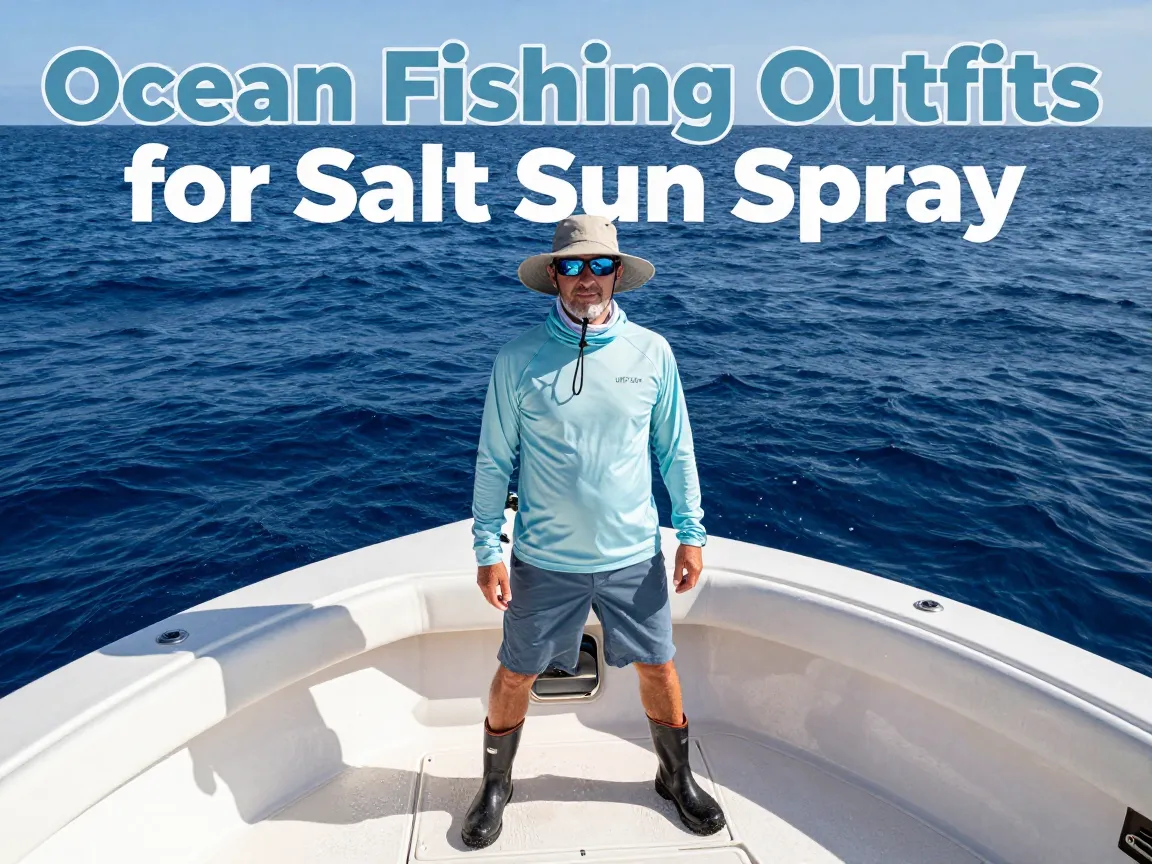
1. UPF 50+ Long-Sleeve Sun Shirt
The sun shirt is the foundation of every serious offshore outfit, and UPF 50+ is no longer a premium feature but a minimum standard. A fabric rated UPF 50+ blocks roughly 98 percent of UV radiation, which matters more on the water than on land because the ocean surface reflects and amplifies rays that would otherwise pass around you. Loose-woven polyester or nylon blends achieve this rating while still allowing airflow, which is why guide-approved picks consistently name technical sun shirts over cotton tees even in tropical heat.
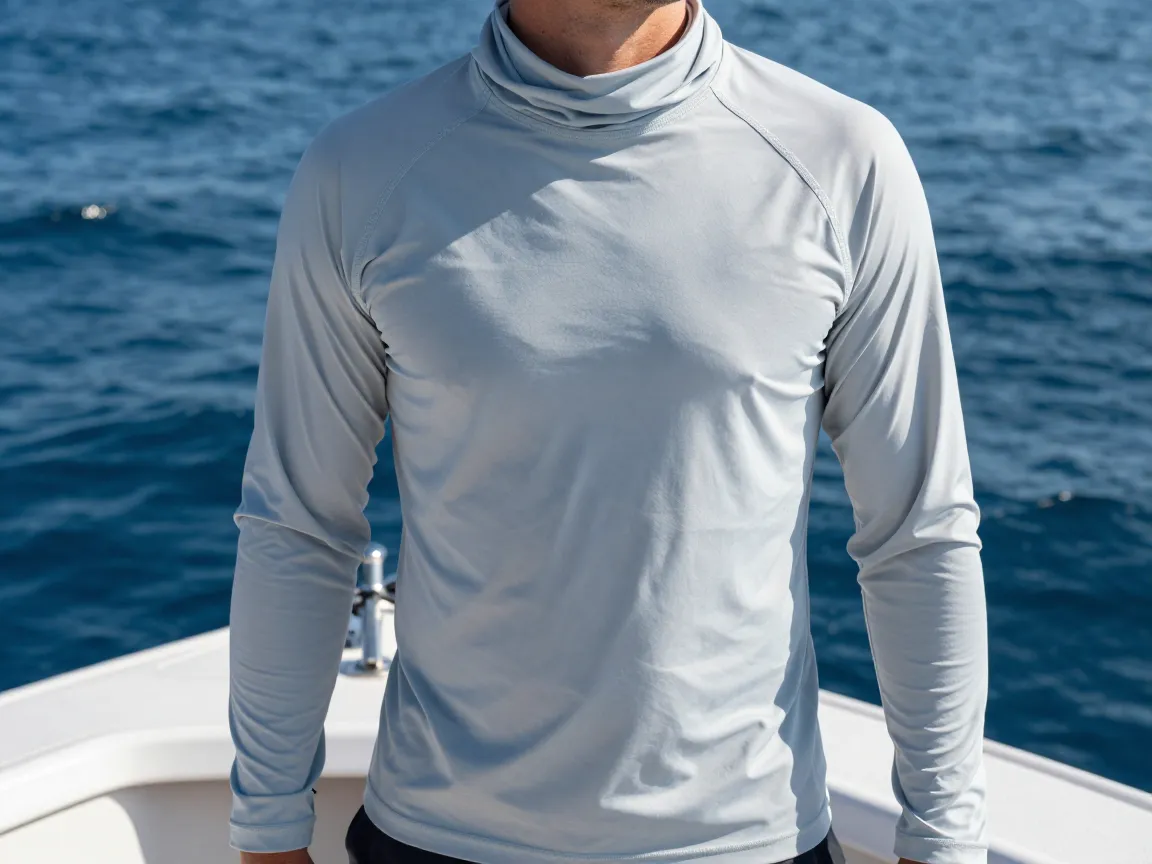
Huk has invested heavily in performance textiles for this category, producing sun shirts with moisture-wicking interiors that pull sweat away from skin and dry quickly after a wave rolls across the deck. Free Fly’s saltwater performance line takes a similar approach with cooling fabric blends designed for days when anglers are repeatedly soaked and then baked dry in the sun. The key construction details to look for are flatlock seams that won’t chafe under a life jacket, a collar tall enough to protect the back of the neck, and sleeves that extend to the wrist without bunching inside gloves or under a rash guard.
Fit matters more than most people expect. A shirt that is too tight against the torso traps heat instead of releasing it; one that is too baggy catches wind and creates drag when you’re leaning over the gunnel. A slim athletic cut that allows a full casting motion without pulling at the shoulders is the practical target. If you run in cooler months or in areas where offshore winds pick up early morning, a lightweight moisture-wicking base layer underneath the sun shirt handles the chill while the sun shirt handles the UV, and neither layer needs to be heavy to do its job.
2. Quick-Dry Ripstop Shorts or Nylon Pants
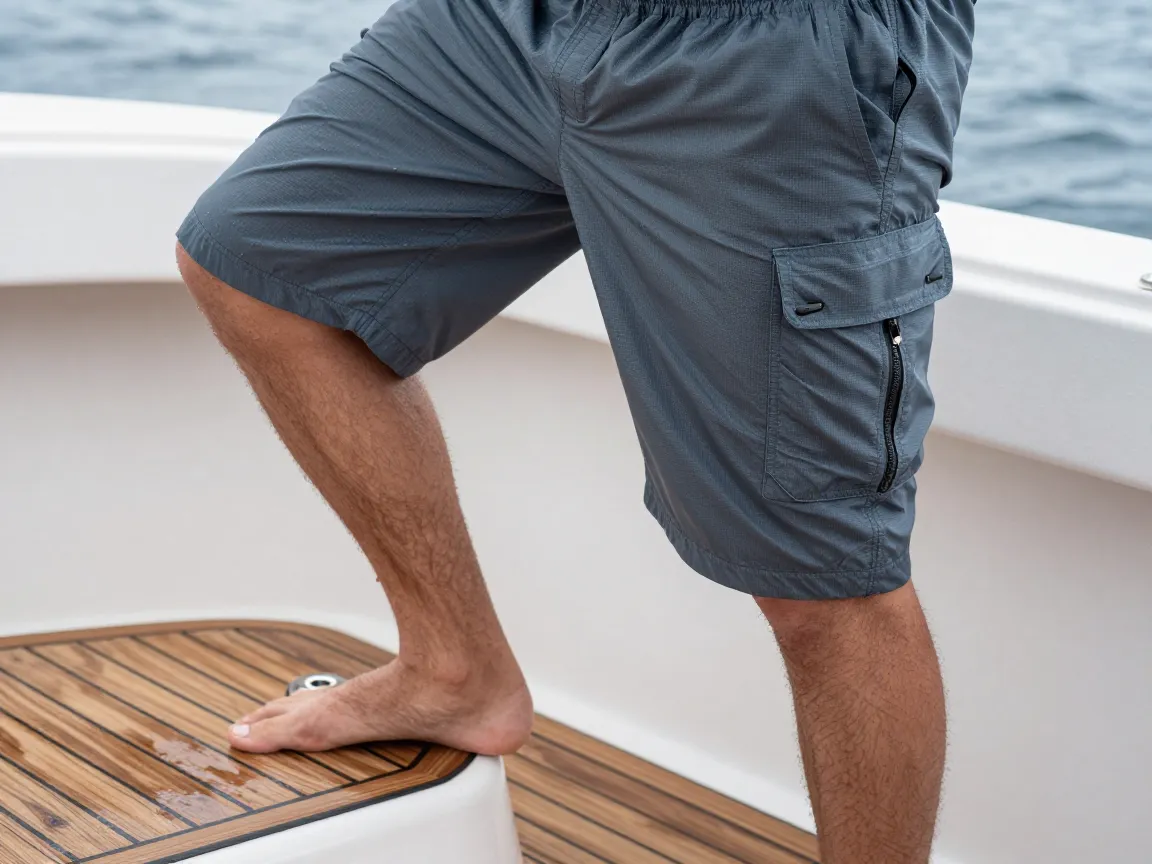
The choice between shorts and pants on an offshore trip is not purely a temperature call. Fish oil and saltwater degrade ordinary fabrics rapidly, which is why current recommendations consistently point toward ripstop polyester shorts or quick-dry nylon pants with stain-resistant coatings. These fabrics are engineered to wick moisture and dry in under 15 minutes, so a soaking from a rogue wave doesn’t mean sitting in wet clothing for the rest of the drift.
Ripstop polyester shorts with an elastic waistband are the most common warm-weather choice on tropical charters. The ripstop weave resists tears from hooks, tackle boxes, and rough deck hardware without adding much weight. For days when spray is constant or the wind picks up after the run out to the grounds, quick-dry nylon pants provide coverage without the clammy feel of wet denim or cotton canvas. AFTCO’s fishing pants and Free Fly’s saltwater performance pants are cited frequently in gear roundups for combining UPF 30 to 50+ protection with the kind of four-way stretch that lets you step up onto a gunnel or drop into a fighting chair without restriction.
One practical note: deep cargo pockets with drainage grommets keep your phone, dehooking tool, and license dry without letting water pool. Some nylon pants also include a zippered lower leg that converts them to shorts, which is worth the slight extra cost if you’re heading somewhere where the morning run is cold and the midday heat is intense.
3. Packable Waterproof Shell or Foul-Weather Jacket
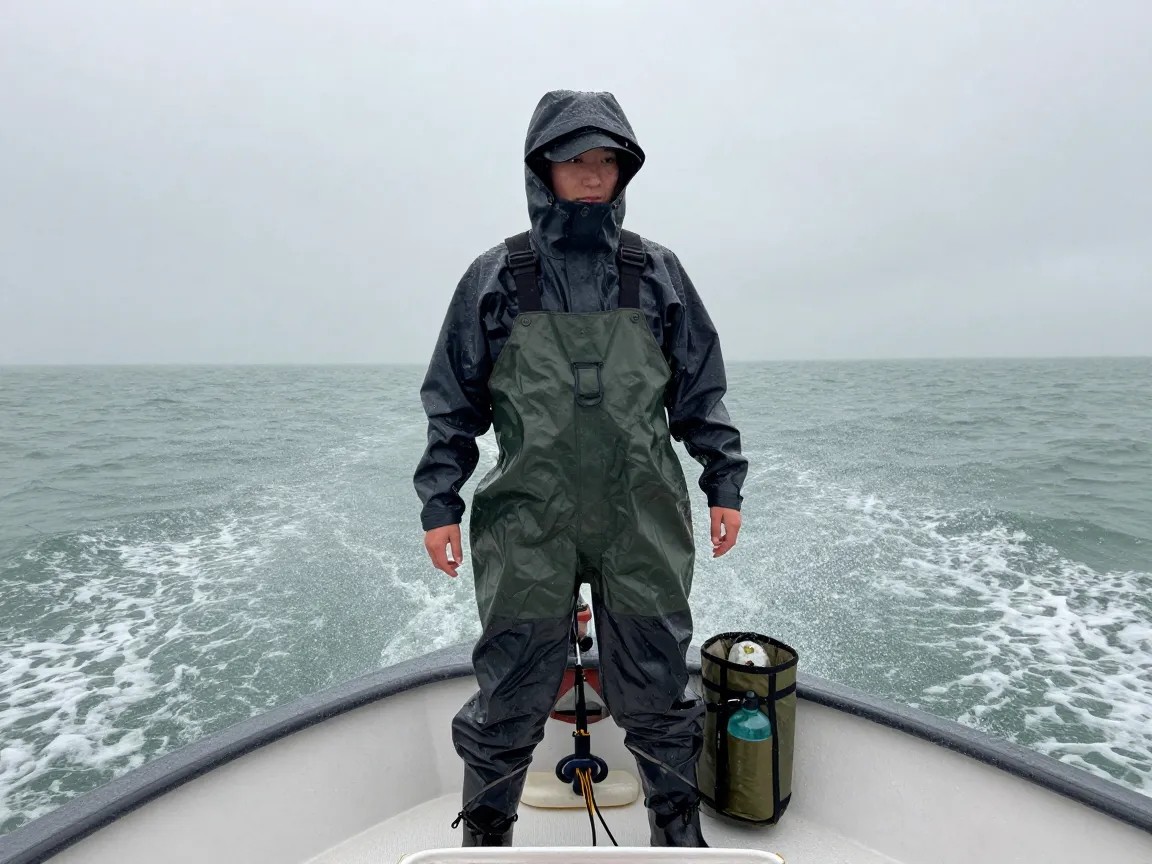
No offshore trip is long enough to skip a rain layer, even in summer. Squalls can materialize within minutes offshore, and the combination of spray, wind, and sudden rain will soak through a sun shirt in seconds. The practical question is how much jacket to carry, and the answer has become more nuanced as new technical fabrics allow lighter construction without sacrificing waterproofing.
For warm-weather fishing where squalls are brief and the temperature stays above 70 degrees even in the rain, a packable windbreaker or light rain shell with a DWR (durable water-repellent) coating is enough. These pack into a stuff sack the size of a water bottle and add almost nothing to a bag. For extended offshore trips, cold-season charters, or any situation where you expect to be in the spray continuously, a fully taped-seam jacket from a marine brand is the right tool. Gill’s Aspect 2.0 jacket and AFTCO’s breathable rain jackets are both noted for combining taped seams and hydrophobic outer fabrics with better airflow than older PVC-coated designs, which makes them tolerable on warm days where previous-generation foul-weather gear would have felt like a sauna.
If the forecast shows any chance of sustained heavy rain or cold spray on the bow run, pair the jacket with matching waterproof bibs. Bibs outperform separate pants in heavy conditions because they eliminate the gap at the waist where water always finds a way in. The Gill Aspect bibs and AFTCO bib options use the same taped-seam construction as their jackets and are cut high enough to stay in place when you’re bent forward fighting a fish.
4. Polarized Wraparound Sunglasses
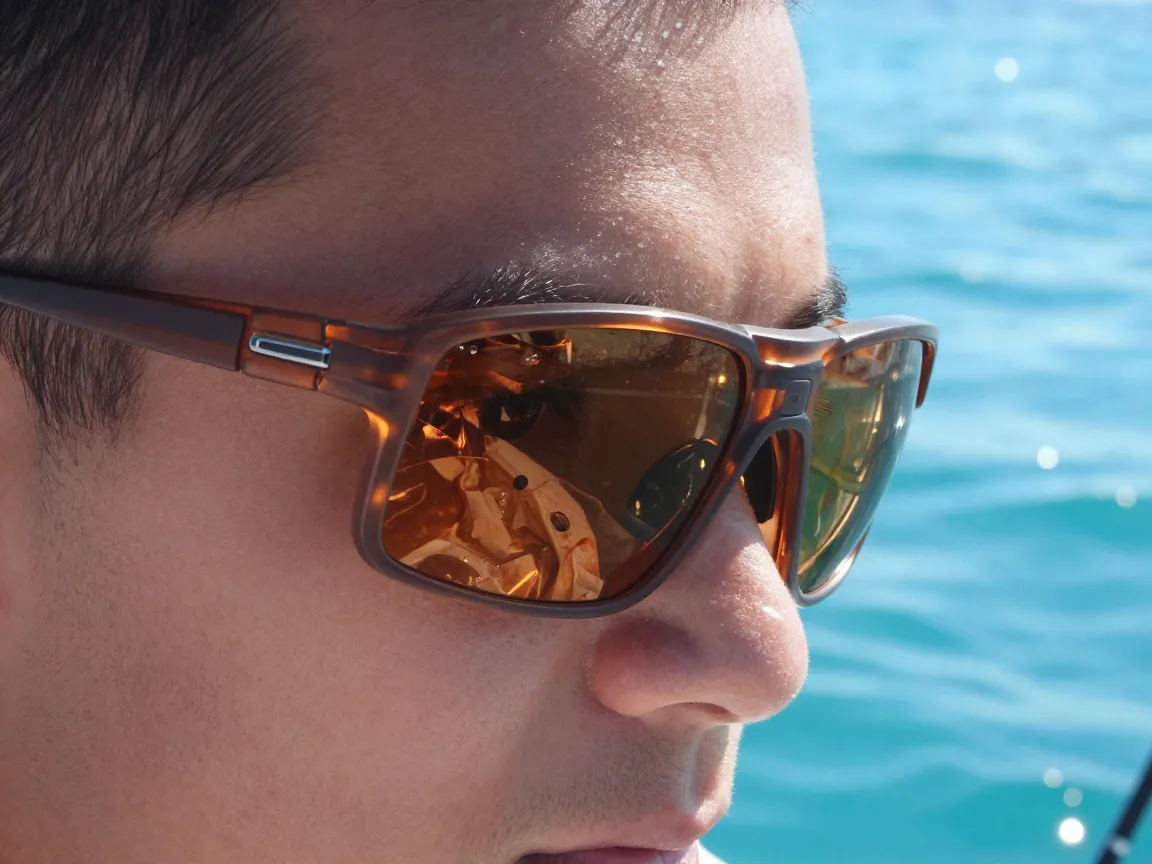
Polarized lenses reduce glare off the water surface, which does two things: they cut eye fatigue over a full day in the sun, and they let you see into the water column to spot fish, structure, and color changes that flat non-polarized lenses turn into a wall of reflection. Neither benefit is subtle after six or eight hours offshore.
The wraparound frame style matters more here than on land because light enters from angles as well as directly ahead. A standard frame with open sides allows reflected UV to reach the eye from the periphery, which defeats the purpose of the polarized lens. Wraparound designs with lenses that curve to the temple block that lateral exposure and also stay on your face in wind. Copper or amber lens tints perform well in bright tropical conditions, cutting blue light and improving contrast in the water surface; grey lenses are more neutral for overcast days or low-angle morning light. Some offshore guides recommend frames with a leash or retention cord, which is a simple addition that prevents losing a $200 pair of lenses when a marlin takes a bait and the boat lurches.
Lens material is worth a brief mention. Glass lenses offer the clearest optics and most scratch resistance but add weight; polycarbonate lenses are lighter, impact resistant, and adequate for most anglers. If you’re wearing glasses for a full 10-hour day in the heat, the weight difference is noticeable.
5. Secure Wide-Brim Hat and Neck Gaiter
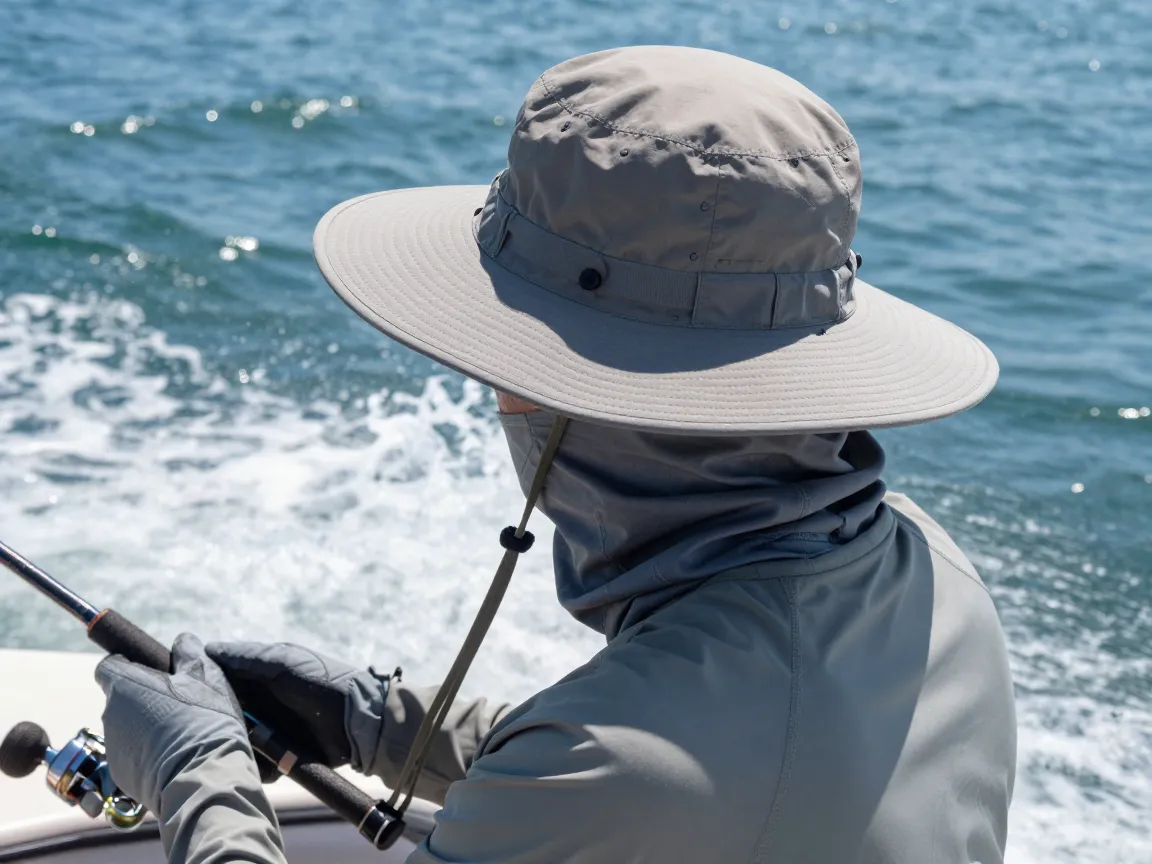
A baseball cap’s brim covers the face but leaves the ears, neck, and the back of the head exposed to direct and reflected UV. On open water with no shade and an amplified reflection off the surface, that exposure adds up faster than most people expect. A wide-brim hat with a brim of at least three inches provides meaningful coverage around the entire face, ears, and upper neck, and most technical fishing hats in this category are made from UPF-rated fabrics that add passive protection even through the crown.
The hat needs to stay on your head at speed. A chin cord or adjustable drawstring is not optional on a center console running at 25 to 35 knots. Without one, the hat becomes a liability rather than an asset. Some technical fishing hats also include a rear cape or sun flap that extends down over the neck, which is useful but not strictly necessary if you’re also wearing a neck gaiter.
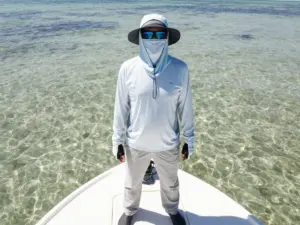
A UPF-rated neck gaiter fills the gap between your hat brim and your collar. It covers the neck, lower face, and ears, can be pulled down when not needed, and dries almost instantly. Paired with a wide-brim hat and a long-sleeve sun shirt, it completes a continuous UV barrier from crown to wrist with no skin gaps. Many offshore anglers also add lightweight sun gloves for the backs of the hands, which are constantly exposed when holding a rod or handling leader. These are thin enough to maintain grip feel and wash out in seconds with a fresh-water rinse.
6. Non-Marking Rubber-Soled Boat Shoes or Deck Boots
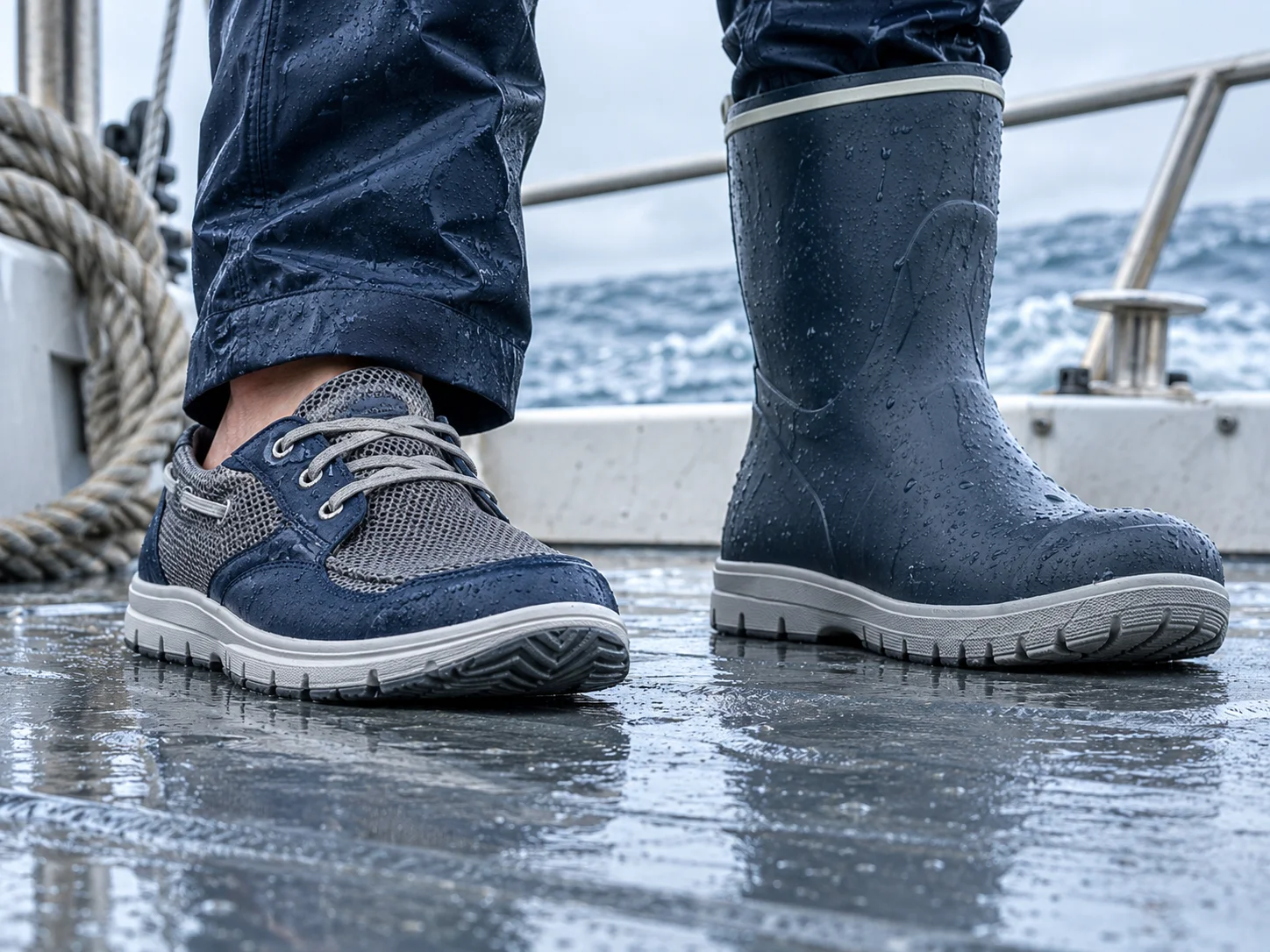
A wet fiberglass deck is one of the most hazardous surfaces in recreational fishing. The right sole does more than protect your feet from hook injuries or sun-heated non-skid; it determines whether you stay upright when the boat rolls or when a wave sweeps across the cockpit. Non-marking rubber soles with siping patterns designed for wet traction are the standard for offshore footwear, and marine brands treat saltwater footwear as a distinct category from general athletic or water shoes for this reason.
For warm, dry conditions, a lightweight boat shoe or deck sneaker with a siped sole and mesh upper drains quickly and provides enough grip for most offshore trips. For heavy spray, continuous wet decks, or cold-weather charters, waterproof boots with the same non-marking rubber construction keep feet dry and reduce fatigue from cold water. The boot height matters: ankle-height boots offer mobility; mid-calf height provides better protection when the deck is continually awash. AFTCO, Gill, and Sperry all maintain dedicated saltwater footwear lines that pair with their foul-weather gear, designed with the same logic as the rest of a layered offshore outfit.
Sole thickness affects feel and fatigue on a rocking deck. Thicker cushioning reduces fatigue on longer trips but reduces proprioceptive feedback, which is the ability to feel the deck surface under you and adjust your balance automatically. Most offshore anglers find a medium-cushion sole strikes the right balance. One practical test before any charter: wear your shoes on a wet floor at home and confirm the sole grips before you’re standing on the bow at dawn trying to clear a snarl while the boat rolls in a swell.
Conclusion
The six picks above form a complete, layered system rather than a set of independent garments. The sun shirt handles UV at the base. The quick-dry bottoms handle moisture and durability. The shell handles spray and wind. The polarized sunglasses handle glare and eye protection. The hat and gaiter close the remaining skin gaps. The soles keep you on your feet. That sequence is deliberate.
Before your next offshore trip, check these six categories against what you currently own and identify the specific gap. If you have quality sun shirts but still wearing cotton shorts, start there. If your sunglasses lack a wraparound frame, the upgrade to polarized wraparounds will immediately change how you read the water. The whole system does not need to be replaced at once, but the system does need to be complete before you leave the dock.