Duck Hunt Pixel Art Projects That Retro Fans Will Instantly Love
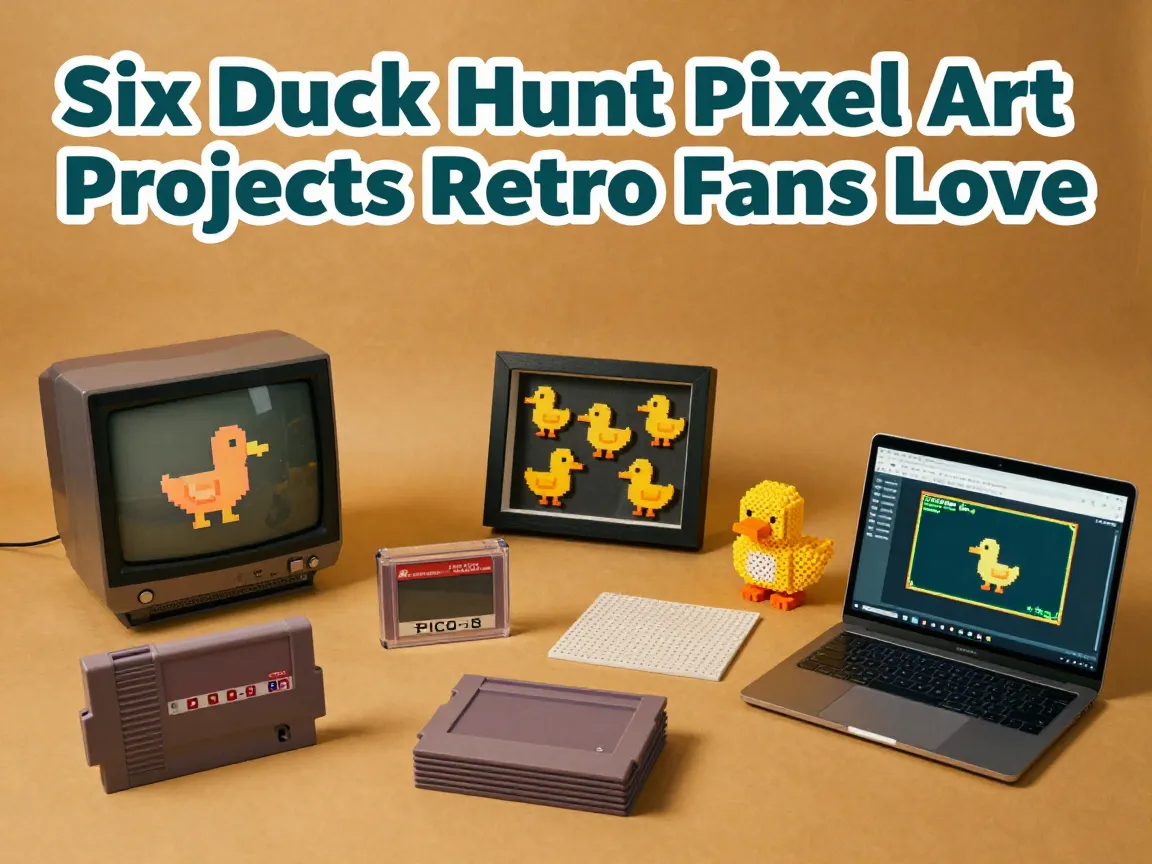
The original Duck Hunt shipped on the NES in 1984, and its three-color duck sprite, roughly 16 pixels wide, has refused to stay buried. In 2026, search results, craft marketplaces, and open-source repositories are all full of people rebuilding, reprinting, and reinterpreting that tiny orange bird. The 6 Duck Hunt pixel art projects that retro fans will instantly love span everything from a fully coded 256×240 fangame to handmade shadow boxes sold on Etsy, and each one shows a genuinely different way that an eight-bit classic can find new life.
Disclosure: This post contains affiliate links. As an Amazon Associate, we earn from qualifying purchases, and at no extra cost to you.
Key Takeaways
- Six distinct Duck Hunt pixel art projects are actively maintained or selling in 2026, ranging from playable fangames to physical craft items.
- Soulrender’s Windows fangame and Buzzard’s PICO-8 demake are the two most technically documented digital recreations available right now.
- IanSkelskey’s 32×32 Lospec sprite demonstrates how strict palette and size constraints can produce focused, study-worthy pixel art.
- Daniel The Fox’s Godot Engine 4 rebuild shows Duck Hunt is still a viable learning project for developers picking up modern tools.
- Physical pixel art, shadow boxes, perler beads, acrylic standees, represents a growing Etsy market with over 60 Duck Hunt-themed products listed in 2026.
- DuckHunt-JS and the open-source Duckhunt GB ROM prove that browser ports and Game Boy-style constraints remain two of the most active frontiers for retro recreation.
1. Soulrender’s 256×240 Windows Fangame on itch.io
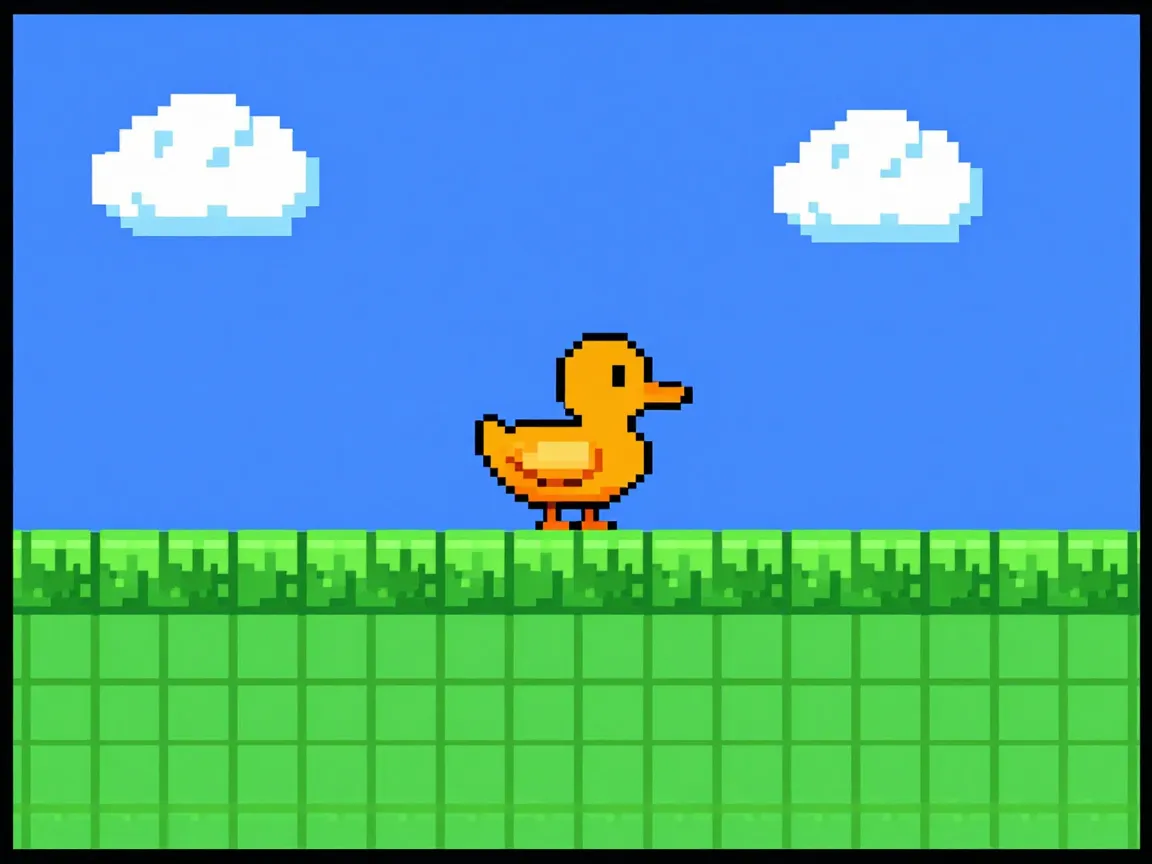
Soulrender’s Duck Hunt tribute, published and updated on itch.io in mid-October 2026, is one of the cleanest documented pixel-art fangame projects available today. Every graphic and sound was built from scratch, no ripped NES assets, which makes it both legally distinct and technically interesting as a study in reconstructing a visual style without copying it directly.
The game runs at exactly 256×240 pixels, the native NES resolution, and can scale to fill any window size. Toggling fullscreen takes one keypress (F), which keeps the experience as close to the original TV-and-couch setup as the platform allows. The itch.io page tags it explicitly as 8-bit, pixel art, retro, single-player, and fangame, so it’s easy to find for anyone searching that category.
What makes this worth attention beyond its playability is the resolution discipline. Working at 256×240 means every sprite, background tile, and animation frame has to earn its pixels. Soulrender’s project is a practical demonstration that NES-era constraints are not a limitation for nostalgia purposes alone, they’re a design system that forces clear visual decision-making. For anyone learning pixel art, studying how the ducks, the dog, and the grass tiles read cleanly at that resolution is more instructive than any tutorial that starts with a 1080p canvas.
If you want to see the project, search “Duck Hunt Soulrender” on itch.io. The page shows the full tag list and a build you can run on Windows without any additional setup.
2. Buzzard’s PICO-8 Demake
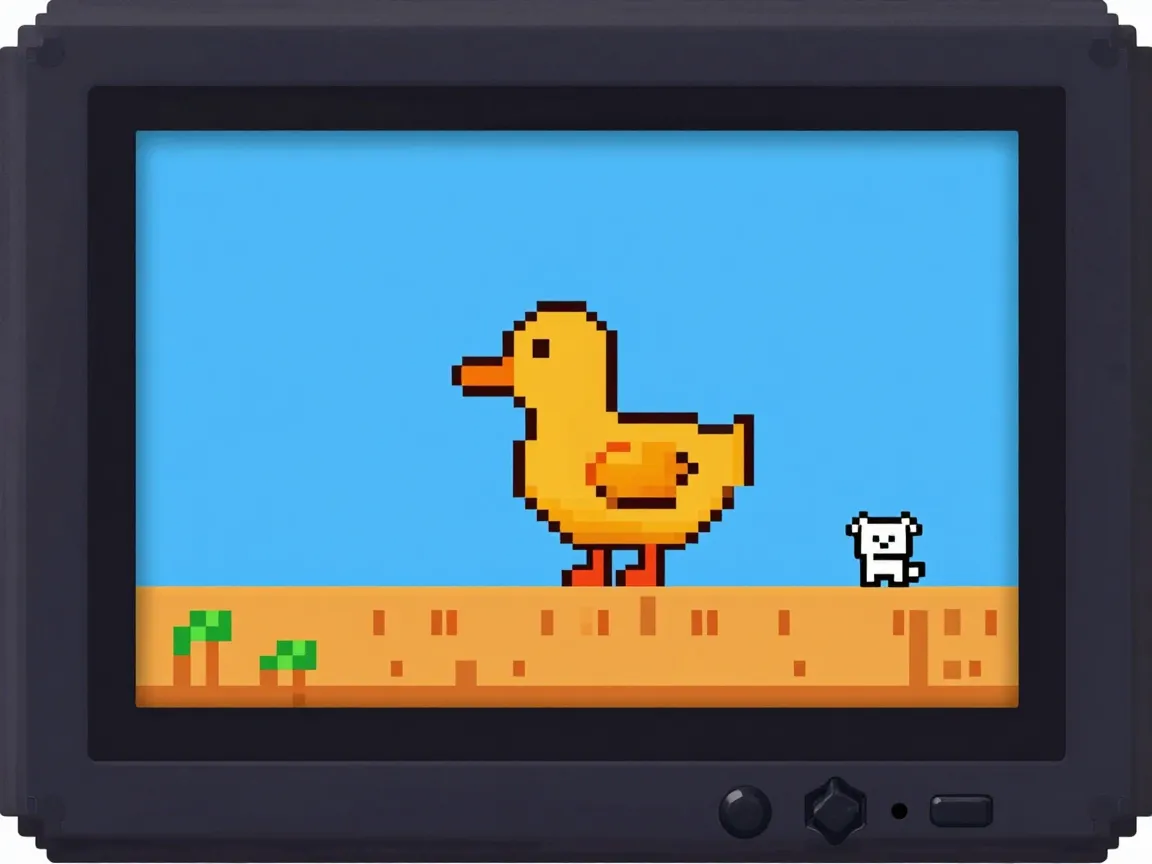
The PICO-8 fantasy console imposes hard limits: 128×128 pixels, a fixed 16-color palette, and a maximum cartridge size measured in tokens rather than megabytes. Buzzard’s Duck Hunt demake, also hosted on itch.io and updated in November 2026, works entirely within those constraints, and the result is a reflex-testing arcade shooter that weighs about 34 kilobytes as a.p8.png file.
That file size matters because it reflects the density of the work. A 34 kB PICO-8 cart contains the game logic, all sprite data, the map, and the sound effects, compressed into a single PNG that also doubles as the cartridge label image. It’s a format that takes the pixel-art philosophy to its logical extreme: the art IS the file.
Visually, Buzzard’s demake reads as Duck Hunt stripped to its most essential shapes. The duck silhouettes are recognizable in four or five pixels. The background is flat color. The dog’s laugh animation fits in a few frames. This is not a lesser version of the Soulrender fangame; it’s a different project with a different goal. Where Soulrender reconstructs the NES look faithfully, Buzzard’s demake asks what Duck Hunt would have been if it had shipped on even more constrained hardware.
For retro fans who also make pixel art, the PICO-8 palette and token limits are worth trying once. The constraint forces prioritization that larger canvases let you avoid.
3. IanSkelskey’s 32×32 NES Cartridge Sprite on Lospec
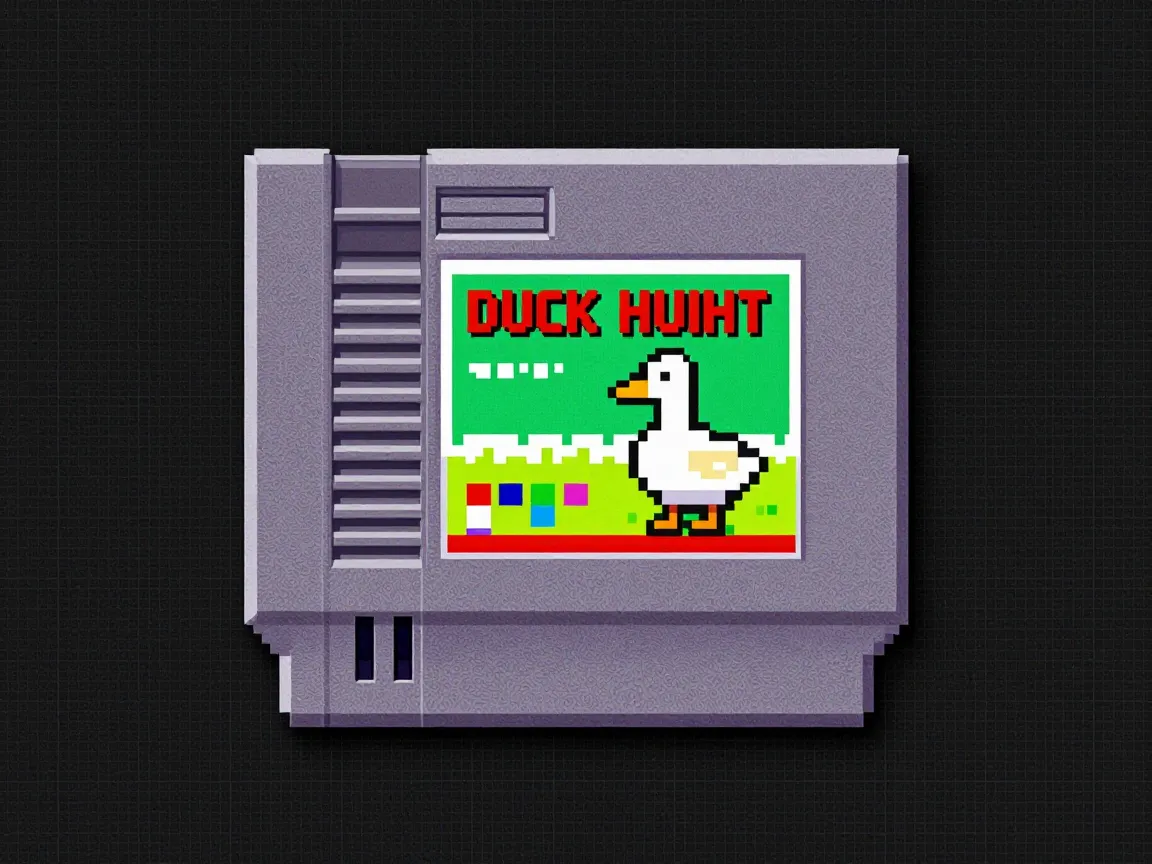
Lospec is a free platform built specifically for pixel artists, and IanSkelskey’s “Duck Hunt NES Cartridge” piece is exactly the kind of project that makes the site worth bookmarking. The artwork condenses the entire physical NES cartridge, label, body, edge connector, into a 32×32 grid using 16 colors drawn from PICO-8’s standard and “secret” palettes. The gallery entry shows a late-November 2026 update date.
The tool credit on the page is Aseprite, which is the most widely used dedicated pixel-art editor available. That detail is useful because it grounds the project in a specific, reproducible workflow: Aseprite’s indexed-color mode and palette-lock features are what make disciplined 16-color work practical. Anyone replicating IanSkelskey’s approach would start there.
What’s technically interesting about a 32×32 cartridge study is the hierarchy problem. A real NES cartridge has the game title, a character illustration, the Nintendo logo, and the edge connector slot, all of which need to read as distinct elements at thumbnail scale. Getting that to work at 32 pixels wide requires deciding which details survive and which get dropped. IanSkelskey keeps the Duck Hunt title legible and the duck silhouette recognizable while reducing the cartridge body to a few value blocks. That’s a palette and contrast problem, not a drawing problem, and solving it at this scale builds skills that transfer to any small-format sprite work.
The Lospec gallery lets you view the piece at 1x, 2x, and higher zoom levels, which is the best way to study how the color choices hold up at different sizes.
4. Duck Hunt Remastered in Godot Engine 4
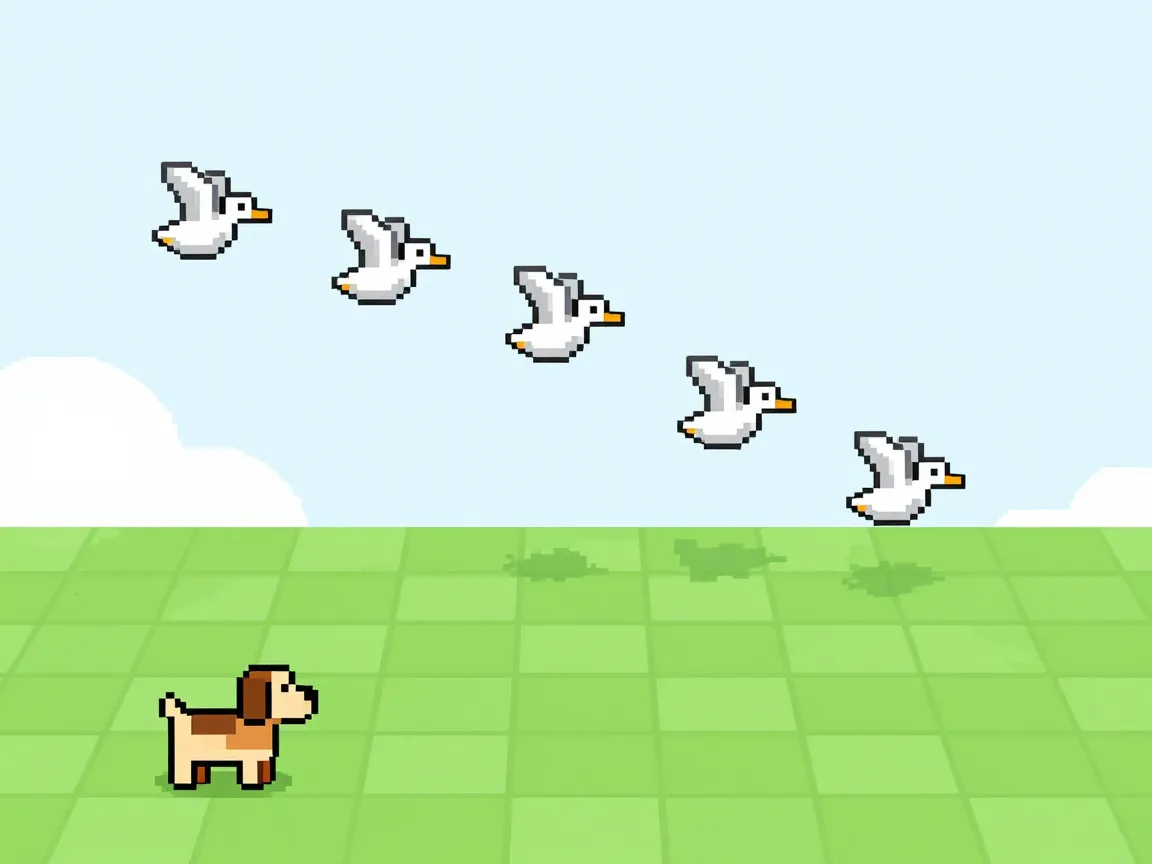
Daniel The Fox built Duck Hunt Remastered while learning Godot Engine 4, releasing an initial version in December 2023 and maintaining the project page into late November 2026. That two-plus-year lifespan for a learning project is not common, which suggests the game found an audience beyond the developer’s own portfolio.
Godot Engine 4 is a free, open-source game engine that handles 2D pixel art natively, with built-in support for nearest-neighbor scaling (which keeps pixels crisp rather than blurring them), tilemaps, and sprite animation. Using it to rebuild Duck Hunt is a reasonable choice for a beginner project because the game’s mechanics are simple enough to implement quickly, leaving cognitive space to learn the engine’s scene system and input handling.
The “remastered” framing means this isn’t a strict 256×240 reconstruction. Daniel The Fox’s version retains the pixel-art visual language but allows for modernized elements, cleaner UI, possibly updated animations, while keeping the core gameplay loop of shooting ducks before they escape the screen. For retro fans, this sits in an interesting middle space: it’s recognizable as Duck Hunt but not identical to it, which is the same position most beloved fan remakes occupy.
For developers picking up Godot in 2026, this project is a useful reference because the page documents an active, working Godot 4 project rather than an abandoned proof-of-concept. Duck Hunt-inspired remakes in modern engines are likely to keep appearing as practice projects for new developers, partly because the original’s mechanics are so well understood that any deviation from expected behavior is immediately obvious.
5. Physical Pixel Art Crafts on Etsy
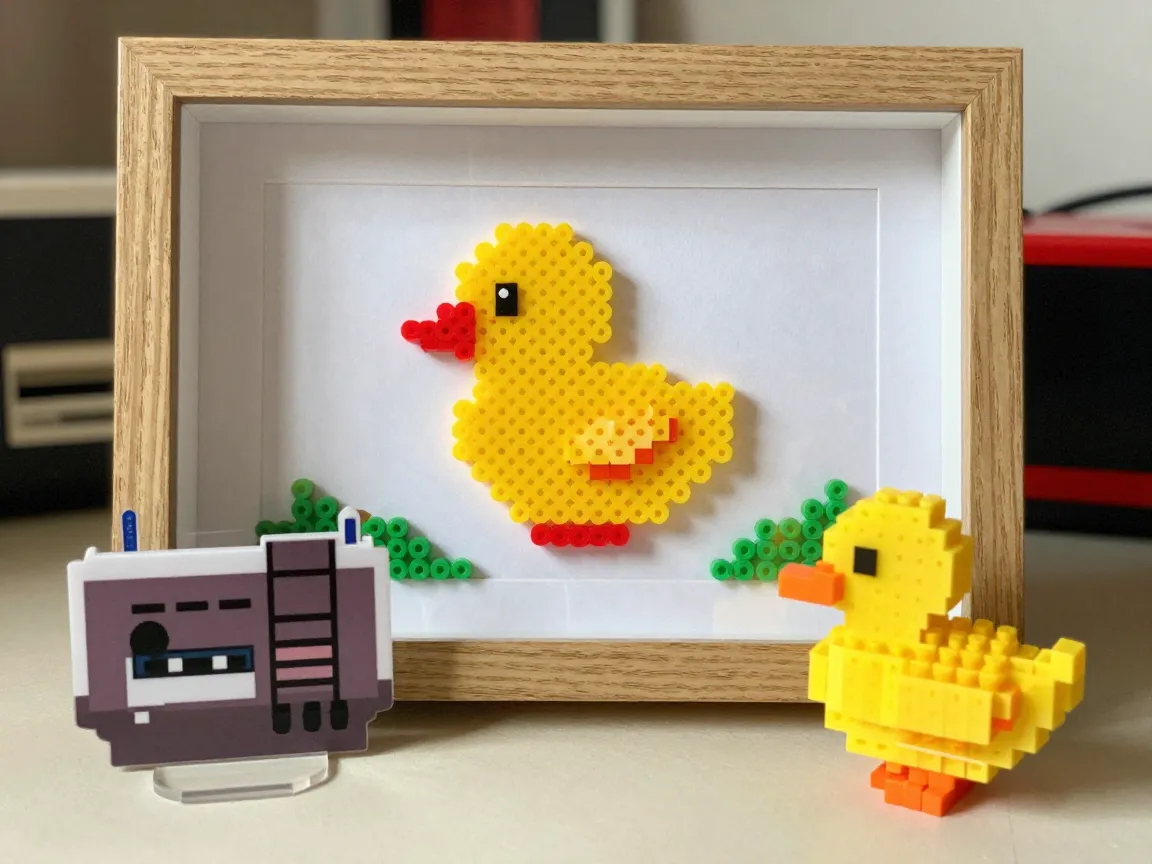
The Etsy marketplace for Duck Hunt pixel art in 2026 is larger than most people expect. A curated “Nintendo Duck Hunt Gift” collection aggregates over 60 products, ranging from shadow box dioramas and pixel-art wall prints to 3D-printed pixelated mallard ducks, perler-bead figures, NES dog acrylic standees, and cross-stitch patterns. Listings use titles like “Duck Hunt Hand Made Pixel Art Shadow Box” and “Duck Hunt Dog Pixel Art Acrylic Standee,” and the collection shows updates through October 2026, which means active sellers are restocking for the holiday season.
The shadow box format is worth examining specifically. A Duck Hunt shadow box typically places laser-cut or hand-assembled pixel-art duck sprites at varying depths inside a framed box, creating a 3D diorama effect from a 2D sprite grid. The result looks like a scene from the game frozen mid-frame and pushed into physical space. Sellers describe these as “retro NES Nintendo game room decor,” which positions them alongside other 8-bit-era merchandise rather than as standalone art.
Perler bead projects follow a different logic. Perler beads are small plastic cylinders that melt together on a pegboard, and because each bead maps directly to one pixel, the medium is a natural fit for NES sprite replication. A Duck Hunt duck built from perler beads is, technically, the same pixel grid as the game sprite, just rendered in plastic at roughly 1cm per pixel instead of fractions of a millimeter on a monitor. The scale change makes the grid visible in a way that the game screen never does.
For retro fans who prefer making to buying, perler bead Duck Hunt sprites are a low-cost starting point. The pegboard and bead packs cost less than most video game purchases, and the sprite reference images are freely available as NES sprite sheets.
6. DuckHunt-JS and the Open-Source Browser Port Ecosystem
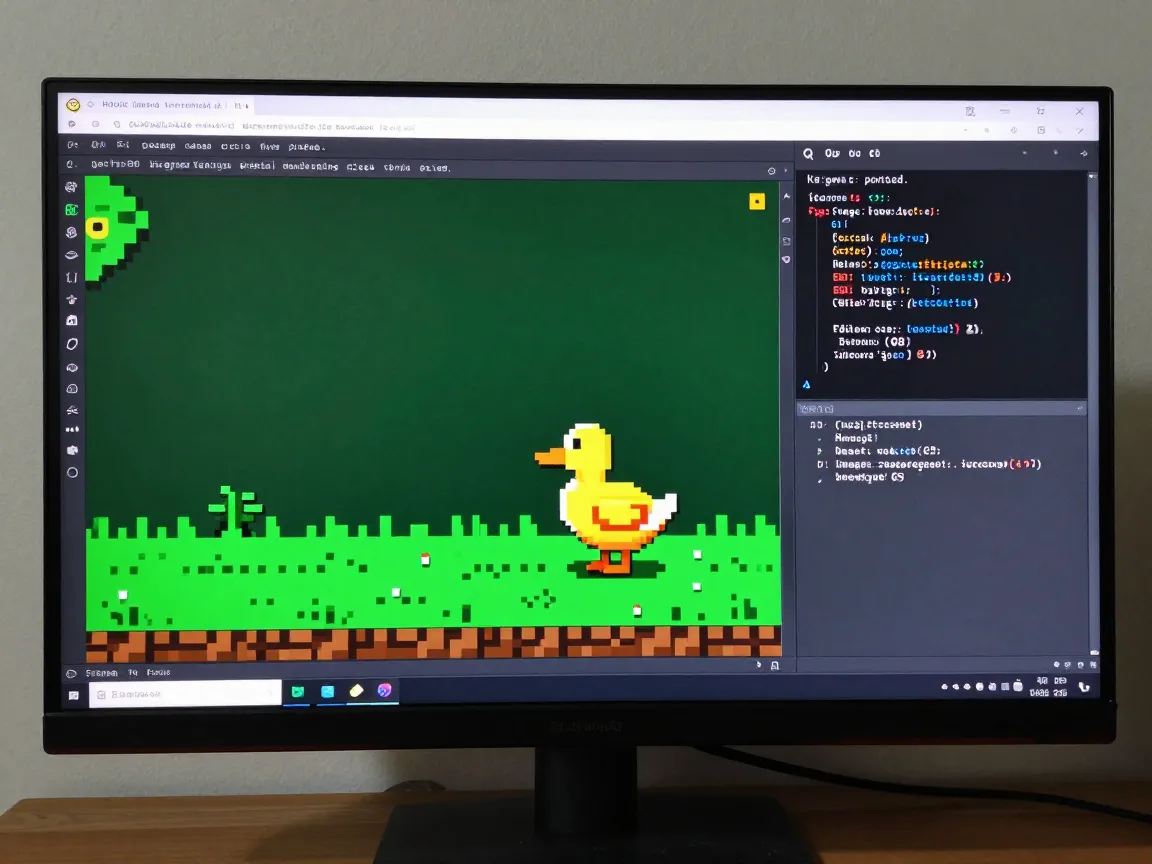
The GitHub topic page for “duck-hunt” collects several projects, and DuckHunt-JS is the most prominent. It ports the game to JavaScript and HTML5, running in any modern browser without installation and preserving the characteristic 8-bit pixel look through canvas rendering with nearest-neighbor scaling. The repository shows activity into October 2026.
Browser-based pixel art rendering presents a specific technical challenge that DuckHunt-JS handles directly. HTML5 canvas by default applies anti-aliasing to scaled images, which blurs pixel edges and destroys the crisp NES aesthetic. The fix is a single CSS rule, `image-rendering: pixelated`, but knowing to apply it, and knowing where in the rendering pipeline to apply it, is not obvious to developers new to web-based retro graphics. DuckHunt-JS serves as a working reference for that problem.
Alongside DuckHunt-JS, a January 2026 Reddit thread in the homebrew community documented “Duckhunt GB,” an open-source Game Boy-style Duck Hunt project. The creator planned to post the ROM on itch.io and explicitly invited others to build their own cartridges from the source. Game Boy display resolution, 160×144 pixels, four shades of green-grey, imposes constraints even tighter than the NES, which means Duckhunt GB required redesigning the duck sprites from scratch rather than porting them directly. The four-shade palette is its own design problem: without color differentiation, ducks need to read against backgrounds using contrast and shape alone.
A separate Reddit post from July 2026 in r/nes extended the concept further, with an artist reimagining Duck Hunt and other NES games in Japanese Ukiyo-e woodblock style. The same artist mentioned painting Scrabble tiles and assembling them into pixel-style NES characters, which is a physical version of the same grid-mapping logic that perler beads use. These projects sit at the boundary of pixel art and mixed media, but they all trace back to the same Duck Hunt sprites as source material.
The open-source angle across these projects is worth noting practically. When source code and ROM files are posted publicly, they become reference material for the next person learning the same techniques. DuckHunt-JS, Duckhunt GB, and similar repositories function as a distributed curriculum for retro game recreation, one that grows incrementally with each new contributor.
Quick Comparison
| Project | Format | Resolution / Scale | Platform | Key Skill Area |
|---|---|---|---|---|
| Soulrender Fangame | Windows game | 256×240, scalable | itch.io | NES-faithful sprite reconstruction |
| Buzzard PICO-8 Demake | Cartridge (.p8.png) | 128×128, 16 colors | itch.io / PICO-8 | Extreme constraint design |
| IanSkelskey Lospec Sprite | Static pixel art | 32×32, 16 colors | Lospec | Palette and hierarchy study |
| Duck Hunt Remastered | Godot 4 fangame | Pixel-art, modernized | itch.io | Engine learning, animation |
| Etsy Physical Crafts | Shadow boxes, perler, prints | Variable (physical scale) | Etsy | Craft translation of sprites |
| DuckHunt-JS / Duckhunt GB | Browser / ROM | NES / GB resolution | GitHub / itch.io | Web rendering, homebrew |
Conclusion
The six projects above cover three distinct categories: coded games, static sprite art, and physical crafts. Each one solves a different version of the same problem, how do you take a 1984 NES sprite and make it meaningful in 2026? The most direct next step depends on what you already do. If you write code, fork DuckHunt-JS and study how it handles canvas scaling. If you draw, open Aseprite and try replicating IanSkelskey’s 32×32 cartridge under the same 16-color limit. If you work with your hands, a perler bead duck is a weekend project that costs under ten dollars and produces something you can actually hang on a wall.