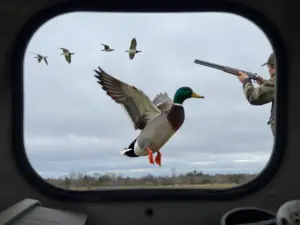
Duck Hunt Tattoo Ideas That Nail Retro Nostalgia and Outdoor Pride
Tattoo catalogs logged over 500 dedicated duck hunting tattoo concepts in 2026 alone, still being updated as new compositions surface. That number reflects something specific: duck hunting tattoos sit at a rare crossroads where rural outdoor identity, genuine sporting tradition, and 1980s console nostalgia all meet on the same piece of skin. Whether the reference is a cold marsh at dawn or a CRT screen glowing in a dark living room in 1985, these designs carry real personal weight for the people who choose them.
Disclosure: This post contains affiliate links. As an Amazon Associate, we earn from qualifying purchases, and at no extra cost to you.
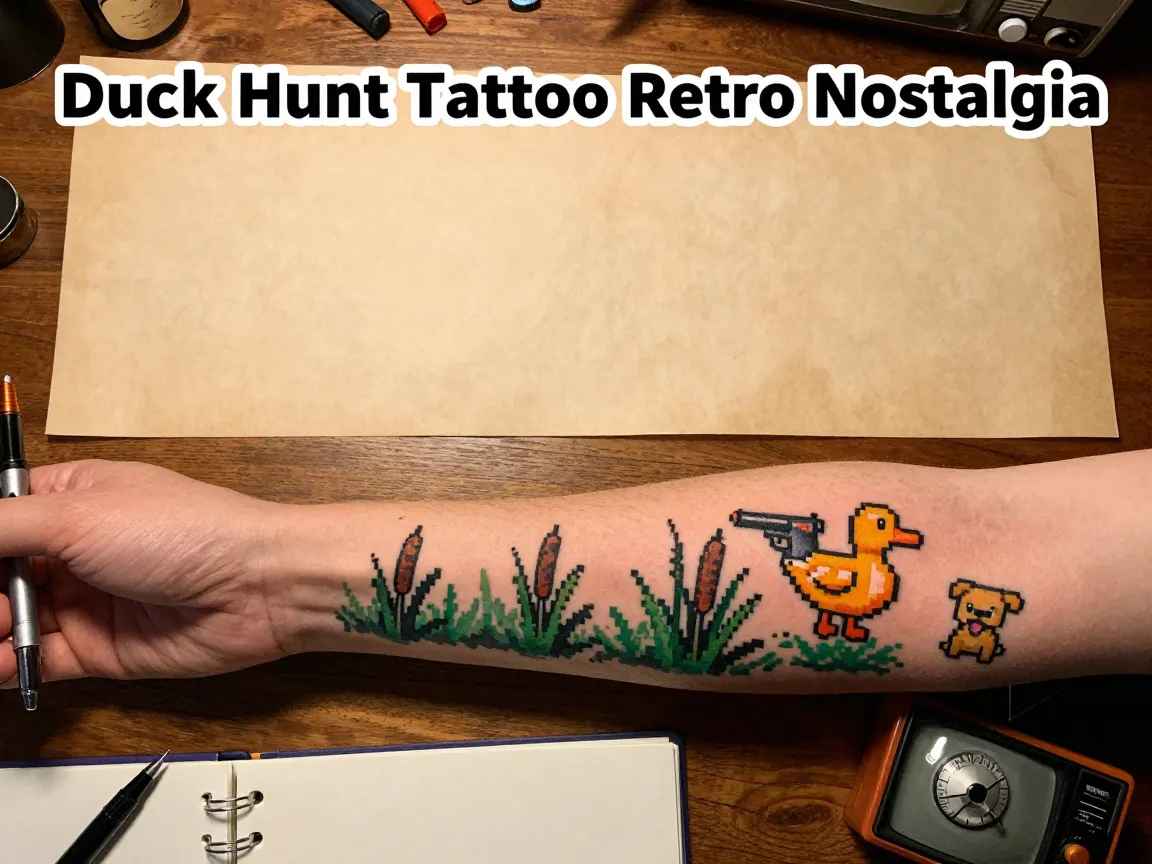
These 6 duck hunt tattoo ideas that nail retro nostalgia and outdoor pride cover both directions, from pure hunting realism to pixel-art gaming callbacks, with several ideas that blend the two. Each entry below is a distinct design direction with its own visual logic, placement advice, and meaningful context.
Key Takeaways
- Duck hunting tattoos function as identity markers for outdoor culture, rural heritage, and waterfowl sport, not just decorative images.
- The 1984 Nintendo Duck Hunt NES game is a recognized and culturally grounded reference that connects these tattoos to 8-bit nostalgia beyond hunting circles.
- Hybrid designs pairing pixel-art elements with realistic marsh rendering are technically feasible and currently fashionable in 2026.
- Placement matters: larger scenic compositions work best on the back, shoulder, forearm, or thigh, where there is enough canvas to hold detail.
- Multi-species scenes combining ducks, deer, and hunting dogs are a growing format for wearers who want a broader outdoor lifestyle statement.
1. Classic Marsh Realism Scene
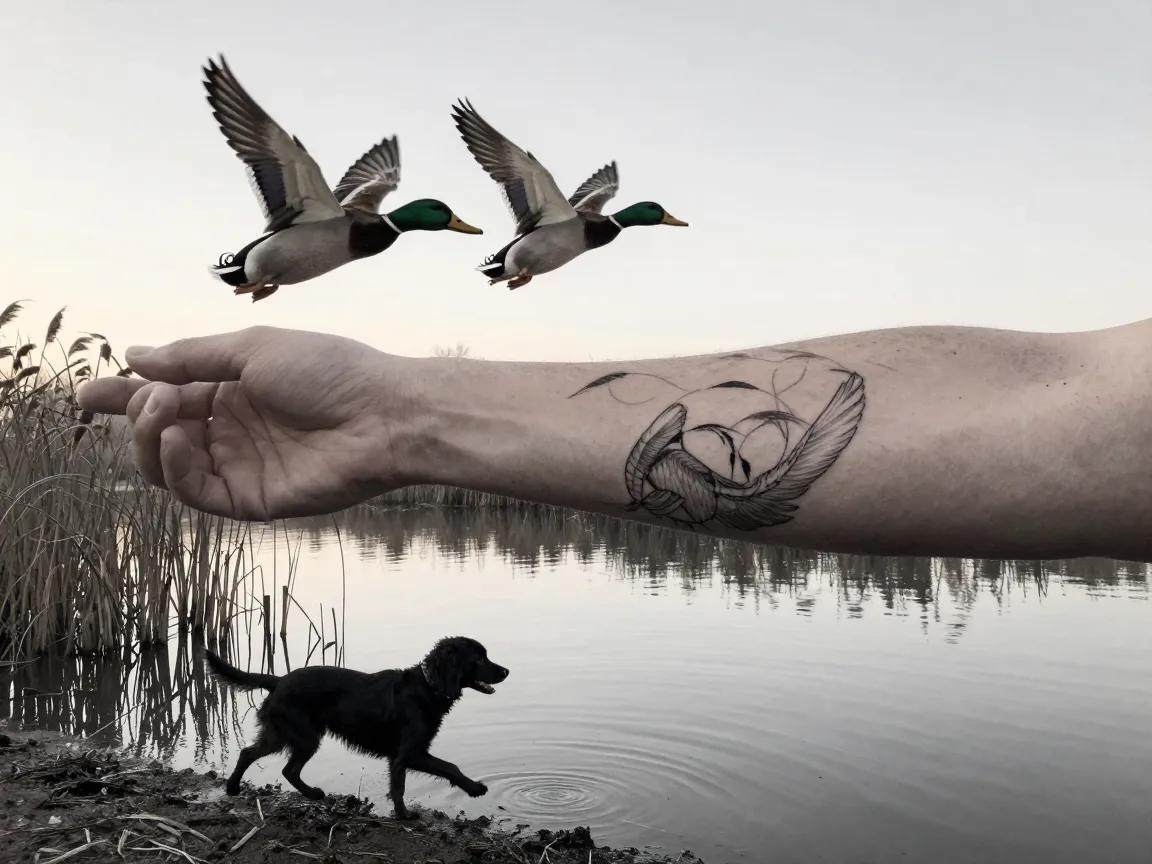
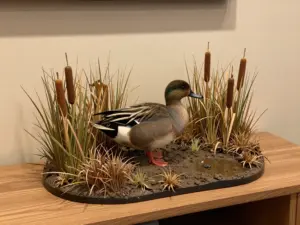
A well-executed realistic marsh scene is still the dominant format in duck hunting tattoos, and for good reason. The visual components are inherently rich: flying mallards, cattail reeds, still water reflecting an early-morning sky, and often a retriever frozen mid-stride at the bank. When rendered in black and grey with fine linework, this composition photographs as well as it tattoos, which explains why it appears on arms, chests, and backs of serious hunters who want the design visible and readable.
The strength of this idea is specificity. A generic “duck flying” silhouette reads as decoration. A marsh scene with the dog, the reeds bending in wind, and two ducks breaking from the water reads as a story. Artists who specialize in wildlife realism will often ask what breed of dog, what species of duck, and what body of water the client hunts most. That level of personal detail transforms the tattoo from catalog art into something tied to an actual place or tradition.
For placement, the shoulder to upper arm runs works well for a horizontal composition, while a vertical layout fits the forearm or calf. If the design includes a dog, a full back piece allows the most room to include the hound at the bottom, ducks ascending in the middle, and sky filling the top third. Plan for at least two sessions with an experienced wildlife tattooist to keep fine feather and water texture from blurring over time.
2. NES Duck Hunt Pixel Art Tribute
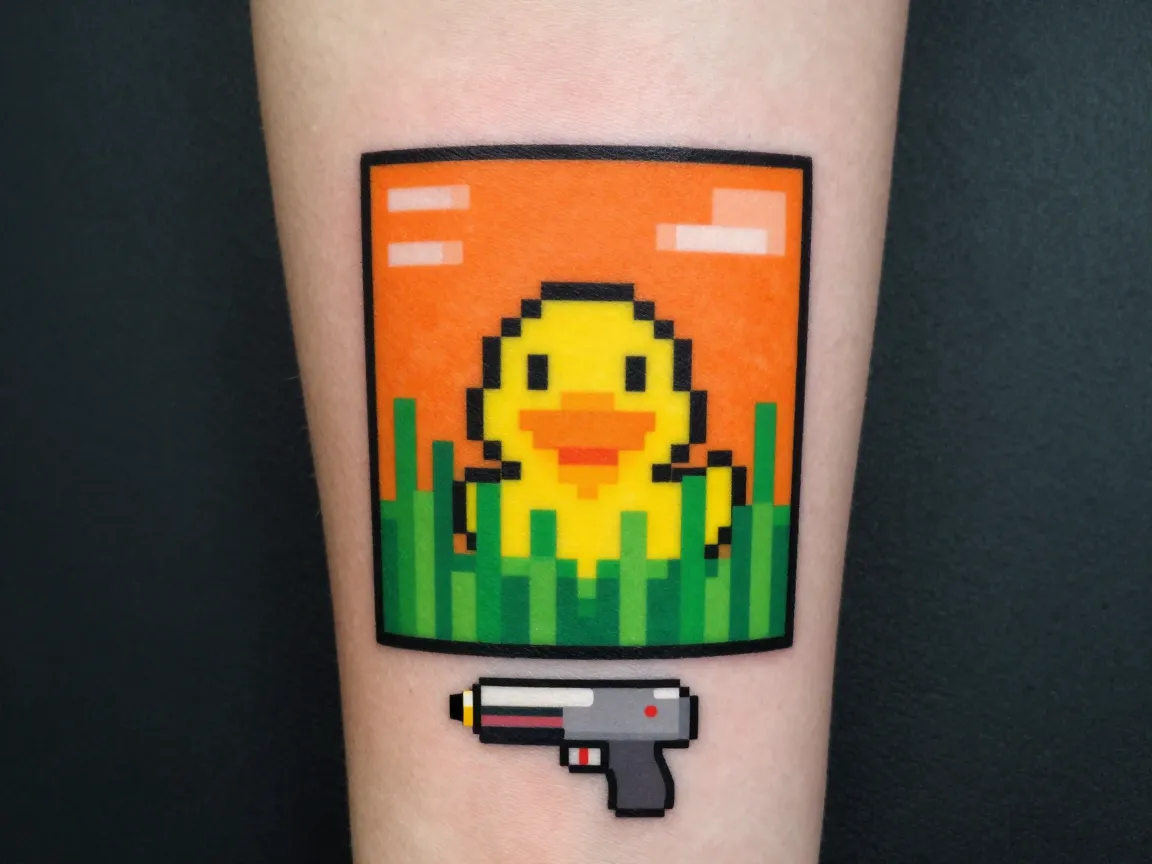
The 1984 Nintendo Duck Hunt game for the NES is not a vague cultural reference. It was bundled with the console for years, used the orange NES Zapper light gun, and featured a dog whose laughing animation became one of the most recognized moments in early console gaming. As one of the most iconic early home-console titles, it earned its place as a standalone tattoo subject, entirely separate from actual waterfowl hunting.
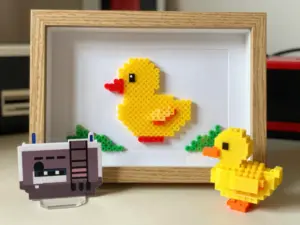
A pixel art tribute to Duck Hunt leans fully into 8-bit aesthetics: blocky sprites, the limited color palette of the original game, the orange sky panel, the dog’s grinning face peering over the tall grass. Done faithfully, the design reads immediately to anyone who owned an NES. Done with a skilled pixel-art tattooist, the small squares of color sit cleanly in the skin and age more predictably than hyper-detailed photo-realism. 2026 tattoo trend reports identify “pixelated nostalgia” explicitly as one of the year’s major global styles, tying it directly to the 8-bit era.
Placement tends toward the forearm or upper arm where the flat, graphic design pops against skin. Some wearers add a small NES Zapper below the main scene, or a cartridge graphic as a companion piece. If you grew up with the game and also hunt, this idea carries double meaning without requiring any hunting imagery at all.
3. Hybrid Pixel-Plus-Realism Composition
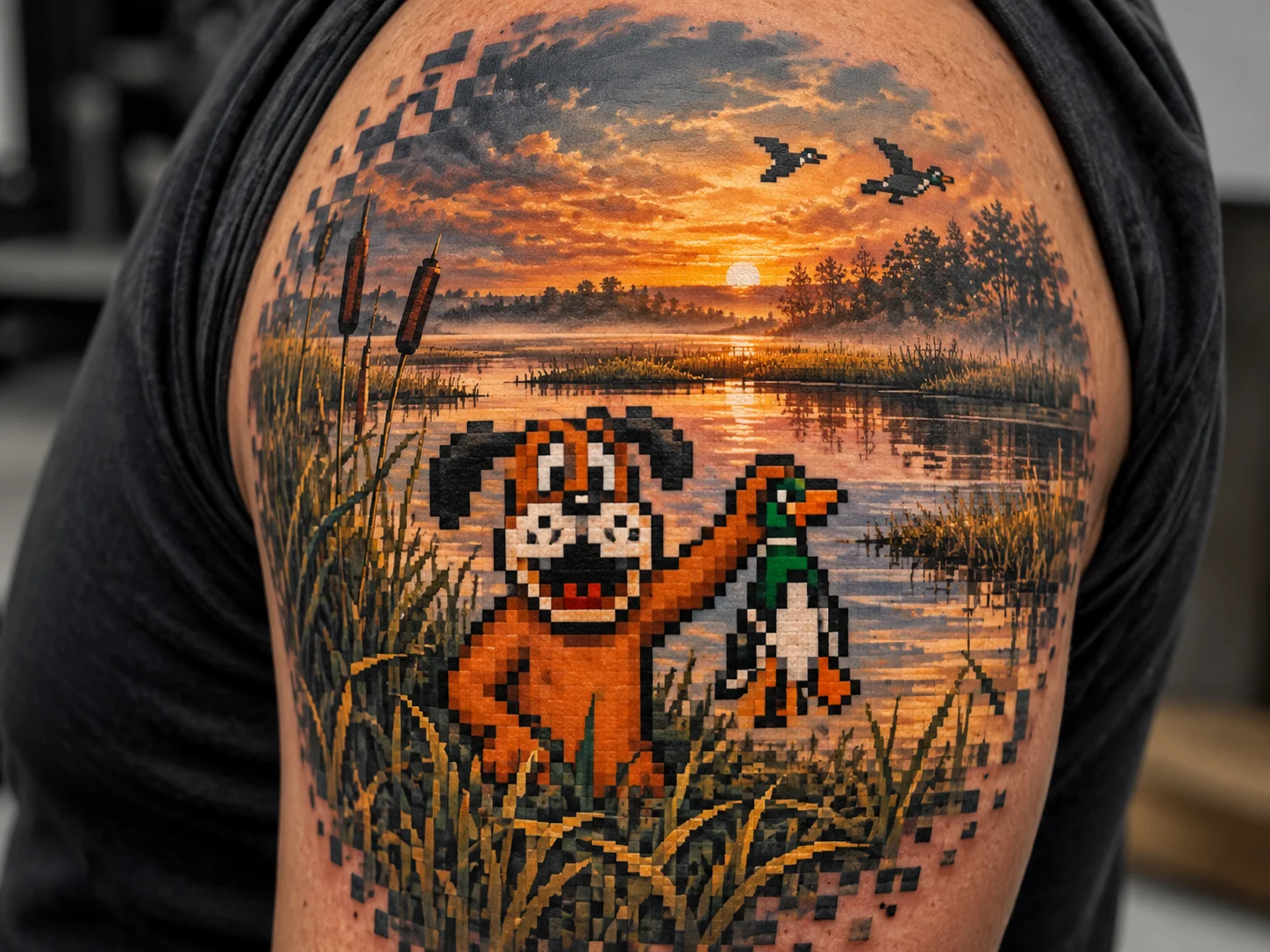
This idea takes the two previous directions and deliberately collides them. The format pairs a pixel-art Duck Hunt dog sprite or 8-bit duck with a realistically rendered marsh background, creating a visual tension that is intentional and stylistically current. Specialist retro-gaming tattoo artists have been advocating for exactly this approach through 2026, describing it as turning “8-bit heroes into realistic art” by grounding them in photorealistic environments.
The practical execution usually works one of two ways. In the first, the pixel character sits in the foreground against a detailed painted-style marsh, almost like a video game character dropped into the real world. In the second, the realistic elements fade into pixels toward the edges of the design, as if the marsh itself is loading or glitching. Both approaches require an artist comfortable with two distinct rendering styles within a single piece, so portfolio review matters more here than with a straight realism job.
This design choice works especially well for people who hunt and also grew up gaming. It captures both references without forcing a choice between them. The composition typically occupies the upper arm or forearm, though a larger version across the calf can hold the contrast between pixel and realism without crowding either element.
4. CRT Television Frame Design
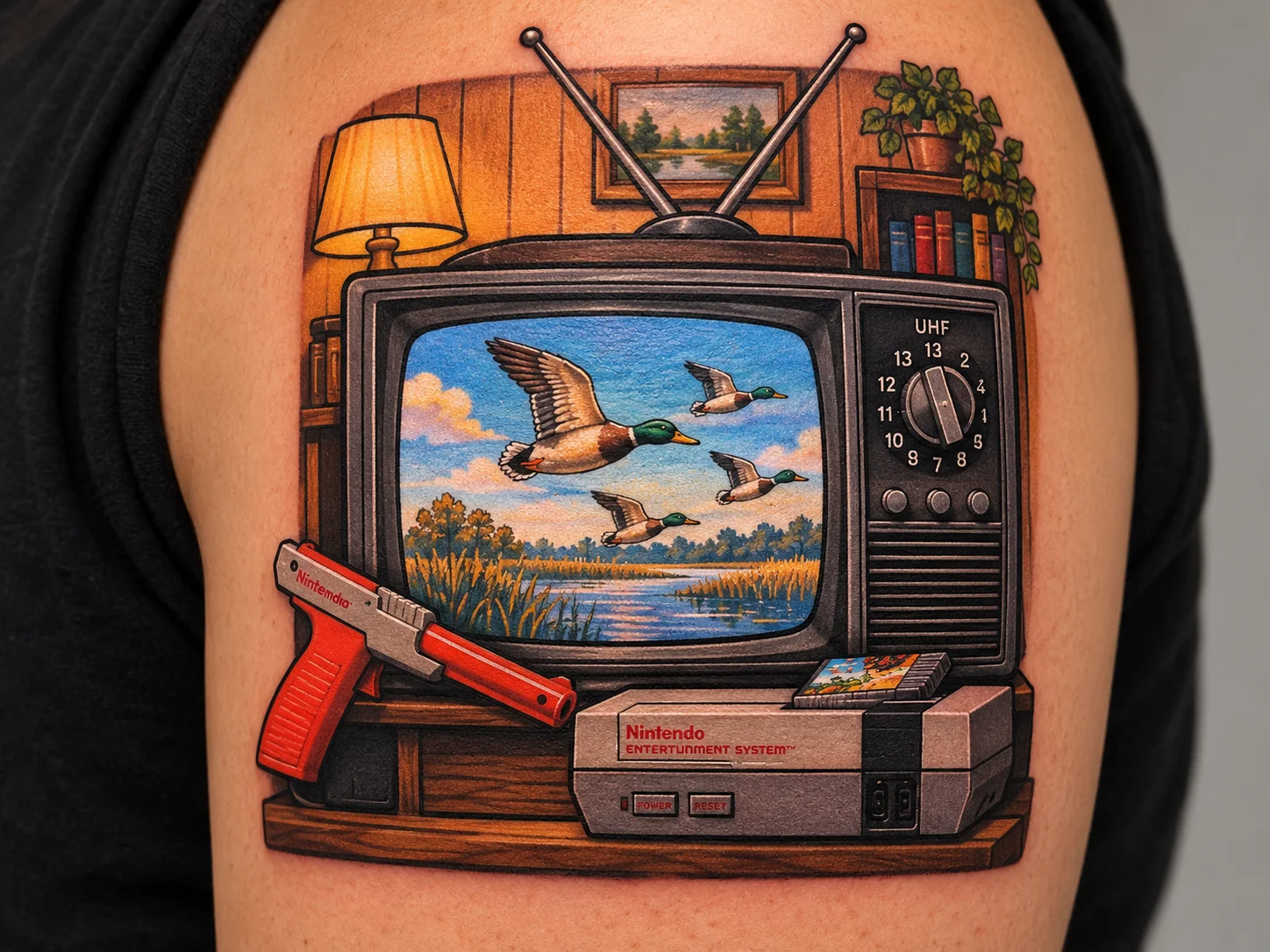
A specific subset of retro gaming tattoos uses actual hardware as the frame. One 2026 tech-tattoo roundup described a tattoo of a miniature CRT television showing a classic console logo, surrounded by game stickers and hardware details, as a complete design unto itself. Applied to Duck Hunt, the idea is to show the game playing on the screen of an old television, with the NES Zapper resting against the TV stand or dangling from a hand below the frame.
The CRT frame functions as a border that naturally contains the scene. The screen shows ducks in flight in the classic Duck Hunt color scheme, the chunky television chassis fills the outer design area, and details like the channel dial, the rabbit-ear antenna, or a cartridge sticking out of a console below the TV add period-accurate character. The overall effect is a portrait of a specific time, 1985 to 1990, in a specific living room, without needing text to explain the reference.
This design suits the upper arm or thigh, where a roughly rectangular composition sits naturally. Keeping the internal game scene relatively simple, recognizable sprites rather than detailed illustrations, lets the television hardware be the visual star. Artists who work in illustrative or neo-traditional styles handle this format better than strict realists, since the whole concept already carries a deliberately artificial quality.
5. Multi-Species Outdoor Lifestyle Scene
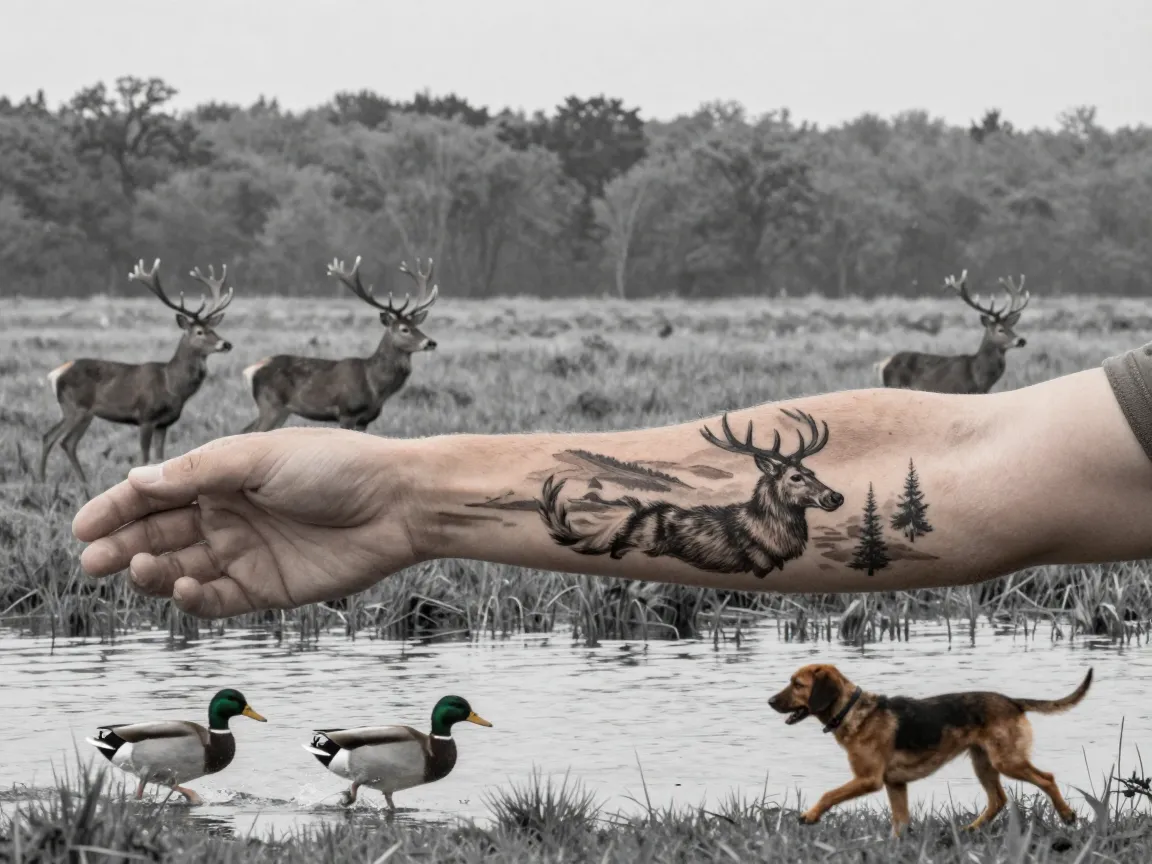
Not every waterfowl hunter limits the season to ducks. A growing design format in 2026 hunting-tattoo catalogs pairs ducks with deer, fish, or turkey in a single unified composition, treating the tattoo as a declaration of a whole outdoor lifestyle rather than a single hunt. One prominent example combines a deer in the background tree line with two ducks breaking from marsh water in the foreground, all rendered in black and grey on the forearm.
The challenge with multi-species scenes is composition unity. When the design includes a buck, two mallards, and a hunting dog, the artist needs a strong landscape anchor, usually a treeline, water edge, or horizon, to prevent the elements from reading as unrelated clips pasted together. Scale relationships matter: the deer should feel far away, the ducks closer, the dog in the extreme foreground if included. Distance creates depth and makes the scene feel like one moment rather than a collage.
This kind of tattoo signals a broad outdoor identity, the person who is out from September through January across multiple seasons, not just the duck blind in November. The back is the natural home for a full multi-species panorama, though a well-planned forearm piece can include two or three species if the artist manages the negative space carefully. Expect three to four sessions for anything approaching a detailed back composition.
6. Geometric Minimalist Duck with Hunting Elements
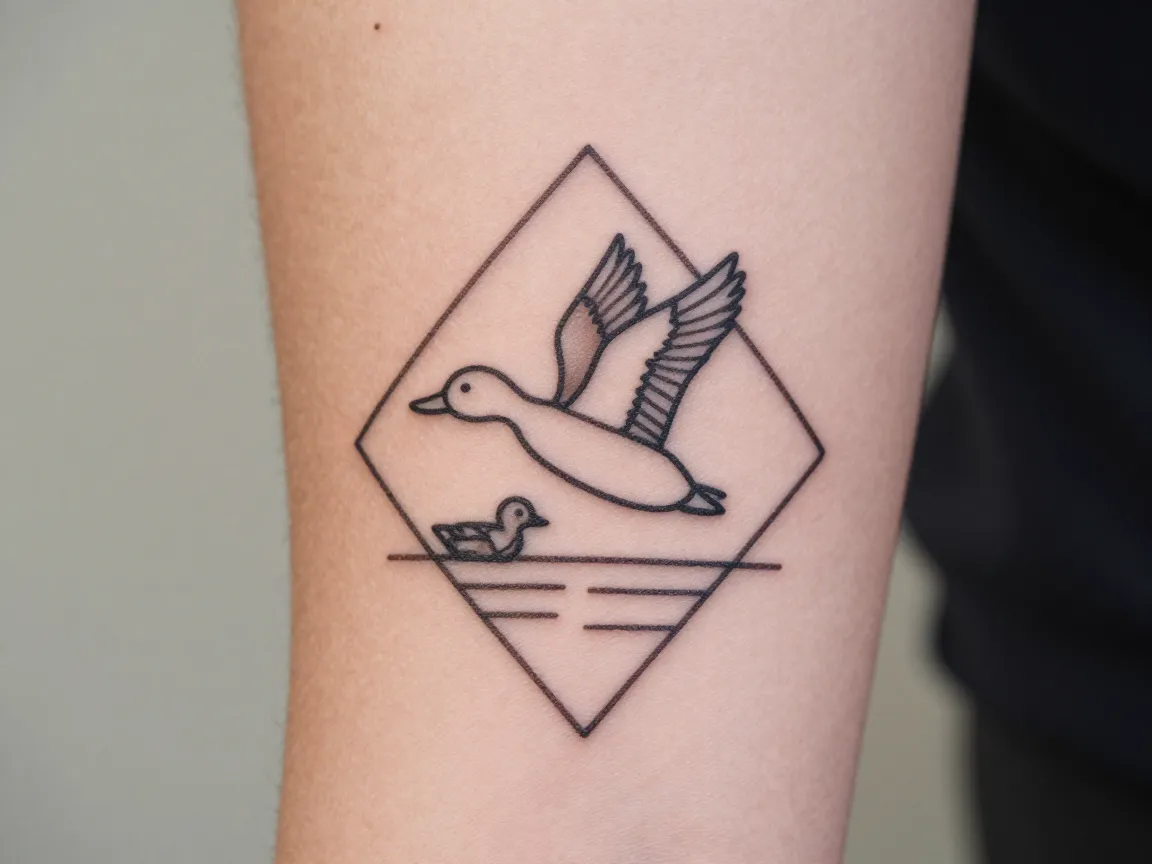
At the opposite end of the detail spectrum, a geometric or minimalist take on the duck hunt theme reduces the imagery to its cleanest visual components. A mallard in flight inside a geometric frame, three straight parallel lines representing water, a negative-space NES Zapper rendered in outline only, or a duck silhouette broken into angular planes: these designs communicate the same cultural references with far less visual noise.
The appeal of minimalism here is not laziness or cost-cutting. It reflects a specific aesthetic preference: the wearer identifies with the theme but wants a design that fits the visual language of a wider tattoo collection. A geometric mallard on the wrist or inner forearm works alongside blackwork and fine-line pieces without competing for attention. The NES Zapper rendered in a single clean outline reads as gaming nostalgia without requiring a full pixel-art panel.
Duck tattoo guides in 2026 note that ducks carry symbolic weight around adaptability and connection to nature, which means a minimalist design can still carry genuine meaning without illustrating a full scene. For this style, choose an artist whose portfolio shows clean geometric work with consistent line weight. The fewer the lines, the more each one has to be exactly right. Placement on the wrist, inner arm, or behind the ear suits the scale these designs typically occupy.
Quick Comparison
| Idea | Style | Best Placement | Sessions Needed | Best For |
|---|---|---|---|---|
| 1. Classic Marsh Realism | Realistic black and grey | Shoulder, back, forearm | 2-3 | Dedicated hunters |
| 2. NES Pixel Art Tribute | 8-bit flat color | Forearm, upper arm | 1-2 | Retro gamers |
| 3. Hybrid Pixel-Plus-Realism | Mixed / illustrative | Upper arm, forearm, calf | 2-3 | Hunters and gamers |
| 4. CRT Television Frame | Illustrative / neo-trad | Upper arm, thigh | 2 | Retro gaming fans |
| 5. Multi-Species Scene | Realistic black and grey | Back, forearm | 3-4 | All-season hunters |
| 6. Geometric Minimalist | Fine line / geometric | Wrist, inner arm | 1 | Minimal aesthetic fans |
Conclusion
The six designs above cover enough ground that most wearers can identify at least one that fits both their aesthetic preference and their personal connection to the theme. If you’re leaning toward the gaming side, the NES pixel tribute or the CRT frame design will land with anyone who recognizes the reference without requiring any explanation. If outdoor identity is the primary driver, the classic marsh scene or multi-species composition carries that meaning in the most direct visual language available.
One practical next step: before booking a consultation, gather three to five reference images representing the specific elements you want, the dog breed, the duck species, the hardware model, or the landscape type. The clearer the brief, the more time the artist can spend on composition rather than interpretation.