Survival Skills and Emergency Preparedness Tips Every Angler Needs
Recreational fishing accounts for more than 550 boating fatalities in the United States each year, and the majority of those victims were not wearing a lifejacket at the time. That single fact sits at the center of everything the 6 survival skills and emergency preparedness tips every angler needs are built around: most fishing-related emergencies are survivable when the angler has prepared for them before leaving the dock.
Disclosure: This post contains affiliate links. As an Amazon Associate, we earn from qualifying purchases, and at no extra cost to you.
This article covers the six practical skills and habits that separate prepared anglers from those who rely on luck. Each one is actionable, tested against real-world conditions, and relevant whether you fish from a kayak on a local reservoir or a center console fifty miles offshore.
Key Takeaways
- Wearing a U.S. Coast Guard-approved lifejacket at all times on the water is the single highest-impact safety decision an angler can make.
- Cold-water shock kills faster than hypothermia; recognizing both stages and knowing the Heat Escape Lessening Posture can extend survival time enough for rescue.
- Filing a float plan with a contact on land costs nothing and gives search-and-rescue teams a starting point if you do not return on time.
- Alcohol is a confirmed factor in a significant portion of recreational boating fatalities; fishing sober is a survival decision, not a lifestyle preference.
- Engine cut-off devices and reliable communication equipment close the gap between an incident and a fatality.
1. Wear the Right Lifejacket and Actually Put It On
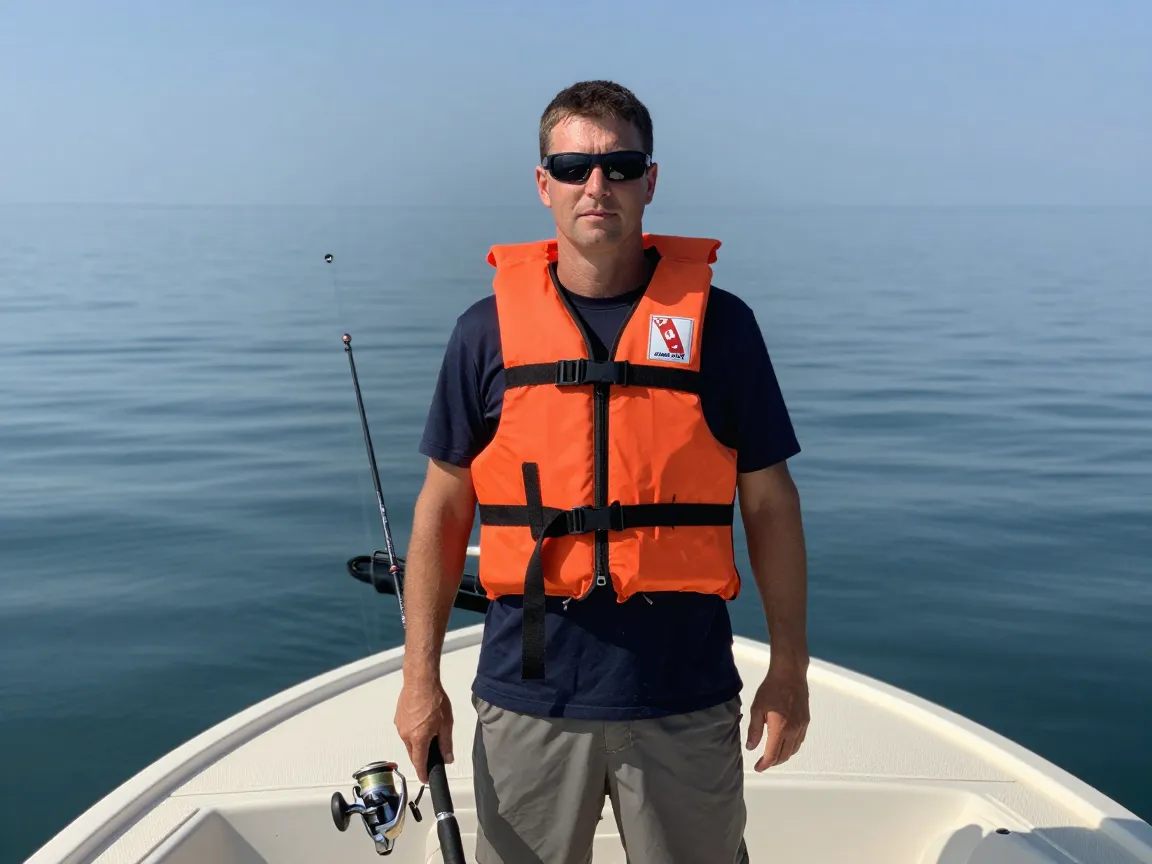
A U.S. Coast Guard-approved personal flotation device does one job: it keeps an unconscious person face-up in the water. No other piece of gear substitutes for that. Yet surveys conducted in conjunction with the 2026 National Recreational Boating Safety Survey consistently show that a large share of anglers store their lifejacket under the seat rather than on their body, treating it as a regulatory requirement rather than a survival tool.
The type of PFD matters as much as whether you wear one. Type I offshore life jackets are rated for open, rough water and will turn most unconscious wearers face-up. Type III jackets, the ones that feel most comfortable and get worn most often, do not guarantee that face-up position. For anglers fishing remote or offshore water, that distinction is worth understanding before purchasing. Inflatable PFDs have become popular because they are unobtrusive, but they require the wearer to be conscious enough to pull the activation cord or fall into the water hard enough to trigger automatic inflation. A leaning fall off a kayak at night does not always generate enough water pressure to trigger auto-inflation reliably.
The habit worth building is simple: put the lifejacket on before you leave the dock and keep it on. Cold water, sudden wakes from passing vessels, slippery casting platforms, and tangled fishing line have all produced overboard situations with no warning. An angler who wears a properly fitted PFD every trip eliminates one of the largest variables in a water-based emergency.
2. Understand Cold-Water Physiology Before You Need It
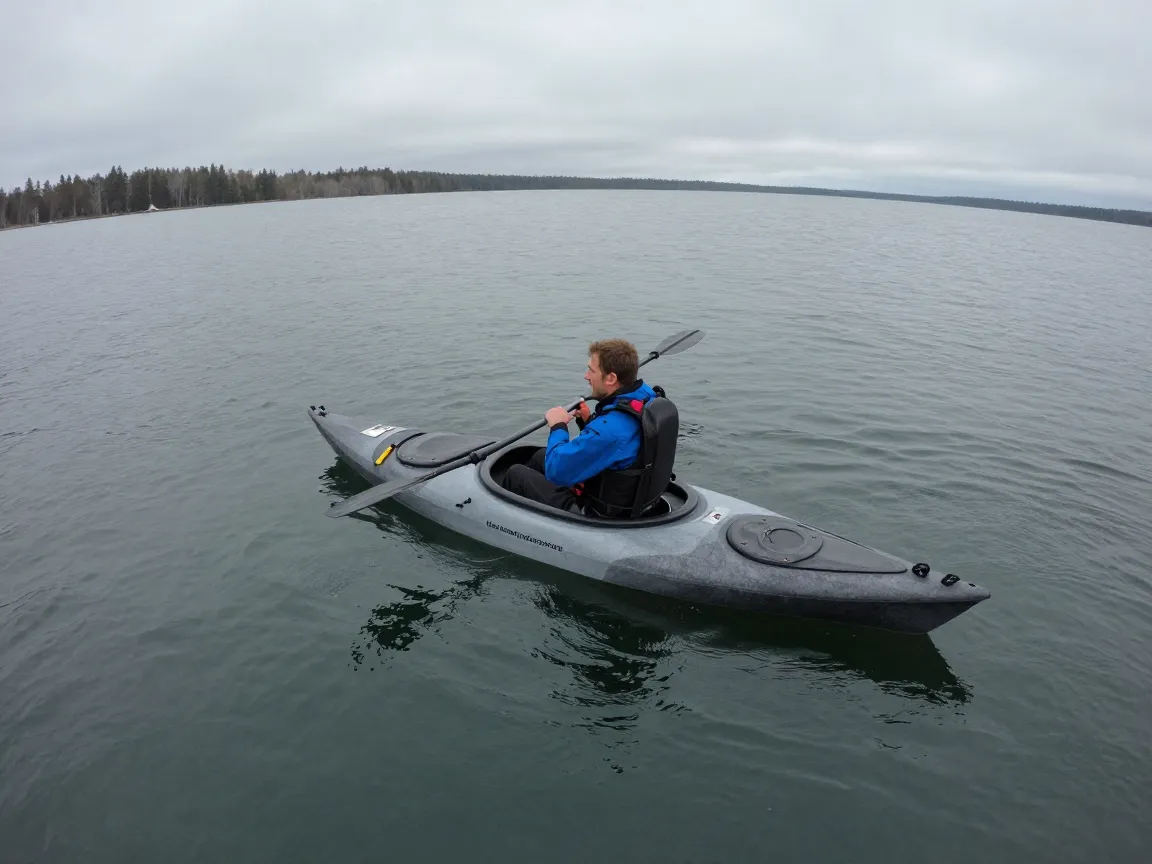
Cold water is more dangerous than most anglers recognize because the first threat is not hypothermia. Cold shock, the sudden gasp reflex and uncontrolled hyperventilation triggered by water below 15 degrees Celsius (59 degrees Fahrenheit), can cause drowning within the first 30 to 90 seconds of immersion regardless of swimming ability. The body’s response to sudden cold immersion is largely involuntary. Knowing this means you can prepare mentally rather than panic.
If you end up in cold water, the survival protocol follows a sequence. First, resist the urge to swim hard. Cold-water swimming burns energy and body heat rapidly and can accelerate exhaustion. If you are wearing a PFD, assume the Heat Escape Lessening Posture (HELP): pull your knees to your chest, cross your arms over your life jacket, and hold still. This posture reduces heat loss from the groin and armpit areas by roughly 50 percent compared to treading water. If multiple people are in the water together, the huddle position, where everyone clusters face-inward with arms around each other’s backs, extends group survival time further.
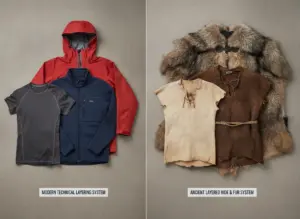
Anglers fishing cold northern lakes, Pacific coastal waters, or early-season trout rivers should treat the water temperature as a determining factor in their gear decisions, not just an inconvenience. Dry suits are the correct answer for water temperatures below 10 degrees Celsius. Wetsuits provide meaningful but limited protection. Layered wool or synthetic fleece under a dry top gives partial protection in moderate conditions. Telling someone on land your planned location and expected return time creates the safety net that makes surviving long enough for rescue realistic.
3. File a Float Plan Every Single Trip
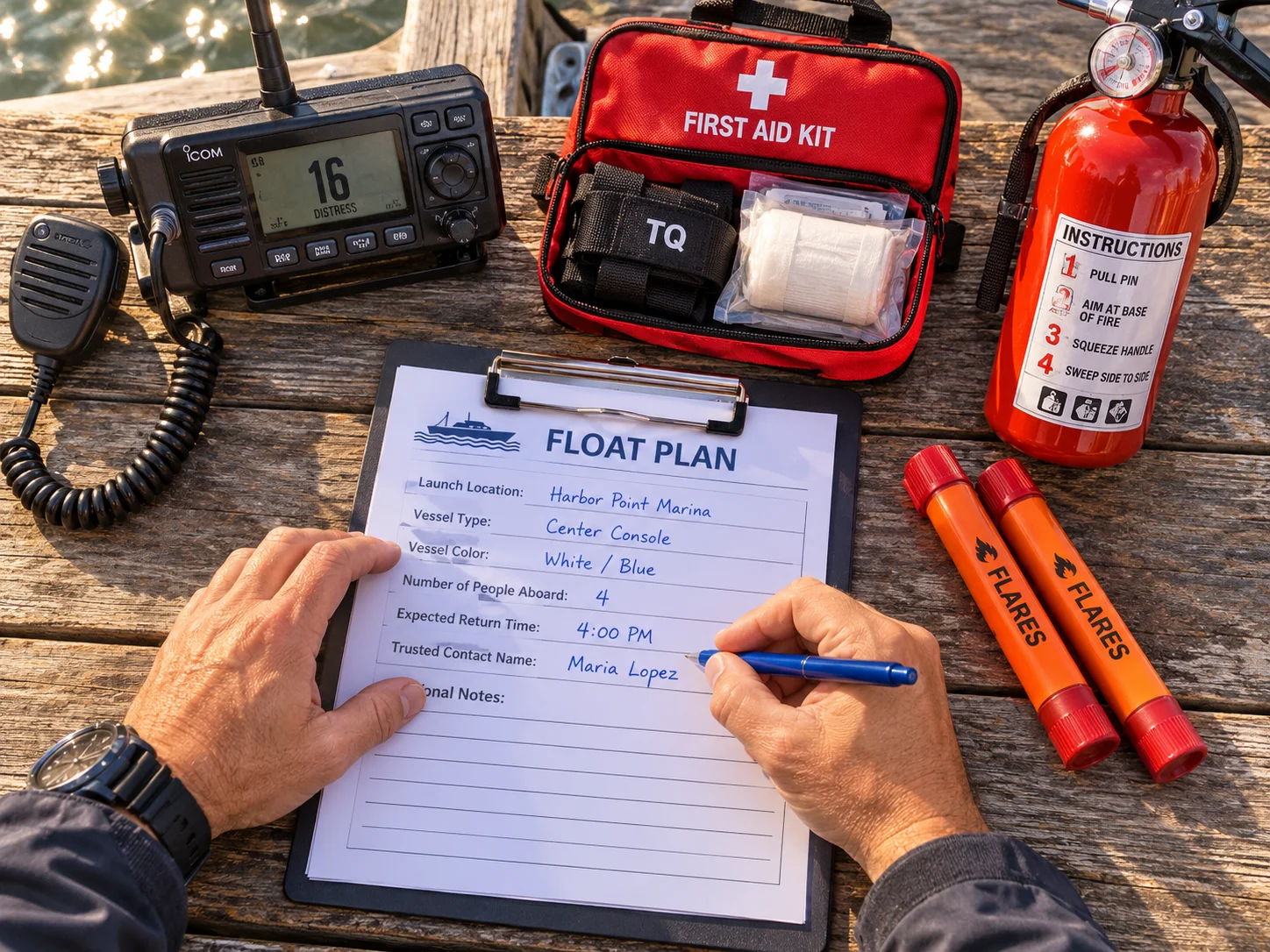
A float plan is a written record left with a trusted person on shore that includes your launch location, intended fishing area, type and color of vessel, number of people aboard, expected return time, and who to call if you have not checked in by a specific hour. The U.S. Coast Guard provides a standard float plan form at no cost, and several state boating agencies have online versions. It takes about five minutes to complete.
The practical value is not abstract. When a vessel is overdue and search-and-rescue teams are deployed, the float plan tells them where to start. Without one, searchers are working with no reference point in a large body of water, which dramatically increases time-to-rescue. Time is the controlling variable in cold-water survival, boat fire response, and medical emergencies offshore. Every minute a float plan saves the SAR team is a minute it adds to your survival window.
Float plans work alongside other pre-departure habits: a safety check of bilge pumps, running lights, flares, fire extinguisher, and navigation equipment before leaving the dock. Treat offshore and remote fishing as a medical-risk environment and prepare accordingly. That means your first aid kit should go beyond adhesive bandages. Deep hook injuries, laceration from fish handling, fish spine punctures, and cardiac events all occur on fishing trips at higher rates than many anglers expect. A compact kit that includes a tourniquet, wound-packing gauze, a CPR face shield, and over-the-counter pain management covers most field-manageable emergencies.
4. Monitor Weather Continuously and Know When to Leave
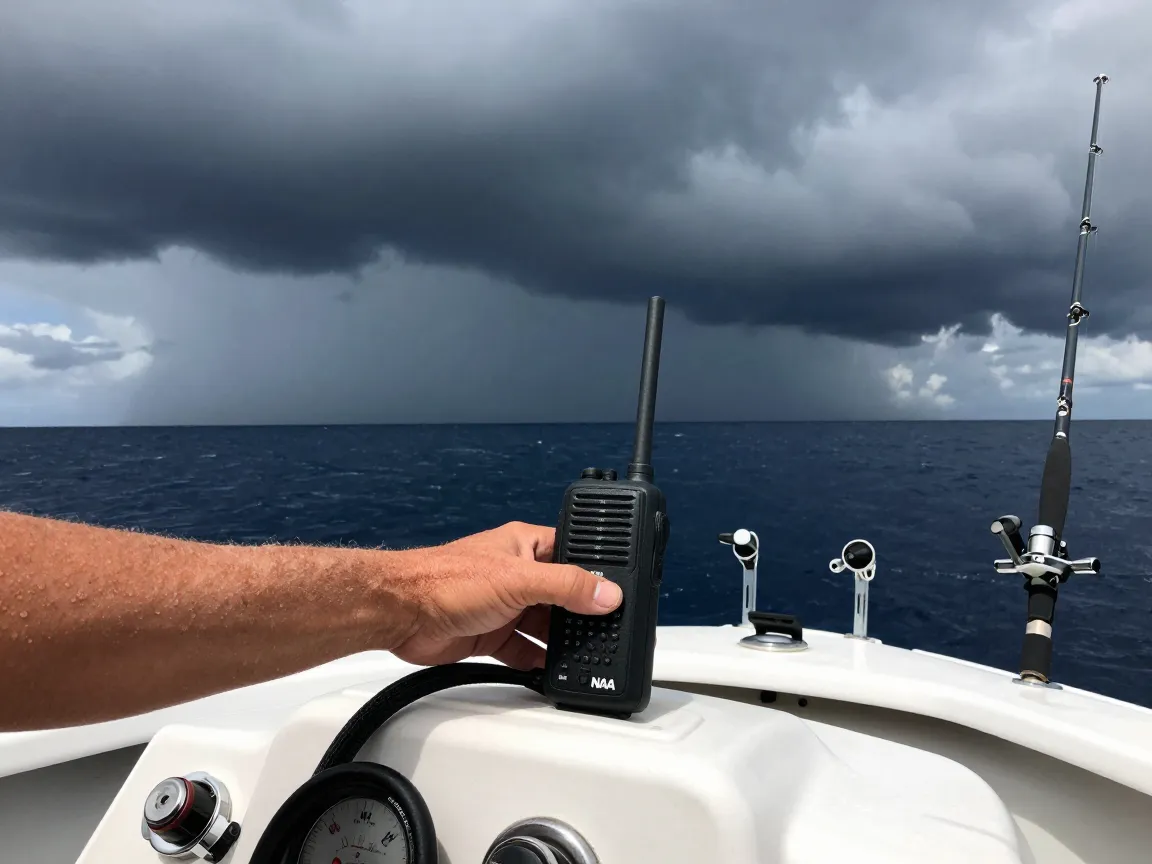
Weather forecasting has improved substantially, but anglers fishing remote lakes, offshore water, or river systems where topography channels wind can still be caught off guard. The practical approach is to treat your weather window as the go/no-go gate on every trip, not a checkbox you complete the night before.
A NOAA marine VHF weather radio receiver, available for under thirty dollars, provides continuous weather broadcasts on dedicated WX channels. It is more reliable than cellular service in remote water and continues broadcasting during storms when you most need the information. Set it as background audio when you anchor or drift fish; it requires no active attention until a hazard broadcast cuts through.
The specific triggers worth memorizing are: lightning within ten nautical miles means you get off the water immediately, not after finishing the current drift. A sudden wind shift or sharp pressure drop is a storm indicator even if the sky looks acceptable. Rising water on rivers requires immediate recognition that upstream rain can produce dangerous current increases even under clear local sky. Thunderstorms produce winds that arrive faster than the visible cloud, and the combination of wind, waves, and lightning in an open boat is not survivable by skill alone. Knowing when to leave is not timidity; it is a core competency covered by the 6 survival skills and emergency preparedness tips every angler needs.
5. Pursue Boater Education and Fish Sober
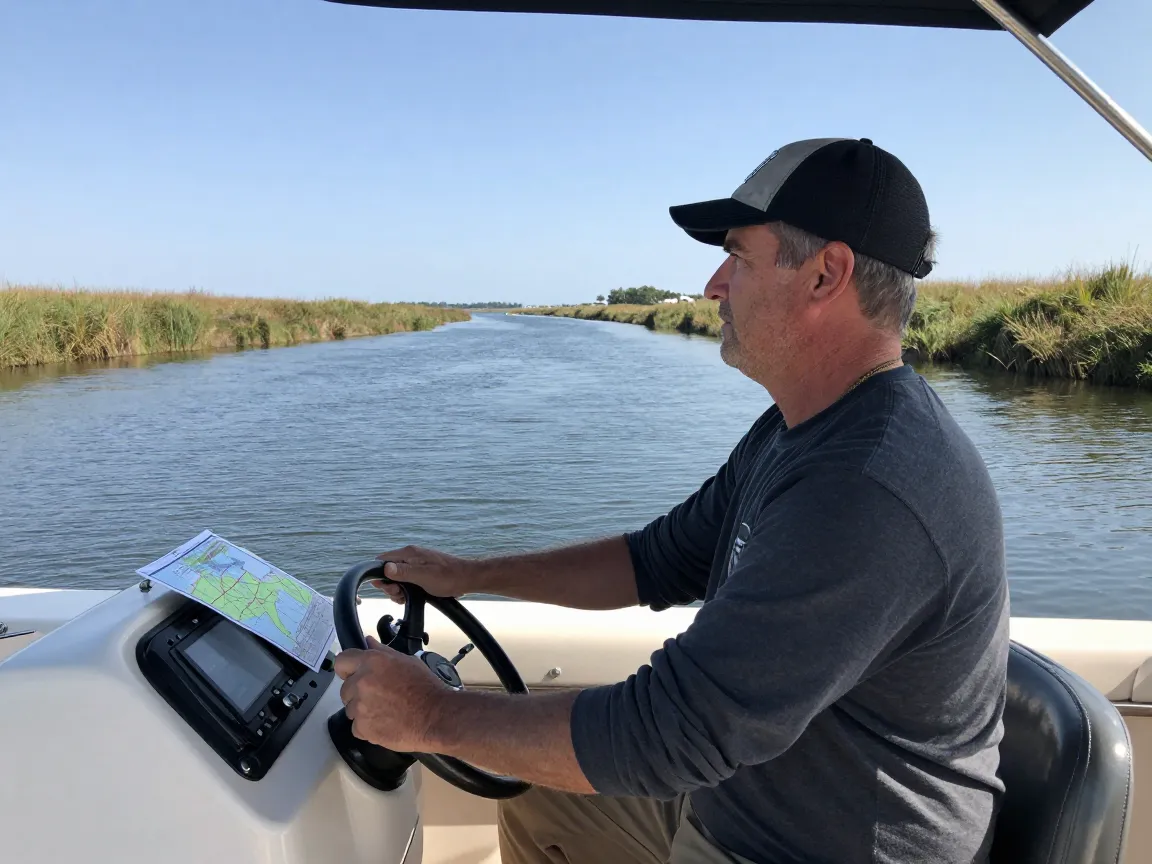
Human error drives more recreational boating incidents than mechanical failure, weather, or navigation hazards combined. The 2026 National Recreational Boating Safety Survey reinforces what coast guard statistics have documented for years: operator inattention, insufficient experience, and alcohol are the top contributing factors in boating fatalities. Each of those factors is controllable.
State-approved boater education courses cover navigation rules, right-of-way, emergency procedures, and vessel handling. Most are available online and can be completed in a weekend. Some states require completion for operators under a certain age, but no state requires experienced adult anglers to take one. That gap in mandatory education is precisely why experienced anglers with many years on the water are overrepresented in serious incidents. Familiarity with a body of water creates complacency about situational awareness, speed in tight channels, and anchoring near submerged hazards.
Alcohol’s effect on water is more severe than on land. Sun, wind, motion, and engine noise accelerate impairment. A blood alcohol level that feels manageable on a highway produces measurably slower reaction times, reduced depth perception, and impaired balance on a moving vessel. Fishing sober is not a suggestion. It is the same decision as wearing the lifejacket: it removes a variable that consistently appears in fatal incident reports. If alcohol is part of your fishing culture, the safety habit is to consume it after the vessel is secured at the dock with the motor off.
6. Maintain Your Safety Equipment and Use an Engine Cut-Off Device
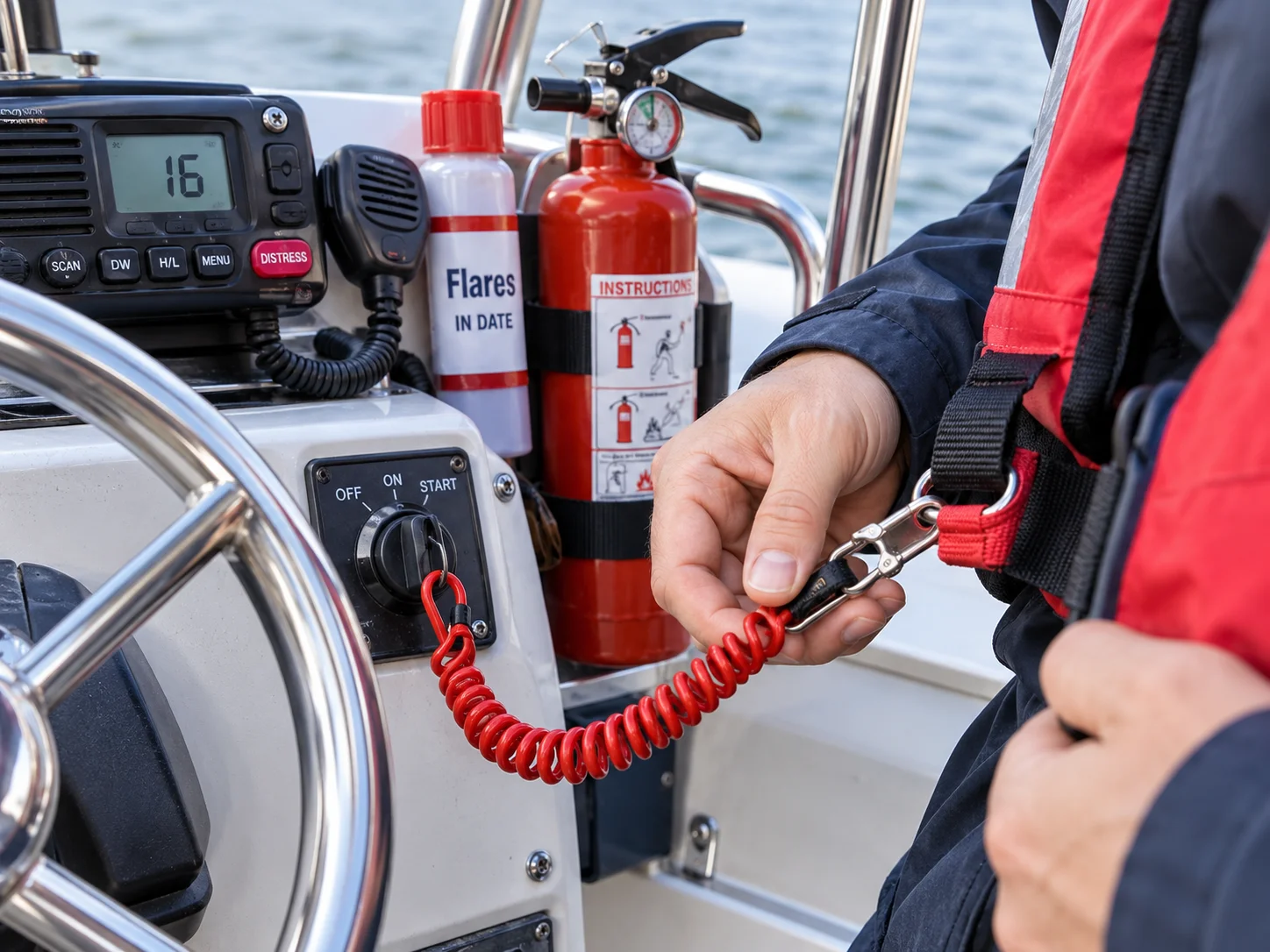
Equipment that is stored and never inspected fails when it is needed. Flares expire, typically after 42 months from the manufacture date stamped on the casing. Fire extinguisher gauges drift out of the green zone. Bilge pump float switches corrode in saltwater environments. VHF radios drain batteries in storage. A pre-season equipment check that runs through each required safety item, tests function, and replaces expired components is a one-hour task that closes gaps that would otherwise become failures during an actual emergency.
The engine cut-off switch (ECOS), sometimes called a kill switch or safety lanyard, deserves specific attention because the U.S. Coast Guard made its use mandatory for vessels under 26 feet with an engine above a certain horsepower threshold. The device connects the operator to the ignition by a cord or wireless fob. When the operator moves far enough from the helm, the engine stops. Its purpose is to prevent an unmanned vessel from circling continuously after a man-overboard event, which has historically caused fatalities when the propeller struck the person in the water. The ECOS does not require complex installation or decision-making; it requires the operator to clip it to their wrist or life jacket at the start of every trip.
Communication equipment is the second layer of the same logic. A fixed-mount VHF radio with Digital Selective Calling (DSC) can transmit an automated distress signal with vessel identification and GPS coordinates by holding a single button for three seconds. That signal reaches the Coast Guard and nearby vessels simultaneously and operates even if the operator is too injured to speak. Handheld VHF radios serve as backup on vessels where a fixed mount is not installed. A cellular phone in a waterproof case adds a third option but should not be the primary communication tool offshore, where cell coverage is unreliable.
Quick Comparison
| Skill | Primary Risk It Addresses | Minimum Equipment Needed |
|---|---|---|
| 1. Wear a proper PFD | Drowning after overboard event | Coast Guard-approved Type I or III lifejacket |
| 2. Cold-water survival knowledge | Cold shock and hypothermia | Dry suit or wetsuit in cold water |
| 3. File a float plan | Delayed search-and-rescue response | Paper form and a shore contact |
| 4. Weather monitoring | Thunderstorm and surge exposure | NOAA VHF weather radio |
| 5. Boater education and sober operation | Human-error incidents | Completed state boating safety course |
| 6. Equipment maintenance and ECOS | Man-overboard and communication failure | Kill switch lanyard, flares, VHF radio |
Conclusion
The six skills covered here are not sequential steps in a checklist; they reinforce each other. A float plan is only effective if search-and-rescue can be contacted, which requires working communication equipment. A PFD keeps you afloat long enough for cold-water survival posture to matter. Boater education and sober operation reduce the likelihood that any of the other skills need to be deployed at all.
The most direct next step for any angler reading this in 2026 is to complete a state-approved boating safety course if you have not taken one recently. Most courses cover every topic on this list, and completing one tends to surface the specific gaps in your own preparation rather than presenting generic advice. Pair that with a pre-season gear audit and the habit of filing a float plan, and you will have addressed the factors that appear in the overwhelming majority of preventable angling emergencies.