Fishing Knot Diagram Guides That Make Tying Simple
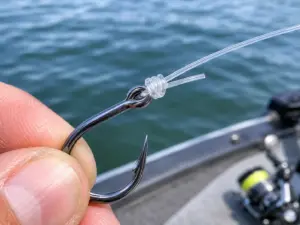
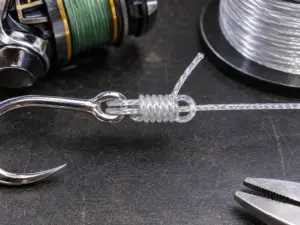
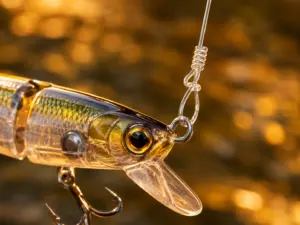
A poorly tied knot is the leading reason anglers lose fish at the last moment, not a dull hook or the wrong lure. The good news is that most saltwater and freshwater fishing situations only require mastery of about six knots. These 6 Fishing Knot Diagram Guides That Make Tying Simple cut through the noise, giving you a focused, visual path to reliable knot-tying whether you’re rigging up for the first time or refreshing a skill you learned years ago and never quite trusted.
Disclosure: This post contains affiliate links. As an Amazon Associate, we earn from qualifying purchases, and at no extra cost to you.
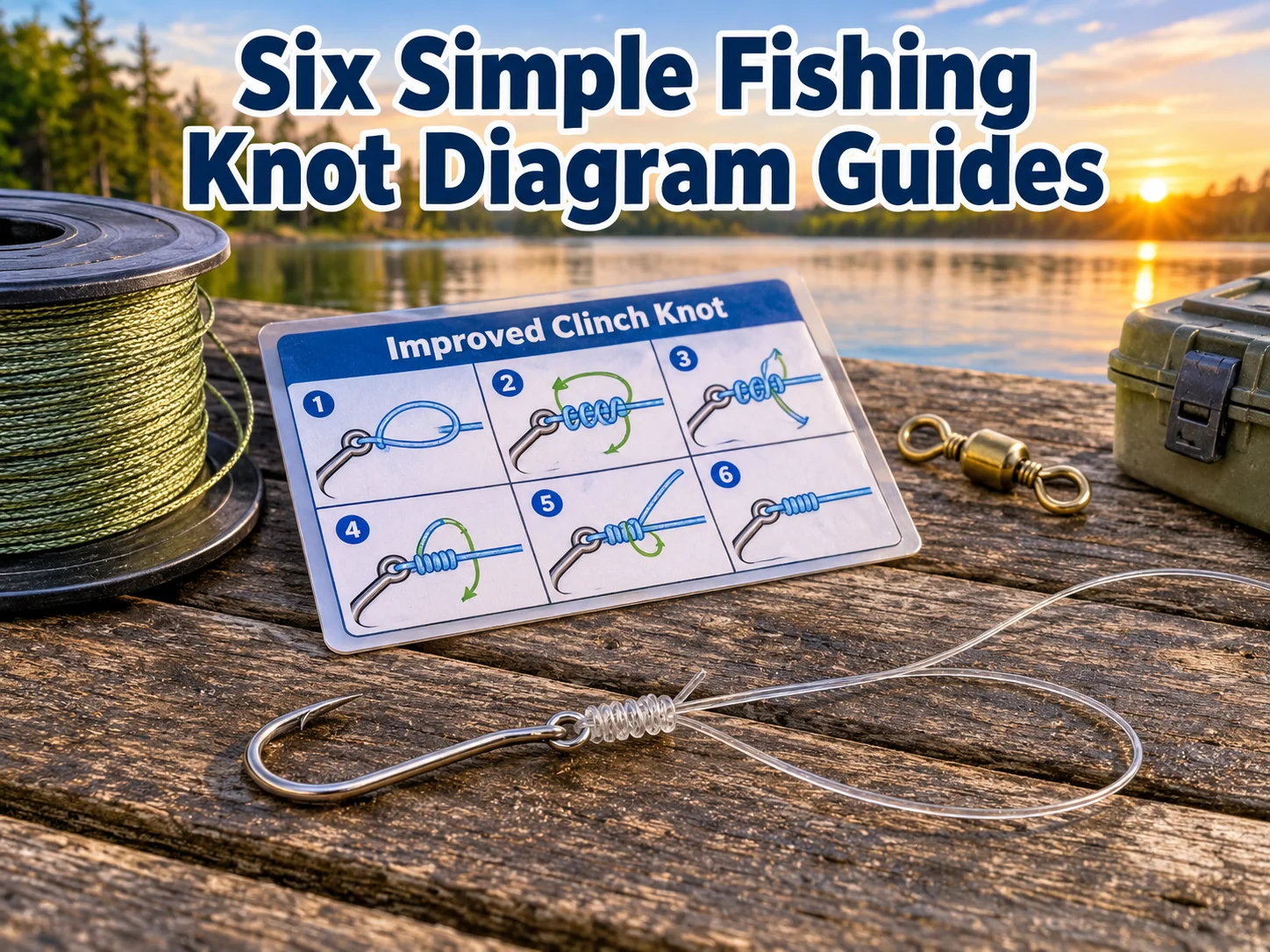
The guides below are drawn from state wildlife agencies, university sea grant programs, and curated digital resources, all of which share a diagram-first approach and a short, teachable list of core knots.
Key Takeaways
- Six knots cover the vast majority of fishing situations, from attaching a hook to joining two different lines.
- Diagram-based guides outperform text-only instructions because each step shows the line path visually before you try it with real line.
- The improved clinch, palomar, and uni knot appear in almost every beginner-focused official resource, confirming they are the best starting point.
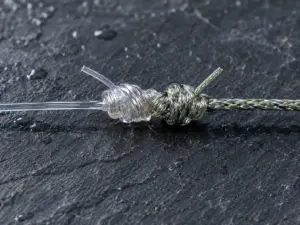
- Joining braid to mono requires a specific knot (uni-to-uni or similar); no single-line knot substitutes for it.
- Retaining “nearly all” line strength is achievable with the palomar when tied correctly, making technique, not knot choice alone, the deciding factor.
1. Vermont Fish and Wildlife’s Diagram and Video Knot Reference
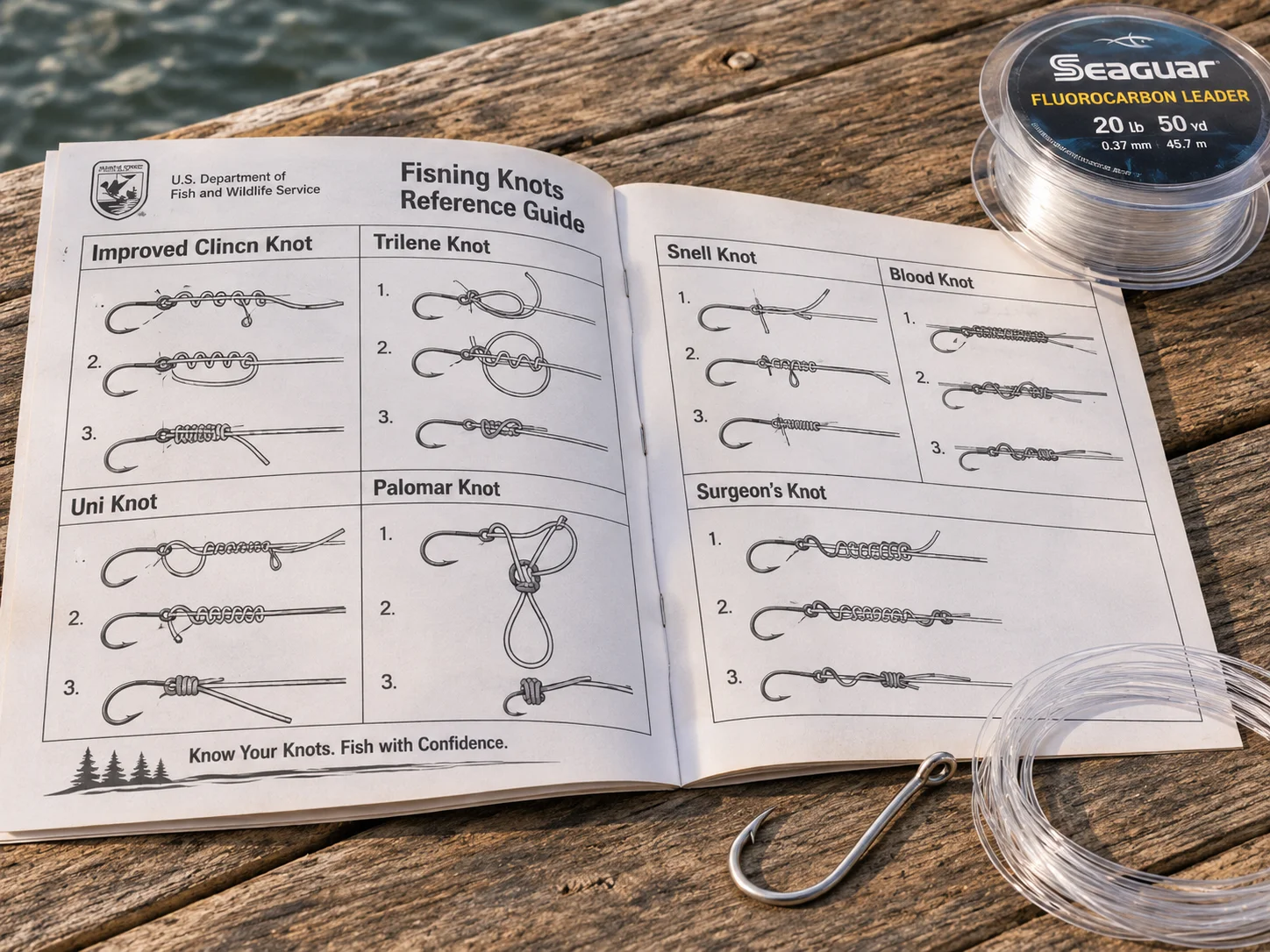
Vermont Fish and Wildlife publishes one of the most thorough official diagram guides available from a government agency. It covers the improved clinch, trilene, uni, palomar, snell, blood, and surgeon’s knots, each paired with clear step-by-step diagrams and short video walkthroughs for anglers who prefer to watch the motion.
The agency describes the improved clinch as “time-tested and relatively easy to tie,” which is a fair summary of its reputation across four decades of recreational fishing instruction. For the palomar, it uses the phrase “extremely versatile and highly dependable,” language that reflects the knot’s real-world record across freshwater bass fishing, saltwater spinning, and braided line applications.
What sets this resource apart is the breadth of knot types. Most beginner guides stop at three or four knots. Vermont’s guide adds the blood knot and surgeon’s knot for joining two lines of similar or different diameter, which covers a gap that many starter resources leave open. If you’re moving from single-species pond fishing into situations where you need a fluorocarbon leader attached to monofilament main line, those two joining knots become immediately relevant. The video component is especially useful for the snell knot, which involves wrapping the leader along the hook shank in a way that diagrams alone can be hard to follow on a first read.
For an angler building a reference library, this guide functions as a solid foundation because it covers both attachment knots (line to terminal tackle) and joining knots (line to line) in one place, with official agency credibility and free public access.
2. Fishing Schools New Zealand’s Interactive Six-Knot Sequence
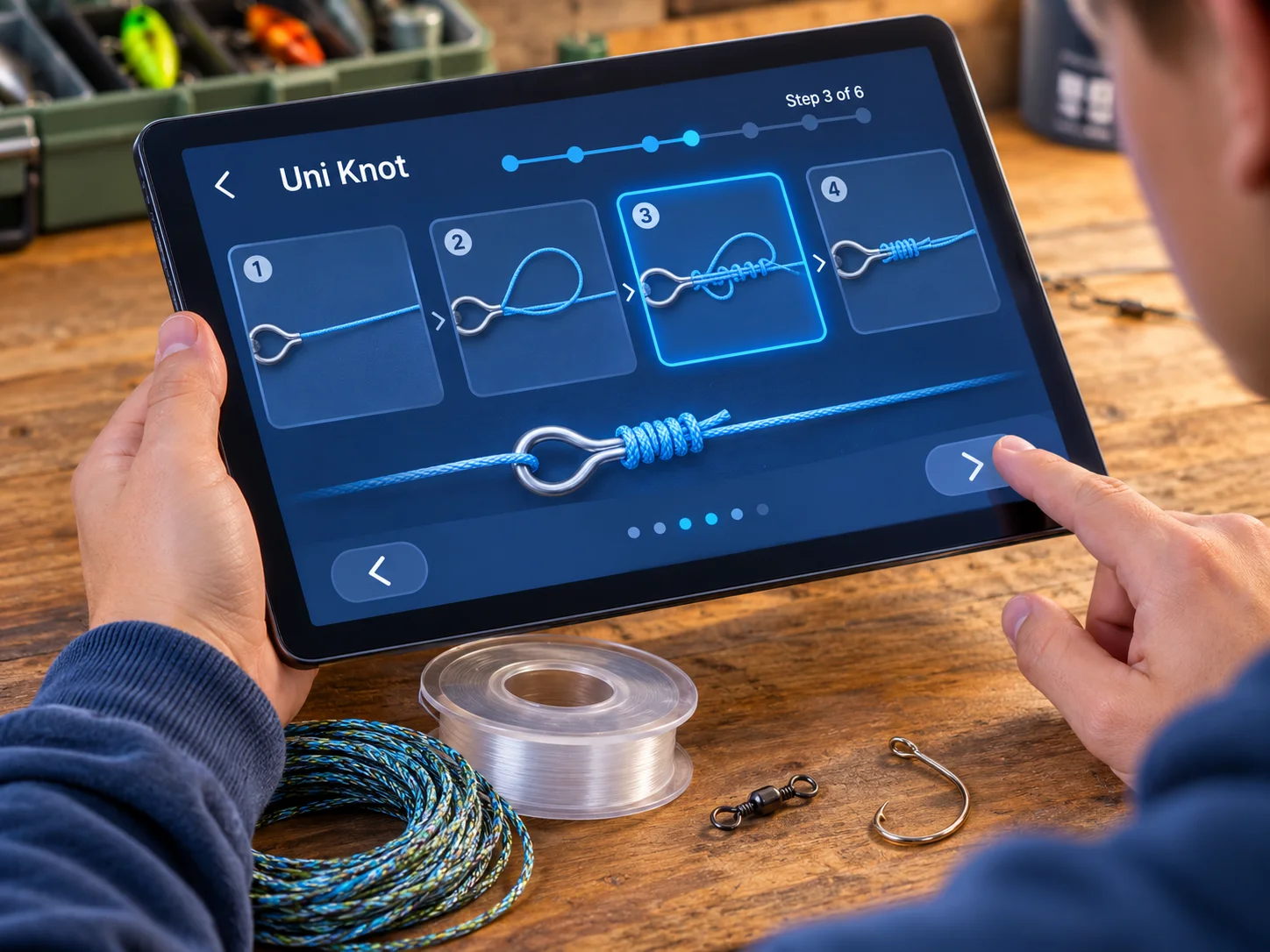
The Fishing Schools New Zealand guide targets beginners with a tightly curated list of exactly six knots, each presented with an interactive diagram sequence, written steps, and a plain-language explanation of when and why you’d use that knot. It was updated in late October 2026 and reflects a New Zealand context, though every knot in its list transfers directly to freshwater and inshore saltwater fishing anywhere.
The six knots it recommends form a logical system rather than a random assortment. The uni knot or palomar handles line-to-hook and line-to-swivel connections. The snell knot provides a straight-pull alignment on the hook shank, which matters when you’re using circle hooks for snapper or bream and want the hook point to rotate into the corner of the fish’s mouth cleanly. The uni-to-uni joins braid to mono leader, an increasingly common setup as braided line use has grown. The dropper loop creates a fixed loop off the main line to hold a second hook or sinker away from the rig, a standard ledger fishing arrangement.
That structure reflects how fish are actually caught, moving from the reel through the main line to the leader to the terminal rig. Each knot solves one mechanical problem in that chain. The interactive diagram format means you can step through each stage at your own pace, which is a real advantage over static print guides when you’re learning to form unfamiliar loops and wraps with slippery mono or braid.
3. FishingClubAI’s Visual Knot-Tying Curriculum
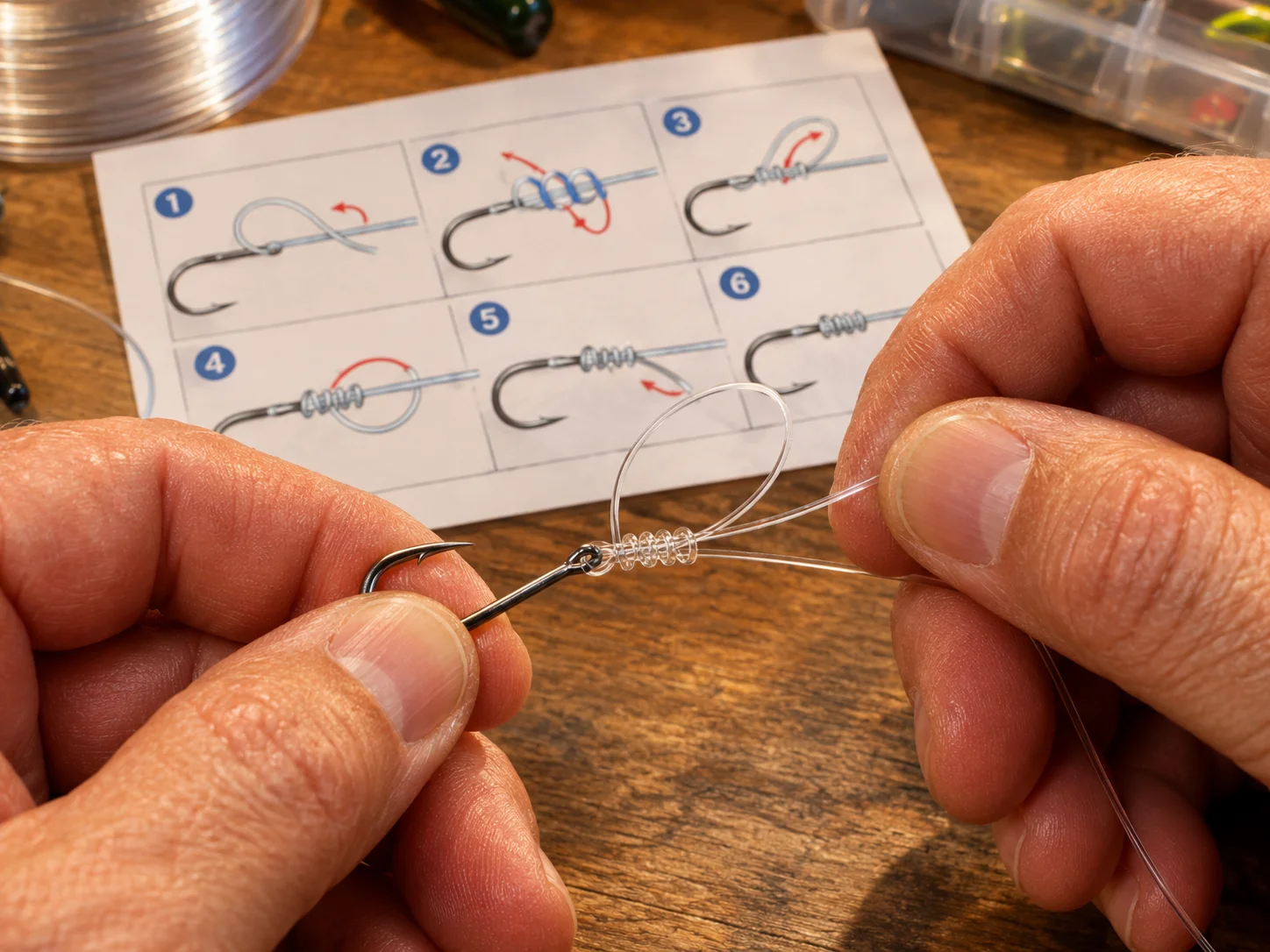
Updated in early October 2026, the FishingClubAI knot collection positions itself explicitly as a visual curriculum rather than a reference sheet. Every knot in the collection has a diagram for each individual move, not just the finished form. That distinction matters more than it sounds.
Most knot failures happen mid-process, when an angler passes the tag end through the wrong loop or makes four wraps instead of five or six. A diagram for every move prevents that by showing exactly where the line is at each stage, not just where it ends up. The guide also documents common mistakes that cause each knot to slip or break, which is a feature most official agency guides skip. Knowing that an improved clinch fails when you don’t pull both the main line and tag end simultaneously while snugging is the kind of practical detail that closes the gap between reading a diagram and actually landing a fish.
The resource also contextualizes each knot by explaining what it’s for before the tying steps begin. That sequence, purpose then method, helps the information stick. If you understand that the palomar is designed to distribute load evenly because the line runs doubled through the hook eye, you’re less likely to form it incorrectly under pressure on a cold morning when your hands aren’t cooperating.
4. Nebraska Game and Parks and Maryland DNR’s Numbered-Step Handouts
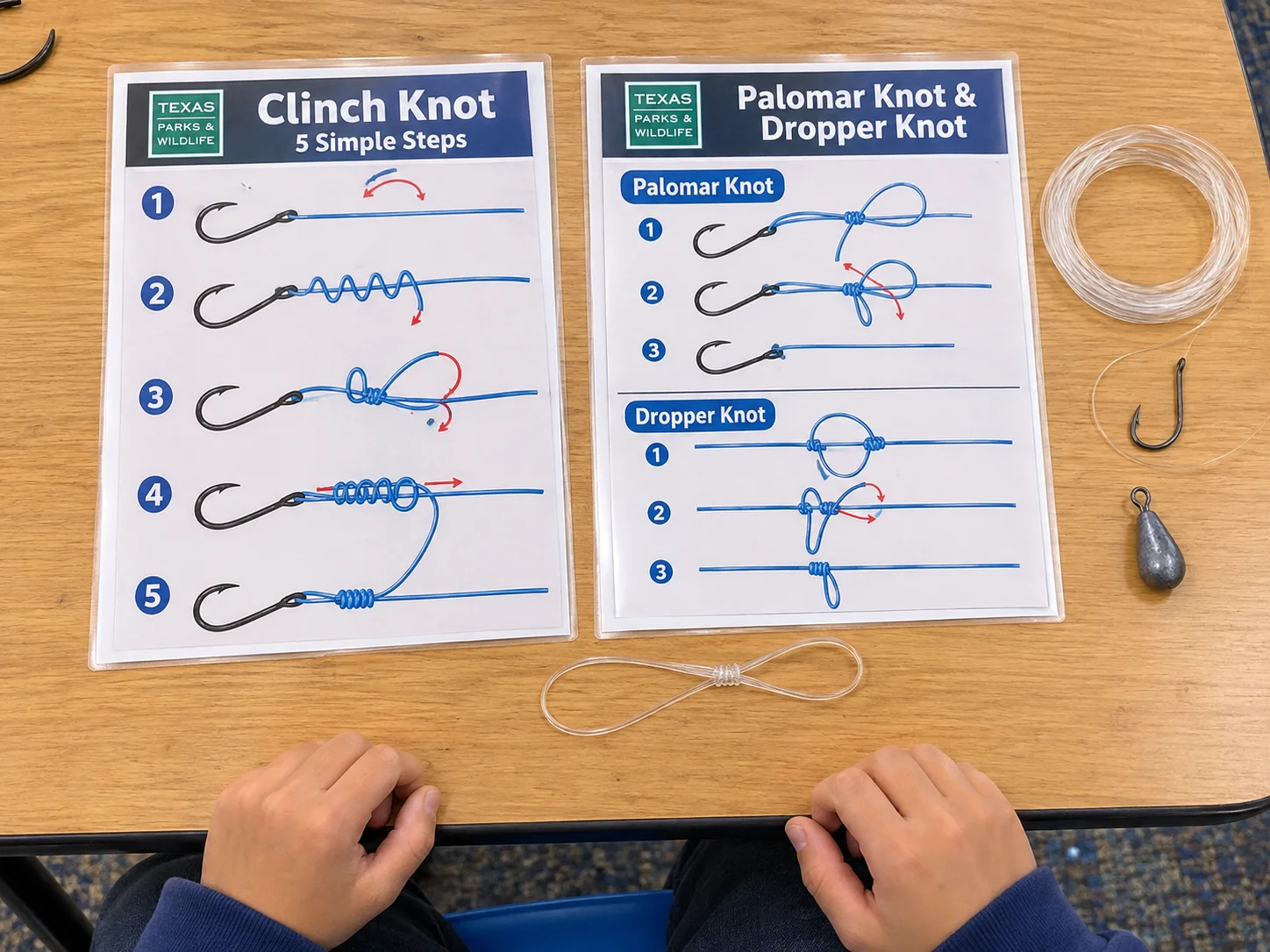
Two state agency handouts deserve mention together because they share a similar format and cover the same core knots in a way that’s well-suited to classroom or youth fishing program use.
Nebraska Game and Parks, through Nebraskaland magazine, provides illustrated diagrams for the improved clinch, palomar, and dropper knots with descriptive notes. The dropper knot explanation is particularly clear: it describes forming a loop of double line, twisting it repeatedly, then passing the original loop back through the center to create a fixed stand-out loop that holds a hook or sinker away from the main line. The guide notes that the palomar retains “nearly all” line strength when tied correctly, which is an important qualifier because a poorly formed palomar can cut into itself under load.
The Maryland Department of Natural Resources handout takes a numbered-step approach to the clinch and palomar knots. For the clinch, it specifies making five turns around the main line before passing the tag end through the loop above the eye and back through the larger loop formed. That level of specificity prevents the most common beginner error, which is making only two or three turns and tying a knot that looks correct but pulls straight through under fish weight. Both handouts are formatted for easy printing and laminating, which makes them practical for tackle boxes and youth programs.
5. SUNY Sea Grant’s Classroom-Ready Uni and Arbor Knot PDF
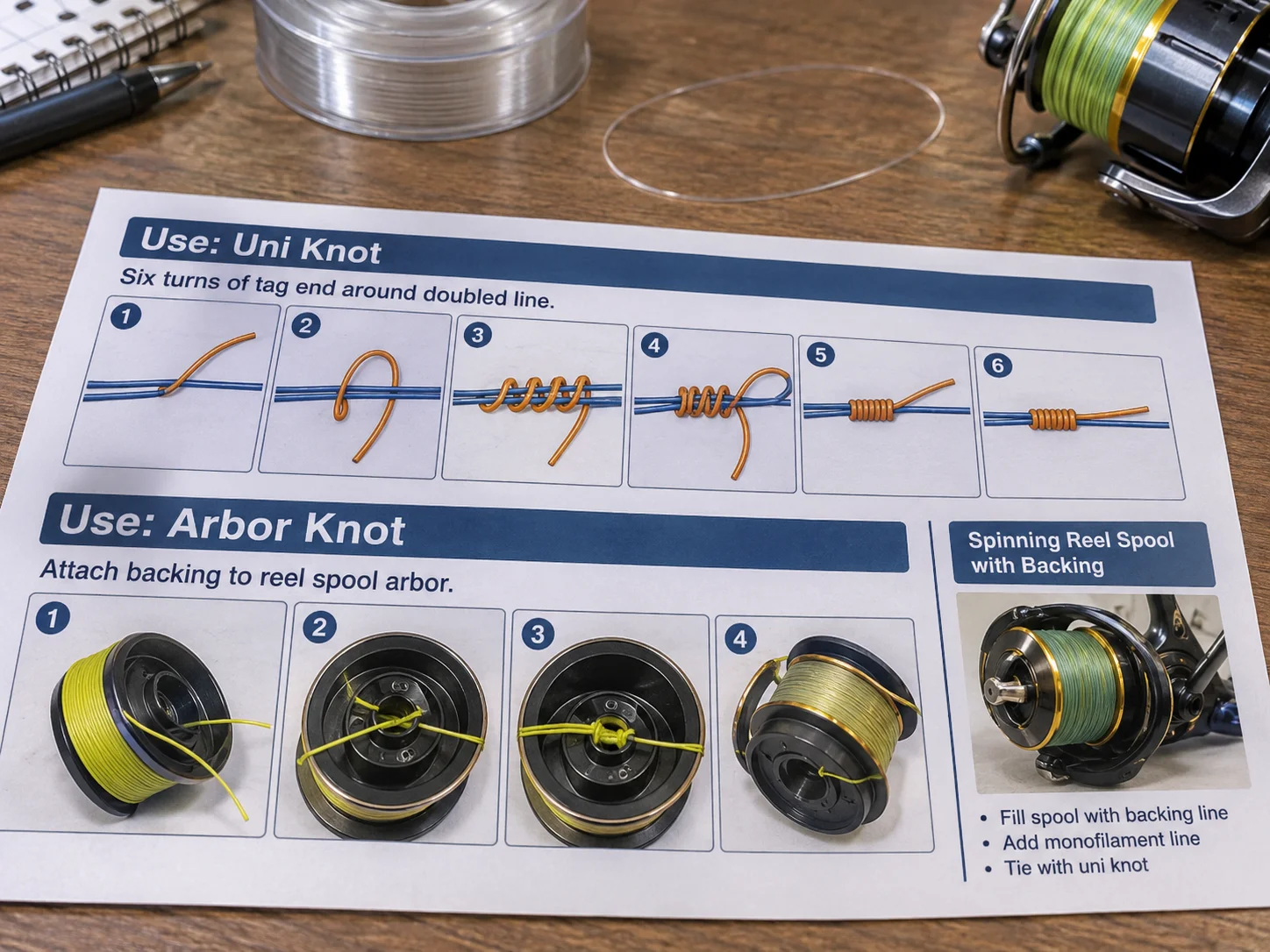
The SUNY Sea Grant “Common Fishing Knots” PDF was designed for educational settings, and its structure reflects that. Each knot comes with a labeled “Use” statement before the diagram sequence begins, so a student knows immediately whether they’re learning a knot for attaching line to a hook, joining two lines, or spooling a reel.
The uni knot instructions specify making six turns with the tag end around the doubled line before snugging, a detail that’s precise enough to be directly actionable. Six turns is not arbitrary; it’s the threshold at which the coil grips reliably on both monofilament and fluorocarbon without adding so much bulk that the knot jams in a rod guide. The guide also covers the arbor knot, which is the knot used to attach backing or main line to a reel spool. Tying overhand knots around the reel’s arbor in the sequence described creates a slip loop that seats against the spool and locks when tension is applied.
The arbor knot is often omitted from beginner guides because it’s only tied once per reel setup, but it’s the starting point of the entire line system. If it fails, everything above it fails with it. Including it alongside the uni knot in a single document gives new anglers a complete picture from reel to hook without requiring multiple sources.
6. ReferenceReady’s Waterproof Pocket Card Set
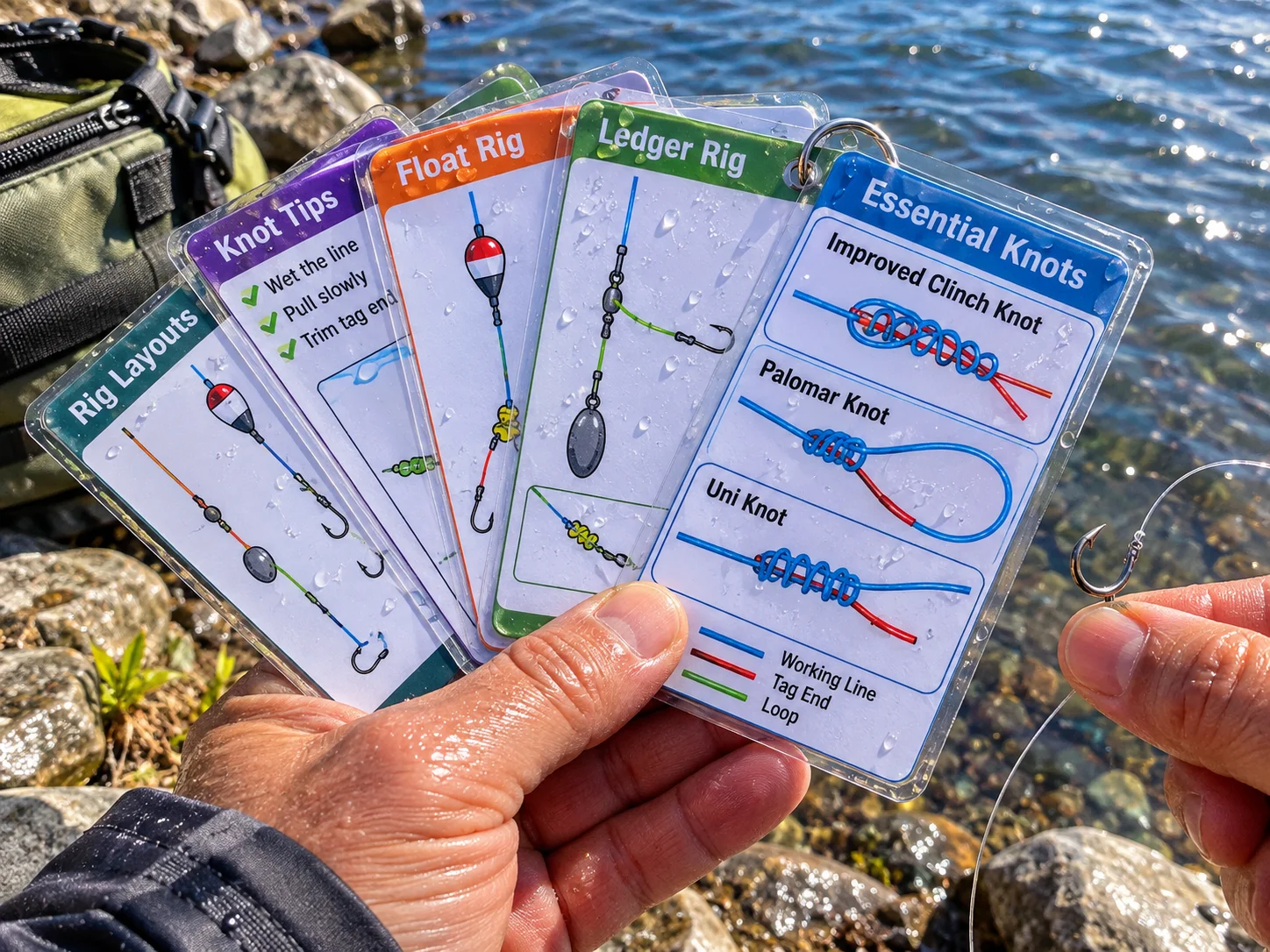
The ReferenceReady “Easiest Fishing Knots Pocket Guide for Beginners” is a commercial product, not a free agency resource, but it addresses a real gap in the guide landscape. Updated online in late November 2026, the card set covers twelve knots using color-coded diagrams, includes simple rig diagrams, and adds usage tips in compressed form.
The waterproof format is practical in a way that PDF guides are not. Phone screens crack, paper gets wet, and printed handouts dissolve in a tackle box. A laminated card you can hold at the water’s edge while threading a hook is a different kind of tool than a resource you study at a desk. The color-coding system assigns different colors to the working line, tag end, and loop in each diagram, which removes the ambiguity that single-color diagrams create when lines cross over each other in a knot mid-formation.
Twelve knots is more than the six-knot core that most beginner guides recommend, but the card set is organized by skill level and use case, so you’re not expected to learn all twelve before fishing. The rig diagrams are a bonus that few knot guides include; they show how individual knots fit into a finished ledger rig, float rig, or lure setup, which connects isolated knot skills to actual fishing applications. For anyone who has learned a knot in isolation and then struggled to know where it fits in a real rig, that visual context closes a meaningful gap.
Quick Comparison
| Guide | Format | Knots Covered | Best For |
|---|---|---|---|
| Vermont Fish and Wildlife | Diagrams plus video | 7 knots including blood and surgeon’s | Anglers adding line-joining knots |
| Fishing Schools New Zealand | Interactive step diagrams | 6 core knots as a system | Beginners wanting logical progression |
| FishingClubAI | Diagram per move, with mistake notes | Core knots with error analysis | Anyone who has tied knots wrong before |
| Nebraska Game and Parks / Maryland DNR | Numbered-step printed handouts | Improved clinch, palomar, dropper | Youth programs and classroom use |
| SUNY Sea Grant PDF | Labeled diagrams with “Use” headings | Uni knot, arbor knot | Reel setup through hook connection |
| ReferenceReady Pocket Cards | Waterproof, color-coded | 12 knots plus rig diagrams | On-the-water reference in any conditions |
Conclusion
The core message across all six of these diagram guides is consistent: a small number of well-practiced knots, tied correctly every time, outperforms a large collection of knots tied from memory under pressure. Start with the improved clinch or palomar for attaching terminal tackle, add the uni-to-uni for joining braid to mono, and learn the dropper loop if you’re rigging a multi-hook rig. That’s four knots covering roughly ninety percent of fishing situations. The next step is to pick one guide from this list, print or bookmark it, and tie each knot ten times on a piece of scrap line before you’re at the water. Muscle memory built on the couch doesn’t wash off when it’s cold and the fish are running.