Deep Sea Fishing Outfit Picks for Rough Water and Long Days
Roughly 11 million Americans go saltwater fishing each year, and a significant share of them head offshore underdressed. A spray-soaked cotton hoodie at 7 a.m. on a Gulf charter can ruin an eight-hour trip before the first line goes in the water. The 6 deep sea fishing outfit picks for rough water and long days covered here solve that problem systematically, moving from your skin outward and from head to foot, so you stay dry, sun-protected, and mobile across a full day offshore regardless of what the weather does.
Disclosure: This post contains affiliate links. As an Amazon Associate, we earn from qualifying purchases, and at no extra cost to you.
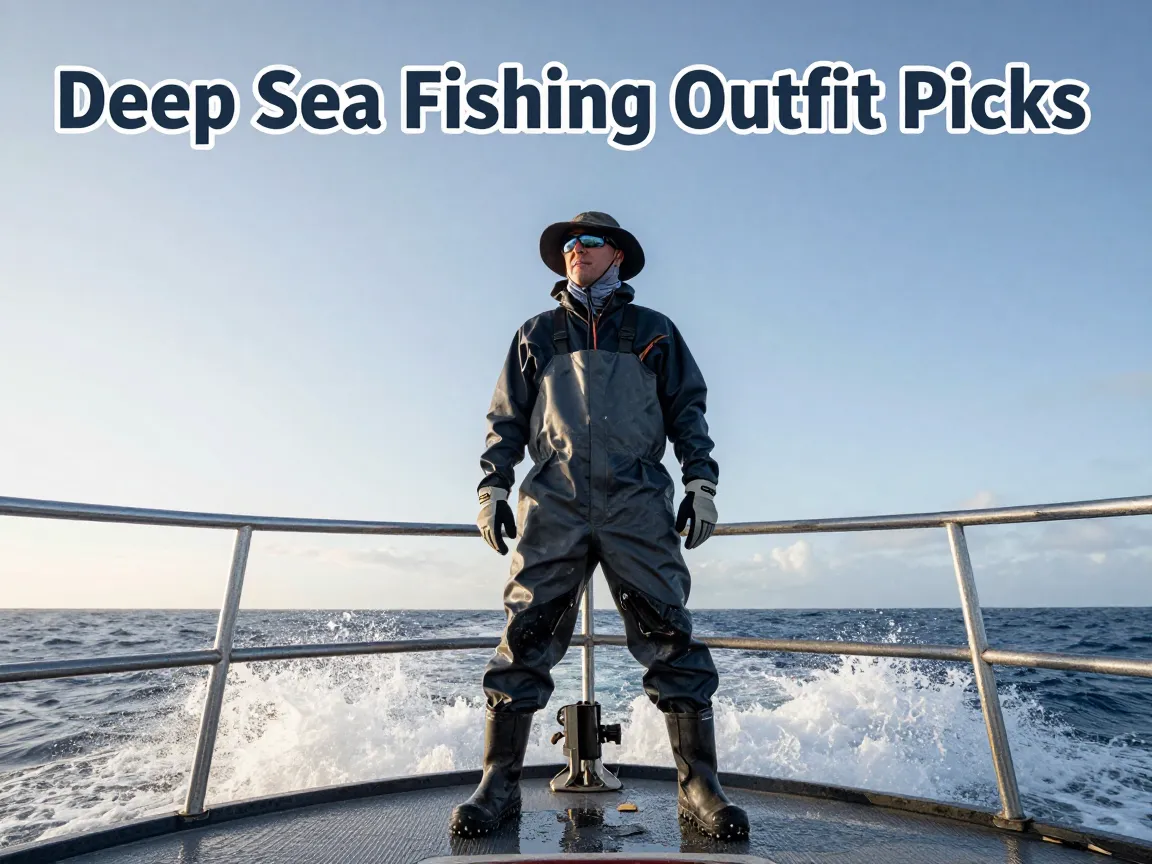
Each pick is a category of clothing or gear with specific functional requirements, not a single brand recommendation. Offshore conditions vary too much for one-size-fits-all product advice, but the principles behind each pick hold from Gloucester to Destin to the Pacific coast.
1. Moisture-Wicking Base Layer Built for Salt and Sweat
The base layer is the piece most anglers get wrong first. Cotton feels fine at the dock but holds sweat and seawater against your skin. Once the wind picks up on a rough-water run, that clammy cotton shirt drops your body temperature fast and stays wet for hours. On an 8-12 hour trip, that’s not uncomfortable, it’s a safety concern.
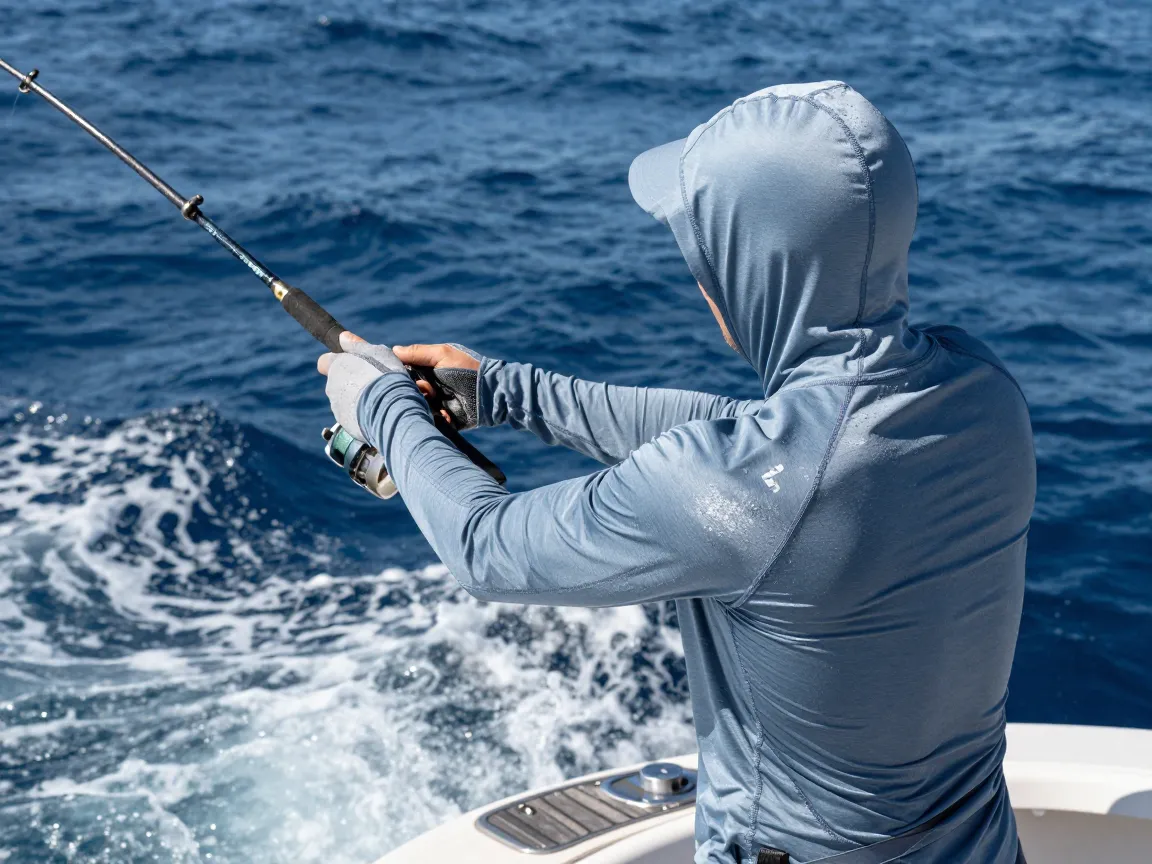
The right base is a fitted, long-sleeve shirt in synthetic fabric or merino wool. Synthetics dry faster after a soaking; merino manages odor better on multi-day trips and is naturally soft against skin that will be in sun and salt all day. Either way, the shirt should have a UPF rating of at least 30, ideally 50+, because your arms are exposed to direct sun and to the reflection bouncing off the water and the deck simultaneously. That reflected UV exposure doubles the effective dose compared to being on land.
Fit matters here. A base layer loose enough to snag on a rod holder is a problem mid-fight. Look for a cut that moves with your arms when you’re cranking a reel or pulling line hand over hand. Some performance fishing brands offer base-layer hoodies in UPF 30+ fabrics that double as a light sun hood when spray picks up, eliminating the need for a separate sun shirt on warm-weather trips. For cooler mornings on northern charters or late-season runs, a lightweight merino long underwear top worn under a quick-dry shirt covers both the warmth and sun-protection needs in one system.
Charter operators in Gloucester now specifically list “no cotton base layers” on their pre-trip packing checklists. That’s not fussiness; it’s the result of watching unprepared anglers suffer through long days at sea.
2. Insulating Mid-Layer That Packs Small and Dries Fast
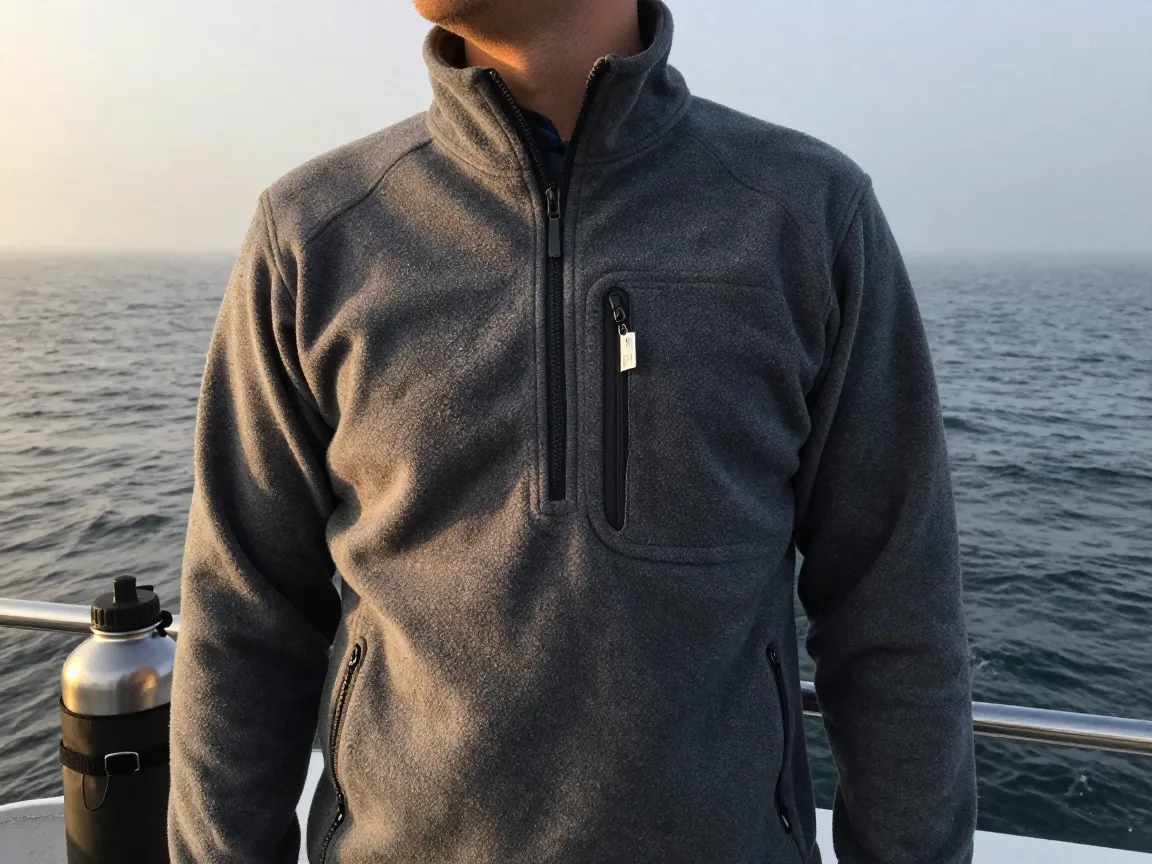
Offshore mornings run cold even in summer. A 25-knot run to the fishing grounds at 6 a.m. in 70°F air feels significantly colder than standing on a dock in the same temperature because of wind chill and spray. By midday, that same day can hit 85°F in direct sun. The mid-layer handles that swing.
A quarter-zip fleece or lightweight synthetic jacket is the standard answer. Fleece dries faster than down, resists salt spray better, and retains some insulation when damp, which matters because a mid-layer on a boat will get wet. Down is warmer per ounce, but a soaked down jacket is dead insulation. For offshore fishing specifically, fleece wins unless the trip is in genuinely cold conditions where the extra warmth of down is worth managing the dryness problem.
The key practical feature is packability. When the sun comes up and the deck gets warm, you need to stuff this layer into a pocket or a small dry bag without thinking about it. Bulky mid-layers end up abandoned in the cabin, which means you’re cold again the moment clouds roll in. A fleece that compresses to roughly the size of a large water bottle is worth paying more for on a long trip.
Zip pockets on the mid-layer are worth checking for. Cards, a folded license, a phone in a waterproof case, these move from layer to layer throughout the day, and a mid-layer with no secure pockets forces you to leave valuables exposed or unzipped on the shell layer instead.
3. Waterproof Shell Jacket With Sealed Seams and a Usable Hood
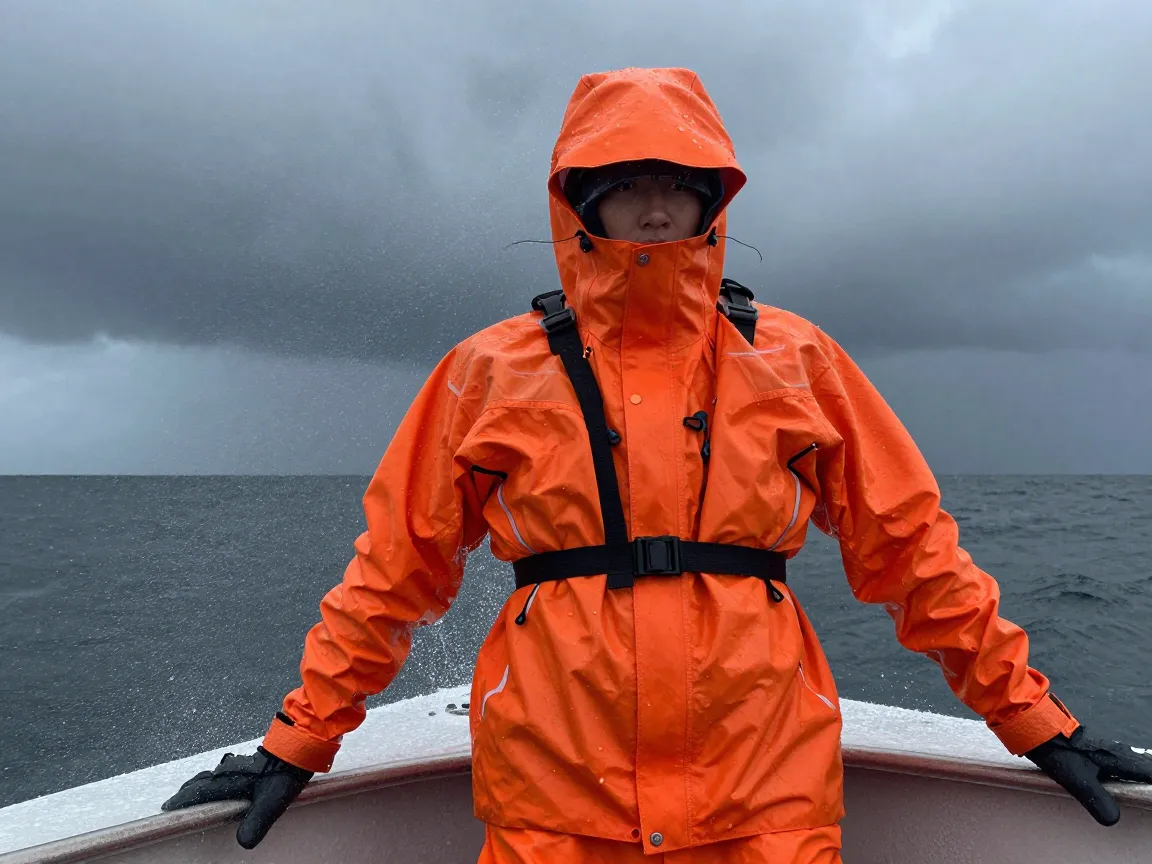
This is the piece that determines whether a rough day is manageable or miserable. A shell jacket for offshore rough-water fishing is not a rain jacket from a hiking brand. The requirements are different: it needs to handle continuous spray from multiple directions, stay waterproof under sustained pressure (not just light rain), and have a hood that stays positioned at speed rather than flipping back the moment you face into the wind.
Waterproof breathable fabrics in the Gore-Tex category are the benchmark. Taped or sealed seams are non-negotiable; stitched-only seams leak under sustained spray regardless of how waterproof the face fabric is. Cuffs should cinch tightly around wrists so water doesn’t run down your arms while reaching forward on a rod. The hem needs to stay put over bibs or pants when you’re bending and moving, which means looking for a drawcord or banding rather than a simple straight cut.
The hood is worth spending time on before you buy. A hood that cinches down tight around your face but still allows head movement protects your neck and ears on a rough run to the grounds. Many offshore anglers skip hoods entirely on calm days, but when conditions deteriorate 20 miles from the inlet, a hood that actually stays put is the difference between staying functional and retreating to the cabin.
Safety-focused deep-sea gear guides in 2026 treat the shell jacket as part of the boat’s safety system. The jacket should be compatible with a personal flotation device worn over it, which affects how the collar and chest closure are designed. If you wear a PFD regularly offshore, and offshore anglers should, confirm the jacket fits under or over your PFD as intended before the trip.
4. Foul-Weather Bib Pants With Adjustable Shoulder Straps
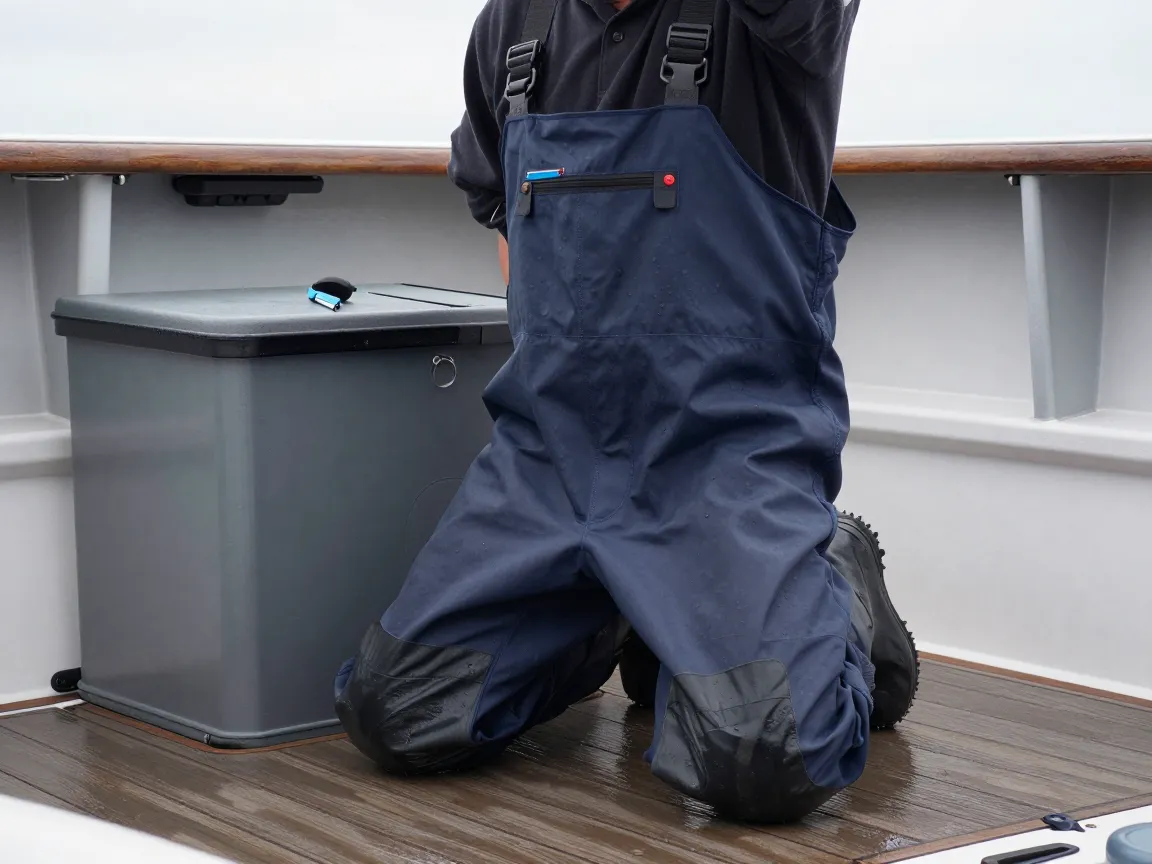
A good shell jacket without matching bib pants leaves a gap. Regular rain pants slip, bunch, and soak through at the waistband during long, active sessions. Bib pants with adjustable shoulder straps distribute the weight of wet gear across your shoulders rather than your waist, which matters after several hours of standing, bending, and fighting fish.
The shoulder strap design affects mobility more than most anglers expect. Straps set too tight restrict your arm swing. Swivel buckles on the shoulder connections let you adjust quickly when the temperature drops and you’re pulling on the mid-layer underneath, without taking the bibs completely off. That adjustment takes about 15 seconds with swivel hardware and several frustrated minutes without it.
Sealed seams and waterproof knees are the specific features to check on bibs. Knees and the seat take the most direct spray and water contact on a boat; a bib that is waterproof everywhere except the knee seams will soak through in those spots within an hour on rough water. Some offshore bib systems also have reinforced kneepads built in, which is a practical bonus when you’re kneeling to clear a tangle or manage gear at the fish box.
Fit over the base and mid-layers without being so baggy that the pants catch on cleats or rod holders is the balance to aim for. Charter operators in Destin specifically describe this in their clothing guidance: pants with room to move but nothing flapping loose on a working deck.
5. Non-Slip Deck Boots or Closed-Toe Water Shoes
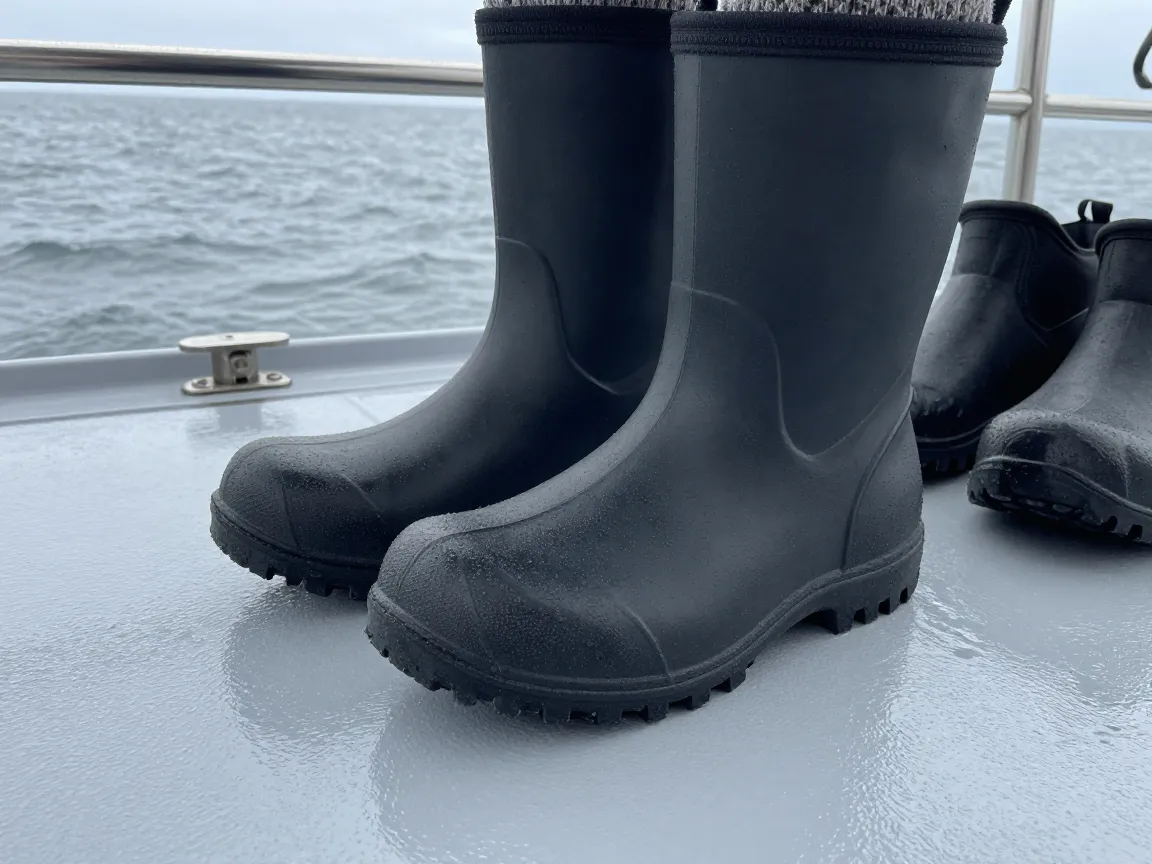
A wet fiberglass deck is one of the most reliably dangerous surfaces in recreational fishing. Open-toe sandals and smooth rubber soles have caused injuries on offshore charters that far exceed what any equipment failure causes. Non-slip footwear on rough water is not a preference; it’s the single item in this list most directly connected to your physical safety on the boat.
Dedicated deck boots with siped rubber soles, meaning soles cut with thin grooves that grip wet surfaces by channeling water away from the contact patch, are the best option for genuinely rough water. Waterproof construction keeps feet dry during the initial run and when spray hits the deck, which improves warmth and prevents the foot fatigue that comes from standing in wet socks for eight hours. Wool or synthetic socks inside waterproof boots also matter: cotton socks, same as cotton base layers, stay wet and cause blisters.
Closed-toe water shoes with aggressive rubber tread work well for warm-weather trips where deck boots feel too hot. The key is confirming the sole is designed for wet, smooth surfaces. Many general athletic or trail shoes have tread that works on dirt and gravel but provides almost no lateral grip on wet gelcoat. Anglers in the Florida Keys and Gulf Coast often fish in water shoes year-round for comfort, but the sole specification needs to be verified regardless of the brand name.
Boot height is worth considering based on trip type. For rough-water offshore runs, a mid-cut or higher boot protects the ankle when you’re bracing against the boat’s motion and keeps spray from pouring in over the top.
6. Sun and Spray Protection Accessories: Hat, Neck Gaiter, and Gloves
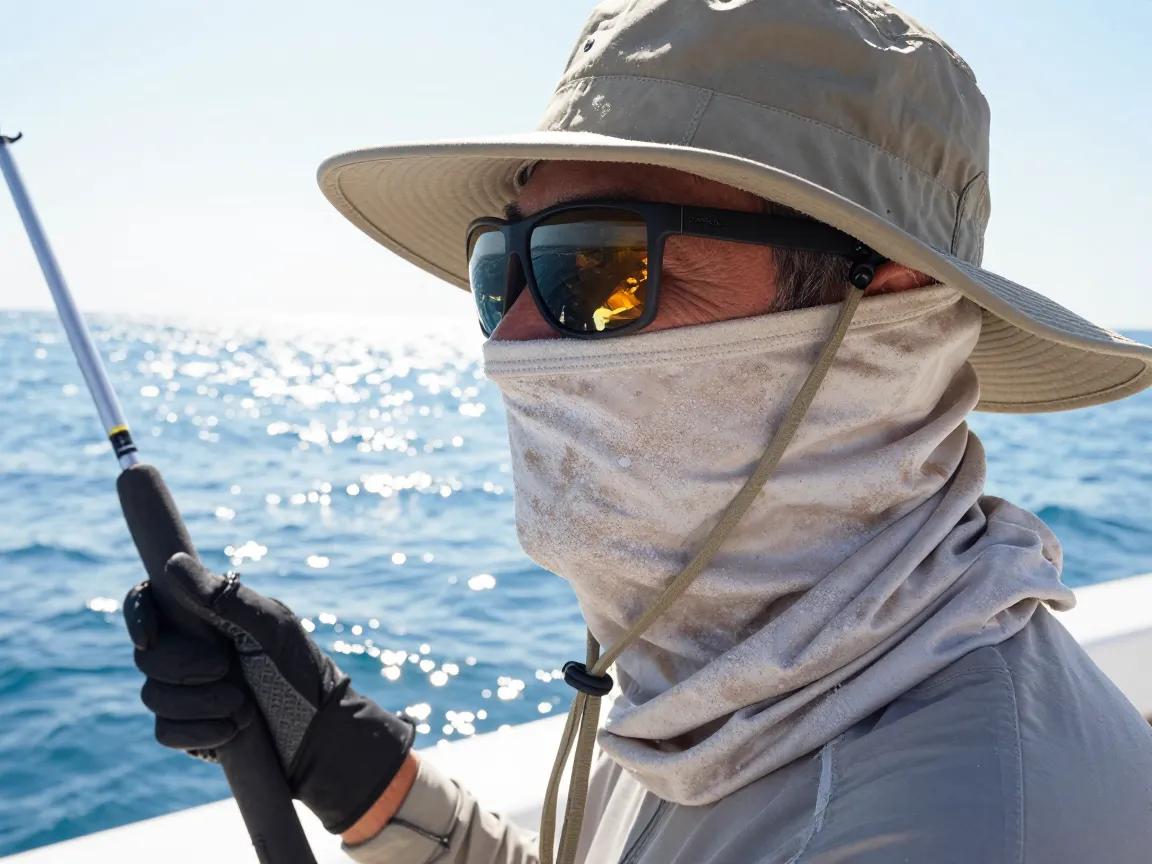
Three accessories that often get left out of outfit planning account for a significant portion of the discomfort and long-term damage that comes from long offshore days. Sun exposure offshore is more intense than on land because UV reflects off both the water surface and the deck, essentially surrounding you with radiation from multiple angles. An 8-hour offshore trip without full coverage is a meaningful UV dose regardless of how good your sunscreen application is.
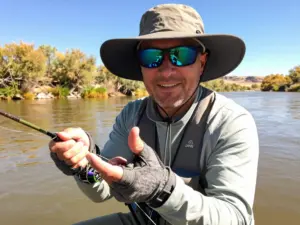
A wide-brim hat with a chin cord is the most useful single sun-protection item you can add to any offshore outfit. The chin cord is not optional on rough water; a hat that blows off mid-run is immediately a problem, and a wet hat retrieved from the deck is half as useful as one that stayed on your head. Brims of three inches or more shade the face, the back of the neck, and the ears, which are three of the highest-risk areas for sun damage in anglers who spend regular time offshore.
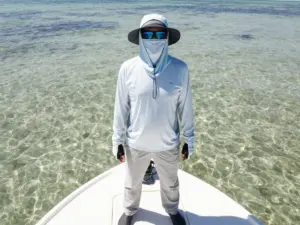
A neck gaiter in a lightweight UPF 50 fabric covers what the hat brim doesn’t. When pulled up over the lower face and nose during a rough run or in sustained spray, it also blocks wind. When pushed down around the neck during a calm midday stretch, it costs nothing in comfort. Anglers who fish 8-12 hour trips regularly wear these on every offshore outing regardless of cloud cover because the UV load from water reflection alone is significant even on overcast days.
Gloves complete this group. Neoprene or fast-drying synthetic gloves with reinforced palms and fingers protect hands from rough braided line, fish handling, and continuous salt spray over a long day. The frequent objection is that gloves reduce dexterity for knot-tying, and cheap gloves do. Gloves designed specifically for fishing have pre-curved fingers and thin palm sections that allow you to feel and tie knots without removing them. Some styles are fingerless at the index finger and thumb only, which is a good compromise for anglers who regularly need bare-finger precision on small hardware.
Polarized UV400 sunglasses round out the system. Polarized lenses cut water glare specifically, they filter the horizontally polarized light that reflects off flat water, which reduces eye fatigue significantly over a long day and improves your ability to spot fish in the water column. UV400 means the lens blocks wavelengths up to 400 nanometers, covering both UVA and UVB completely. Standard sunglasses without that rating let UV through even if the lenses appear dark.
Packing Strategy for Full-Day and Multi-Day Trips
The outfit system described above works on a single-day run, but how you pack it determines how well it works when conditions change mid-trip. For a full-day 8-12 hour offshore trip, the minimum useful backup kit is a dry bag containing a spare shirt, the mid-layer if it’s not already on, a pair of synthetic socks, and the gloves. If your shell gets soaked through or you get fish slime on your base layer early, that dry bag is what keeps the rest of the day functional.
Multi-day offshore trips require two complete sets of the base and mid-layer, a spare pair of deck boots or water shoes, fleece pants, and long underwear for overnight temperature drops. A packable jacket compressed in its own pocket takes up almost no space and covers situations where the full shell is drying out. Charter operators now include dry bag recommendations in their standard gear lists precisely because wet gear stored in a tackle bag does not dry between days.
Conclusion
The core principle running through all 6 deep sea fishing outfit picks for rough water and long days is the same: offshore conditions vary faster and more severely than inshore fishing, and no single garment solves the whole problem. The three-layer system (base, mid-layer, shell) with matched bib pants handles temperature swings and spray. Non-slip footwear handles the deck safety problem. Sun and spray accessories handle the UV and hand protection that the main layers don’t cover.
The most useful next step before any long offshore trip is to lay every piece out at home and check for the specific features described here: sealed seams, UPF ratings, non-cotton fabrics, siped soles, chin cords. What looks like a minor detail in a gear description is usually the feature that determines whether the item holds up at hour seven of a rough day offshore.