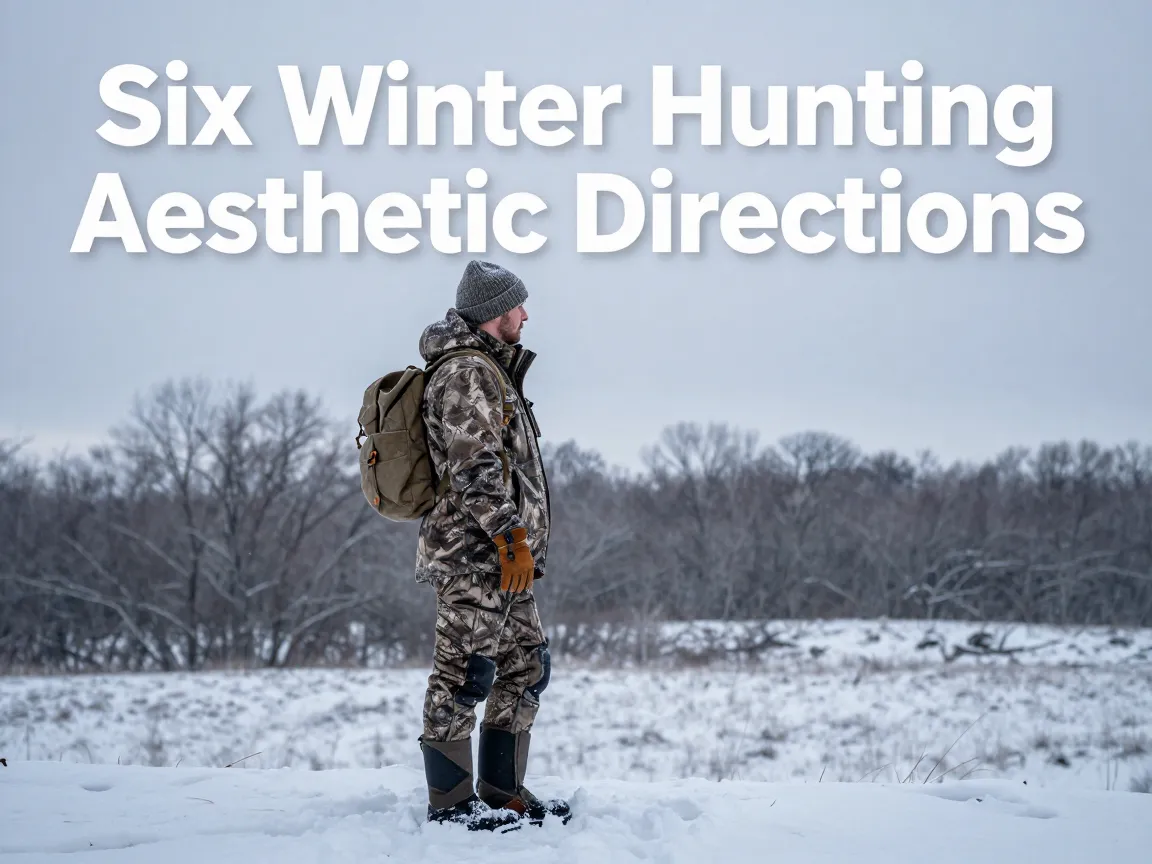
Winter Hunting Aesthetic Ideas for Cold-Weather Adventure Style
Roughly 15.9 million Americans hunt each year, yet the gap between gear that merely keeps you warm and gear that projects a coherent, purposeful cold-weather identity has never been wider. The brands releasing late-season lines in 2026 are not just solving a thermal problem, they are defining a visual language. These 6 Winter Hunting Aesthetic Ideas for Cold-Weather Adventure Style break down that language into actionable directions, whether the goal is a fully coordinated technical kit or a rugged heritage-inspired field look.
Disclosure: This post contains affiliate links. As an Amazon Associate, we earn from qualifying purchases, and at no extra cost to you.
1. Arctic Tech Camo: Head-to-Toe Pattern Discipline
The most dominant visual trend in late-season hunting outerwear right now is the commitment to a single camo system from collar to boot gaiter. Rather than mixing patterns from different brands or eras, the Arctic Tech Camo aesthetic is built around one terrain-matched print carried across every layer that shows, jacket, bib, gloves, and pack.
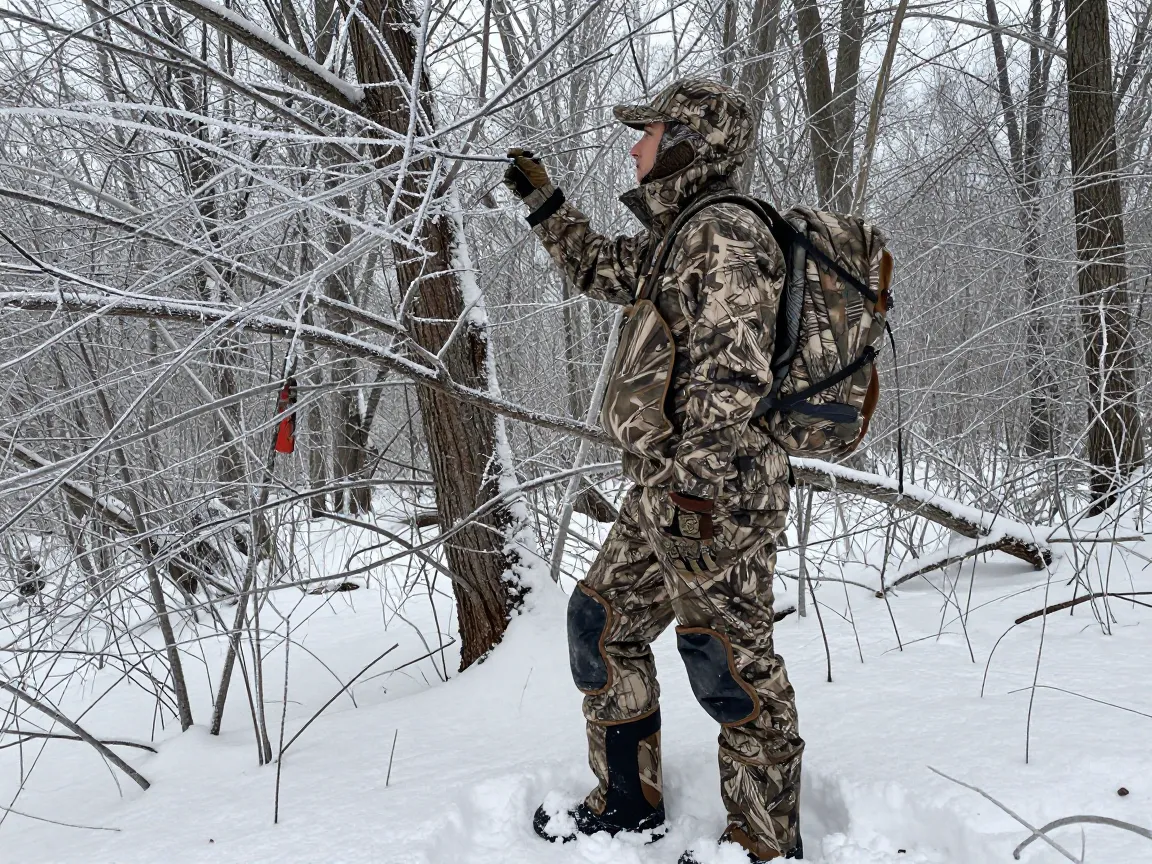
ScentLok’s BE:1 Revenant jacket and bib set a strong benchmark for this look. The shell runs Realtree’s XT-3 camo, a pattern engineered for the bare-branch, frost-covered terrain of late whitetail season, over a WindBrake windproof membrane and thermally mapped PrimaLoft Silver insulation. The result is a silhouette that reads clean and intentional rather than bulky and mismatched. When the jacket and bibs share the same graphic, the eye reads the hunter as a single, resolved shape against snow and grey timber, which is both tactically sound and visually striking in photographs and video content.
Blocker Outdoors reinforces the same idea with its Flyway jacket and bib pairing, adding a 10K/10K RainBlocker waterproof-breathable membrane and 120 g body insulation. The Wooltex wool-hybrid sets from the same brand extend the uniform look to hunters who want a texture contrast, the slight sheen difference between a smooth shell and a wool-face fabric adds visual depth without breaking pattern discipline. The practical takeaway for building this aesthetic is straightforward: select a camo family first, then fill every outer layer from that single family before introducing any solid-color accent pieces.
One caveat worth noting: Arctic Tech Camo works best when the terrain actually matches the pattern. Running a dense-timber pattern in open prairie, or a grassland break-up in dark boreal spruce, undercuts the whole visual logic. Part of what makes this aesthetic compelling is that it signals awareness of environment. Choosing the right pattern for the specific hunt is what separates a thoughtful kit from an outfit that happens to be camouflage.
2. Bitter-End Bulk-Free: The Athletic Late-Season Silhouette
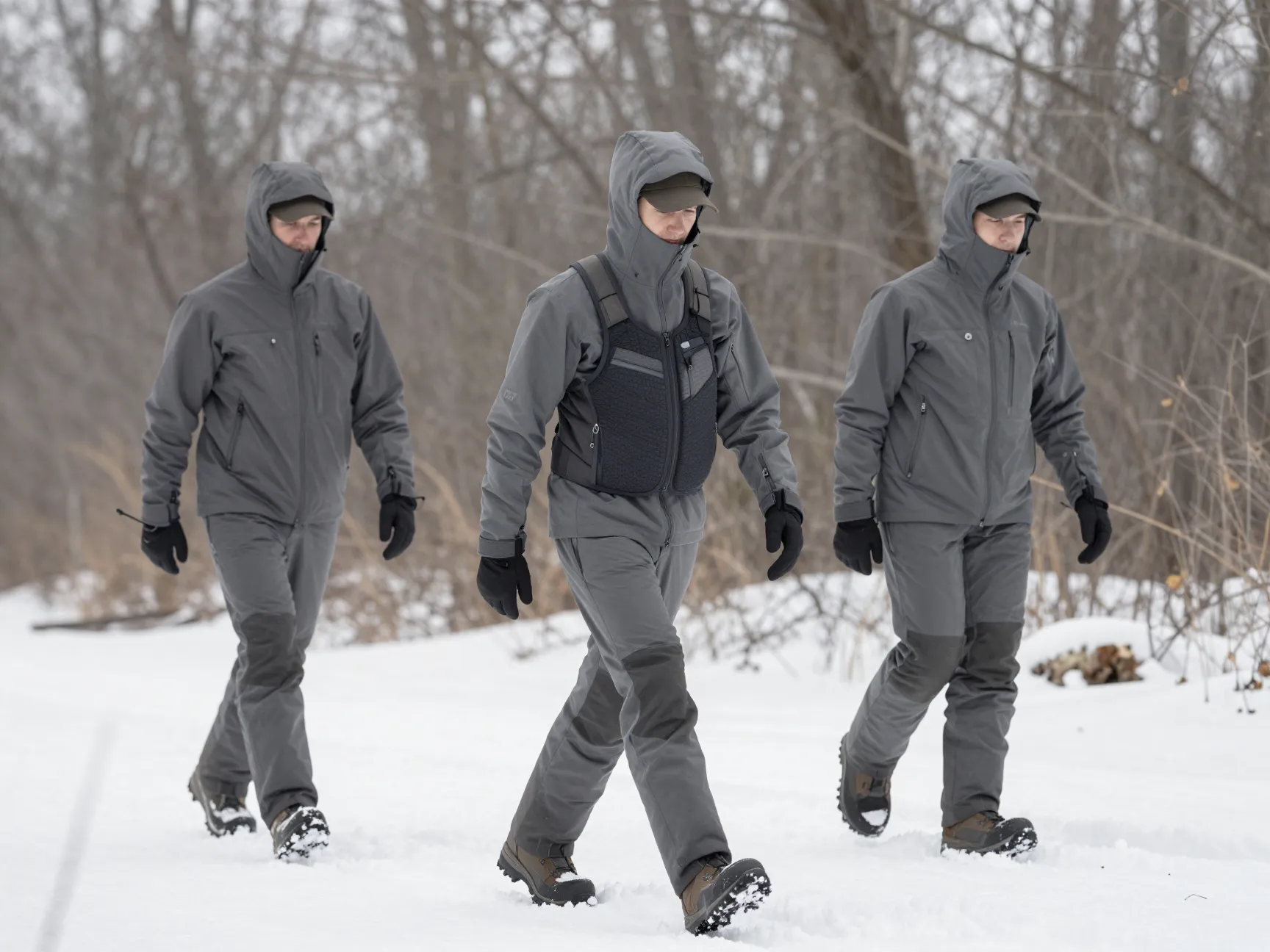
The traditional image of a cold-weather hunter involved a heavily padded, boxy parka that added visible girth in every direction. The Bitter-End Bulk-Free aesthetic pushes directly against that idea. The goal is a slim, athletic silhouette that communicates warmth through loft placement rather than overall volume.
Muddy’s DV8 Mammoth jacket and bibs are the clearest current expression of this direction. The construction is specifically engineered to be soft and silent, critical for tree-stand hunting, while delivering high-loft insulation that sits close to the body rather than billowing outward. The fit reads more like a modern ski-touring midlayer than a traditional hunting parka, which is precisely the point. The body can move naturally, the outer profile stays compact, and the technical materials visible at the cuffs and collar signal performance without bulk.
What elevates this beyond a single jacket choice is the system approach. Muddy pairs the DV8 shells with Nucleus heated vests, 17-inch insulated boots, overshoe foot warmers, and boot and glove dryers marketed as a coordinated deep-winter package. When every element from vest to boot shares a consistent visual family, matching or complementary colorways, similar logo placement, and unified trim details, the overall outfit achieves the kind of head-to-toe coherence that elevates a functional kit into a genuine aesthetic statement.
The athletic silhouette also photographs better than a boxy alternative, which matters as hunters increasingly document their pursuits across social platforms. Slim-cut bibs paired with a fitted high-loft jacket and low-profile boots create a recognizable “technical hunter” profile that is easy to identify and replicate. For hunters building a late-season wardrobe from scratch in 2026, starting with fit before insulation weight is a useful reversal of the usual priority order.
3. Women’s Late-Season System: Fitted and Purpose-Built
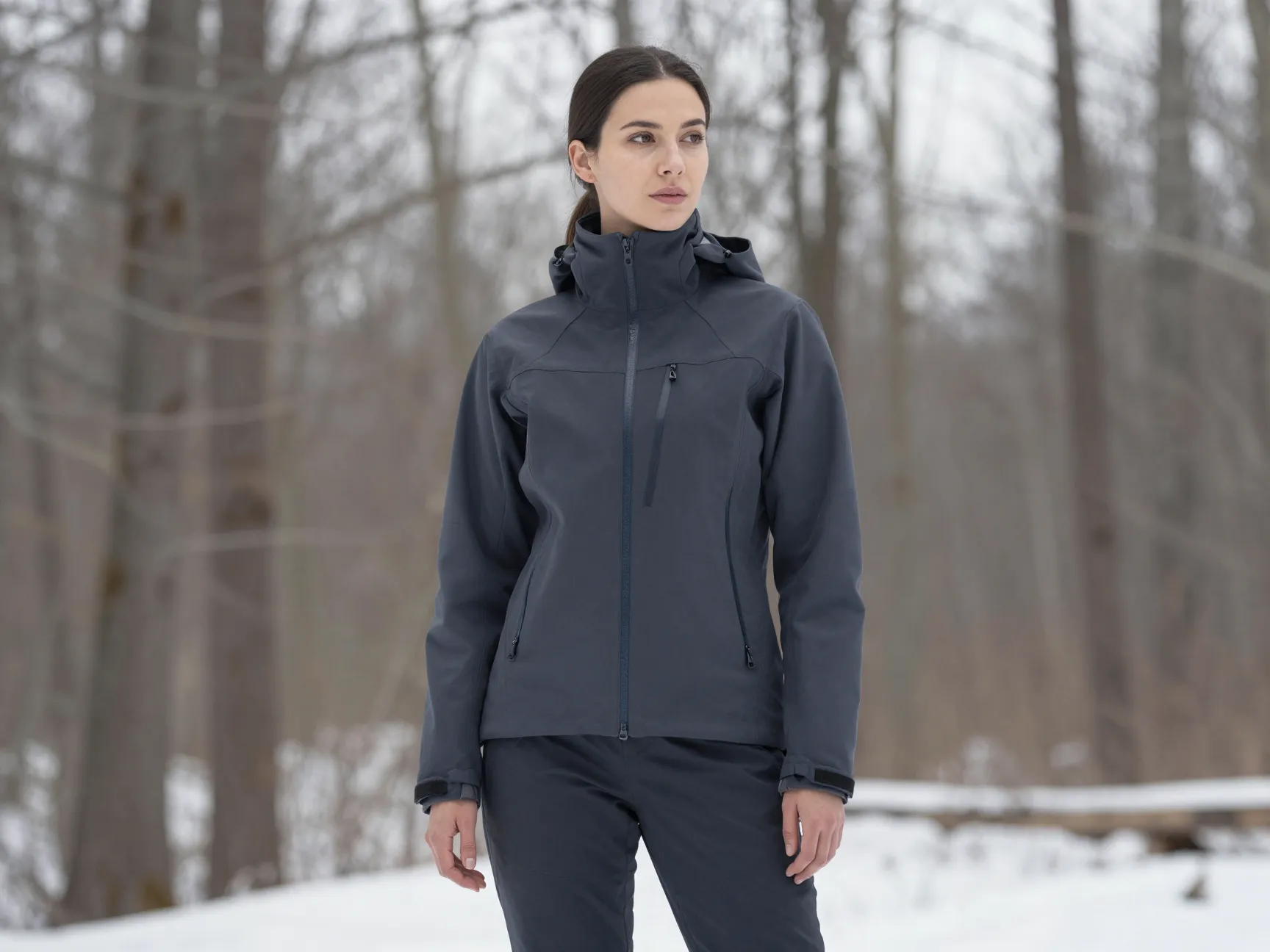
For years, women’s hunting apparel meant a men’s design scaled down and perhaps offered in a different colorway. That approach is now being replaced by a distinct aesthetic category: purpose-built women’s late-season systems that treat fit, insulation mapping, and mobility as independent design problems rather than afterthoughts.
Muddy’s DV8 and Timber Recon Xtreme (TRX) lines for women represent the clearest current example. These systems include articulated base layers, mid-layers with strategic insulation placement for areas where women lose heat differently than men, silent waterproof softshells, and hardshell pieces rated for temperatures well below freezing. The fit across all layers is shaped for a female torso, longer in the hip, tapered at the waist, proportioned in the sleeve, which means the finished look has the clean, resolved quality that only comes from purpose-built construction.
Visually, the fitted women’s late-season system occupies a different space from both unisex cold-weather workwear and fashion-forward outdoor apparel. It is technical and serious without being oversized. The layering is visible and intentional: a moisture-managing base at the collar, an insulating mid visible at the cuffs, a quiet outer shell with clean panel lines. Each piece signals that it belongs to a system rather than a random assembly of warm things.
The practical benefit of building this aesthetic is that the system approach eliminates the visual inconsistency that comes from mixing brands, cuts, and generations of gear. A hunter who starts with a brand’s full women’s late-season offering, from base to hardshell, will have a consistent look across all conditions simply by adding or subtracting layers. For women who hunt seriously through December and January, this category finally offers a cold-weather adventure style that reflects the seriousness of the pursuit.
4. One-Piece Technical Shell: The Clean Modern Profile
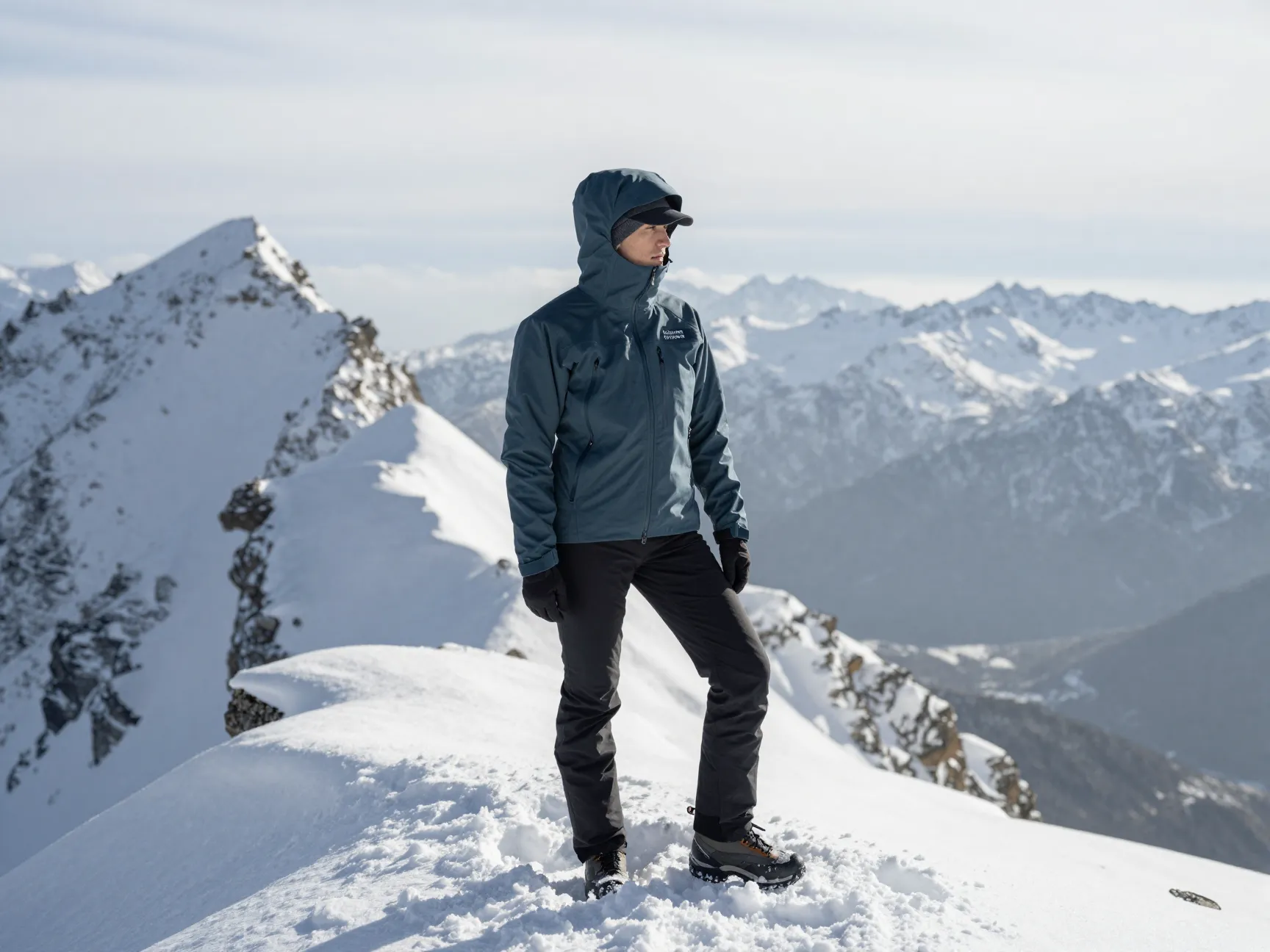
There is a specific appeal to the outer profile of a hunter or backcountry traveler who has collapsed a traditional two-layer outerwear system into a single, clean shell. The One-Piece Technical Shell aesthetic is built around exactly that idea, a jacket that handles both insulation and weather protection in one piece, eliminating the visual bulk and layered-look complexity of wearing a puffy under a rain shell.
Sitka’s Timberline Pro jacket is the most precise current expression of this direction. It combines a WINDSTOPPER stretch shell with 80 g PrimaLoft Silver Active insulation in a single garment, producing a slim outer profile with clean panel seams, an integrated hood, and no visible mid-layer bulk underneath. The garment reads as one resolved piece from a distance, which is visually very different from the segmented look of a stacked layering system.
Sitka’s broader 2026 whitetail gear philosophy, as outlined by veteran whitetail specialist John Barklow, reinforces this visual coherence. The modern “technical hunter” look, in Barklow’s framing, is built on quiet outer shells over efficient insulation and moisture-management base layers, a deliberately minimal profile that prioritizes movement and silence over visible technical complexity. The fewer seam lines, zippers, and panel interruptions on the outer surface, the cleaner the overall silhouette reads.
This aesthetic works particularly well for mountain hunts and mobile spot-and-stalk scenarios where freedom of movement is as important as warmth. It also translates well into the lifestyle segment of hunting apparel, the one-piece technical shell worn over a merino base and slim pants reads as adventure-ready whether the wearer is on a ridge or at a trailhead. For hunters who want a single outer garment to carry a strong visual identity, the one-piece stretch shell is currently the most versatile choice.
5. Classic Expedition Stack: The Layered Visual System
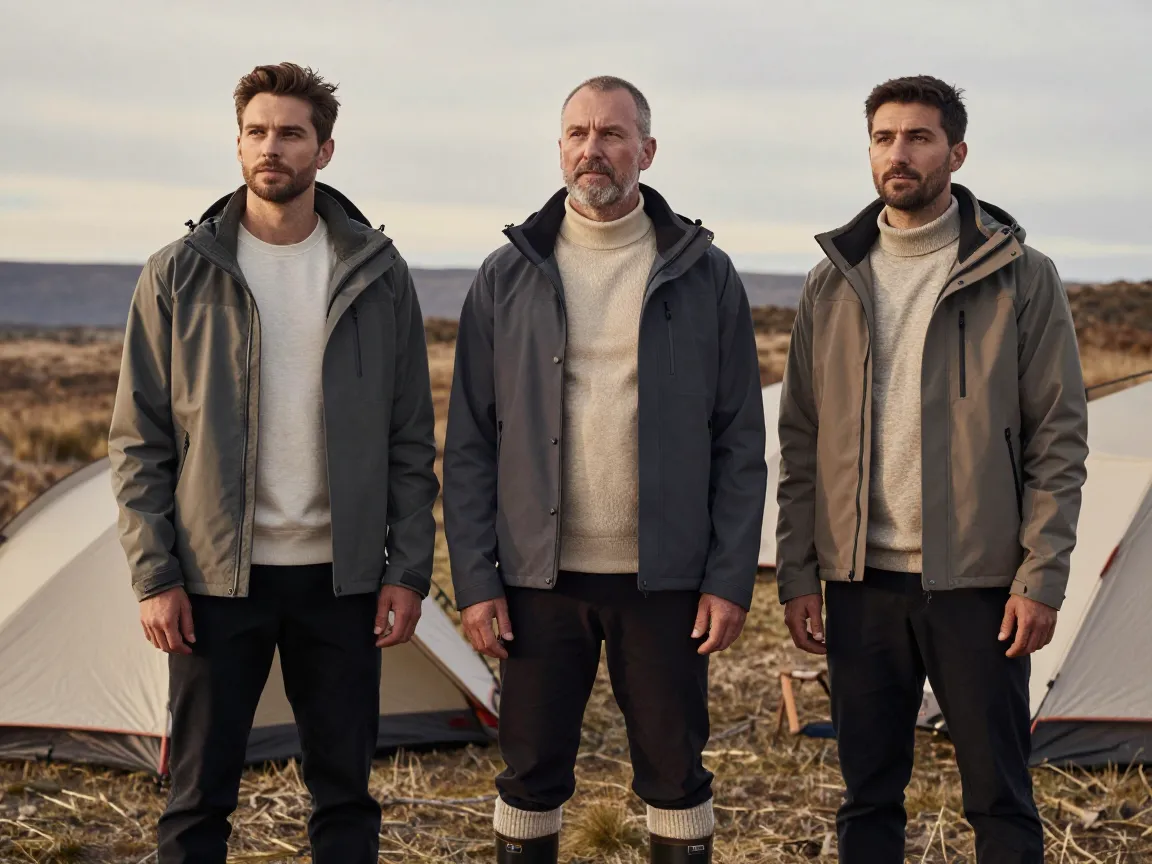
Not every compelling cold-weather hunting aesthetic comes from new technology. The Classic Expedition Stack, a visible three-layer system of base, mid, and outer, remains the foundational visual template for serious winter adventure style, and recent guidance from technical outfitters reinforces that it is far from obsolete.
The base layer in this system serves a moisture-management role and is ideally made from merino wool or a performance synthetic. Both materials stay functional when damp, dry without overheating, and avoid the odor problems of cotton. The key visual detail at the base layer level is the collar, a close-fitting crew or quarter-zip in a neutral or terrain-complementary color that is intentionally visible at the neck of the mid and outer layers. This layering of collar depths is one of the clearest visual signals of a well-assembled expedition stack.
The mid-layer, typically a fleece jacket, hybrid insulated vest, or wool-blend shirt, adds the visible loft that communicates warmth. When worn open over a base layer at camp or during a low-intensity approach, the mid-layer carries most of the aesthetic weight of the outfit. Pairing a fitted merino base with a structured fleece or insulated vest in a complementary tone creates a clean two-piece look that works independently of the outer shell.
The outer shell closes the system with windproofing and waterproofing. Waterproof boots and wool or thermal socks complete the picture from the ankle down. The discipline required by the Classic Expedition Stack, avoiding cotton entirely, matching insulation to expected temperatures, selecting an outer shell that breathes well enough to prevent mid-layer saturation, produces a look that is visually coherent precisely because every element is functionally necessary. Nothing in a well-built three-layer stack is decorative, and that restraint is itself an aesthetic statement.
6. Graphene Fleece and Next-Gen Texture: The Plush Technical Look
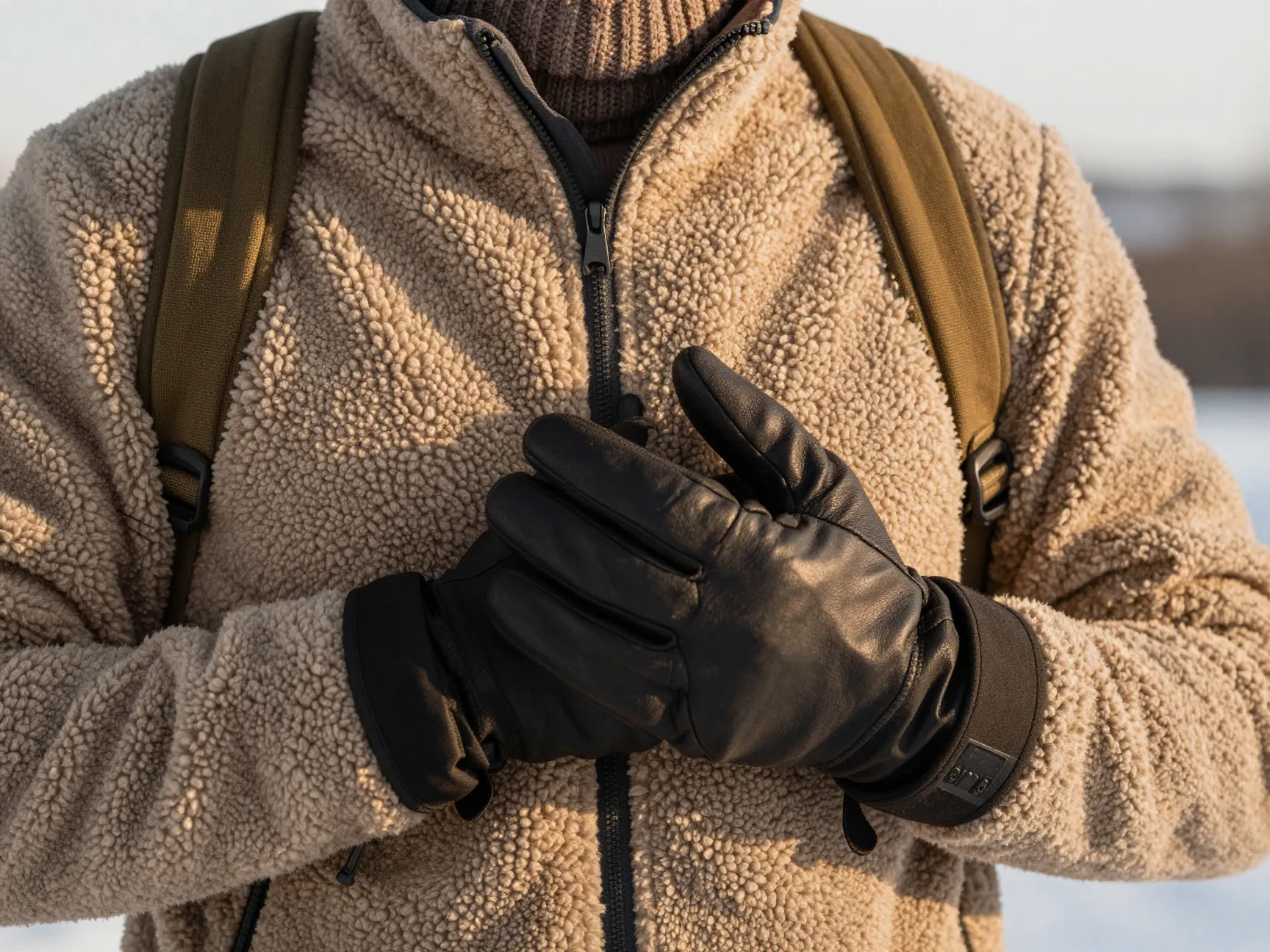
The smoothest surfaces in hunting outerwear have traditionally belonged to hardshell GORE-TEX-style jackets, slick, paneled, and minimalist. The Graphene Fleece aesthetic runs in the opposite direction, embracing visible texture, loft, and warmth as a design story rather than something to be hidden inside a smooth shell.
Huntworth’s Kenora and Halifax jackets represent the clearest current iteration of this direction. Both use Heat Boost graphene technology embedded in quiet fleece constructions. Graphene’s ability to capture and radiate body heat is a performance claim, but its visual contribution is the preservation of a soft, textured exterior that invites the kind of close-up inspection that hardshells do not. The Halifax takes the texture story further with Berber fleece and extra loft insulation in the chest and arms, producing a highly tactile outer surface with visible dimension.
The aesthetic contrast between this approach and a smooth-face membrane jacket is significant. Where a GORE-TEX shell says “expedition minimalism,” a Berber-faced fleece jacket says “rugged warmth”, a distinction that connects to a longer tradition of wool and pile outerwear in hunting and fieldwork. The graphene technology underneath keeps the performance credentials intact, but the surface reads as approachable, heritage-adjacent, and visually rich rather than surgical.
For hunters building a cold-weather style story that goes beyond a purely technical look, the graphene fleece category offers a strong visual middle ground. It pairs naturally with wool base layers and heritage-influenced accessories, think heavy knit beanies, leather-faced gloves, and canvas packs, in a way that smooth-face shells do not. The emerging “huntcore” lifestyle aesthetic, which blends traditional field craft with modern technical performance, finds one of its most coherent expressions in a well-chosen graphene fleece outer layer. Finishing the look with slim, articulated waterproof gloves, the kind designed for dexterity and grip rather than bulk, ties the technical and heritage threads together without letting either one dominate.
Conclusion
These 6 Winter Hunting Aesthetic Ideas for Cold-Weather Adventure Style share one underlying principle: coherence beats individual piece quality every time. A well-matched three-layer stack in a single camo family, worn head to toe with purpose-built accessories, will always read as a more resolved cold-weather identity than an expensive mix of unrelated high-performance pieces.
The most useful next step for anyone building or refining a winter hunting wardrobe in 2026 is to audit existing gear for visual and functional system alignment, identifying which pieces belong to a coherent kit and which ones break it, before adding anything new. Start with the outer shell, since it carries the most visible aesthetic weight, and work inward from there.