Cute Fishing Pictures That Melt Hearts and Inspire Your Next Sketch
Stock libraries now hold more than 133,000 fishing-themed illustrations across major platforms, yet a small subset of charming, character-driven images consistently outperforms the rest in saves, downloads, and fan art recreations. Those are the ones that land somewhere between nostalgia and pure joy, the kind of fishing pictures that make a viewer stop scrolling and reach for a pencil. This article walks through 6 cute fishing pictures that melt hearts and inspire your next sketch, breaking down what makes each visual style work and how to channel it into your own artwork, whether you are a beginner doodler or a seasoned illustrator.
Disclosure: This post contains affiliate links. As an Amazon Associate, we earn from qualifying purchases, and at no extra cost to you.
1. The Wide-Eyed Child Angler on a Wooden Dock
Few images in the cute fishing genre carry more emotional weight than a small child perched on the edge of a weathered wooden dock, bare feet dangling above still water, eyes wide with anticipation as a bobber sits motionless on the surface. The composition is deceptively simple, but every element is doing real work. The oversized fishing rod relative to the child’s tiny frame creates an immediate sense of scale contrast that reads as charming rather than absurd. The reflective water doubles the subject and adds visual symmetry without any extra effort from the artist.
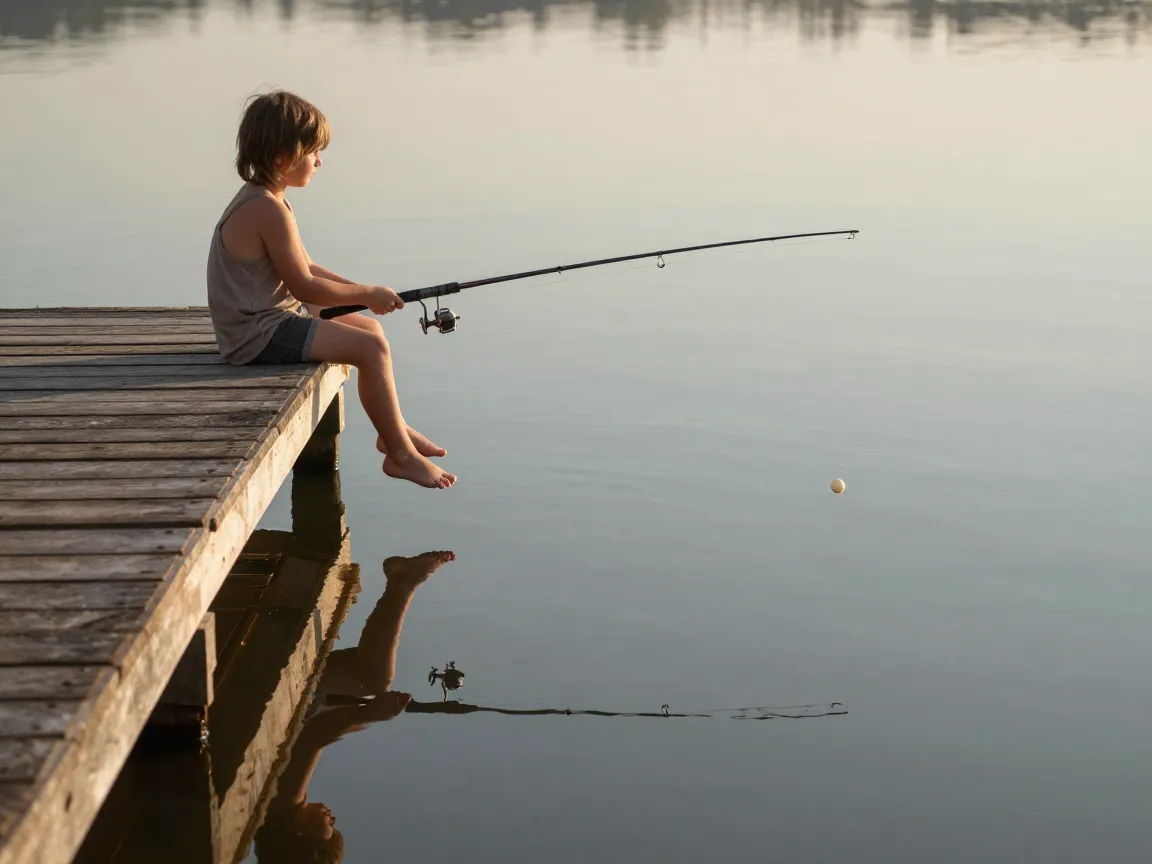
What makes this archetype so effective for sketch practice is its reliance on gesture over detail. The child’s posture, shoulders slightly hunched, neck craned forward, hands tight on the grip, communicates pure focus. Learning to capture that body language in just a few confident lines is one of the most transferable skills in character illustration. Beginners often make the mistake of detailing the face before nailing the pose, but in this style, a correct silhouette reads as cute even without features.
For your own version, start with a loose oval for the head, a gentle C-curve for the rounded back, and two dangling rectangles for the legs. Add a minimal horizon line and a single vertical stroke for the rod. Only after the gesture feels right should you refine the face. Keep the eyes large and circular, roughly one-quarter of the face height, and place them low on the head to amplify the childlike proportions that define this style.
The reference material that fuels this look is widely available. Platforms like Vecteezy host hundreds of free cute fishing PNGs that fall into exactly this category, and browsing them before sketching is a legitimate and professional step in building a visual vocabulary.
2. The Cartoon Animal Fisher with Exaggerated Accessories

Somewhere around 19,900 fishing clip-art assets exist on major stock platforms, and a disproportionate number of the most popular ones feature animals rather than humans. A cat in a wide-brimmed straw hat, a bear cub with a bamboo rod, a frog balanced on a lily pad with a makeshift line made of grass, these images consistently generate high engagement because they layer two already-likeable things: familiar animals and a relaxed leisure activity.
The key to making animal fishing characters land as genuinely cute rather than merely competent is accessory exaggeration. The hat should be slightly too big. The tackle box should be comically oversized. The fish on the end of the line should be tiny enough to look almost embarrassed. These small size relationships do the comedic and emotional lifting. They signal to the viewer that the world in the image operates by its own gentle rules, which is an invitation to relax.
For sketch purposes, animal fishers offer a valuable exercise in adapting real animal anatomy into a cartoon register. Take a cat, for example. The real proportions, long torso, relatively small head, flexible spine, shift dramatically in a cute illustration style. The head enlarges, the torso shortens, and the limbs become stubby and round. Practice this transformation deliberately: draw the realistic version first, then systematically exaggerate toward the cute end of the spectrum. That process builds the muscle memory to create convincing cute animal characters from scratch.
One specific compositional trick worth stealing from successful cartoon animal fisher images is the three-quarter view. Placing the character at roughly 45 degrees to the picture plane allows both a readable side profile of the fishing action and enough of the face to show expression. It is more dynamic than a strict side view and more intimate than a straight-on pose.
3. The Vintage Crosshatch Fisherman in Ink Line Art
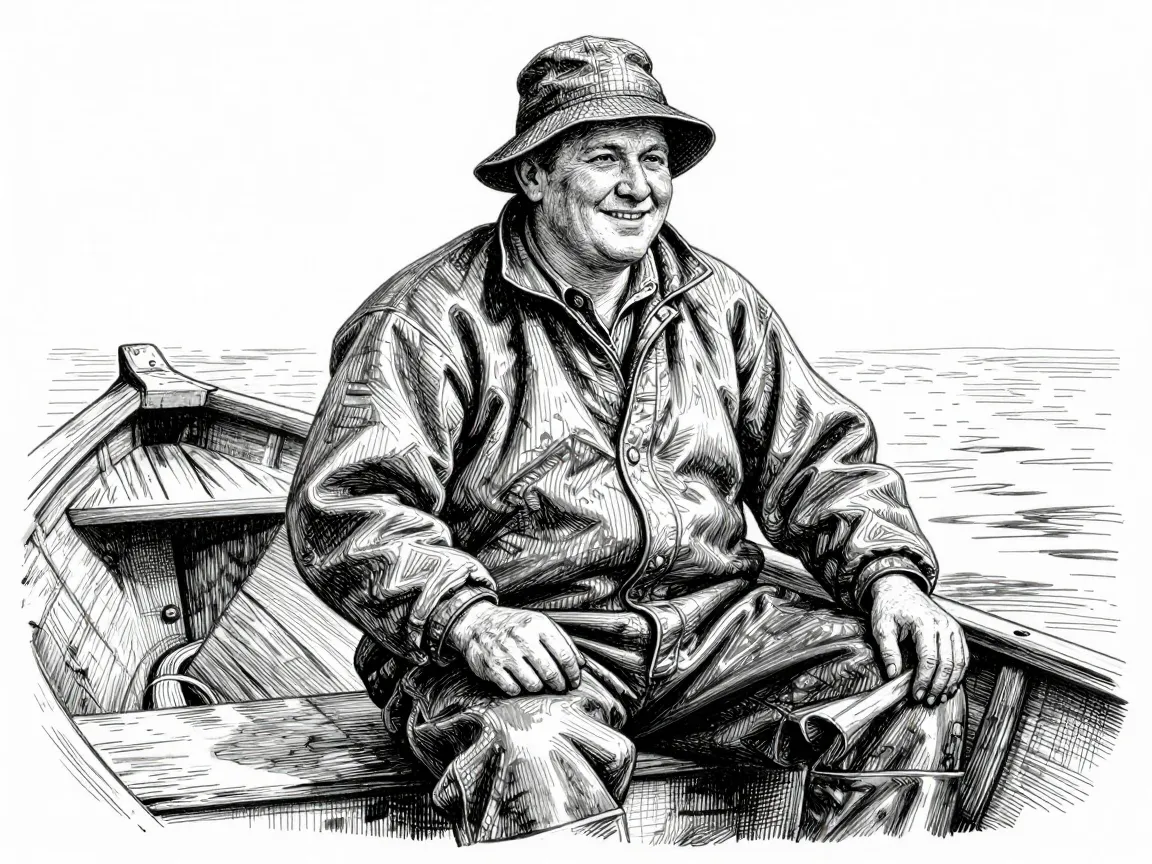
Not all cute fishing pictures rely on color or softness to create warmth. A well-executed pen-and-ink crosshatch illustration of a rotund, smiling fisherman in an old-fashioned slicker and bucket hat can feel just as heart-melting as a pastel watercolor, often more so, because the technique implies craft and time. Etsy’s marketplace for fishing sketch digital downloads features vintage fisherman line-art prints as a consistently strong seller, which confirms that this aesthetic has a dedicated and emotionally invested audience.
The charm in this style comes from weight and texture. Crosshatching builds density in the shadows, under the hat brim, beneath the coat, in the fold of the waders, while the highlights stay as bare white paper. That contrast creates a three-dimensional quality that feels tangible and old-world. The fisherman’s round belly and rosy cheeks are suggested by the density of lines rather than by color, which is a more demanding but ultimately more satisfying technique.
For artists wanting to try this approach, the entry point is learning to use hatching direction intentionally. Lines that follow the form of a curved surface (called contour hatching) make shapes read as round and solid. Lines that run at a consistent diagonal regardless of form create a flatter, more graphic look. Both have their place, but the vintage fisherman style almost always uses contour hatching on the figure and crosshatched texture fills on the background elements like boat planks, tackle, and water.
A useful exercise: find a simple round object, an apple, a ball, and practice shading it entirely with parallel lines, then with crosshatched lines, then with contour lines. That 15-minute drill directly translates to controlling volume in a crosshatch fisherman sketch.
4. The Parent-and-Child Fishing Duo in Soft Watercolor
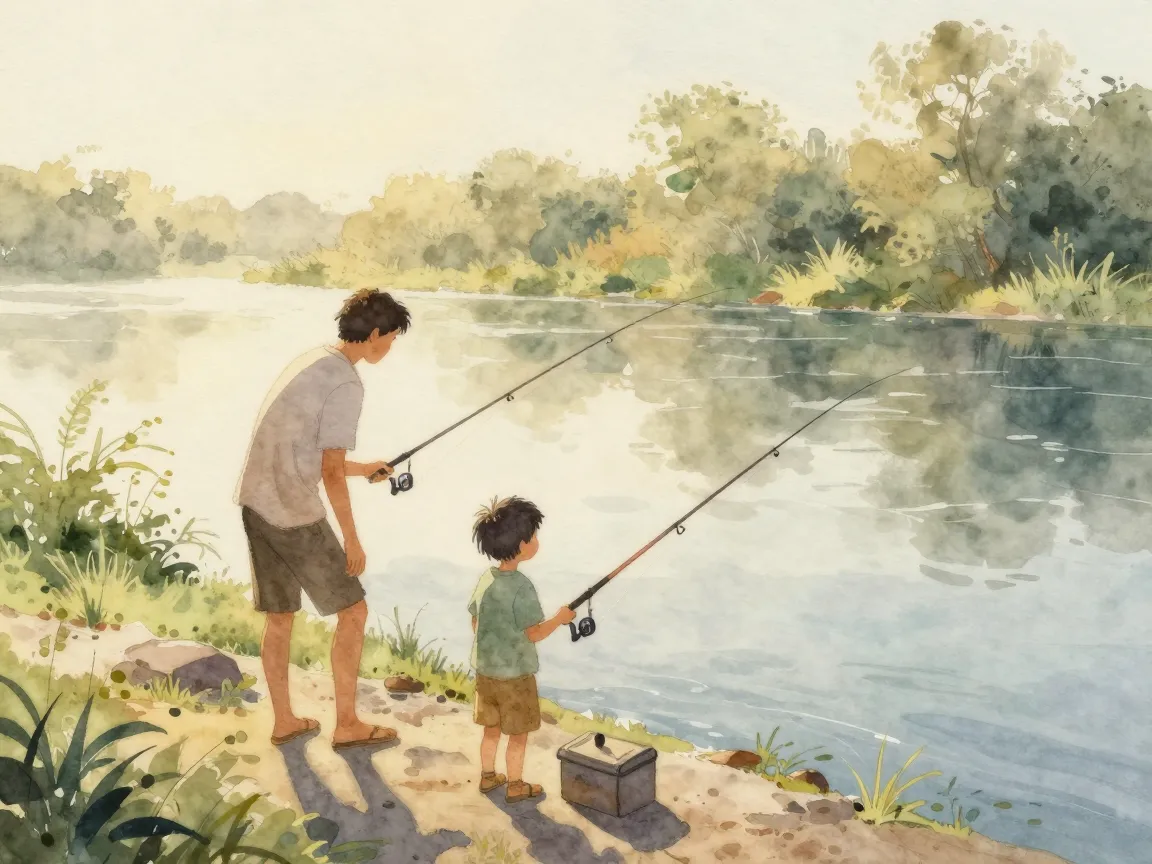
Of all the emotional registers available to cute fishing illustration, the parent-and-child pairing hits the most reliably. A tall adult figure and a small child figure, side by side on a riverbank, lines in the water, sharing a moment of quiet, this image travels because it is universally understood. It does not require text, cultural context, or explanation. The size difference alone tells the whole story.
Watercolor is the medium most commonly associated with this subject, and the reason is tonal. Watercolor’s soft edges and translucent washes naturally suggest gentleness and memory, which aligns perfectly with the nostalgic quality of a fishing-with-a-parent moment. The color palette in the best examples of this style tends toward muted yellows, dusty blues, and warm greens, sunrise or late afternoon light that feels unhurried.
The compositional challenge in a two-figure scene is avoiding a stiff, side-by-side pose that reads like a police lineup. The figures need to lean toward each other, overlap slightly, or share a point of focus, the bobber, the fish, the tackle box, to create visual connection. Even a small tilt in the adult’s posture toward the child changes the emotional read of the entire image from “two people fishing” to “a moment between two people who love each other.”
For sketchers, the duo format is excellent practice for relative proportions. The adult is not simply a bigger version of the child, the head-to-body ratio changes, the limb proportions shift, and the posture tends to be more relaxed and less braced. Drawing these two figures correctly in relation to each other is a genuine skill, and cute watercolor fishing references from stock illustration libraries provide accessible benchmarks to measure progress against.
5. The Single Fish Portrait with Personality

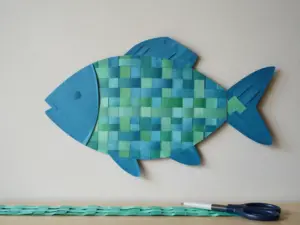
There is a category of cute fishing picture that inverts the usual subject hierarchy: instead of a human or animal holding a rod, the fish itself becomes the star. A round-bodied, wide-eyed cartoon fish with a slightly surprised expression, rendered in bold outlines with flat color fills, is one of the most enduring motifs in the cute illustration space. When placed in context, a hook sliding past harmlessly, a worm waving hello, a little speech bubble with an ellipsis, the image becomes genuinely funny and disarming.
This style owes much to the kawaii aesthetic tradition, which prioritizes minimal features (dot eyes, tiny mouth, rosy cheeks) on a maximally simple body shape. The fish becomes a vehicle for emotion rather than a realistic depiction of aquatic life. Its roundness signals safety and approachability; its expression, usually a mild, wide-eyed surprise, suggests innocence. Those are the same visual signals used in infant faces, which is why the response they produce feels almost reflexive.
For sketch practice, the single character portrait on a plain or minimally detailed background is one of the best drills for learning to control line weight. In a kawaii fish portrait, the outer contour line should be the heaviest, with progressively lighter lines used for interior details like the dorsal fin, scales, and eye highlights. That hierarchy, heavy outside, light inside, creates the illusion of form and keeps the image readable at any size, from a sticker to a poster.
A productive constraint is to design the fish portrait using no more than five interior lines. That limitation forces ruthless prioritization of what details actually read as “fish” and which ones are noise. Most artists find that the eye, one gill line, and two fin lines are sufficient. Everything else is optional.
6. The Sunrise Silhouette Scene with Minimal Detail

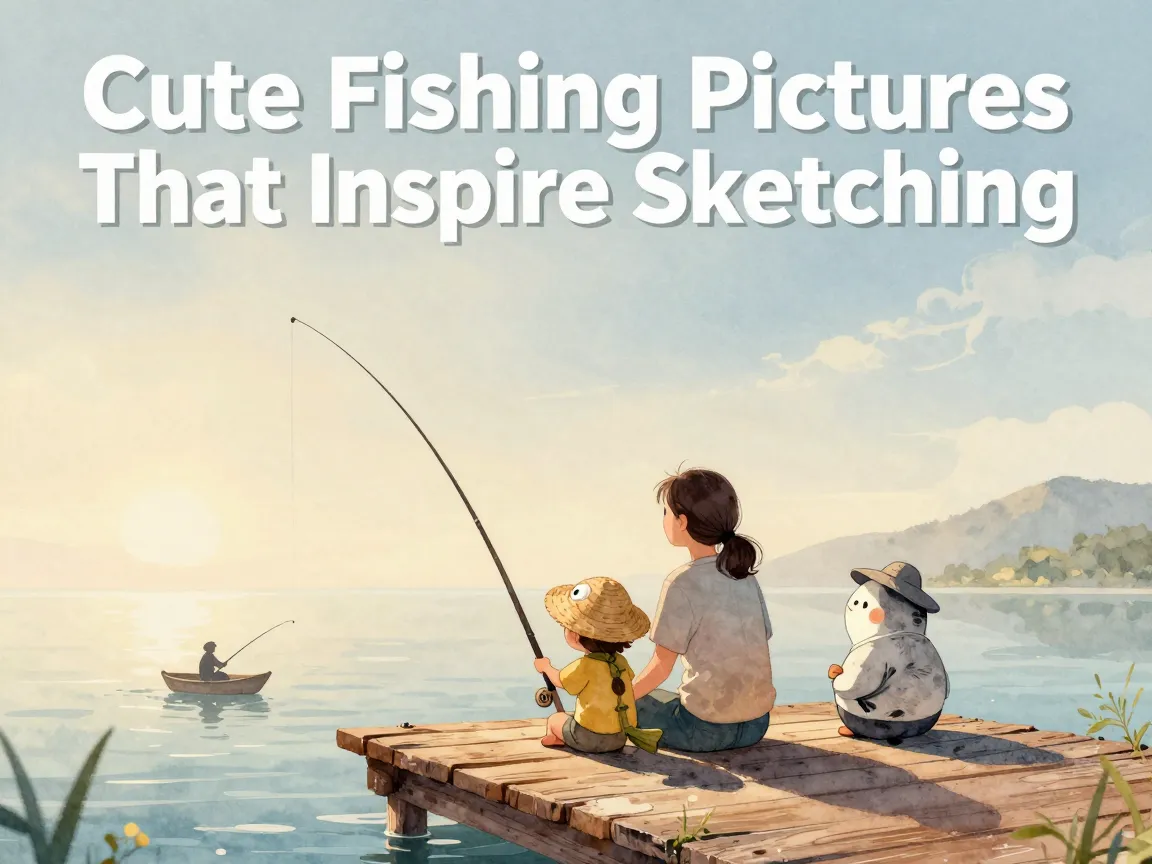
The final type in this collection of 6 cute fishing pictures that melt hearts and inspire your next sketch is structurally different from the others. It trades character expressiveness for environmental atmosphere. A single small figure, human or animal, sits in a boat or on a bank, rod extended, against a glowing sunrise sky reflected in calm water. The figure is a silhouette: no features, no detail, just a clean dark shape against luminous color.
The reason this image consistently melts hearts is not what it shows but what it implies. The viewer projects their own fishing memories, their own sense of early morning peace, their own small figure against a large and beautiful world, into that silhouette. Ambiguity, used intentionally, is one of the most powerful tools in visual storytelling.
For artists, the silhouette sunrise scene is an excellent exercise in negative space and color gradient. The figure must be interesting in pure shape, a readable pose, a recognizable rod angle, perhaps a hat brim that adds a small but clear character note, without relying on any interior detail for identity. This forces the artist to think about contour with unusual care. Meanwhile, the background gradient (deep orange or coral at the horizon, moving through soft yellow to pale blue-grey at the top) teaches basic watercolor or digital blending technique in a forgiving context.
The reflections in the water are worth particular attention. A strong reflection doubles the composition vertically and creates a sense of completeness that transforms a good image into a memorable one. The reflection does not need to be a perfect mirror, slightly blurred, with gentle horizontal ripple lines, it actually reads as more realistic and more beautiful than a mathematically precise copy.
What unites all six of these image types is a commitment to emotional clarity. Each one, in its own visual language, communicates something simple and warm. That is ultimately what makes a fishing picture land as cute rather than merely accurate. The technique serves the feeling, not the other way around.
Conclusion
The six visual styles covered here, the dockside child angler, the cartoon animal fisher, the vintage crosshatch portrait, the watercolor parent-and-child duo, the single fish character study, and the silhouette sunrise scene, each offer a distinct entry point for anyone looking to develop their illustration skills around this endlessly appealing subject. The single most useful next step is to choose one style that genuinely excites you, find three strong reference images from a reputable stock library, and produce one focused sketch from each before moving to the next. Depth of practice in one style always outperforms shallow exposure to many.