8 Foolproof Methods for How to Cook Venison Steak to Perfection
Venison is one of the leanest red meats available, containing roughly 50% less fat than beef, yet it remains one of the most commonly overcooked proteins in the home kitchen. That single fact explains why so many hunters and home cooks end up with dry, tough steaks despite starting with exceptional wild game. Mastering how to cook venison steak is not about luck; it is about applying the right technique to a unique cut of meat. This guide covers the 8 foolproof methods for how to cook venison steak to perfection, drawing on tested culinary approaches that respect the meat’s lean structure and bold, earthy flavor. Whether working with backstrap, loin, or round steaks, each method below delivers consistent, restaurant-quality results.
Disclosure: This post contains affiliate links. As an Amazon Associate, we earn from qualifying purchases, and at no extra cost to you.
Key Takeaways
- Venison is extremely lean, which means high heat and short cook times are essential to prevent dryness
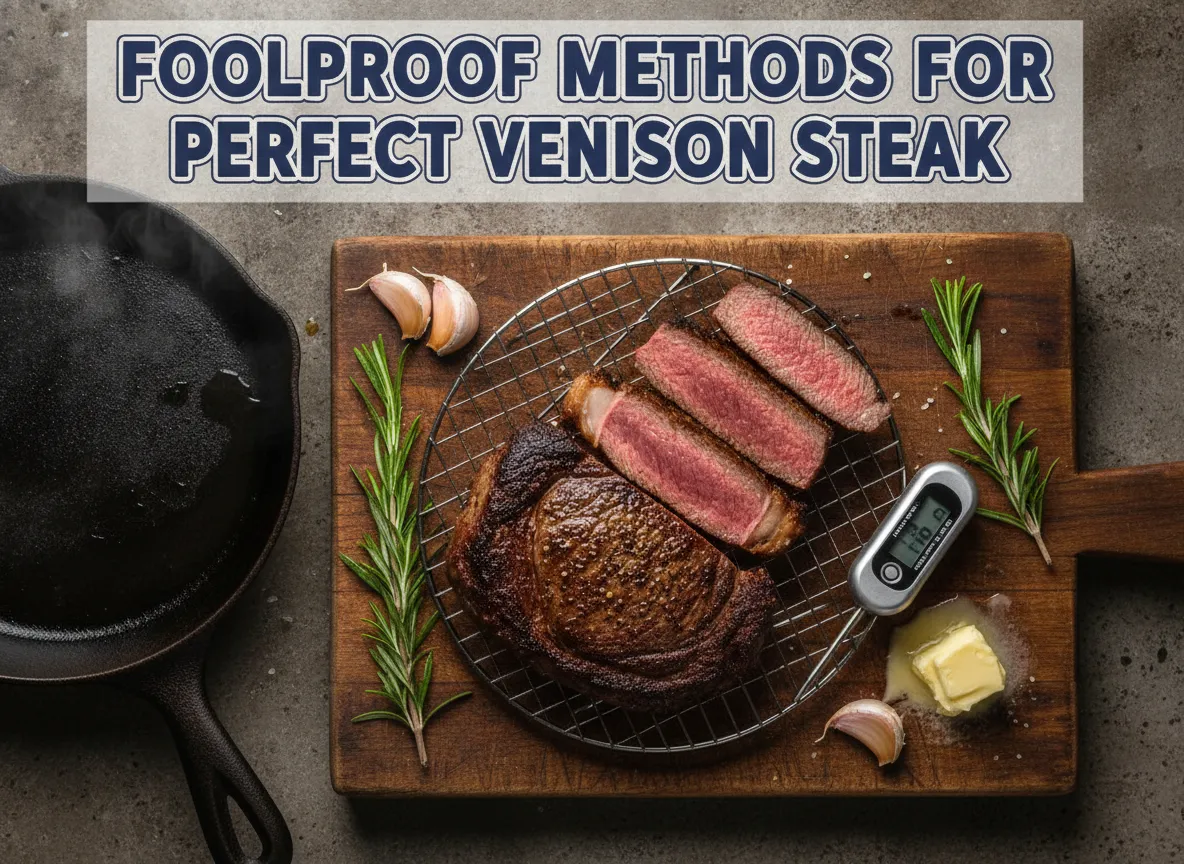
- An internal temperature of 130-135 degrees Fahrenheit (medium-rare) is the sweet spot for most venison cuts [1]
- Resting the steak for at least 5 minutes after cooking is non-negotiable for juicy results
- Marinades, butter basting, and fat-rich cooking environments compensate for venison’s low natural fat content [2]
- Each of the 8 foolproof methods suits different equipment levels, time constraints, and flavor goals
Why Venison Demands a Different Approach Than Beef
Before diving into the 8 foolproof methods for how to cook venison steak to perfection, understanding what makes venison unique is critical. Deer muscle is denser and leaner than beef because wild deer are constantly active animals. That lean density is a nutritional advantage, venison is high in protein, iron, and B vitamins, but it is also the reason standard beef cooking rules often fail [3].
The three biggest mistakes home cooks make with venison:
- Cooking it past medium (internal temperature above 145 degrees Fahrenheit)
- Skipping a marinade or fat source to compensate for low fat content
- Not allowing the meat to come to room temperature before cooking [5]
“Venison should be treated more like duck breast than beef steak, fast, hot, and rested properly.”, culinary consensus across game cooking specialists
The good news is that once the fundamentals are understood, venison is actually forgiving within its ideal temperature window. The methods below are organized from the most accessible (a basic skillet) to the more advanced (sous vide), so cooks at every skill level will find a reliable starting point.
The 8 Foolproof Methods for How to Cook Venison Steak to Perfection
1. Hot Cast-Iron Pan Sear
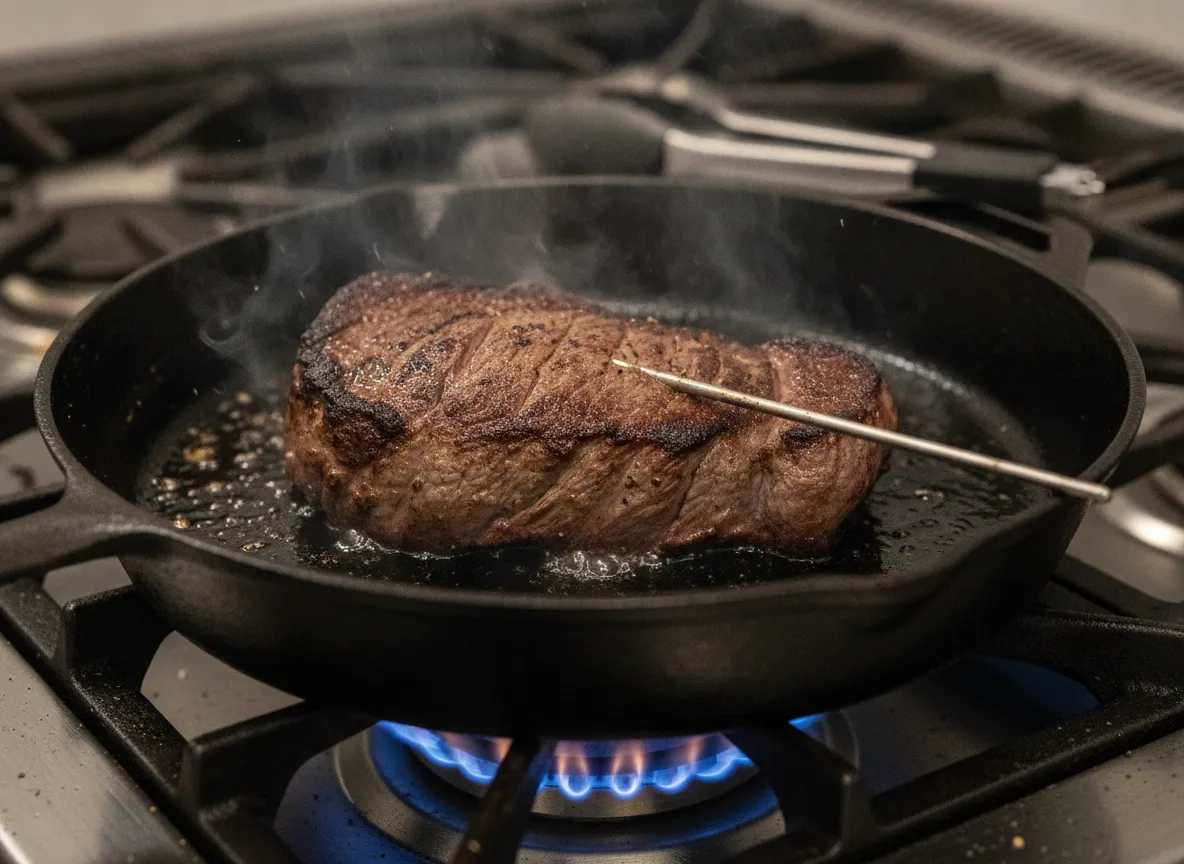
The cast-iron sear is the baseline technique, the one method every venison cook should master first. A cast-iron skillet retains and distributes heat more evenly than stainless or non-stick pans, creating the deep, mahogany crust that locks in moisture and develops complex flavor through the Maillard reaction [1].
How to do it:
- Pat the steak completely dry with paper towels (moisture is the enemy of a good sear)
- Season generously with kosher salt and black pepper at least 30 minutes before cooking
- Heat the cast-iron skillet over high heat until it begins to smoke slightly
- Add a high-smoke-point oil such as avocado or grapeseed oil
- Sear each side for 2-3 minutes without moving the steak
- Pull at an internal temperature of 130-135 degrees Fahrenheit for medium-rare [1]
- Rest on a wire rack for 5-7 minutes before slicing
The cast-iron method works best with backstrap or loin cuts that are at least 1 inch thick. Thinner cuts risk overcooking before a proper crust forms [6].
2. Herb Butter-Basted Skillet Steak
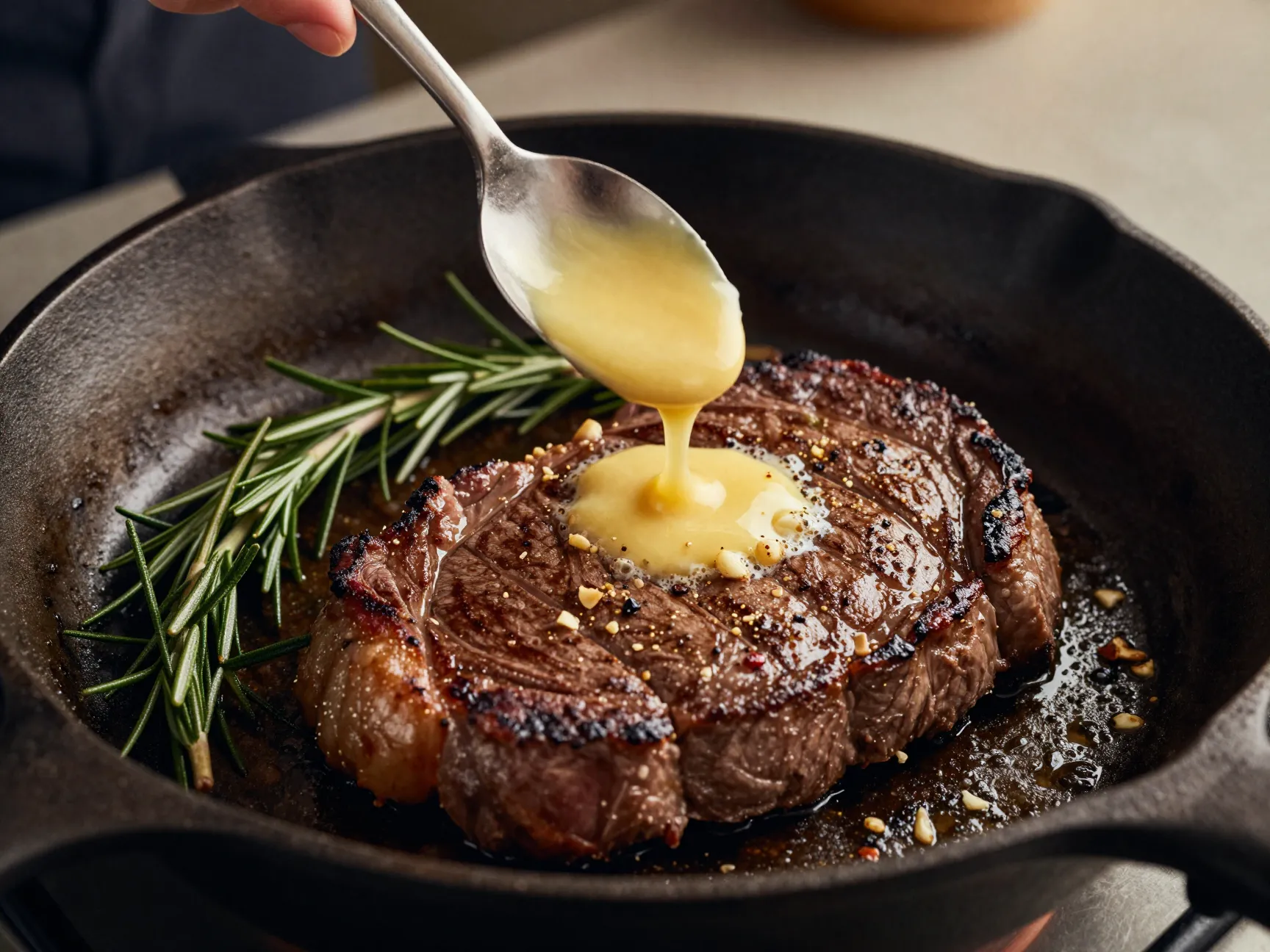
Building directly on the cast-iron foundation, the herb butter-basting method adds a layer of richness that compensates for venison’s lean profile. This is arguably the most flavorful of all 8 foolproof methods for how to cook venison steak to perfection because the continuous spooning of foaming butter infuses the meat with fat and aromatics simultaneously [2].
Basting setup:
- Begin with the same high-heat sear as Method 1
- After the first flip, reduce heat to medium-high
- Add 2-3 tablespoons of unsalted butter, 2 crushed garlic cloves, and fresh thyme or rosemary sprigs
- Tilt the pan and use a large spoon to continuously baste the steak with the foaming butter for 60-90 seconds per side
- The butter should foam but not brown excessively, adjust heat as needed
| Element | Purpose |
|---|---|
| Unsalted butter | Adds fat, richness, and basting medium |
| Fresh thyme/rosemary | Infuses herbal aromatics into the crust |
| Crushed garlic | Provides depth without overpowering game flavor |
| High-heat initial sear | Creates crust before basting begins |
This method pairs exceptionally well with backstrap medallions and is well-suited for dinner party presentations because the visual of basting in a skillet is as impressive as the result [7].
3. Reverse Sear Method
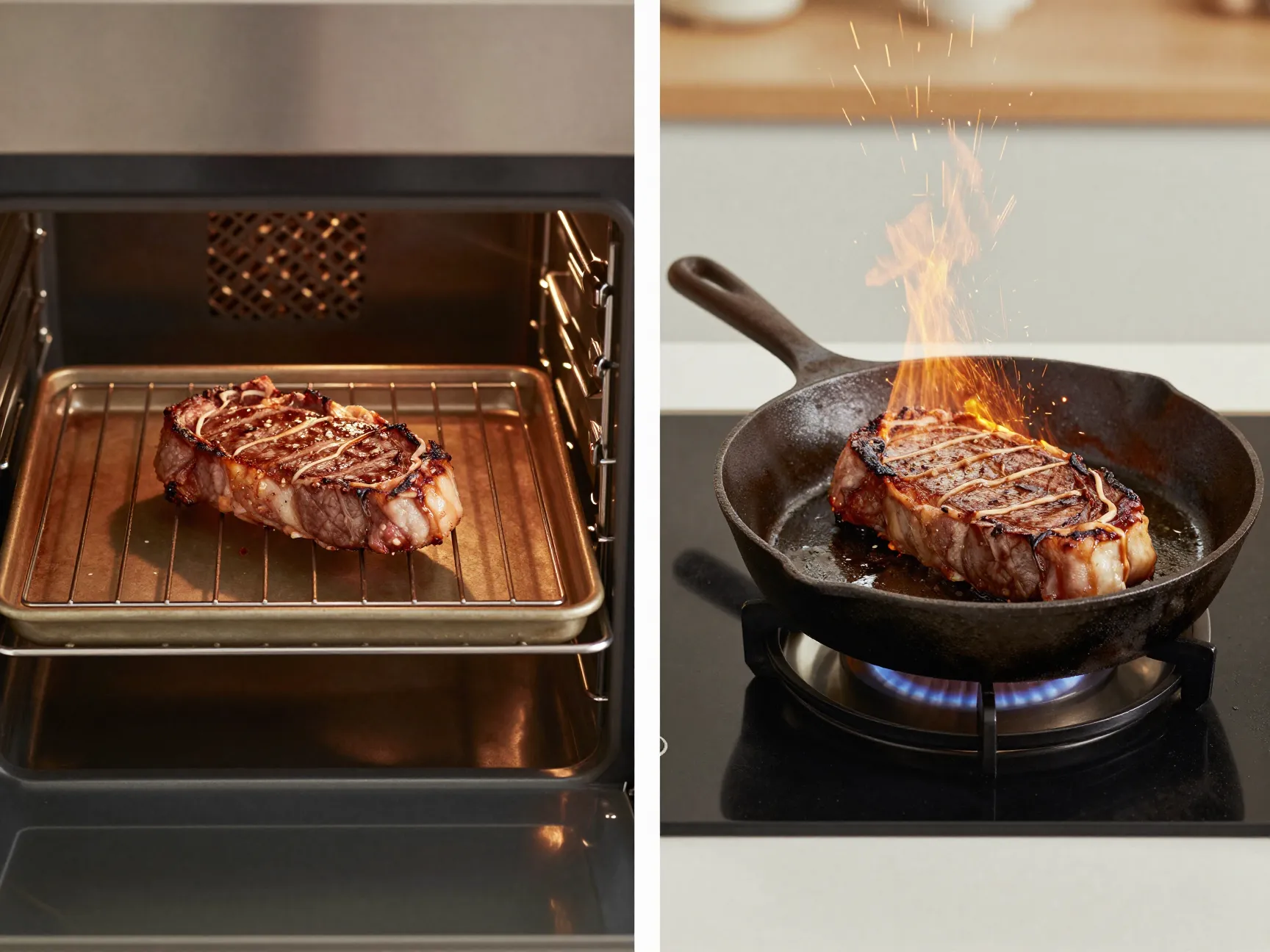
The reverse sear flips the conventional approach: the steak is cooked low and slow in the oven first, then finished with a high-heat sear. This technique gives the cook precise control over internal temperature, which is especially valuable with venison’s narrow ideal doneness window [5].
Step-by-step:
- Preheat oven to 250 degrees Fahrenheit
- Season the steak and place it on a wire rack over a baking sheet
- Cook in the oven until the internal temperature reaches 115-120 degrees Fahrenheit (approximately 20-35 minutes depending on thickness)
- Remove and rest for 10 minutes
- Sear in a screaming-hot cast-iron pan for 60-90 seconds per side
- The result is edge-to-edge even doneness with a perfect crust
The reverse sear is particularly effective for thicker cuts (1.5 inches or more) where a standard sear risks an overcooked exterior before the center reaches temperature [6].
4. Marinade and Grill Method
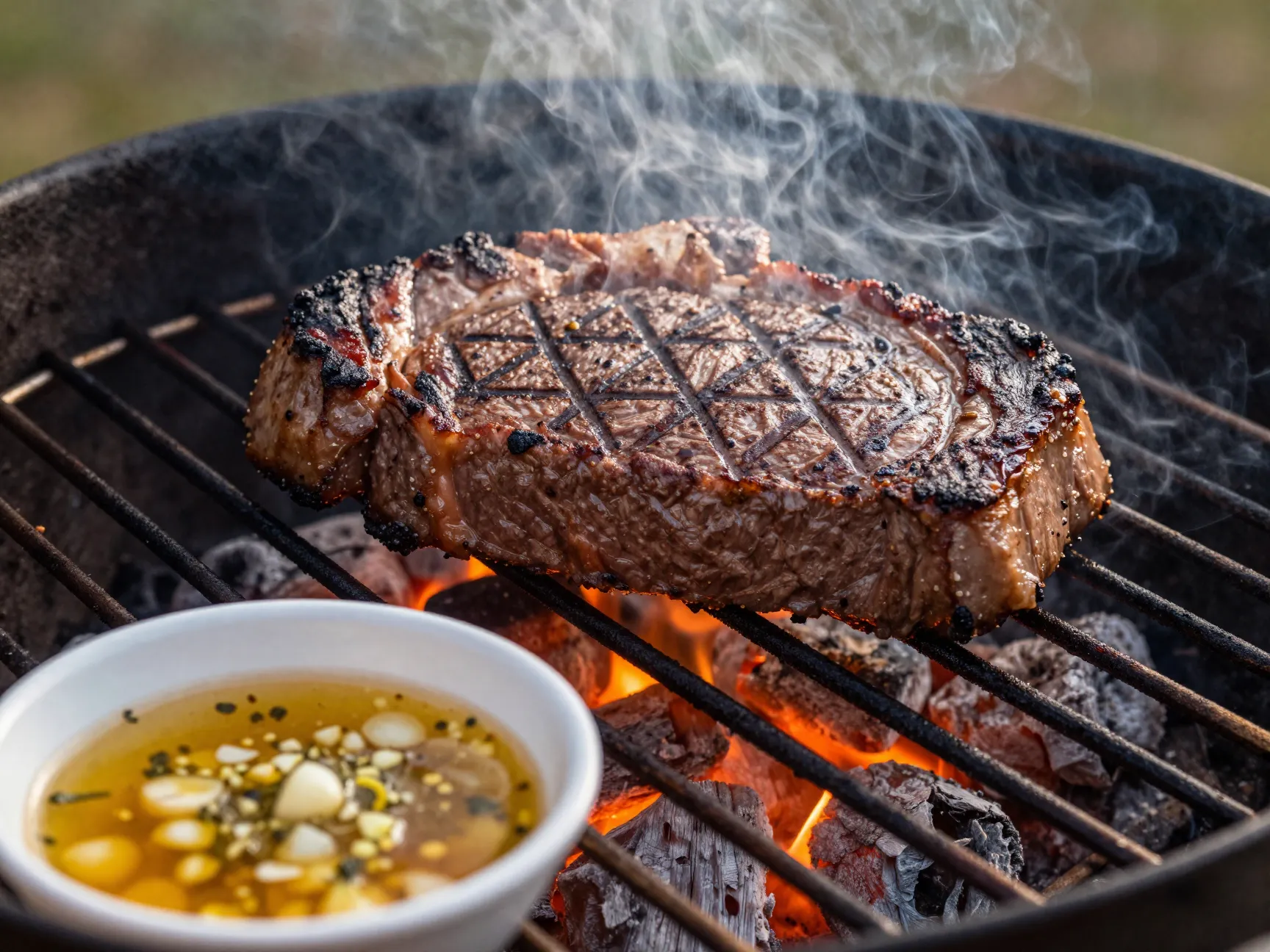
Grilling venison over direct high heat delivers smoky char and bold flavor, but the lean meat benefits enormously from a pre-cook marinade. The marinade serves two functions: it tenderizes connective tissue and adds a fat component (usually olive oil) that prevents the steak from drying out over open flame [3].
Effective venison marinade components:
- Acid (red wine, balsamic vinegar, or citrus juice), breaks down muscle fibers
- Oil (olive or avocado), provides moisture and prevents sticking
- Aromatics (garlic, shallots, juniper berries), complement the game flavor
- Sweetener (honey or brown sugar), promotes caramelization on the grill
Marinate for a minimum of 4 hours, ideally overnight in the refrigerator. Before grilling, pat the surface dry to encourage char rather than steaming [2].
Grilling instructions:
- Preheat grill to high (450-500 degrees Fahrenheit)
- Grill 2-3 minutes per side for steaks under 1 inch thick
- Use a meat thermometer, pull at 130 degrees Fahrenheit
- Rest 5 minutes, then serve
5. Sous Vide Precision Cooking
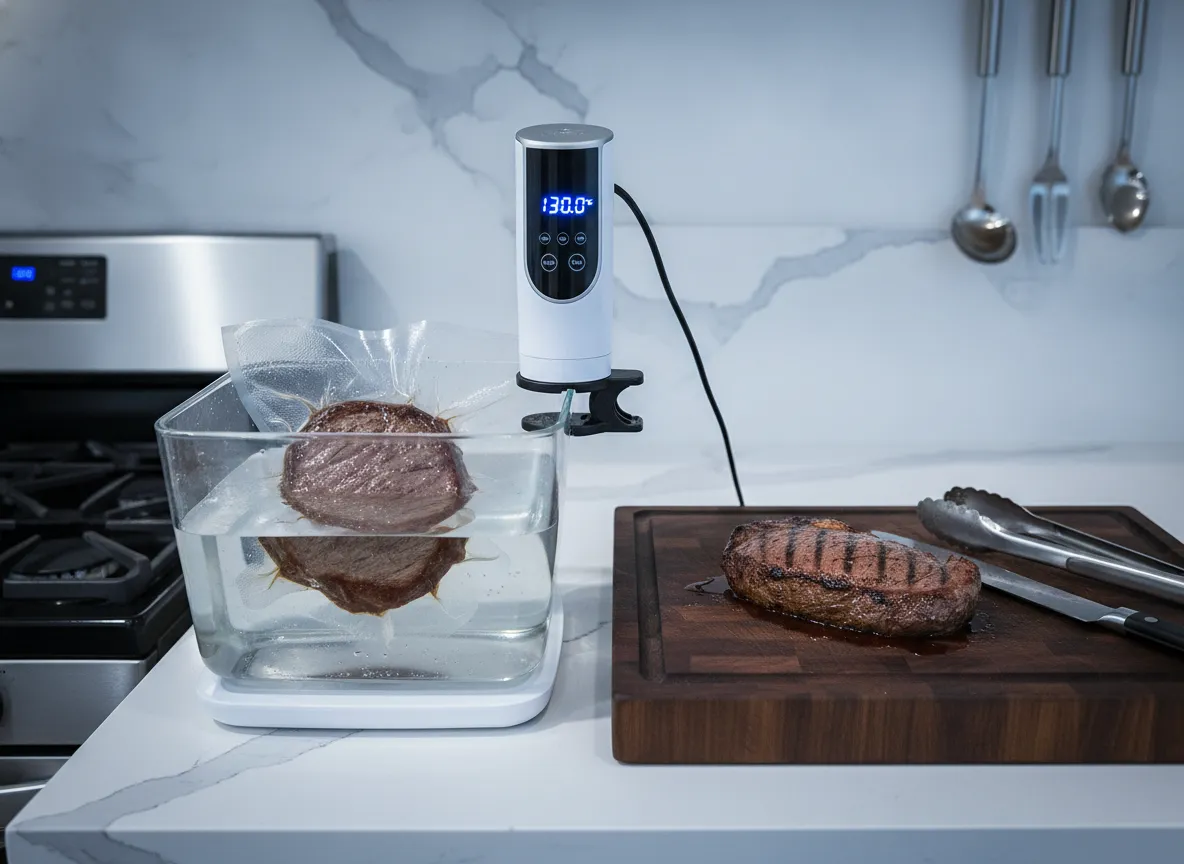
Sous vide is the most technically precise method on this list and the one that produces the most consistently perfect results, especially for less experienced cooks. The steak is vacuum-sealed and cooked in a temperature-controlled water bath, making it virtually impossible to overcook [4].
Sous vide settings for venison:
| Doneness | Temperature | Time |
|---|---|---|
| Rare | 125 degrees F | 1-2 hours |
| Medium-rare | 130 degrees F | 1-3 hours |
| Medium | 140 degrees F | 1-3 hours |
After the water bath, the steak is finished with a 60-second sear per side in a very hot cast-iron pan to develop the crust. Because the interior is already at the target temperature, the sear is purely for texture and flavor, there is zero risk of overcooking the center [5].
Sous vide works particularly well for tougher venison cuts like round steaks that benefit from the extended, precise heat exposure.
6. Oven Broiler Method
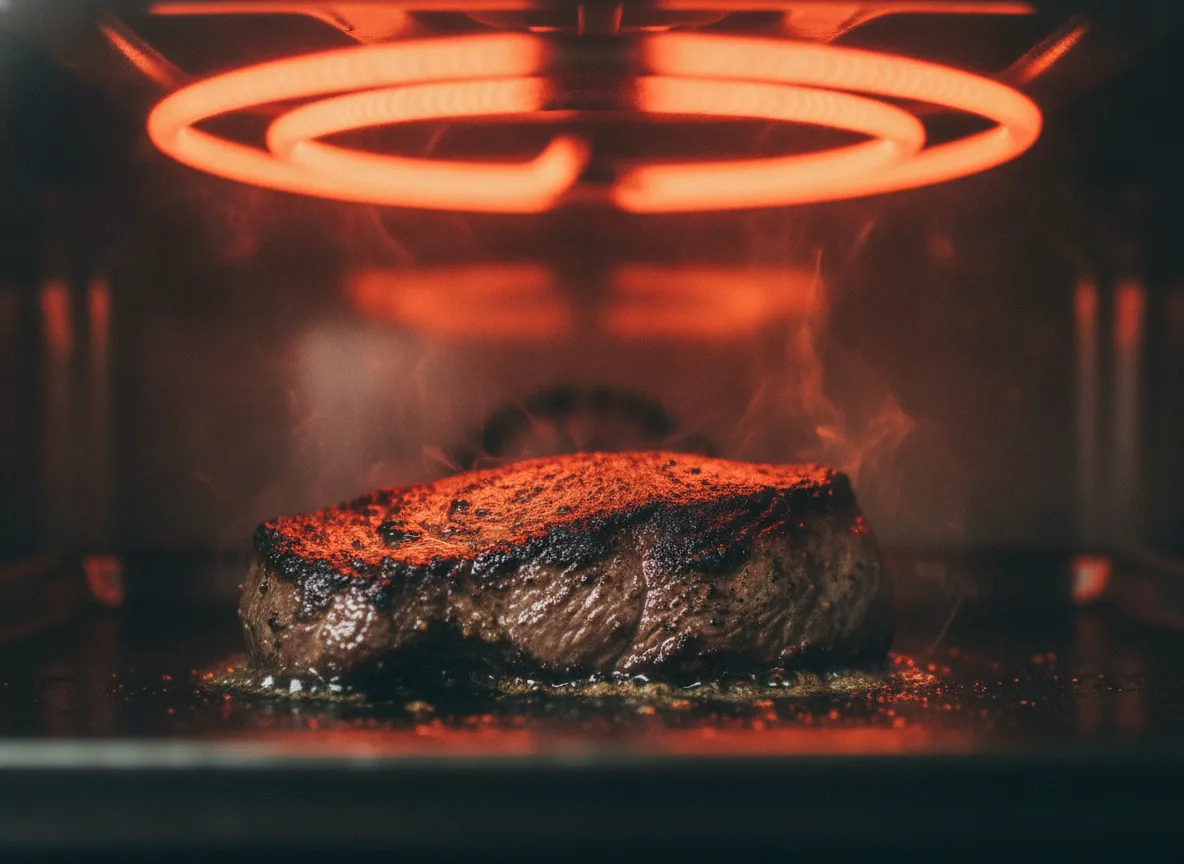
The broiler is an underutilized tool for venison and functions essentially as an upside-down grill. High radiant heat from above creates a crust quickly, and the method requires minimal equipment beyond a broiler pan or cast-iron skillet [6].
Broiler technique:
- Position the oven rack 4-6 inches from the broiler element
- Preheat the broiler on high for at least 10 minutes
- Season the steak with oil, salt, pepper, and optional garlic powder
- Broil 3-4 minutes per side for a 1-inch steak
- Monitor closely, broilers vary significantly in intensity
- Pull at 130 degrees Fahrenheit and rest for 5 minutes
The broiler method is ideal for apartment cooks without access to an outdoor grill. It delivers a similar char-forward flavor profile to grilling without requiring outdoor equipment [7].
7. Slow Cooker Braised Venison Steak
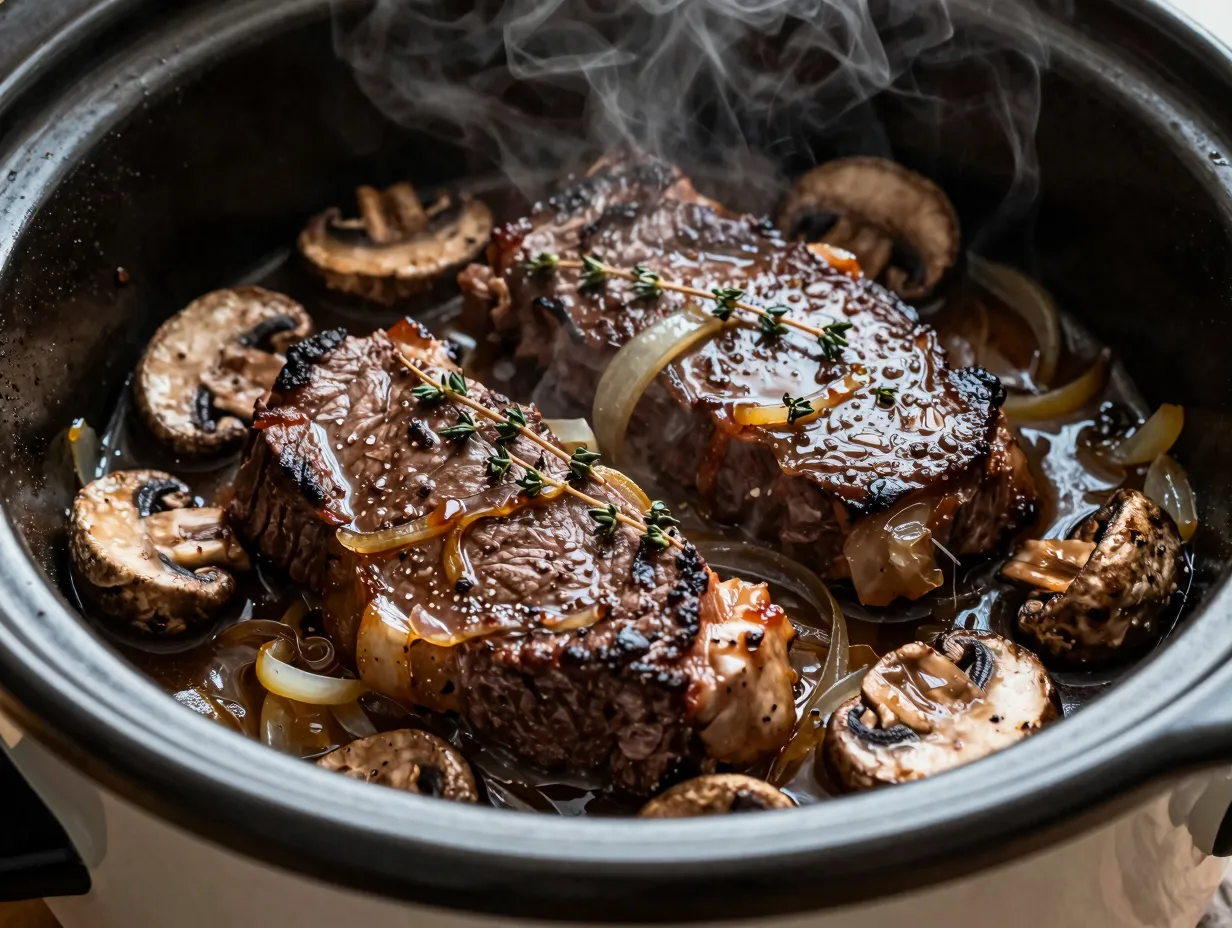
While the previous methods focus on quick, high-heat cooking, the slow cooker approach takes the opposite direction, low heat over several hours. This method is best suited for tougher venison cuts (round, shoulder, or older deer) that benefit from extended moist-heat cooking rather than a quick sear [9].
Braising liquid components:
- Beef or venison stock (1 cup)
- Caramelized onions and mushrooms (adds umami depth) [9]
- Red wine or dark beer (half cup)
- Fresh thyme, bay leaves, garlic
Process:
- Sear the venison steaks in a hot skillet first to develop a crust (3 minutes per side)
- Transfer to the slow cooker with the braising liquid and aromatics
- Cook on low for 6-8 hours or high for 3-4 hours
- The result is fork-tender venison with a rich, savory sauce
This method transforms cuts that would be chewy using high-heat methods into deeply satisfying meals. The caramelized onion and mushroom combination is a classic pairing that balances venison’s earthy notes [9].
8. Stovetop Pan-Fry with Seasoned Crust
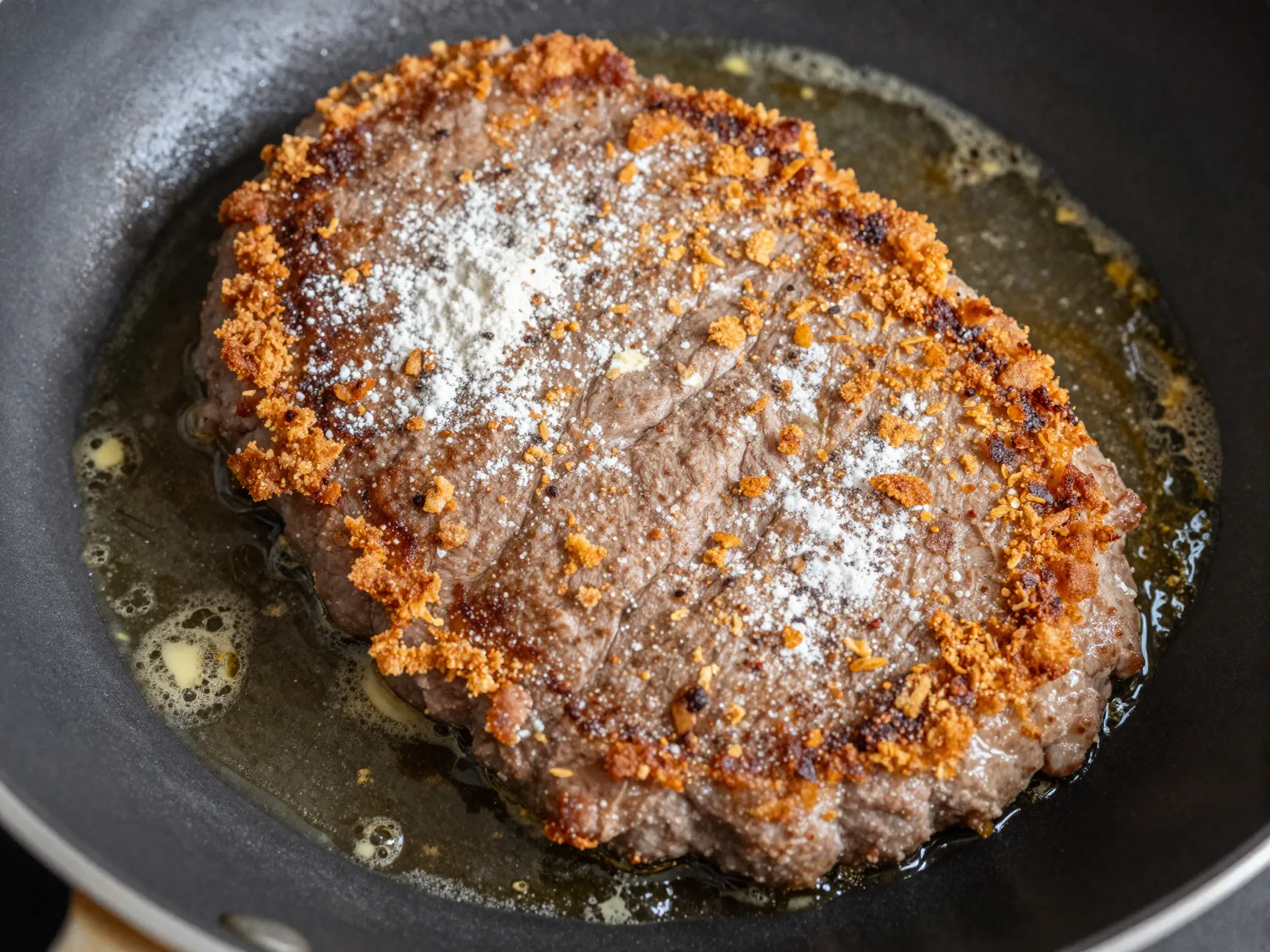
The pan-fry method differs from the basic cast-iron sear in one key way: a seasoned coating is applied to the steak before cooking. This creates an additional flavor and texture layer, a light crust of seasoned flour, breadcrumbs, or spice rub that crisps in the pan and adds complexity [10].
Seasoned crust options:
- All-purpose flour with smoked paprika, garlic powder, and black pepper
- Panko breadcrumbs with Parmesan and dried herbs
- Pure spice rub (cumin, coriander, chili flakes, brown sugar)
Pan-fry process:
- Dredge the steak lightly in the chosen coating, shaking off excess
- Heat 2-3 tablespoons of butter and oil together in a skillet over medium-high heat
- Cook 2-3 minutes per side until the crust is golden and internal temperature hits 130 degrees Fahrenheit
- Rest 5 minutes before serving
The butter-oil combination raises the smoke point while adding richness, which is especially important for venison’s lean profile [10]. This method is excellent for thinner steaks or venison cutlets that cook through quickly.
Essential Tips That Apply Across All 8 Methods
Regardless of which technique is chosen from the 8 foolproof methods for how to cook venison steak to perfection, several universal principles determine success or failure.
Temperature management:
- Always use a reliable instant-read meat thermometer
- Pull venison at 130-135 degrees Fahrenheit for medium-rare, this is the universal target [1]
- Never cook venison past 145 degrees Fahrenheit (medium) unless braising
Preparation steps that matter:
- Bring the steak to room temperature 30-45 minutes before cooking
- Remove silver skin and sinew before cooking, these connective tissues do not break down with quick-heat methods and create a chewy texture [3]
- Dry brine with salt 1-24 hours ahead for better crust formation and moisture retention
Resting protocol:
- Rest every venison steak on a wire rack (not a cutting board) for at least 5 minutes
- Tenting loosely with foil retains heat without steaming the crust
- Slicing too early causes significant juice loss, patience is rewarded
Flavor pairings that complement venison:
| Flavor Category | Examples |
|---|---|
| Herbs | Rosemary, thyme, juniper berry, sage |
| Acids | Red wine, balsamic, blackberry reduction |
| Fats | Butter, bone marrow, duck fat |
| Earthy | Mushrooms, caramelized onions, truffle |
Choosing the Right Method for Your Cut and Situation
Not every venison cut suits every cooking method. Matching the technique to the cut is as important as the cooking process itself.
Quick reference guide:
- Backstrap / Loin: Methods 1, 2, 3, 5 (best cuts for high-heat searing)
- Round steaks: Methods 4, 5, 7 (benefit from marinade or extended heat)
- Shoulder / Neck: Method 7 only (requires braising to become tender)
- Thin cutlets: Method 8 (pan-fry with crust works best for thin cuts)
For hunters processing their own deer, the backstrap is the prime cut and rewards the butter-basting or reverse-sear methods most generously. Round steaks from the hind leg are leaner and tougher, making the marinade-and-grill or slow cooker approaches the smarter choice [3].
Conclusion
Venison’s lean, dense character demands respect, but it also rewards the cook who takes the time to understand it. The 8 foolproof methods for how to cook venison steak to perfection covered in this guide range from the accessible (cast-iron sear, broiler) to the precise (sous vide) and the slow (braised in a slow cooker), ensuring that every cook has a reliable path to a great result regardless of equipment or experience level.
Actionable next steps:
- Start with Method 1 (hot cast-iron sear) to build foundational technique before advancing to basting or reverse sear
- Invest in a quality instant-read thermometer, it is the single most impactful tool for venison cooking
- Remove silver skin from every steak before cooking, regardless of method chosen
- Experiment with the herb butter-basting method (Method 2) once the basic sear is mastered, the flavor difference is significant
- For tough or older deer cuts, default to Method 7 (slow cooker braising) rather than forcing a quick-cook technique
Venison cooked properly is not just acceptable, it is genuinely exceptional. With the right method matched to the right cut, it consistently outperforms commercially raised beef in both flavor complexity and nutritional value.
References
[1] Venison Steak – https://www.missallieskitchen.com/venison-steak/
[2] How Do You Cook A Venison Steak – https://kitchprep.com/how-do-you-cook-a-venison-steak/
[3] How To Cook Venison – https://www.missallieskitchen.com/how-to-cook-venison/
[4] Watch – https://www.youtube.com/watch?v=MtZaN8D8cl4
[5] How To Cook Venison – https://www.bbcgoodfood.com/howto/guide/how-to-cook-venison
[6] How To Cook Venison Steaks Basic And Simple Guide – https://leaaverygear.com/blogs/game-and-garden-recipes/how-to-cook-venison-steaks-basic-and-simple-guide
[7] The Best Way To Cook Venison Steak – https://prisedujour.com/2022/01/22/the-best-way-to-cook-venison-steak/
[8] Watch – https://www.youtube.com/watch?v=fwKemva0UHM
[9] Venison Recipe Caramelized Onions Mushrooms – https://honest-food.net/venison-recipe-caramelized-onions-mushrooms/
[10] Pan Fried Venison Steak Recipe – https://foodmeanderings.com/pan-fried-venison-steak-recipe/