Traditional Archery Aesthetic Ideas for a Timeless Bow and Arrow Space
A longbow left leaning in a closet corner looks like clutter. The same bow, hung horizontally on a simple wooden peg with nothing else around it, looks like sculpture. The difference costs almost nothing in materials and almost everything in intention. That gap between accidental storage and deliberate display is exactly what separates a forgettable gear closet from a space people actually want to spend time in.
Disclosure: This post contains affiliate links. As an Amazon Associate, we earn from qualifying purchases, and at no extra cost to you.
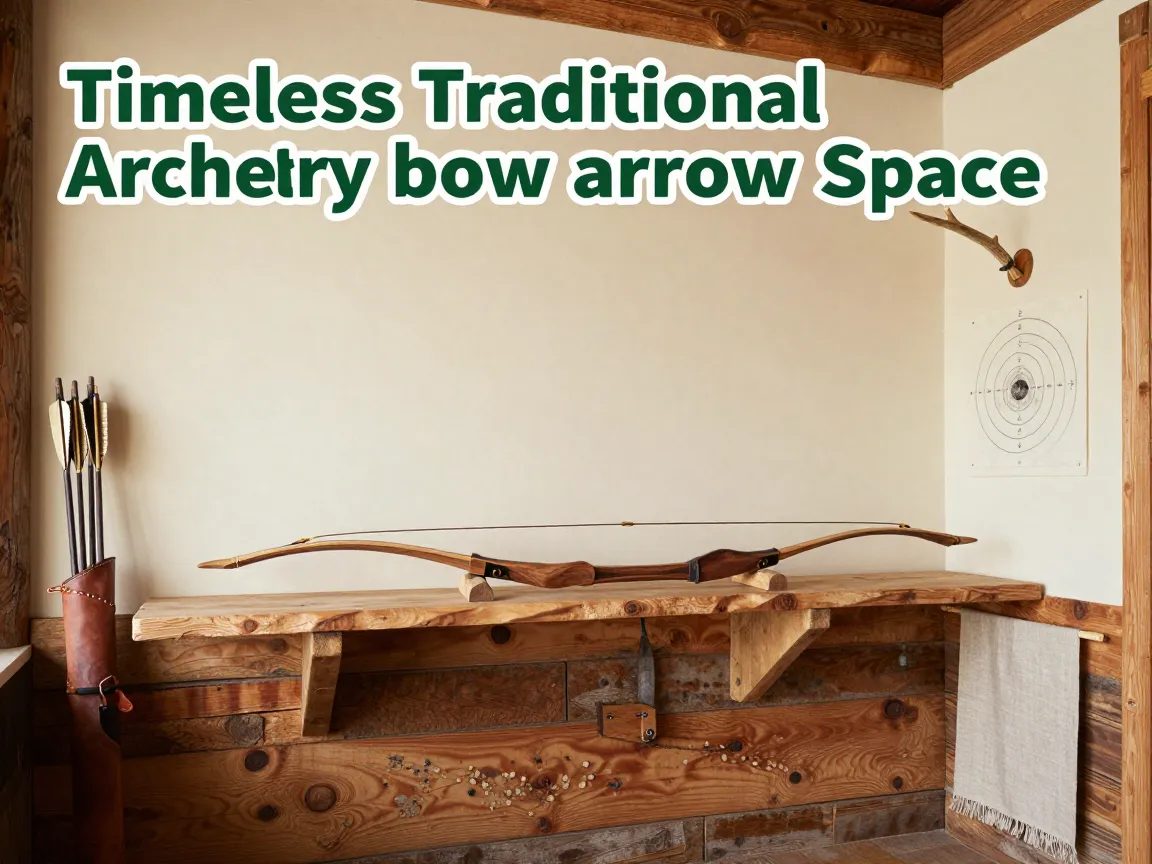
This article walks through 6 Traditional Archery Aesthetic Ideas for a Timeless Bow and Arrow Space, drawn from how serious collectors, hunters, and minimalist archers actually organize their rooms. Each idea stands on its own, but most spaces end up blending two or three. The goal throughout is the same: honor the history and craftsmanship of the equipment while keeping the room functional enough to use every day.
1. Rustic Woodland Display Wall
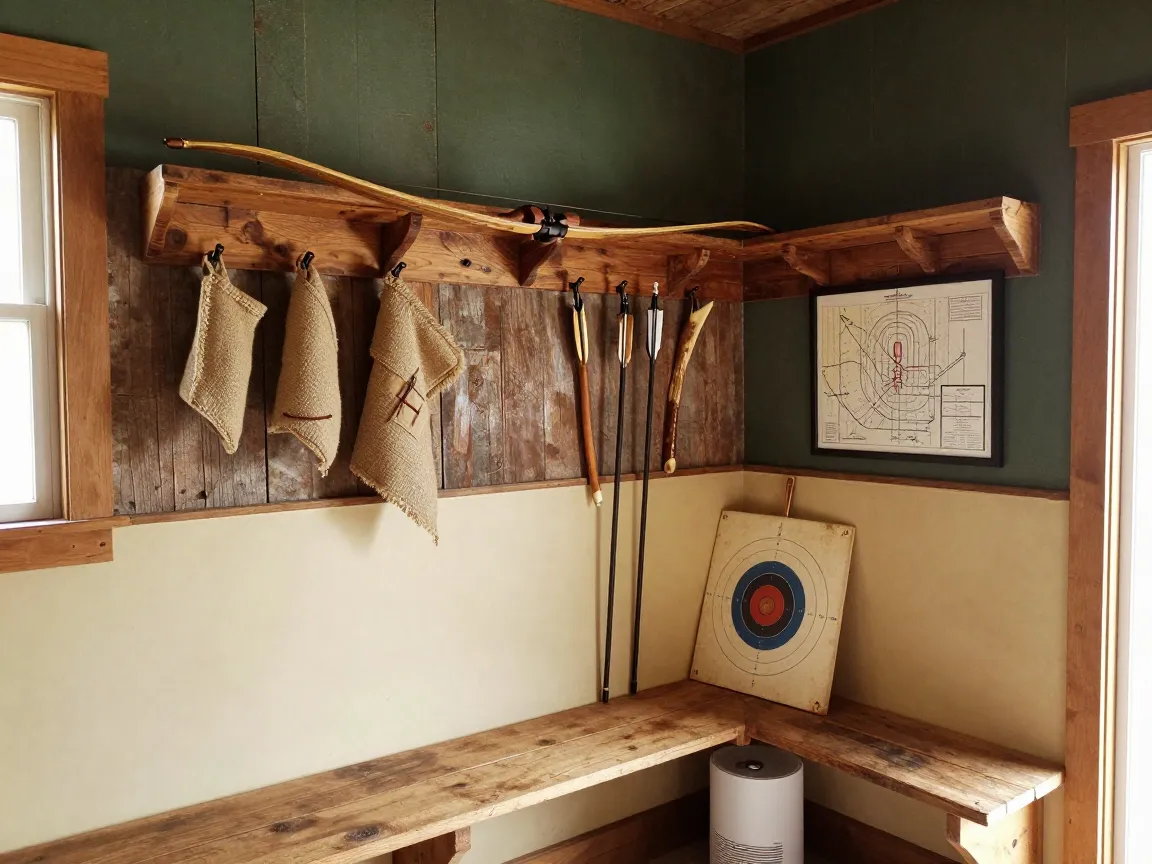
The rustic woodland look is the most obviously “traditional” of any archery aesthetic, and it is also the easiest to start building with secondhand materials. The foundation is a reclaimed wood bow rack, ideally with hand-carved details rather than a factory-stamped edge, mounted against a wall finished in deep walnut or weathered barn board. Quivers made from burlap or heavy canvas hang beside it, and antler-style hooks hold loose arrows or accessories at angles that look gathered rather than arranged.
Picture a converted mudroom where the back wall is painted a flat cream, broken up by one plank of raw cedar running horizontally as a shelf. A vintage target face, the kind with hand-drawn rings rather than printed ones, leans against the wall below the rack instead of hanging flat. A hand-drawn range map from an old hunting trip sits framed nearby. The palette stays narrow on purpose: walnut brown, forest green, burnt sienna, and cream, nothing brighter.
The caveat with this style is moisture. Reclaimed wood and leather accessories both react badly to humidity swings, so a woodland-themed room still needs a dehumidifier or at least airflow near any wall-mounted gear. Treat the display pieces as functional storage first and decor second, and the rustic look holds up for years instead of warping within a season.
2. Japanese-Inspired Minimalist Corner
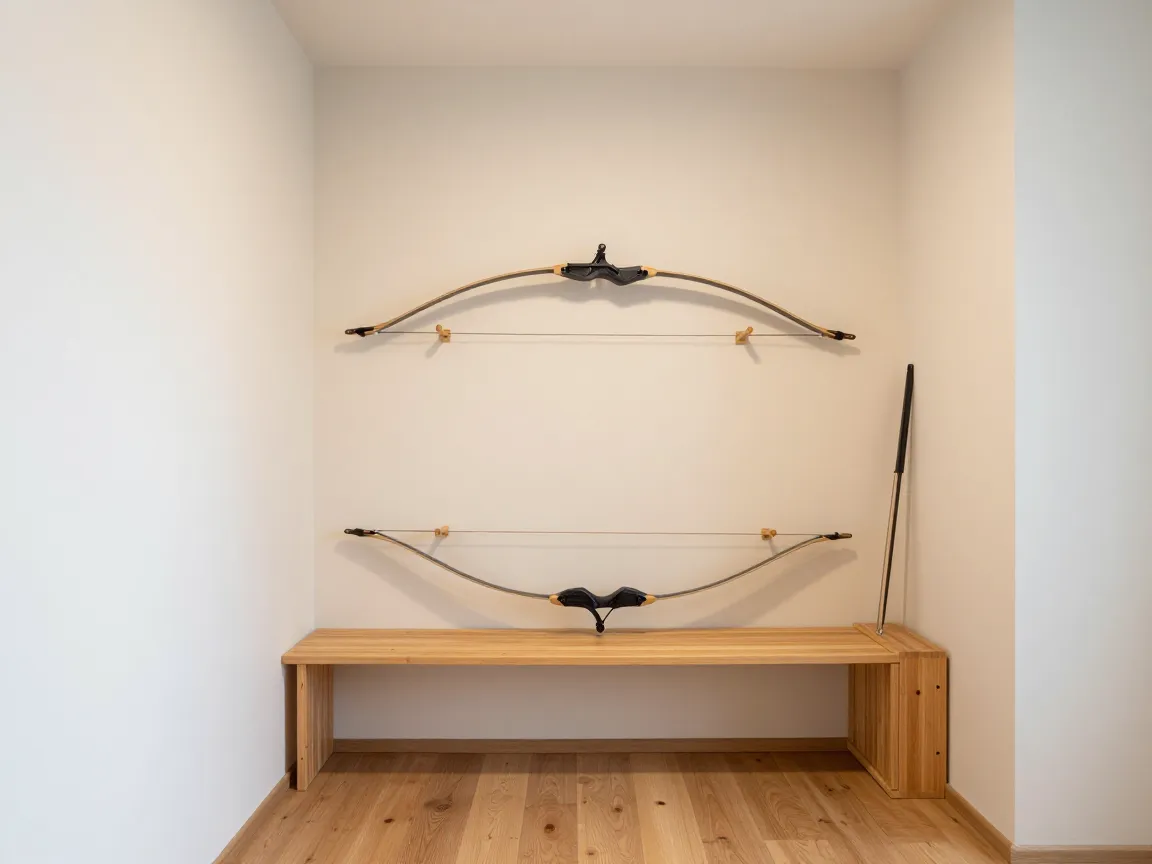
Where the woodland wall is dense and layered, a Japanese-inspired minimalist setup strips everything back. This idea borrows from the design concept of ma, the deliberate use of empty space to give a single object more visual weight. In an archery room, that usually means one bow displayed horizontally on two simple supports, with nothing else competing for attention on that wall.
Imagine a small reading nook converted into an archery corner: unfinished oak flooring, a bamboo low shelf, and a single recurve bow resting on two matching pegs at eye level. No target faces, no trophy wall, no extra quivers in sight. Every other piece of gear lives in a closed cabinet nearby, so only what is actively being used ever shows on the open wall.
This approach demands discipline more than money. A homeowner has to be willing to put gear away rather than display it, which runs against the instinct to show off a growing collection. The payoff is a room that feels calm rather than cluttered, and it photographs beautifully for anyone sharing the space online. It also works well in smaller apartments where wall space is limited and a dense rustic look would feel cramped.
3. Dedicated Traditional and Longbow Zone
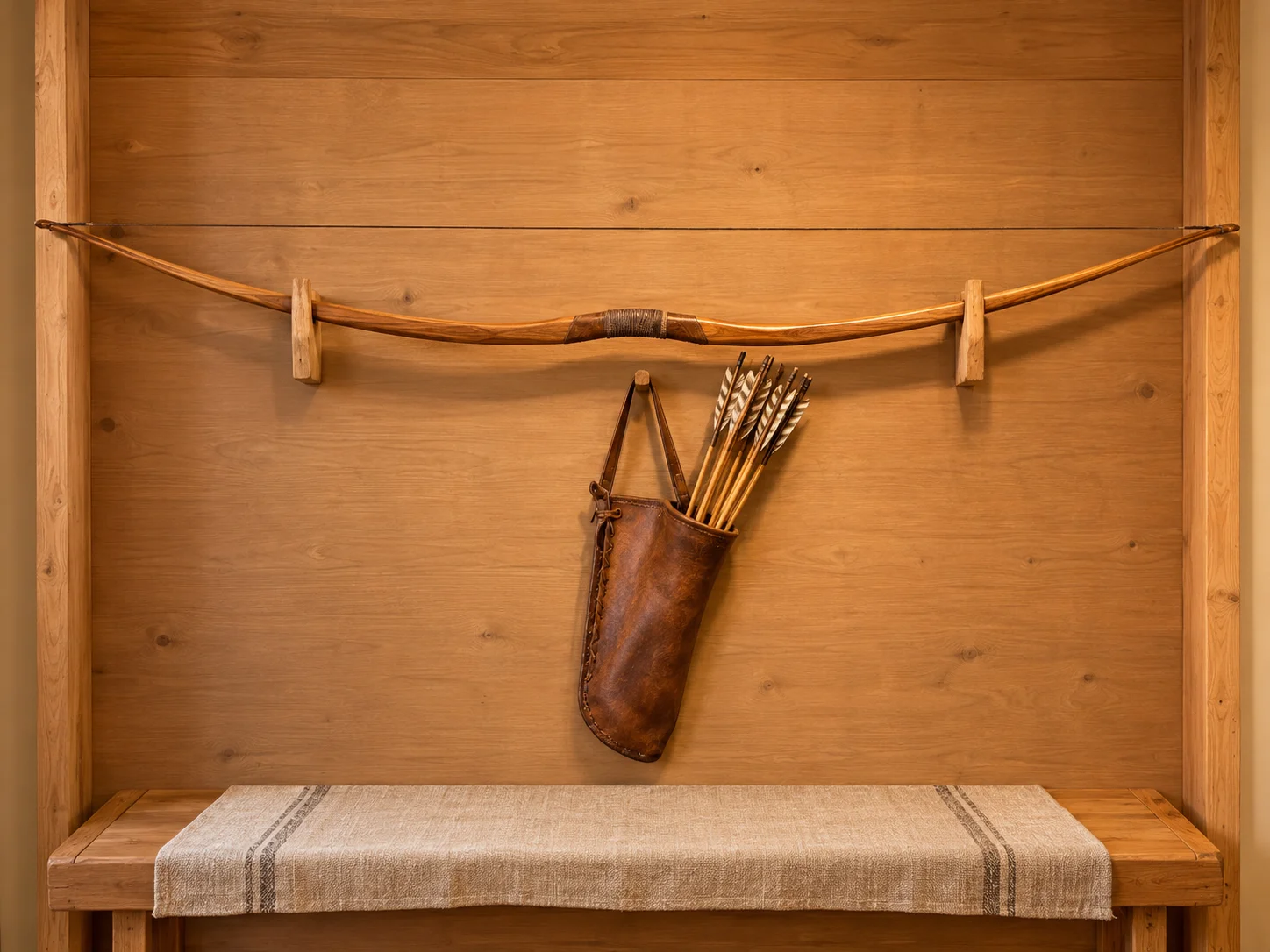
For archers who shoot longbows or recurves built the old way, a dedicated zone keeps that equipment visually and physically separate from compound bows, sights, and modern accessories. The materials lean natural throughout: unfinished wood, leather, and linen instead of metal brackets or plastic clips. Longbows rest on simple horizontal wooden pegs rather than angled modern racks, which also happens to be gentler on the limbs over time.
A leather quiver loaded with natural-feather-fletched arrows becomes the centerpiece, hung on the wall like a piece of art rather than tucked into a corner. Next to it, a linen runner or small woven textile adds texture without introducing new colors. The effect reads as closer to a museum alcove than a gear closet, and that is the point. This zone is meant to honor equipment with real history behind it, whether that is a hand-built longbow or arrows fletched by hand rather than machine.
One practical note: natural feather fletching is more fragile than plastic vanes, so the display spot should avoid direct sun and high-traffic areas where a stray bag or jacket might brush against the arrows. Treat the zone as display-grade storage, checked and dusted occasionally, not a shelf to be ignored until the next hunting season.
4. Lodge-Style Hunting Room Integration
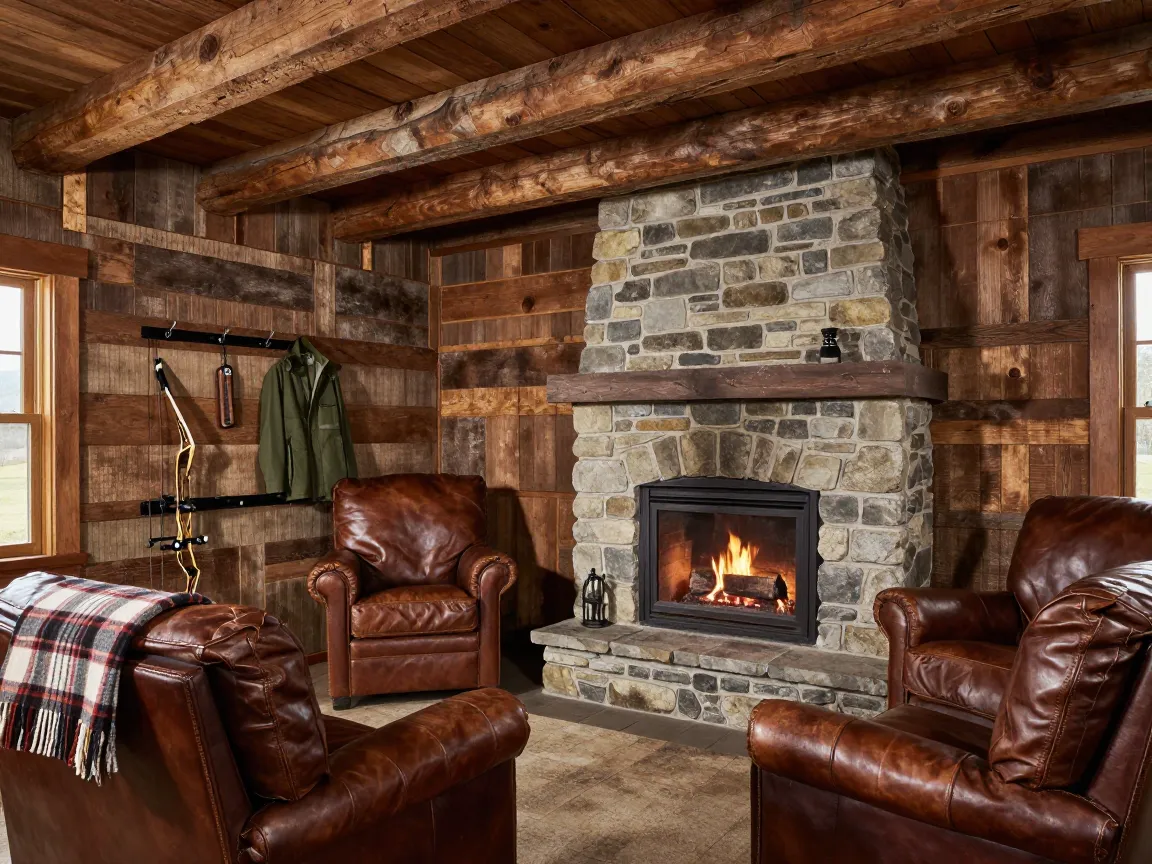
Many archers do not have a dedicated archery room at all. Instead, the bow and arrow setup lives inside a broader hunting or lodge-style space, and the aesthetic has to work within that bigger plan. This version leans on reclaimed wood paneling, exposed ceiling beams, a stone fireplace if the house allows for one, and rich brown leather furniture anchoring the seating area. Plaid textiles on throws or chair backs tie the room together without feeling themed.
In a room like this, archery gear gets its own defined zone rather than getting scattered across open surfaces. A corner near the fireplace might hold a bow rack alongside hooks for decoys, game calls, and field clothing, all organized so the hunting identity of the room reads clearly at a glance. The archery pieces do not have to dominate; they just need a consistent spot that matches the materials used everywhere else in the room.
The risk here is overcrowding. A lodge room can easily turn into a catch-all for every piece of outdoor gear a household owns. Keeping archery equipment in one clearly bounded area, rather than letting bows and quivers spread across every wall, keeps the space feeling intentional instead of cluttered. This works especially well for families who hunt and shoot together, since the shared space signals that the hobby belongs to everyone, not just one person’s closet.
5. Trophy Wall With Symmetrical Framing
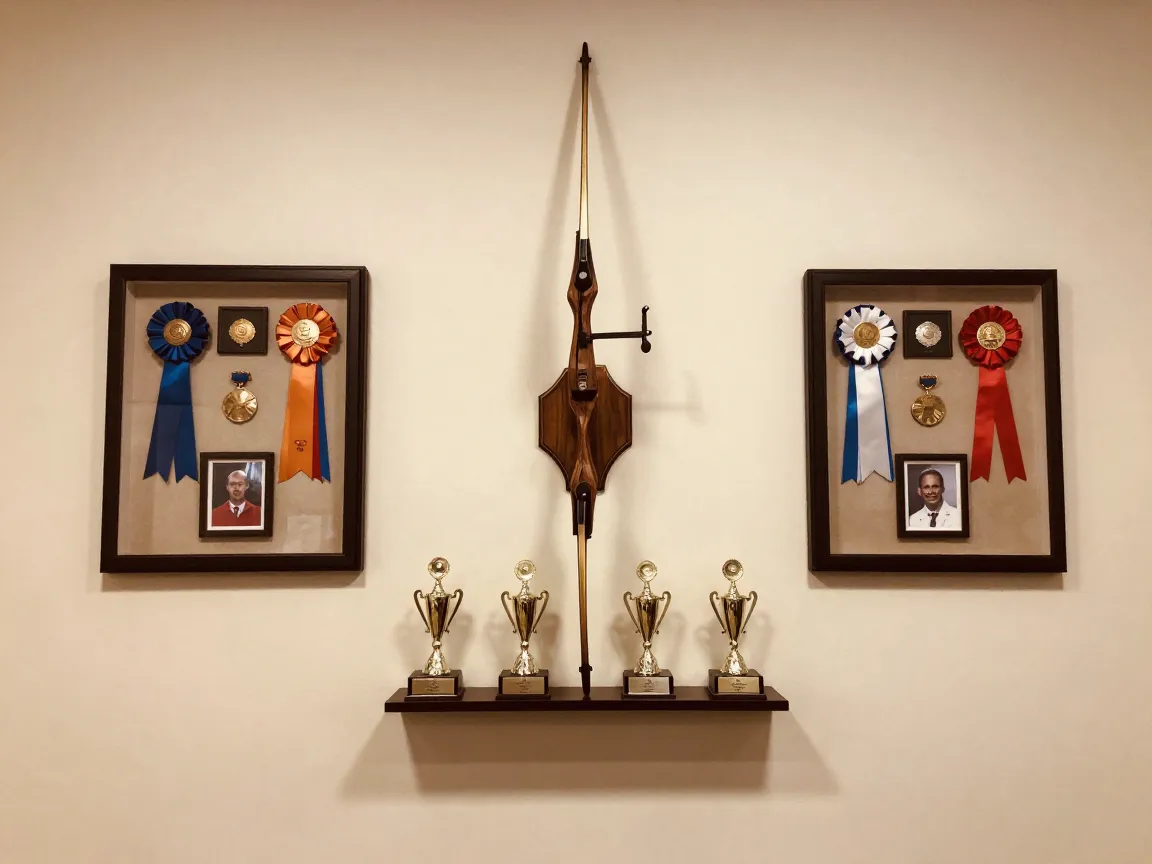
For archers with medals, ribbons, or competition photos worth showing off, a trophy wall turns achievements into the room’s visual anchor. The format is straightforward: a primary bow mounted and centered on the wall, flanked symmetrically by shelving or shadow boxes holding medals, ribbons, and framed photos. Consistent frame styles across every piece matter more than any single frame looking expensive, since mismatched frames read as clutter even when the content inside is impressive.
Think of a garage or den wall where a compound bow hangs dead center at chest height, with two identical shadow boxes on either side holding ribbons from regional competitions. Below that, a narrow shelf holds a row of small trophies, each one roughly the same height so the line stays level. The symmetry does the heavy lifting here; it gives the wall a museum-like weight even if the individual pieces are modest.
This idea works best as a standalone focal wall rather than one more surface in a busy room. It also needs occasional editing. Adding every new ribbon without removing older, less significant ones eventually breaks the symmetry and turns a clean trophy wall back into clutter. Treat it the way a gallery treats a rotating exhibit: curate what stays visible, and store the rest.
6. Framed Archery Art and Abstract Wall Pieces
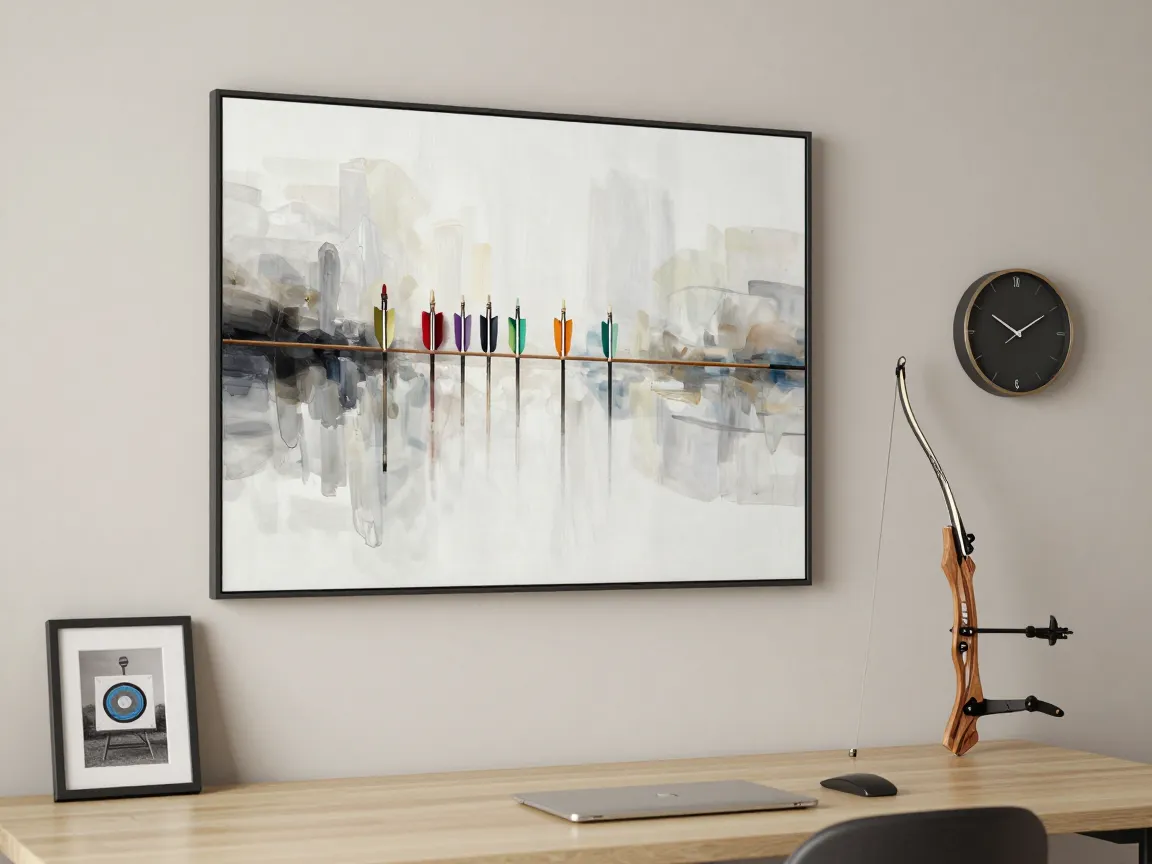
Not every space can or should commit to a full cabin-style theme. For a bedroom, office, or shared living room, framed archery art offers a lighter way to bring the aesthetic in without rearranging furniture or dedicating wall space to functional storage. Options range from vintage Olympic archer posters to abstract multi-panel canvas prints showing rows of colored arrows against a blurred target background, built to capture motion and focus rather than a literal hunting scene.
A home office might use one large abstract canvas behind a desk, paired with a small arrow-shaped wall clock and a single framed black-and-white photo of a classic recurve bow. None of these pieces require specialized mounting hardware or humidity control, which makes this idea far more flexible than displaying actual equipment. Sequential artwork showing the stance, draw, anchor, and release of a shot can also work well here, since it captures the movement of archery rather than just the gear itself.
The tradeoff is that this approach decorates around the sport rather than showcasing real equipment. For someone who wants their actual bow visible, this idea works best as a complement to one of the earlier five, not a replacement. A poster near the doorway and a real bow mounted elsewhere in the same room often strike the right balance between decoration and genuine display.
A Timeless Space Worth Building Toward
None of these six ideas require choosing just one. A rustic wall, a quiet minimalist corner, and a single framed print can coexist in the same house without clashing, as long as the materials and colors stay consistent from room to room. The real throughline across every version of 6 Traditional Archery Aesthetic Ideas for a Timeless Bow and Arrow Space is restraint: fewer pieces, better placed, protected from warping and humidity, and chosen because they mean something rather than because there was empty wall space to fill. Start with whichever idea matches the equipment already owned, and let the room grow from there.