Japanese Archery Aesthetic Ideas for a Minimal, Zen Look
A single bamboo bow, hung at an angle on a plain wall, can quiet a room more than any curated gallery of framed art. That is the strange power of kyudo, the Japanese way of the bow, when it moves from the dojo into design. This article lays out 6 Japanese Archery Aesthetic Ideas for a Minimal, Zen Look, drawn from the actual philosophy of the practice rather than decorative shortcuts. Each idea below treats archery not as a theme to copy but as a discipline to translate into space, object, and mood.
Disclosure: This post contains affiliate links. As an Amazon Associate, we earn from qualifying purchases, and at no extra cost to you.
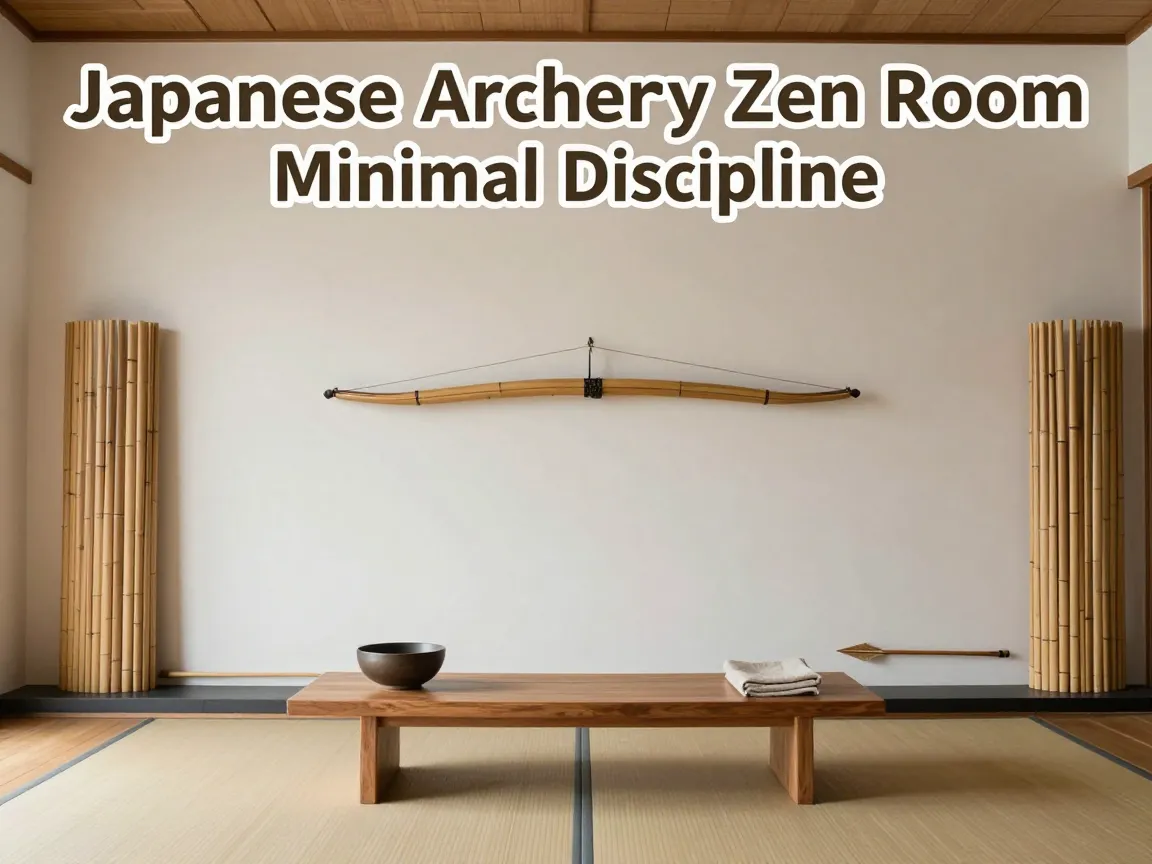
The appeal is not nostalgia. It is restraint. Kyudo asks practitioners to slow down, breathe, and let form speak for itself. That same instinct is shaping interiors, studios, and personal rituals for people tired of visual noise. What follows are six concrete ways to borrow that spirit honestly.
1. Anchor the Room in Shin Zen Bi
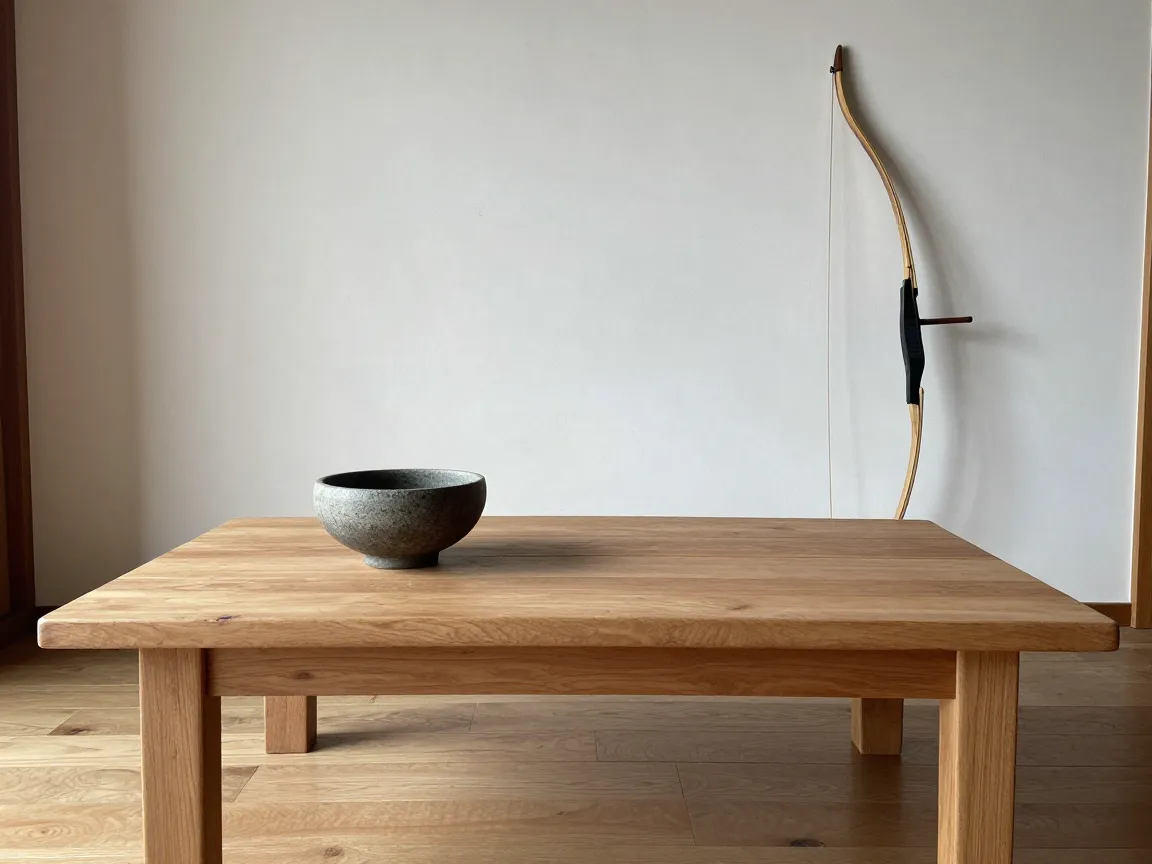
Shin zen bi, the union of truth, goodness, and beauty, is the philosophical backbone of kyudo. It holds that correct form naturally produces something good and something beautiful, without those qualities being separately pursued. Applied to a room, this means choosing objects because they are made correctly, not because they look decorative.
A well-strung yumi, a hand-planed low table, or a single stoneware bowl earns its place by being true to its function first. The beauty follows. This is different from typical minimalism, which often prioritizes visual emptiness for its own sake. Shin zen bi asks a harder question: does this object do its job honestly?
In practice, start by removing anything chosen purely for looks. Keep the items that have a clear purpose, even if that purpose is quiet, like a low bench meant for sitting in stillness. The resulting space may hold fewer things but each one will feel earned. A useful follow-up discipline is to ask, before buying anything new, whether it would still belong in the room if no one ever saw it.
2. Design Around Ma’ai, the Spacious Pause
Ma’ai refers to the correct distance and timing between archer and target, but more broadly it describes the pregnant pause before action. In kyudo, there is no rush to release the arrow. The archer waits until the moment is right, and that waiting is treated as part of the performance, not a delay before it.
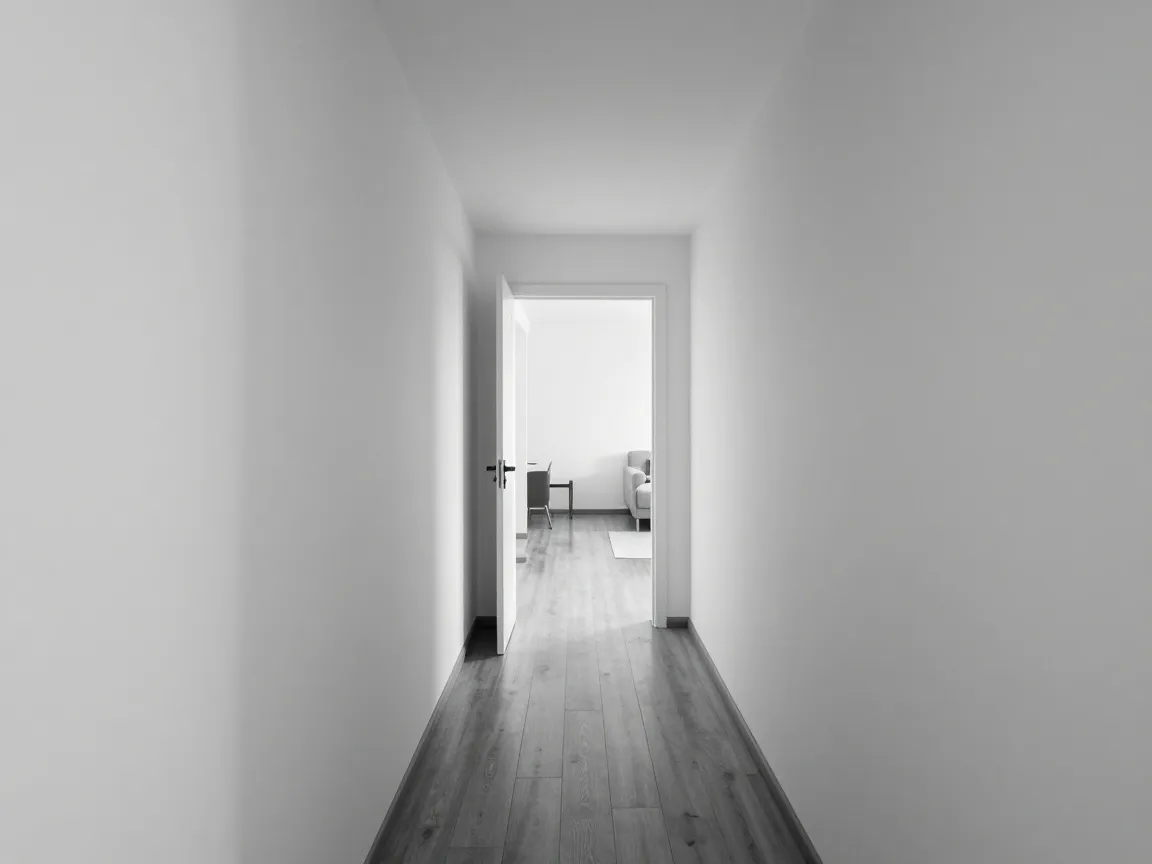
Translating ma’ai into a minimal interior means deliberately building in emptiness. This is not the same as negative space for aesthetic balance. It is space left unfilled so the eye and mind have somewhere to rest. A hallway with nothing on its walls, a shelf with three items instead of ten, a long pause between one piece of furniture and the next, all function like ma’ai.
One practical way to apply this is the one-wall rule: pick a single wall in a room and leave it completely bare, even if surrounding walls hold art or shelving. Visitors often notice that wall first, not because it demands attention, but because its stillness contrasts with everything else. The caveat is that ma’ai only works if the rest of the room has enough content to create contrast. An entirely empty room has no pause to offer, only absence.
3. Let the Yumi’s Asymmetry Guide Your Shapes
The yumi is unlike most bows found elsewhere in the world. It is unusually tall, often over two meters, and famously asymmetrical, gripped roughly a third of the way up rather than at its center. This asymmetry was originally practical, suited to mounted archery and tall grasses, but visually it has become one of the most recognizable silhouettes in Japanese craft.
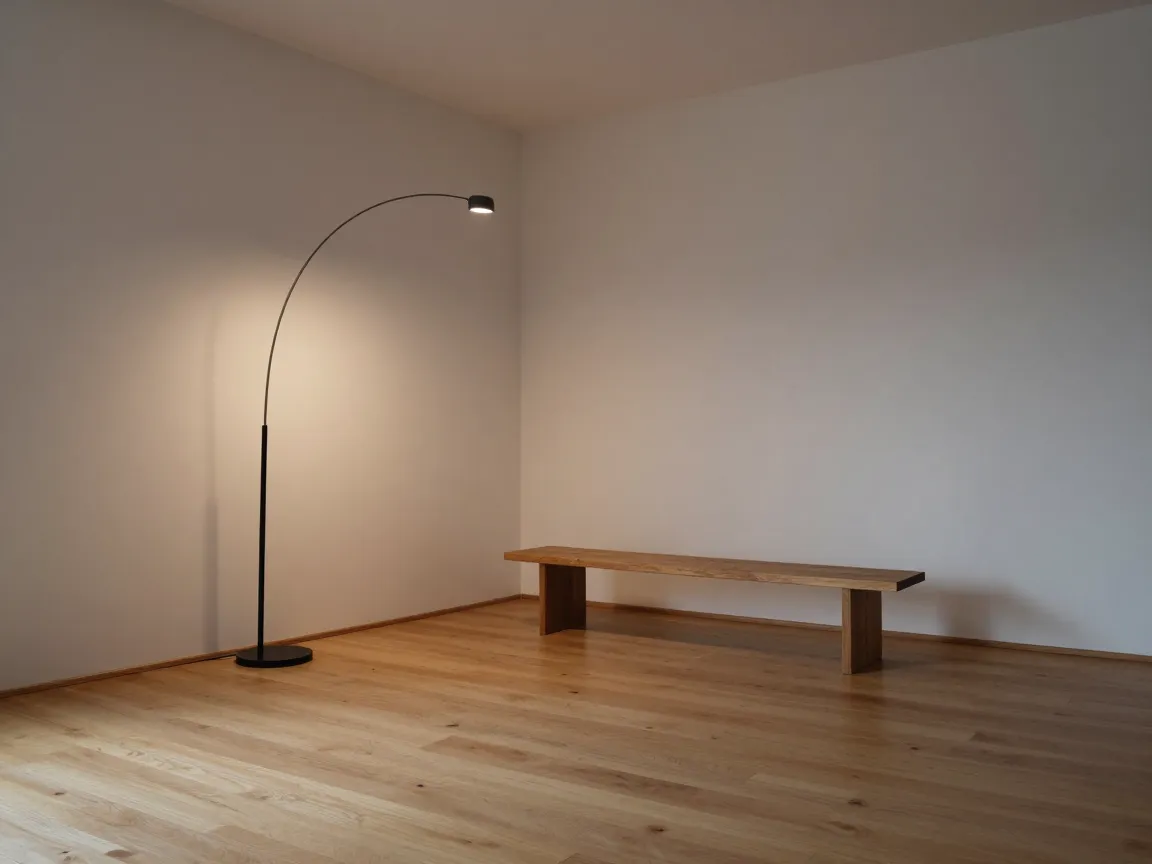
For a minimal interior, the yumi’s long curve and off-center balance point offer a model for furniture and layout choices that avoid perfect symmetry. A floor lamp with an uneven arc, a bench slightly off-center in a room, or a single tall vertical element against a low horizontal one can all echo that same tension between height and balance.
A concrete way to use this is to introduce one tall, slender object into an otherwise low, horizontal room, positioned not in the center but closer to one side, the way a yumi’s grip sits below its midpoint. The imbalance should feel intentional, not accidental. Avoid filling the opposite side with a matching object, since that defeats the point. The asymmetry is the feature, not a flaw to correct.
4. Replace Performance Cues With Meditative Posture
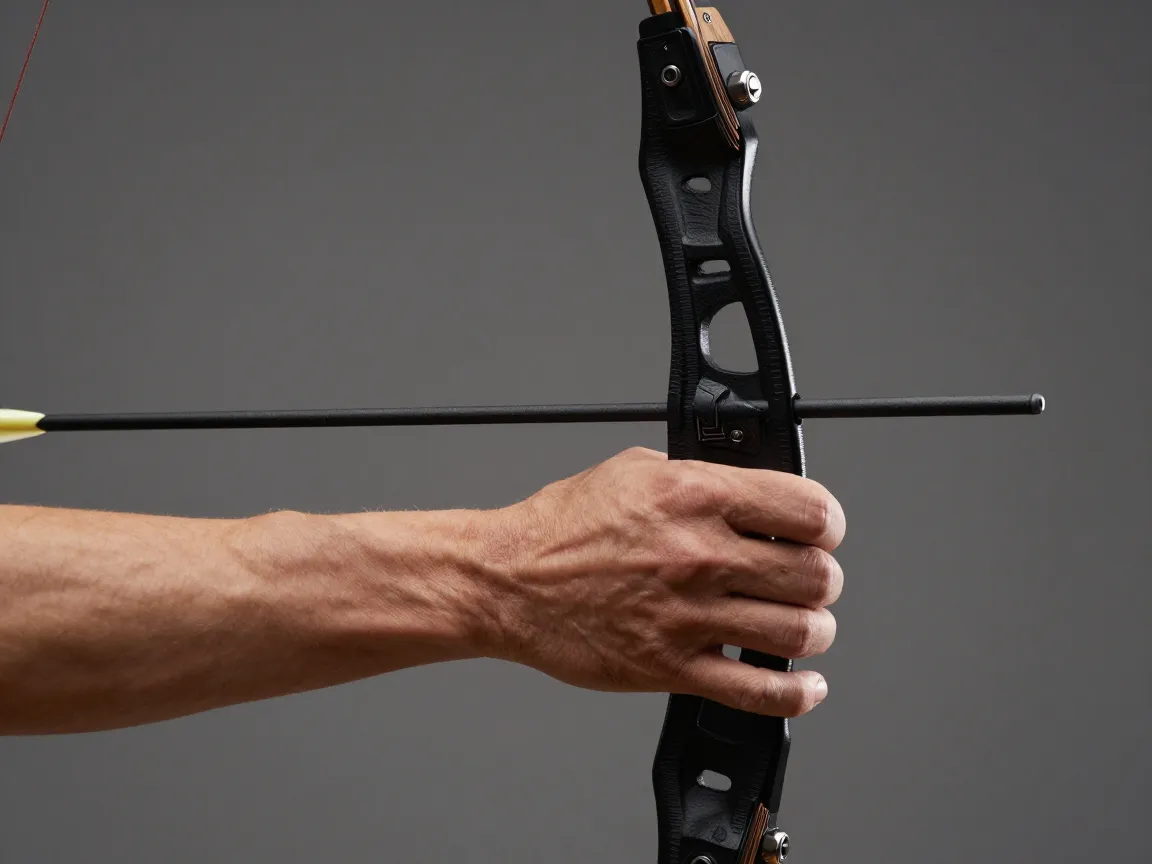
Western sport aesthetics often celebrate motion, strain, and victory. Kyudo deliberately avoids all three. The ideal is described as mushin, or no-mind, where the shot happens without forced effort, closer to a meditative state than a competitive one. Hitting the target well is considered a byproduct of correct form and calm mind, not the primary goal.
This matters for a minimal look because many archery-themed interiors default to dynamic imagery, drawn bows, flying arrows, dramatic lighting. That energy works against a zen atmosphere. A more accurate translation favors stillness: a single bow at rest, an archer’s quiet stance captured before the draw, or no human figure at all.
A simple application is to choose photography or art that shows preparation rather than release. A framed image of hands resting lightly on a bowstring communicates more calm than one of an arrow in flight. If decorating a meditation or reading corner, this choice of imagery matters more than furniture style. The follow-up question worth asking before adding any archery-themed piece is whether it depicts tension or ease. Favor ease.
5. Express Rei and Fuso Through Material Choice
Rei, the principle of courtesy, and fuso, the avoidance of confrontation, shape how kyudo is practiced socially. Archers bow to each other, to the target, and to the space itself. There is no trash talk, no aggressive posturing, even in formal competition. The entire culture of the practice resists conflict, even symbolic conflict, at every step.
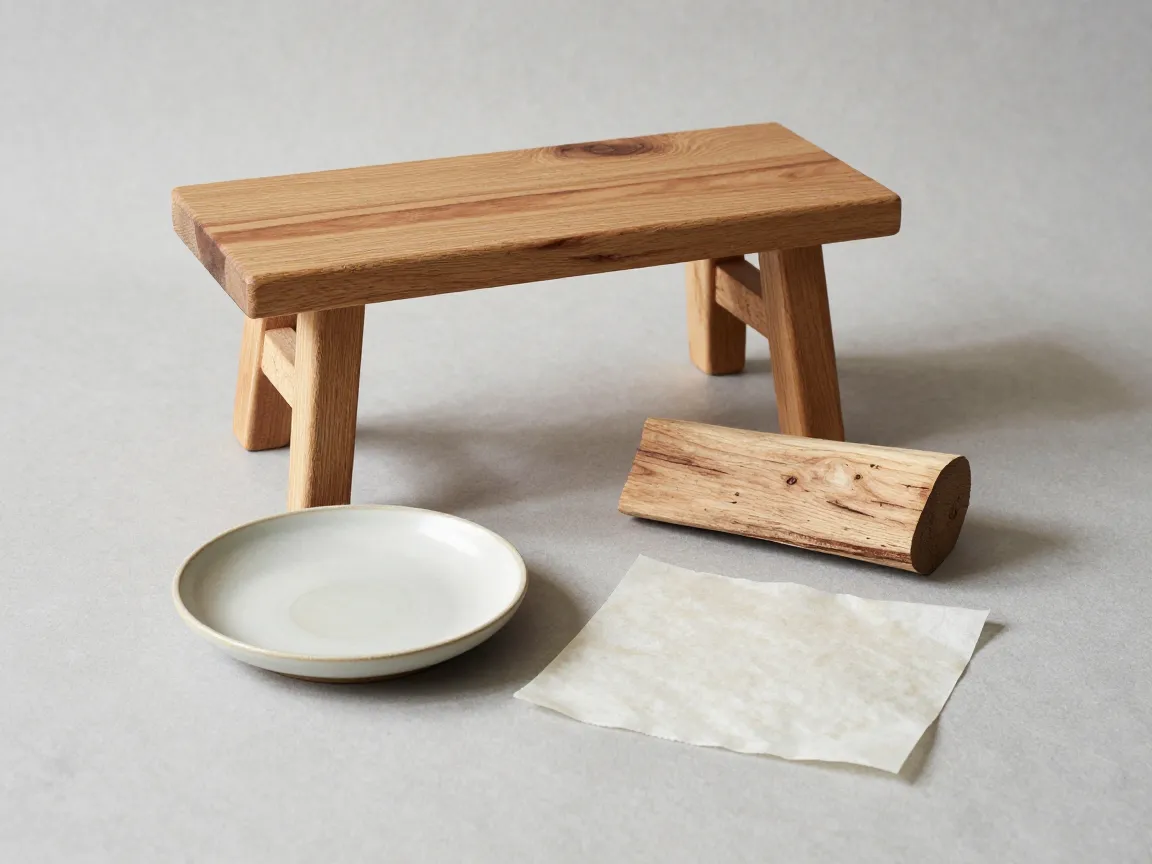
In design terms, this suggests avoiding materials and layouts that feel aggressive or attention-seeking. High-gloss black lacquer, harsh metallic accents, or sharply angular furniture can clash with the quieter mood kyudo represents. Softer alternatives, raw wood, matte stone, washi paper, unbleached linen, tend to align better with courtesy as a material value, not just a social one.
A practical rule is to test new furniture or decor by how it would look if someone bowed to it. That sounds unusual, but it is a fast filter. Objects that feel showy or combative rarely pass. A low wooden stool or an unfinished ceramic dish usually does. The caveat here is not to confuse softness with blandness. Rei is about restraint in tone, not an absence of character.
6. Use Calligraphy and Monochrome as Focal Points Instead of Gear
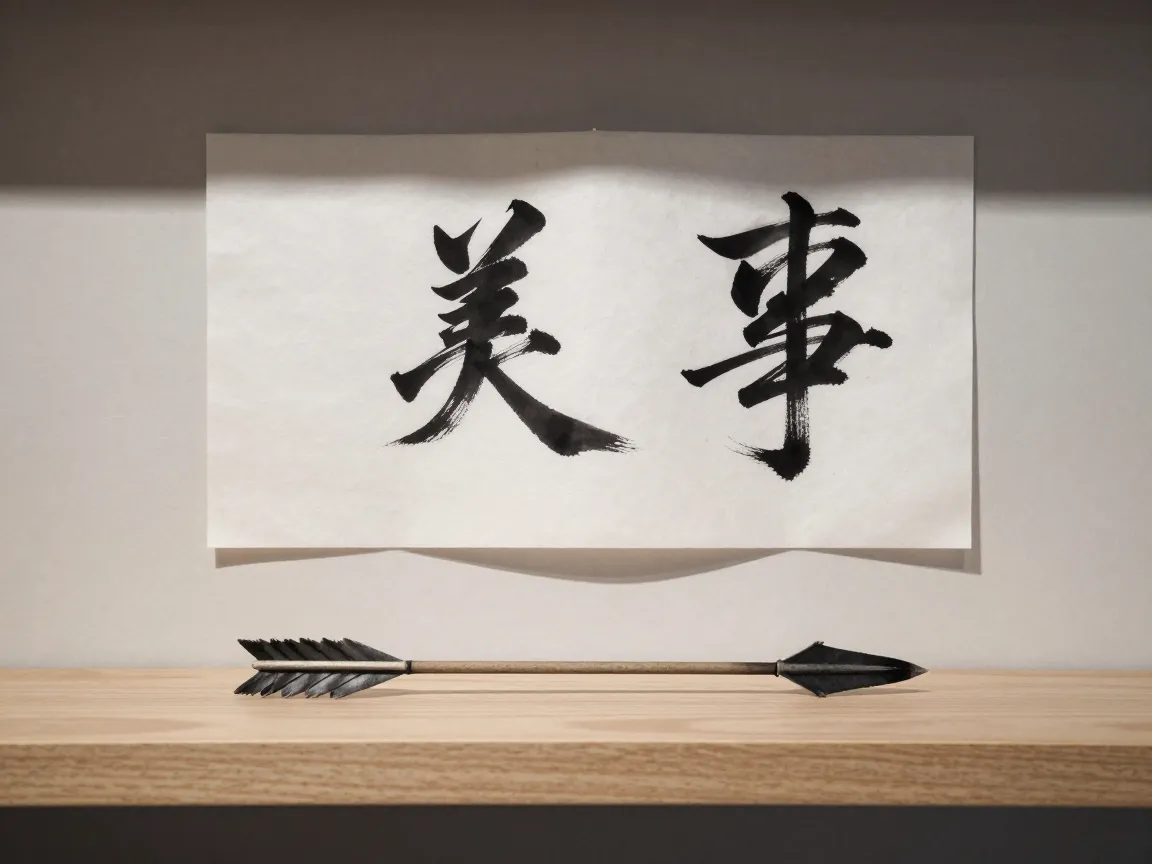
A common mistake when decorating with an archery theme is cluttering a wall with bows, arrows, quivers, and targets all at once. That approach reads as a sports display, not a meditative space. Kyudo-inspired rooms tend to work better with far fewer objects and more intentional focal points, particularly Zen calligraphy and monochrome palettes.
A single piece of sumi-e ink calligraphy, perhaps a character meaning stillness or truth, carries more weight than five archery props combined. Paired with a limited palette of black, white, and warm neutral wood tones, the room gains cohesion without needing many objects to do it. This also echoes the wider idea that Japanese arts, from tea ceremony to calligraphy to kyudo, are often described as meditation in action, where the visual result reflects a disciplined mental state rather than decoration for its own sake.
A workable approach is to select one calligraphy piece and one archery object, such as a single arrow displayed horizontally on a shelf, and build the room’s palette around those two items rather than around a theme. It is worth being cautious here about leaning into the popularized but contested idea, made famous decades ago in Western writing about Zen and archery, that the practice is primarily mystical. Scholars have since debated how much of that framing reflects the actual tradition versus a romanticized reading. A grounded aesthetic borrows the discipline and calm of kyudo without overstating its mysticism, which keeps the look authentic rather than cliched. Current interest in quiet, kyudo-inspired decor suggests this restrained approach may keep gaining traction, though that remains a trend to watch rather than a settled fact.
Conclusion
Building a space around 6 Japanese Archery Aesthetic Ideas for a Minimal, Zen Look works best when the goal is discipline, not decoration. Choose objects for their honesty, leave room for pause, let asymmetry breathe, favor calm imagery over action, pick courteous materials, and let one calligraphy piece do more work than a wall of gear. The next step is simple: pick just one of these six ideas and apply it to a single room this month before adding anything else.