Handline Fishing DIY Projects for Anglers Who Want a Simple, Packable Setup
A standard spinning combo weighs around 12 ounces before you add a single lure. For a hiker who fishes twice a year, that weight is hard to justify. The 6 handline fishing DIY projects for anglers who want a simple, packable setup covered here solve that problem using materials most people already own, and none of them require a reel seat, rod guides, or a tackle box the size of a carry-on bag.
Disclosure: This post contains affiliate links. As an Amazon Associate, we earn from qualifying purchases, and at no extra cost to you.
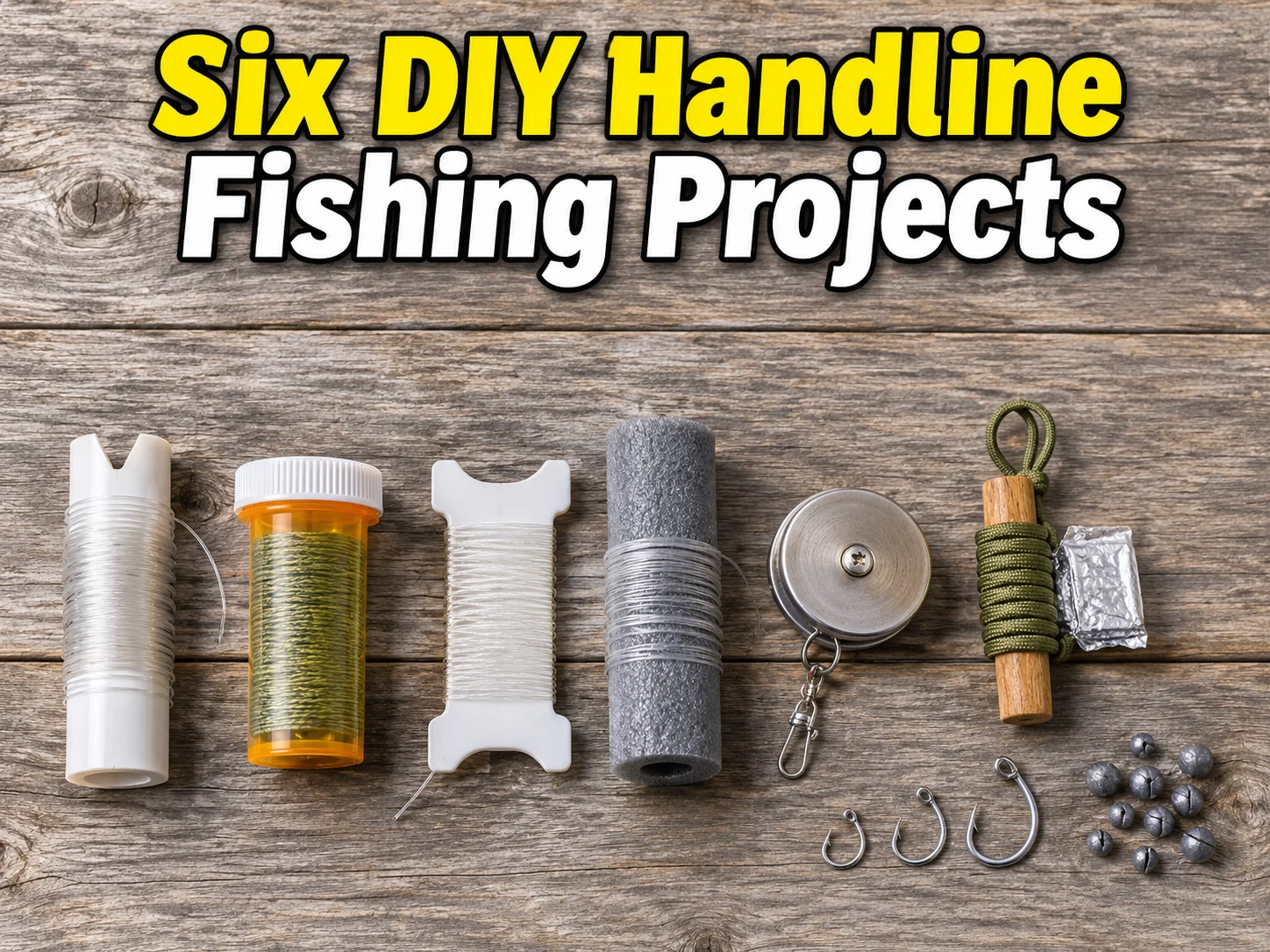
Handlines have caught fish for thousands of years, and the modern versions are lighter and more organized than anything your grandfather rigged off a dock. What’s changed in 2026 is the range of compact build patterns now documented by survival kit designers, ultralight backpackers, and fishing-focused content creators. Each of the six projects below gives you a finished rig you can drop in a shirt pocket, a dry bag, or the lid of a pack without thinking twice.
1. PVC Pipe Winder with Hook Keeper Notch
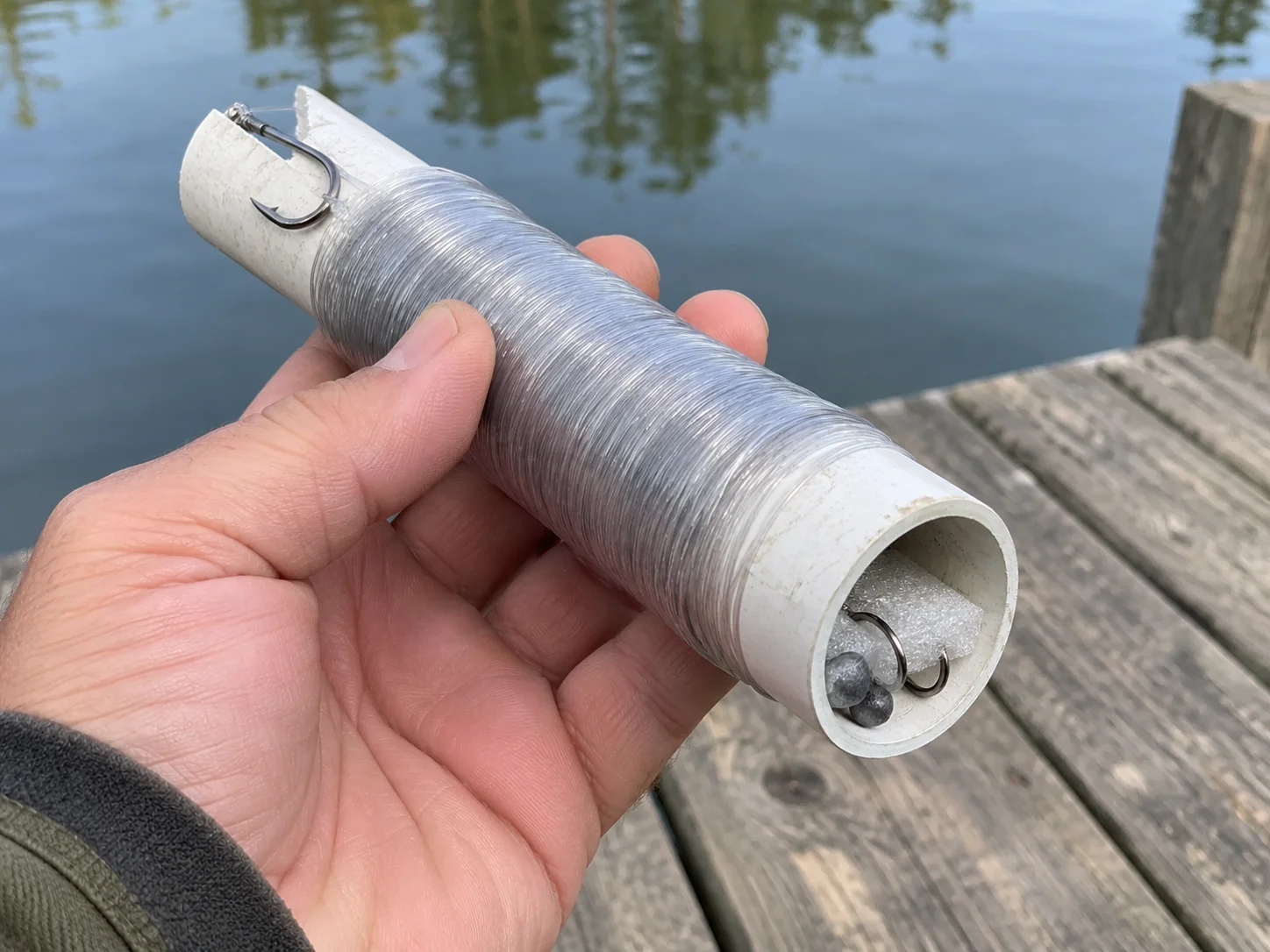
A short section of 3/4-inch Schedule 40 PVC pipe, cut to about five inches, makes one of the most durable handline spools available for under a dollar. The pipe’s hollow core doubles as storage for a folded leader, a few split-shot sinkers, and two or three spare hooks wrapped in a small square of foam. That internal storage is the detail that separates this build from a plain stick winder.
Cut the pipe, then file or sand a shallow V-notch at one end. That notch holds the hook when the line is wound, preventing it from sliding loose in a pack pocket. Wrap 50 to 80 feet of 20-pound monofilament directly onto the pipe. If you’re fishing still water from a bank or dock, 50 feet is usually enough. Add more if you’re dropping bait to depth from a bridge or pier.
The technique for casting is straightforward: hold the pipe in one hand, let out a few arm-lengths of line, and swing the weighted rig in a horizontal arc before releasing. PVC floats if you drop it, which matters on a kayak or a boat. Total finished weight for this rig, loaded with line and terminal tackle, stays under two ounces.
2. Repurposed Pill Bottle Rig
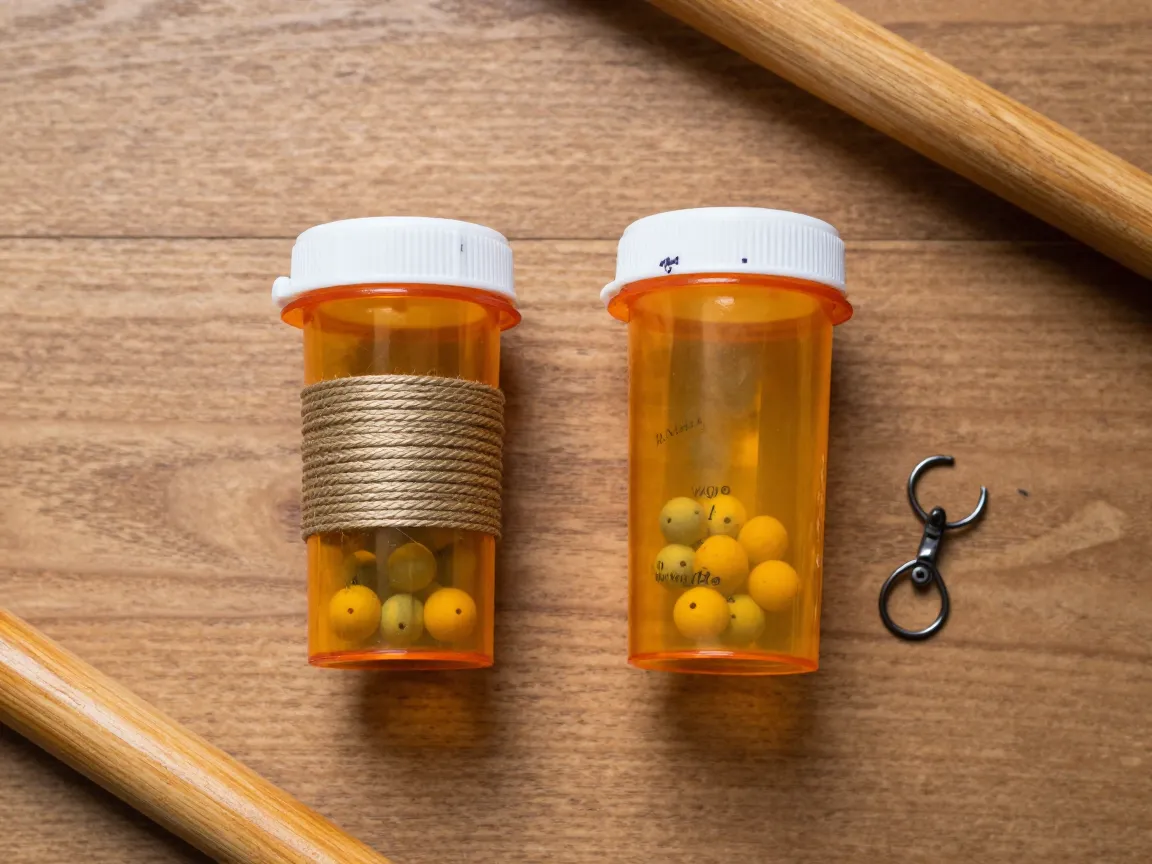
A standard 60-count prescription bottle, the kind with a wide mouth and a child-resistant cap, is exactly the right diameter to wind 30-pound braided line without kinking. Braid is worth using here because it stores more line in less space than mono at equivalent breaking strength. Sixty feet of 30-pound braid occupies less than a quarter of the bottle’s outer surface.
The cap seals your stored tackle: a small swivel, a snap, two circle hooks, and a half-dozen split-shot sinkers fit inside without rattling. Mark the line weight and hook size on the cap with a paint marker so you’re not guessing in the field. The bottle’s smooth exterior lets line pay out cleanly when you drop bait over the side of a canoe or through ice.
This build pattern appears repeatedly in survival-oriented liferaft fishing kit designs, where flat profile and waterproof storage are non-negotiable. The pill bottle isn’t flat, but it’s narrow enough to tuck into the mesh side pocket of almost any daypack. For trout in a mountain lake or panfish in a farm pond, this rig is complete the moment you tie on a hook.
3. Hand Caster Card
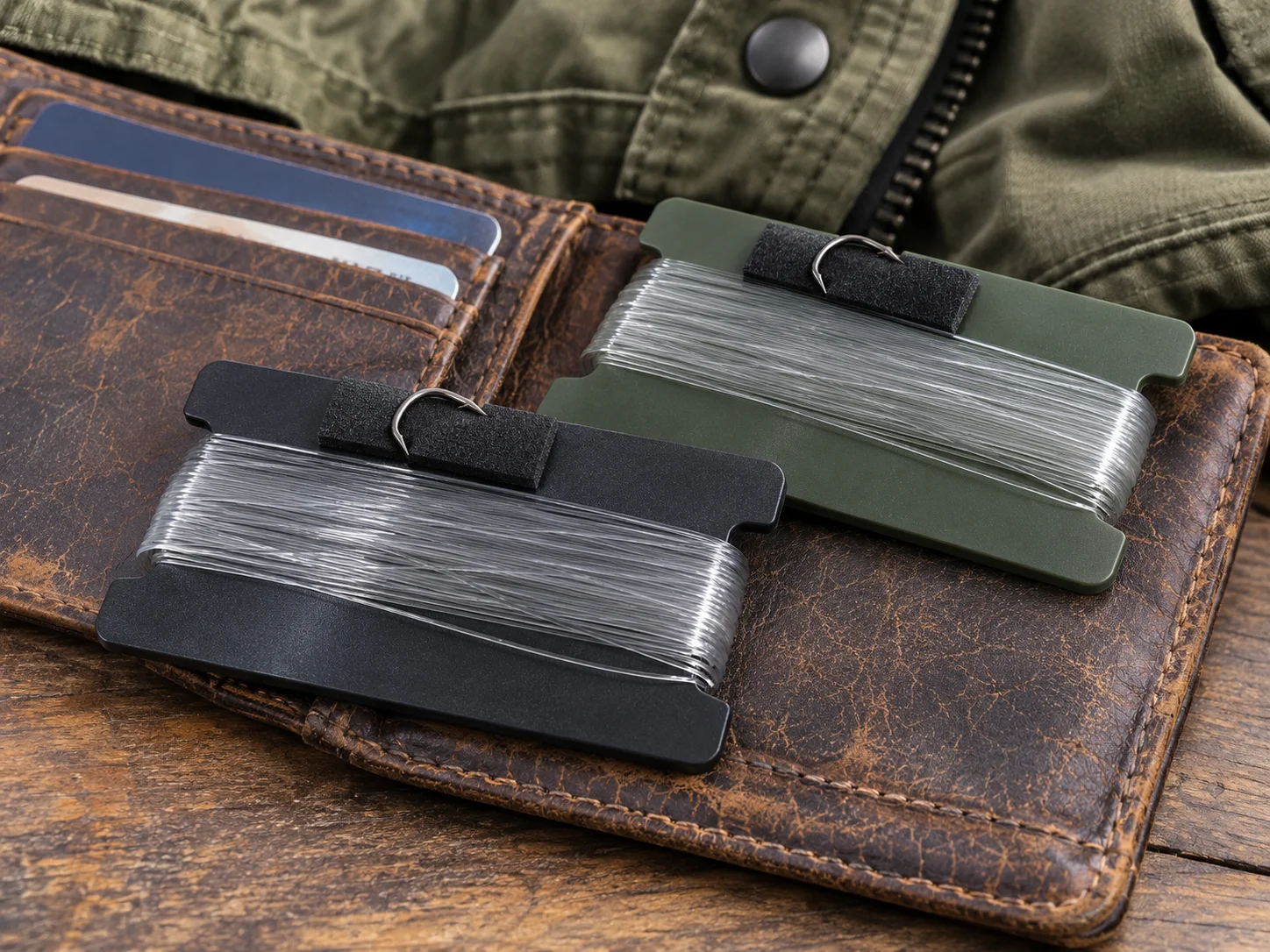
A hand caster card is a flat piece of rigid plastic, roughly the dimensions of a large index card, with notches along the short ends to hold wrapped line. Several commercial versions exist as of 2026, but cutting one from a sheet of 1/8-inch HDPE or repurposing a retired credit-card-sized gift card holder costs nothing. The finished card is about 4 inches by 2.5 inches and weighs less than half an ounce empty.
Wind 30 to 40 feet of 10-pound monofilament onto the card in tight, even passes. The notches at each end keep the first and last wraps locked. Tuck the hook point into a small strip of closed-cell foam glued to one face of the card, and the whole assembly fits flat in a wallet pocket or the inside flap of a jacket. This is the build that shows up in EDC (everyday carry) kits and emergency go-bags precisely because it adds almost no bulk.
The tradeoff is line capacity. Forty feet is limiting if you need depth, but for surface and mid-column fishing from a dock or a slow-moving creek bank, it’s adequate. The card format also makes it easy to carry multiples: three loaded cards weigh less than a single compact spinning reel. That’s a real option when you’re targeting different species with different rigs on the same trip.
4. Foam Pool Noodle Spool
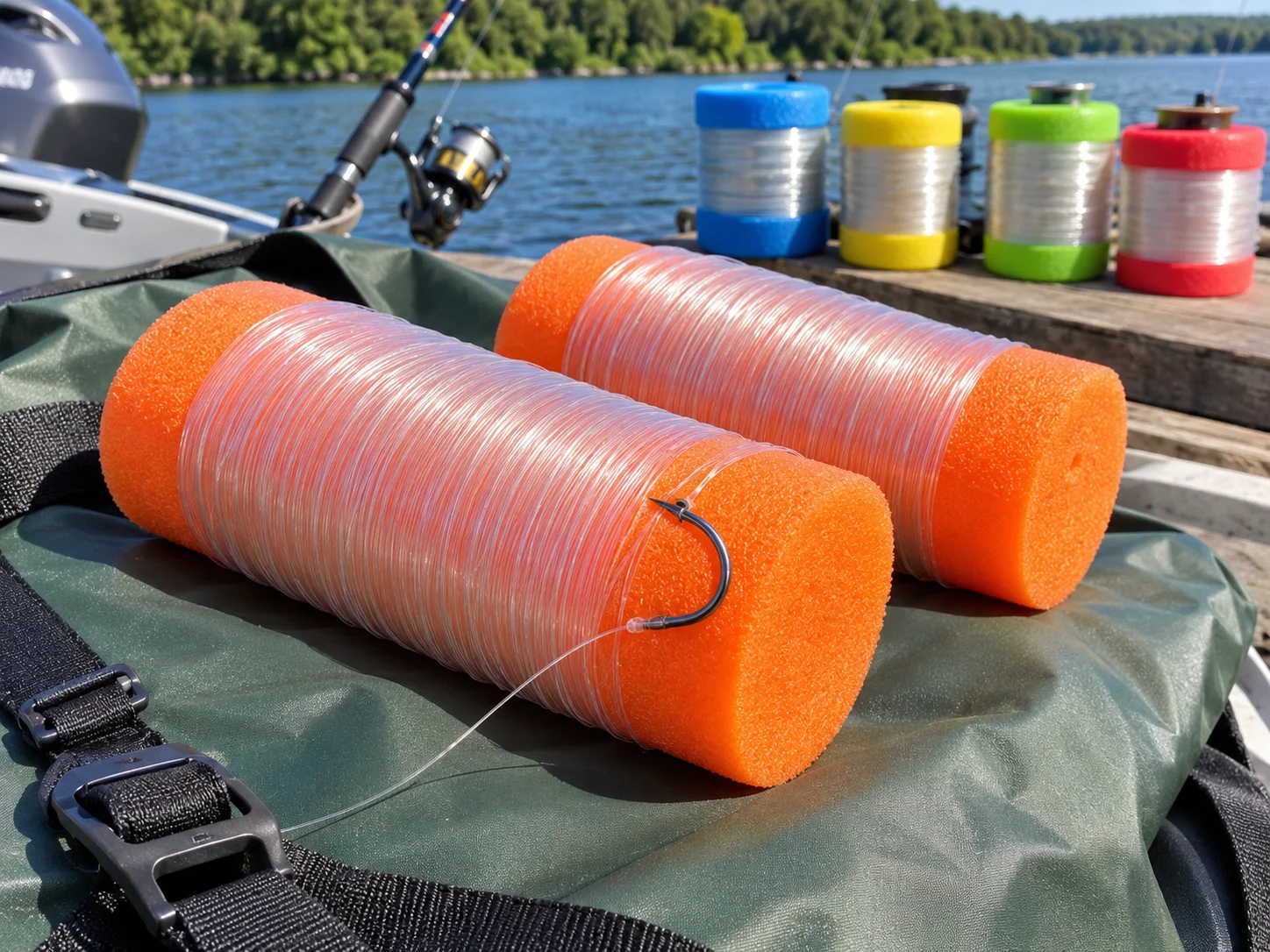
Cut a six-inch section from a standard foam pool noodle. The foam is buoyant, grippy in wet hands, and soft enough that you can press a hook point directly into the surface without a keeper notch. Wind 50 to 100 feet of monofilament around the outside of the foam in neat, touching wraps. The foam grips the line well enough to prevent loose coils from slipping off during transport.
This build is popular in multi-handline setups where anglers run several lines simultaneously from a dock or anchored boat. Because each spool costs essentially nothing to make, you can rig four or five of them with different baits without worrying about losing gear. The foam’s color is visible at a distance, which matters when you’ve set multiple lines along a bank.
The spool isn’t the most packable option on this list in terms of raw dimensions, but a six-inch noodle section compresses slightly and fits lengthwise along the inside of a dry bag or alongside a sleeping pad roll on a pack’s exterior. For warm-water fishing from a fixed position, it’s the fastest rig to deploy and retrieve of any project here. No knots on the spool itself, no moving parts, nothing to break.
5. Yo-Yo Reel Module in a Dry Pouch
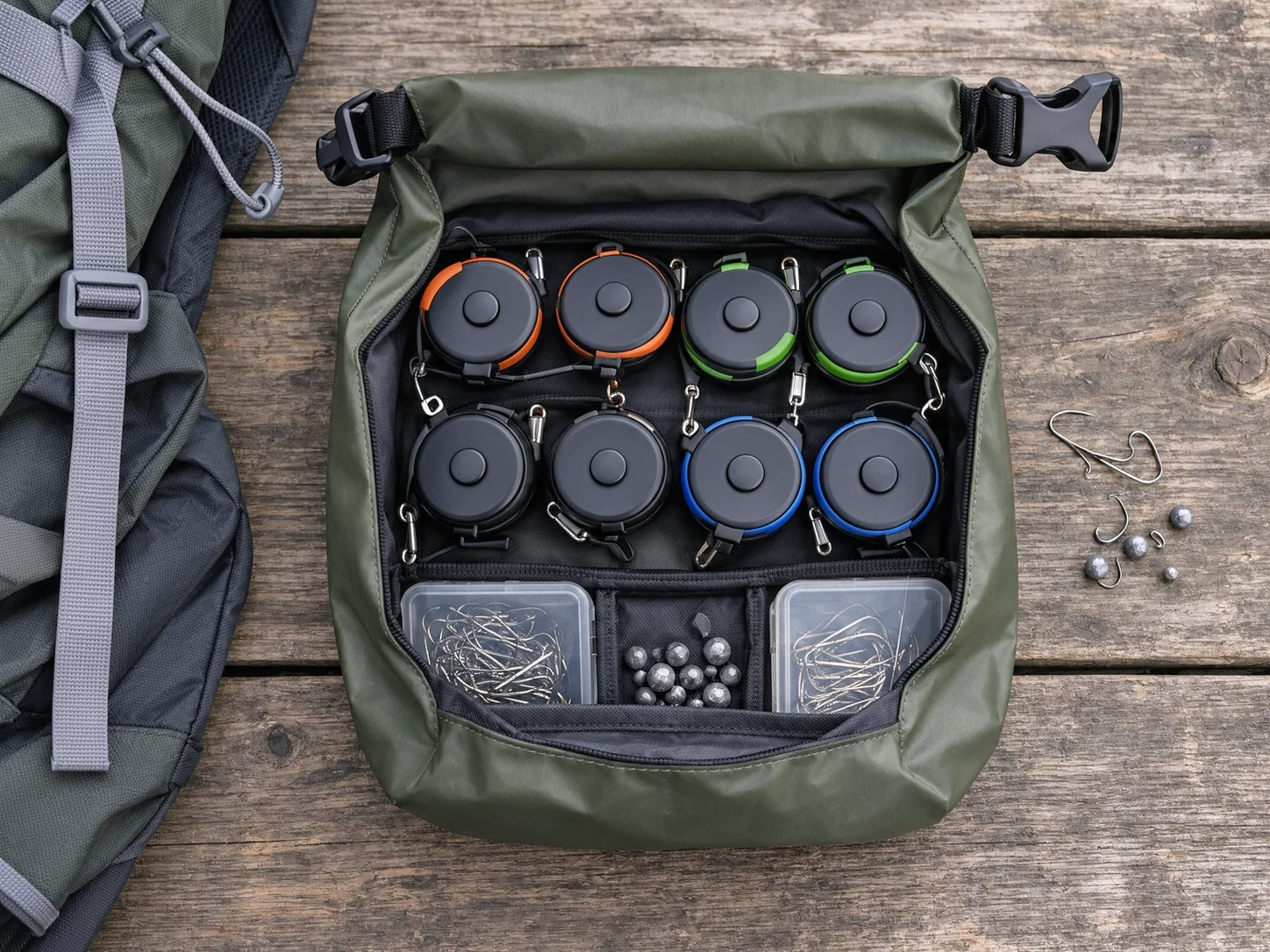
Yo-yo reels are spring-loaded automatic fishing reels designed to hang from a branch or bank stake and strike automatically when a fish takes the bait. They’ve been sold for decades under names like the Mechanical Fisher, and a pack of six retails for well under ten dollars. What’s less documented is how well they work as hand-operated spools when you remove them from their hanging context and pack them loose.
The spring mechanism means the line always retracts to a consistent tension, which eliminates the tangled-coil problem that plagues basic stick winders. Drop six or eight of them into a small roll-top dry pouch with a selection of hooks and split-shot, and you have a multi-line packable system that weighs about four ounces total. Content creators who demonstrate multi-handline setups for catfish and carp regularly use exactly this configuration.
One caveat: the automatic strike feature is illegal for unattended fishing in many U.S. states. When using yo-yo reels as hand-operated spools rather than set lines, that regulation doesn’t apply, but check local rules before hanging them. For backpacking trips where fishing is secondary to the hike, the yo-yo pouch module is one of the most capable setups per ounce on this list.
6. Paracord-Wrapped Hardwood Toggle
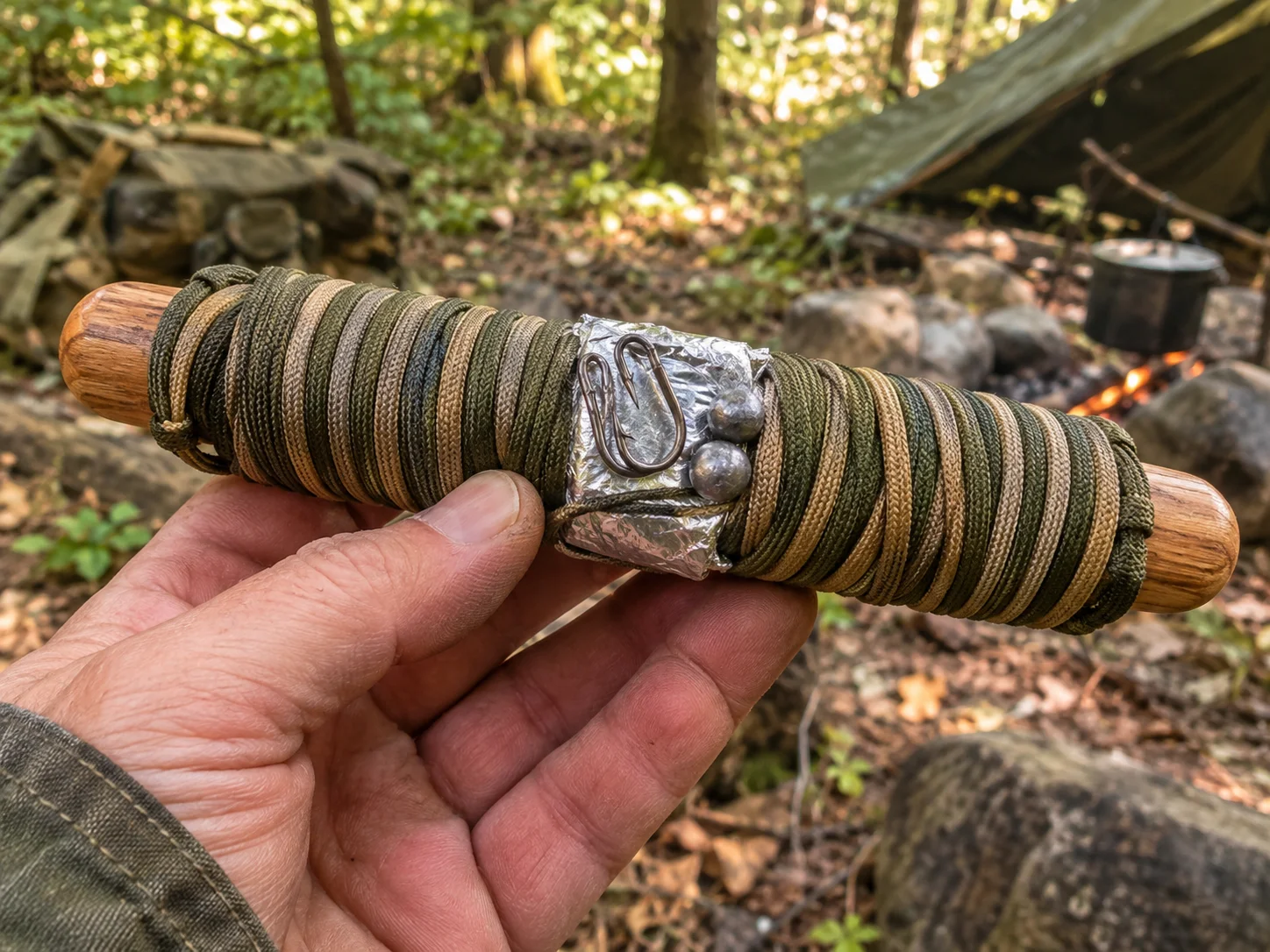
This build has the longest history of any project here. A smooth hardwood dowel, cut to about four inches and sanded round at both ends, wrapped with 50 feet of braided or twisted nylon line, is a fully functional handline that bushcraft instructors and survival educators have documented in field guides going back decades. The paracord-wrapped version adds a grippy outer layer that doubles as emergency cordage if you’re in a true survival situation.
Wrap the toggle by starting at the center and working toward each end in tight, alternating passes. The finished shape looks like a cocoon or a small barrel. Secure the working end of the fishing line under the last few wraps so it can’t pull free. Terminal tackle, two or three hooks and a couple of sinkers, tucks into a small folded square of aluminum foil crimped around the toggle’s midsection.
The foil packet trick keeps tackle organized and adds almost no weight. Ultralight backpacking guides that recommend handlines over conventional rods almost always specify a variation of this toggle design because it’s the easiest to explain and the hardest to break. No plastic parts, no springs, nothing to corrode. If you’re building a fishing kit for a pack that gets heavy use or hard weather, this is the most reliable option here. Sand the toggle from any dense hardwood scrap: oak, maple, and osage orange all work. The finished rig fits in a shirt pocket.
Choosing Materials and Line for Any of These Builds
The line choice matters more than the spool type for most of these projects. Monofilament is forgiving, cheap, and easy to handle with bare hands, which is why it appears in beginner handline guides and commercial pocket kits alike. Braided line stores more capacity in less space and has no memory, meaning it doesn’t coil after sitting wound for weeks. The tradeoff is that braid cuts skin more readily under load. For the pill bottle and hand caster card builds, braid is worth using. For the foam noodle and toggle builds, where you’re likely handling a lot of line by hand during retrieval, mono is safer.
Hook selection follows the same logic as any other fishing. Circle hooks reduce gut-hooking in catch-and-release situations and tend to set themselves without a hard strike, which suits handline fishing well since you feel the take directly through the line. A size 2 or 1/0 circle hook handles most panfish, trout, and bass applications. For carp or catfish with the yo-yo module, go up to 2/0 or 3/0.
New portable handline reels with integrated tackle storage compartments have come to market in late 2026, and several of them borrow directly from the pill-bottle and PVC-pipe patterns described above. If you’d rather buy a finished version as a starting point and modify it, those products are worth examining. But for cost and customization, the DIY builds remain the better choice for most anglers.
Weight discipline is the other variable worth tracking. A complete handline rig for a backpacking trip should weigh no more than three ounces, including line and terminal tackle. All six builds on this list hit that target when loaded conservatively. The foam noodle spool is the heaviest at around two ounces for the spool alone, but it also carries the most line and handles the roughest use.
Conclusion
Of the six projects here, the hand caster card is the best starting point if you’ve never built a handline before. It requires no tools beyond scissors, costs nothing if you have scrap HDPE, and produces a finished rig in under ten minutes. Once you’ve used it a few times and understand how much line depth and casting distance you actually need for your specific water, you’ll know which of the other five builds is worth your time next.