Rod and Reel Storage Solutions That Prevent Tangles and Protect Your Investment
A mid-grade spinning combo costs $150. A quality offshore setup can run past $1,500. Yet most anglers toss their gear in a truck bed or lean rods against a garage wall, then wonder why guides crack, lines tangle into nests, and reels get dinged. Proper rod and reel storage is not a luxury upgrade; it is the cheapest repair bill you will never pay. These 6 rod and reel storage solutions that prevent tangles and protect your investment cover every situation from the garage to the boat to the highway, so you can match the right system to how and where you fish.
Disclosure: This post contains affiliate links. As an Amazon Associate, we earn from qualifying purchases, and at no extra cost to you.
1. High-Capacity Floor Rod Racks for Home Storage
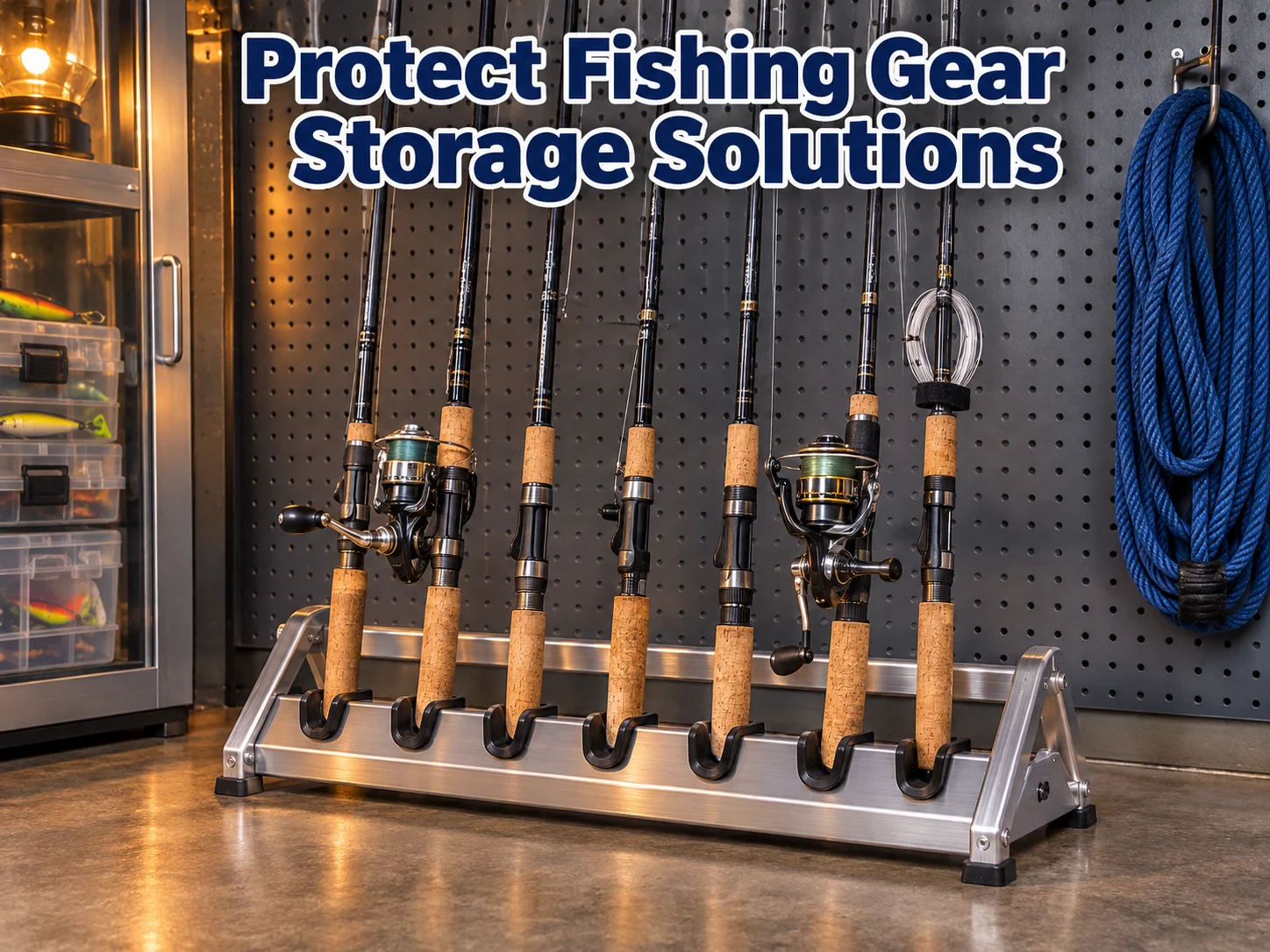
Floor racks are the simplest solution for anyone storing more than four or five rods at home, and the capacity numbers have grown considerably. Current aluminum floor racks from manufacturers like Mud Hole hold up to 24 rod-and-reel combos, each in its own dedicated slot. Old Cedar Outfitter’s round rack, available through Fleet Farm, holds 15 combos in a circular footprint that fits neatly in a corner. Rush Creek’s 16-rod round stand is another widely available option found in major retail assortments.
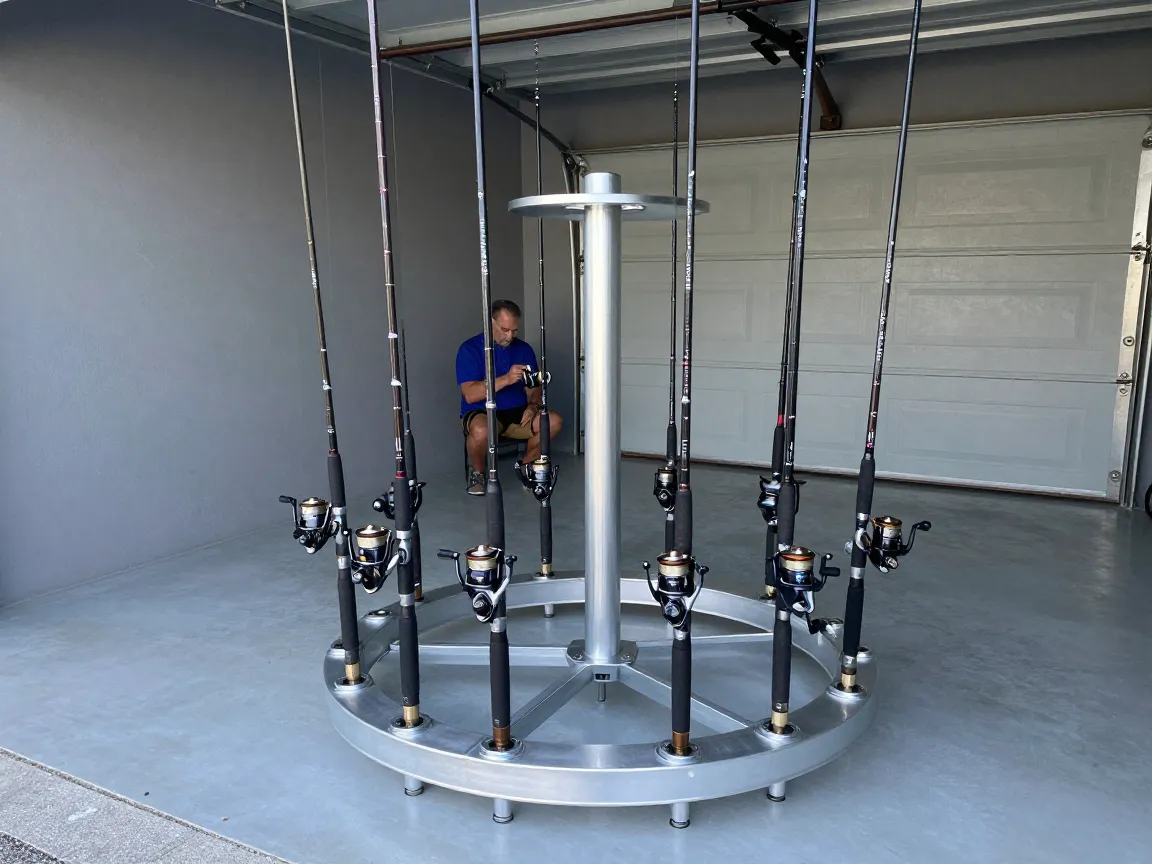
The core advantage of a dedicated slot system is physical separation. When every rod sits in its own cradle, lines cannot cross, rod tips cannot knock together, and reels do not press against each other’s frames. That matters most during the off-season, when gear sits untouched for weeks or months and unnoticed contact damage adds up quietly.
One practical point that buying guides consistently flag: saltwater rods and large offshore reels take up more lateral space than a freshwater ultralight combo. A rack rated for 24 rods may realistically hold 14 or 15 heavy saltwater setups. If your collection skews toward bigger gear, buy a rack with more slots than you think you need rather than crowding rods into slots designed for lighter tackle. Overcrowding defeats the entire purpose of individual separation.
2. Furniture-Style Rod and Reel Cabinets
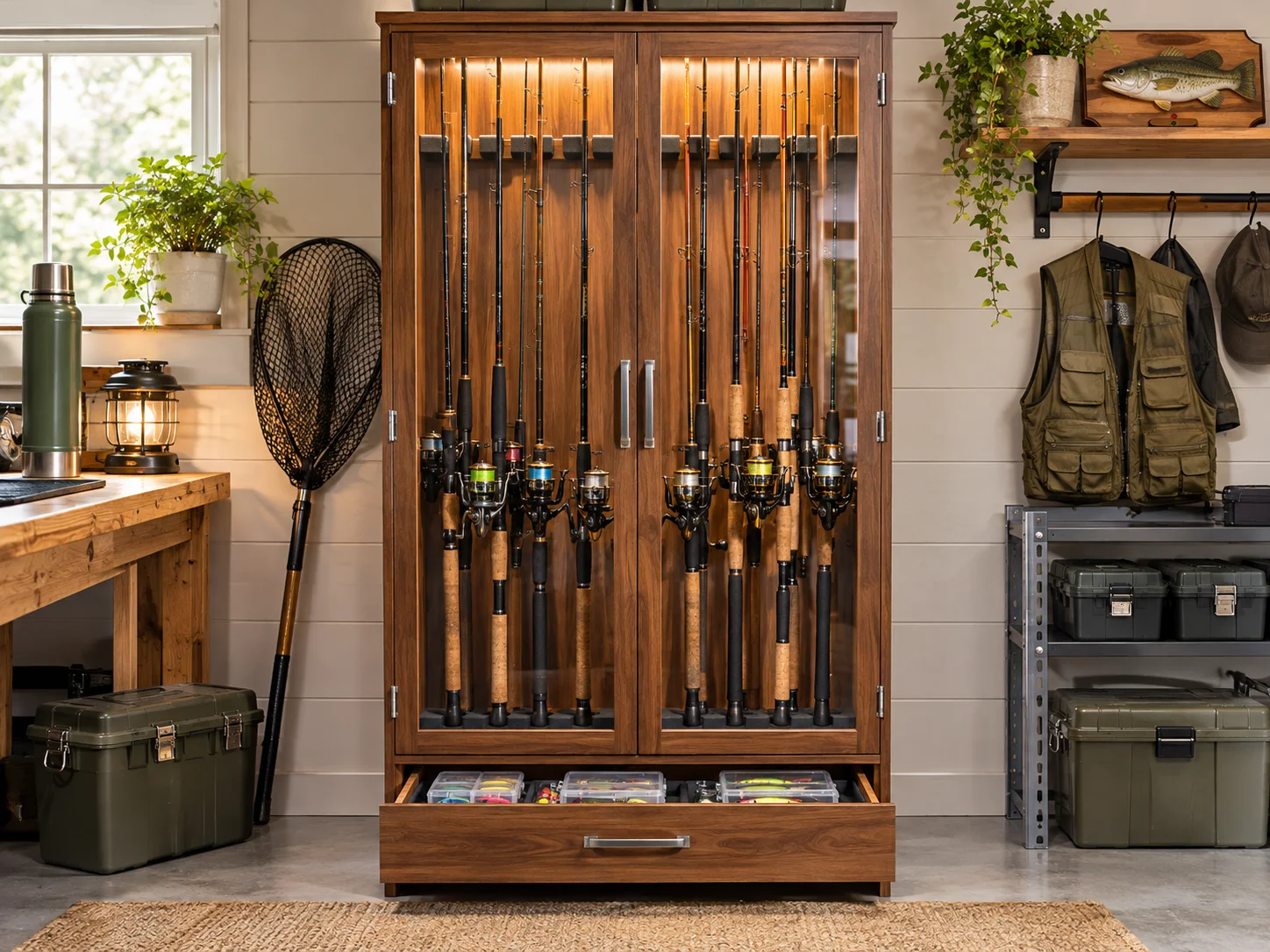
The furniture-style storage cabinet is a newer category, and it solves a problem that open floor racks cannot: dust, UV exposure, and casual contact from people walking through a garage or storage room. A dual-side vertical fishing storage cabinet released in mid-2026 uses soft rubber anti-scratch grommets at each rod slot, translucent glass doors that let you see your gear without opening the cabinet, and an integrated tackle drawer at the base. The whole unit functions as a single piece of furniture rather than a rack bolted to a wall.
The rubber grommets deserve attention because rod blanks, especially graphite ones, are more fragile than they look. A thin graphite blank can develop a hairline fracture from repeated contact with a metal or hard plastic edge, and that fracture only shows itself when the rod loads under a heavy fish. Soft grommets eliminate that failure mode entirely.
The glass-door design also protects reels from airborne dust and salt in coastal garages, which causes corrosion on reel components over time. If you have invested in a matched set of rods and reels worth several hundred dollars per combo, keeping them in an enclosed cabinet rather than on an open rack is a straightforward way to extend their service life. The tradeoff is footprint and cost: furniture-style cabinets take more floor space and cost significantly more than a simple floor rack, so they make the most sense for dedicated fishing rooms or organized garage setups where aesthetics and protection both matter.
3. Specialized Racks for Bent-Butt and Big-Game Rods
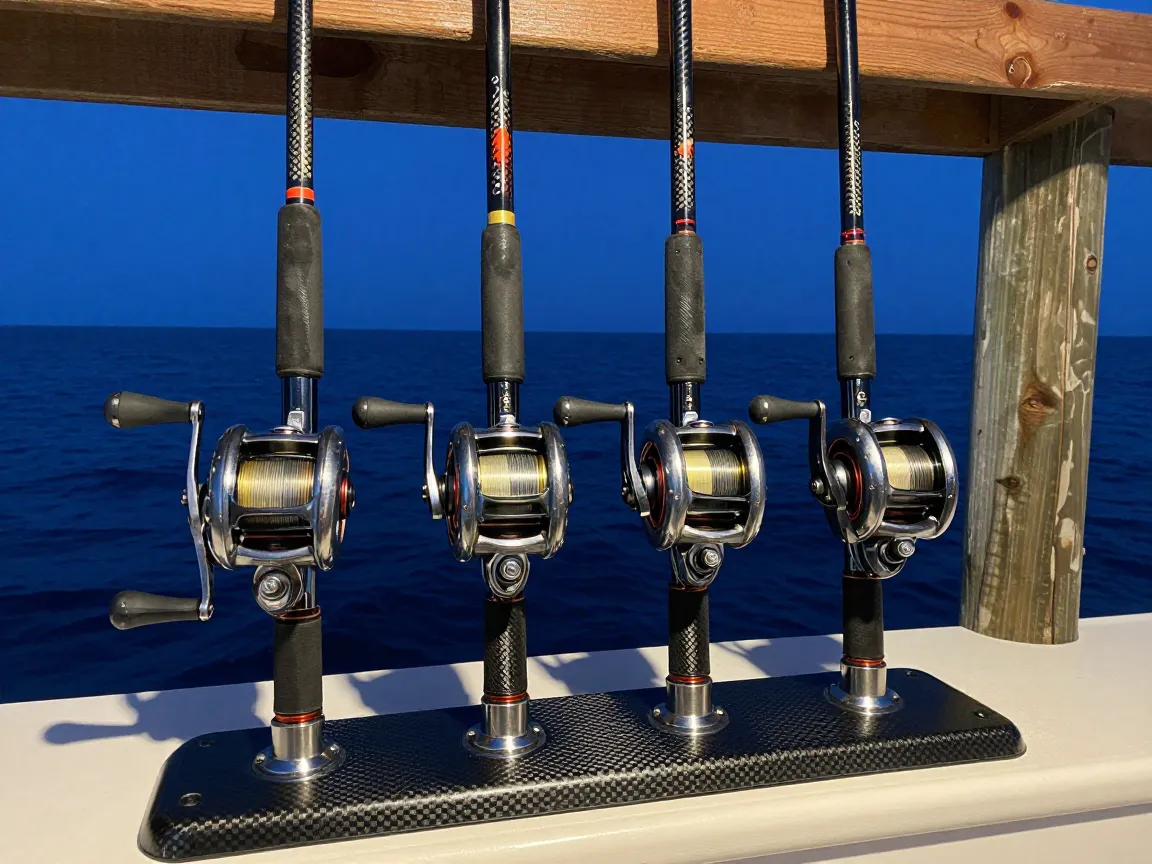
Standard floor racks and wall mounts are designed around straight-butt rods. Bent-butt rods used in offshore trolling have a curved grip section that simply does not sit correctly in a straight slot, and forcing them in places stress on the blank and the reel seat. Connley Fishing produces purpose-built bent-butt rod racks specifically for this category of gear, with cradles shaped to match the curve of the butt section.
The investment argument is straightforward here. A matched bent-butt rod and two-speed conventional reel for bluefin or billfish trolling can run well past $2,000. Storing that setup in a rack not designed for its geometry means the rod rests on a stress point rather than on the reinforced butt section, which can cause slow deformation or cracking over long storage periods. A heavy reel hanging at an angle also puts torque on the reel seat.
Dedicated big-game racks also typically display rods vertically with the reel facing outward, which keeps reel handles and drag knobs from pressing against anything. That display orientation is not just aesthetic: it makes it easy to inspect gear before a trip, check drag settings, and confirm that nothing has shifted or corroded since the last outing. For anglers running multiple offshore setups, this category of rack is not optional equipment.
4. Wall-Mount and Modular Rack Systems
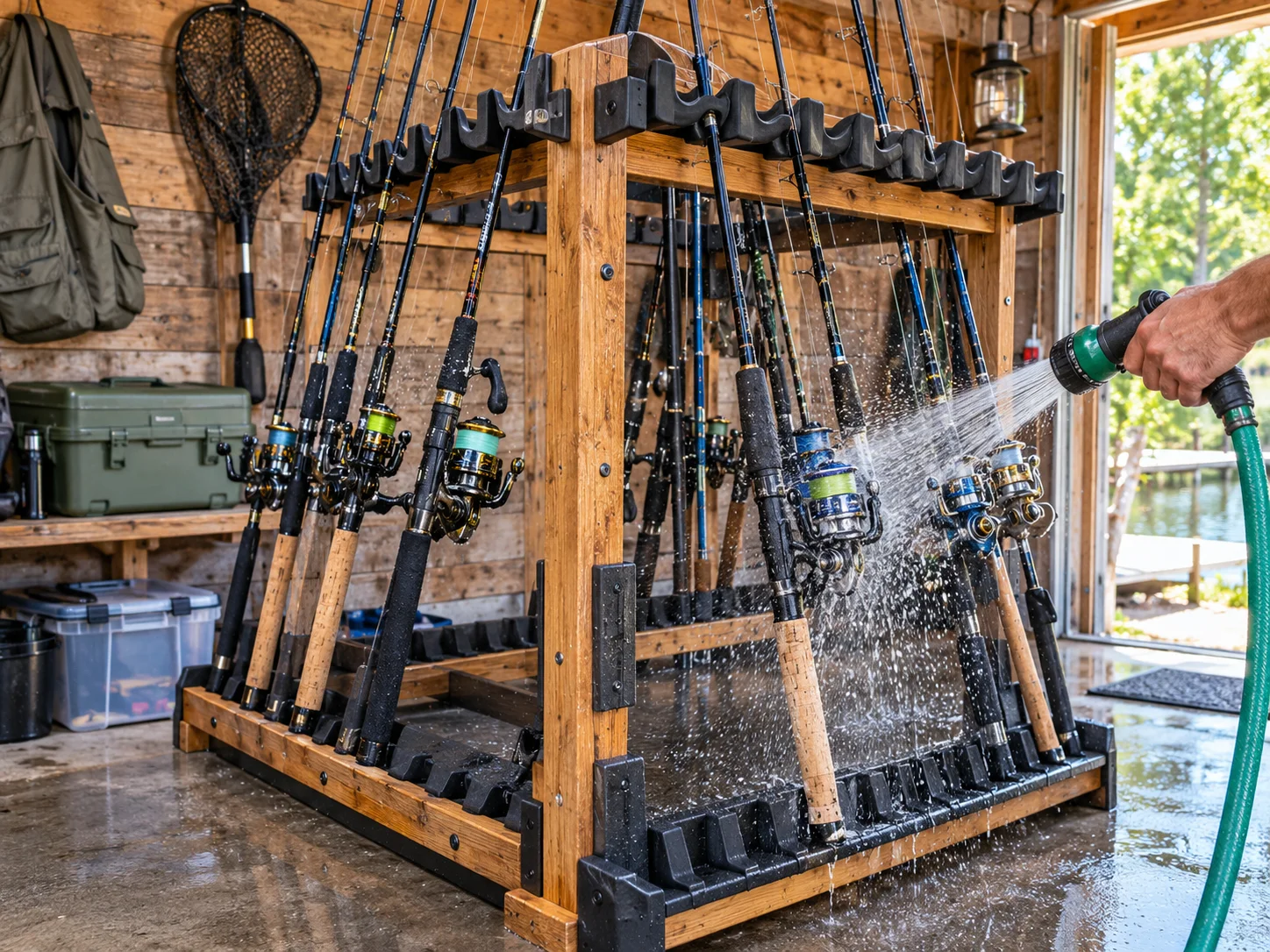
Wall mounting moves rod storage off the floor entirely, which matters in garages and fishing shacks where floor space is limited. Okuma’s 16-piece mountable rod rack, updated in late 2026, supports both single-sided and double-sided configurations, so you can store rods back-to-back against a wall or in a freestanding island configuration. The system also allows you to wash rods and reels while they remain seated in the rack, which reduces the number of times you handle each rod and lowers the chance of an accidental drop during post-trip rinsing.
Washing in the rack sounds like a minor convenience, but it has a real maintenance benefit. The standard alternative, pulling rods out, rinsing them over a bucket or at a hose bib, and re-racking them, means handling each rod two extra times per wash. Over a full season, that adds up to dozens of additional handling events, each one a small opportunity for a tip to clip a shelf edge or a reel to bang against something.
The modular nature of systems like Okuma’s also means you can expand capacity by adding sections rather than replacing the entire rack. That is a better long-term value for anglers who expect their collection to grow. Wall racks keep rods stored horizontally or at a slight angle, with tips supported to prevent blank sag over time, which is a real concern for fiberglass rods stored vertically for extended periods without tip support.
5. Interior Vehicle Rod Holders and Rooftop Carriers
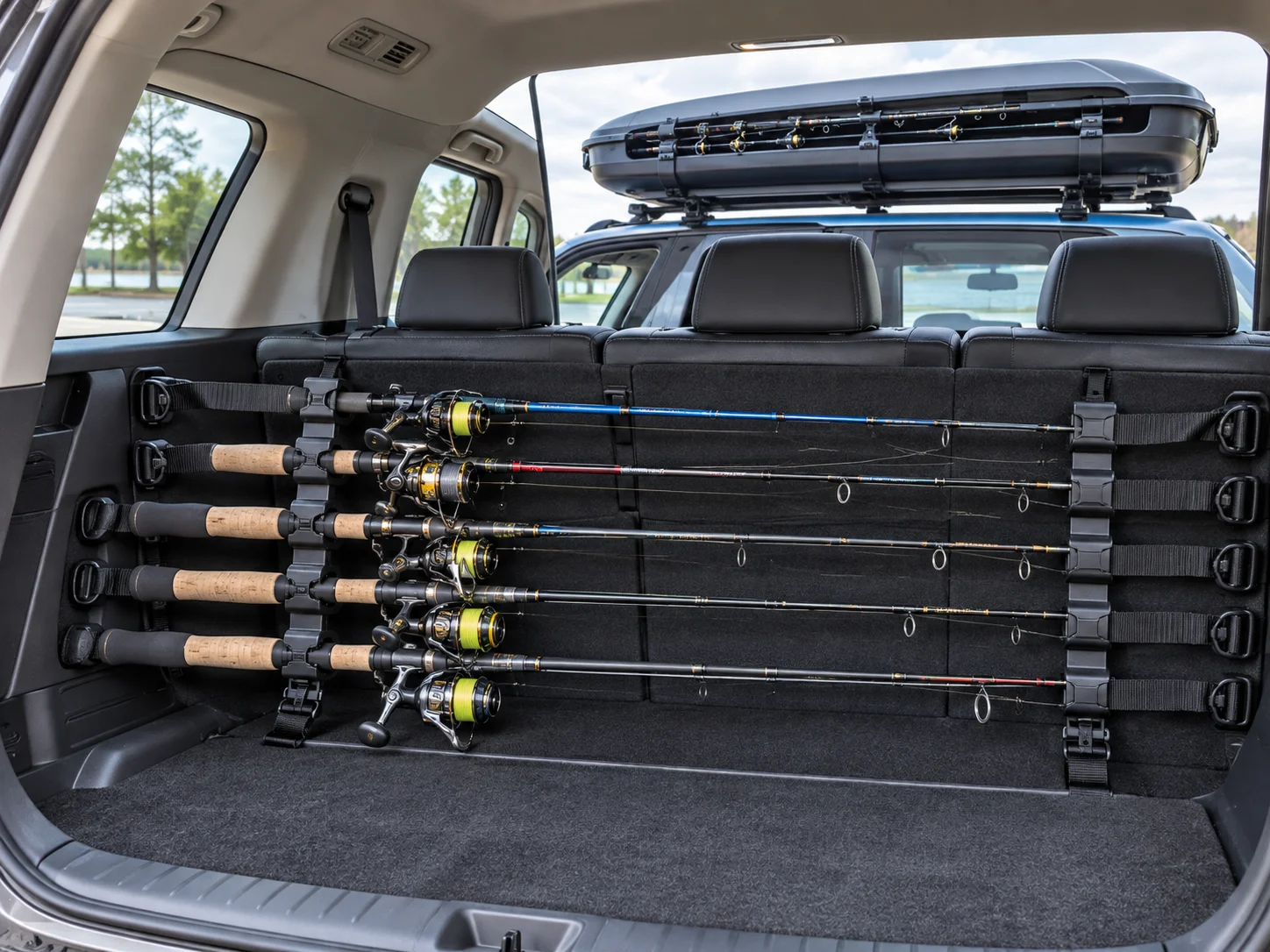
Transporting rigged rods is where most line tangles and tip breaks actually happen. A quick-clip interior rod rack system released in October 2026 uses adjustable telescopic nylon straps and multiple plastic clips to mount inside SUVs, vans, and trucks. Installation takes under a minute, and the system holds up to six full rod-and-reel combos secured at two points each. Each rod stays in its own clip position, preventing the lateral movement that causes lines to wrap around neighboring rods on a bumpy road.
The interior mount is the lower-cost option and works well for shorter rods, but it occupies cabin space and limits passenger capacity. For longer rods or larger loads, rooftop rod carriers are the practical alternative.
Yakima’s DoubleHaul and TopWater carriers, available through specialty rack retailers, hold four to eight rigged rods up to roughly eight feet long in an enclosed or semi-enclosed configuration mounted to a roof rack. The enclosed design protects reels from road debris and highway wind pressure, both of which can force grit into bail systems and drag mechanisms. The specific advantage of traveling with rods fully rigged, as these systems allow, is that you skip re-rigging at the water, which saves 15 to 30 minutes per trip and eliminates the shoreline errors that come with rushing a knot in low light.
Rack Warehouse and similar multi-brand retailers carry systems from Yakima, Thule, Portarod, and Trxstle with capacities from two to eight rods, so you can match the carrier size to your actual load rather than buying more capacity than you use. The key specification to verify before purchasing any rooftop carrier is maximum rod length: most systems cap at eight feet, which excludes some two-piece surf rods and long fly rods when assembled.
6. Protective Hard Cases and Rod Vaults
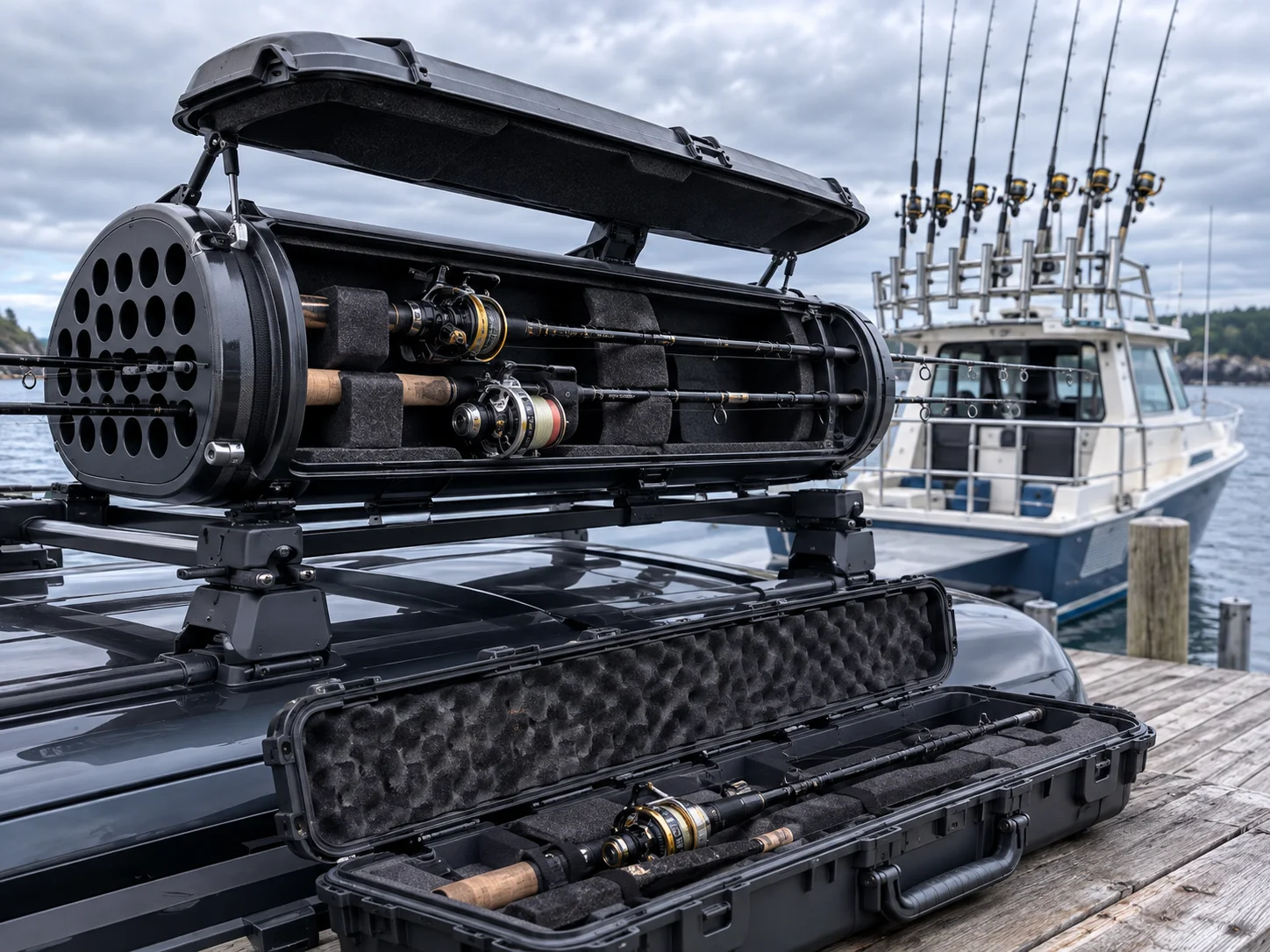
Floor racks, cabinets, and vehicle carriers handle most storage and transport situations, but none of them protect a rod from a direct impact, an airline baggage handler, or the inside of a charter boat’s rod locker during rough seas. That is the gap filled by protective hard cases and rod vaults.
Thule’s RodVault uses 46 mm openings, a padded reel box, and spring-loaded access to keep rods separated inside a hard shell that mounts to a roof rack. The 46 mm opening is wide enough to accept rods with large guides or bulky reel seats without forcing them, which matters because squeezing an oversized guide through a tight opening can bend it out of alignment. The padded reel box keeps the reel from bouncing against the case walls, which is where reel foot scratches and bail damage typically originate during transport.
Plano and Mud Hole produce hard rod cases designed for checked luggage and boat-to-boat transport, with foam-lined interiors that keep rods immobile regardless of how the case is oriented. Plano’s fly rod and reel cases use the same principle at a smaller scale for the specific geometry of a fly rod and large-arbor reel. These are not everyday storage solutions; they are for situations where a rod will be fully out of your control for a period of time.
Millennium Marine’s Spyderlok R300, announced in late 2026, addresses the boat-based version of this problem. It carries up to eight rods on a boat using anodized aluminum construction and a patented Spyderlok tooth-style adjustment that locks each rod in its own position. When running between fishing spots at speed, an unsecured rod can slide, tip can strike a cleat or gunwale, and a large reel can bounce out of a loose holder entirely. The R300’s locking mechanism prevents all of that while keeping different rigged setups organized so you can grab the right rod quickly when fish show up.
For any hard case or vault, the useful question before buying is whether the reel stays on the rod inside the case or needs to be removed. Cases that accommodate the reel on the rod save assembly time and reduce the chance of a reel seat wearing unevenly from repeated removal and reinstallation. Thule and Plano’s higher-end cases both accommodate reel-on storage; cheaper cylindrical tubes typically do not.
Conclusion
The right storage system depends on where your gear spends most of its time. A furniture-style cabinet or high-capacity floor rack handles home storage. A modular wall rack solves space constraints and simplifies maintenance. Bent-butt racks address a specific geometry problem that general racks cannot. Vehicle-based systems, interior or rooftop, determine whether rods arrive at the water intact and rigged. Hard cases handle the situations where impact protection matters more than convenience. No single product covers all six situations equally well, so the practical next step is to identify which part of your current routine is causing the most damage, start there, and build outward.