Ducks Unlimited Sweatshirt Picks For Warmth In The Blind
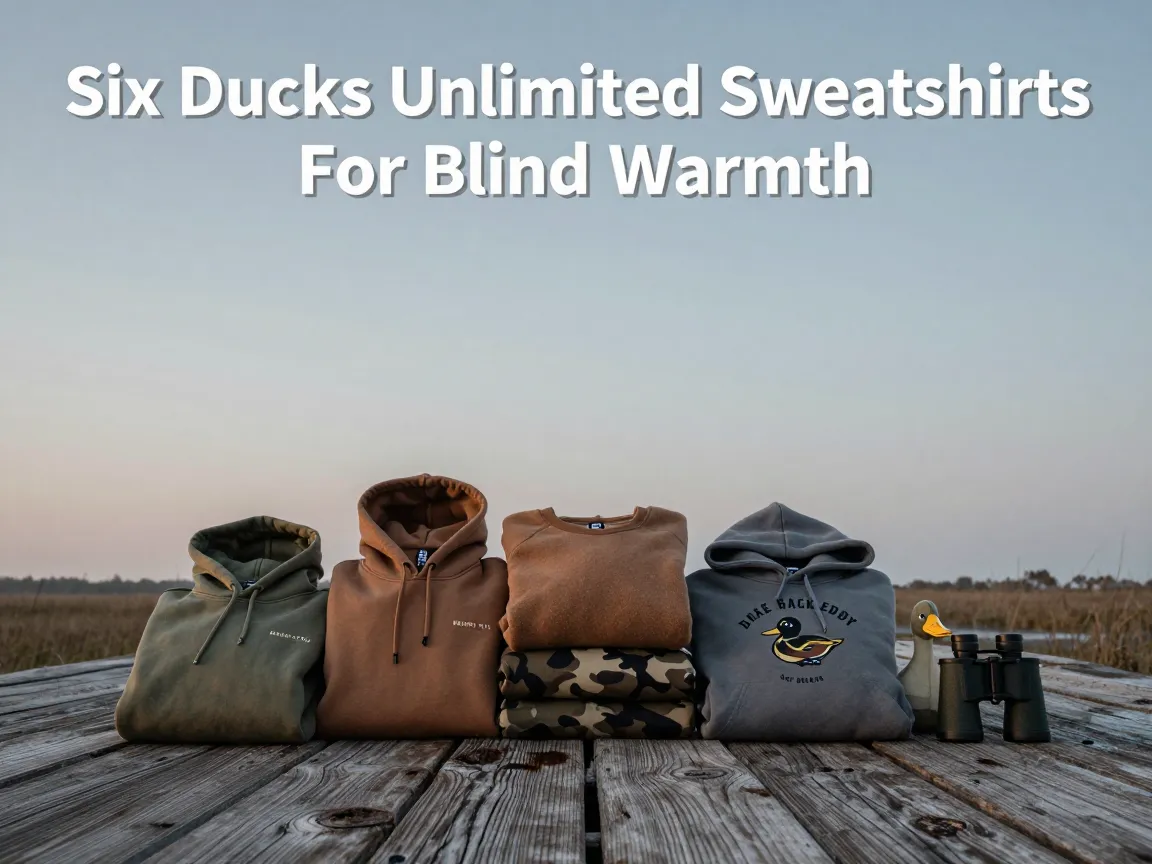
Cold water pulls heat from a hunter’s body roughly 25 times faster than cold air at the same temperature, a fact that makes the difference between a productive morning in the blind and a miserable one almost entirely about what you’re wearing. These 6 Ducks Unlimited sweatshirt picks for warmth in the blind are chosen with that reality in mind, covering everything from soft cotton crewnecks suited to shoulder-season scouting to high-performance Merino blends built for genuinely brutal predawn sits.
Disclosure: This post contains affiliate links. As an Amazon Associate, we earn from qualifying purchases, and at no extra cost to you.
Key Takeaways
- No single sweatshirt works in isolation, DU’s own layering guidance puts a sweatshirt as the midlayer between a moisture-wicking base and a wind-blocking shell.
- Fabric choice drives performance: cotton stays comfortable in cool, dry conditions; wool blends and synthetics manage moisture when you’re moving or sweating into the blind.
- Several DU-licensed sweatshirts double as camp and lifestyle wear, which extends their value outside the actual hunt.
- Price points across these six picks range from roughly $49 to $75, keeping them accessible without sacrificing function.
- Quilted insulation built into a midlayer reduces pack bulk compared to adding a separate insulating vest.
1. Drake Waterfowl Back Eddy Embossed Hoodie
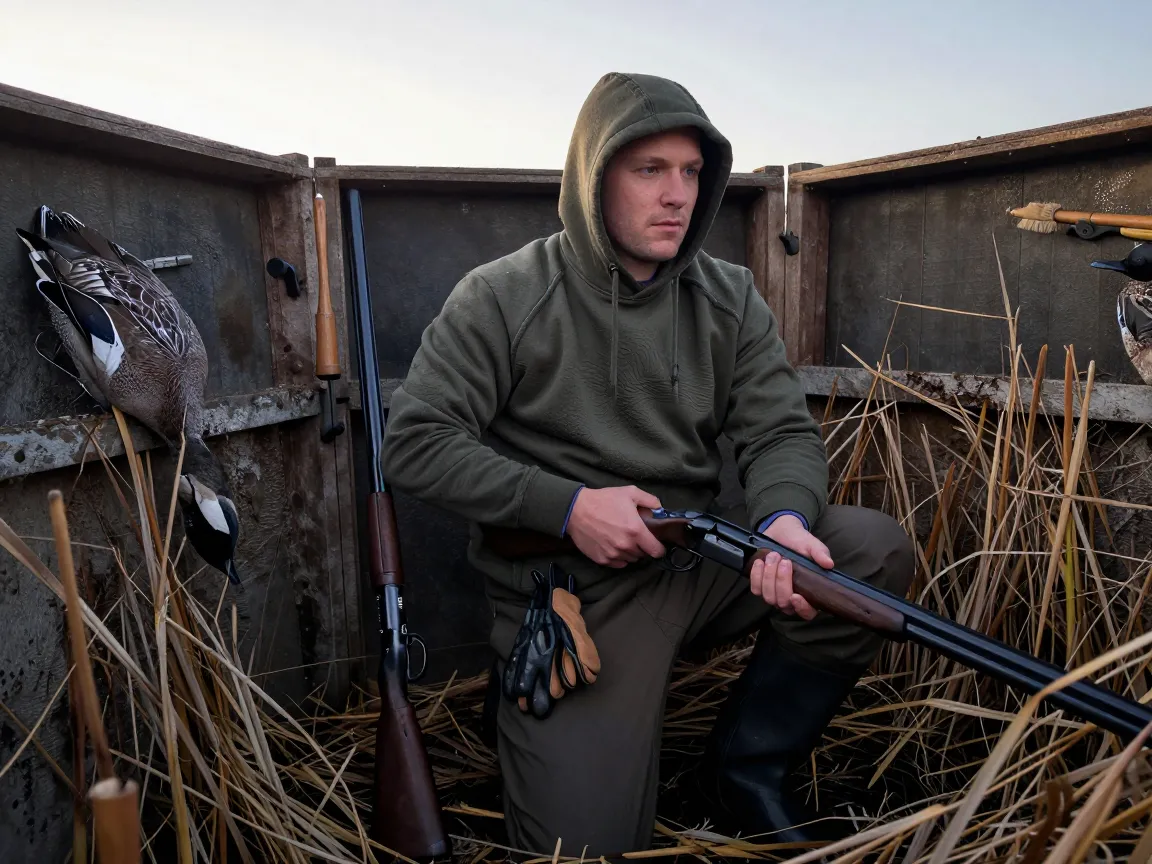
The Drake Back Eddy sits at the core of what DU’s 2024 gear roundup recommends for blind layering: a midweight hooded sweatshirt with enough stretch to move freely but enough structure to anchor a layering system. The fabric includes built-in stretch materials that don’t bind when you’re pulling on waders or mounting a gun, and the lined hood adds a noticeable amount of head insulation without the bulk of a separate beanie. The kangaroo front pouch is a practical detail, it keeps hands warm during the decoy wait and stores a call or gloves within easy reach.
What makes the Back Eddy worth calling out specifically is that DU positions it as a piece worn before, during, and after the hunt. That range of use matters. A hooded sweatshirt that works while you’re scouting a marsh at noon in late October and then functions as a midlayer during a 28-degree November sit earns its shelf space in a way that single-purpose fleeces don’t. The embossed texture on the face of the fabric is subtle enough that it won’t create noise against a blind’s reeds or brush.
Worn over a thin moisture-wicking base layer and under a waterproof shell, it handles most of a temperate-climate duck season without needing to be swapped out. For hunters who run warm, it works as a standalone top on cool mornings above 40°F.
2. First Lite Kiln Hoody Midweight 250 Merino-X
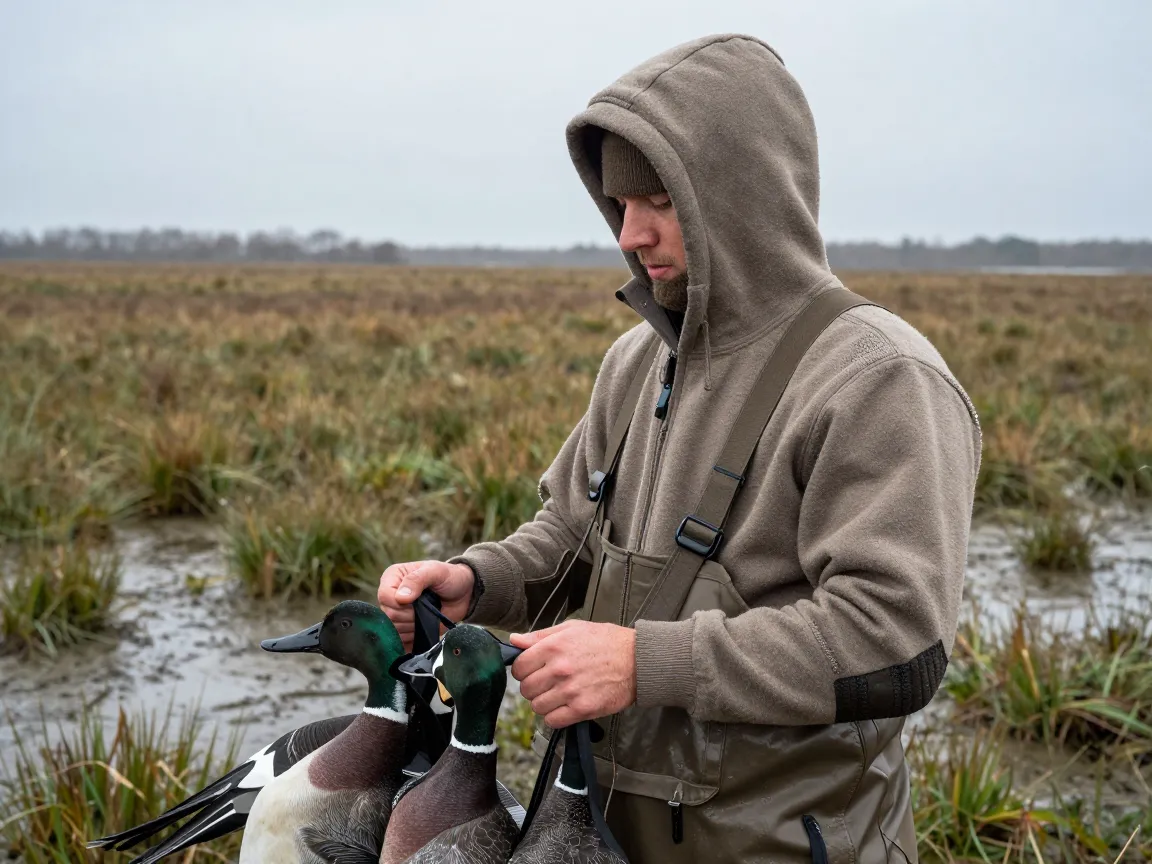
A DU field tester described the Kiln Hoody as “super comfortable” in Ducks Unlimited’s field-tested gear coverage, and that assessment tracks with what the Merino-X fabric actually delivers. The 250-weight Merino-X blend combines merino wool with a synthetic reinforcement that addresses wool’s historic weak point, durability at friction zones like cuffs and shoulders, while keeping wool’s core advantages intact.
Those advantages are specific and measurable. Merino wool regulates temperature across a wider range than cotton or standard polyester fleece. It retains warmth even when damp, which matters in a tidal marsh where humidity is constant and you may work up a sweat hauling a spread before the sit. It also resists odor buildup, a secondary benefit that reduces the amount of washing required between consecutive hunt days.
The Kiln Hoody’s versatility is worth taking seriously. The DU tester noted it functions as a base layer on colder days and an outer layer on warmer ones, which means one piece can cover a wider temperature range than two single-purpose layers. For hunters who travel light or pack a blind bag with minimal clothing room, that adaptability has real practical value. This is the most technically capable piece on this list, and its price reflects that.
3. Duck Camp Ducks Unlimited x DC Sweatshirt in Demitasse
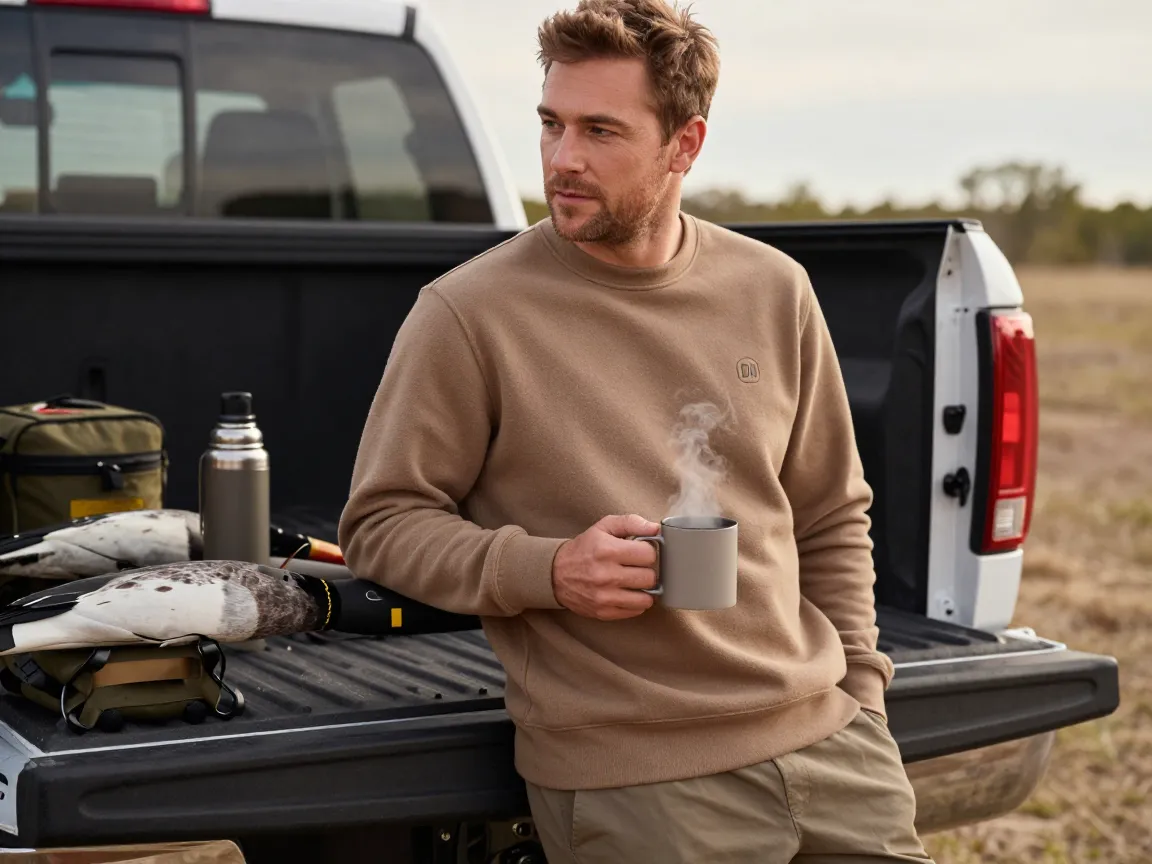
The Duck Camp collaboration with Ducks Unlimited produced a midweight cotton fleece blend that sits in a different category than technical hunting gear, and that’s intentional. The Demitasse colorway is a warm, muted brown that works in and out of the field without reading as either blaze orange casual or aggressively camo. The cotton fleece construction prioritizes all-day comfort over extreme temperature management.
“All day” is the operative phrase here. This sweatshirt is designed to keep a hunter comfortable through the extended hours that blind hunting actually involves, the predawn drive, the setup, the sit, the cleanup, and whatever follows. Pure cotton fleece won’t wick moisture as efficiently as synthetics or Merino, but on cool, dry days it performs reliably and softens with washing in a way that synthetic blends don’t.
The DU collaboration branding is understated rather than loud, which extends where you can wear this without it looking out of place. Camp, truck, and blind all work. If you’re looking for a sweatshirt that covers moderate cold from roughly 35°F to 50°F and functions equally well off the water, this is the pick.
4. Mack’s Prairie Wings Ducks Unlimited Logo Performance Hoodie
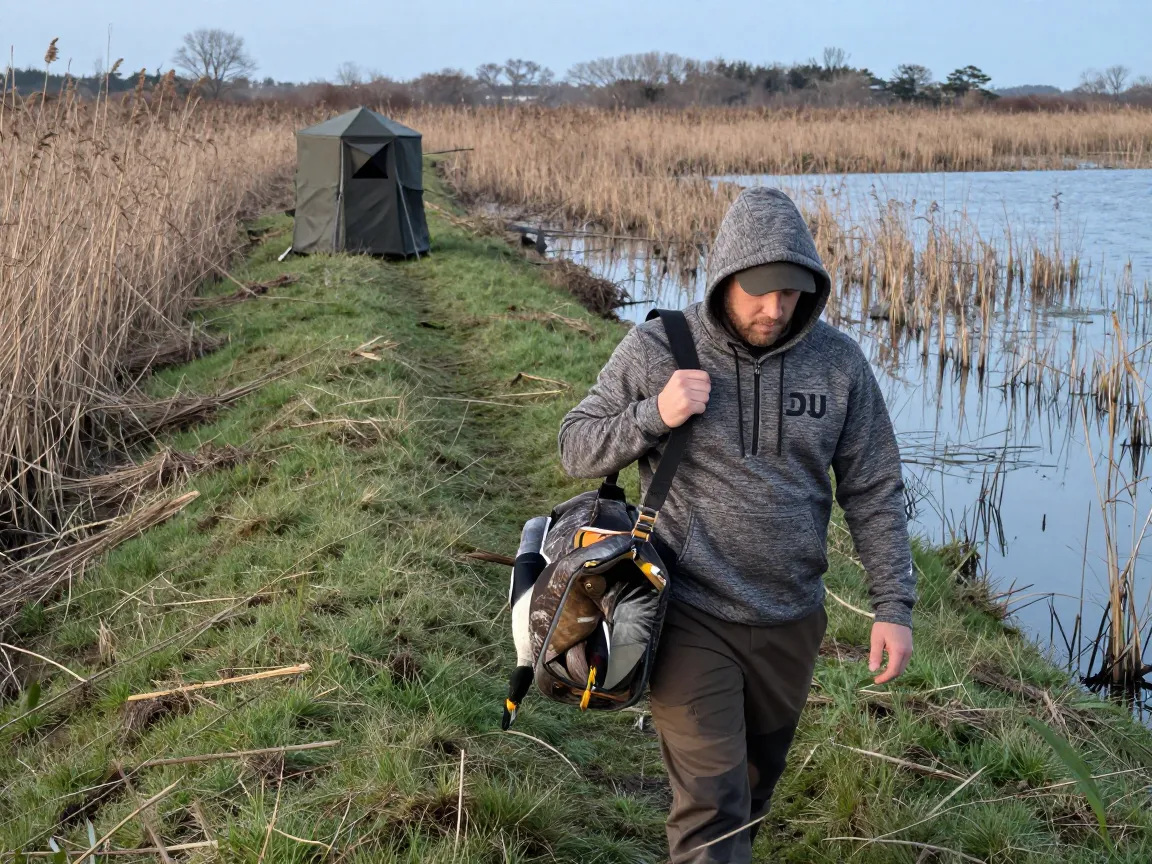
The MPW Performance Hoodie occupies a specific gap in a waterfowler’s wardrobe: it delivers breathable warmth suited to chilly blind sits and cool evenings at camp without committing to either heavy insulation or pure technical fabric. Marketed explicitly for versatility in waterfowl hunting conditions, it’s positioned as a hunt-adjacent hoodie that handles temperature regulation without overbuilding.
“Breathable warmth” is a phrase that gets used loosely in outdoor retail, but in this context it refers to a construction that allows moisture vapor to escape during moderate exertion, specifically the kind of moderate exertion involved in setting a decoy spread or walking a dike, while still holding enough warmth during a static blind sit. The hoodie’s performance fabric construction makes it a better choice than straight cotton fleece when you expect to generate heat during setup and then cool down quickly once you’re stationary.
At the price point this hoodie occupies, it competes directly with mid-tier synthetic fleece hoodies from larger outdoor brands. The DU licensing and branding add a conservation contribution to the purchase, which matters to buyers who want gear spending to support wetlands habitat. That’s not a performance claim, it’s a values alignment that DU’s audience consistently responds to.
5. Artisans Script Print Applique DU Camo Mallard Crew
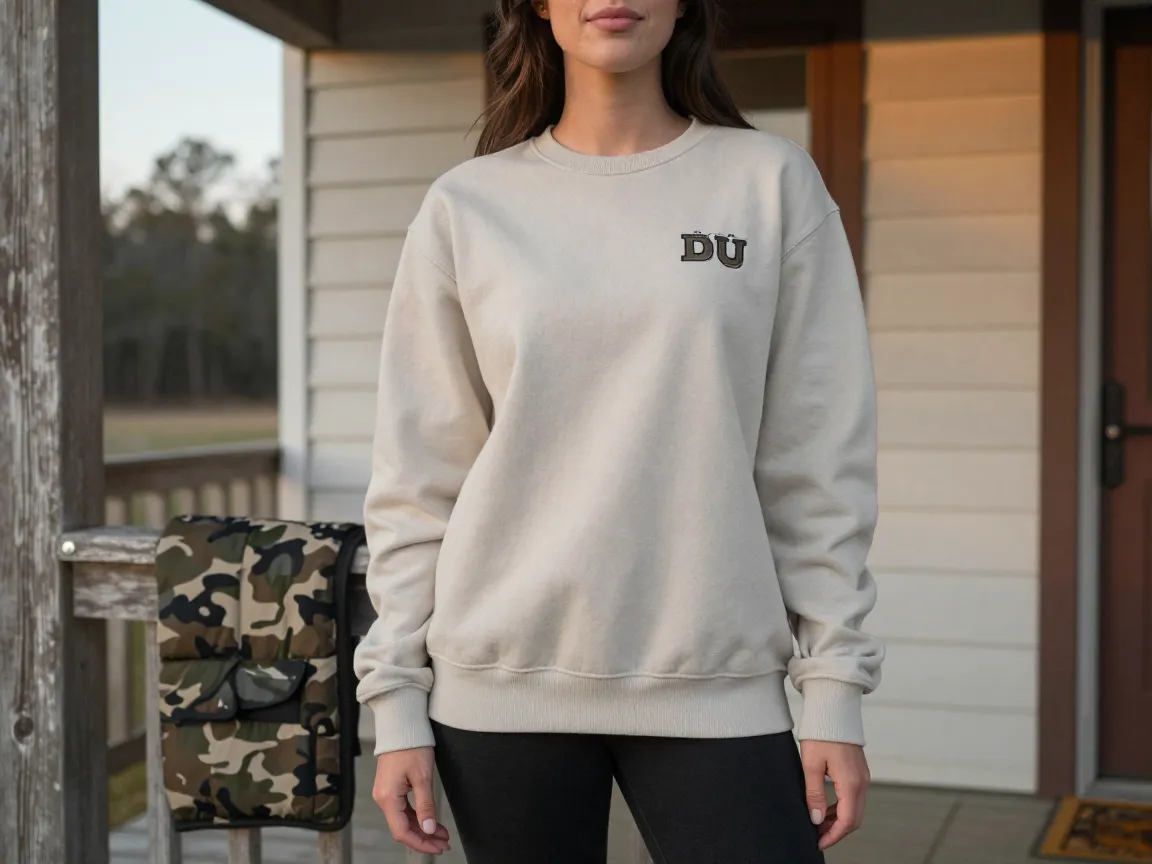
This crewneck sits at the lifestyle end of DU’s sweatshirt range, and that’s not a criticism. Ducks Unlimited’s women’s gear coverage specifically highlights it as a cotton-poly blend crewneck suited to cooler days at the camp house, which is an honest and accurate positioning. The camo mallard applique detail is decorative rather than functional camouflage, and the DU script branding makes the conservation connection legible at a glance.
Cotton-poly blends offer a practical middle ground between pure cotton’s softness and synthetic fabrics’ durability and fade resistance. The poly content, typically 60/40 or similar, reduces shrinkage and helps the crewneck hold its shape through repeated washing, which matters for a piece worn frequently around camp. The relaxed crewneck cut works as a standalone layer for temperatures from about 45°F to 60°F, and it layers under a vest or shell when it gets colder.
For female hunters specifically, DU’s gear coverage calls this out as a piece that lets hunters represent the DU mission without wearing technical apparel that wasn’t designed with women’s fit in mind. That’s a gap worth noting, women’s-specific cuts in hunting apparel remain underrepresented, and a well-fitting crewneck sweatshirt for camp use fills a real wardrobe need in that segment.
6. Ducks Unlimited Flying Ducks Hooded Sweatshirt
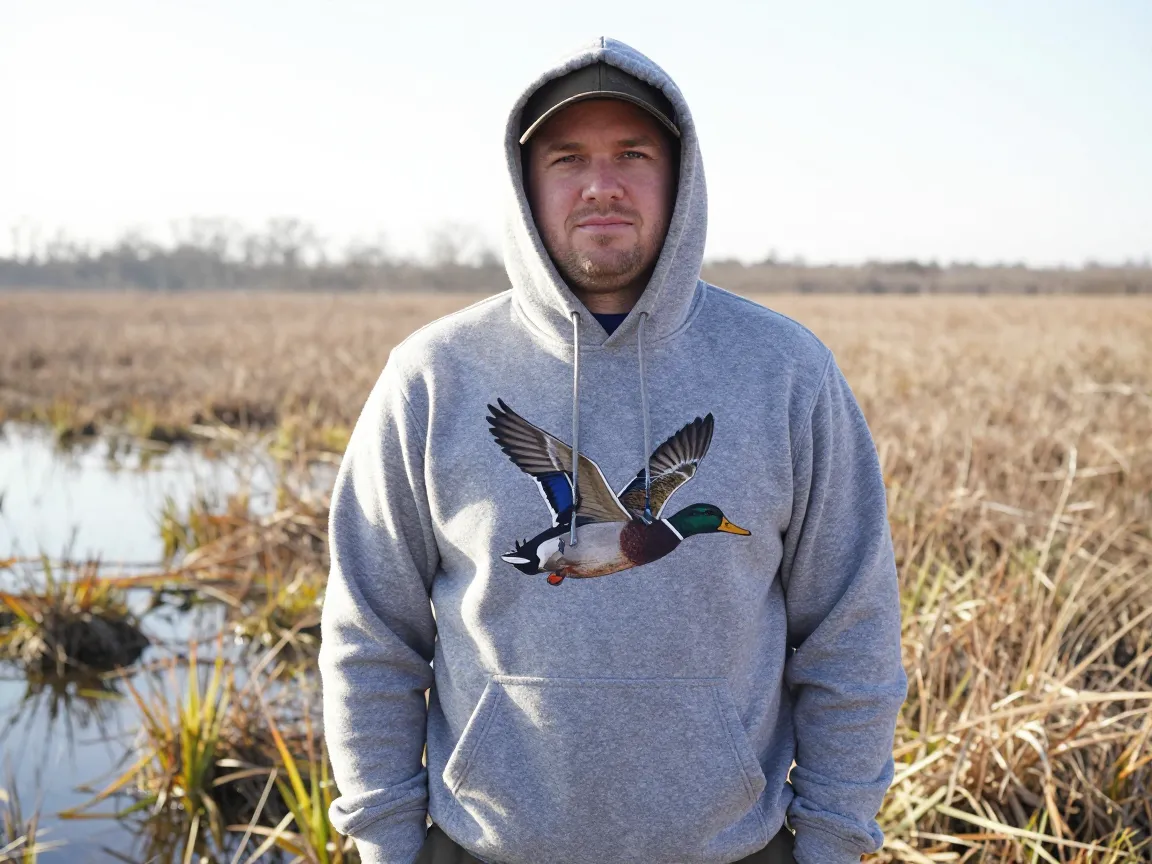
The Flying Ducks Hooded Sweatshirt is a DU-licensed everyday hoodie priced at roughly $49.99 to $51.99, which makes it the most accessible entry on this list. It’s not built for hardcore cold-weather sits in exposed marshes, but that’s not what it’s optimized for. At this price, it functions as a casual-wear hoodie that doubles as a cool-weather blind layer when conditions are mild, and it carries DU branding prominently enough to serve as a conversation piece about wetlands conservation.
The construction is standard cotton-poly fleece, which means it performs well from roughly 40°F upward when worn over a base layer. Below that threshold, you’ll want something with more insulation, either a heavier midlayer or one of the technical pieces listed earlier in this article. For early-season teal hunts, September goose mornings, or the shoulder period between summer and serious cold, this hoodie covers the range without overcomplicating the wardrobe.
Where it earns a spot on this list is in its dual role: it’s genuinely useful apparel that also supports DU’s licensing revenue, which funds wetlands conservation. For newer hunters or those building out a first blind kit on a limited budget, starting here and upgrading the technical layers over time is a sensible approach. It layers cleanly under a shell and over a base layer, which is the minimum requirement for any piece in a functional blind system.
Quick Comparison
| Sweatshirt | Fabric | Best Temp Range | Best Use |
|---|---|---|---|
| Drake Back Eddy Embossed Hoodie | Stretch synthetic blend | 28°F, 50°F | Active midlayer, all-day hunt |
| First Lite Kiln Hoody 250 Merino-X | Merino wool blend | 20°F, 55°F | Base or outer layer, serious cold |
| Duck Camp DU x DC Sweatshirt | Cotton fleece blend | 35°F, 55°F | Cool, dry days; all-day comfort |
| MPW DU Logo Performance Hoodie | Performance synthetic | 32°F, 50°F | Breathable warmth, varied exertion |
| Artisans DU Camo Mallard Crew | Cotton-poly blend | 45°F, 60°F | Camp, shoulder season |
| Flying Ducks Hooded Sweatshirt | Cotton-poly fleece | 40°F, 60°F | Entry-level, casual/mild blind use |
Layering Context: Where Sweatshirts Actually Fit
None of these six pieces work as standalone solutions below about 32°F. DU’s cold-weather guidance is consistent on this point: a thin fleece base layer goes on first regardless of temperature because it manages moisture and allows movement. The sweatshirt or midlayer goes over that, and a wind- and waterproof shell closes the system on the outside.
That framework changes how you evaluate each pick. The Merino-X Kiln Hoody earns its higher price because it works at both the base and mid positions, it’s effectively two layers in one piece on certain mornings. The Drake Back Eddy earns its place because it handles the mid position reliably across a wide temperature range. The Flying Ducks Hoodie earns its place because it handles mild conditions competently at an accessible price, without pretending to do more.
DU’s layering articles also note the fabric logic: cotton works on cool days with low exertion, while wool and performance synthetics handle colder, wetter, or more physically demanding conditions better. That split maps cleanly onto this list. The Artisans Crew and Flying Ducks Hoodie are cotton-forward pieces suited to camp and mild sits. The Merino-X and Performance Hoodie are synthetic and wool pieces suited to demanding conditions. The Drake Back Eddy and Duck Camp sweatshirt bridge those ranges.
Quilted insulation built into a flannel midlayer, another DU-highlighted piece featuring 80 grams of quilted fill, takes a slightly different approach by embedding insulation directly into the outer layer, reducing the need for a separate vest. That construction trades breathability for warmth efficiency, which makes sense on static, cold sits where you’re not generating much body heat.
Recognizing where you typically hunt, temperature range, exertion level, blind exposure, determines which of these six makes the most practical sense for your kit. A hunter running a layout blind in a Missouri River cornfield in January needs the Merino-X. A hunter doing a September teal opener in Arkansas doesn’t.
Conclusion
The right starting point depends on where your current kit is thin. If you’re missing a true performance midlayer for hard-cold mornings, the First Lite Kiln Hoody is the most capable piece on this list. If you need a reliable everyday hoodie that pulls double duty on mild blind days and around camp, the Drake Back Eddy or Duck Camp collaboration covers that range cleanly. Build from your coldest expected morning outward, that determines whether you need wool, synthetic, or cotton fleece at the core of your system.