Mens Fishing Outfits That Are Rugged, Cool, and Comfortable
Cotton kills on the water. That is not an exaggeration. A soaked cotton shirt traps cold, chafes after an hour, and takes all day to dry. Yet most men who fish occasionally are still reaching for their regular T-shirts and jeans. The difference between a forgettable trip and a great one often comes down to what you are wearing. These 6 mens fishing outfits that are rugged, cool, and comfortable cover every major fishing scenario, from a blistering summer morning on a bass pond to a cold October wade in moving water.
Disclosure: This post contains affiliate links. As an Amazon Associate, we earn from qualifying purchases, and at no extra cost to you.
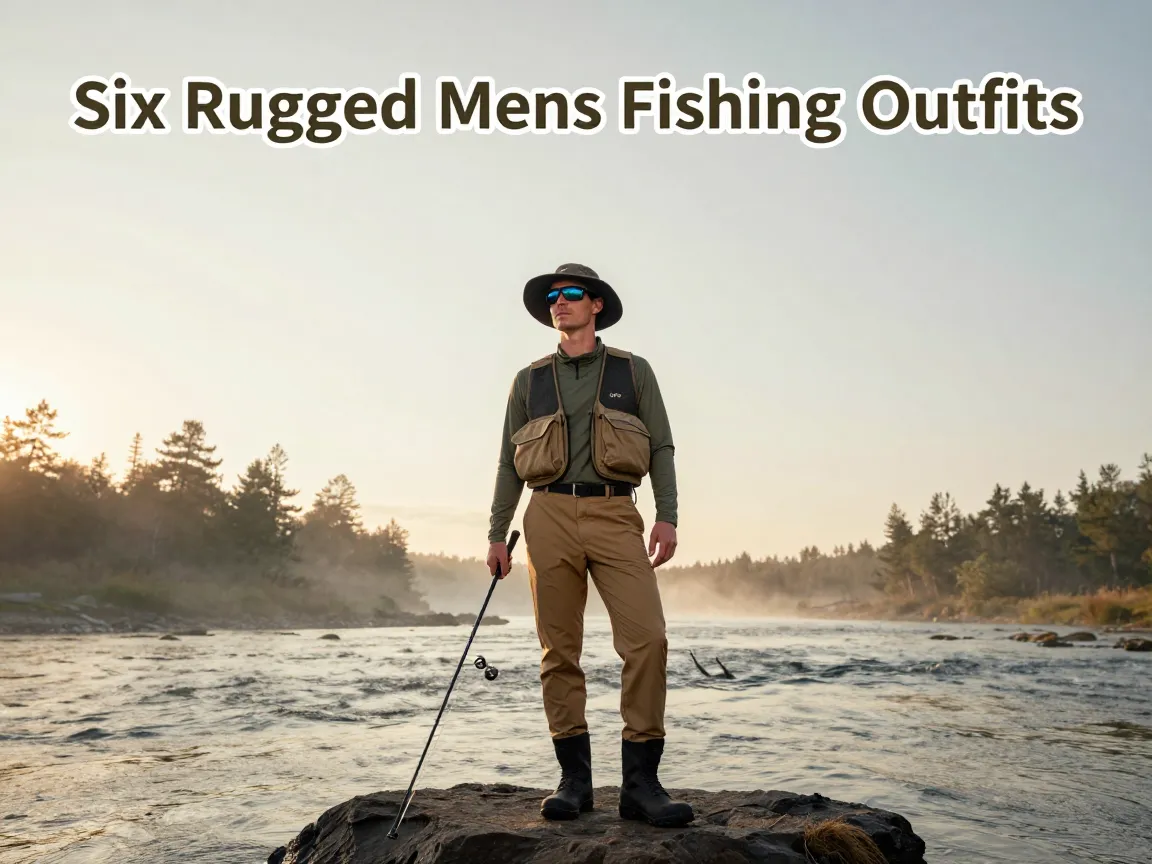
1. The Classic Sun-Protection Setup for Hot-Weather Fishing
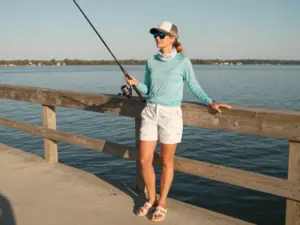
The go-to warm-weather fishing outfit centers on one piece: a long-sleeve, UPF-rated synthetic shirt. It sounds counterintuitive to wear long sleeves in July heat, but the physics favor it. A UPF 50+ shirt blocks more than 98% of UV radiation and, when made from a lightweight moisture-wicking polyester or nylon blend, actually feels cooler than exposed skin in direct sunlight because it manages sweat and limits radiant heat absorption.
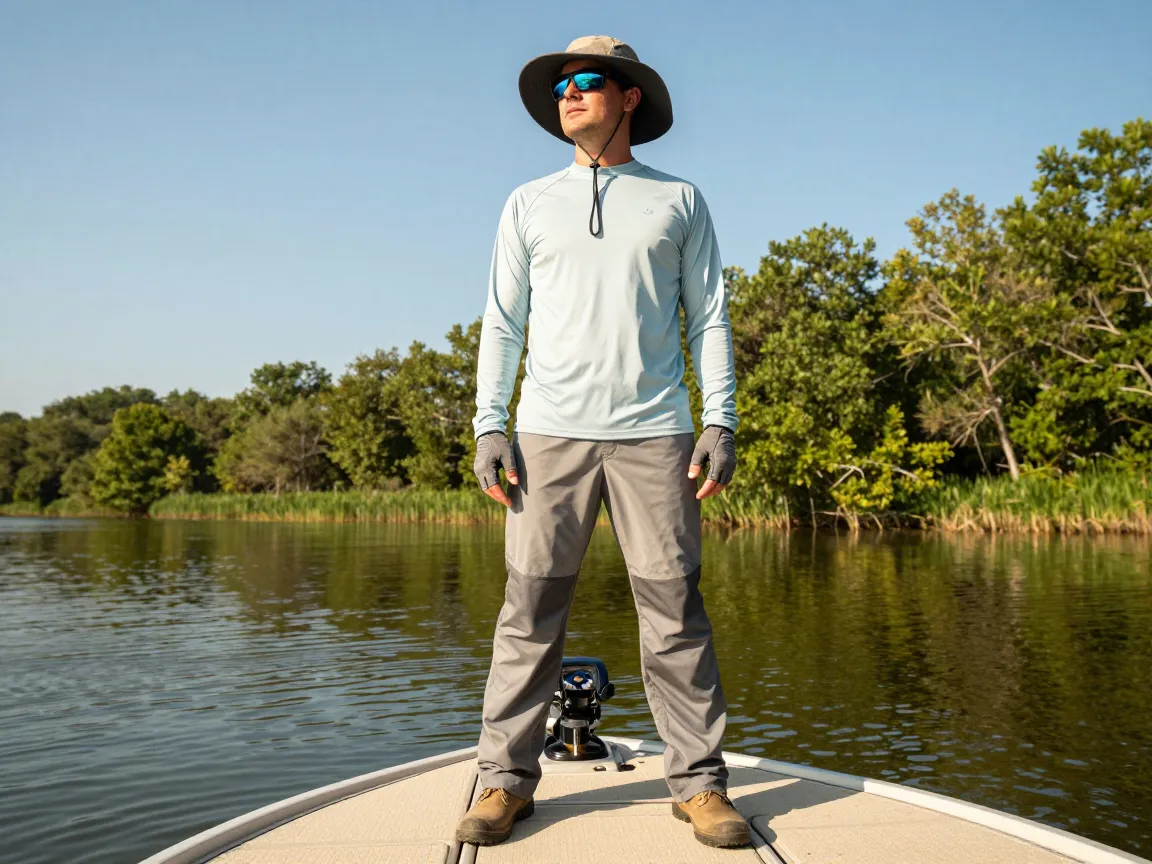
Pair that shirt with quick-dry synthetic shorts or fishing pants, not denim, never denim. Nylon-blend fishing pants from brands like L.L.Bean or Columbia dry within 20 minutes of getting wet, while denim can stay wet for hours and restrict movement. If you are standing in a boat or wading in calf-deep water, you want fabric that moves with you and dries between drenches.
Round out this outfit with a wide-brim hat (at least a 3-inch brim to protect your ears and neck), polarized sunglasses to cut glare and actually see fish below the surface, and lightweight fingerless fishing gloves if you are handling line or fishing in direct sun for more than a few hours. Non-slip shoes or low deck boots complete it. This combination is what serious saltwater and freshwater anglers wear, and it works because every piece is solving a specific problem.
2. The Layered Cold-Weather Fishing Outfit
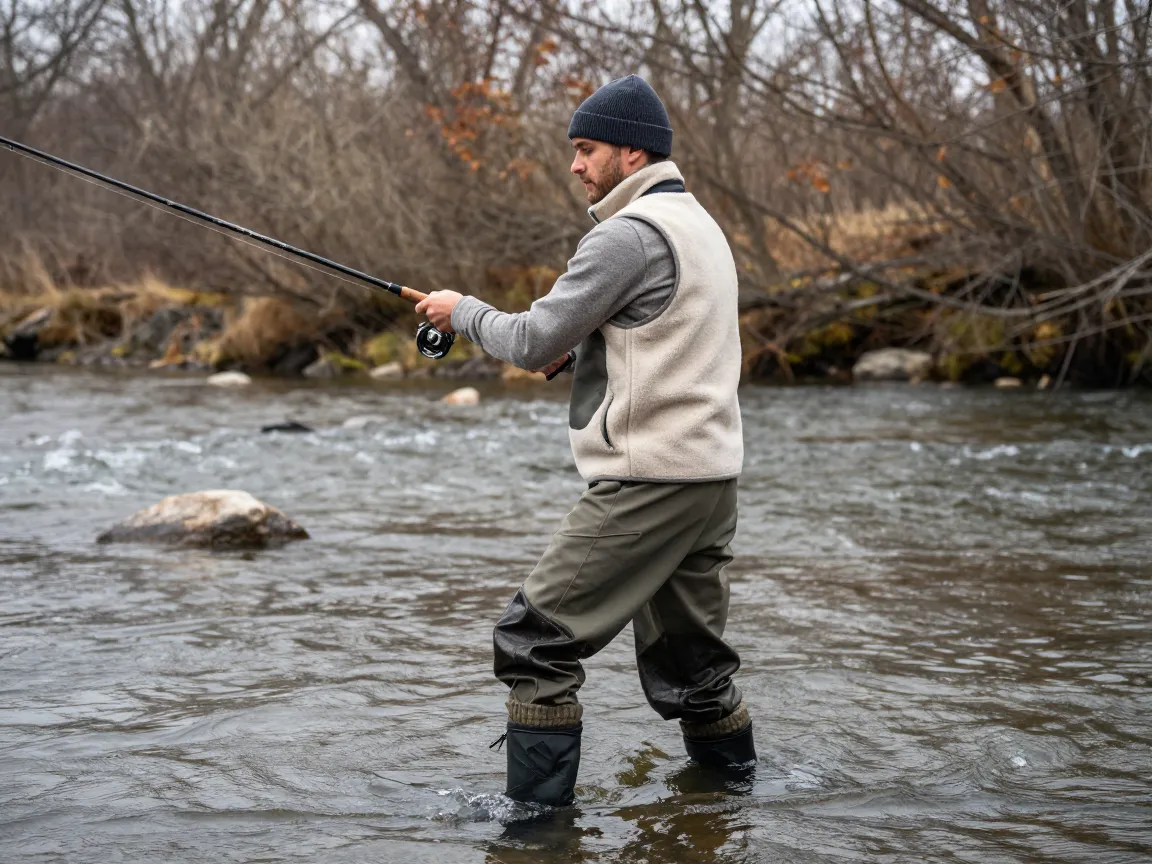
Fall and early winter fishing demand a system, not just a jacket thrown over a T-shirt. The base layer matters most. A close-fitting merino wool or synthetic base layer (polyester or polypropylene) pulls moisture away from your skin and holds some warmth even when wet. Merino wool is worth the higher cost for cold-water wading because it regulates temperature across a wider range and resists odor over multi-day trips.
Over that, a lightweight fleece or long-sleeve collared synthetic shirt functions as a mid-layer. It traps air for warmth without adding bulk that restricts casting. The outer layer is a softshell or waterproof rain shell, depending on how wet conditions will get. A softshell is more breathable and better for active use on dry cold days. A rain shell wins whenever spray, rain, or wading in deep water is a real possibility.
Bottom half: synthetic fleece-lined pants or wading pants with wool socks and insulated, waterproof boots. The socks matter more than most anglers realize. Wet cotton socks accelerate heat loss through the feet, which degrades performance and comfort faster than almost any other factor. This three-layer approach is not over-engineering. It is the same system guides and waterfowl hunters have standardized on because it works consistently across variable conditions.
3. The Fishing Vest Outfit for Fly Anglers and Wade Fishers
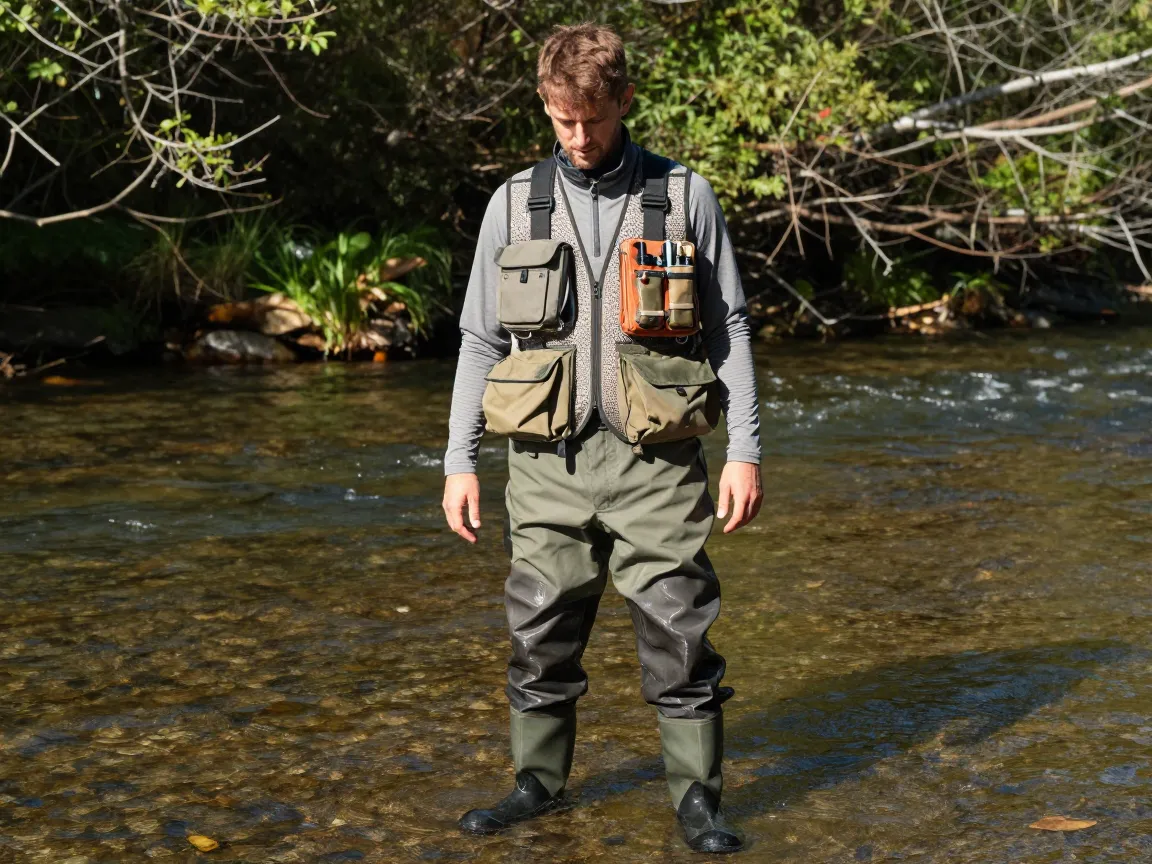
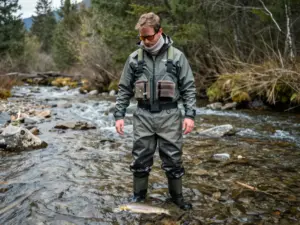
A fishing vest transforms an otherwise ordinary outfit into a fully functional carry system. For fly fishers and wade anglers who cannot easily return to a bag or tackle box, the vest handles everything. Modern fishing vests have anywhere from 15 to 25 pockets, include D-rings for net clips and tools, and are made from mesh or ventilated synthetic panels that breathe well in warm weather.
Worn over a moisture-wicking long-sleeve shirt and paired with wading pants and felt-sole or rubber-sole wading boots, this outfit is purpose-built for rivers and streams. Wading pants (or waders for colder water) handle submersion, while the vest keeps leaders, tippet spools, fly boxes, forceps, and a strike indicator all within reach without requiring a pack.
The key to making this outfit look and function well is fit. A vest that is too long catches on water when you wade deep. Too tight and it restricts the arm movement needed for casting. Most manufacturers now make fishing vests with articulated shoulders and relaxed-fit backs. Try it on over your fishing shirt, not over a T-shirt, to judge actual wearable fit. This outfit has decades of functional refinement behind it, and it remains the most organized setup available for technical freshwater fishing.
4. The “Fishing-Core” Casual Outfit That Works Off the Water Too
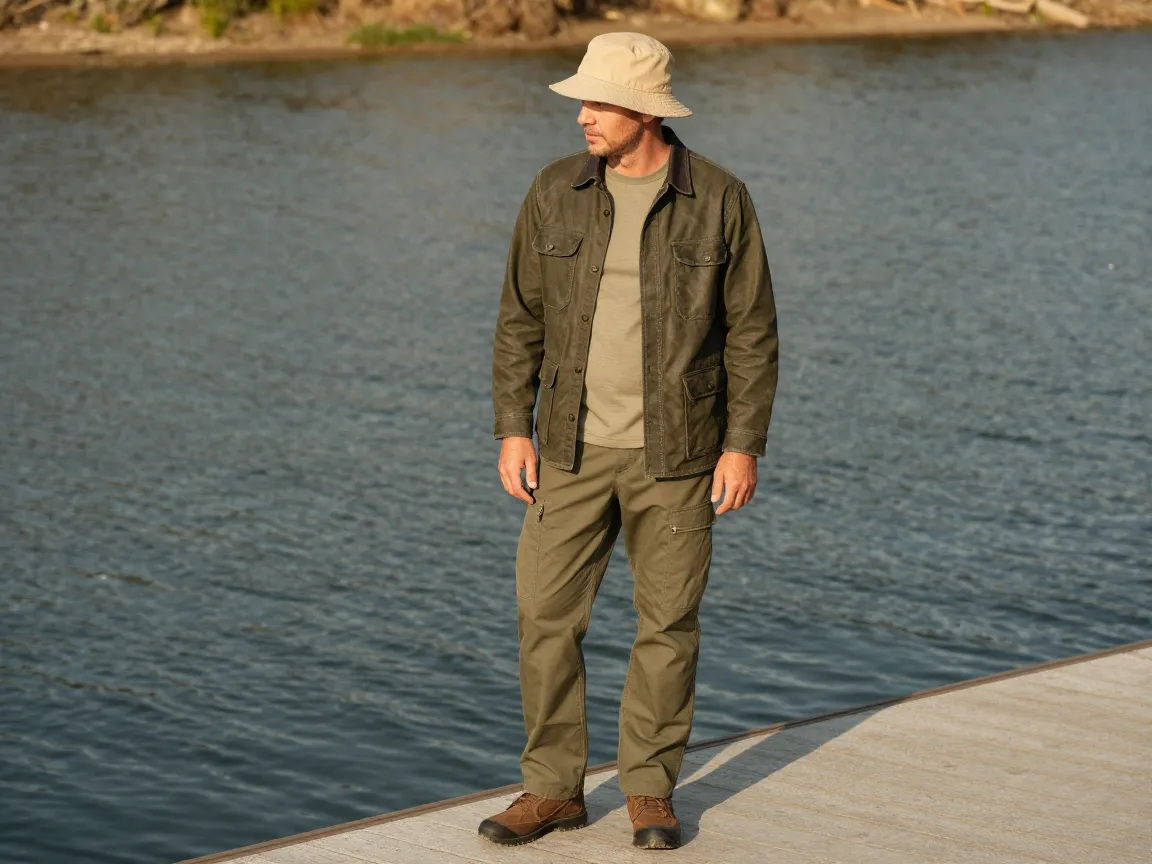
Men’s fishing apparel has moved into mainstream menswear in a real way. In 2026, what brands and style editors are calling “fishing-core” is a legitimate aesthetic: waxed-canvas work jackets, cargo pants, bucket hats, and fishing vests are appearing in capsule collections and urban menswear entirely separate from their original function. The appeal is practical-looking, utilitarian clothing that also signals an outdoor identity.
For a fishing outfit that holds up on the water but looks intentional afterward, the combination works like this: a waxed-canvas or water-resistant overshirt (something in an olive, tan, or slate colorway), worn open over a moisture-wicking base shirt, with straight-cut technical cargo pants that have zip pockets and a slight stretch. A bucket hat in cotton canvas or treated nylon pulls the look together without being aggressively sporty.
This is not cosplay for non-anglers. The functional details are real. Waxed canvas repels light rain. Zip pockets secure your phone and keys on a boat. The cargo pockets carry more than jeans pockets without looking awkward. For the angler who goes from the water to a casual lunch or errands without changing, this outfit requires no compromise. It looks deliberate because the clothing was actually designed for use.
5. The Performance Fishing Outfit Built Around Stretch Pants
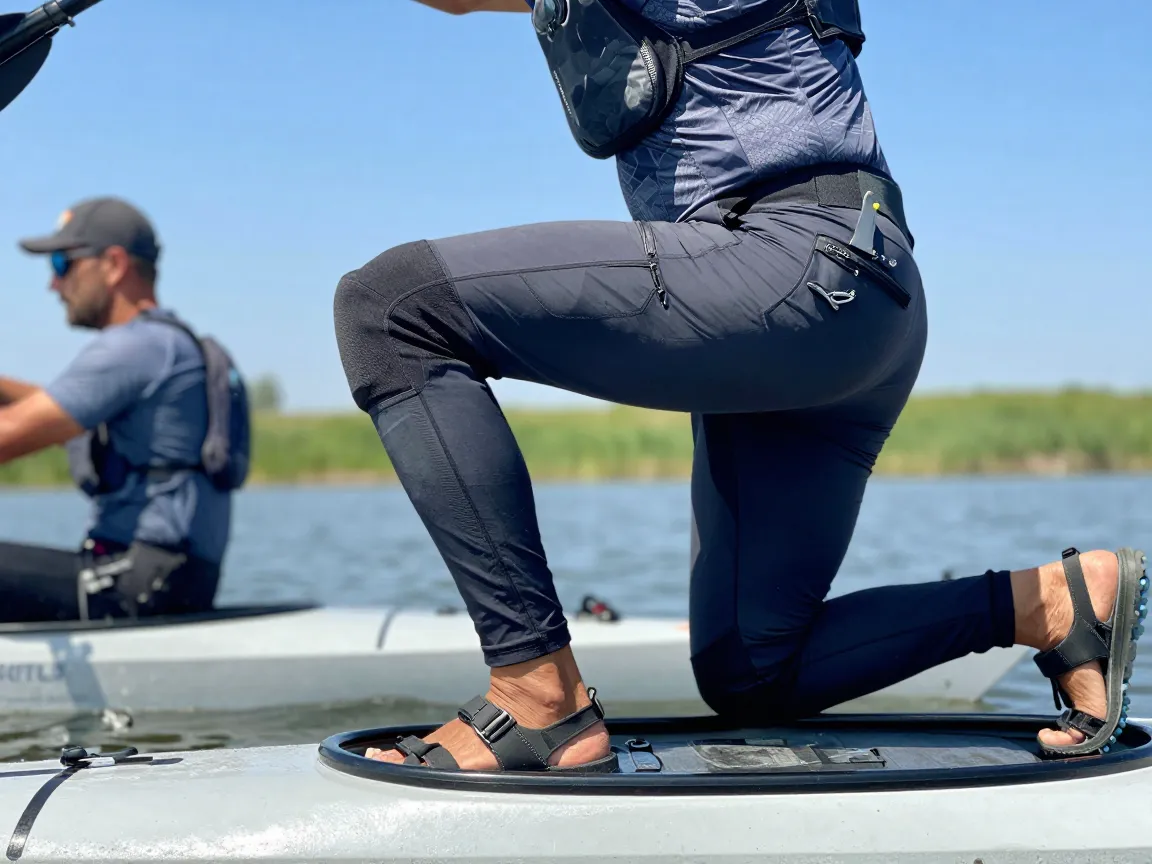
Fishing pants with mechanical stretch are a legitimate upgrade over both jeans and basic shorts. For anglers who spend long days cycling between standing on a boat deck, crouching to unhook fish, sitting in a kayak, or wading waist-deep, standard cut pants create friction. Literally. Non-stretch fabric resists movement, generates pressure at the knees and hips, and causes fatigue that you notice mainly after the fact.
Modern fishing-specific pants from manufacturers like Simms, Patagonia, and Kuhl use nylon-spandex blends (typically 90-95% nylon, 5-10% spandex or elastane) to allow full range of motion. Articulated knees are pre-shaped to follow the natural bend angle, which means no fabric pulling when you squat or step over obstacles. Multiple secure pockets — zip closures on the thighs and hip — mean you can carry tools, a folding knife, and your phone without worrying about losing them in the water.
Pair these pants with a technical fishing shirt and low-profile wading sandals or trail-runner-style water shoes for warm weather, or with insulated rubber boots for cold water or early-season boat fishing. The stretch-pants outfit is the most versatile single combination on this list. It accommodates temperature changes with a simple layer swap on top while the bottom half stays consistently functional all day.
6. The Sustainable High-Performance Outfit for the Modern Angler
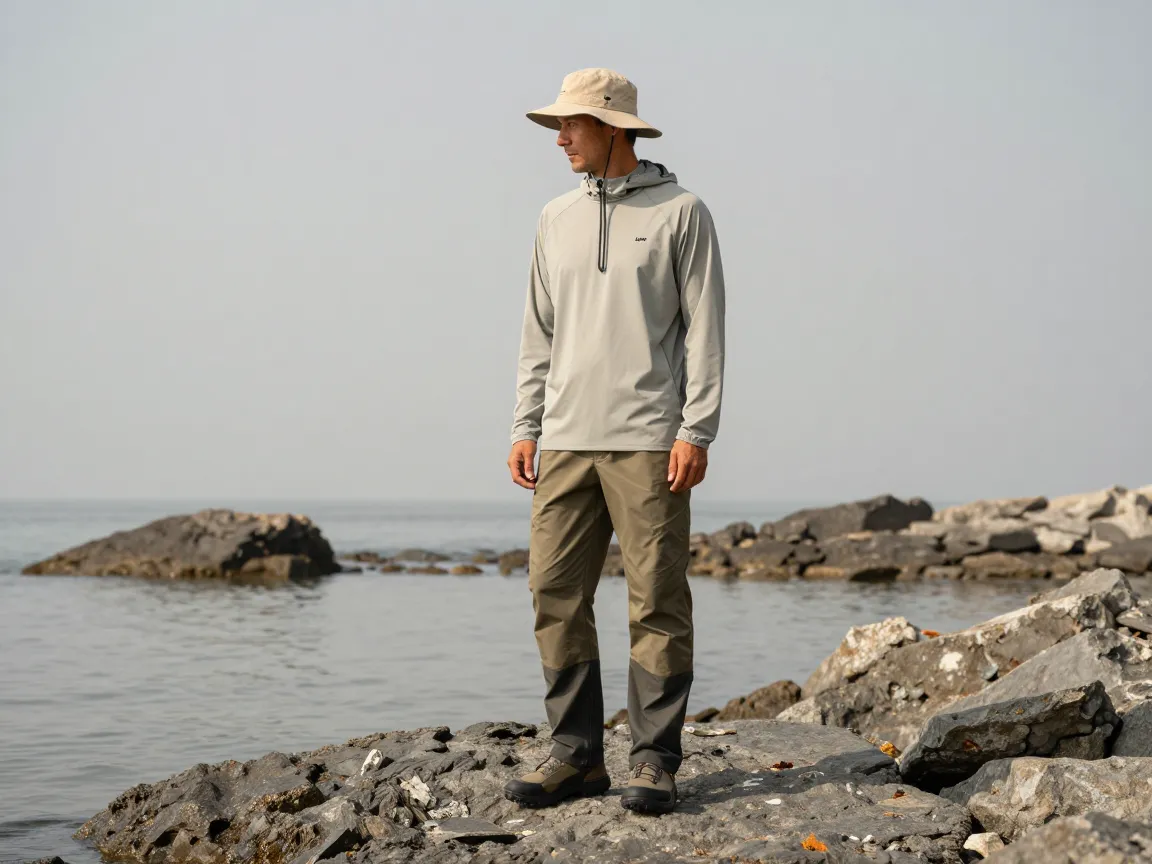
Men’s fishing apparel in 2026 is shifting toward recycled-material construction at a pace that would have seemed unlikely five years ago. Brands including Patagonia, Sitka, and several newer direct-to-consumer labels now produce full fishing outfits where the shirt, pants, and outer layer are made from recycled polyester derived from plastic bottles or reclaimed fishing nets. Performance is not compromised. In some cases, recycled-fiber fabrics now match or exceed virgin-polyester moisture management and durability benchmarks.
A complete sustainable fishing outfit looks like this: a recycled-polyester long-sleeve fishing shirt with UPF protection, recycled-nylon quick-dry fishing pants, and a lightweight recycled-polyester wind shell or rain jacket. Accessories such as hats and gloves are increasingly available in organic cotton or recycled fiber options as well. The aesthetic skews toward muted earth tones and minimal branding, which fits both the water and the fishing-core streetwear crossover.
For anglers who care about what happens to freshwater and marine environments beyond their fishing spot, the material choice carries some practical relevance. Recycled fishing net-derived nylon, for example, directly reduces abandoned gear in the ocean. The functional performance is there regardless of the sustainability angle. But if the clothing works as well as the conventional alternative and the manufacturing chain is more transparent, it is a rational choice. This category is growing because demand is real, not because it is a marketing overlay on otherwise standard gear.
How to Build a Complete Men’s Fishing Outfit from Scratch
The outfits above share a structure that makes them work. Understanding the underlying logic helps you adapt any of them to your specific conditions, budget, or fishing style.
Start with the shirt. A UPF-rated, long-sleeve, moisture-wicking fishing shirt is the highest-impact single purchase in any men’s fishing outfit. It handles sun protection, moisture management, and coverage simultaneously. After that, choose your bottom: synthetic pants for versatility, shorts for extreme heat with no wading, or wading pants when you will be in the water.
Layer outward from there based on temperature. A lightweight fleece or softshell covers the range between 45 and 60 degrees Fahrenheit where a shirt alone is cold but a heavy jacket is too warm. For anything below 40 degrees, the three-layer cold-weather system described in outfit two applies.
Accessories complete the system. Polarized sunglasses are non-negotiable if you spend more than an hour on the water — they reduce eye strain and genuinely improve fish visibility in clear water. A brimmed hat protects your face and neck. Non-slip shoes or wading boots match the terrain. Fingerless gloves make sense for long sun exposure or cold mornings when you still need to handle line and hooks without removing your hand covering.
The full checklist from L.L.Bean and similar technical outfitters adds up to: technical fishing shirt, synthetic pants or shorts, appropriate base layers for the season, a lightweight fleece or softshell, brimmed hat, polarized sunglasses, gloves matched to conditions, and footwear matched to terrain. That is not an aspirational wishlist. It is a functional inventory for a prepared angler.
Conclusion
The right men’s fishing outfit is not about spending money on name brands. It is about matching materials to conditions and building an outfit that does not fight you over a long day on the water. Any of these 6 mens fishing outfits that are rugged, cool, and comfortable can be assembled incrementally, starting with the shirt and pants, then adding layers and accessories as your fishing expands. If you fish warm, shallow water most of the time, start with outfit one and get the polarized sunglasses right. If you wade rivers in fall, invest in the merino base layer first. The specifics of your fishing narrow the choice quickly.