Duck Hunt Painting Ideas That Turn Your Passion Into Wall Art
Waterfowl hunting generates over 1.5 million active participants in the United States alone each season, yet most hunters display little more than a mounted bird or a blaze-orange hat rack on the wall. The gap between a genuine passion for the sport and wall art that reflects it is wider than it needs to be. These 6 duck hunt painting ideas that turn your passion into wall art close that gap, covering everything from full-room murals to nursery-friendly character prints, with enough range that one of them fits every room, budget, and skill level.
Disclosure: This post contains affiliate links. As an Amazon Associate, we earn from qualifying purchases, and at no extra cost to you.
Key Takeaways
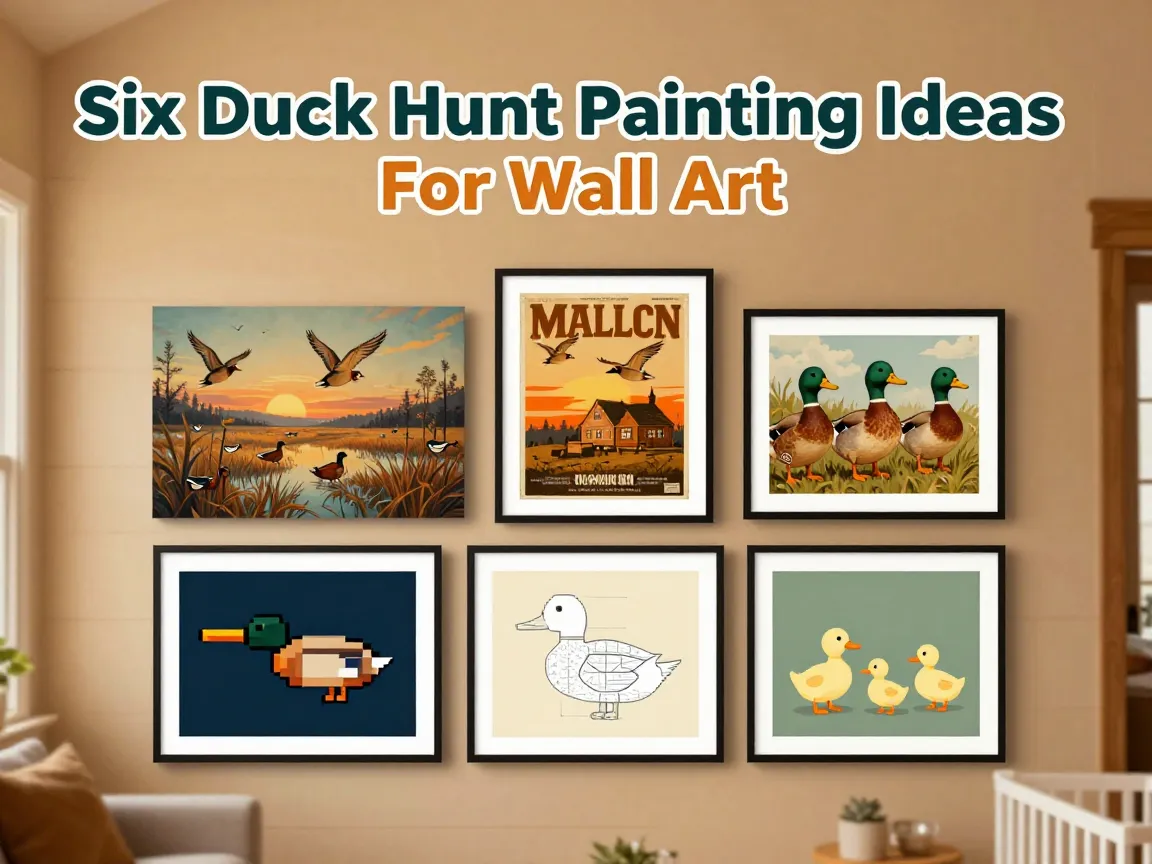
- Six distinct painting styles exist for duck hunt wall art, from panoramic marsh murals to pixelated NES tributes, so you can match the art to the room’s purpose.
- Format matters as much as subject: large-format prints work in man caves and family rooms, while smaller framed studies suit hallways and offices.
- Blueprint-style and field-guide illustration styles read as design-forward, not purely decorative, which makes them work in modern interiors.
- Nursery and family-friendly versions of hunting art are commercially available and stylistically cohesive, not an afterthought.
- Digital downloads let you print any of these styles at the exact size you need before committing to canvas or framing costs.
1. Panoramic Bog Hunt Scene
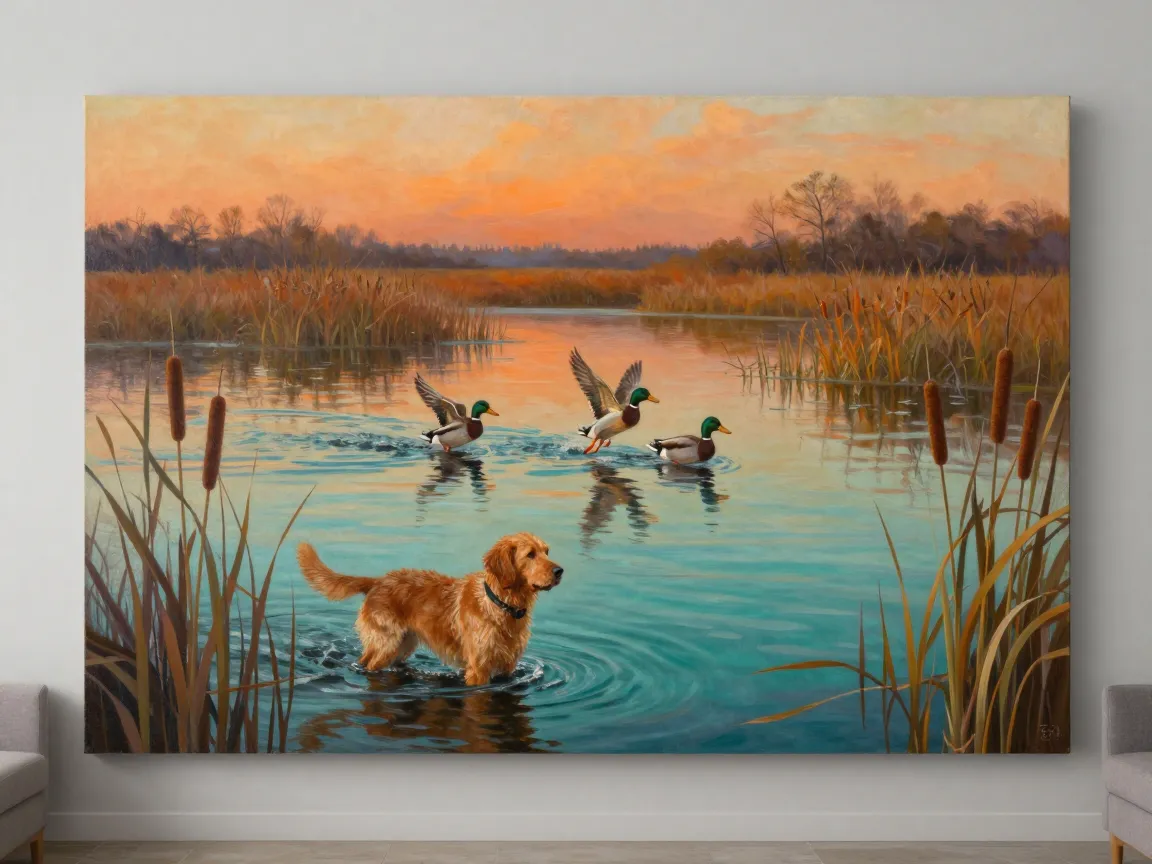
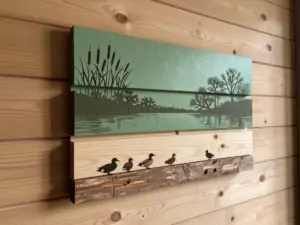
A wide-format duck hunting painting does something a standard portrait-orientation print cannot: it fills peripheral vision. When you hang a 48-inch-wide panoramic across the main wall of a man cave or family room, the viewer steps into the scene rather than observing it from outside. That is the core value of the panoramic bog hunt format, and it explains why full-wall murals and wide canvas prints are among the most searched duck-hunt wall art products in 2026.
The scene itself typically sets the viewer at water level in a marsh at first light. Cattails frame the left and right edges. A retriever holds position in the foreground. Three or four mallards break from the water in the mid-distance, wings catching orange light. Oil-painting and digital oil styles both work here because they carry enough visual texture to hold up at large scale without pixelating. Watercolor tends to lose definition at 48 inches or wider, so it’s a better choice for smaller formats.
For placement, the wall behind a sectional sofa or above a stone fireplace mantel works best. The painting needs breathing room, meaning at least six inches of clear wall above and below it. If the room has 8-foot ceilings, a canvas that runs 24 to 30 inches tall keeps proportions correct. For 10-foot ceilings, 36 to 40 inches tall reads better. Many digital download vendors in 2026 sell this style as a print-ready file at multiple aspect ratios, so you can size it precisely before paying a print shop.
One practical constraint: panoramic prints need gallery-wrap framing or frameless float mounting to look right. Standard frames with mats interrupt the wide-angle effect. Gallery wrap, where the image wraps 1.5 inches around the stretcher bar, keeps the edges clean and the scene unbroken.
2. Sunrise Marsh Lodge Poster
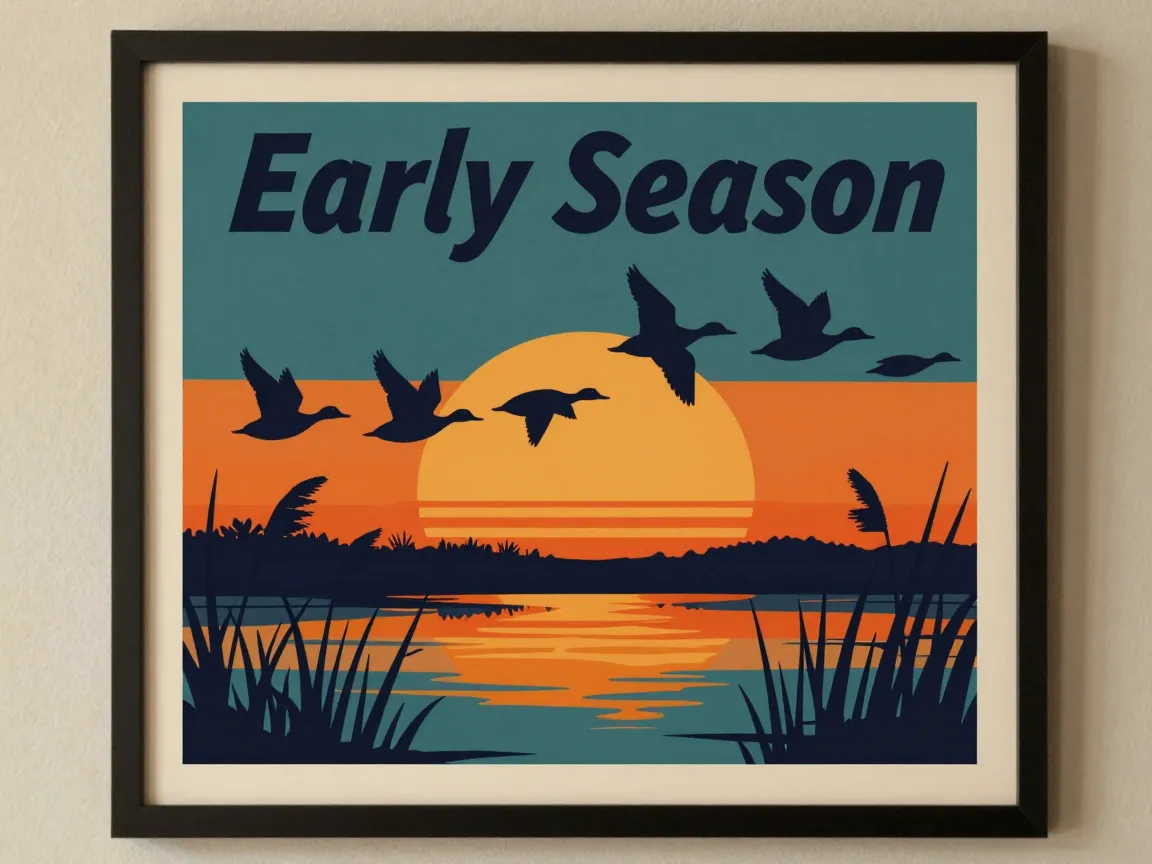
Vintage lodge and cabin poster art from the 1930s through the 1960s established a visual language that still reads clearly today: flat color fields, bold outlines, stylized waterfowl silhouettes, and either a sunrise or sunset palette. Reproductions and newly commissioned pieces in this style remain strong sellers across mainstream art print retailers in 2026, and it’s not hard to see why. The style is instantly readable from across a room, it frames well at almost any size, and it carries enough nostalgia to feel warm without feeling dated.
The defining features are limited color palettes, usually four to seven colors, with strong use of amber, deep teal, burnt orange, and navy. Text is part of the composition, often a lodge name, a duck species name, or a phrase like “Early Season.” That typography element is what separates lodge poster art from generic waterfowl illustration. It gives the piece a destination quality, as though it marks a specific place and time.
If you’re commissioning a custom piece in this style, the most useful direction you can give an artist or a custom print service is a reference to Works Progress Administration travel posters from the late 1930s. That specific visual reference communicates flat shading, bold outlines, and stylized natural forms more clearly than a general request for “vintage hunting art.”
Printed at 18×24 inches and framed in a simple black or natural wood frame, a sunrise marsh lodge poster works in a hallway, a home office, or a cabin bedroom. It’s also one of the most affordable options in this list. Many Etsy sellers and print-on-demand platforms offer digital downloads in this style for under $15, with printing at a local shop adding another $20 to $40 depending on paper stock.
3. Field-Guide Mallard Study
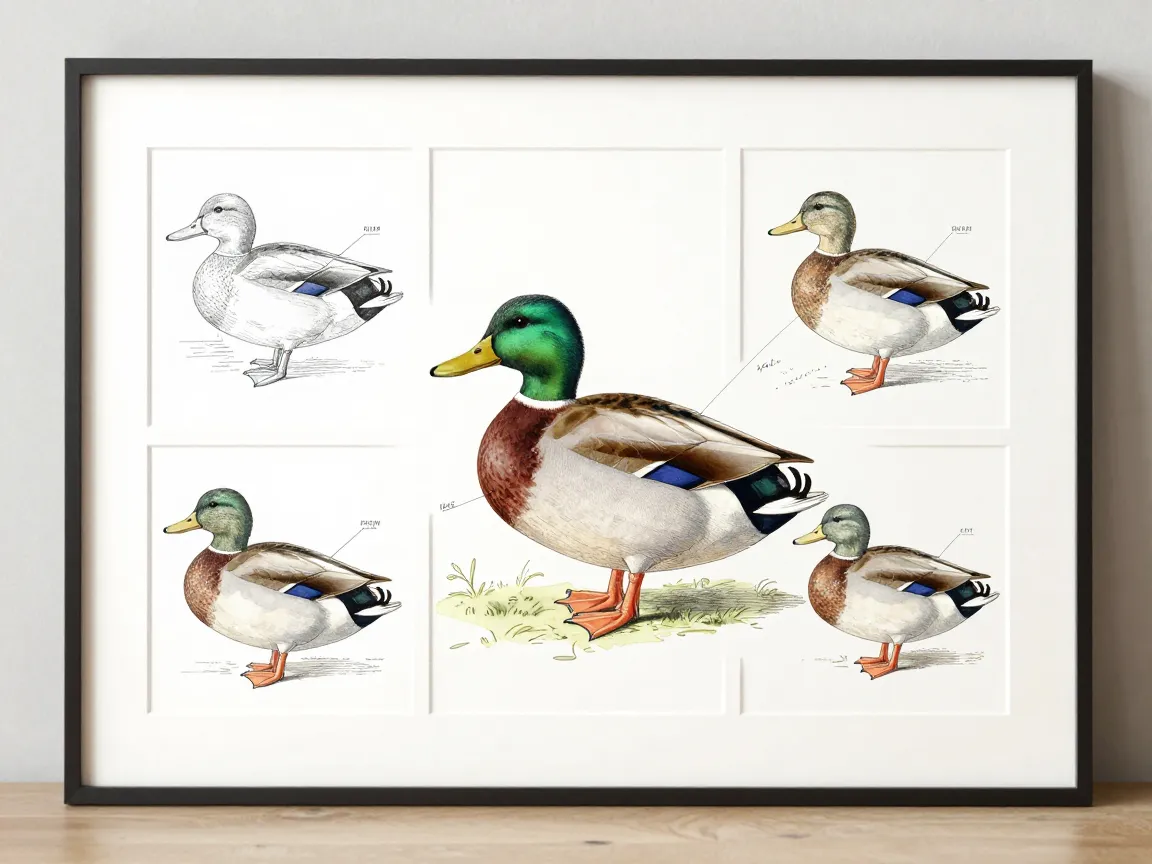
Scientific and ornithological illustration, the kind found in Audubon Society field guides and 19th-century natural history volumes, produces wall art that reads as sophisticated in rooms that might reject a more overtly “hunting cabin” aesthetic. A field-guide mallard study shows the bird from multiple angles, labels anatomical features or plumage markings, and uses precise linework with controlled watercolor washes. The result sits comfortably in a modern home office, a dining room, or even a library.
The western sporting illustration style, which emerged from 19th-century British and American hunting publications, is a close relative. Where the pure field-guide version emphasizes scientific accuracy, the sporting illustration style adds environmental context: the bird in flight over a marsh, or a drake landing on still water. Both styles use the same tight linework and muted naturalistic palette.
What makes this idea practical for a DIY painter is that the field-guide format accommodates imperfection. Slight variations in watercolor wash read as texture rather than error. The linework can be done in pen before the wash is applied, which removes the pressure of painting precise edges freehand. If you’re working from reference, a high-quality photograph of a mallard in good light, showing both the iridescent green head and the wing speculum, gives you enough detail to work from. Roger Tory Peterson’s field guide illustrations remain useful compositional references for anyone attempting this style.
For framing, archival white mats with a thin black or brass frame preserve the scientific document quality of the piece. A set of three studies, one of a mallard, one of a teal, and one of a wood duck, creates a cohesive series that works across a horizontal wall space at 8×10 or 11×14 inches per panel.
4. NES Duck Hunt Tribute
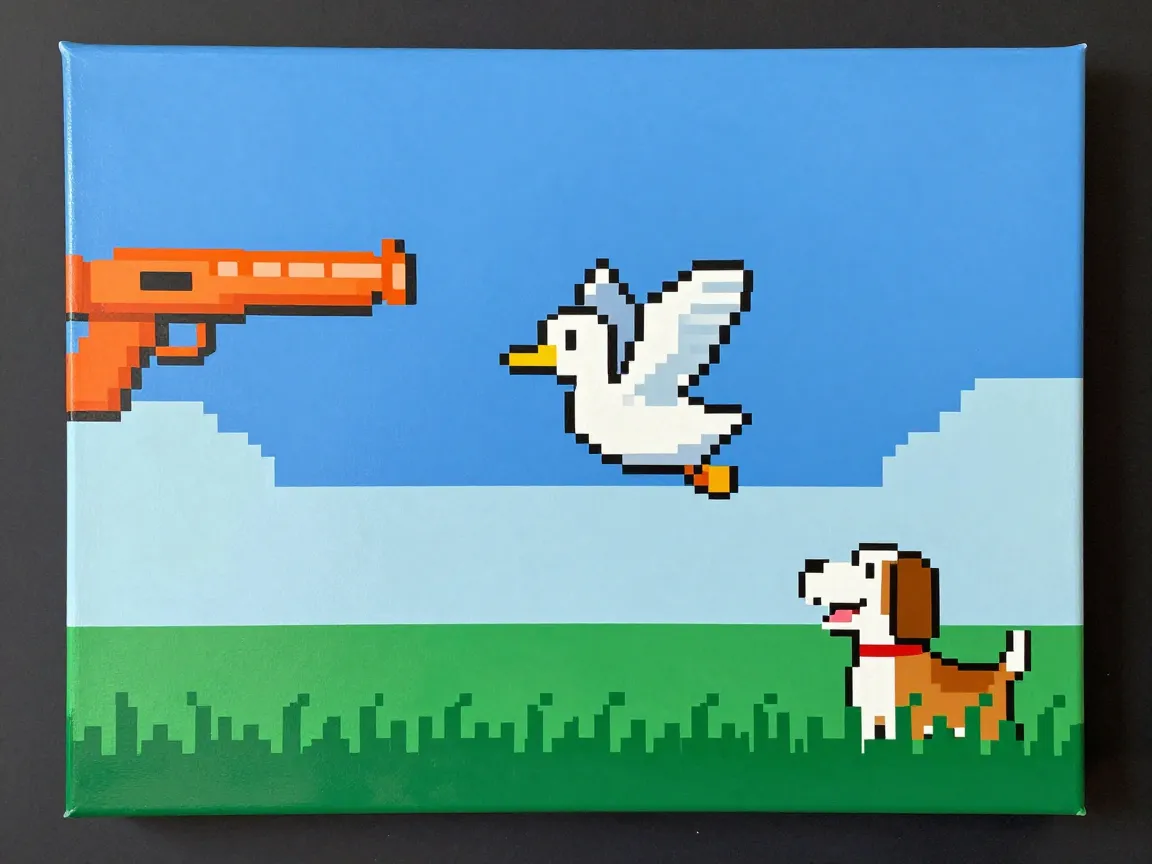
The original Duck Hunt video game, released by Nintendo in 1984 and reaching peak cultural saturation in North American households by 1987, left a specific visual memory in anyone who played it on an NES. The pixelated duck sprites, the orange Zapper light gun, and the laughing dog became shorthand for a certain era of childhood. In 2026, retro gaming nostalgia is an active and commercially distinct niche within the broader duck-hunt art market.
An NES Duck Hunt tribute painting translates those 8-bit sprites into a painted or printed wall piece. The approach ranges from exact pixel replication, where each pixel becomes a small square of flat color on canvas, to loose acrylic interpretations that capture the spirit of the sprites without the strict grid. Both work. The pixel-perfect version has a satisfying graphic quality that suits a game room or home theater. The loose acrylic version works better in a living space that isn’t exclusively game-themed.
A specific compositional choice that consistently works: frame the orange Zapper gun on the left, the duck mid-flight in the center, and the hunting dog peering up from tall grass at the bottom right. This mirrors the in-game layout and triggers the recognition immediately. Using the original color palette, specifically the NES’s limited output of greens, sky blue, orange, and white, keeps the piece authentic rather than a generic cartoon duck painting.
Canvas size of 16×20 inches is sufficient for this composition. Acrylic paint handles the flat color fields well, and masking tape edges keep the pixel boundaries clean if you’re going for the grid version. Finished with a matte varnish, the colors hold their flatness, which is correct for an 8-bit tribute. High-gloss varnish gives the piece a different character, closer to a pop-art print.
5. Decoy Blueprint Wall
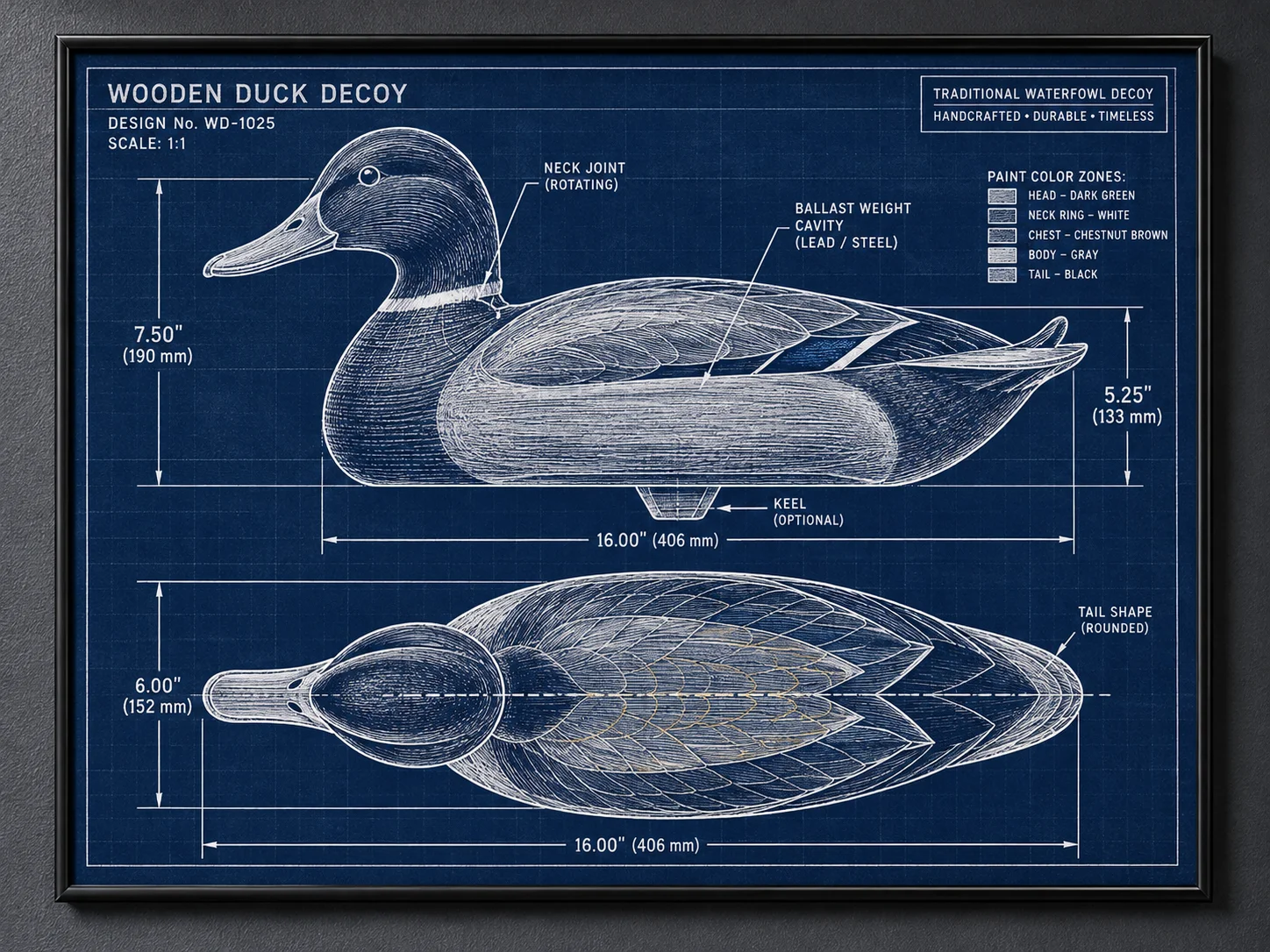
Patent drawings and technical blueprints have crossed over from industrial archives into mainstream interior design. The look, fine white linework on aged cream or navy background, precise measurements and labels, clean sans-serif annotation, reads as both technically interesting and visually restrained. Applied to a wooden duck decoy, the format becomes a duck hunting art piece that works in spaces where hunting trophies and cabin-rustic decor would feel out of place.
A decoy blueprint typically shows the decoy from at least two orthographic views, a side profile and a top-down plan view, with callout lines pointing to the keel, the ballast weight cavity, the paint color zones, and the neck joint. Some versions include a cross-section view. The more detailed the annotation, the more convincingly it reads as an actual patent drawing rather than a decorative approximation.
This style is currently sold by multiple specialty art retailers and Etsy sellers as digital downloads sized for standard print dimensions. A 16×20 or 18×24 print in this format, framed in a thin black metal frame, looks at home on a dark-painted wall in a home office or study. It signals hunting knowledge without the visual weight of a large wildlife painting.
For a DIY version, the construction is accessible with drafting tools or even a ruler and fine-line technical pens on toned paper. The precision of the linework matters more than artistic rendering skill, which makes this a good option for someone who can draw accurately but doesn’t paint. Aging the paper with a light tea wash before drawing gives the finished piece a document quality that reads as authentic rather than fresh from a printer.
6. Hunting-Family Nursery Series
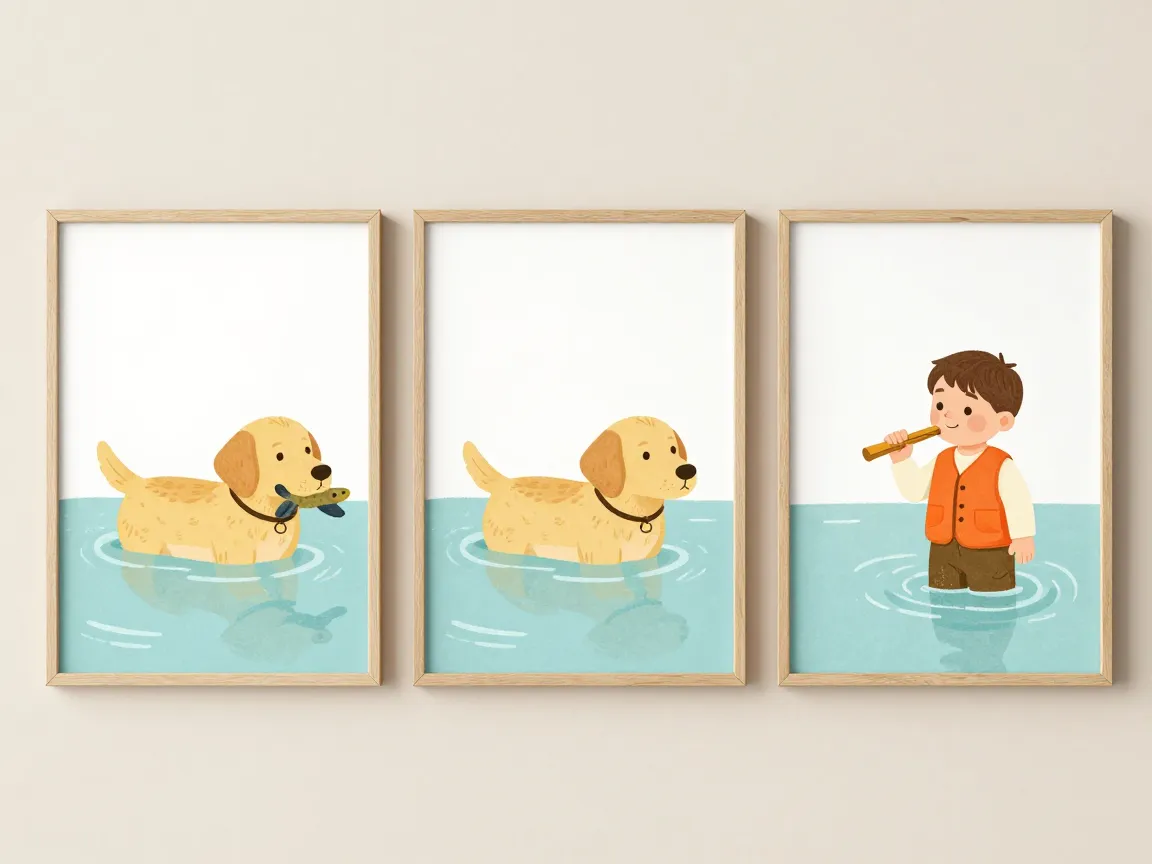
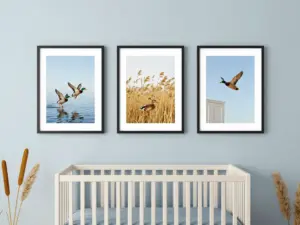
The assumption that hunting-themed art means dark, masculine, cabin-rough imagery ignores a commercially active segment of the market. Character-driven, softly illustrated hunting family prints, featuring a retriever puppy, a small duck in an oversized hunter’s vest, or a family of ducks in marsh grass, are a distinct category in nursery wall art in 2026. These pieces carry the subject matter of waterfowl hunting while fitting the soft palette and rounded forms that nursery design requires.
A coherent nursery series in this vein typically runs three to five panels at matching sizes. A common set might include: a mallard family wading in shallow water, a yellow Labrador puppy holding a decoy in its mouth, and a small child in an orange hunting vest holding a wooden duck call. Each panel uses the same muted color palette, the same illustration style, and the same frame size. Sold together as a set, they create a wall that tells a story across multiple panels rather than presenting a single image.
The illustration approach leans toward simple shapes, low detail density, and warm neutrals with one or two accent colors, typically a soft teal and a warm wheat or sage green. This keeps the art legible at a glance from across a room, which matters for nursery art where the viewer is often a tired adult working in dim light. Character expressions are gentle and non-threatening, which is a deliberate choice for a child’s space rather than a compromise on the hunting theme.
For parents who hunt and want their child’s room to reflect that early, this series format is the most cohesive way to do it. The pieces age well too: a child who grows up with this art on the wall connects the imagery to family experience, not just decoration. At 8×10 inches per panel, the investment in framing stays modest while the overall wall impact is proportionally larger than the individual pieces suggest.
Quick Comparison
| Painting Idea | Best Room | Recommended Size | Skill Level | DIY-Friendly |
|---|---|---|---|---|
| 1. Panoramic Bog Hunt Scene | Man cave, family room | 36-48 in. wide | Intermediate | Moderate |
| 2. Sunrise Marsh Lodge Poster | Hallway, cabin, office | 18×24 in. | Beginner | Yes |
| 3. Field-Guide Mallard Study | Office, dining room | 8×10 to 11×14 in. | Beginner | Yes |
| 4. NES Duck Hunt Tribute | Game room, living room | 16×20 in. | Beginner | Yes |
| 5. Decoy Blueprint Wall | Office, study | 16×20 to 18×24 in. | Beginner | Yes |
| 6. Hunting-Family Nursery Series | Nursery, child’s room | 8×10 in. per panel | Beginner | Moderate |
Conclusion
Of all six ideas here, the decoy blueprint and the field-guide mallard study have the widest crossover appeal because neither reads exclusively as hunting-cabin decor. If you’re working with a room that isn’t a dedicated sporting space, start with one of those two. Buy a digital download first, print it on cardstock at home, and hold it against the wall before committing to canvas and framing. That one step, testing scale and placement cheaply before spending on materials, saves more frustration than any other part of the process.