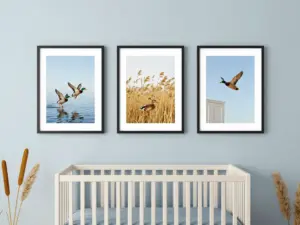
Duck Hunting Background Ideas For Stunning Photos And Displays
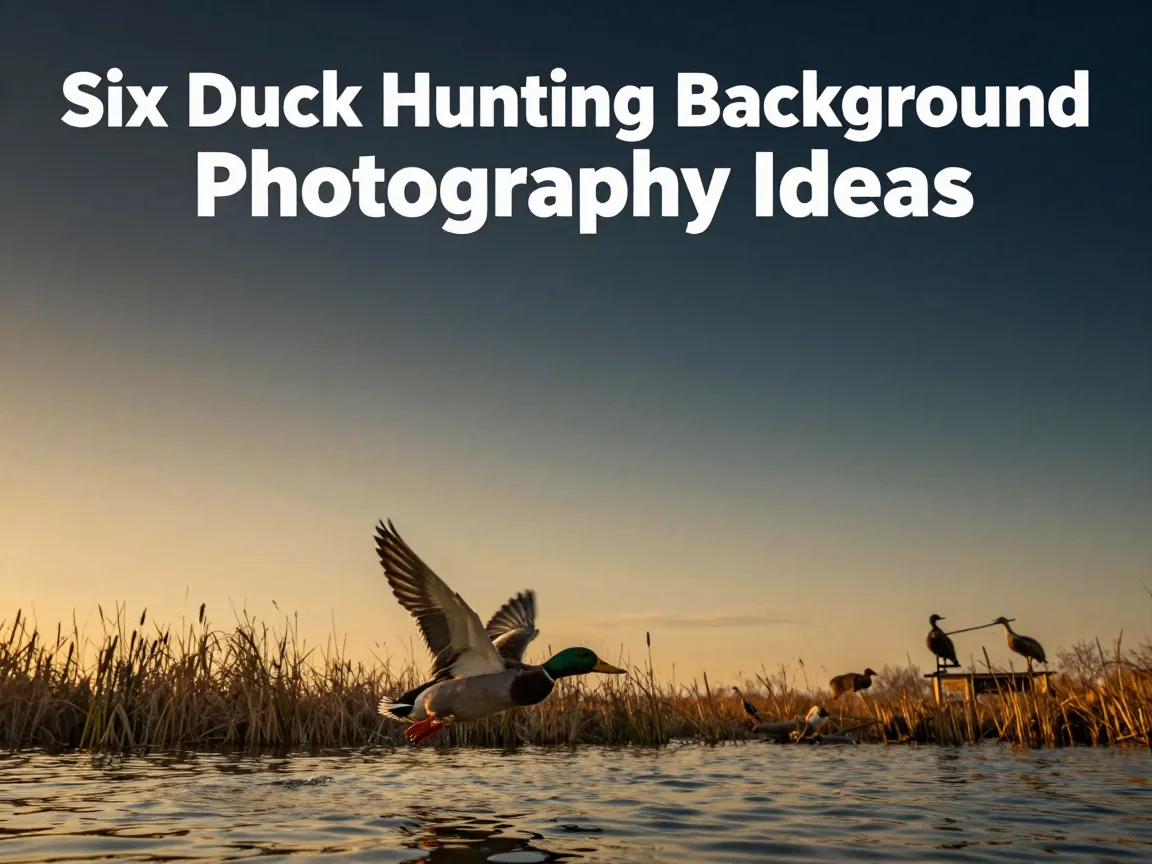
Every year, tens of thousands of duck-hunting photos get deleted the same afternoon they’re taken because the background looks flat, cluttered, or accidental. The difference between a forgettable image and one that gets framed or shared widely almost always comes down to one decision made before the shutter fires: where to put what’s behind the bird, the hunter, or the dog. These 6 duck hunting background ideas for stunning photos and displays cover both field photography and taxidermy displays, pulling from current guidance by waterfowl photographers, hunting content creators, and mount designers who have worked through what actually performs.
Disclosure: This post contains affiliate links. As an Amazon Associate, we earn from qualifying purchases, and at no extra cost to you.
Key Takeaways
- Golden-hour silhouettes work because the sky becomes the subject, not just the setting.
- Authentic marsh and river habitat backgrounds are the baseline standard for serious waterfowl imagery in 2026.
- Lifestyle and camp scenes document the full story of a hunt, not just the result.
- Low-angle dog-retrieve sequences with water spray produce some of the most emotionally engaging hunting images made today.
- Intentional motion blur is now a recognized creative technique, not a technical failure.
- Habitat-faithful taxidermy dioramas outperform plain panel backdrops on both aesthetics and conservation messaging.
1. Golden-Hour Sky Silhouettes
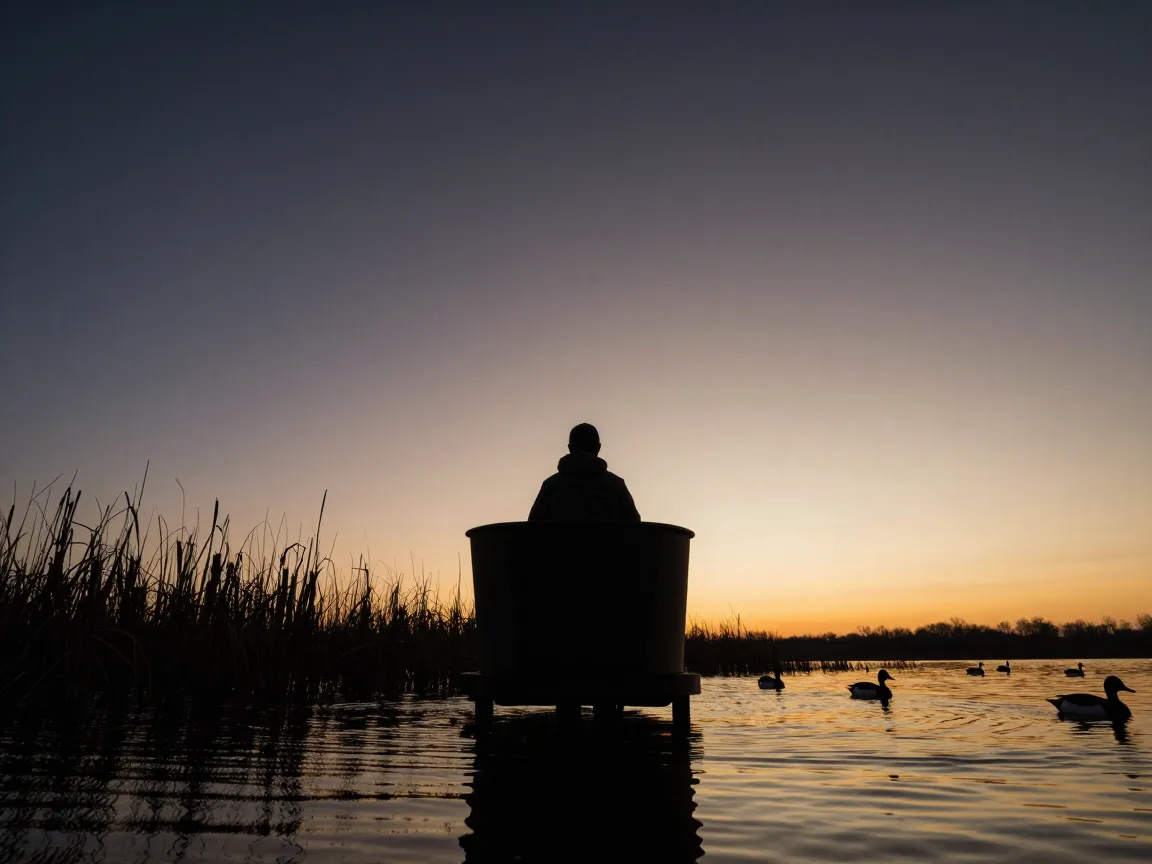
The first usable light of a duck-hunting morning arrives within about 30 minutes of legal shooting time, and that window is the single most valuable background opportunity of the day. Silhouette photography during this period works because the sky itself carries all the color and drama while the subjects, whether hunters, decoys, or birds in flight, go dark and graphic against it.
The technique is straightforward: meter for the brightest part of the sky, not for the hunter’s face or the bird’s feathers. When you expose for the sky, everything in the foreground drops into deep shadow. Ducks Unlimited’s low-light photography guidance is explicit on this point, recommending that cattails, hunters, and birds should read as dark shapes against a rich, graduated background rather than evenly lit subjects. The result is a background that shifts from deep blue-black at the top to amber, gold, or red near the waterline, depending on cloud cover and season.
For taxidermy displays, the same principle can be applied to painted backdrop panels. A painted sky background in gradient tones, deepest at the top and warming toward a horizon line, gives flying mounts the same visual logic as a field silhouette. It tells the viewer’s eye exactly where to go. Some taxidermists use an airbrush technique to blend three to four color bands behind a flying mount, creating a background that photographs well under gallery lighting and reads naturally from across a room.
One practical constraint worth noting: silhouette backgrounds require clean subject edges. A hunter with loose, broken camo netting hanging off a blind does not read as a clean shape, so the minutes before the shot require some attention to the subject’s outline. Birds in flight are almost always clean shapes by definition, which is part of why flight shots against golden-hour skies remain one of the most reliably strong image types in waterfowl photography.
2. Authentic Marsh, River, and Open-Water Habitat
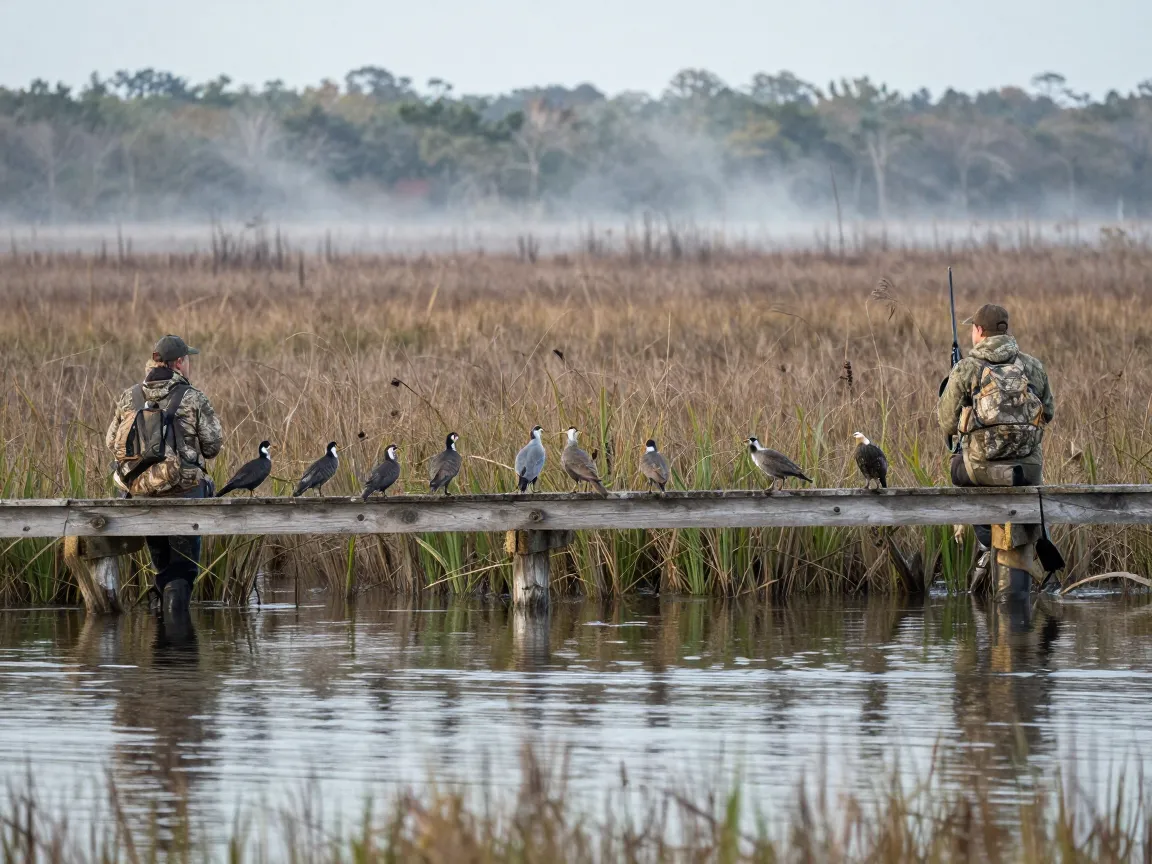
Placing the actual hunting environment at the center of the background is not a default choice made when no better option exists. It’s the choice that professional waterfowl photographers return to again and again, because a real marsh, river bend, or flooded timber stand cannot be reproduced in a studio. The grasses, the water color, the specific way mist sits two feet above the surface on a cold November morning all carry regional identity that makes an image verifiably real.
Contemporary hunting photographers describe their approach as putting hunters or birds in the right geographic position and letting the environment do the work. Farm fields in the Mississippi Flyway, marsh pockets along the Gulf Coast, and big river systems in the Midwest each have distinct visual signatures. Using those signatures as a background makes the image speak to hunters who know that terrain, which is a significant factor in how well waterfowl images travel on social platforms.
For taxidermy, habitat-accurate backgrounds have become the clear standard over plain white or generic panel backdrops. A 2025 overview of “Last Flight” waterfowl mounts describes canvasbacks and wood ducks posed against painted reeds, still water surfaces, and distant tree lines, with the stated goal of placing the bird visually inside the ecosystem where it was encountered. Realistic water effects, dried marsh grasses, small stones, and painted sky panels work together to build a scene rather than simply mount a specimen. These naturalistic dioramas reinforce conservation awareness by showing the habitat alongside the bird, which is a point that both taxidermists and waterfowl conservation organizations have emphasized in recent guidance.
For field photography, the most practical application is to resist the urge to tuck into the thickest cover available and instead find a position where some open water, a reed line, or a tree line is visible behind the main subject. That background element anchors the image in a real place.
3. Camp and Lifestyle Scenes
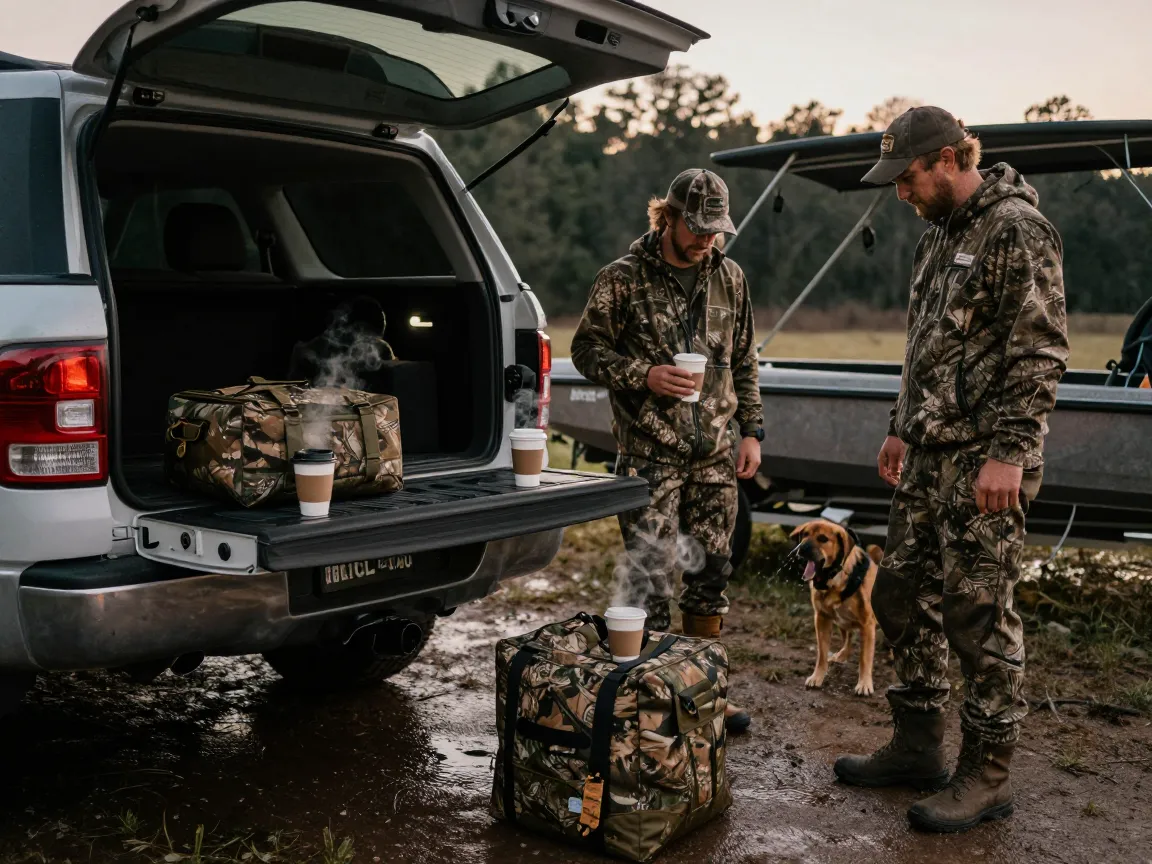
A grip-and-grin photo with two hunters holding a strap of mallards tells one part of the story. The tailgate with steaming coffee cups, the decoy bag being dragged through boot-deep water before first light, and the dog shaking itself dry next to the boat tell the parts of the story that most hunters actually remember.
Ducks Unlimited’s photo and content guidance in 2026 is direct about this: document everything, not just the birds. Tailgate lunches, decoy spreads being set out in the dark, hunters arriving by boat with the blind barely visible in the background, and campfire circles after the hunt all function as background elements that carry mood and context. The common thread in all of these is that the background is not incidental; it’s the evidence that something real happened.
The lighting situation for camp and lifestyle backgrounds is usually more forgiving than for golden-hour silhouettes, since midday or shade light tends to be soft and even. A tailgate scene works with simple natural light coming from one direction, and a campfire scene benefits from the fire’s warm fill light against a dark background of trees or sky. Both are achievable without additional equipment.
For photo displays and albums, lifestyle backgrounds are particularly valuable for sequencing images. A well-assembled display that moves from pre-hunt camp preparation to action shots to the post-hunt tailgate creates narrative structure that a wall of bird-and-hunter photos lacks. When planning a season’s worth of images, it’s worth treating camp backgrounds as intentional rather than incidental, specifically holding the camera up during moments that most hunters never think to photograph.
4. Dog Retrieves and Water Action
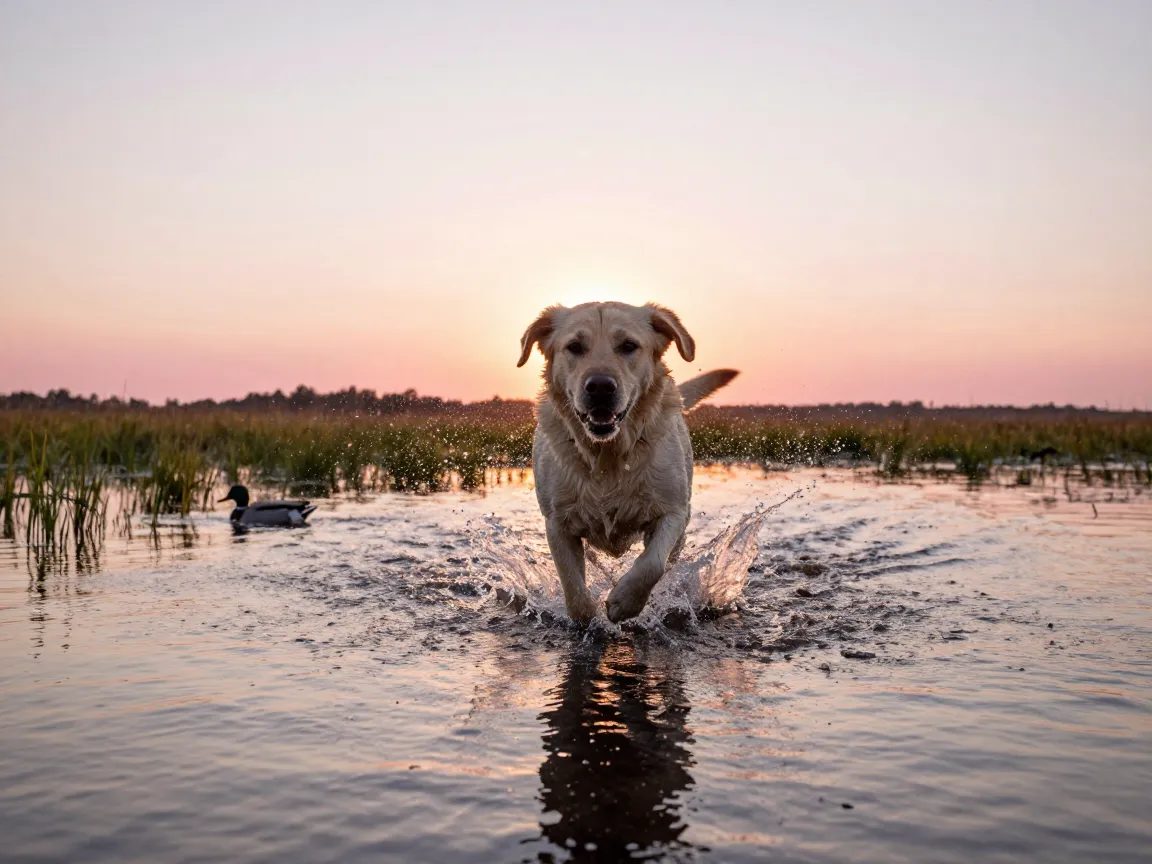
A Labrador Retriever charging through shin-deep marsh water at low angle, with spray frozen mid-air and the horizon visible behind it, produces a type of image that hunting audiences consistently respond to with more engagement than most other subjects. The reasons are partly compositional and partly emotional: water action is dynamic in ways that static poses are not, and dogs carry an affection from hunting audiences that birds alone rarely generate.
The key variable in dog-retrieve backgrounds is camera height. Shooting at water level, with the camera on or just above the surface, puts the horizon line in the middle to upper third of the frame and fills the foreground with water. The dog moves through this environment with spray and ripple around it, and the sky behind becomes a wide, clean background that shifts with the light. Realtree’s duck-photo guidance specifically identifies low angles on running and swimming dogs as among the most effective compositions available to hunters with mid-range cameras and no professional training.
Dawn and dusk light applied to dog retrieve sequences combines this background idea with the golden-hour principle from idea number one. A dog exiting the water backlit by a pink or orange sky, with water droplets scattering light, produces a background that looks produced even when it was completely spontaneous.
One constraint: continuous autofocus tracking matters here more than in almost any other hunting photography context. A dog running directly toward the camera at ten to fifteen yards will outpace single-point manual focus in a fraction of a second. Most modern smartphones in burst mode and mirrorless cameras with subject-tracking AF can handle this, but it’s worth testing before the hunt rather than during.
For displays, a dog-and-bird composition mounted or framed together against a water-and-sky background gives the final product a narrative completeness that a bird-only mount does not.
5. Intentional Motion Blur and Low-Light Abstraction
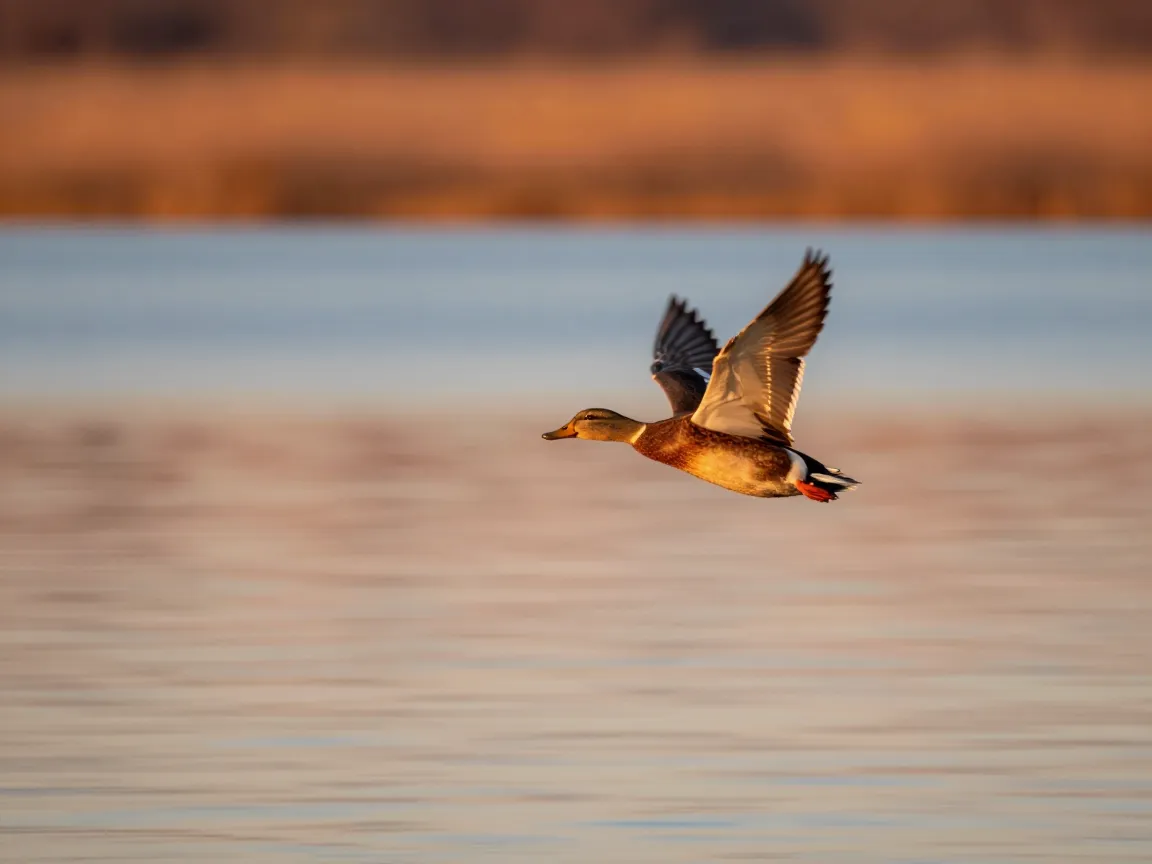
For most of duck hunting’s history in photography, a blurred bird or a streaked background was a failed exposure. That framing has shifted. Current low-light photography guidance now treats panning blur and long-exposure abstraction as deliberate creative choices with their own aesthetic value, particularly for social content and prints where a “painterly” quality reads as artistic rather than technical failure.
The panning technique involves tracking a flying duck or goose with the camera moving at the same angular speed as the bird. The result is a relatively sharp bird against a background that becomes a horizontal streak of blended color. At golden hour or blue hour, those streaks carry the warm-to-cool gradient of the sky, turning the background into an abstract band of amber, coral, and blue that no static exposure can produce. Ducks Unlimited’s low-light guide specifically describes this technique as a way to transform the sky and horizon into an expressive, non-literal backdrop.
The reverse works too: keep the camera fixed on the marsh or horizon and let birds blur through the frame. This produces a sharp, identifiable background of cattails, water, and sky with motion-ghost birds streaking across it. The background becomes the dominant element, and the birds become evidence of motion rather than the main subject. This approach works particularly well in pre-sunrise conditions when the sky has color but no defined sun position.
Practically, shutter speeds in the 1/30 to 1/60 second range produce readable blur on birds in flight without turning them into unrecognizable smears. Exact settings vary with bird species, flight speed, and focal length. A short test sequence before the main action window is the fastest way to calibrate. These images work well as large-format prints where the abstracted background reads as visual texture from across the room.
6. Habitat-Accurate Taxidermy Dioramas
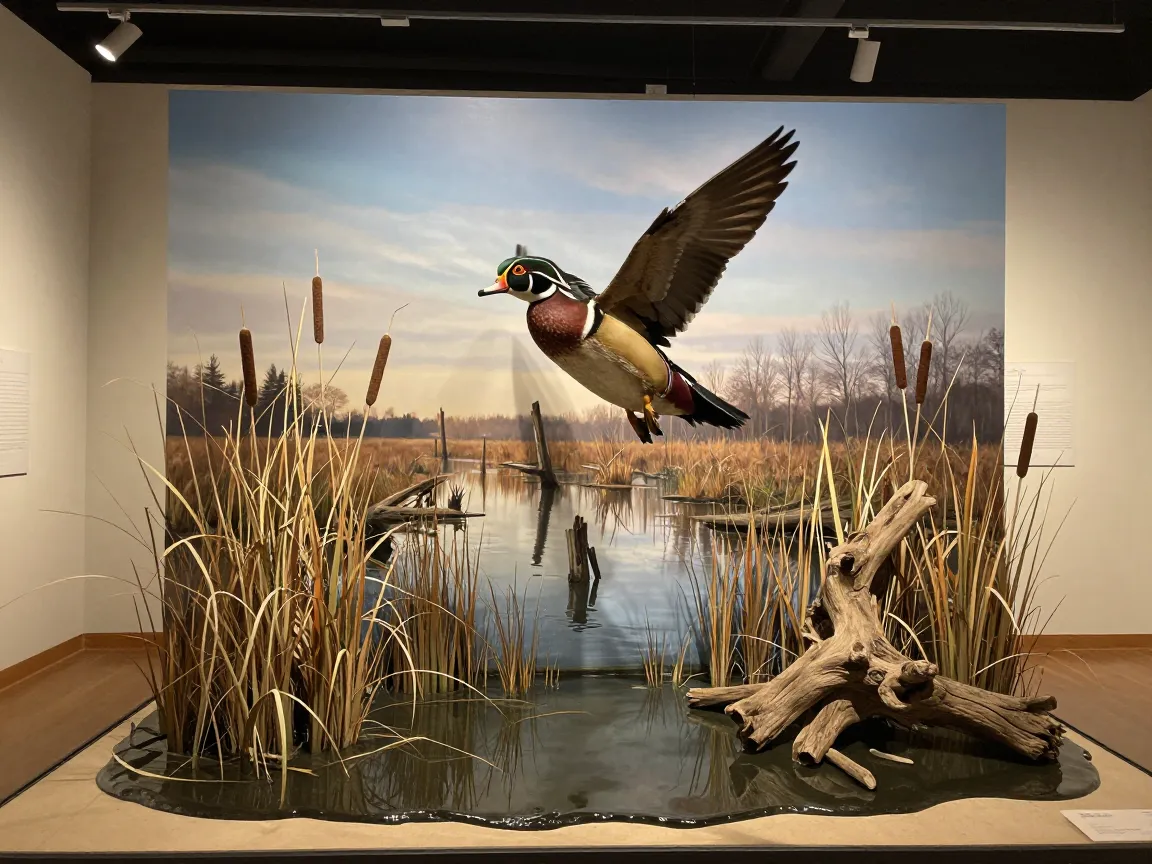
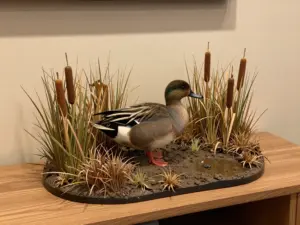
A mounted duck on a driftwood branch against a plain white wall communicates one thing: a bird was harvested and preserved. A mount built into a diorama scene with a painted wetland background, realistic water surfaces, marsh grasses, and a sky panel communicates something more specific about where that bird lived, what habitat it preferred, and what the experience of encountering it looked like. The difference in display impact is significant.
Current taxidermy guidance for waterfowl consistently recommends wetland settings as the preferred background choice for both standing and flying mounts. Specific recommended elements include sculpted or resin water surfaces that reflect the mount, dried or artificial marsh grasses and cattails positioned at realistic angles, painted background panels that depict distant tree lines, sky gradients, and horizon features, and driftwood or textured terrain bases that anchor the composition. The “Last Flight” style of flying mounts, in which birds are posed mid-wingbeat above a water or marsh base, relies almost entirely on the diorama background for its visual logic; without the wetland context, the pose reads as disconnected from any real place.
Painted background panels should be matched to the species on display. A wood duck display benefits from a background showing flooded timber with reflections on still water. A canvasback or redhead mount reads best against an open-water background with low, distant shorelines. Matching the background to the bird’s actual preferred habitat is both aesthetically stronger and accurate in a way that benefits the display’s long-term credibility.
For hunters who commission mounts, it’s worth discussing background choice with the taxidermist before the work begins rather than after. Background panels can be ordered specifically, and the transition from mount base to painted panel requires planning from the initial pose selection forward. A flying mount intended for a diorama background requires different wing positioning than one destined for a bracket mount against a plain wall.
Quick Comparison
| Background Idea | Best Used For | Key Technical Requirement | Works in Taxidermy |
|---|---|---|---|
| Golden-hour sky silhouette | Action shots, flight images | Expose for sky, not subject | Yes, painted sky panels |
| Authentic marsh/river habitat | Portfolio, editorial, documentary | Real location, early-light patience | Yes, naturalistic dioramas |
| Camp and lifestyle scenes | Albums, social content, narratives | Soft natural light, candid timing | No |
| Dog retrieves and water action | Social content, prints | Low angle, continuous AF | Partial (framed photo displays) |
| Motion blur and abstraction | Prints, creative content | 1/30-1/60s panning technique | No |
| Habitat-accurate taxidermy diorama | Mounted displays | Species-matched painted panel | Primary application |
Conclusion
The six ideas covered here, golden-hour sky silhouettes, authentic marsh habitat, camp and lifestyle scenes, dog retrieve sequences, intentional motion blur, and habitat-accurate taxidermy dioramas, are not competing approaches. They’re complementary, and the most complete documentation of a duck hunt uses several of them across a single season. The clearest next step is to identify which one is currently absent from your own photos or display work and plan specifically for it before the next hunt: scout your position for the background it will produce, not just for the decoy spread it allows.