Survival Life Hacks Every Woman Who Fishes Off-Grid Needs to Know
Roughly 21.1 million women fished in the United States in 2025, making up about 37% of all recreational anglers. That number has grown by more than 5 million over the past decade, and a significant portion of that growth has pushed into remote, off-grid water. More women are hauling kayaks down unmaintained forest roads, camping beside backcountry streams, and spending full days beyond cell signal. The gear and fishing knowledge have kept pace. The survival preparation often has not.
Disclosure: This post contains affiliate links. As an Amazon Associate, we earn from qualifying purchases, and at no extra cost to you.
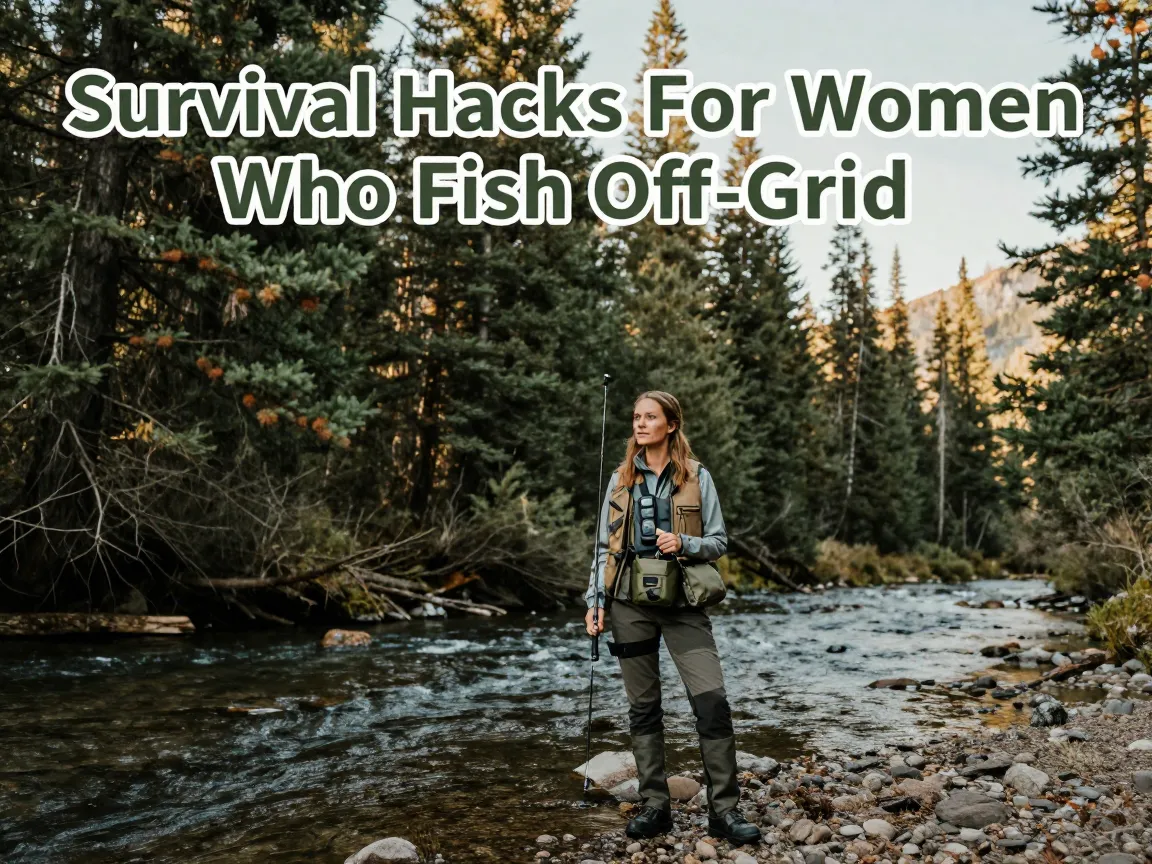
This article covers the 6 survival life hacks every woman who fishes off-grid needs to know, drawn from documented safety guidance, women’s fly-fishing travel resources, and outdoor participation research updated through 2026. These are practical, specific measures that close the gap between a good day on the water and a dangerous one.
Key Takeaways
- File a detailed trip plan with a trusted contact before every off-grid outing, including exact location, expected return time, and a check-in protocol.
- Carry a satellite SOS device or GPS locator as standard gear, not an optional extra.
- Build a compact survival kit around fire, water, shelter, and food, and know how to use every item in it.
- Treat first-aid skills as core fishing skills, not a separate category.
- Women fishing in predator country need a wildlife and personal security plan before they reach the trailhead.
- Knowing local harvest regulations is both a legal obligation and a survival asset when you depend on fish for calories.
1. File a Detailed Trip Plan Before You Leave
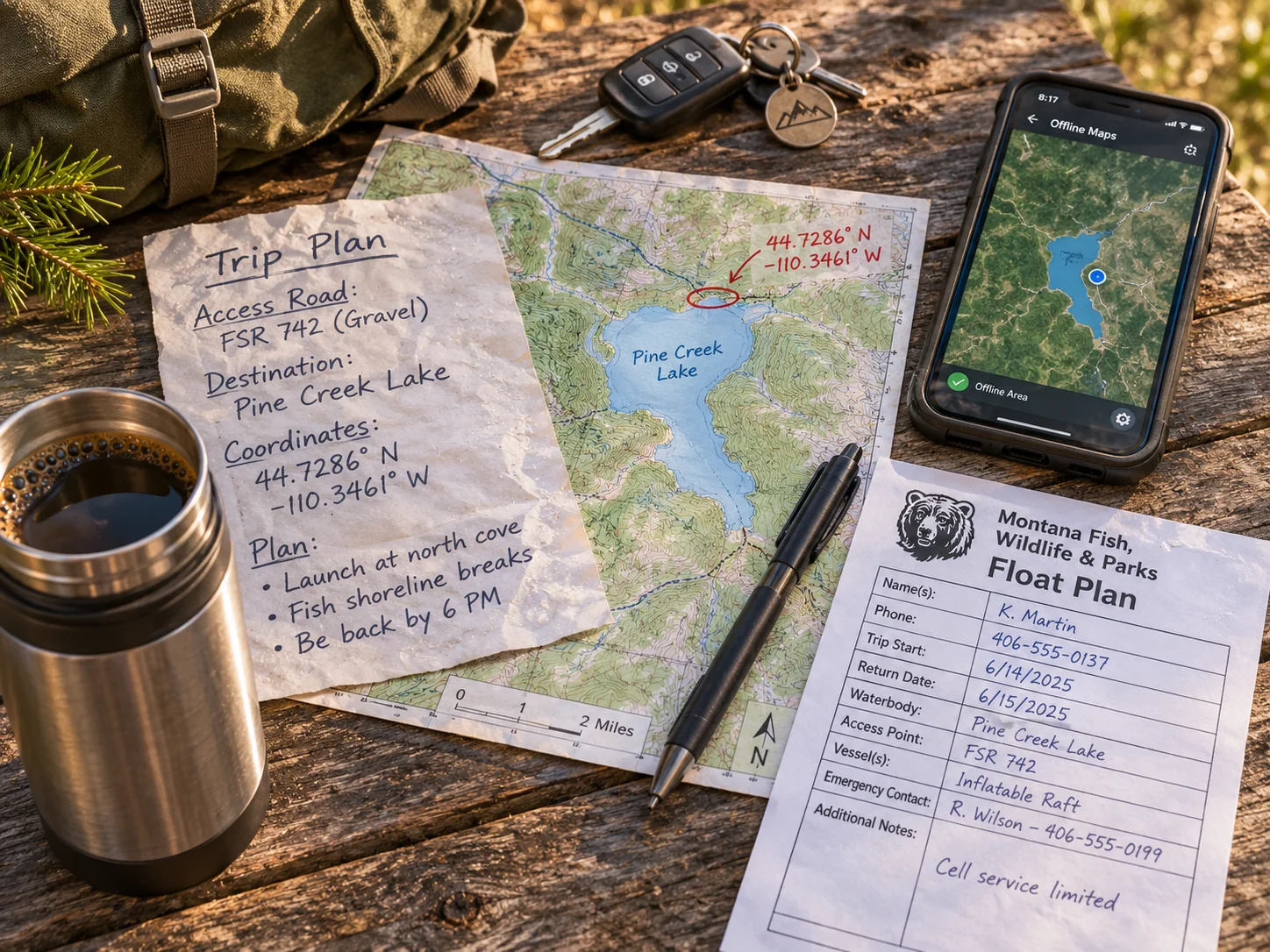
The single most effective safety measure for solo or off-grid fishing costs nothing and takes under ten minutes. Tell a specific, trusted person exactly where you are going, when you plan to return, and at what point they should call for help if they have not heard from you.
A vague “I’m going fishing up north” is not a trip plan. A usable one names the access road, the body of water, and the GPS coordinates or at minimum a clear map reference of your intended location. It includes the time you expect to be back at your vehicle and a hard cutoff: “If I haven’t texted you by 7 p.m. Sunday, call search and rescue.” Some women use a free float plan template from their state’s fish and wildlife agency, which prompts for vehicle description, gear carried, and any medical conditions relevant to rescue.
About 31% of women cite lack of time as a barrier to fishing, which means many women on remote water are squeezing trips into tight windows. That tight window is exactly when late returns happen and when rescuers need accurate information fast. A written trip plan that your contact can hand directly to search and rescue is worth more than any single piece of gear.
2. Carry a Satellite Communicator, Not Just a Phone
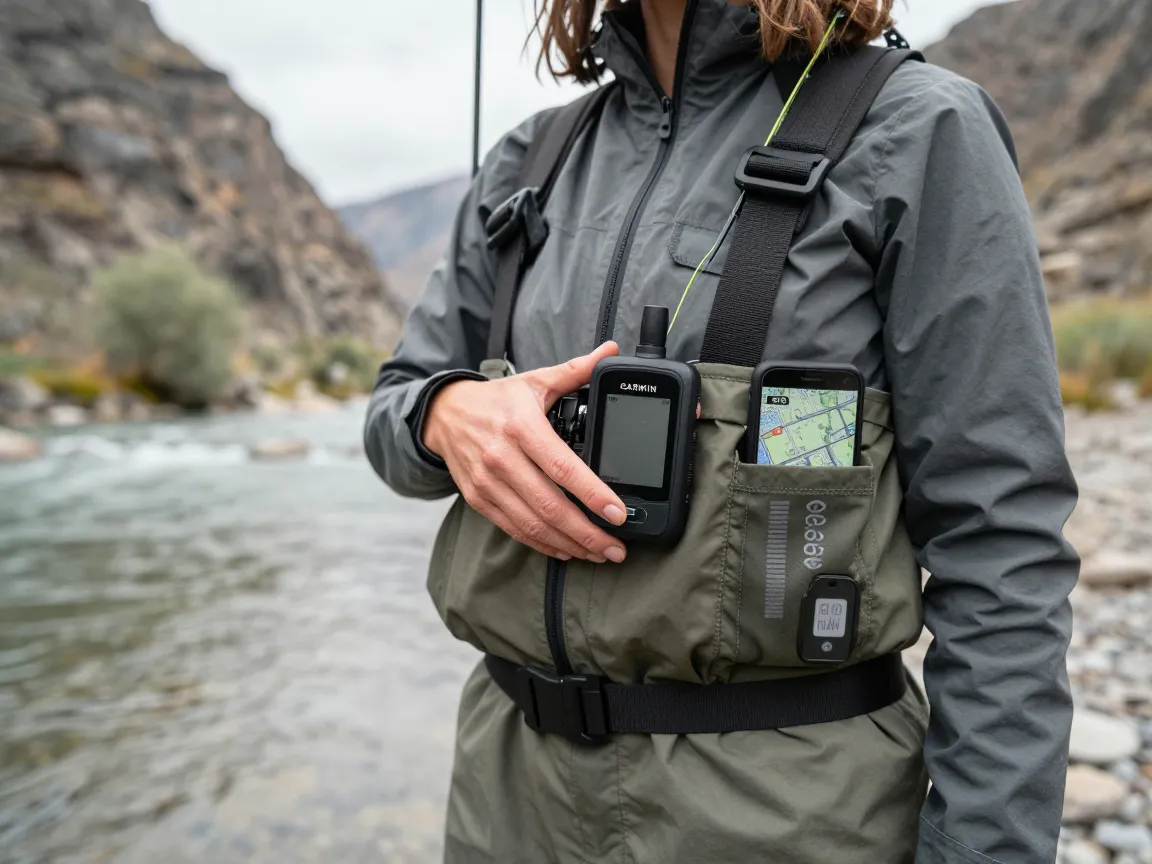
Cell coverage ends well before most good off-grid fishing starts. A smartphone with a downloaded offline map is useful for navigation, but it cannot summon help from a canyon bottom with no signal. A satellite communicator can.
Devices like the Garmin inReach Mini 2 or the SPOT Gen4 transmit your location and an SOS signal to rescue coordination centers via satellite, independent of cellular infrastructure. Some models also allow two-way text messaging so you can communicate with your trip-plan contact or receive weather alerts. Women’s fly-fishing travel guides updated in 2026 categorize these devices alongside rod and reel as non-negotiable gear for remote overnight trips.
Carry the device on your body, not in your dry bag. A communicator at the bottom of your pack does not help if you’re swept downstream or injured and separated from your gear. A chest harness or vest clip keeps it accessible with one hand. Keep the battery charged before each trip, and test the non-emergency check-in function at least once so you know the interface when it matters.
A backup battery pack for your phone adds another layer. If you’re day-tripping and carrying the satellite communicator, a 10,000 mAh battery bank weighs about six ounces and keeps navigation and camera live for a full day.
3. Build a Compact Survival Kit Around Four Functions
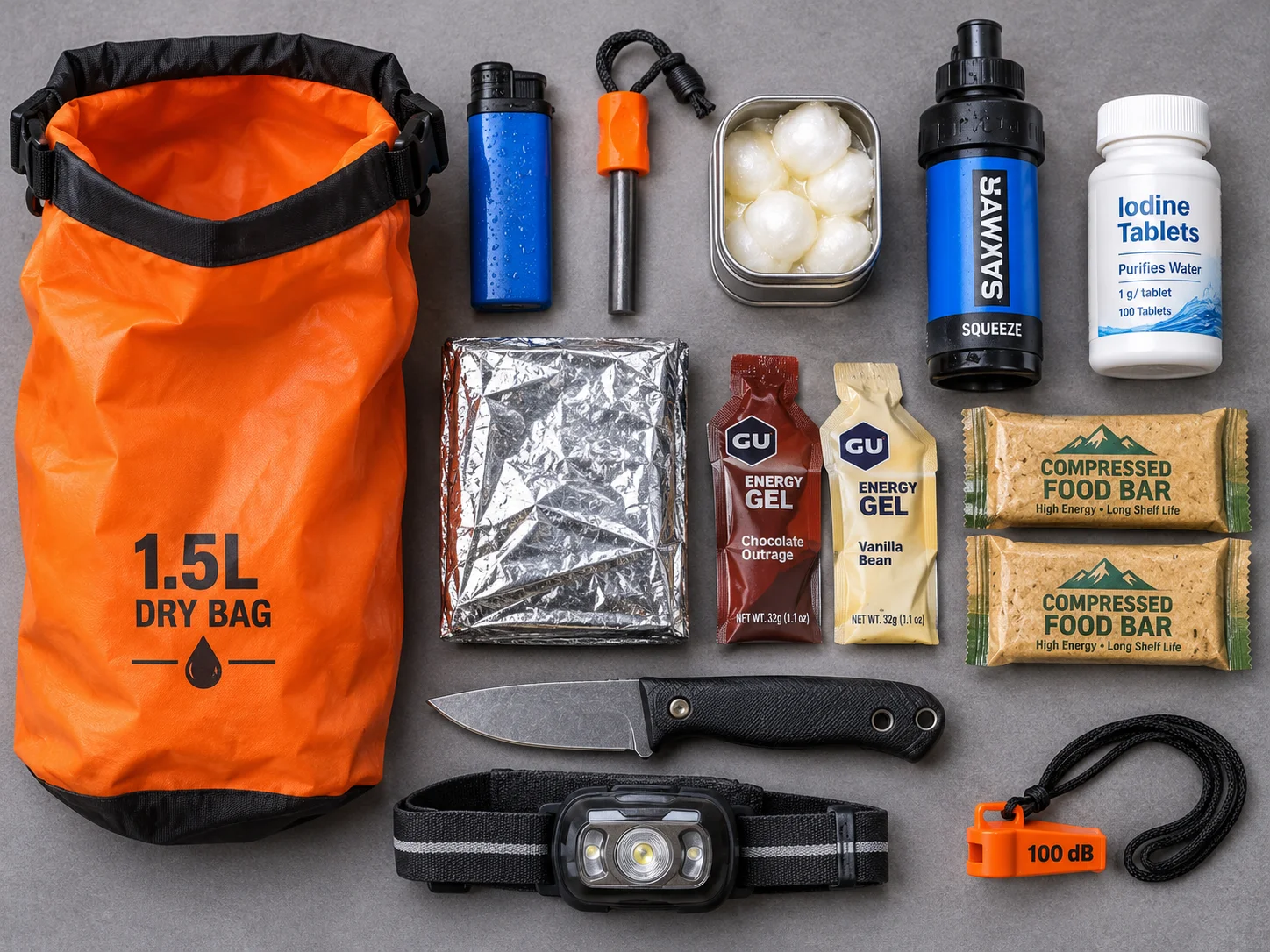
The survival kit that most off-grid women anglers actually need is not a 72-hour emergency bag. It is a small, purpose-built kit organized around four functions: fire, water, shelter, and calories. Every item should earn its weight.
For fire, carry a waterproof lighter, a ferrocerium rod as a backup, and pre-made tinder. Cotton balls coated in petroleum jelly are reliable, cheap, and will catch a spark even damp. For water, a squeeze filter like the Sawyer Squeeze handles most backcountry water sources, and a small supply of iodine tablets covers situations where the filter is lost or frozen. For shelter, a compact emergency space blanket (the heavier foil type, not the crinkle-thin version) reflects enough heat to prevent hypothermia during an unexpected overnight. For calories, energy gels or compressed food bars add minimal weight and can sustain function for 12 to 24 hours without cooking.
Add a fixed-blade knife of at least three inches, a small headlamp with fresh batteries, and a whistle rated to 100 decibels or louder. If you are staying overnight, a full first-aid kit replaces the basic blister-and-bandage pouch. The whole day-trip kit fits in a 1.5-liter dry bag clipped inside your fishing vest.
The kit fails if you don’t know how to use it. Practice starting a fire with the ferrocerium rod before a trip where you need it. Run water through the filter at home so you know how much resistance is normal. That ten minutes of practice is what separates gear from actual capability.
4. Manage Exposure Before It Becomes an Emergency
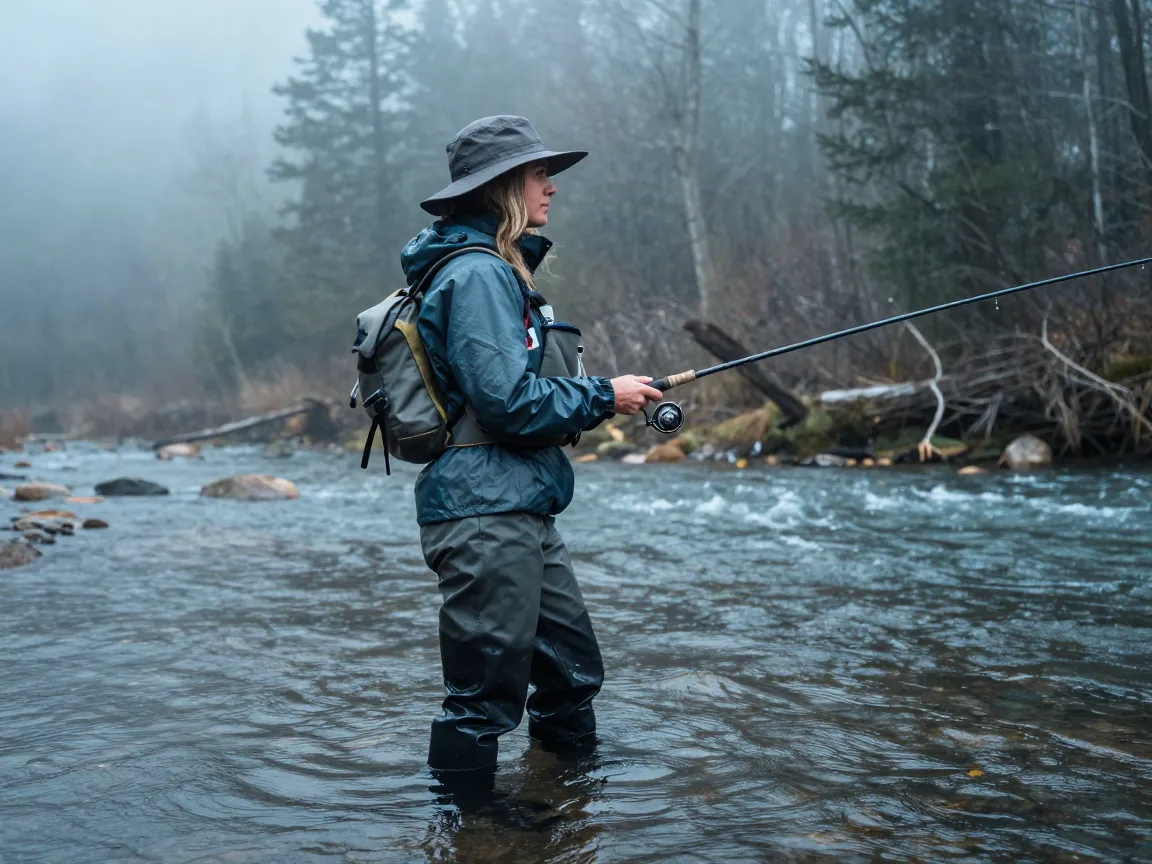
Hypothermia and heat illness are the two most common ways that a productive fishing trip becomes a medical emergency, and both are preventable with the same underlying habit: making deliberate decisions about thermal exposure rather than reacting after symptoms start.
For cold-water environments, the standard is layers, not bulk. A moisture-wicking base layer, an insulating mid-layer, and a waterproof shell give you a system you can adjust as conditions change. Waders keep you dry while wading, but if you capsize or wade too deep, water-soaked clothing against cold skin drops core temperature in minutes. Neoprene waders provide insulation when wet; breathable waders do not. Know which you are wearing and what your plan is if you go in. When fishing solo from a kayak or small boat, a properly fitted personal flotation device is not optional. 2026 solo fishing guidance frames PFD use as mandatory, not recommended, for solo anglers, particularly those who are smaller-framed or carrying heavy gear that would impede swimming.
In hot weather, the risk flips. Fishing in direct sun from an exposed bank or boat, without shade or hydration, creates heat exhaustion risk in two to three hours. A wide-brim hat, sunscreen with an SPF of at least 30, and at least half a liter of water per hour in high temperatures are the working numbers. Electrolyte tabs added to water help if you’re sweating heavily over a full day.
Overnight trips in the backcountry add sleeping bag rating to this equation. A bag rated to 20 degrees Fahrenheit provides meaningful margin if temperatures drop unexpectedly; a bag rated to 40 degrees becomes a problem when it’s 35 at 2 a.m. Check the forecast for the full trip window, not just daytime high temperatures.
5. Have a Wildlife and Personal Security Plan
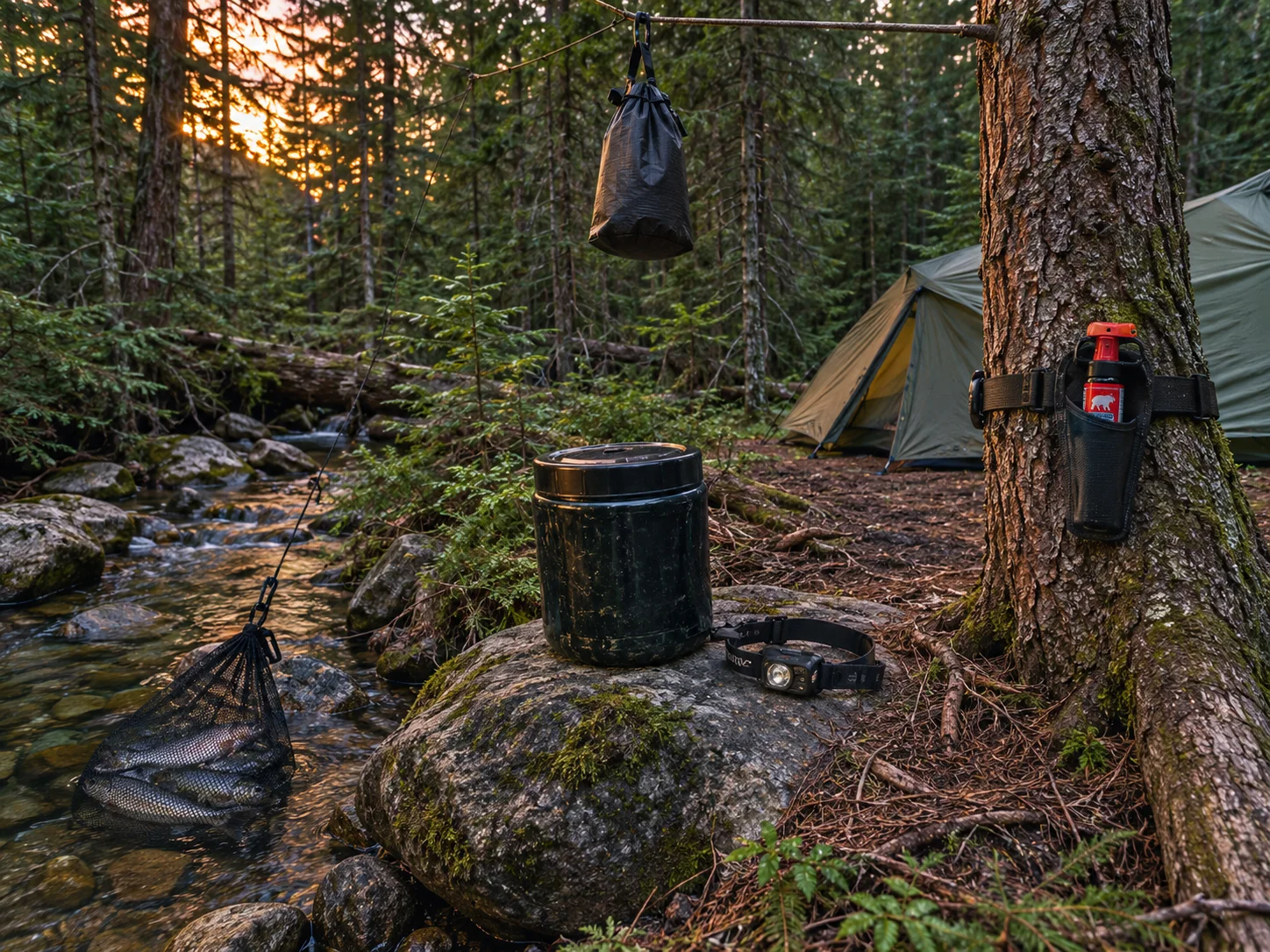
Women fishing in bear country, mountain lion territory, or remote areas where they may encounter other people need a security plan that is thought through before they park the truck, not improvised on the trail.
For wildlife, bear spray is the most broadly recommended deterrent for grizzly and black bear encounters. The effective range is roughly 30 feet, and it must be accessible within two seconds, meaning carried in a hip holster, not inside a pack. Practice drawing it. Some experienced backcountry anglers also carry a firearm, and in areas with dense grizzly populations, a large-caliber sidearm is a recognized secondary option. What matters most is knowing how to use whatever you carry before you need it.
Fish scent and bait attract bears. Keep your catch in a mesh bag in the water while fishing, clean fish well away from camp, and store all food and scented items in a bear canister or hang them at least 10 feet off the ground and 4 feet from the tree trunk when camping. These are habits that reduce encounters rather than manage them after the fact.
Personal security for solo women in remote areas involves a few direct measures. Trust your instincts about people you encounter. Have a clear plan for what you do if someone makes you uncomfortable: know your exit route back to the trailhead, know where your satellite communicator is, and do not share your solo status or campsite location with strangers. This is not about being fearful on the water. It is about making deliberate decisions before they’re needed.
6. Know the Regulations and Your First Aid
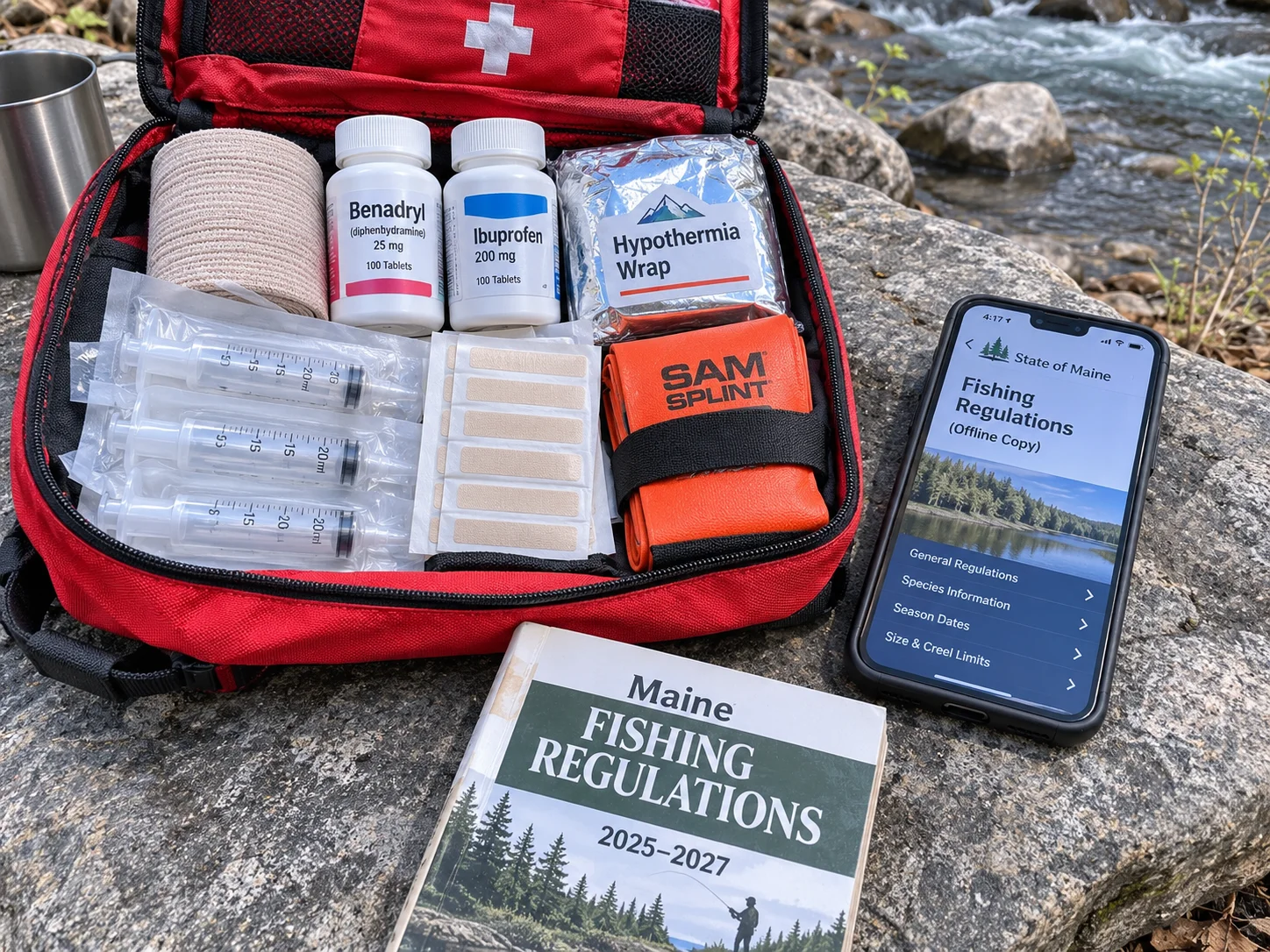
These two skills belong together because both involve knowing the rules of your specific environment before they become urgent. Neither is optional for women fishing off-grid for food.
Harvest regulations vary by state, water body, and species. Size limits, bag limits, and seasonal closures exist not only for conservation but because they determine how much protein you can legally and sustainably pull from a backcountry lake. If you are depending on fish as a food source during a multi-day off-grid trip, you need to know the daily limit and minimum size for every species you’re targeting before you arrive. Fishing apps like FishBrain or your state agency’s digital reg book allow offline access to regulations, which matters when you’re out of signal range.
First aid is the more urgent skill. Women’s outdoor communities consistently report that first-aid knowledge is treated as optional rather than foundational, and that changes when you are two hours from a road with a deep hook wound or early signs of hypothermia. A Wilderness First Aid (WFA) course covers exactly the scenarios that occur off-grid: wound management, hypothermia recognition and treatment, sprain and fracture stabilization, and allergic reaction response. The standard course runs 16 to 20 hours over a weekend and certifies you for three years. Organizations like NOLS and the Wilderness Medical Associates run these courses nationally.
The practical kit to match these skills includes irrigation syringes for wound cleaning, adhesive wound closure strips, SAM splints, an elastic bandage, a small supply of diphenhydramine for allergic reactions, ibuprofen, and a hypothermia wrap. For hooks specifically, the string-pull technique for removing a hook without barb advancement is a 30-second skill worth learning before your first solo trip.
Knowing local regulations and carrying the ability to handle your own injuries means you can operate farther from help with real confidence, not just the feeling of confidence. That is what separates a prepared off-grid angler from someone who is simply getting lucky.
Quick Comparison
| Hack | Primary Risk Addressed | Minimum Gear Required | Skill Level Needed |
|---|---|---|---|
| 1. Trip Plan | Delayed rescue | Notepad or digital form | None |
| 2. Satellite Communicator | No-signal emergencies | GPS SOS device, backup battery | Basic device operation |
| 3. Survival Kit | Weather, injury, delay | Knife, filter, blanket, fire tools, food | Practice with each item |
| 4. Exposure Management | Hypothermia, heat illness | Layered clothing, PFD, hydration | Situational awareness |
| 5. Wildlife and Personal Security | Animal and human threats | Bear spray, secure food storage | Pre-trip rehearsal |
| 6. Regulations and First Aid | Legal risk, medical emergency | First-aid kit, offline reg access | WFA course recommended |
Conclusion
Women now make up more than a third of all anglers in the United States, and a growing share of them are fishing in genuinely remote, off-grid conditions. The 6 survival life hacks every woman who fishes off-grid needs to know are not complicated. They are specific, rehearsable, and within reach before your next trip.
The most useful next step is the one with the lowest barrier: write a trip plan for your next outing, hand it to a specific person, and agree on an exact check-in time. That single habit has ended more search-and-rescue operations faster than any other measure. Build the other five habits around it.