Camping Gear Survival Hacks That Keep You Safe When the Fish Aren’t Biting
Every year, thousands of anglers head out for a fishing-centric camping trip and find themselves with hours of unexpected downtime on their hands. When the bite goes cold, the gap between a comfortable wait and a genuinely dangerous situation comes down almost entirely to what gear you packed and how you’ve set up camp. The 6 camping gear survival hacks that keep you safe when the fish aren’t biting covered here aren’t about catching more fish. They’re about making sure a slow day on the water doesn’t turn into an emergency on shore.
Disclosure: This post contains affiliate links. As an Amazon Associate, we earn from qualifying purchases, and at no extra cost to you.
Key Takeaways
- A compact, pre-assembled multi-tool survival kit replaces several single-purpose items and covers fire, navigation, and signaling in one package.
- Cheap materials like contractor trash bags, poly tarps, and petroleum jelly-coated cotton can substitute for specialized shelter and fire-starting gear at a fraction of the cost.
- Personal flotation devices belong on your body, not in the boat, any time you’re near open water, even when you’re standing on shore waiting out a slow bite.
- A camp safety kit covering burns, sun exposure, and insect bites addresses the actual injury risks at a fishing camp, which are far more common than food scarcity.
- Redundant light sources and LED rope lighting around camp prevent nighttime tripping injuries that most anglers never think to plan for.
- Skill-based preparation, wilderness first aid, a written hazard plan, and practiced signaling techniques, determines outcomes in real emergencies more reliably than gear alone.
1. Build a Compact Multi-Tool Survival Kit Before You Leave Home
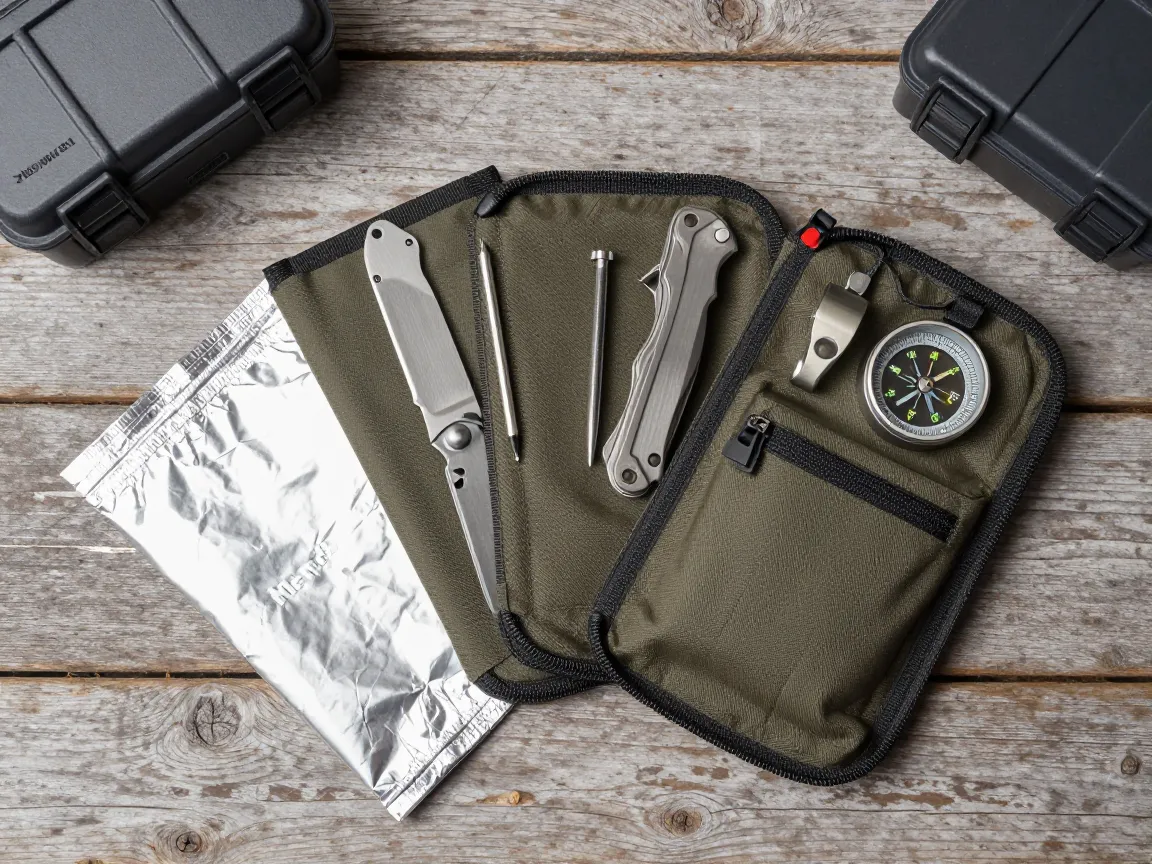
The single most common gap in fishing-trip packing is treating safety gear as optional. A 19-in-1 pre-assembled survival kit, the kind that includes a fire starter, compass, emergency whistle, folding knife, and emergency mylar blanket in one pouch, weighs about the same as a medium tackle box and fits in a day bag. When the fish aren’t biting and you decide to take a solo hike or scout a new bank, that kit is what allows you to handle a rolled ankle, start a fire for warmth, and signal rescuers if something goes wrong.
The emergency blanket deserves specific mention. A standard mylar blanket retains roughly 90 percent of body heat, which matters if you’ve been wading in cold water for three hours and the temperature drops after sundown. It also functions as a signal mirror in direct sunlight, making it one of the most versatile items in the kit.
Treat the kit as non-negotiable tackle, not optional insurance. Set a rule: the kit goes in the bag every single time, regardless of how close to the trailhead you plan to stay. The majority of wilderness rescues involve people who didn’t expect to need help when they set out.
2. Use Contractor Bags and Poly Tarps as Backup Shelter
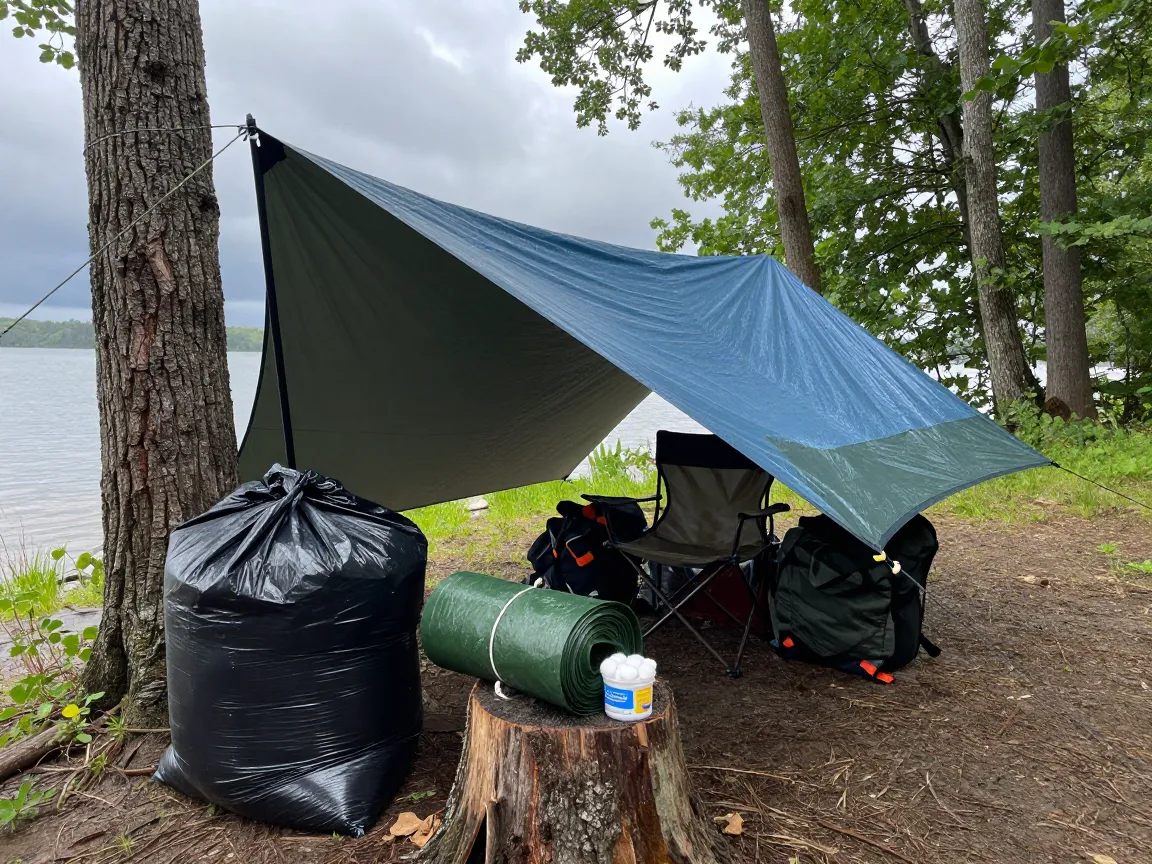
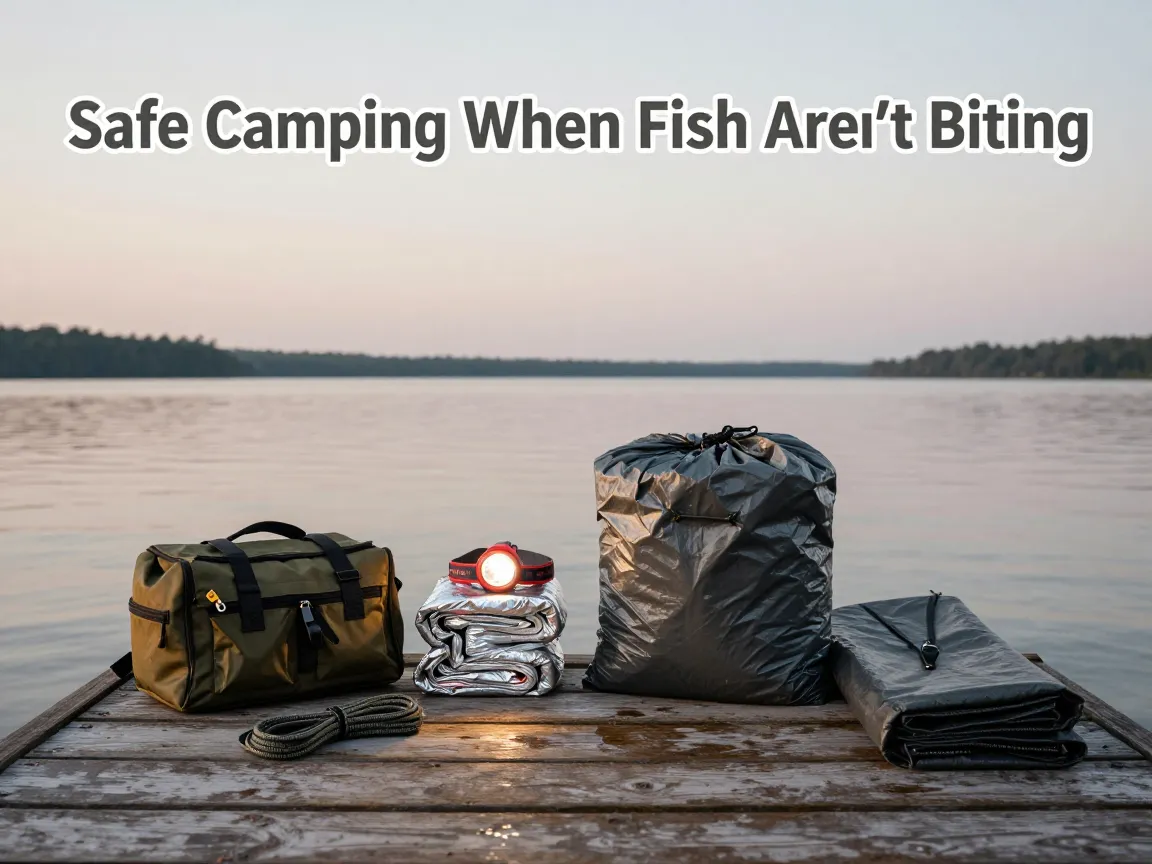
Specialized ultralight tents and high-end rain gear are convenient, but they aren’t the only way to stay dry and warm when conditions deteriorate. A 55-gallon contractor trash bag, available at most hardware stores for about $0.50 each, can be cut into a functional emergency poncho or used as a waterproof liner inside a backpack. If your camp chair gets soaked or your sleeping bag takes on moisture, a contractor bag buys you time until conditions improve.
A 10-by-12-foot poly tarp, which typically runs $15 to $20, can be rigged as a rain fly or lean-to shelter using paracord and nearby trees. That setup won’t win any comfort awards, but it keeps rain and wind off your gear and gives you a dry surface to work from. Paracord itself, 550-pound test is the standard, handles lashing, clothesline duty, and emergency repairs to fishing gear with equal ease.
The logic behind budget substitutes isn’t just cost savings. It’s redundancy. If your primary shelter stakes get lost or a gust collapses your tent, having a backup tarp already in the pack means you’re not problem-solving from zero in the dark. Dedicated anglers who spend a lot of time on exposed banks or open lake shores are particularly exposed to sudden weather shifts, and those shifts tend to happen fastest when the fish are least active.
For fire-starting backup, cotton balls coated in petroleum jelly cost about $4 for a large batch and light reliably in wind and damp conditions. Store them in a small waterproof container. They’re not glamorous, but they work when commercial fire starters get wet.
3. Never Leave Shore Without a Personal Flotation Device
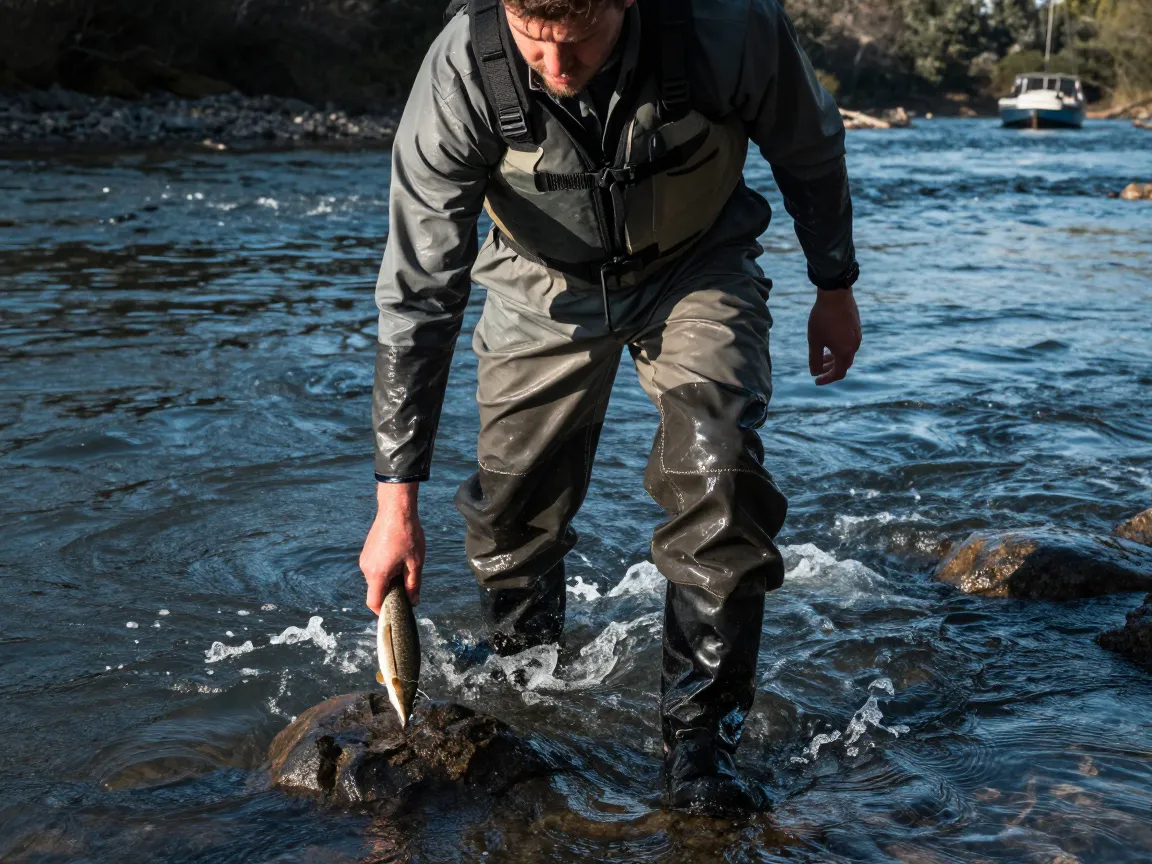
This one has nothing to do with the quality of the fishing. The U.S. National Park Service is consistent on this point: personal flotation devices should be worn, not stored in the boat, not clipped to a belt loop, any time you’re on, in, or immediately adjacent to open water. That guidance was reaffirmed in updated NPS materials in late 2026 and applies equally to adults and children.
For kids, sizing matters specifically. An adult life jacket on a small child provides almost no protection because the buoyancy isn’t distributed correctly for their body weight. Children should always wear a PFD rated for their actual weight range, and it should be fastened properly before they reach the waterline.
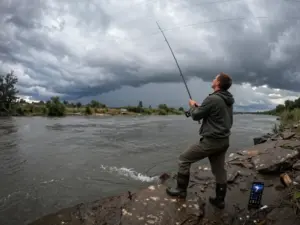
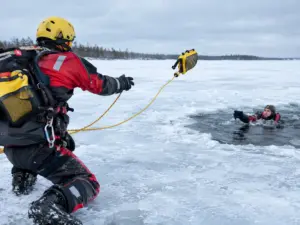
The practical angle for fishing trips is this: wading anglers who spend long periods in moving water without catching anything tend to push further into the current looking for better holding water. Cold water immersion, even in water that feels manageable, causes rapid muscle incapacitation. A wading belt or inflatable PFD worn consistently is what keeps a stumble from becoming a drowning. Felt-sole wading boots add grip on slick rock, and waterproof waders with stitchless seams reduce the risk of cold-water flooding if you do go down.
None of this gear prevents you from having a slow day on the water. It does prevent that slow day from ending badly.
4. Pack a Dedicated Camp Safety Kit for the Injuries That Actually Happen
Starvation isn’t the realistic risk on a fishing trip where the fish aren’t biting. Burns from camp stoves, sunburn from full-day exposure on open water, insect bites and stings, and minor cuts from hooks and fillet knives are. A camp safety kit built around those actual hazards is more useful than a generic wilderness first-aid kit stocked for scenarios you’re unlikely to face.
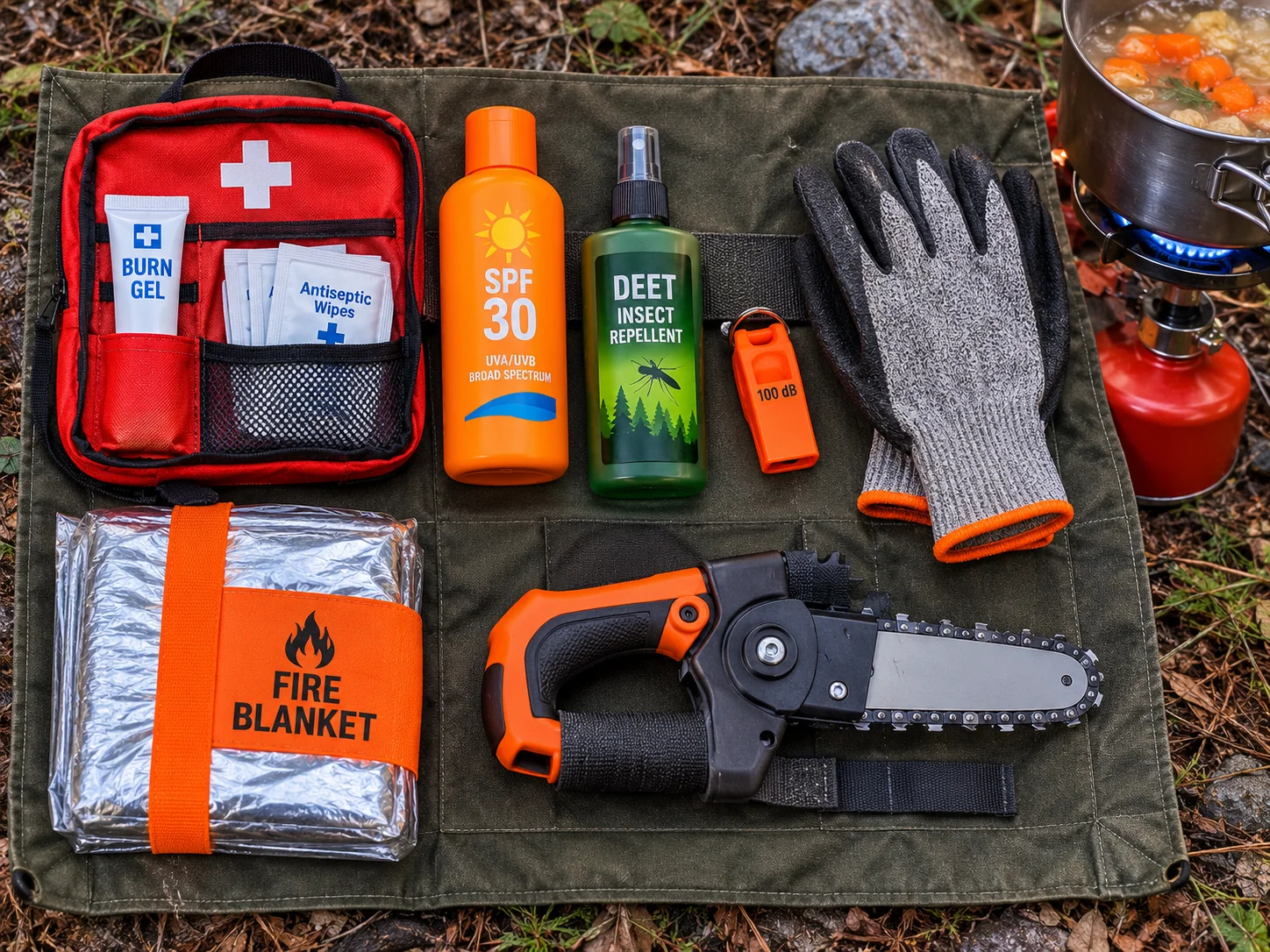
The core items for a fishing-specific safety kit include a compact first-aid kit with burn gel and antiseptic wipes, broad-spectrum sunscreen rated SPF 30 or higher, DEET-based or picaridin insect repellent, a whistle rated to 100 decibels or louder for signaling, cut-resistant gloves for handling fish and processing firewood, and either a small fire extinguisher or a fire blanket appropriate to your cooking setup. If you’re using a pressurized camp stove, a fire blanket stored within reach of the cooking area can suppress a flare-up before it spreads.
Retail gear categories at major outdoor stores in 2026 have moved toward treating these items as integral to tackle selection rather than afterthoughts. That framing is correct. The same care you put into choosing the right lure for the conditions you expect should apply to preparing for the injury risks those conditions carry.
A survival hand chainsaw, a compact chain tool that fits in a palm, is worth including if you camp in areas where downed timber is common. It processes firewood without requiring a full-size axe and handles emergency clearance if a storm drops a branch across your tent or vehicle path.
5. Set Up Redundant Lighting to Prevent Camp Injuries After Dark
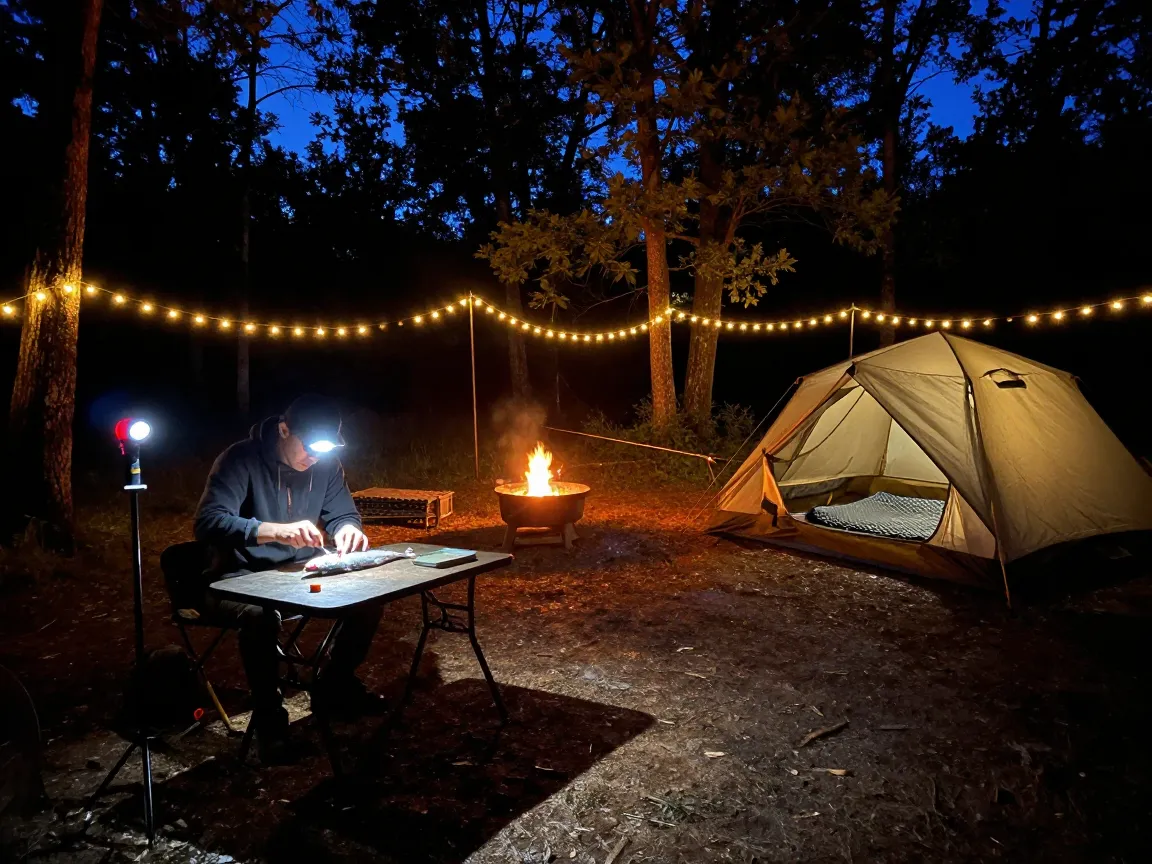
Most fishing-trip injuries that happen at night aren’t dramatic. They’re a tripped tent stake in the dark, a stumble over a cooler, or a burn from a camp stove that someone couldn’t quite see clearly. Redundant lighting is a straightforward fix that most fishing-trip checklists underweight.
The minimum setup is a primary headlamp with fresh batteries and a backup flashlight stored separately. Headlamps keep both hands free for camp tasks, which matters when you’re filleting fish or adjusting a tarp in the rain. Backup flashlights should be stored in a known, fixed location, not wherever someone last set them down.
Glow-in-the-dark rope or battery-powered LED string lights rigged between trees around the perimeter of a camp make a significant difference after dark. They mark the edge of the cooking area, outline tent guy-lines that are almost invisible at night, and reduce the chance of someone walking into a fire ring. This isn’t a luxury upgrade. It’s a straightforward injury-prevention measure that costs under $15 and takes five minutes to set up.
Foam sleeping pads and extra blankets serve a secondary safety function beyond comfort: they provide ground insulation that keeps body heat from being drawn away by cold earth. In late-season fishing conditions where overnight temperatures drop faster than expected, adequate insulation is a hypothermia prevention measure, not just a comfort choice.
6. Use Downtime to Build Survival Skills and Write a Camp Hazard Plan
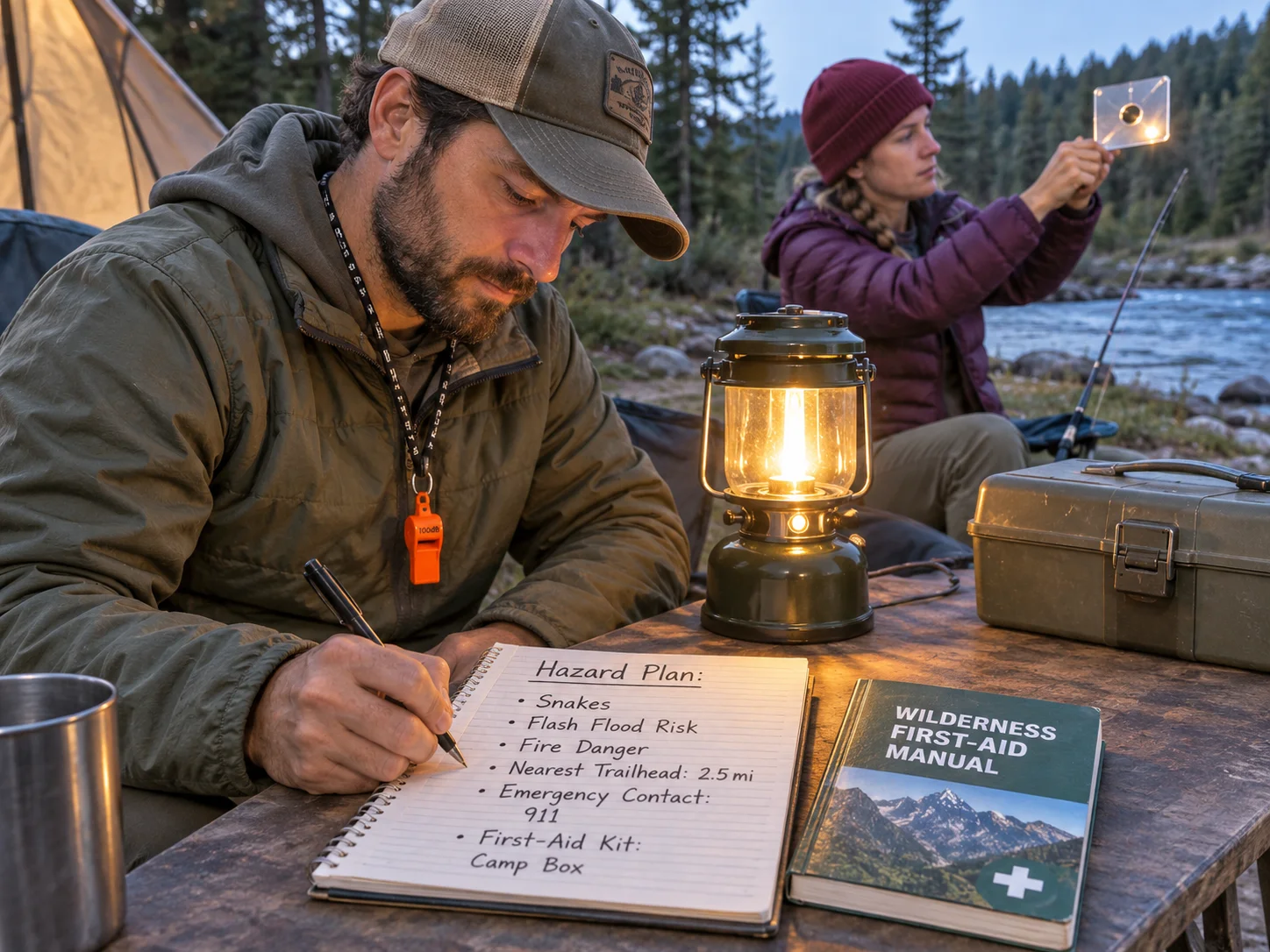
Gear without knowledge has limits. When the fish aren’t biting and you have hours of unstructured time at camp, that time has real value if you use it to practice skills and document a safety plan rather than simply waiting out the slow bite.
A written hazard plan doesn’t need to be complicated. It should answer four questions: What are the specific hazards at this location (rattlesnakes, flash flood risk, fire danger, boat traffic)? Where is the nearest trailhead or road exit? What is the emergency contact plan if someone doesn’t return by a specified time? Where is the first-aid kit and who knows how to use it? Writing those answers down and sharing them with everyone in the group before the trip starts takes less than 30 minutes and resolves ambiguity at exactly the moment when clear thinking is hardest.
Wilderness first-aid training is the skill-based investment that pays off most reliably. A standard Wilderness First Responder course runs 70 to 80 hours, but even a one-day Wilderness First Aid course teaches hemorrhage control, spinal injury assessment, and evacuation decisions that are directly applicable at remote fishing camps. The gap between knowing what to do and guessing is particularly consequential in locations where evacuation time is measured in hours.
Practiced signaling is the other skill worth building during downtime. A signal mirror can be seen from a rescue aircraft at distances up to ten miles in clear conditions. Three blasts on a whistle is the universal distress signal. Knowing how to use both, and having them on your person rather than in the camp bag, requires deliberate practice, not just ownership of the tools.
Quick Comparison: 6 Survival Hacks at a Glance
| Hack | Primary Gear | Key Benefit | Approximate Cost |
|---|---|---|---|
| 1. Multi-tool survival kit | 19-in-1 compact kit | Fire, navigation, signaling in one pouch | $20,$40 |
| 2. Contractor bag and tarp shelter | 55-gal bags, 10×12 poly tarp, paracord | Waterproof backup shelter and rain cover | $15,$25 |
| 3. Personal flotation device | Weight-rated PFD or wading belt | Drowning prevention near open water | $30,$120 |
| 4. Camp safety kit | First-aid, sunscreen, repellent, gloves | Addresses actual fishing-trip injury risks | $40,$80 |
| 5. Redundant lighting | Headlamp, backup light, LED camp rope | Prevents nighttime tripping and burns | $15,$50 |
| 6. Hazard plan and skills | Written plan, first-aid course, whistle | Resolves emergencies when gear isn’t enough | $0,$300 |
Conclusion
The 6 camping gear survival hacks that keep you safe when the fish aren’t biting share a common thread: they all address the gap between what anglers plan for and what actually goes wrong at camp. A multi-tool survival kit, improvised shelter materials, a PFD worn consistently, a targeted safety kit, redundant lighting, and a written hazard plan backed by practiced skills cover the realistic failure points on a fishing-centric trip.
The clearest next step is to audit your current pack against that list before the next trip. Most of these items cost under $50 each. The survival hand chainsaw, the contractor bags, the LED rope lighting, and the fire blanket can all be added in a single hardware-store run. The written hazard plan costs nothing and takes half an hour. Start there.