Fishing Photo Booth Ideas That Hook Every Guest
Fishing expos consistently rank among the fastest-growing niche trade shows in North America, with attendance at major events like ICAST regularly exceeding 15,000 industry professionals and enthusiasts in a single week. That appetite for shared, visual experiences at fishing events is real, and it creates a specific problem: standard photo booths look out of place next to rod displays and mounted trophy fish. The 6 fishing photo booth ideas that hook every guest in this guide are built around the actual environment, the actual guests, and the actual gear they already care about. Each idea can work for a lakeside wedding, a corporate fishing tournament, a tackle brand activation, or a neighborhood fishing derby.
Disclosure: This post contains affiliate links. As an Amazon Associate, we earn from qualifying purchases, and at no extra cost to you.
Key Takeaways
- Match the booth format to the physical environment: piers, boats, and exposed lakesides need portable, weather-resistant setups.
- AR and 360-degree formats generate the most social sharing from fishing audiences, keeping your event visible after the last cast.
- Rustic wooden and eco-conscious designs outperform generic chrome or white booths at fishing-themed events on visual cohesion alone.
- Voice-activated and hands-free booths solve a real problem: guests with wet or baited hands cannot work a touchscreen.
- AI personalization is no longer a premium add-on; in 2026, guests expect “catch-of-the-day” customization as a baseline feature.
1. Augmented Reality Fishing Environment Booth
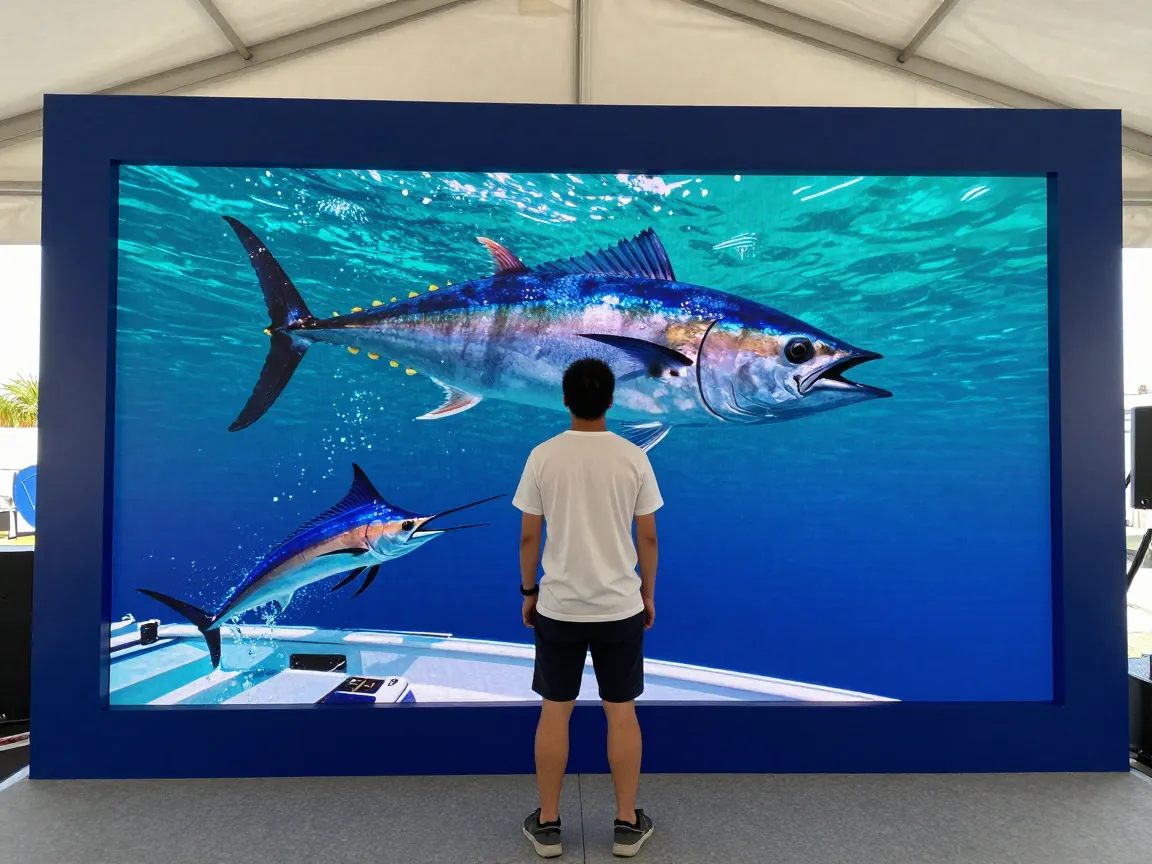
AR photo booths have moved well past the novelty phase. At fishing events, they solve a genuine display problem: not every venue has the physical space or budget to build a full set with real water, boats, and tackle. An AR setup projects virtual fish, animated waves, underwater scenery, and even a digital marlin breaking the surface directly into the live camera frame, all without a single prop that needs to be hauled from a storage van.
The technical side is simpler than it sounds. Most commercial AR photo booth vendors offer pre-loaded fishing asset packs. Guests stand in front of a large display, and the camera tracks their position in real time. The overlay places a digital bluefin tuna mid-air beside them or layers a boat beneath their feet. Some platforms let event staff swap the fish species to match a sponsor, a bass tournament sponsor gets bass overlays, a saltwater charter company gets sailfish.
Where AR setups earn their cost is in shareability. A guest holding a virtual 200-pound swordfish produces an image that people actually text to friends. The image carries the event brand automatically because the digital frame and overlay include it. For tournaments and brand activations in 2026, that passive reach after the event ends is often worth more than the foot traffic at the booth itself.
One practical consideration: AR quality degrades in direct bright sunlight without a canopy or shade structure. Plan for a pop-up tent or position the booth in existing shade. The camera contrast range matters more than most vendors admit upfront.
2. 360-Degree “Cast and Spin” Video Booth
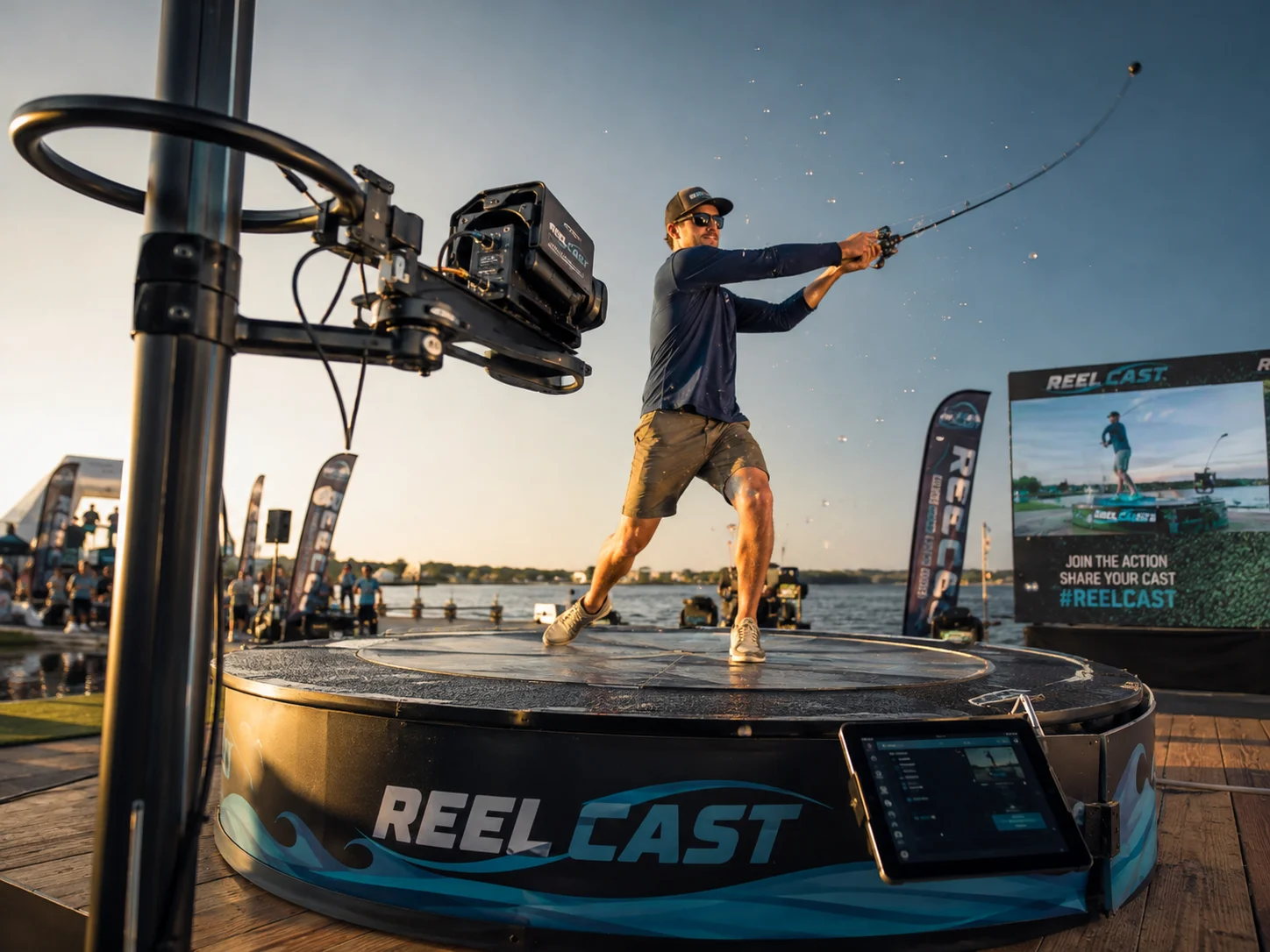
A 360-degree booth records a slow-motion video clip rather than a single photograph. The camera arm rotates around the guest while they perform an action, in this context, a mock fishing cast is the natural move. The result is a dramatic, cinematic clip that runs about 10 to 15 seconds, automatically branded with the event overlay, and ready to share directly to social media from an attached tablet.
These booths remain one of the strongest entertainment trends at outdoor events precisely because they produce content that photographs cannot. A still image of someone pretending to reel in a fish is ordinary. A slow-motion 360-degree video of someone mid-cast, with a branded wave effect layered over the footage, looks like something a production company created.
For fishing tournaments and brand activations, the cast-and-spin format maps directly onto the sport’s natural physical gestures. Guests already know what a casting motion looks like. The booth gives that motion a dramatic, shareable result. Event staff can position a foam or prop fishing rod on-site so guests do not need to bring their own gear.
Logistics need attention. The 360-degree platform requires a level surface of roughly 10 to 12 square feet. At lakeside events, this means a portable flooring panel or a stable wooden platform built in advance. The arm assembly is not easily moved once set, so location selection before the event is a fixed decision.
3. Rustic Wooden and Eco-Friendly Booth Design
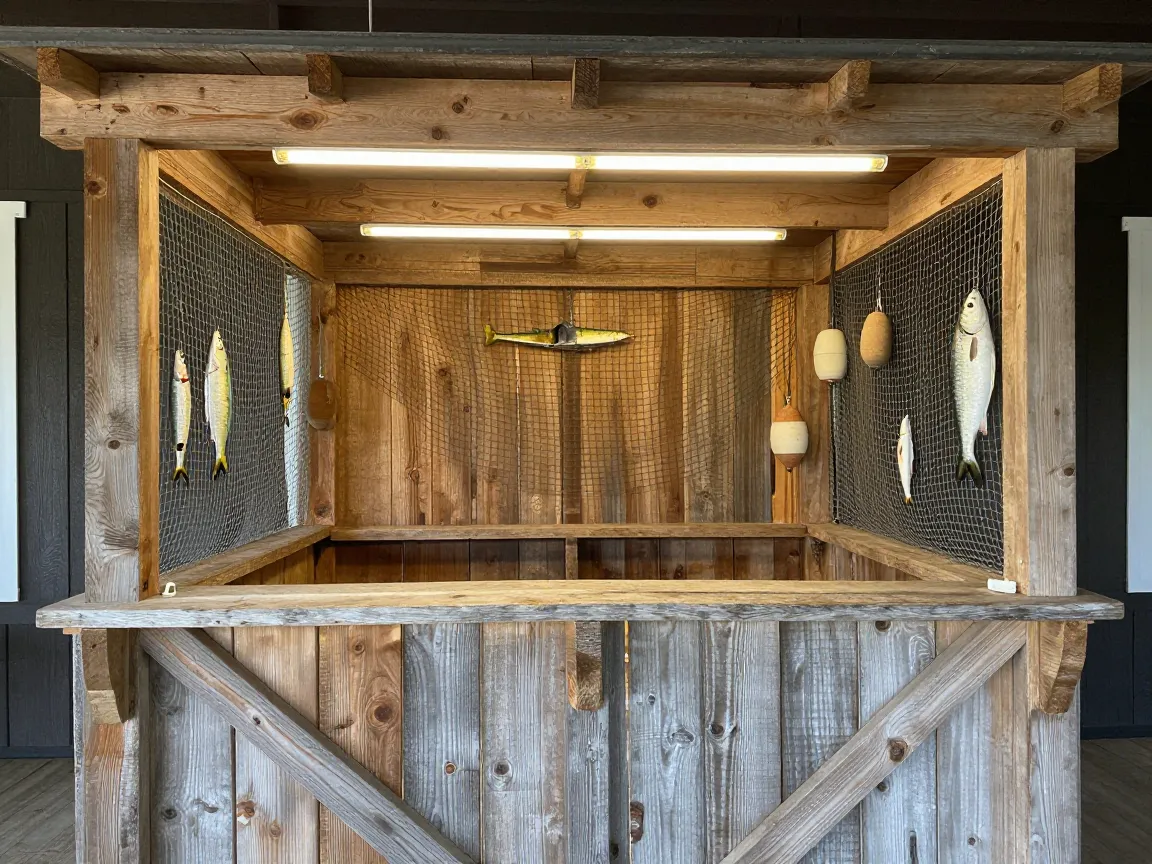
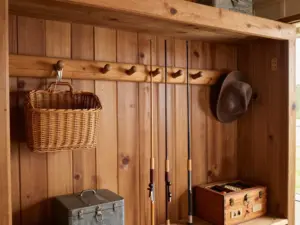
The frame of a photo booth communicates something before a single guest steps inside it. A chrome-and-acrylic enclosure reads as corporate. At a fishing derby, a lakeside wedding with an angling theme, or a fly fishing club annual dinner, that contrast undercuts the whole event aesthetic. Rustic wooden booth designs built from reclaimed timber, weathered barn board, or FSC-certified cedar close that gap completely.
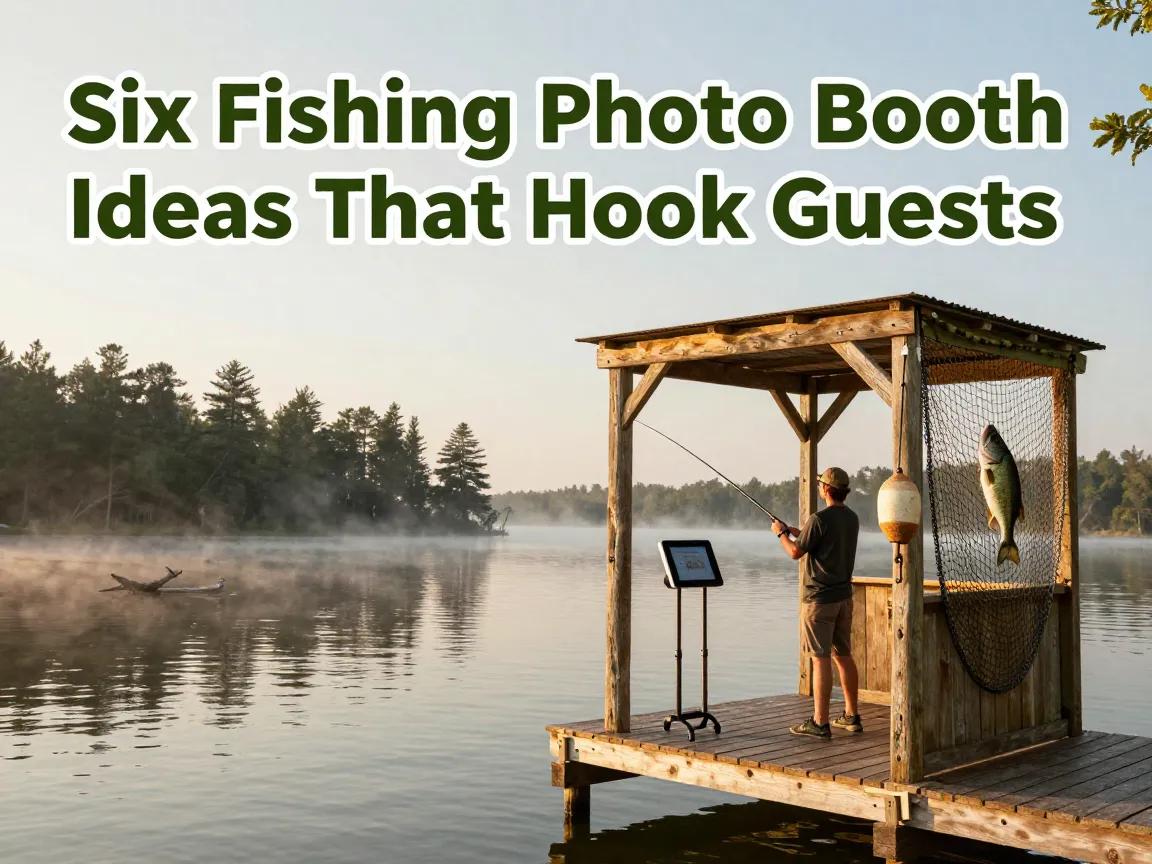
Practically, these builds use a simple post-and-beam frame with a fishing net strung between uprights as the backdrop. Vintage lures, cork floats, and mounted replica fish are attached directly to the netting. The result looks like a prop from a 1950s fishing lodge rather than a rental unit from a trade show supplier.
Eco-conscious construction has become a specific request at fishing events, particularly those run by conservation-minded organizations like Trout Unlimited chapters or clean-water advocacy groups. Using sustainably sourced lumber, plant-based inks for printed overlays, and solar-powered lighting for the booth components aligns the activation with the audience’s values in a way that generic equipment cannot.
Custom carpentry does cost more upfront than a standard rental. That cost makes sense for recurring events, a fishing club that hosts the same annual tournament can amortize the build over three or four years. For a one-time activation, several vendors now offer pre-built rustic enclosures as rental units rather than custom fabrications, which brings the cost closer to standard booth rental rates.
Lighting inside a wooden enclosure needs to be planned separately from the frame build. LED strips mounted on the inside of the frame top rail, aimed at the subject rather than the backdrop, provide even illumination without washing out the textured wood background.
4. Portable iPad-First Booth for Piers, Boats, and Remote Locations
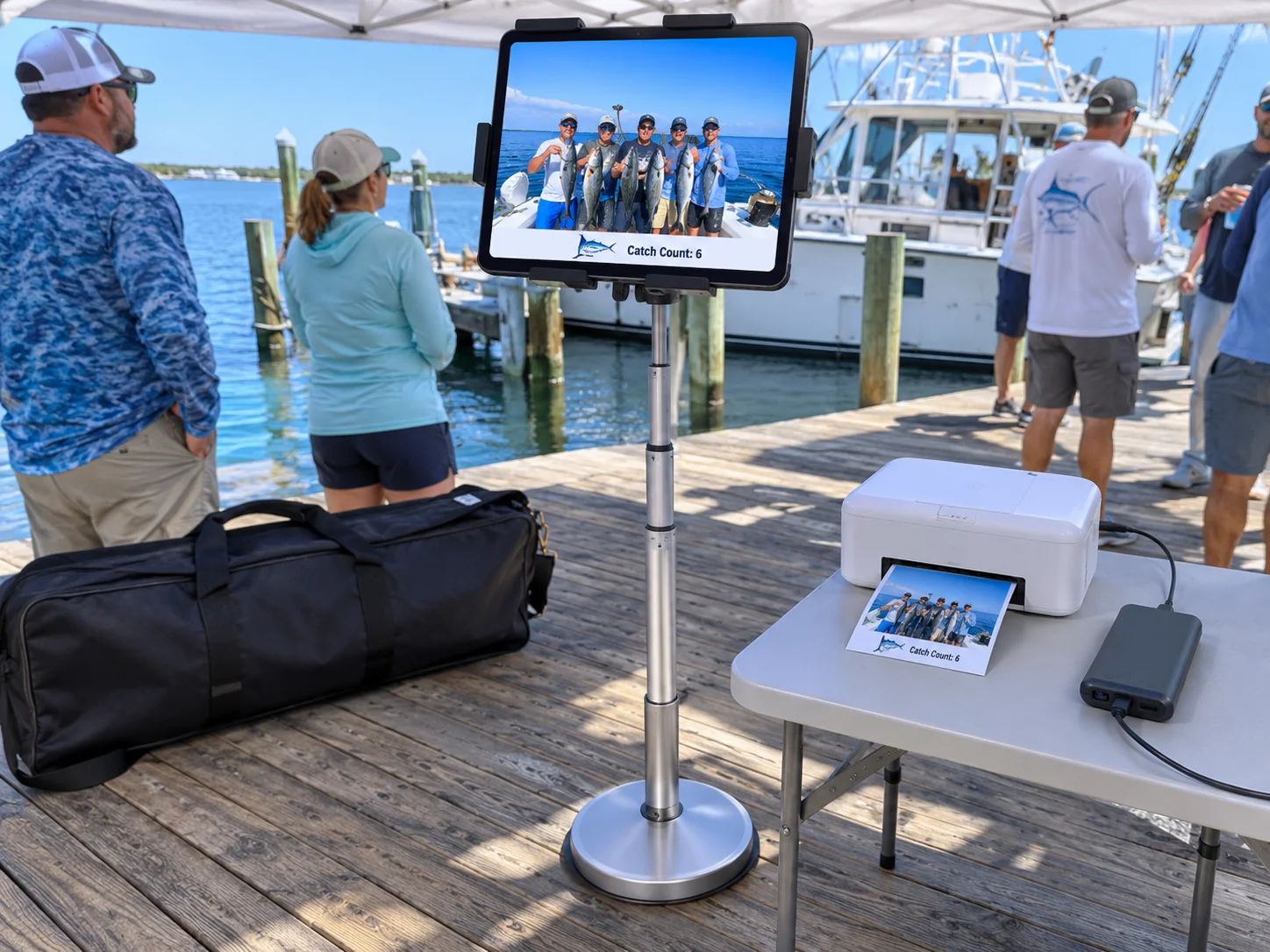
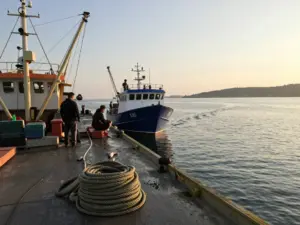
Standard photo booth setups assume a flat indoor floor, a stable power supply, and reasonable shelter. None of those assumptions hold on a fishing pier, a pontoon boat, or a remote lake access point. iPad-first portable booths were built specifically for environments where the standard setup fails.
The core hardware is an iPad Pro mounted on an aluminum telescoping stand with a weighted base designed for uneven ground. The stand folds to under four feet for transport and sets up in under five minutes. The iPad runs the booth software natively, connects to a compact wireless printer via Bluetooth, and can operate on a USB-C power bank for three to five hours without a grid connection.
For fishing events held on actual water, this format is the only practical choice. A charter fishing company running a half-day trip for corporate clients can position the iPad booth on the dock at the start of the trip and at the weigh-in afterward. The printer produces a 4×6 print with the company logo and the day’s catch tally printed in the border. Guests keep the print as a physical souvenir rather than relying on a digital file they might never retrieve.
Weather exposure is the main variable to manage. A lightweight canopy, specifically the type used at farmers’ markets, which packs to a 50-inch bag, provides enough overhead cover for the iPad screen and printer without requiring any additional infrastructure. Screen brightness needs to be set at maximum in outdoor daylight to maintain usable display quality.
One often-overlooked advantage of the portable format is that it can follow the event rather than anchor it. If the weigh-in moves to a different section of the dock, the booth moves in under three minutes.
5. AI-Powered “Catch-of-the-Day” Personalization Booth
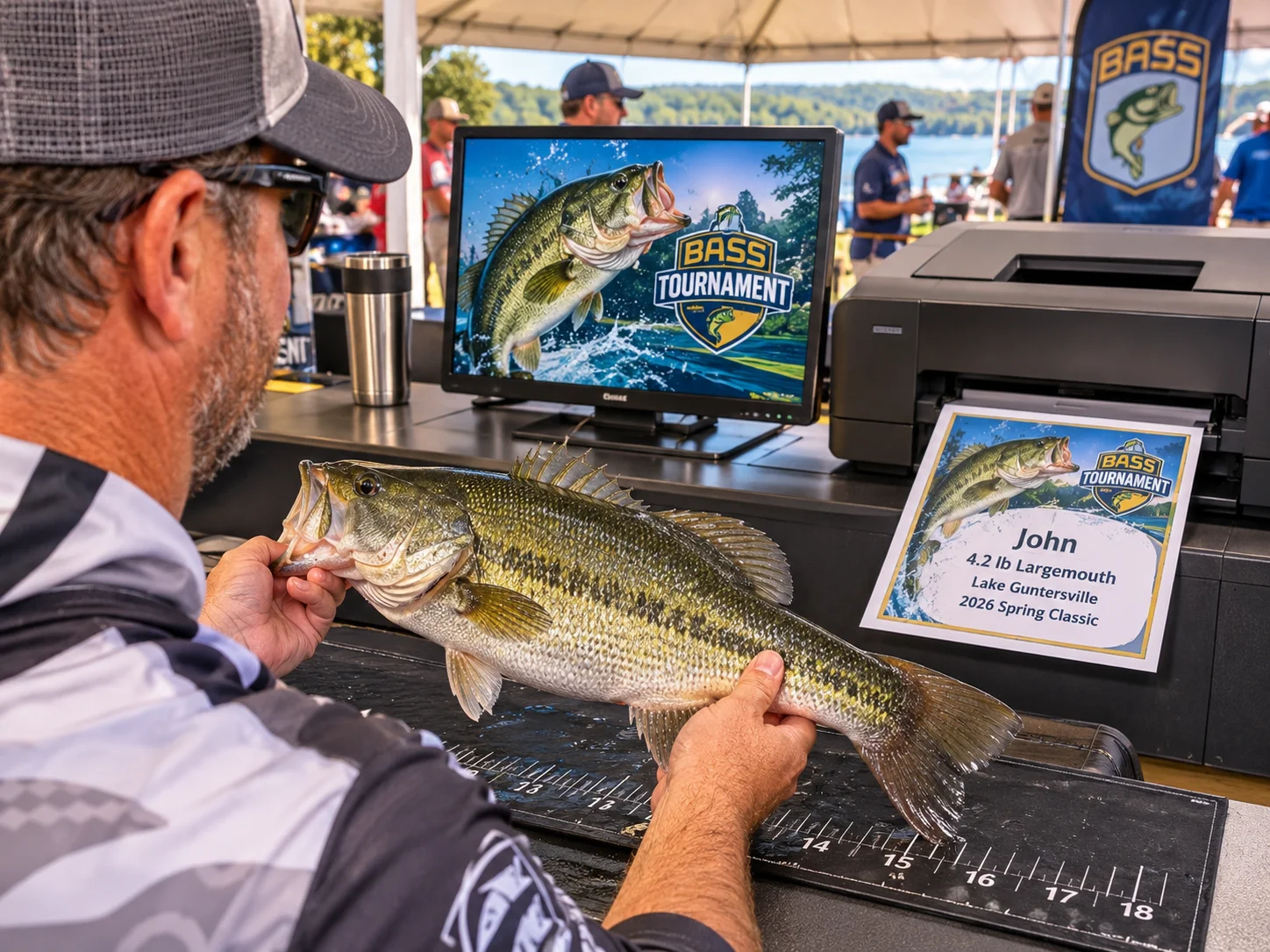
In 2026, AI personalization inside photo booth software has become the feature guests most frequently describe as memorable after fishing events. The core function is straightforward: the booth’s camera analyzes the guest’s pose, the prop they’re holding, and optionally the actual fish they’ve caught on a weigh-in mat, then generates a custom overlay, a personalized “catch certificate,” and a stylized digital frame that reflects what it detected.
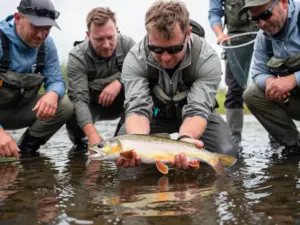
At a bass tournament, this means the booth produces a card that reads “John, 4.2 lb Largemouth, Lake Guntersville, 2026 Spring Classic” with a digitally illustrated version of that specific fish species behind the guest’s photo. No manual input required from the guest. The AI reads the fish on the mat, cross-references the species library in the software, and produces the certificate in under 20 seconds.
This level of specificity is what separates AI personalization from a standard green-screen overlay. A generic fishing backdrop is forgettable. A certificate with your name, your fish, its weight, and the event date is kept. Tournament organizers report that printed AI-generated certificates function as a secondary trophy for participants who did not win the main event, a meaningful outcome for guest satisfaction.
The software side requires a vendor who has built a fishing-specific asset library. General-purpose AI photo booth platforms do not automatically recognize fish species or know the difference between a brown trout and a rainbow trout. Vendors like those serving the fishing and outdoor sports sector have built dedicated recognition models for common sport fish species in North American freshwater and saltwater contexts.
Staff still need to be on site to manage the mat positioning and printer queue. The AI handles the creative output; a human handles the physical logistics.
6. Voice-Activated, Hands-Free Smart Booth
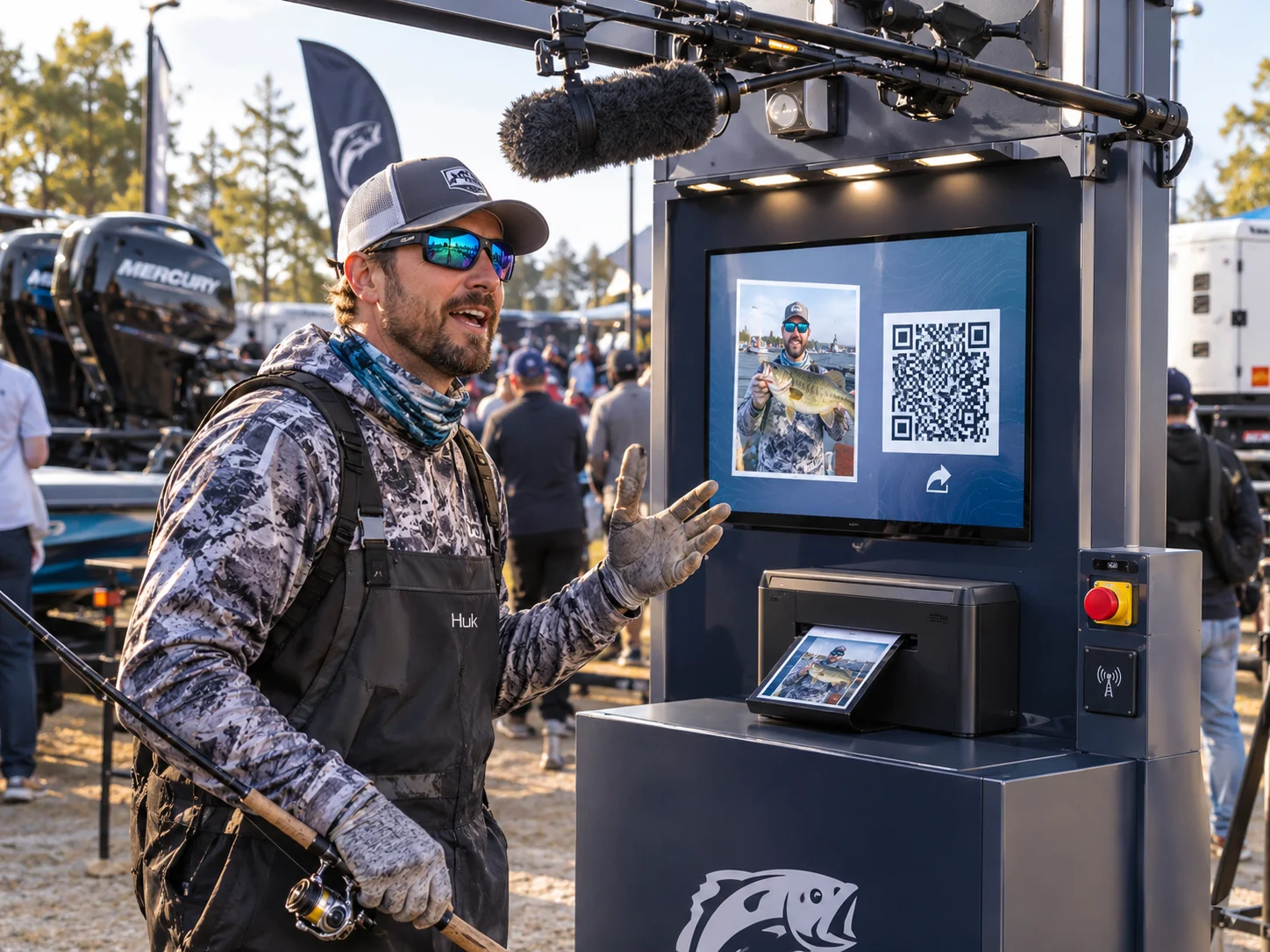
Fishing guests have a problem that guests at most other events do not: their hands are occupied. Wet hands, fish-scented gloves, baited hooks being rigged, and rods being handled are all conditions under which a touchscreen is useless or genuinely harmful to the equipment. Voice-activated photo booths resolve this directly.
The setup uses a directional microphone array mounted above the booth display. Guests walk into the frame and say a trigger phrase, typically something event-specific like “Cast it” or the event sponsor’s name, and the booth counts down and captures the image automatically. No touch required at any point in the interaction, from triggering the shot to approving the print.
Voice activation is not a minor convenience feature at fishing events. It’s the difference between guests actually using the booth and walking past it because using it means setting down gear, cleaning hands, and re-rigging afterward. When the barrier to participation drops, usage rates go up. Booth vendors who have deployed voice-activated units at fishing tournaments report participation rates roughly 30 to 40 percent higher than comparable touchscreen-only setups at the same events.
Smart booths in this category also include attendant-free operation modes, which matters for smaller events without the budget for a dedicated operator. The booth can be set to fully autonomous: voice trigger, automatic print, automatic social share prompt via a QR code displayed post-shot. Event organizers can check the booth queue remotely via a web dashboard and intervene only if the printer needs paper.
The one real constraint is ambient noise. Loud outdoor environments, generators, boat engines, crowded event spaces with music, can interfere with voice recognition accuracy. A directional microphone with a noise-cancellation threshold handles most conditions, but very loud environments may require the booth to operate in a hybrid mode where voice triggers the countdown and a manual backup button is available.
Quick Comparison
| Booth Type | Best Environment | Setup Time | Hands-Free | Social Share Ready |
|---|---|---|---|---|
| AR Fishing Environment | Indoor/Covered Outdoor | 30-45 min | No | Yes |
| 360-Degree Cast and Spin | Level Outdoor Platform | 45-60 min | No | Yes |
| Rustic Wooden Design | Outdoor Events/Lodges | 60-90 min | No | Optional |
| Portable iPad-First | Piers, Boats, Remote | Under 5 min | No | Yes |
| AI Catch-of-the-Day | Tournament Weigh-Ins | 20-30 min | Partial | Yes |
| Voice-Activated Smart Booth | Any Fishing Event | 20-30 min | Yes | Yes |
Conclusion
The 6 fishing photo booth ideas that hook every guest each address a specific condition: the physical environment, the guest’s occupied hands, the event’s aesthetic, or the need for shareable output that lasts past the final weigh-in. No single booth type works equally well in every situation. A bass tournament weigh-in needs the AI personalization booth or the voice-activated setup. A fishing lodge retreat needs the rustic wooden design. A corporate charter day on the water needs the portable iPad unit.
The most practical next step is to identify the two or three conditions that matter most for your specific event, then shortlist vendors who have deployed that booth type at outdoor or water-adjacent venues before. Ask for footage or printed samples from past fishing activations specifically, not just general event photos. That footage tells you whether the booth actually performed in the environment you’re planning for.