Rustic Fly Fishing Decor Ideas to Transform Your Space
Fly fishing has inspired artists, craftspeople, and cabin owners for well over a century, and by 2026 the market for rustic, nature-driven interior decor has never been more robust or more creative. Whether the goal is a fully themed mountain lodge or a single accent wall that nods to the sport, the right pieces can shift a plain room into something that feels earned and lived in. These 6 rustic fly fishing decor ideas to transform your space draw on a strong trend toward handcrafted materials, reclaimed wood, and customizable pieces that hold real meaning beyond surface-level style.
Disclosure: This post contains affiliate links. As an Amazon Associate, we earn from qualifying purchases, and at no extra cost to you.
1. Make Trout Wall Art the Undisputed Focal Point
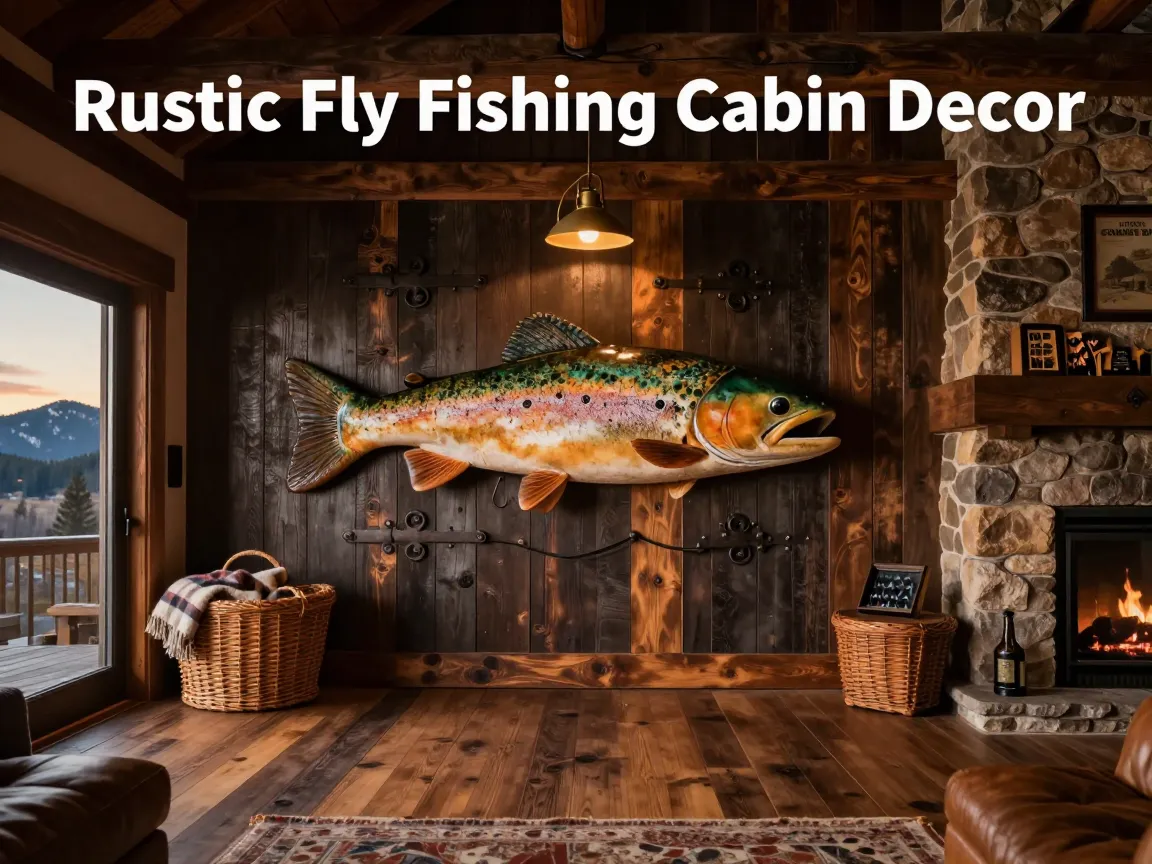
Nothing announces a fly fishing theme with more authority than a well-chosen piece of trout wall art placed where the eye lands first. That might be the wall above a fireplace, the expanse behind a sofa, or the first wall visible when someone walks through the front door. Scale matters enormously here. A small print tucked into a corner reads as an afterthought; a large carved wooden trout or a museum-quality fish mount commands a room and starts conversations.
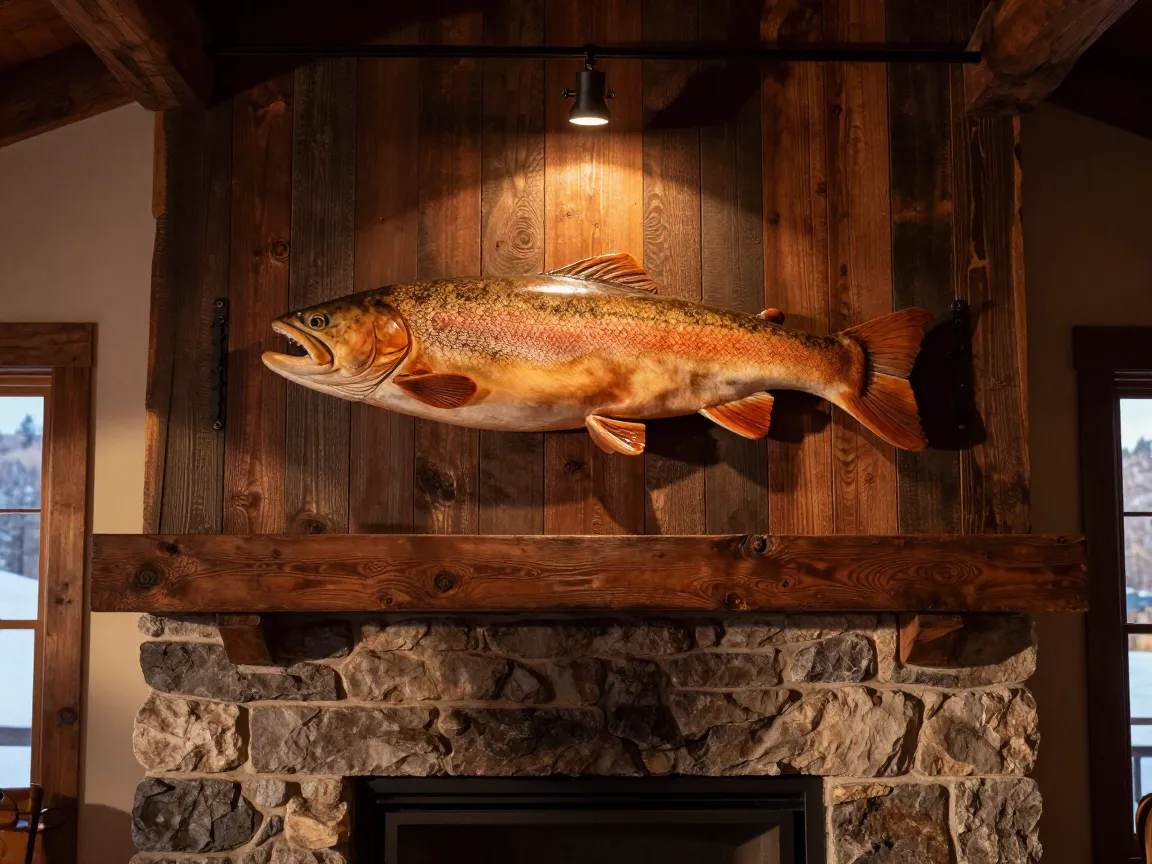
The strongest choices in 2026 lean toward handcrafted work. A cedar or white pine carving finished in natural oils preserves the grain while giving the fish a lifelike depth that mass-produced resin reproductions simply cannot match. Local woodworkers and fishing-focused artisans often accept commissions, which means the piece can represent the actual species from a home river, a brown trout from a Montana spring creek, for example, or a rainbow from a coastal steelhead run. That specificity transforms decor into personal history.
When selecting materials for the surrounding wall, reclaimed wood paneling reinforces the rustic sensibility without competing with the artwork itself. A dark-stained barnwood background behind a light-colored trout carving creates natural contrast and draws the gaze directly to the focal piece. Wrought iron mounting hardware, chosen to match any door handles or light fixtures in the room, ties the installation together and signals intentionality rather than improvisation.
Consider the lighting as seriously as the art itself. A single adjustable picture light mounted above the piece, the kind used in galleries, works exceptionally well in lodge-style spaces. It casts warm, directional illumination that reveals carved texture and painted detail while leaving the rest of the wall in softer shadow, giving the whole room a moody, after-sunset cabin atmosphere.
2. Introduce Fly Fishing-Patterned Textiles and Wallpaper
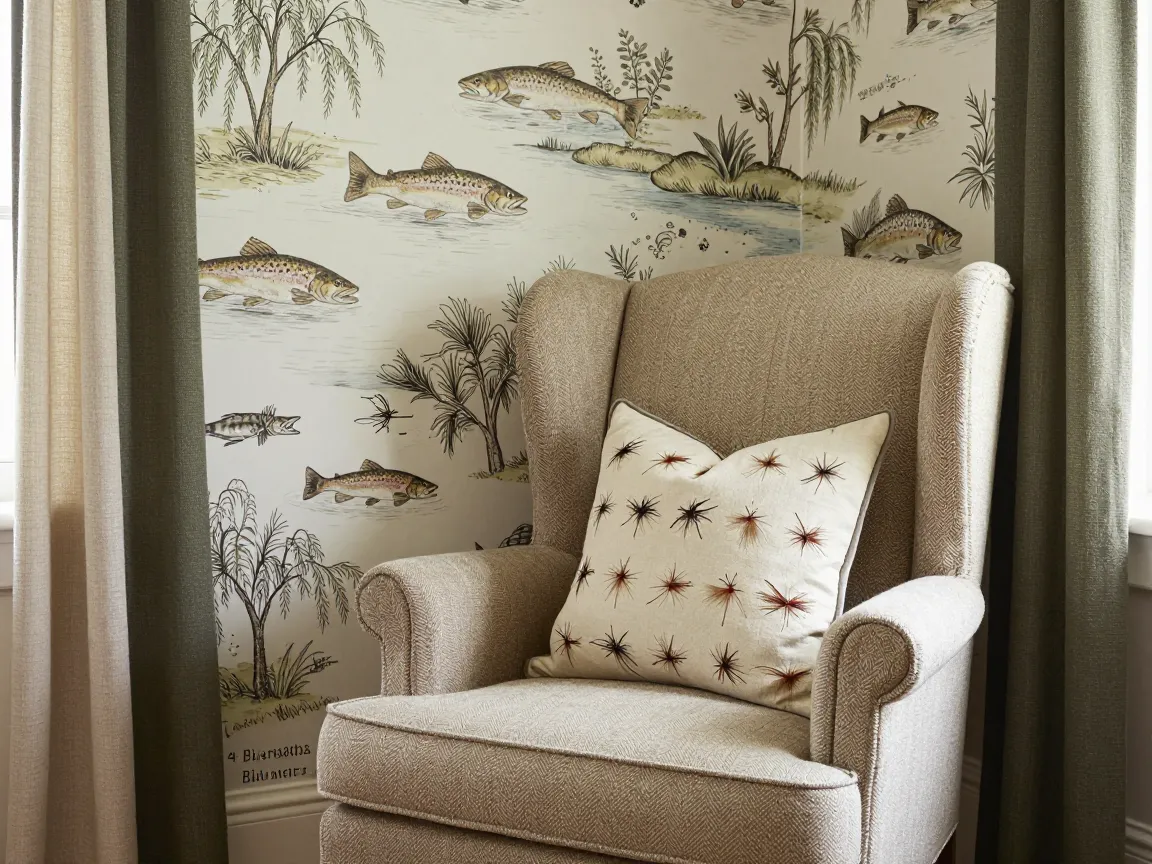
Textiles and wallpaper are among the fastest ways to shift the character of a room, and the range of fly fishing-inspired fabric designs available in 2026 is broader than it has ever been. Patterns range from subtle, a small-scale fly pattern printed on a neutral linen ground, to statement-making, such as an oversized toile featuring wading anglers, brown trout, and stream-side willows repeated across a full accent wall.
The key to making patterned textiles work in a rustic space is restraint and layering. A single wallpapered accent wall behind a bed or in a reading nook carries the theme without overwhelming the room. Pairing it with solid natural fabrics, undyed wool, oatmeal-colored cotton canvas, or dark olive linen, prevents the space from feeling theme-park busy. The pattern becomes an anchor rather than a shout.
For soft furnishings, look for curtain panels, table runners, and throw pillow covers printed with classic fly patterns: the Adams dry fly, the Elk Hair Caddis, or the Royal Wulff. These designs function as a kind of insider language that fellow anglers immediately recognize and appreciate, while striking non-fishing guests as simply interesting, well-drawn nature imagery. That dual readability is one of the qualities that separates genuinely good fly fishing decor from novelty merchandise.
Upholstered pieces deserve attention too. A wingback chair reupholstered in a herringbone tweed with a subtle fish motif woven into the fabric sits comfortably in a traditional cabin interior without demanding to be noticed. Over time, as other pieces in the room build the theme, that chair reveals its role as part of a carefully considered whole. Layering in this way, a pattern here, a texture there, produces rooms that feel discovered rather than assembled.
3. Build a Gallery Wall of Vintage Prints and Stream Maps
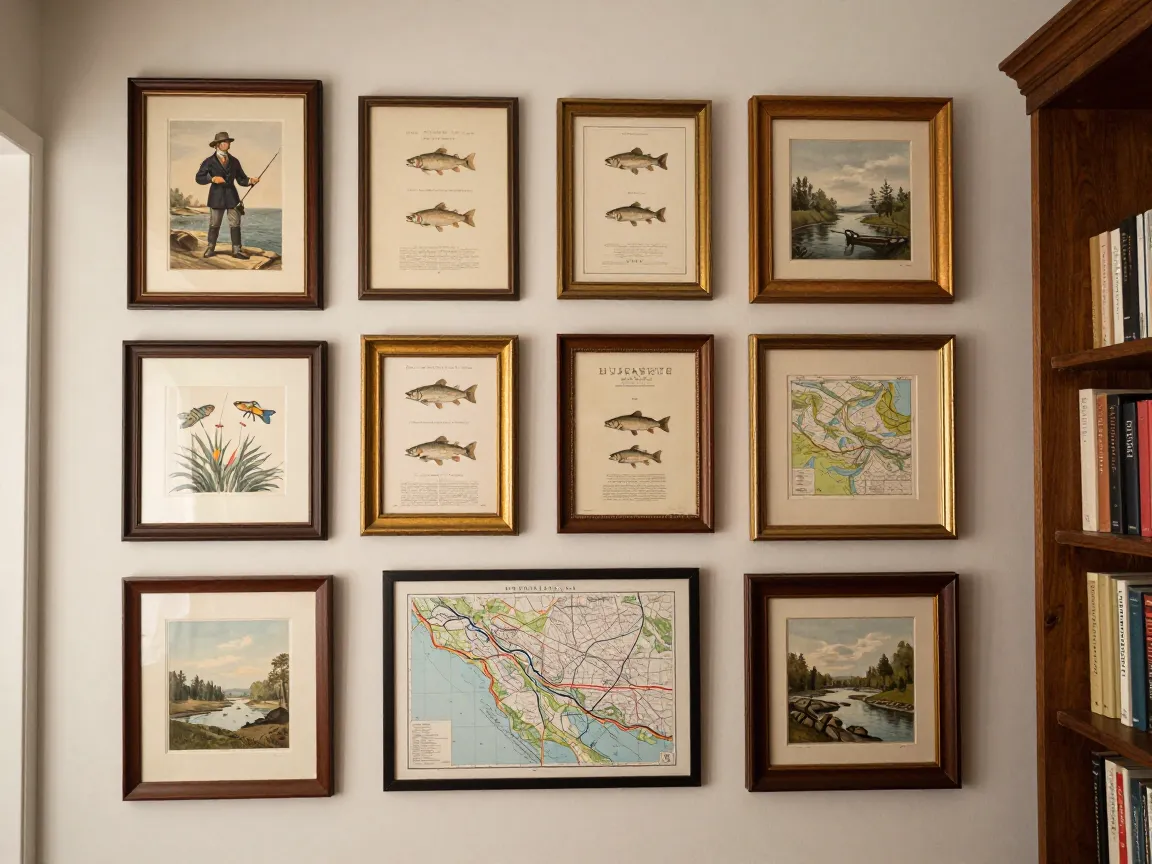
A gallery wall anchored by vintage fly fishing prints and hand-drawn topographic stream maps creates one of the richest visual experiences possible in a rustic interior, because every element rewards close inspection. This approach works particularly well in hallways, stairwells, mudrooms, or the wall space flanking a bookcase, where guests naturally slow down and look.
Vintage prints encompass a wide range of source material. Nineteenth-century sporting lithographs depicting anglers in period dress, botanical illustrations of aquatic insects, anatomical drawings of trout species, and hand-lettered tackle catalog pages from the early twentieth century all share an aesthetic that pairs naturally with reclaimed wood and aged leather. Estate sales, antique markets, and specialized online dealers remain reliable sources in 2026, as do high-quality reproductions printed on archival paper with period-appropriate typography.
Topographic stream maps add a geographic layer that deepens the story a gallery wall tells. A USGS quad map of a beloved home river, framed in simple black metal or unfinished oak, communicates something a print alone cannot: that the person who lives here has walked those contour lines and knows exactly where the riffles drop into the deep pools. Custom cartographers now produce beautifully styled waterway maps on demand, using hand-drawn aesthetics that look as though they date from the golden age of exploration.
The arrangement itself should feel considered but not rigid. A mix of frame sizes, materials, and orientations, landscape prints alongside portrait maps, gilt-edged antique frames beside raw wood ones, produces the layered quality of a room that has accumulated meaning over decades. Leave modest gaps between pieces rather than packing them edge to edge, so each item has visual breathing room and the wall reads as a curated collection rather than a cluttered surface.
4. Display Flies and Gear in Shadow Boxes and Framed Cases
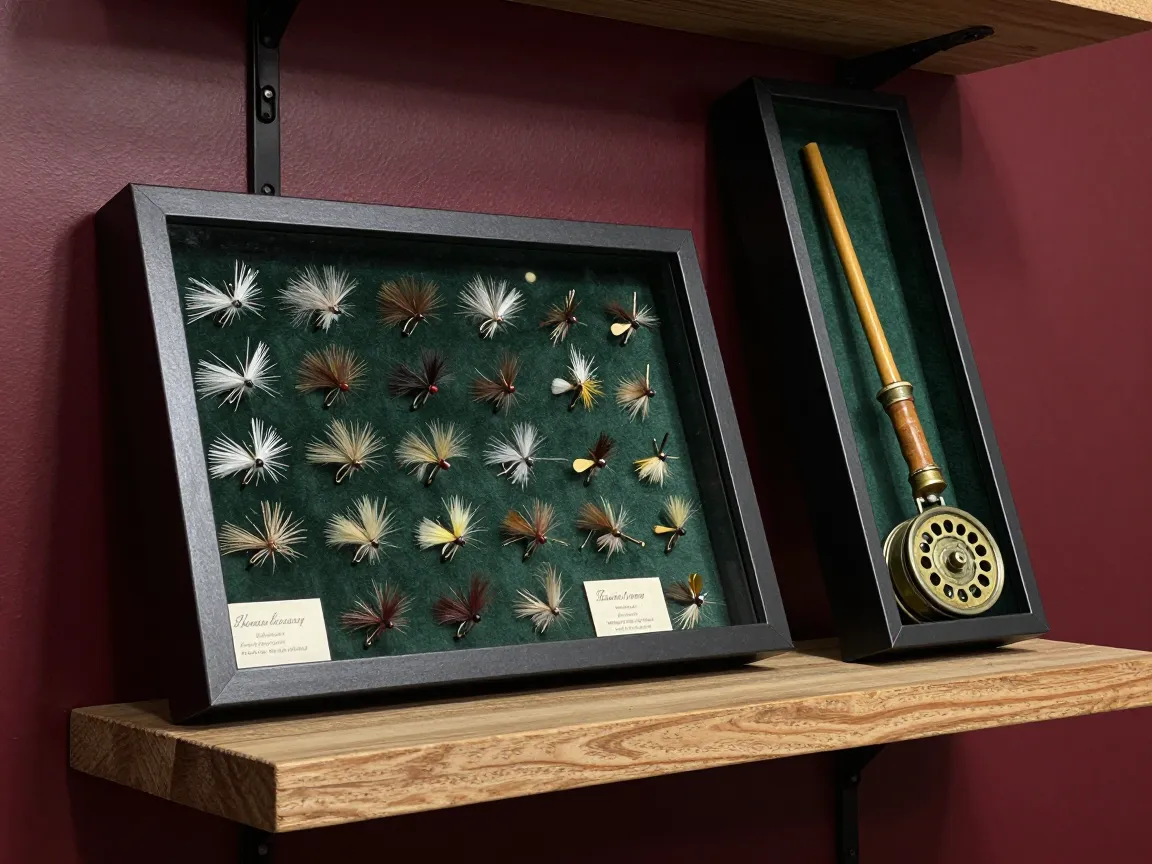
Fly fishing gear carries a kind of quiet beauty that most anglers take for granted on the stream but rarely think to put on the wall. A collection of hand-tied flies arranged by pattern and color inside a deep shadow box is simultaneously a piece of natural history, a demonstration of craft, and a deeply personal artifact. As a decor element, it occupies a category that generic purchased art simply cannot reach.
Shadow box frames designed for fly displays are available in sizes ranging from small single-row cases to wide multi-row museum-style presentations. The interior lining material matters: dark forest green or burgundy velvet sets off the natural materials of traditional wet flies and dry flies with striking clarity. Labeling each fly with a small hand-lettered card, pattern name, tier, date, and the river where it was first used, adds narrative depth and transforms the display from decoration into documentation.
Vintage gear offers equally compelling framing subjects. A split-cane bamboo rod laid diagonally across a wide shadow box, flanked by a matching antique reel and a small collection of leader spools, produces a composition that reads almost as a trophy in the most honest sense: proof of time invested in a worthwhile pursuit. The patina of aged cane and oxidized brass fits naturally within a palette of reclaimed wood and matte iron that defines contemporary rustic interiors.
For a more dynamic presentation, consider leaning framed displays against a floating shelf rather than hanging them flush. This creates a layered, studio-like arrangement that invites adjustment and growth over time. New flies from a season’s tying bench can be added, older ones shifted, and the display evolves alongside the angler’s experience. That sense of an ongoing, living collection is one of the qualities that makes fly fishing decor feel genuinely personal rather than purchased.
5. Turn Functional Fishing Storage into Statement Decor
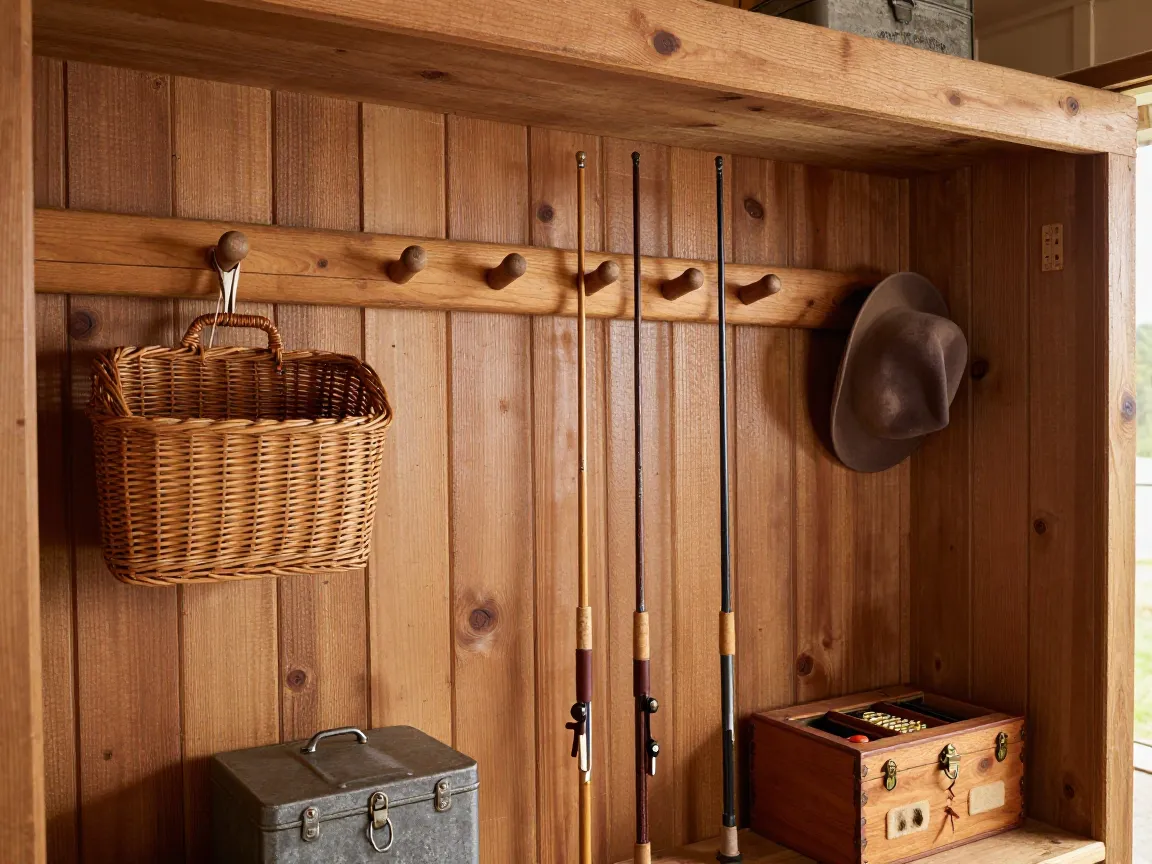
Storage and display do not need to be separate concerns in a fly fishing-themed space. Some of the most visually compelling rustic interiors treat the tools of the sport as the decor itself, allowing function and aesthetics to reinforce each other at every turn. This approach is particularly effective in entryways, mudrooms, home offices, and cabins where the boundary between indoor and outdoor life is intentionally porous.
A wooden rod rack mounted on a barnwood wall does two things at once: it keeps fishing rods organized and immediately signals the character of the space to anyone who enters. Well-crafted rod racks made from hand-turned oak or walnut dowels and fitted with leather cord wraps are objects worth looking at in their own right, not just utilitarian brackets. When rods are actually mounted in them, their cork handles and delicate tip sections visible, the whole assembly reads as a kind of sculpture.
Wicker creels, the traditional basket used for carrying fish before catch-and-release became standard practice, have found a compelling second life as decorative storage. Mounted on a wall as a container for mail and keys near the front door, stacked on a shelf to hold rolled maps or magazines, or simply placed on a windowsill as a sculptural object, an antique creel brings an organic texture and a direct material link to stream-side tradition. Paired with a battered felt hat hung from a nearby hook, the combination tells a story without a single word.
Tackle boxes and wooden fly chests, particularly vintage metal tackle boxes with their distinctive latched compartments, or handmade wooden boxes fitted with foam fly patches, also transition naturally into interior storage for small objects: remote controls, charging cables, craft supplies. The logic is straightforward: objects that are honestly made, visibly worn, and tied to a specific way of life age gracefully in domestic spaces in a way that purpose-built storage furniture rarely does.
6. Layer Classic Cabin Textures with Trout-Themed Soft Furnishings
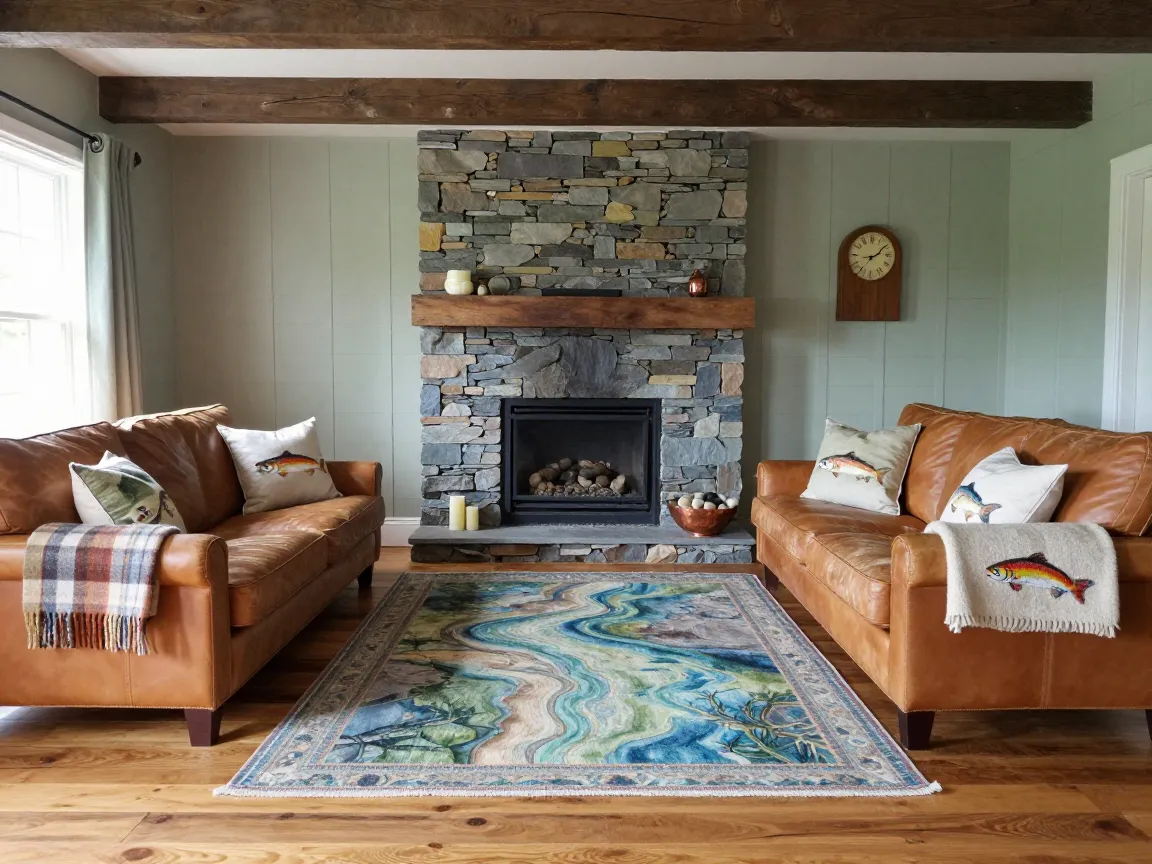
The deepest and most lasting version of a fly fishing-themed interior is one that does not rely solely on explicit imagery but instead builds atmosphere through the accumulation of textures, materials, and tonal choices that the trout-themed soft furnishings then anchor and clarify. This layered approach is what separates rooms that feel genuinely rustic from those that feel costumed.
The foundational textures in this kind of space are reliable classics: rough-hewn log walls or shiplap paneling, stone or stacked-slate fireplace surrounds, wide-plank hardwood floors with visible grain and natural variation, and exposed ceiling beams finished in a dark stain. Against that backdrop, the soft furnishings, wool blankets woven in earthy plaids, leather-upholstered seating worn soft and honey-colored with age, linen curtains in sage or slate, provide warmth and comfort without competing for attention.
Trout-themed soft furnishings enter this environment as the detail layer: throw pillows printed with watercolor brook trout, a heavy wool blanket with a small embroidered rainbow trout on the corner, an area rug woven in a stream-water pattern of blues and greens. These pieces work precisely because the room surrounding them is calm and grounded. They register as discoveries rather than decorations, the way a trout in clear water reveals itself only to those who look carefully.
By 2026, a growing number of small-batch textile makers and sustainable goods producers are offering customizable versions of these furnishings, allowing for personalization that goes well beyond selecting a color. Embroidered initials alongside a favorite fly pattern, a blanket woven in the specific colorway of a home river, or a hand-stitched pillow featuring the topography of a remembered stretch of water, these options bring the same personal specificity to textiles that custom cartography brings to wall art. The result is a room that could only belong to one person, which is ultimately the highest standard any interior can aspire to.
Finish the layer by considering scent and sound as complementary elements. A beeswax candle on the mantle, a cast iron or copper bowl filled with smooth river stones, the quiet tick of a wooden wall clock, none of these are fly fishing decor in a strict sense, but they reinforce the sensory world that fly fishing inhabits: slow mornings, cool air, natural materials, unhurried time.
Conclusion
The 6 rustic fly fishing decor ideas explored here range from a single commanding piece of trout wall art to the full-room layering of cabin textures and personalized soft furnishings. What connects all of them is a preference for materials with honest origins, reclaimed wood, hand-tied flies, vintage prints, natural fibers, and a commitment to decoration that holds meaning beyond the moment of purchase.
The single most effective next step for anyone beginning this process is to identify one piece that carries genuine personal significance: a fly tied for a memorable catch, a map of a home river, a rod inherited from a mentor. Build the decor outward from that object, and every subsequent choice will have a natural reference point. Rooms assembled that way never look decorated; they look lived in.