Summer Fishing Outfit Ideas to Beat the Heat on the Water
Roughly 55 percent of anglers who report sunburn-related skin damage say they were wearing a standard cotton T-shirt when it happened. Cotton soaks up sweat, stays wet, and provides zero UV protection. Yet most fishing apparel guides in 2026 have largely moved past this problem, converging on a clear answer: full-coverage, lightweight technical clothing outperforms bare skin plus sunscreen every time you spend more than two hours on the water in peak summer heat.
Disclosure: This post contains affiliate links. As an Amazon Associate, we earn from qualifying purchases, and at no extra cost to you.
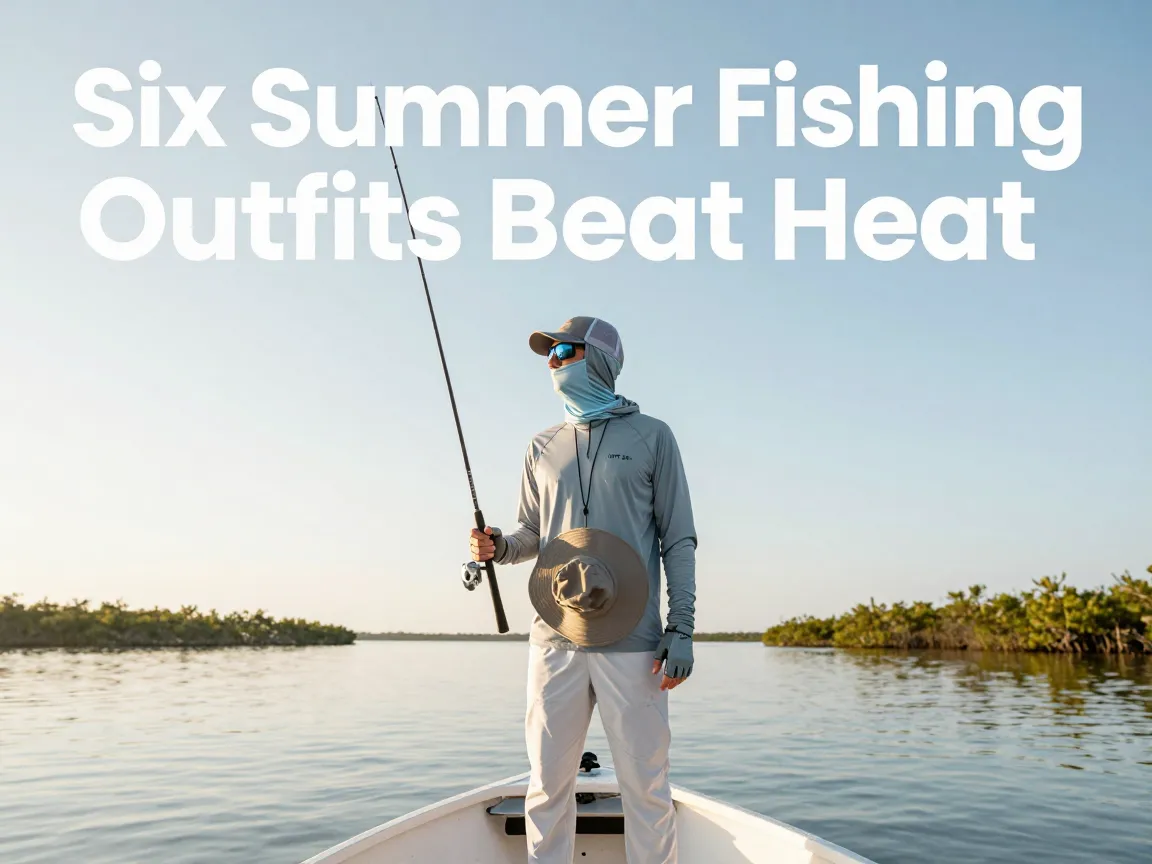
These 6 Summer Fishing Outfit Ideas to Beat the Heat on the Water are built around that principle. Each outfit is a complete, field-tested combination of garments and accessories suited to a specific scenario or angler preference. The goal is not to look good in a fishing photo. It’s to stay comfortable and protected from 7 a.m. to 3 p.m. when the sun has full access to every surface your body presents.
1. The UPF Long-Sleeve Sun Shirt and Performance Hat Combo
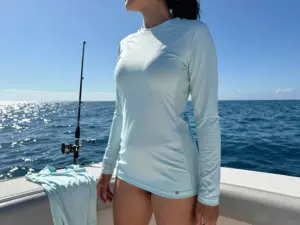
The backbone of almost every serious summer fishing outfit is a long-sleeve shirt rated UPF 30 or higher, ideally UPF 50+. The physics are straightforward: a UPF 50+ shirt blocks roughly 98 percent of UV radiation at the fabric surface, which no spray-on sunscreen can reliably replicate after two hours of sweat and water splash.
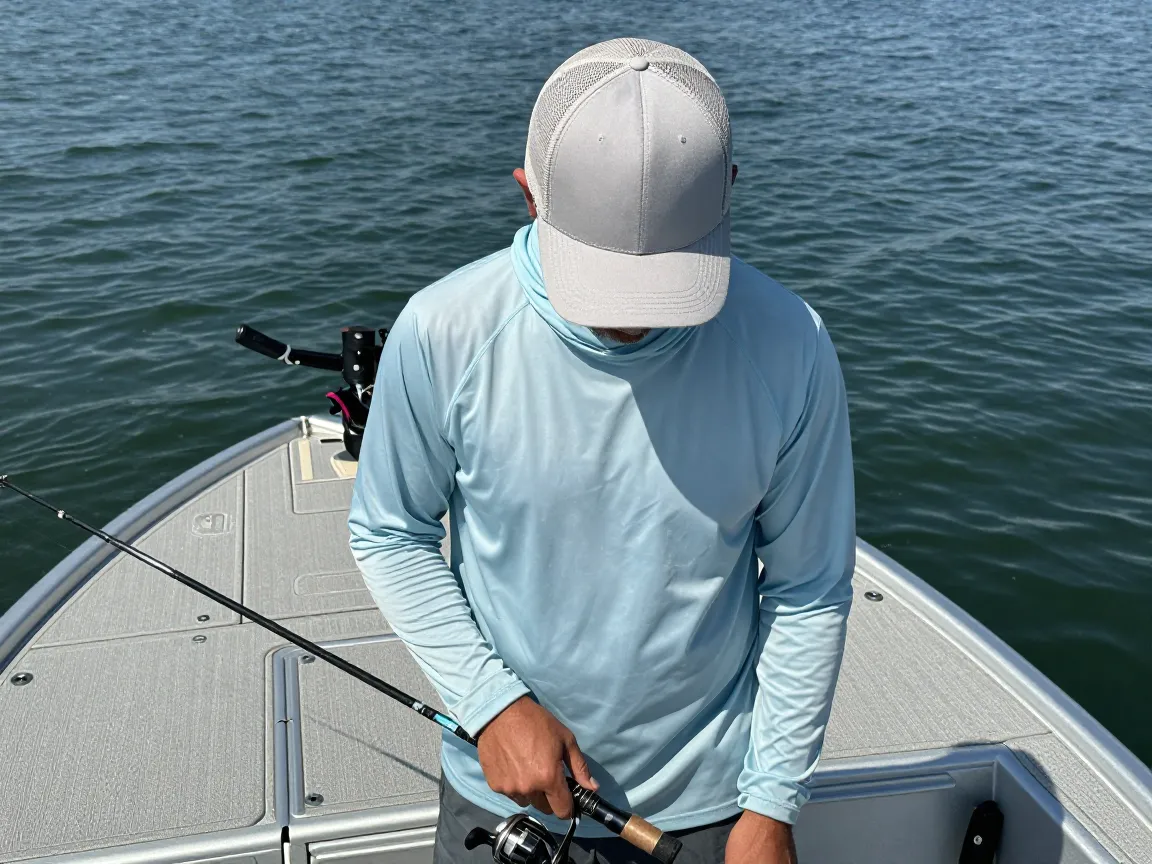
The shirt material matters more than most anglers expect. Lightweight polyester blends with built-in moisture-wicking construction pull perspiration away from the skin and move it to the fabric surface where it evaporates quickly. Brands like Columbia engineer specific cooling technologies into their fishing lines, including Omni-Shade for UV blocking, Omni-Wick for moisture transfer, and Omni-Freeze for active cooling on contact with sweat. These aren’t marketing terms without function. When you’re standing on an open aluminum boat deck that radiates heat back at you from below, a shirt that actively cools as you sweat is a meaningful comfort difference over a plain synthetic.
The performance hat is the second half of this combination. A structured trucker-style cap with a mesh back panel keeps airflow moving over the top of the head while blocking direct sun from the face and forehead. For anglers who fish east-facing banks in the morning and west-facing water in the afternoon, a hat with a full 360-degree brim offers better coverage as the sun angle shifts. Pair the hat with the long-sleeve shirt and you’ve covered your highest-exposure surfaces before adding anything else.
One constraint worth naming: a shirt and hat alone leave the neck, lower face, and forearms near the cuff exposed. That’s not a failure of the outfit, it’s the starting layer that the other ideas in this list build on.
2. The Sun Hoodie Over a Cap Setup
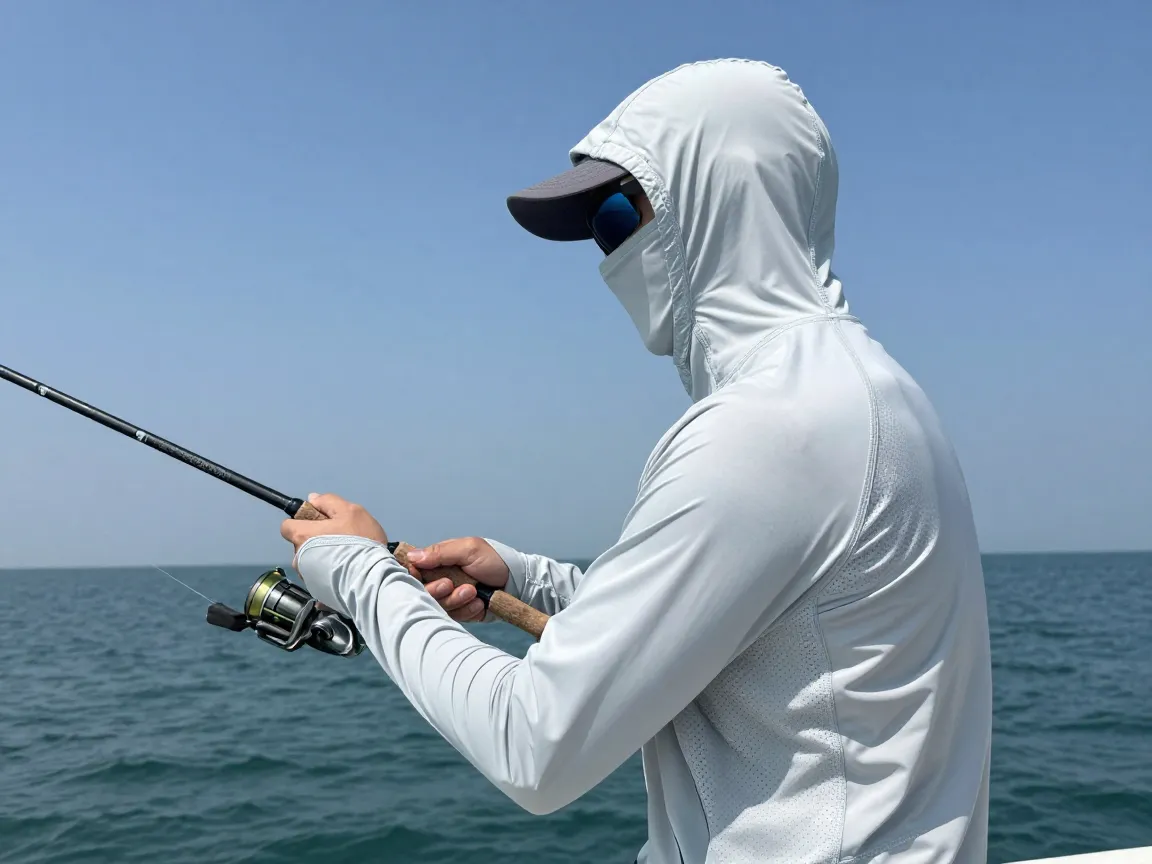
A sun hoodie worn over a baseball cap is the fastest upgrade an angler can make to the basic shirt-and-hat setup, and it’s become the default recommendation across most 2026 tournament angler guides for a reason. The hoodie’s fitted hood sits directly over the brim of the cap, covering the ears, the back of the neck, and the lower face when the neck tube is pulled up, all without adding meaningful weight or bulk.
The best fishing sun hoodies are made from UPF 50+ four-way-stretch synthetic fabric with mesh or perforated panels under the arms and across the upper back. These vent zones are not decorative. On a 92-degree day with no cloud cover, they’re the difference between a wearable garment and a portable sauna. Brands like Pelagic (Aquatek series) and Columbia (PFG Terminal Tackle Hoodie) produce versions specifically designed for open-water heat, with fabric weights well under 200 grams per square meter.
The cap-under-hoodie technique works because the rigid cap brim keeps the hood from collapsing over your eyes when you cast or look up. Without the cap, most hoodie drawstrings need constant adjustment. With it, the hood stays positioned without any intervention. You free your hands for the rod.
This outfit works best for offshore, flats, and reservoir fishing where there’s little overhead canopy. It’s less comfortable in dense riparian cover where temperatures are lower and branches snag hood fabric. For those environments, a standard long-sleeve shirt with a neck gaiter is easier to manage.
3. Lightweight UPF Fishing Pants as a Heat Management Tool
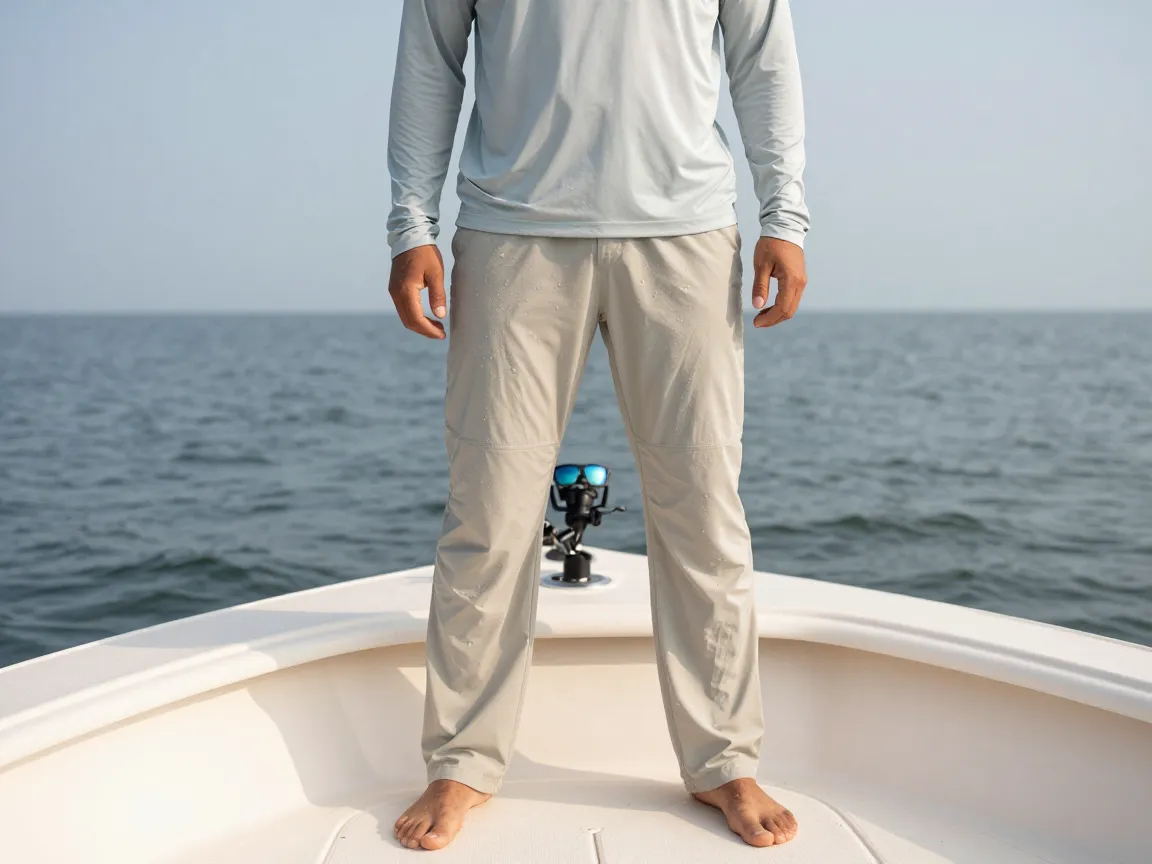
The most counterintuitive piece of advice in every 2026 warm-weather fishing guide is this: on days above 85°F, lightweight UPF 50+ pants keep you cooler than shorts. The explanation is not complicated. Direct solar radiation on bare skin heats the skin surface directly. A light-colored, breathable synthetic pant with a loose fit creates an air gap between fabric and skin. That gap acts as a buffer, slowing heat transfer to the leg while the moisture-wicking fabric moves sweat outward.
Simms Superlight pants are frequently cited in gear roundups as a benchmark for this category. They’re built from a 100 percent recycled polyester ripstop fabric, weigh under 200 grams, offer UPF 50+ protection, and have a four-way stretch that doesn’t restrict movement when you’re climbing in and out of a boat or wading a shallow flat. Other manufacturers have produced similar ultralight options, but the Simms design is notable for its articulated knees, which prevent fabric bunching at a joint that sees constant flexion during a long fishing day.
The practical test for any fishing pant in this category is how fast it dries after getting splashed or wading through knee-deep water. Quick-dry construction, meaning fabrics that shed water and return to dry within 20 to 30 minutes of sun exposure, is non-negotiable. Cotton and even some synthetic blends marketed as “fishing pants” fail this test badly. Check the fabric spec before purchasing. Look for DWR (durable water repellent) finish and a polyester or nylon base with no cotton content above 5 percent.
Pairing lightweight UPF pants with the sun hoodie from idea two gives you full torso and leg coverage. Add polarized sunglasses, and you’ve built a complete outfit that handles everything from 70°F to 95°F by simply adjusting how many layers you start with in the morning.
4. The Women’s Technical Fishing Outfit for Hot Weather
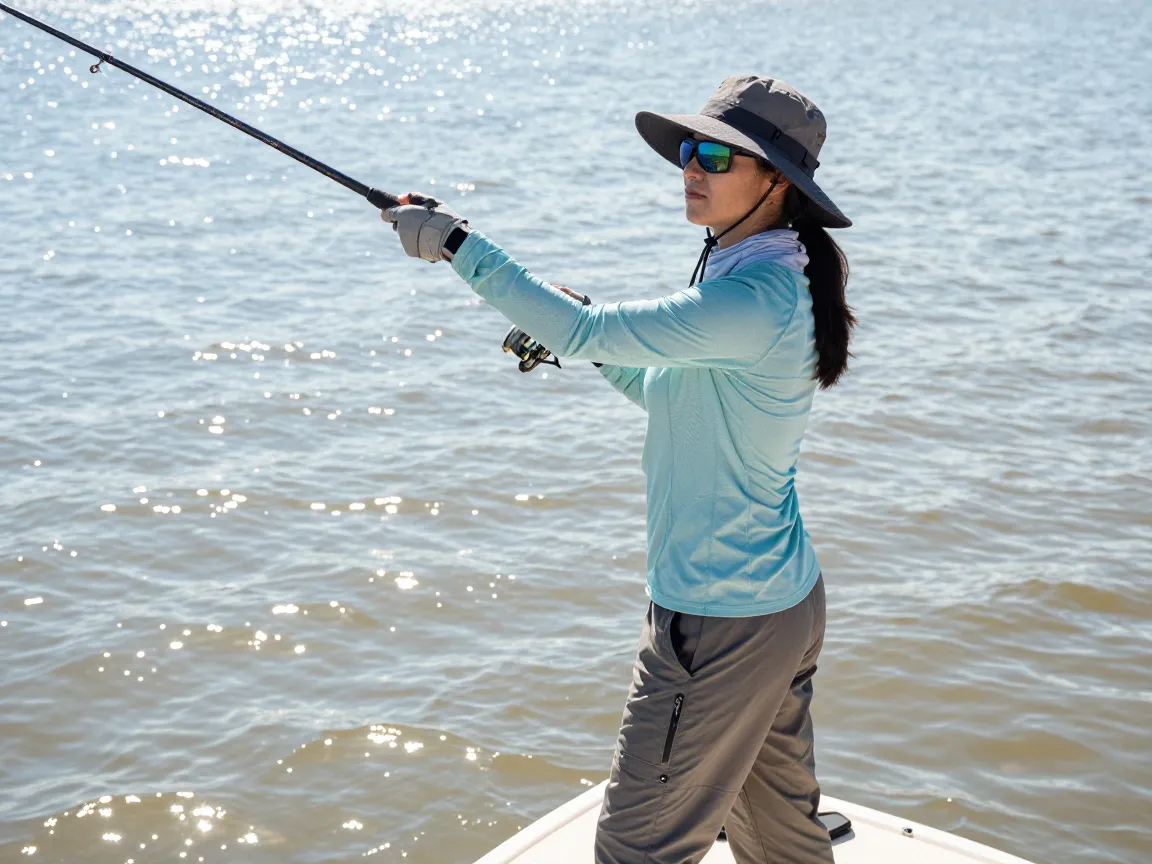
Women-specific fishing apparel has improved substantially, but the gap between what’s available and what actually works for a full day in summer heat is still significant. A purpose-built hot-weather outfit for women starts with a UPF 50+ long-sleeve shirt cut for a fitted but not restrictive torso. The Columbia PFG Tamiami II and the Pelagic Aquatek hooded shirt are both designed with women’s sizing and proportions, not scaled-down men’s cuts, and both use moisture-wicking polyester construction with underarm gussets for casting range of motion.
The bottom half presents a choice that depends on how much time is spent in or near the water. Quick-dry fishing shorts work in shaded creek fishing or early morning sessions where direct sun exposure is limited. For open-water or midday fishing, lightweight UPF pants offer the same heat reduction advantage described in idea three. Many women anglers choose convertible pants that zip off at the knee, giving the option to shift between full coverage and ventilated calf exposure depending on conditions.
The head and neck system matters as much for women as for men. A wide-brim hat, specifically one with at least a 3-inch brim all the way around, protects the face, ears, and upper neck from the sun angles that a baseball cap misses. A neck gaiter pulled up to the chin completes coverage below the hat line. Polarized sunglasses are non-negotiable on reflective water surfaces. Squinting into glare causes eye fatigue that compounds heat fatigue faster than most anglers account for.
One frequently overlooked detail in women’s warm-weather fishing: hand and forearm coverage. Fingerless UV gloves, made from the same stretch synthetic used in sun shirts, protect the high-exposure skin on the back of the hand and the forearm near the cuff while leaving fingers free for knot tying and lure handling.
5. The Full Sun Armor Outfit for Extreme Exposure
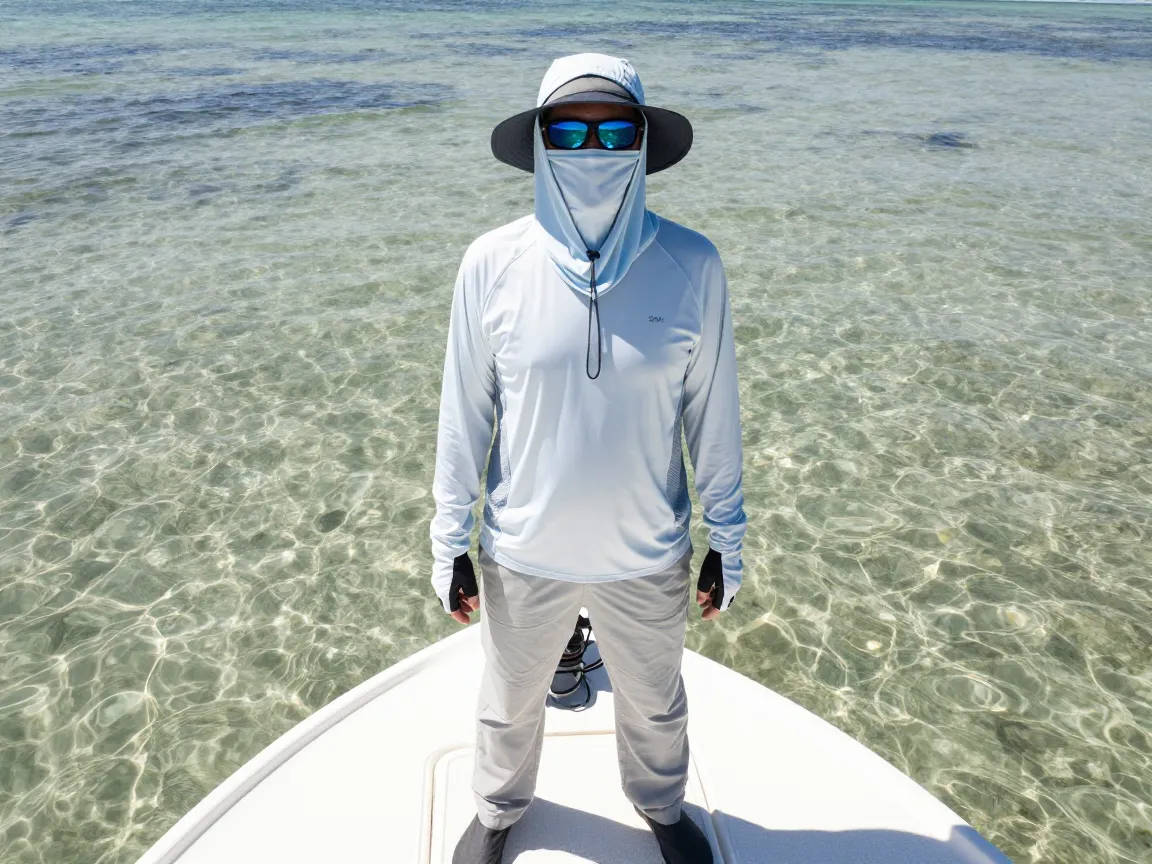
There’s a category of fishing day that sits outside normal summer conditions. Mid-July offshore runs, flats fishing from 10 a.m. to 2 p.m. in clear shallow water, and high-altitude lake fishing where UV index regularly hits 10 or above all require a stricter approach to coverage. The full sun armor outfit addresses those conditions.
The base is a UPF 50+ sun hoodie, hood up, with a ball cap underneath to hold the brim in position. Over that, some anglers add a lightweight buff or neck gaiter that covers from the collarbone to the lower face, overlapping with the hoodie’s neck tube for no-gap coverage. Lightweight UPF 50+ pants cover the legs. UV-protective fingerless gloves cover the hands and forearms. Polarized sunglasses with a wrap-around frame block peripheral UV as well as direct glare. A wide-brim hat worn over the hoodie hood provides the final layer of face and ear shading.
This outfit sounds excessive until you calculate sun exposure. A six-hour day on an open flats boat under a UV index of 9 delivers the equivalent UV dose of roughly 54 minutes of unprotected midday sun in terms of erythema (skin reddening) response. Broad-spectrum SPF 50 sunscreen reapplied every 80 minutes would manage that exposure on covered skin. But sweat and water contact degrade sunscreen faster than the label timeline assumes. Physical coverage from UPF fabric does not degrade with sweat.
The cooling challenge with full coverage is real. The solution is fabric selection, not fabric reduction. Light colors (white, light grey, pale blue) reflect solar radiation rather than absorbing it. Mesh vent panels under the arms and across the mid-back move hot air out as the body heats up. Some brands, including several that use the brrr Pro cooling fiber in their construction, incorporate materials that actively conduct heat away from the skin surface. These are not gimmicks in extreme heat scenarios. They’re the reason anglers wearing full coverage can feel cooler than anglers in shorts and a T-shirt by mid-morning.
6. The Warm-Water Wading Outfit With Water Shoes
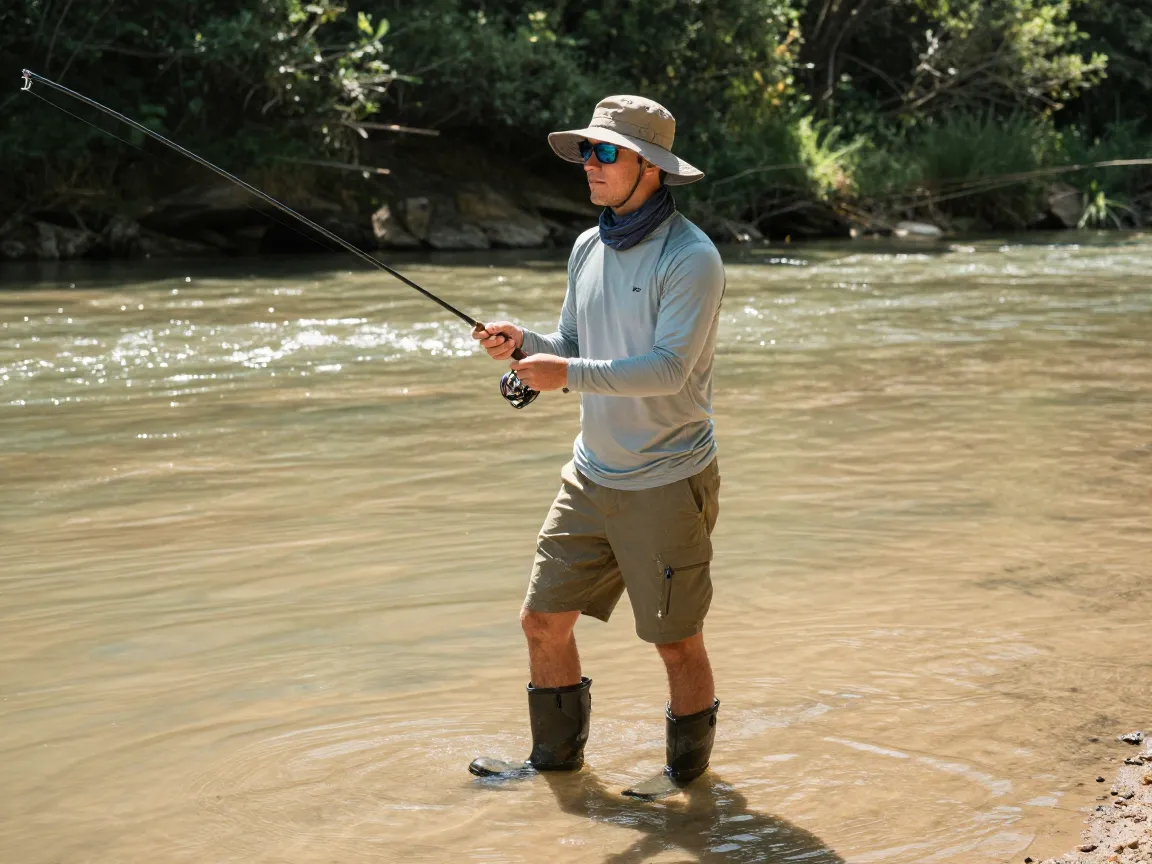
Wading in warm, shallow water requires a different outfit logic than boat fishing. Neoprene waders trap heat that becomes dangerous above 75°F water temperature. Breathable waders improve on that but still add a layer that most warm-water wading situations don’t require. For creek fishing, flats wading, and inshore environments where water temperatures exceed 70°F, the most practical option is a wet-wading setup built entirely from UPF-rated clothing.
The foundation is quick-dry UPF shorts or lightweight pants worn directly in the water. Quick-dry nylon or polyester fabrics lose moisture within 15 to 30 minutes of exiting the water and don’t chafe when wet the way cotton does. A long-sleeve UPF 50+ shirt tops the outfit, keeping arms and shoulders protected from the sun while the water contact on the lower body provides natural cooling. This is one scenario where shorts make genuine thermal sense. The water keeps leg temperature manageable without the need for pant-based protection.
Water shoes or wading sandals replace standard footwear. The selection depends on bottom type. Rocky and gravel-bottomed streams need closed-toe shoes with rubber soles for grip. Sandy and muddy flats work better with open sandals that shed material quickly. Either way, the tops of the feet and the toes become the most sun-exposed surfaces in the outfit, particularly in clear, shallow water where UV reflects upward from the bottom. Applying SPF 50 sunscreen to the foot tops before entering the water is the one point in this outfit where topical sunscreen is genuinely necessary, because no practical garment covers that area effectively.
A wide-brim hat, neck gaiter, and polarized sunglasses complete this outfit. The wet-wading approach works across a temperature range from roughly 72°F to 95°F air temperature, making it the most flexible hot-weather option on this list for anglers who fish rivers and inshore environments.
Conclusion
Of these six options, the sun hoodie over a cap paired with lightweight UPF pants covers the widest range of summer conditions with the least decision-making required at the dock. If that combination fits your fishing style, it’s a reasonable place to start building your warm-weather kit. The next useful step is checking the UPF rating on the shirts and pants already in your gear bag. Many synthetic garments marketed for fishing have no UPF rating at all, which means they offer no reliable UV protection even if they wick moisture well. Replacing those pieces with rated UPF 50+ alternatives is the single most effective change most anglers can make before next season.