Monster Hunter Forest Aesthetic Ideas for a Wild, Fantasy Look
The Monster Hunter franchise has sold over 21 million copies of a single title, Monster Hunter: World, making it one of the best-selling action RPGs of all time. That scale of popularity has translated far beyond gaming screens. Players, interior designers, and creative enthusiasts are now translating the franchise’s breathtaking forest environments into real-world visual aesthetics. The 6 Monster Hunter Forest Aesthetic Ideas for a Wild, Fantasy Look explored in this guide pull directly from the franchise’s most iconic biomes, from Capcom’s layered Ancient Forest to fan-imagined burning redwood concepts, to give any space, wardrobe, or creative project a genuinely wild, fantasy-driven atmosphere.
Disclosure: This post contains affiliate links. As an Amazon Associate, we earn from qualifying purchases, and at no extra cost to you.
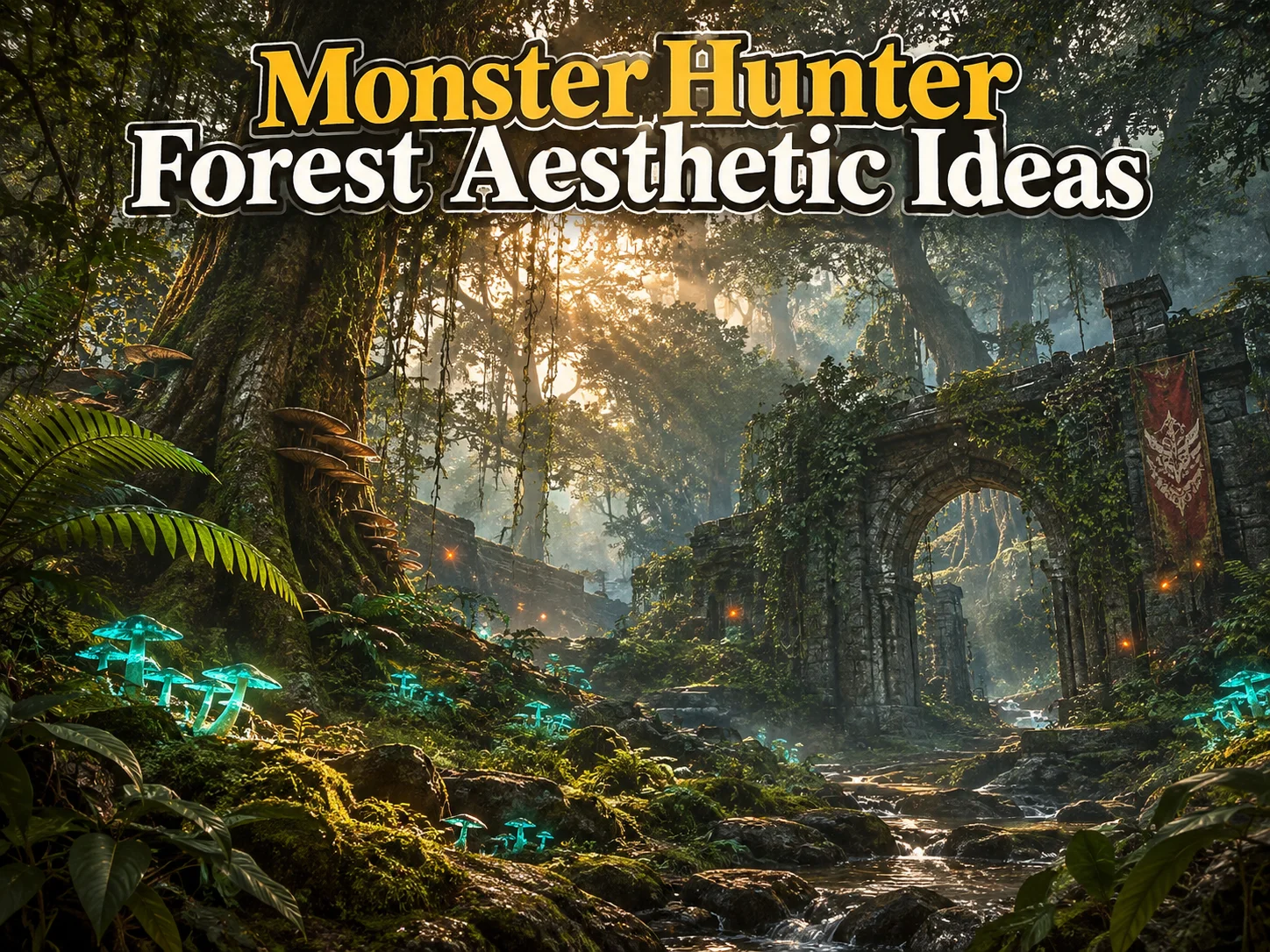
Whether the goal is a bedroom overhaul, a cosplay backdrop, or an artistic moodboard, each idea below offers concrete, actionable direction grounded in the visual language of Monster Hunter’s most celebrated environments.
1. The Ancient Forest Vertical Canopy Look
Capcom’s Ancient Forest biome is the definitive reference point for the Monster Hunter forest aesthetic. Its defining quality is not just density, it is verticality. The design stacks multiple layers of living ecosystem on top of one another: mushroom-covered forest floors, mid-level vine networks, elevated root platforms, and a high canopy that filters dappled green-gold light downward. Every layer feels inhabited and slightly dangerous.
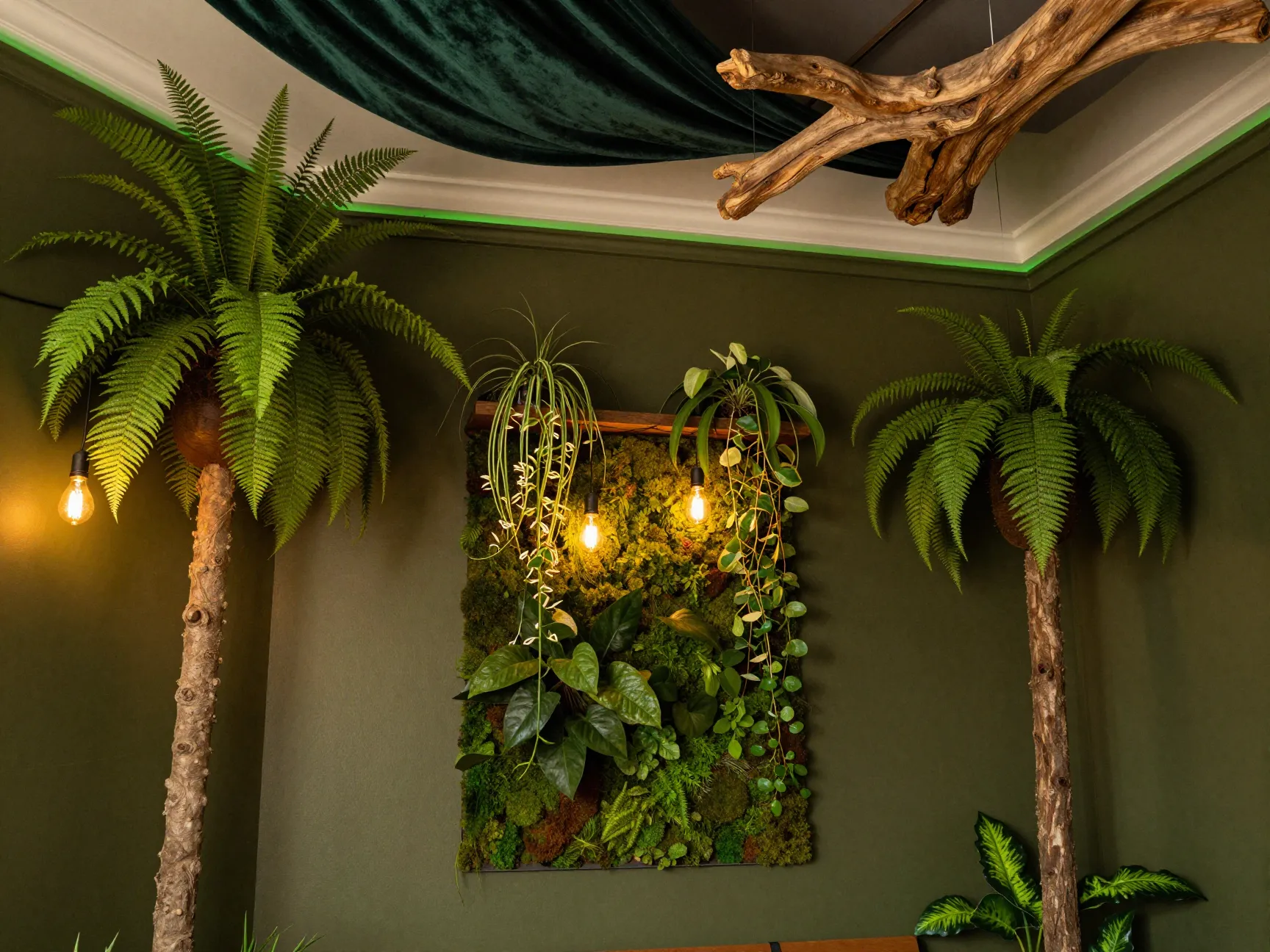
To translate this into a room or creative setup, the key principle is layering. Start with a dark, earthy base, deep olive, forest green, or rich brown for walls or backdrops. Then add mid-level visual weight through hanging plants, trailing pothos, or preserved moss panels. The upper layer is where dramatic lighting earns its keep: warm Edison-bulb strings or green-tinted LED strips tucked behind crown molding mimic that filtered canopy glow. Oversized fern fronds in tall corner planters anchor the lower tier and add the authentic jungle-floor density the Ancient Forest is known for.
The practical constraint here is scale. This aesthetic rewards going bigger. A single small plant on a desk does not read as Monster Hunter forest, it reads as generic office decor. Committing to at least three distinct vertical zones, even in a modest space, is what tips the composition from decorative to genuinely immersive. Official Monster Hunter concept art consistently emphasizes this layered danger: serene foregrounds that give way to eerie, monster-filled depths. Replicating that contrast in a physical space, calm and lush at eye level, shadowy and dense above, creates the same psychological tension that makes the in-game environments so compelling.
A useful application is to treat the ceiling as an active design element rather than neutral space. Suspended driftwood, climbing plant frames, or even fabric canopy drapes in deep green velvet transform a flat ceiling into the beginning of a forest overstory.
2. Burning Redwood Drama for Cinematic Impact
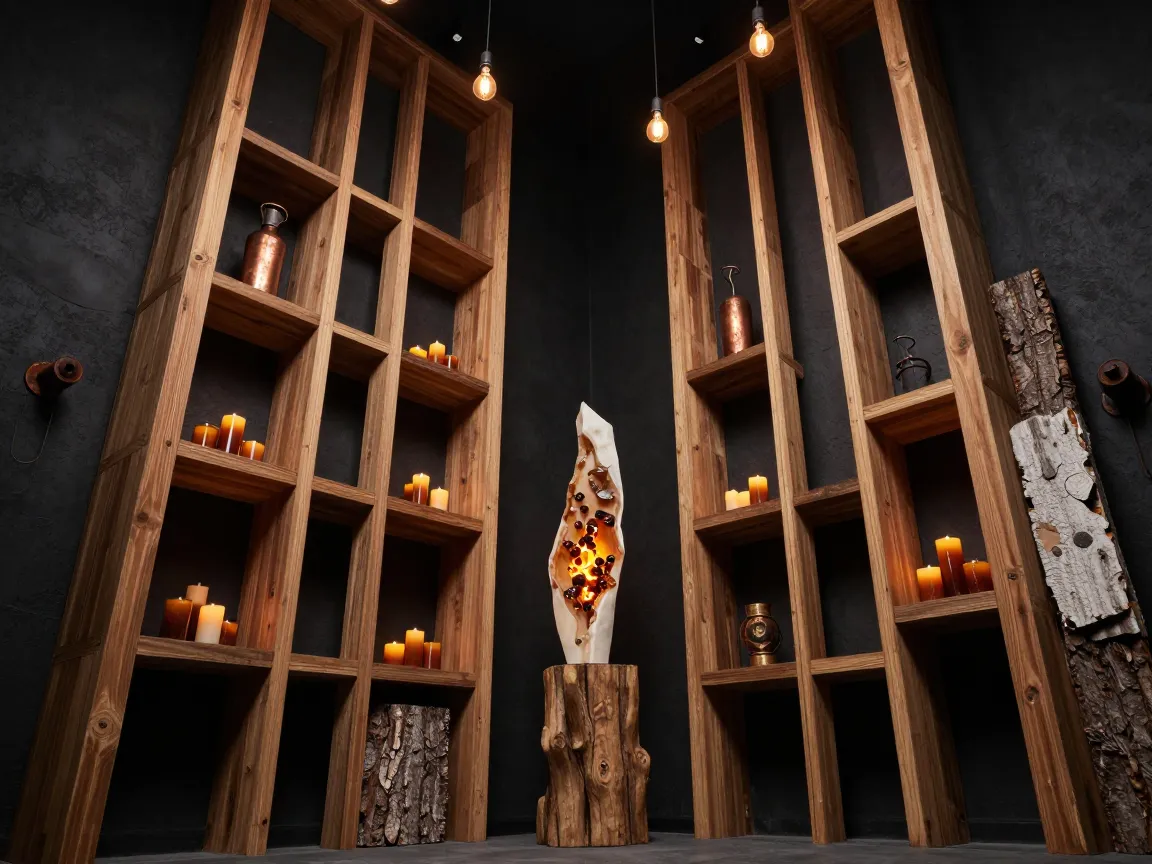
Community-generated “dream map” concepts within the Monster Hunter fanbase have pushed hard toward a burning or scorched-redwood forest environment. The visual logic is immediately compelling: the sheer vertical mass of redwood trunks combined with ember-orange lighting creates a cinematic tension that the franchise’s standard jungle palettes do not fully explore. For aesthetic purposes, this idea is about contrast, massive, ancient organic forms set against destructive warm light.
The color palette here shifts dramatically from the Ancient Forest’s cool greens. Burnt sienna, deep amber, charcoal grey, and ash-white form the core. In a room context, this translates to warm Edison filament lighting as the primary source, dark charcoal or near-black walls, and large cylindrical wooden elements, think raw log side tables, wooden column-style shelving, or bark-textured wallpaper panels. The “burning” element is best suggested rather than literal: amber-tinted candles in clusters, warm-toned resin art with embedded ember-like inclusions, or copper and rusted-iron hardware throughout the space.
What elevates this beyond a generic “dark academia” or “cabin” aesthetic is the Monster Hunter-specific sense of scale. Redwood-inspired decor should feel imposing. A single floor-to-ceiling wooden shelving unit with rough, unfinished edges does far more work than a row of smaller pieces. The goal is for anyone entering the space to feel physically small, the same way players feel when navigating between towering ancient trunks while a monster circles somewhere out of frame.
This idea also travels well into cosplay photography and digital art backgrounds. A simple backdrop of vertical dark-toned wood panels backlit with diffused amber light creates an immediately recognizable cinematic forest scene that reads as Monster Hunter without requiring elaborate props.
3. Ruined Forest Overgrowth and Lost Civilization Motifs
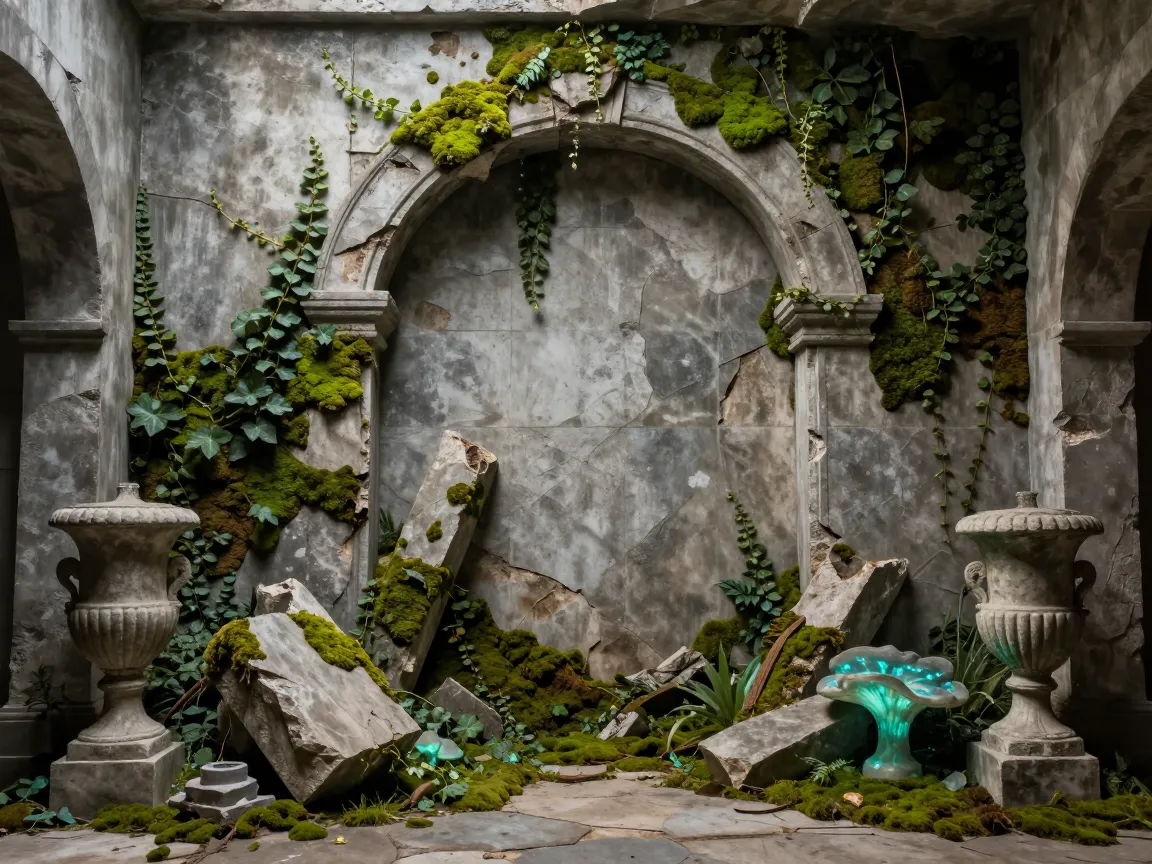
Fans and environment designers speculating on future Monster Hunter biomes repeatedly call for temperate or boreal forests with visible ruins, crumbling stone architecture being consumed by vegetation. This “ruined forest” concept taps into one of fantasy design’s most enduring visual languages: the idea that something powerful once existed here and nature is methodically reclaiming it.
The visual motifs to focus on are stone and organic contrast. Rough-hewn grey stone textures paired with vivid green moss, creeping ivy, and lichen patches create immediate narrative depth. In an interior or creative space, this can be executed through faux stone panels or concrete-effect feature walls combined with live moss art installations. Terrariums featuring small stone figures or architectural fragments half-buried in substrate bring the concept to a manageable tabletop scale.
Color palette: muted stone grey, forest green, earth brown, and occasional flashes of bioluminescent blue-green where fungi or glowing moss would logically appear. The bioluminescent accent is a specifically Monster Hunter-coded detail, the franchise uses glowing flora as a recurring visual signature, and it separates this aesthetic from generic “abandoned ruins” design.
The Monster Hunter connection strengthens when the ruin element suggests a specific scale of threat. These are not cozy hobbit-hole ruins. They are massive, broken things, oversized archways, collapsed pillars, walls with inexplicable claw marks. Where possible, oversized decorative elements (large stone-effect urns, monolithic candle holders, wide-frame artwork depicting architectural fragments) reinforce the sense that whatever used this space was not human-sized. That tension between organic growth and imposing scale is the aesthetic’s real power.
4. Boreal and Temperate Forest Moodboard Styling
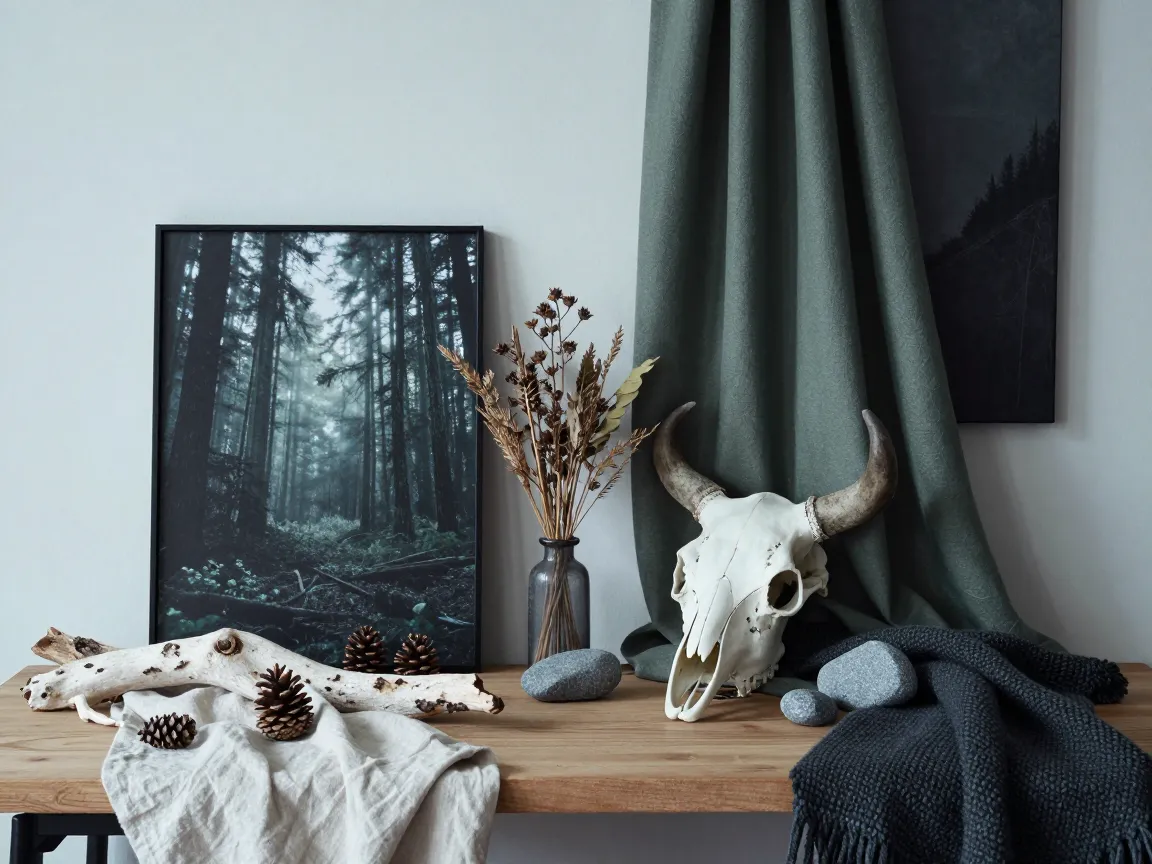
Not every Monster Hunter forest runs hot and tropical. Fan discussions around desired biomes consistently advocate for colder, more temperate environments, boreal forests of frost-dusted pine, pale birch groves, and mist-covered highland meadows. Monster Hunter Rise gestures toward this with its Frost Islands, but a purely temperate forest environment remains largely unexplored canonical territory, which makes it rich ground for original aesthetic work.
The boreal forest palette is fundamentally different from the tropical approach. Cool grey-greens, icy blues, pale cream, dusty sage, and deep charcoal define the range. In a space, this means leaning toward natural linen and wool textures, pine and birch wood furniture, and cool-toned lighting, think soft white or slightly blue-shifted LEDs rather than warm amber. Dried botanicals, preserved pine cones, bleached driftwood, and grey stone accessories carry the biome’s signature quiet austerity.
What keeps this distinctly within the Monster Hunter aesthetic rather than drifting into generic Scandinavian minimalism is the sense of latent threat. The franchise’s color and lighting debates, particularly around Monster Hunter Wilds, highlight how important it is to build tension into a palette. In practical terms, this means including at least one element that feels slightly wrong: a large, dark shadow-suggestive art piece on an otherwise serene wall, oversized animal skull decor, or deep forest photography prints where something large is implied in the background darkness. The moodboard should feel like the calm before an encounter, not a spa retreat.
Textiles are especially powerful in this version of the aesthetic. Heavy woven throws in dark forest tones, rough-edged wool rugs that suggest animal hides, and curtains in deep sage or pine green add tactile weight that warms the cool palette without betraying it.
5. Bioluminescent Underground Forest Ecosystem
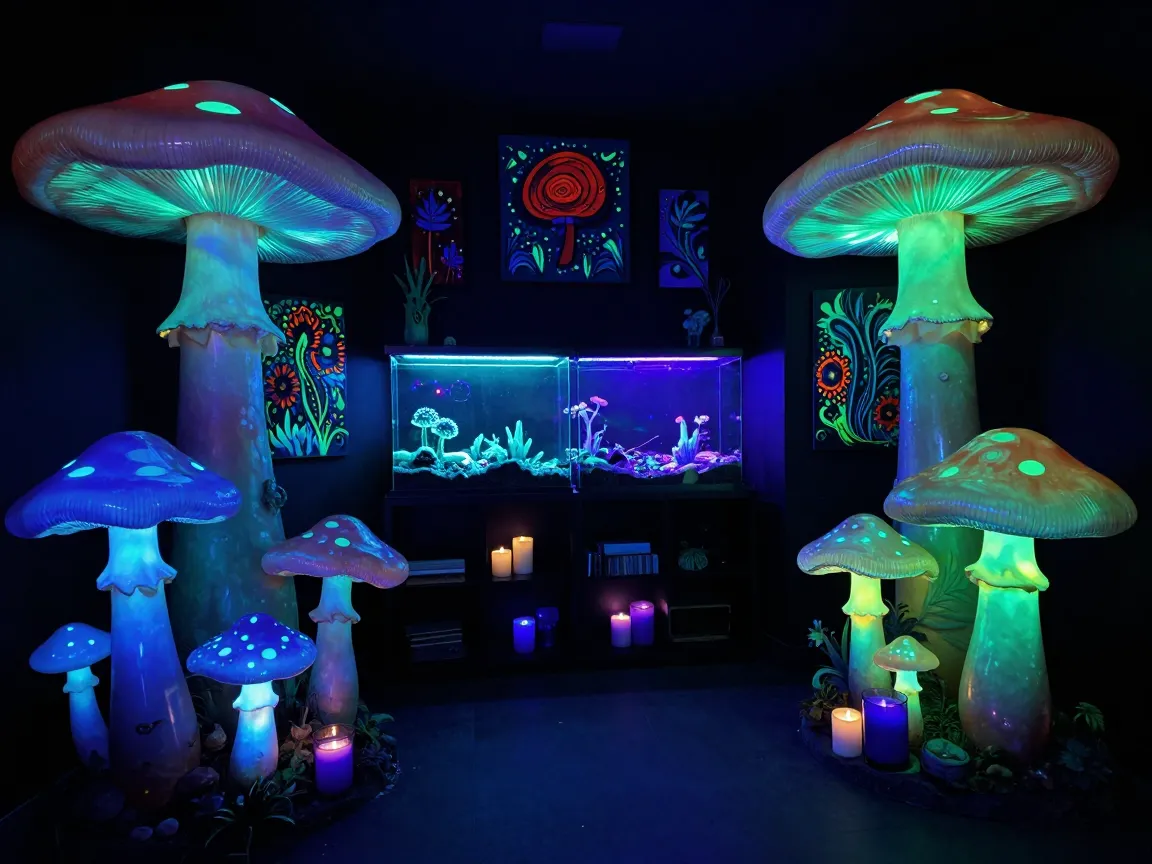
Expansion concepts circulating around Monster Hunter Wilds and its anticipated content lean toward subterranean biomes where forests exist below the surface, fed by bioluminescent light rather than sunlight. This underground ecosystem concept combines the organic density of a traditional forest with the otherworldly glow of deep-cave environments. The result is one of the most visually striking interpretations of the Monster Hunter forest aesthetic available.
The core visual logic is darkness punctuated by vivid, unnatural light. Soft teal, electric blue, violet, and acid green provide the bioluminescent layer, while the base palette stays near-black or deep charcoal. Mushrooms are the dominant flora motif, oversized, glowing, clustered. In a creative space, this is executed through UV-reactive elements (paint, fabric, or resin art that glows under blacklight), neon-accented terrarium builds, and sculptural mushroom decor in iridescent or glow-in-the-dark finishes.
Lighting is the single most important component of this idea. Standard ambient lighting destroys the effect. The space needs to be primarily lit by accent sources only: LED strips in teal or violet tucked behind shelving, blacklight panels paired with UV-reactive art, and candles in deep cobalt or violet glass holders. The absence of broad, even light is what makes the bioluminescent accents read as genuine atmospheric elements rather than colored decoration.
This aesthetic translates extremely well into photography and video content backgrounds. A dark-walled space with layered bioluminescent accents creates an immediate fantasy-world atmosphere that photographs dramatically without requiring complex set construction. For Monster Hunter fans specifically, in-game housing assets from titles like Monster Hunter: World and Rise include wild-nature sets with glowing flora, directly referencing these canonical design choices grounds the aesthetic in the franchise’s own visual vocabulary.
6. Layered Danger: Serene Foreground, Eerie Depth
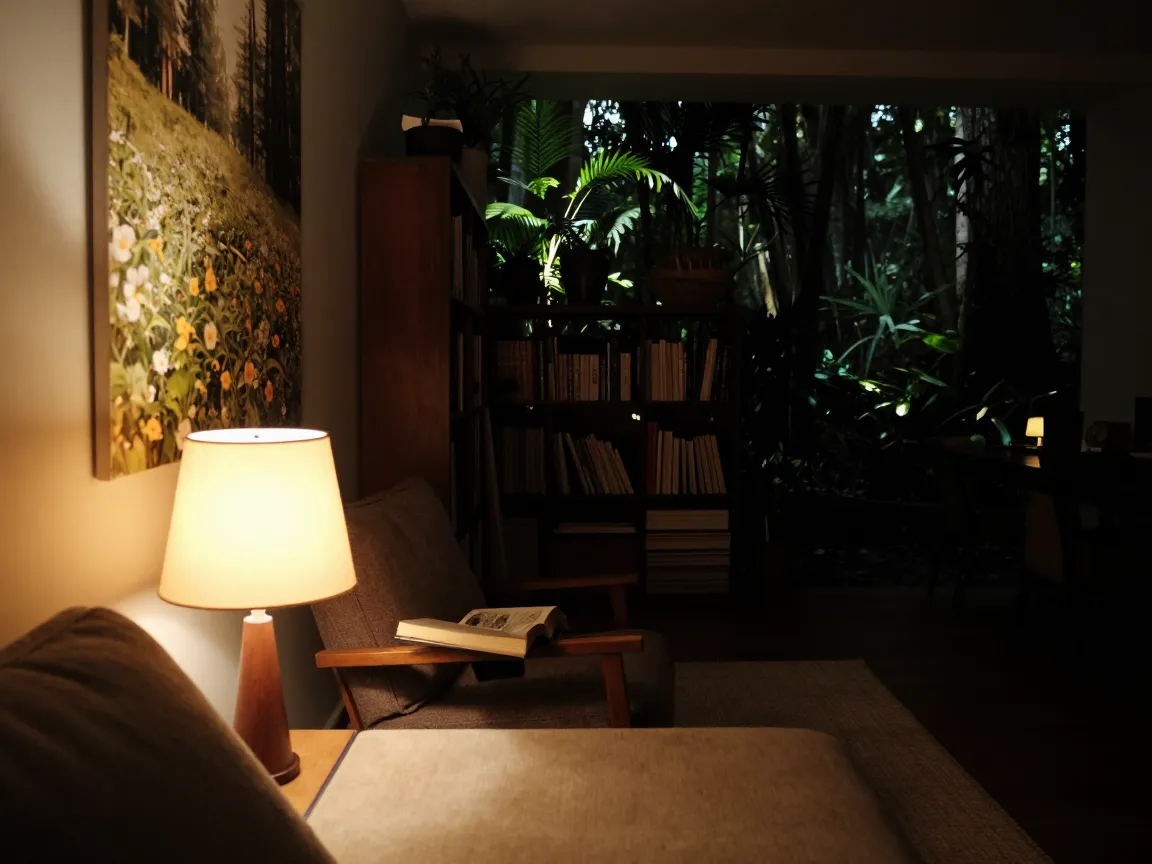
The final idea synthesizes a principle that runs through virtually all of Monster Hunter’s official forest concept art: the deliberate contrast between a calm, inviting foreground and an unsettling, monster-implied depth. This is not a single biome or color palette, it is a compositional philosophy that can be applied across any of the previous ideas to push the aesthetic from decorative to genuinely narrative.
Official concept art for the franchise consistently shows this structure. A sunlit clearing with delicate flowers, then three meters back the light begins to fail and something enormous has clearly passed through recently. This creates unease not through explicit horror but through implication. Applied to interior or graphic design, the technique involves creating a clear visual foreground that is warm and approachable, then engineering a background that becomes progressively darker, denser, and more ambiguous.
In practical room design, this plays out as follows. Place the most inviting, comfortable, well-lit elements nearest to the occupant’s primary viewpoint: a reading chair, a lamp, light-toned rug, familiar textures. Then, moving away from that focal point, let the space get progressively darker and more layered. Deep shelving units that become shadowy at the back, tall plants whose upper reaches disappear into lower-lit areas, wall art that shifts from serene forest foreground to implied deep-woods darkness, all of these reinforce the compositional principle.
Merch and home decor markets have recognized this dynamic specifically. Monster Hunter-licensed posters and large-format wall art frequently use exactly this foreground-depth contrast, making them functional anchors for this aesthetic approach. Pairing licensed art with complementary environmental design, where the room itself reflects the same compositional logic as the artwork, creates a cohesive, high-impact result that is immediately recognizable to fans and visually arresting even to those unfamiliar with the franchise.
The practical caveat is intentionality. The difference between a coherent “layered danger” aesthetic and a room that simply has poor lighting in the corners is deliberate design decision-making. Every dark element in the depth zone should feel chosen, not accidental. Textured wallpaper panels, strategically placed tall plants, and deliberately low-wattage secondary lighting all signal design intent and prevent the aesthetic from reading as neglect.
Conclusion
The 6 Monster Hunter Forest Aesthetic Ideas for a Wild, Fantasy Look covered here, from the Ancient Forest’s vertical canopy architecture to the compositional tension of serene-foreground-eerie-depth, share a common thread. Each one treats the natural world not as a backdrop but as an active, threatening presence. That sense of nature as a force rather than decoration is what distinguishes a genuine Monster Hunter forest aesthetic from generic jungle or woodland styling.
The most effective starting point is to pick one dominant idea, establish its core palette and lighting scheme, and build outward from there. Trying to blend all six simultaneously dilutes the impact of each. Choose the idea that resonates most strongly, then use the remaining five as a resource for accent details and complementary elements. That focused approach is what transforms a collection of forest-themed objects into a cohesive, wild, fantasy environment.