Cute Fishing Tattoos That Show Off Your Love for the Water
Anglers make up one of the largest outdoor recreation communities in the world, yet body art that speaks directly to that passion remains surprisingly personal. A well-chosen fishing tattoo does more than decorate skin, it marks a lifestyle, honors a memory, or keeps a lost fishing buddy close forever. Whether someone spends weekends chasing bass in a reservoir or fly fishing cold mountain streams before dawn, the 6 cute fishing tattoos that show off your love for the water covered in this guide offer something genuinely meaningful for every type of angler.
Disclosure: This post contains affiliate links. As an Amazon Associate, we earn from qualifying purchases, and at no extra cost to you.
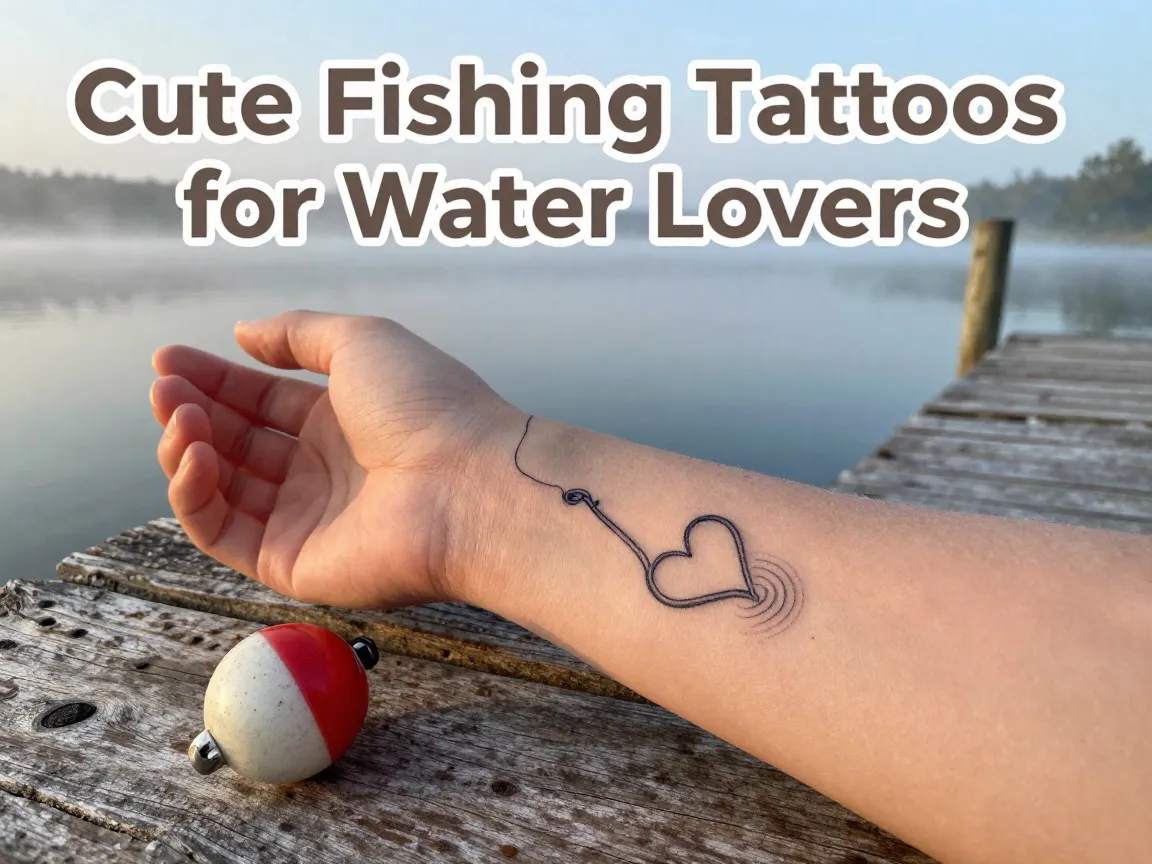
Tattoo databases tracking active searches in 2026 now catalog tens of thousands of fishing-related designs, from sweeping scenic compositions to tiny minimalist icons that fit neatly on a wrist or ankle. That volume signals one clear thing: interest in fishing tattoos is not a passing trend. It is a mature, diverse category with real creative depth. The six designs below represent the most compelling directions within that category, each one distinct in style, placement potential, and emotional resonance.
1. Fine-Line Fishing Hook With a Heart Curve
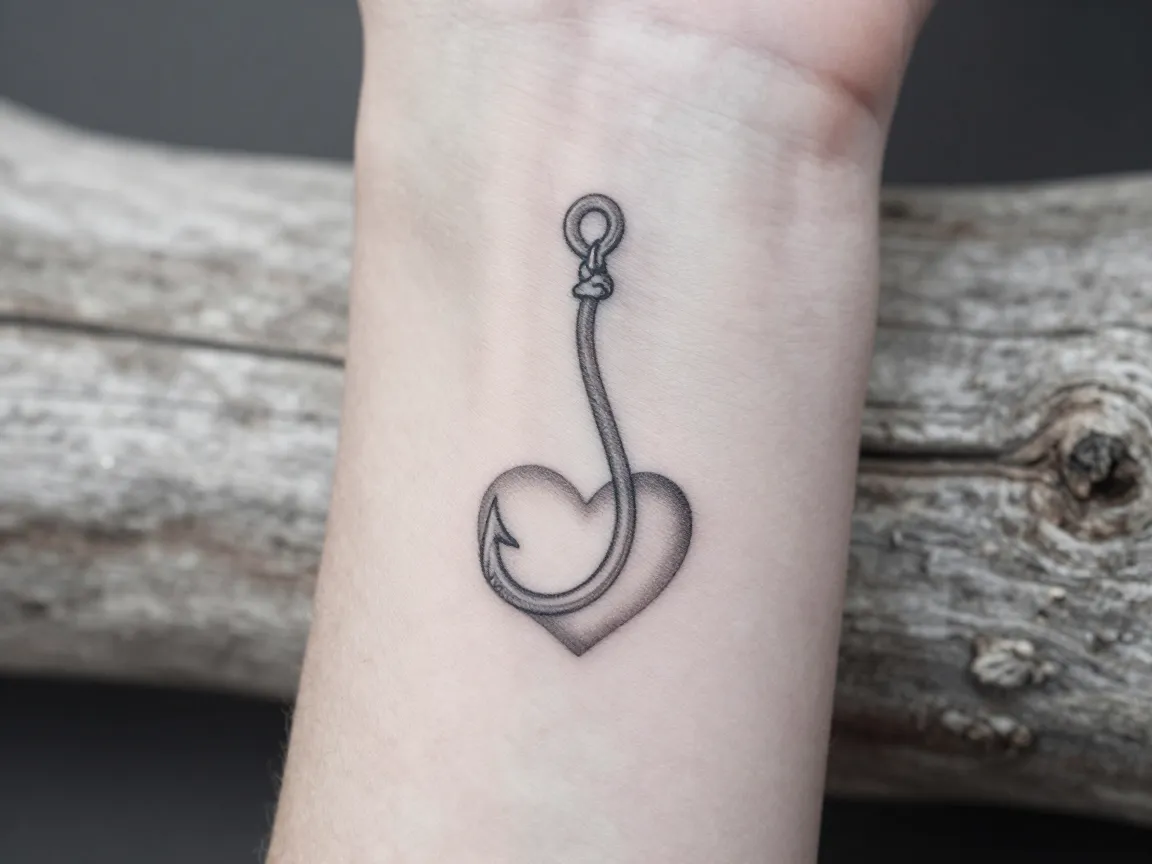
The fishing hook is arguably the most recognizable symbol in all of angling culture. It is compact, instantly readable, and loaded with meaning, patience, skill, and the act of connecting with something wild beneath the surface. What makes the fine-line hook particularly compelling as a cute tattoo option in 2026 is a subtle design evolution: artists are now shaping the curve of the hook into a soft heart form, so the barb loops back toward the shank in a way that reads as both a functional hook and a small romantic gesture.
This style works exceptionally well in black and grey single-needle linework. The thin lines give it a lightweight, almost ethereal quality that sits beautifully on inner wrists, behind ears, or along the collarbone. Because the design is small and self-contained, it does not demand a large canvas, which makes it a practical first tattoo or an easy addition to an existing sleeve. Tattoo reference pages specializing in fish hook designs consistently highlight the pairing of a heart-curve hook with a short length of tattooed fishing line trailing from the eye of the hook, adding depth without adding bulk.
The sentimental applications here are genuinely touching. Some clients have this design tattooed in memory of a grandparent who first taught them to fish, using the heart shape to carry the emotional weight without spelling anything out in text. Others pair it with a small date or set of initials placed along the line. The restrained scale of fine-line work means that even with added elements, the finished piece stays elegant rather than crowded, a rare quality in commemorative tattoos.
2. Watercolor Koi Fish in Motion
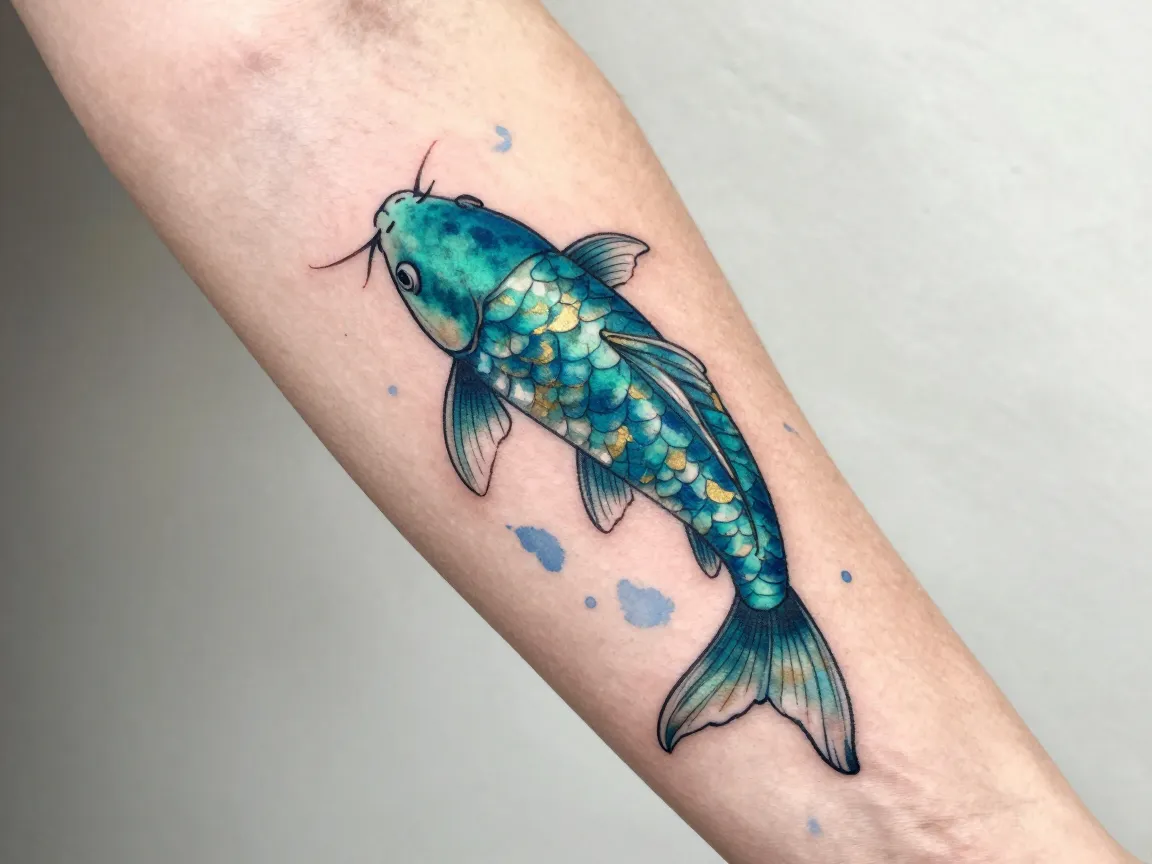
The koi is not strictly a fishing tattoo in the rod-and-reel sense, but it belongs firmly within the broader family of water-and-fish body art that defines this genre. What separates a watercolor koi from a traditional koi tattoo is the technique: pigment appears to bleed softly beyond the outline, mimicking the way watercolor paint spreads on wet paper. The result feels alive and fluid, which suits a fish perfectly.
Fine-line koi designs have appeared consistently across fishing and fish tattoo galleries throughout 2026, confirming that the minimalist take on this species continues to resonate alongside the bolder watercolor approach. The two styles can even be combined, a crisp outline filled with loose, bleed-edge color, giving the artist room to control legibility while still capturing that painterly quality. Orange, gold, red, and white are the classic koi palette, but teal and deep cobalt versions read more aquatic and pair well with the water-themed imagery that often surrounds fishing tattoos.
Placement options for a watercolor koi are wider than for many fishing designs because the composition naturally curves and flows. It works along a forearm, wrapping gently around the limb, or as a standalone piece on a calf or shoulder blade. For anglers who have a personal connection to koi, perhaps a backyard pond, a Japanese cultural heritage, or simply an appreciation for the fish’s symbolism of perseverance, this design carries meaning beyond aesthetics. The motion implied by a koi turning or rising toward the surface echoes the same energy that makes watching a fish strike so exhilarating in real life.
3. Minimalist Fishing Rod and Reel Silhouette
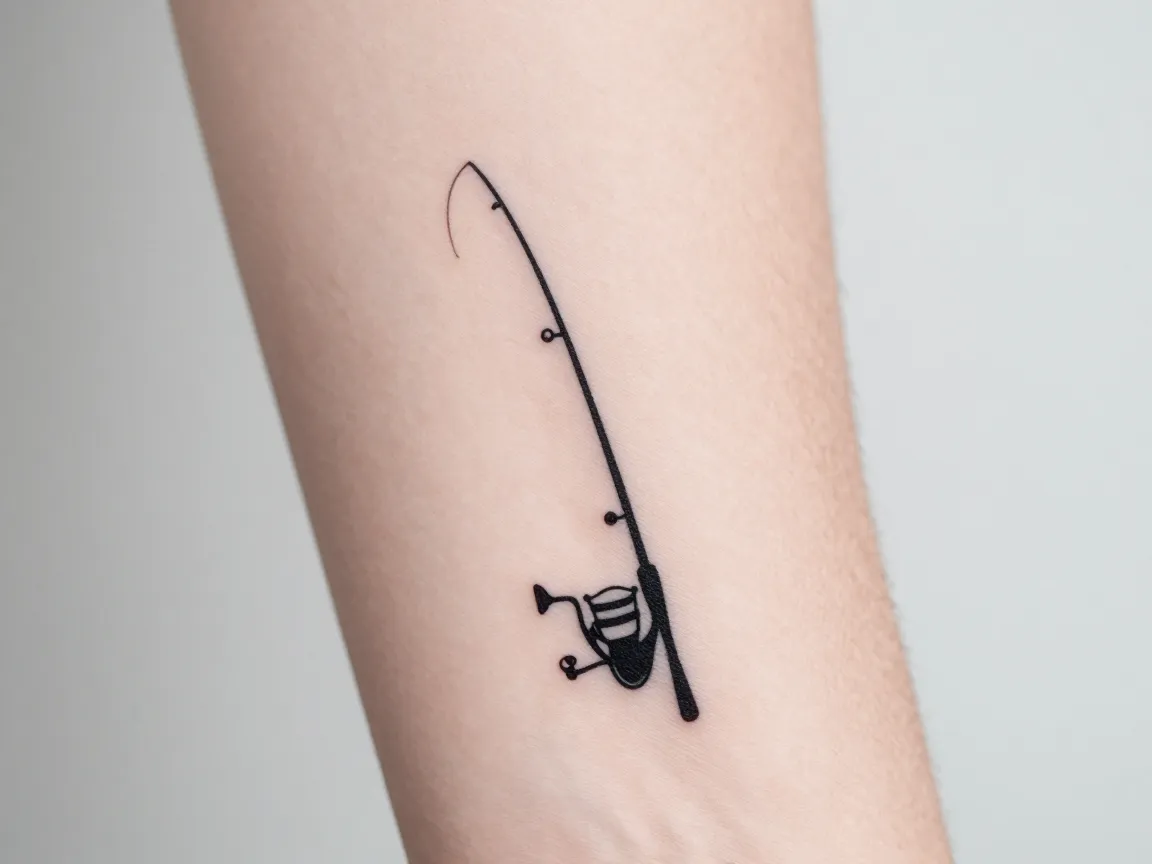
Not every angler wants a detailed, shaded masterpiece. Some of the most effective fishing tattoos are built from the fewest possible lines, and the fishing rod silhouette is a prime example of that philosophy done right. A single arched rod with a reel suggestion at the handle and a fine curved line representing the cast can communicate an entire world of feeling in a space no larger than a matchstick.
The key to making a minimalist rod tattoo feel intentional rather than unfinished is the arc of the cast line. A skilled artist uses that single curved element to bring energy to what would otherwise be a static image. When the line sweeps upward and forward, the whole piece implies action, a cast mid-air, a moment suspended between intention and outcome. Some variations include a tiny lure or fly at the end of the line, just a few strokes of ink, which adds narrative without overwhelming the minimalist premise.
Scenic lifestyle versions of this concept have also grown popular, particularly designs that place a small figure holding a rod against a sunset horizon. Fishing pole tattoo galleries in late 2026 include concepts like a woman ice fishing against a twilight sky, illustrating how this minimalist core can expand into a micro-scene. Even in expanded form, the rod and reel silhouette keeps its identity as the visual anchor. For anglers who value the meditative, unhurried side of fishing, the act of casting and waiting as much as the catch itself, this design captures exactly that spirit.
4. Bass Fish Jumping From Stylized Waves
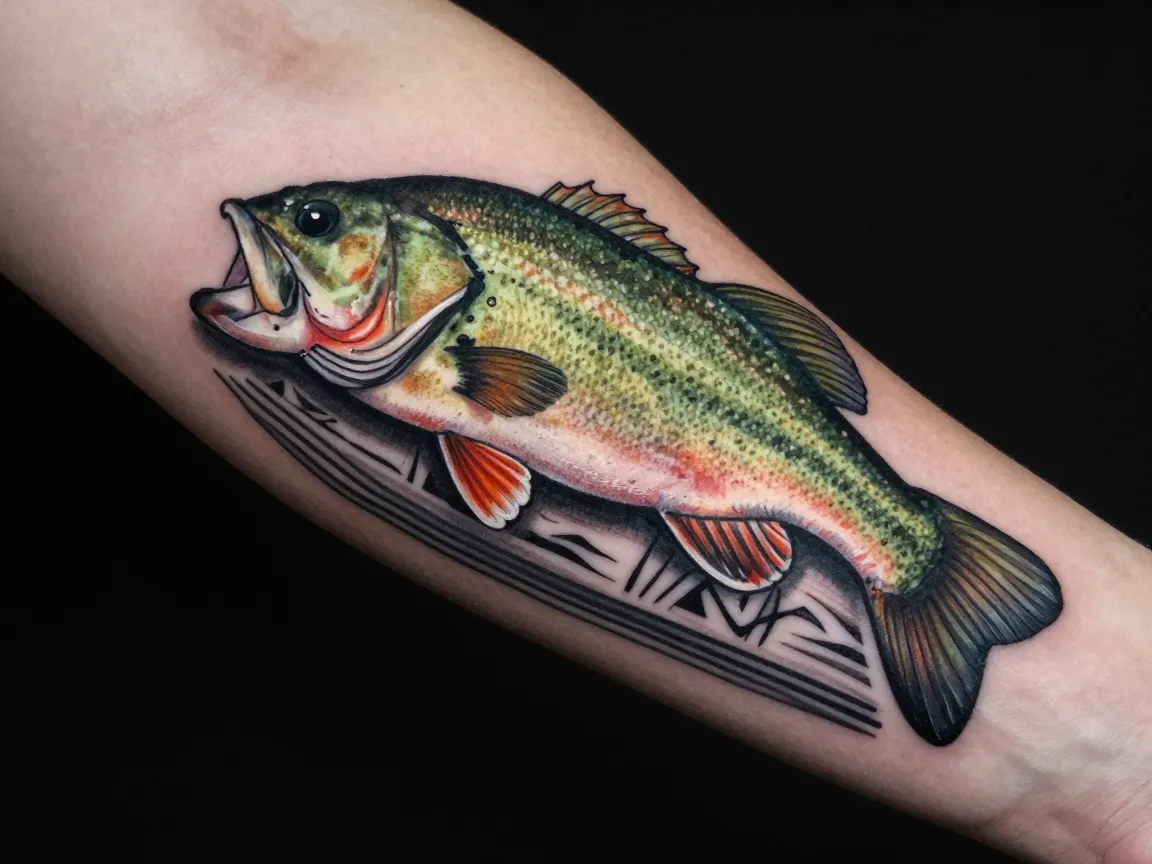
A largemouth or smallmouth bass clearing the surface of the water is one of the most electrically exciting moments in freshwater fishing. The fish goes airborne, the line goes tight, and everything happens at once. Translating that kinetic burst into a tattoo produces some of the most dynamic designs in the entire fishing category, and bass-specific artwork has remained a consistent focal point for angling communities well into 2026.
The classic composition shows the bass mid-leap, body arched, tail flared, with stylized wave curves beneath it. Artists render the waves in one of two ways: as clean, art-deco-influenced geometric arcs that keep the piece graphic and bold, or as more naturalistic water ripples that add texture and realism. Both approaches work, and the choice usually comes down to the owner’s overall tattoo aesthetic. If the rest of their ink leans traditional or neo-traditional, the geometric wave fits seamlessly. If their collection tends toward realism, the naturalistic water makes more sense.
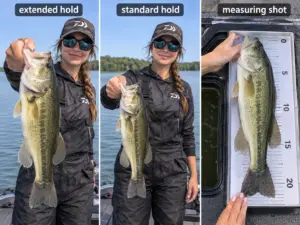
Color is optional but impactful with this design. A realistic bass has an unmistakable greenish-brown lateral line and speckled flank that becomes instantly recognizable to any bass angler the moment they see it on someone’s skin. Black and grey versions are equally strong, letting contrast do the visual work that color would otherwise handle. The bass jump tattoo scales well across body placement, it functions as a medium-sized forearm piece, a larger calf design, or even a full back panel composition when paired with underwater elements. For anyone whose fishing identity is built around bass tournaments, early mornings on a favorite lake, or teaching a child to fish for the first time, this design communicates that passion without a single word.
5. Fly Fishing Dry Fly or Streamer Pattern
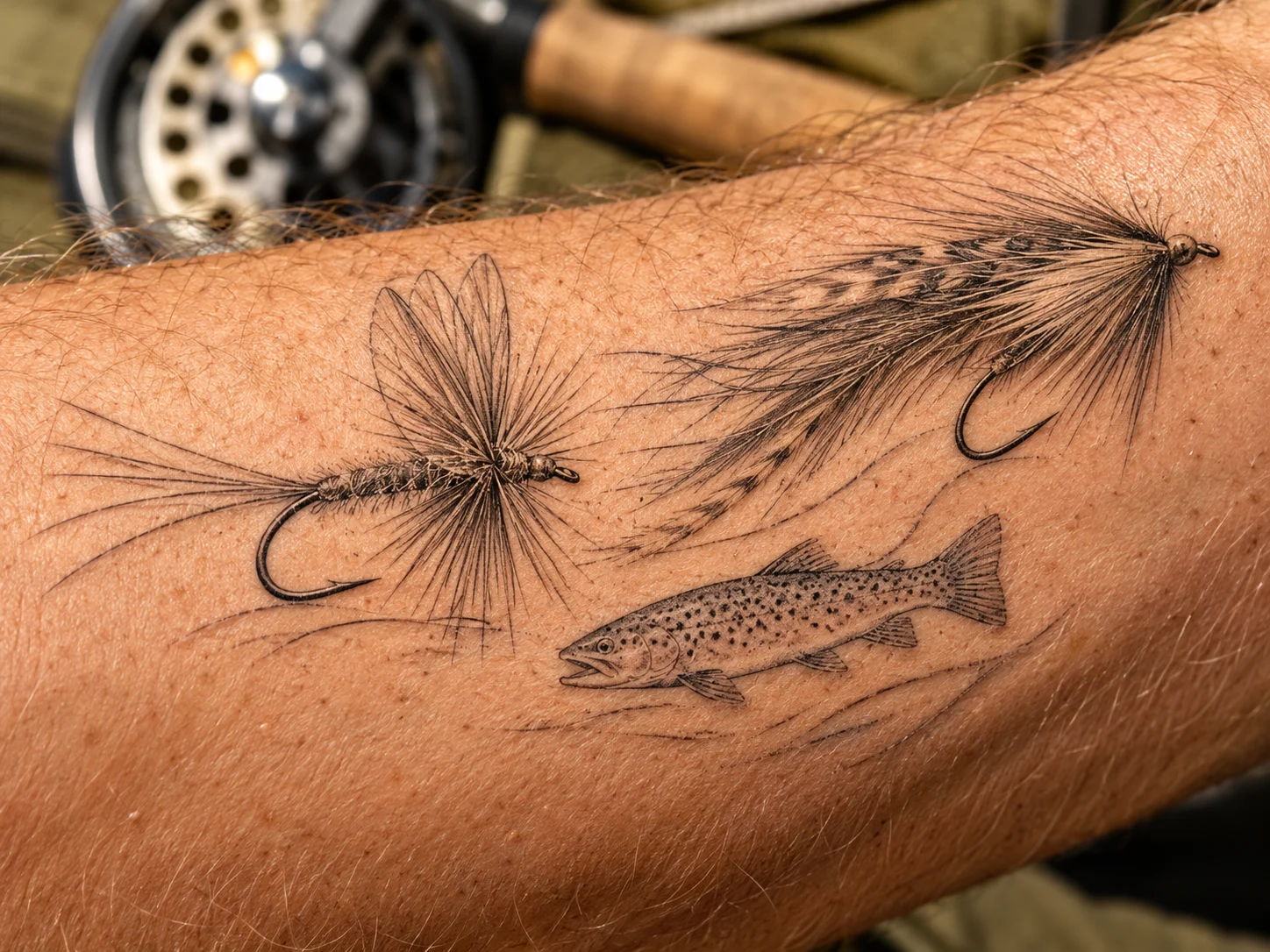
Fly fishing occupies a distinctive cultural corner of the angling world. Its practitioners often have a near-obsessive relationship with the flies themselves, tiny handcrafted objects that imitate insects, baitfish, or other prey with remarkable precision. Tattooing a specific fly pattern onto skin is a deeply insider gesture, one that immediately signals membership in a tight-knit community to anyone who recognizes the design.
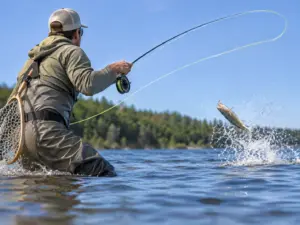
Dry fly tattoos, which represent flies meant to float on the water’s surface, tend to have a delicate radial structure: a thin hook, a wrapped body of dubbed material, upright wings, and trailing tails. When rendered in fine linework, the result is intricate but not oversized. Streamer patterns, larger flies designed to move through the water like a small fish, allow for bolder, more expressive design because their flowing feather or synthetic fibers create natural visual movement. Both types translate beautifully into tattoo art when the artist has genuine knowledge of fly-tying structure.
The enthusiast culture around fly fishing tattoos has been documented for years, with anglers choosing designs tied to specific fish, specific rivers, or the flies that produced their most memorable catch. A Parachute Adams tied to a trout silhouette, for instance, tells a layered story in a small amount of space. For fly anglers, this type of tattoo is less about looking attractive to a general audience and more about carrying a private, specific memory. That said, the visual intricacy of a well-executed fly tattoo earns appreciation even from people who have never held a fly rod.
6. Fishing Line, Bobber, and Ripple Scene
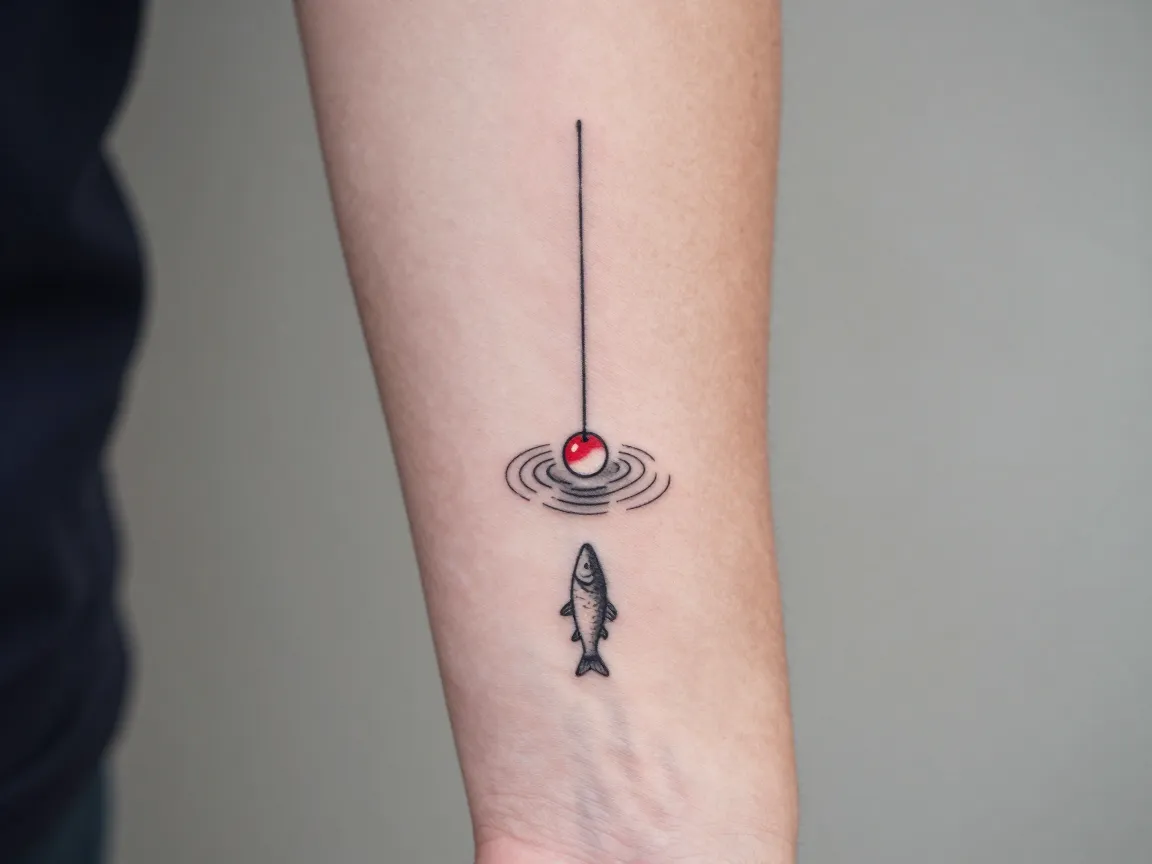
Of all the designs in this collection, the fishing line and bobber scene may be the most universally nostalgic. Almost anyone who has fished has stared at a bobber on still water, waiting for it to dip. That image, a floating indicator, a taut line descending into the unknown, concentric ripples spreading outward from the point of contact, is quietly loaded with anticipation, patience, and childhood memory.
As a tattoo, this scene works beautifully in a vertical format along the inner forearm or outer calf, with the line descending from the wrist or knee area toward the bobber, which sits lower on the limb. The ripple circles radiate outward from the bobber in thin concentric arcs, creating a sense of depth and water surface without requiring any color at all. Black linework alone handles everything. Some artists extend the design downward to suggest the line continuing below the surface, adding a small lure, hook, or even a fish approaching from below in the negative space.
The bobber itself can be rendered true-to-life, the classic red-and-white round float that most people learned on, or stylized into something more graphic. When fish-hook tattoo resources note the visual pairing of hooks with waves and ripples, this bobber composition is exactly the direction that pairing leads. The whole design is compact, clean, and immediately legible, which makes it one of the most accessible starting points for anyone who wants a cute fishing tattoo that communicates genuine love for the water without committing to a large or complex piece.
Conclusion
The 6 cute fishing tattoos that show off your love for the water outlined here span a wide range of styles, scales, and emotional tones. From the intimate heart-curve hook to the kinetic bass jump, each design offers a specific way to carry a fishing identity permanently. The consistent thread running through all six is intentionality, the best fishing tattoos are not generic fish shapes grabbed from a flash sheet, but considered designs that connect to real experiences on real water.
The most useful next step for anyone drawn to one of these ideas is to find a tattoo artist whose existing portfolio demonstrates comfort with the style that appeals to them most. A fine-line artist excels at the hook, the bobber scene, and the fly pattern. A realism specialist will do the bass jump justice. Matching the right design to the right hand is the single decision that separates a tattoo worn for a lifetime from one that is simply endured.